
A TESTED AND WATCHFUL HEART
FEAST OF ST. EDWARD, KING & CONFESSOR
Commemoration of Bl. Gerard Sasso
Anniversary of the Miracle of the Sun at Fatima
Remembrance of Pope Leo XIII’s Vision and St. Michael’s Protection
Day 8 of the Novena to St. Teresa of Avila
October 13, 2026
TODAY’S GOSPEL: Luke 12:35-40
EPISTLE: Ecclesiasticus 31:8-11
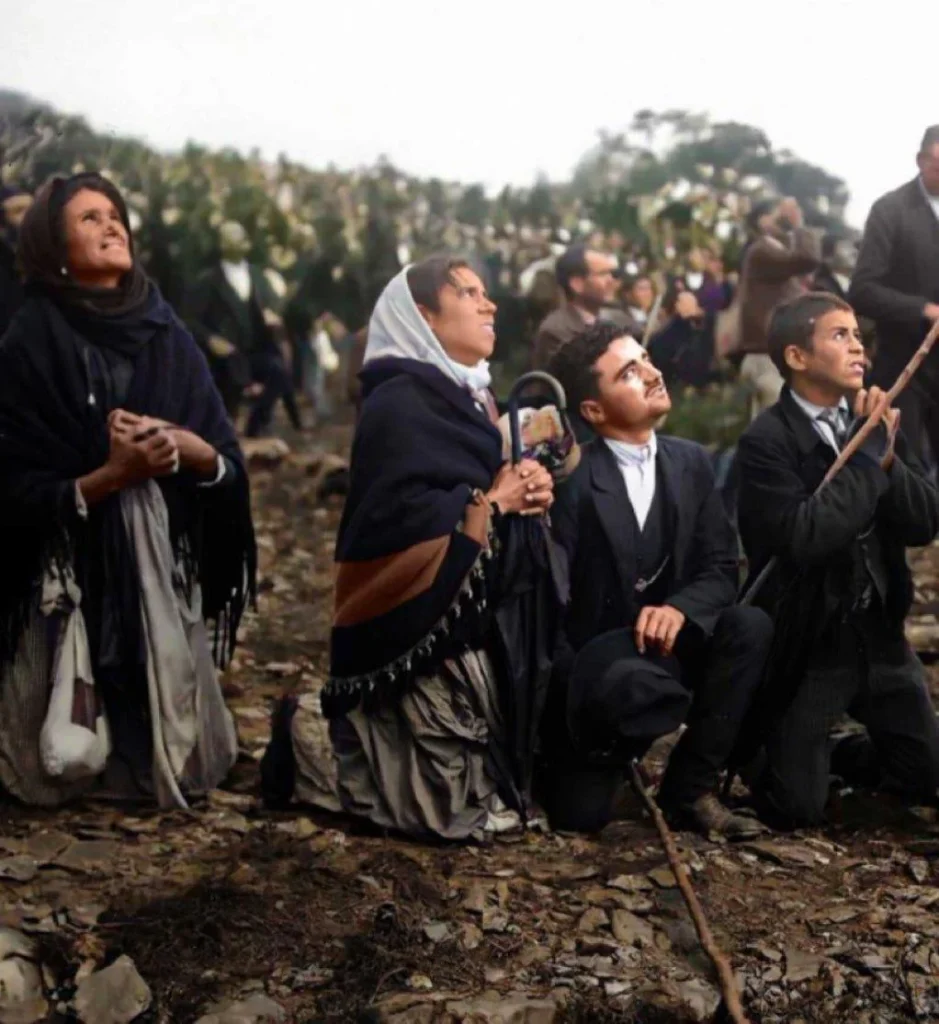
Today we honor St. Edward, King and Confessor, and remember Blessed Gerard Sasso, founder of the Order of St. John of Jerusalem, now known as the Order of Malta. We also recall the Miracle of the Sun at Fatima and the traditional account of Pope Leo XIII’s vision of the powers of Hell and St. Michael’s defense of the Church.
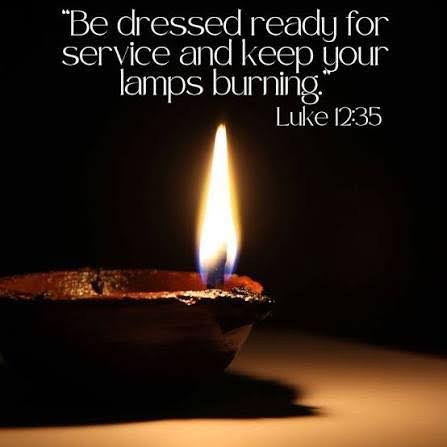
In today’s Gospel, Our Lord tells His disciples to keep their loins girded and their lamps burning, like servants awaiting their master’s return from a wedding. When he comes and knocks, they are to open immediately. Jesus calls us to live with that same readiness: faithful in prayer, attentive to our duties, and prepared to welcome Him whenever He comes.
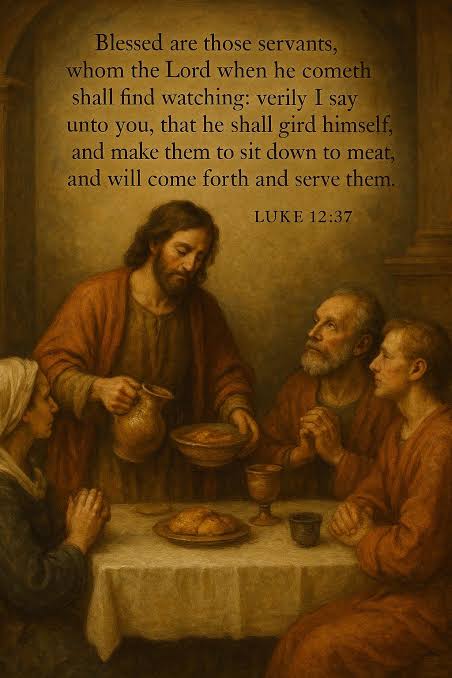
Then Our Lord gives a beautiful promise. The master who finds his servants watching will gird himself, have them sit down at table, and serve them. What tenderness there is in this image! The Lord whom we serve desires to receive us into His joy. Our waiting is sustained by the hope of being with Him.
Today’s Epistle praises the man who possesses riches without setting his heart upon them. He has been tested and found faithful; he could have transgressed, but did not. Wealth, influence, and opportunity reveal much about a heart. What do we do when dishonesty would benefit us, when generosity costs us something, or when no one would notice our wrongdoing? Let us ask for the grace to choose what is right before God.
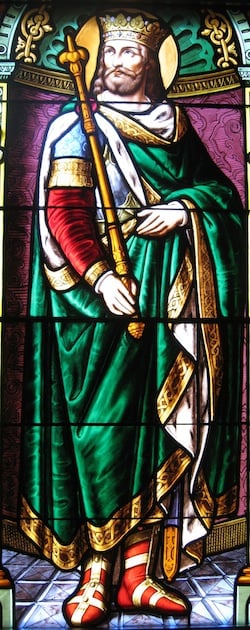
St. Edward’s life brings this reading close to us. After years of exile in Normandy, he returned to England and became king. He is remembered for his devotion to God, his charity toward the poor, and his rebuilding of Westminster Abbey, where he was buried. The accounts of his life describe a king whose concern extended to the vulnerable and whose almsgiving was often done quietly. His royal responsibilities became occasions to practice charity and honor God.
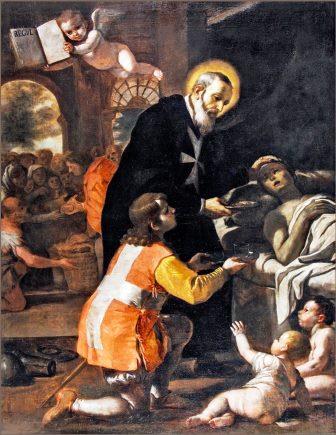
Blessed Gerard Sasso likewise placed his life at the service of others. In Jerusalem, he cared for pilgrims, the sick, and the wounded, gathering a religious community around that work. Pope Paschal II approved the Order in 1113. Gerard taught his brothers to treat the poor and sick as their lords, serving them with reverence. His example invites us to recognize Christ in those whose needs interrupt our plans.
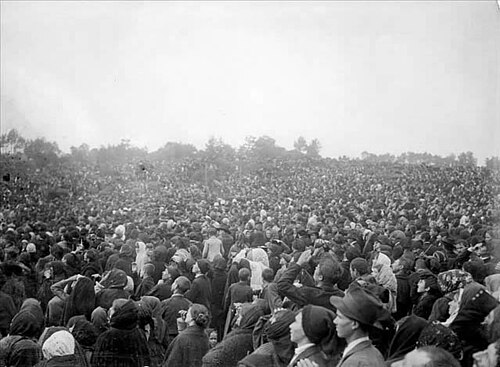
October 13 also recalls the Miracle of the Sun at Fatima in 1917. A great crowd had gathered for the promised sign. Witnesses described the sun appearing to spin, change color, and plunge toward the earth. At this final apparition, Our Lady identified herself as the Lady of the Rosary and called for daily prayer, amendment of life, and repentance for sin. The extraordinary sign draws our attention to a message we must live each day.
Let us respond to Our Lady with renewed faithfulness. Pray the Rosary. Examine the conscience honestly. Ask pardon for the sins we have excused or allowed to become familiar. Offer our daily sacrifices for the conversion of sinners, remembering that we, too, need conversion. A watchful heart allows God to show us what must change within our own lives.
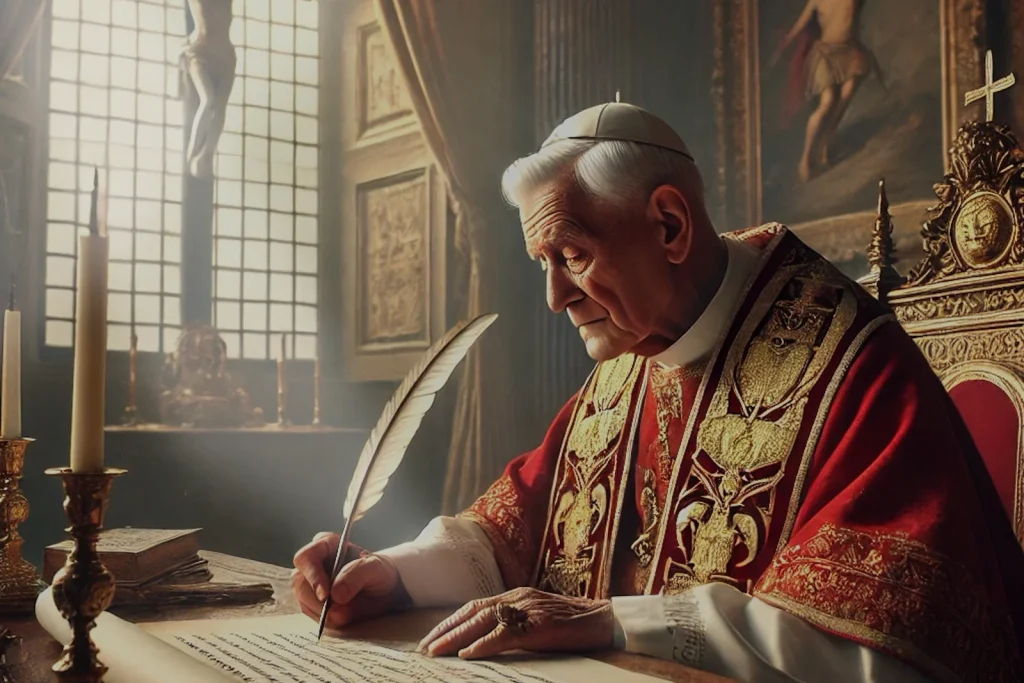
This date is also traditionally associated with a vision attributed to Pope Leo XIII on October 13, 1884. According to the account, he witnessed demonic powers attacking the Church and St. Michael intervening in her defense. The vision is associated with his prayer to St. Michael the Archangel. It reminds us to take the spiritual battle seriously and to seek God’s protection with confidence.
Our Lord has given us help for that battle. May He find us watching, with hearts tested by daily choices and strengthened by His grace.
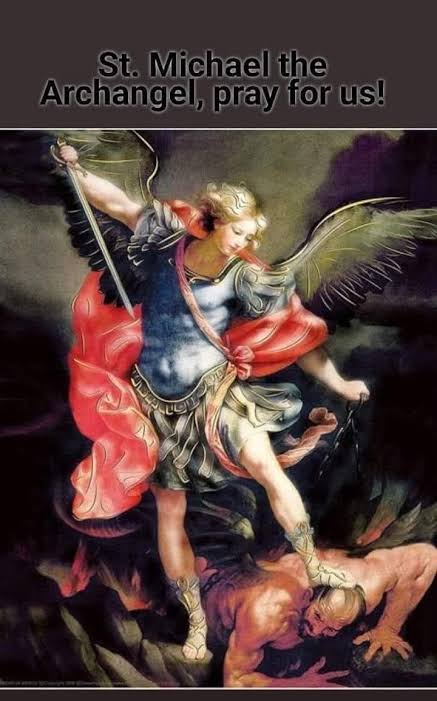
PRAYER TO ST. MICHAEL THE ARCHANGEL
Saint Michael the Archangel, defend us in battle. Be our protection against the wickedness and snares of the Devil. May God rebuke him, we humbly pray, and do thou, O Prince of the heavenly hosts, by the power of God, thrust into hell Satan, and all the evil spirits, who prowl about the world seeking the ruin of souls. Amen
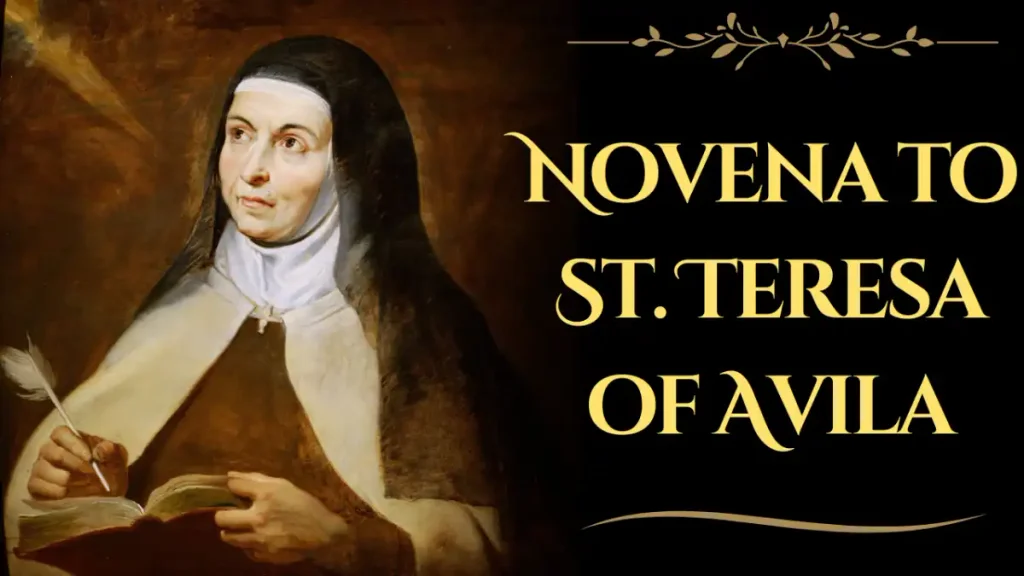
Pray this each day (October 6-14) leading up to the feast on October 15.
Daily novena prayer taken from the manual of prayers of the Carmelite Sisters
Eternal Father, by Your Holy Spirit, You raised up our peerless Mother, St. Teresa of Avila, to show Your Church the way to perfection. May her inspired teaching awaken in us a longing for true holiness. May these prayers of preparation for her feast keep us faithful to Christ and help us to work in the Church for the salvation of all mankind. Amen.
V. Holy Mother St. Teresa, look down from heaven and see.
R. Take care of this vine and protect what your right hand has planted.
(Here make your petition)
V. Let us pray:
(All) Lord, our God, watch over this religious family You nourish with the Bread from heaven. Help us to follow the example of our Holy Mother, St. Teresa, and sing Your merciful love forever. We ask this through Christ our Lord. Amen.
Novena | Day 8 (October 13)
“This Beloved of ours is merciful and good. Besides, He so deeply longs for our love that He keeps calling us to come closer.” – St. Teresa, Interior Castle
Dear Jesus, as You did for St. Teresa, grant us the gift of a great desire for heaven, possessing the Beloved eternally.
St. Teresa of Jesus, pray for us!
QUESTIONS FOR THE HEART

What would I want to put right if I knew I would meet Our Lord today?
When honesty or generosity costs me something, do I remain faithful to God?
How will I answer Our Lady’s call to prayer and amendment of life today?
A LITTLE POEM FOR THE JOURNEY
Lord, keep our lamps alight today,
And guide our hearts along Thy way.
When wealth or ease would draw us near,
Give us the grace to hold Thee dear.
O Mary, help us turn from sin,
And let thy Son’s sweet mercy in.
St. Michael, guard us through the night,
Till faith gives way to Heaven’s light.
“Blessed are those servants, whom the lord when he cometh, shall find watching.” (Luke 12:37)
STRENGTH TO PERSEVERE
FEAST OF OUR LADY OF THE PILLAR
Commemoration of St. Wilfrid, Bishop & Confessor
Day 7 of the Novena to St. Teresa of Avila
October 12, 2026
TODAY’S GOSPEL: John 4:46-53
EPISTLE: Ephesians 5:15-21
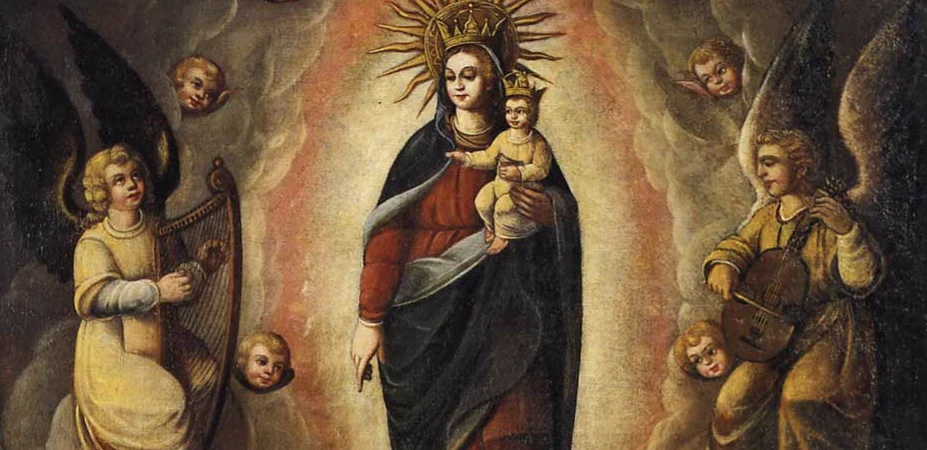
Today we honor Our Lady of the Pillar. We also remember St. Wilfrid, Bishop and Confessor.
In today’s Gospel, a royal official approaches Jesus because his son is dying in Capharnaum. Our Lord tells him that his son will live, and the father believes His word. When his servants meet him with news of the recovery, he learns that the fever left his child at the very hour Jesus spoke. The Gospel closes with a beautiful detail: he believed, together with his whole household.
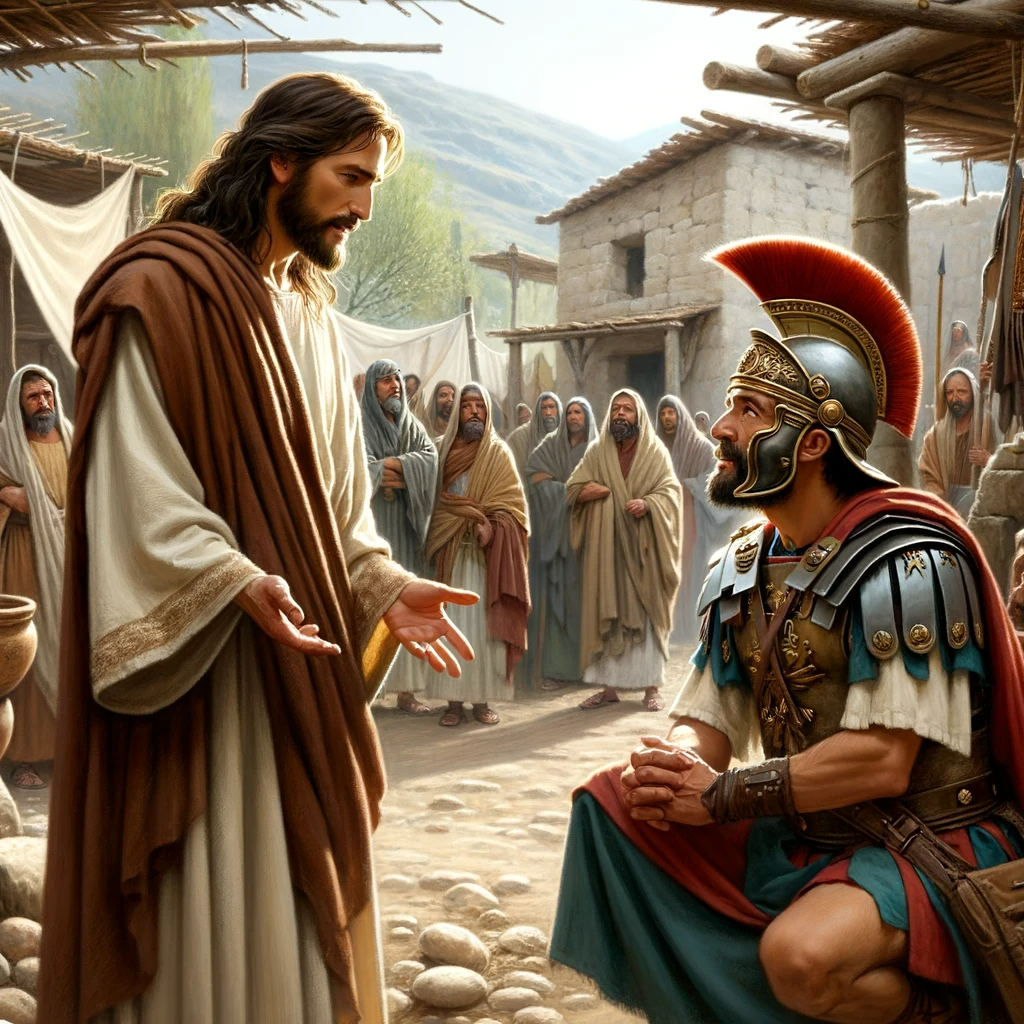
The father came seeking the life of his son. By the end of the account, faith had reached his entire household. The mercy of Jesus touched a family through the plea of one man who brought his sorrow to Our Lord.
Let us remember this when we pray for our families. Perhaps we carry concern for a child who has wandered from the Faith, a spouse who struggles to believe, or someone whose suffering has made prayer difficult. Bring that person before Jesus. Ask for healing, conversion, and the grace to recognize His mercy. Our own faithfulness can help those around us turn toward Him.
In the Epistle, St. Paul urges us to walk carefully, redeem the time, and seek to understand the will of God. He warns against drunkenness and calls the faithful to be filled with the Spirit, praising God and giving thanks. Our time is precious. Let us use it to strengthen the faith entrusted to us and to serve the souls God has placed in our care.
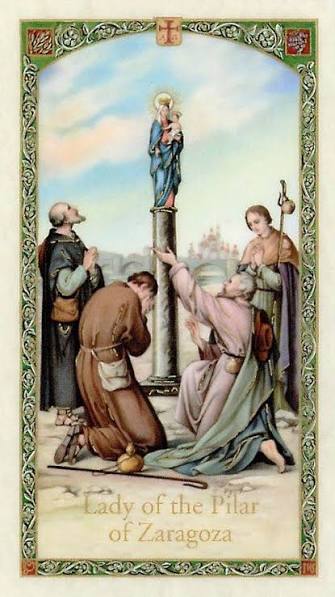
Today’s devotion to Our Lady of the Pillar brings special encouragement to those who feel weary in that work. According to ancient Spanish tradition, St. James the Greater was preaching the Gospel in Spain and had become discouraged by the small number of converts. Near the River Ebro at what is now Zaragoza, the Blessed Virgin appeared to him and his disciples upon a pillar. Remarkably, Mary was still living on earth at the time, before her Assumption. She came to encourage the apostle in the mission entrusted to him by her Son.
Our Lady asked that a church or small oratory be built at that place. When the vision ended, the pillar remained, and St. James and his disciples began the work she had requested. The jasper pillar, which is not native to that area, is still venerated in the Basilica of Our Lady of the Pillar in Zaragoza, where it is now encased in bronze and silver.
This cherished devotion long preceded its wider liturgical recognition. In 1730, Pope Clement XII authorized the celebration of the feast’s Office and Mass throughout Spain on October 12.
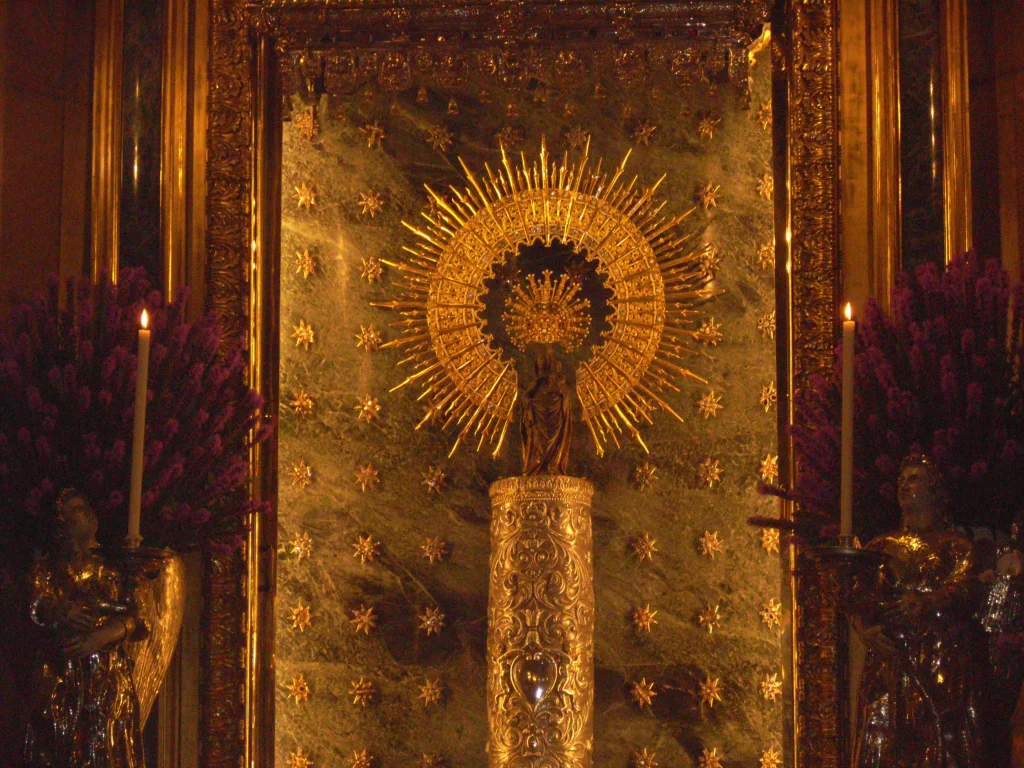
PRAYER TO OUR LADY OF THE PILLAR
Almighty and everlasting God, who through the glorious Mother of Thy Son hast granted heavenly protection for all who invoke her under the title of the Pillar: grant us, we beseech Thee, that through her intercession we may obtain firmness in faith, security in hope, and constant perseverance in charity. Through the same Lord Jesus Christ, Thy Son, Who liveth and reigneth with Thee in the unity of the Holy Ghost, God, world without end. Amen.
Novena to St. Teresa of Avila
Pray this each day (October 6-14) leading up to the feast on October 15.
Daily novena prayer taken from the manual of prayers of the Carmelite Sisters
Eternal Father, by Your Holy Spirit, You raised up our peerless Mother, St. Teresa of Avila, to show Your Church the way to perfection. May her inspired teaching awaken in us a longing for true holiness. May these prayers of preparation for her feast keep us faithful to Christ and help us to work in the Church for the salvation of all mankind. Amen.
V. Holy Mother St. Teresa, look down from heaven and see.
R. Take care of this vine and protect what your right hand has planted.
(Here make your petition)
V. Let us pray:
(All) Lord, our God, watch over this religious family You nourish with the Bread from heaven. Help us to follow the example of our Holy Mother, St. Teresa, and sing Your merciful love forever. We ask this through Christ our Lord. Amen.
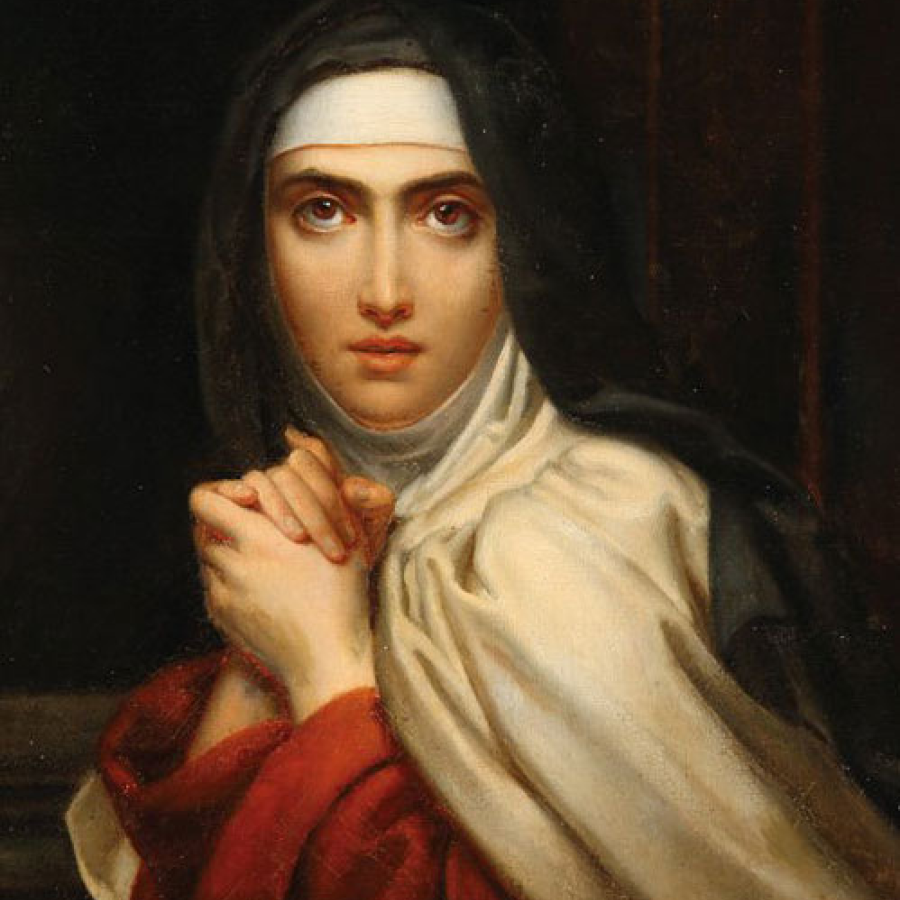
Novena | Day 7 (October 12)
“Grant, that our love may never be small, but always most ardent, like a great fire that cannot but shine brightly.” – St. Teresa
Dear Jesus, as You did for St. Teresa, grant us that our hearts, too, may be wounded with your Divine Love.
St. Teresa of Jesus, pray for us!
QUESTIONS FOR THE HEART
How does my example help those in my household grow closer to Jesus?
Where have I grown discouraged, and will I ask Our Lady of the Pillar to intercede for the strength to persevere?
How can I use today’s time more faithfully in prayer, duty, and charity?
A LITTLE POEM FOR THE JOURNEY
When weary hearts begin to tire,
Lord, stir in us love’s holy fire.
Receive the loved ones in our prayer,
And keep them in Thy tender care.
O Mother, help our faith stand strong,
When burdens press and days seem long.
Obtain for us the grace to stay
Close to thy Son throughout the way.
“And himself believed, and his whole house.” (John 4:53)
TRUSTING JESUS WITH THOSE WE LOVE
MATERNITY OF THE BLESSED VIRGIN MARY
Day 6 of the Novena to St. Teresa of Avila
October 11, 2026
TODAY’S GOSPEL: John 4:46-53
EPISTLE: Ephesians 5:15-21
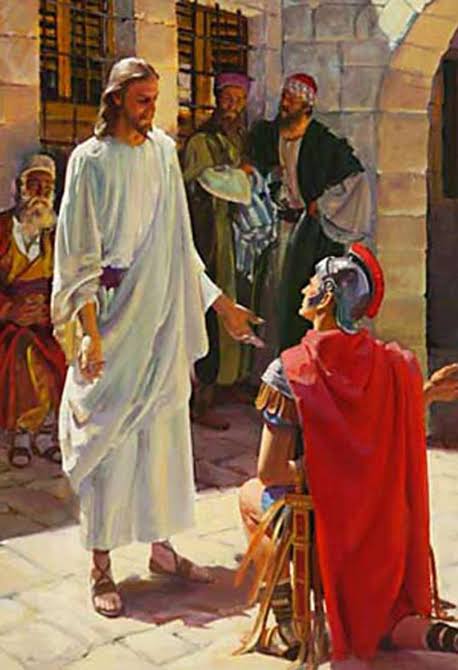
Today the Holy Church celebrates the Maternity of the Blessed Virgin Mary.
In today’s Gospel, a father who is a royal official comes to Jesus with an urgent plea. His son is dying in Capharnaum, and he begs Our Lord to come and heal him. Whatever position this royal official holds, he cannot rescue his child by his own authority. His sorrow brings him before the One who can give life. The official believed that Jesus must go to his son and touch him to heal him, but Jesus said to him – “unless you see signs and wonders, you believe not.”
Jesus lets him know that if faith relies solely on miracles, it is not sustainable. He asks the man to have faith beyond what he can see. Jesus says to him: “Go thy way; thy son liveth.” The man believes the word Jesus has spoken and begins his journey home. Before he has even received confirmation of the healing, he trusts the One who has promised it.
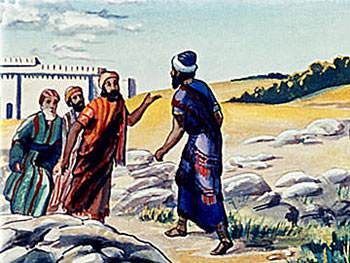
As he was going to his house, his servants met him, and they brought word, telling him that his son lived. When he asks about the hour of the recovery, he discovers that it occurred when Jesus spoke. The Gospel tells us that he believed, together with his whole household.
That journey home gives us much to consider. Can we continue faithfully when we have prayed but cannot yet see an answer? Can we resist the temptation to measure God’s care by our immediate circumstances? Faith rests upon God’s truth and goodness. It teaches us to obey Him even while our hearts are troubled and the outcome remains hidden.
In the Epistle, St. Paul charges them to walk with care. Because the world they live in is evil, they must be wise, avoid drunkenness, and use their time seeking to understand the will of God. The world today, as then, is full of moral traps, temptations, and a hatred for the Word of God. We must take this warning seriously now as well, to walk with great care.
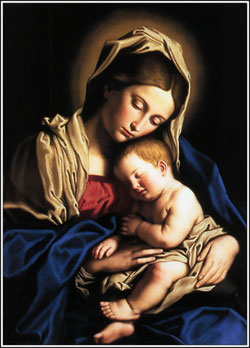
We honor today the Maternity of the Blessed Virgin Mary. Her title, Mother of God, expresses the truth about her Son. Jesus Christ is the eternal Son of the Father, who assumed our human nature. Mary truly bore Him according to His humanity. Because her Son is God, she is rightly called the Mother of God. His divinity has no beginning; His human life began in the womb.
Mary’s virginity and motherhood reveal the marvelous work of God. By the power of the Holy Spirit, she conceived Our Savior. With humble faith, she accepted the vocation entrusted to her. Her motherhood unfolded through the ordinary care of the Child Jesus and through the extraordinary sorrows that brought her to the foot of His Cross.
Novena to St. Teresa of Avila
Pray this each day (October 6-14) leading up to the feast on October 15.
Daily novena prayer taken from the manual of prayers of the Carmelite Sisters
Eternal Father, by Your Holy Spirit, You raised up our peerless Mother, St. Teresa of Avila, to show Your Church the way to perfection. May her inspired teaching awaken in us a longing for true holiness. May these prayers of preparation for her feast keep us faithful to Christ and help us to work in the Church for the salvation of all mankind. Amen.
V. Holy Mother St. Teresa, look down from heaven and see.
R. Take care of this vine and protect what your right hand has planted.
(Here make your petition)
V. Let us pray:
(All) Lord, our God, watch over this religious family You nourish with the Bread from heaven. Help us to follow the example of our Holy Mother, St. Teresa, and sing Your merciful love forever. We ask this through Christ our Lord. Amen.
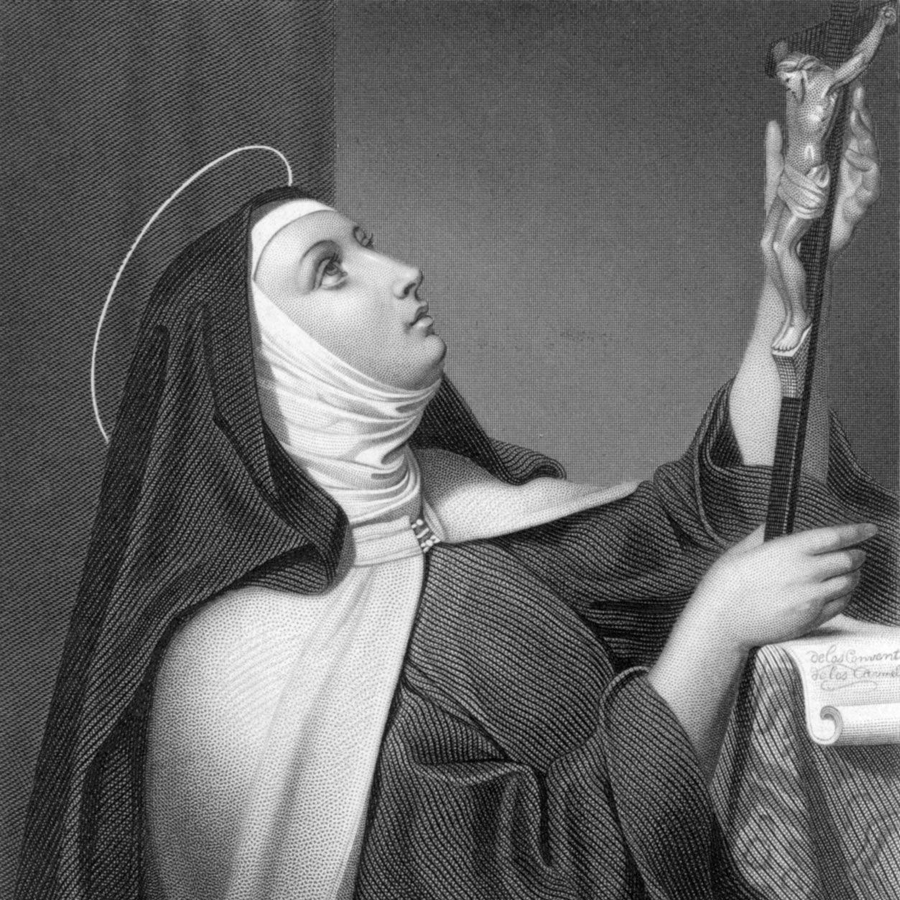
Novena | Day 6 (October 11)
“I am quite sure that if we could but once approach the Most Holy Sacrament with great faith and love, it would suffice to make us rich. How much more so if we approach it often!” – St. Teresa
Dear Jesus, as You did for St. Teresa, increase in us the gift of faith, especially in the Most Blessed Sacrament!
St. Teresa of Jesus, pray for us!
QUESTIONS FOR THE HEART
Do I trust the word of Jesus when I cannot yet see the answer to my prayers?
How can I use today’s time more faithfully in prayer, duty, and charity?
Will I entrust someone I love to the maternal intercession of the Blessed Virgin Mary today?
A LITTLE POEM FOR THE JOURNEY
I bring to Thee the ones I love,
And seek Thy mercy from above,
When answers hide beyond my sight,
Lord, lead me onward in Thy light.
O Mother, hear my humble plea,
And bring my loved ones close to Thee,
Teach us to trust thy Son each day,
And follow where He leads the way.
“The man believed the word which Jesus said to him, and went his way.” (John 4:50)
WHAT IS MY REWARD?
FEAST OF ST. FRANCIS BORGIA, CONFESSOR
Day 5 of the Novena to St. Teresa of Avila
October 10, 2026
TODAY’S GOSPEL: Matthew 19:27-29
EPISTLE: Ecclesiasticus 45:1-6
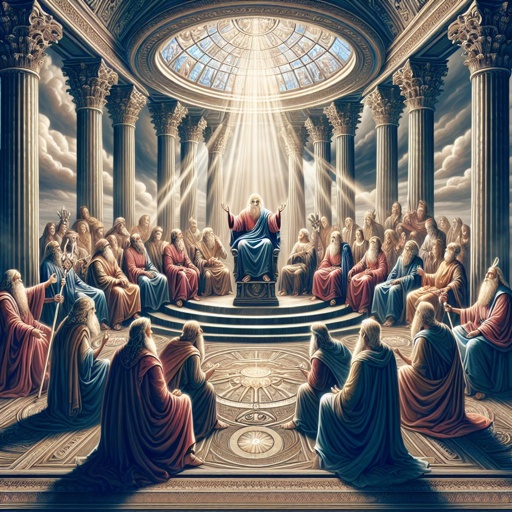
In today’s Gospel, Peter asks Jesus what their reward will be because they have left everything to follow Him. Jesus gives an astonishing answer: when the Son of Man sits upon the throne of His glory, those who have followed Him will sit upon twelve thrones, judging the twelve tribes of Israel. He also promises that those who have made sacrifices for His name will receive a hundredfold and inherit eternal life. Their sacrifices are seen by God, even when the world cannot understand them.
Not all of us get to see the rewards of our labor in faith. At times, it can seem like a thankless journey. We pray for someone who continues to turn away. We try to live faithfully and encounter ridicule or misunderstanding. We choose to keep God’s commandments when doing so costs us something we dearly want. The temptation is to ask whether our efforts are making any difference.
Peter’s question brings that concern before Jesus. Our Lord does not rebuke him for hoping in His promises. He directs his eyes toward eternity. We may not see the fruit of our prayers today, but we can trust the One to whom we have offered them.
Following Jesus requires surrender, but that surrender takes its proper form within our vocation. A husband or wife serves Christ through fidelity to marriage and care for the family. A priest or religious follows Him through the duties and sacrifices of that calling. Each of us must relinquish whatever keeps us from loving God above all things: sin, pride, resentment, or an attachment we refuse to place in His hands.
We do not earn Heaven by our own strength. Salvation is God’s gift, won for us by Jesus Christ. Yet His grace calls for our free cooperation. Through prayer, the sacraments, obedience, and works of charity, we respond to that grace. Even our smallest faithful acts can bear fruit when offered to God in union with Christ.
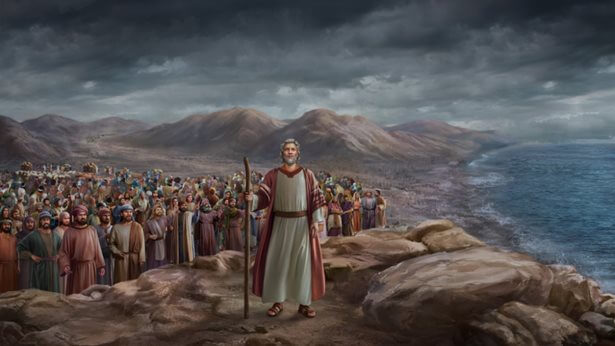
Today’s Epistle presents Moses as a man beloved by God, chosen for his faithfulness and meekness. God entrusted him with His commandments so that he might teach His people. His greatness came from belonging to God and serving the work entrusted to him. That same lesson reaches into our lives: holiness grows through faithful obedience, often in duties that attract little attention.
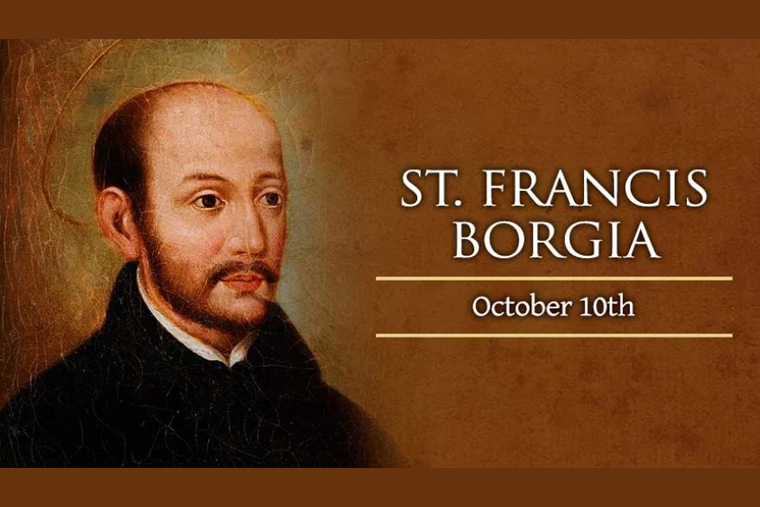
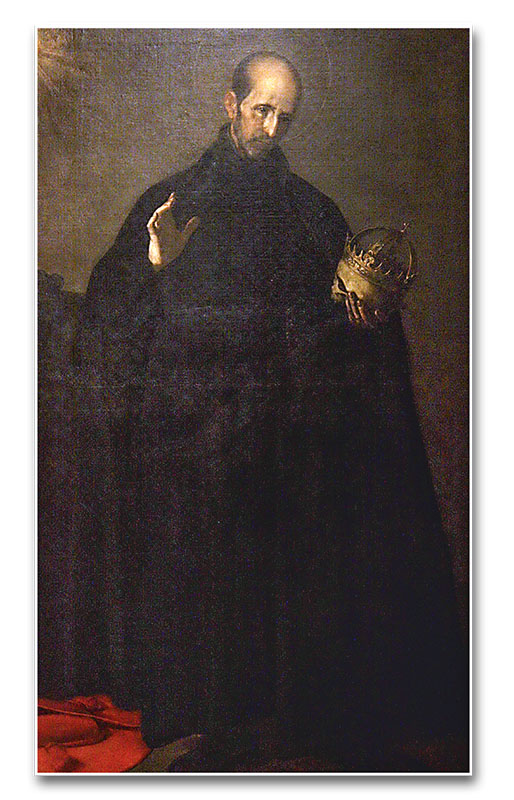
St. Francis Borgia knew the honors and responsibilities of earthly life. A Spanish nobleman, husband, and father of eight children, he served at the imperial court and became Duke of Gandia. After his wife’s death, and after providing for his children, he relinquished his worldly position to enter the Society of Jesus. He eventually became its third Superior General, placing his abilities at the service of the Church and her missions.
His life gives us a concrete answer to Peter’s question. Wealth and distinction could not satisfy his desire for God. He fulfilled his responsibilities, then answered the further call God placed before him. We may never be asked to surrender a title or a fortune, but we can ask whether we are willing to surrender our own plans when God calls us to something different.
Our reward will not always appear as comfort, recognition, or success. Sometimes the present fruit is a deeper trust in God, a more patient heart, or the strength to remain faithful through suffering. Our final hope is eternal life with Him. Let us ask for the grace to persevere until the end.
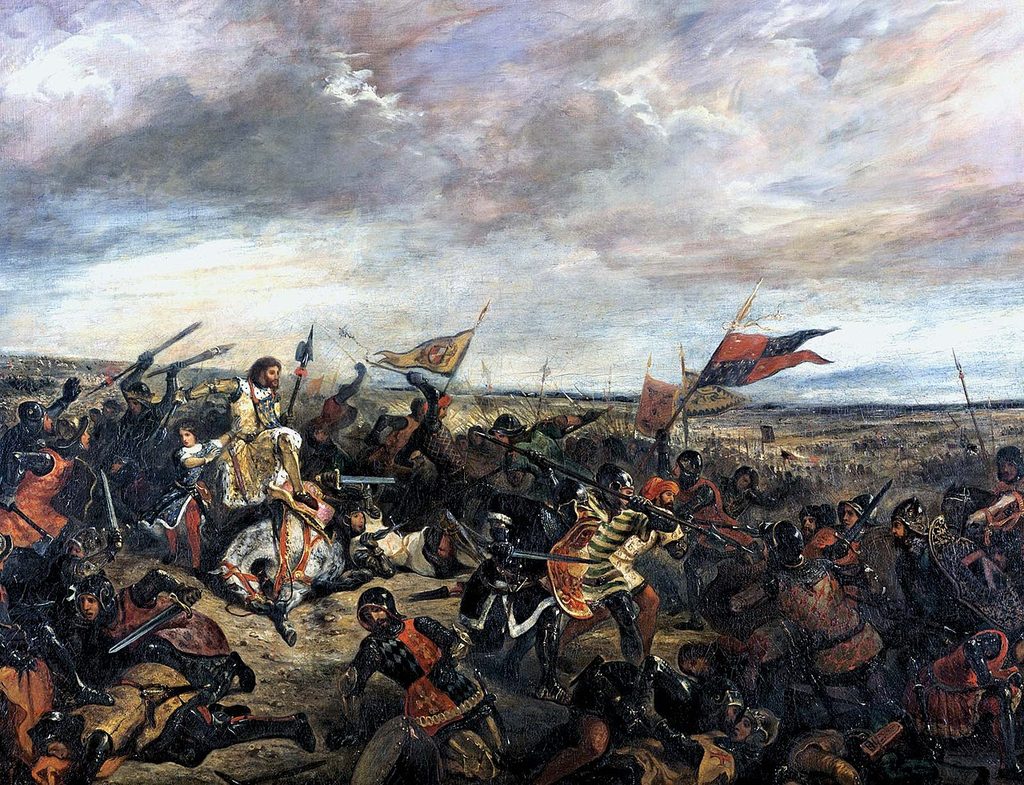
We recall the Battle of Poitiers, known as the Battle of Tours, fought in October 732. We recount Charles Martel’s victory over the invading army near Tours, an important event in the history of Christian Europe. This remembrance gives us an occasion to thank God for the gift of our Faith and to pray for Christians facing persecution, for the protection of their communities, and for peace founded upon truth and justice.
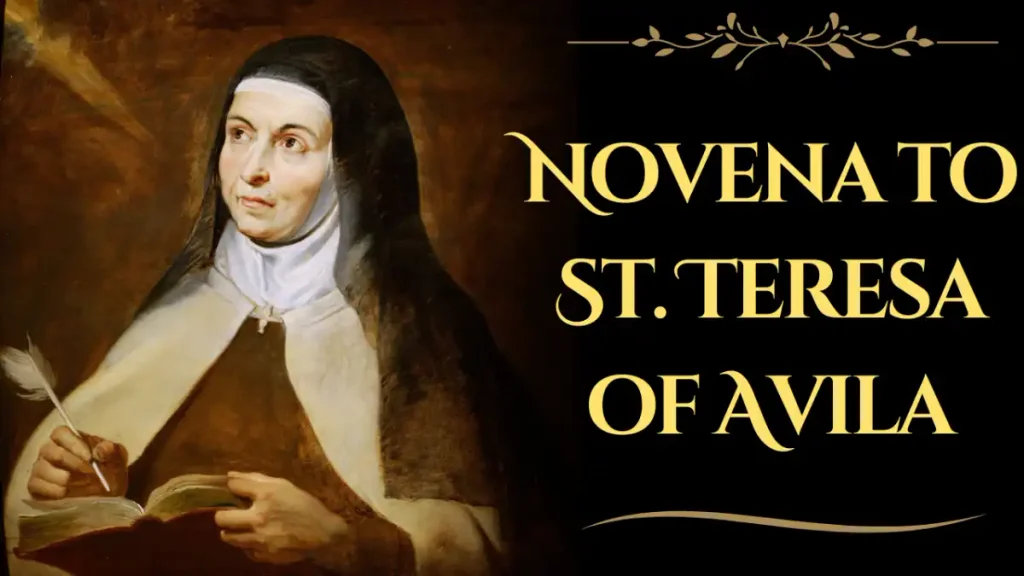
Novena to St. Teresa of Avila
Pray this each day (October 6-14) leading up to the feast on October 15.
Daily novena prayer taken from the manual of prayers of the Carmelite Sisters
Eternal Father, by Your Holy Spirit, You raised up our peerless Mother, St. Teresa of Avila, to show Your Church the way to perfection. May her inspired teaching awaken in us a longing for true holiness. May these prayers of preparation for her feast keep us faithful to Christ and help us to work in the Church for the salvation of all mankind. Amen.
V. Holy Mother St. Teresa, look down from heaven and see.
R. Take care of this vine and protect what your right hand has planted.
(Here make your petition)
V. Let us pray:
(All) Lord, our God, watch over this religious family You nourish with the Bread from heaven. Help us to follow the example of our Holy Mother, St. Teresa, and sing Your merciful love forever. We ask this through Christ our Lord. Amen.
Novena | Day 5 (October 10)
“There is more value in a little study of humility and in a single act of it than in all the knowledge of the world.” – St. Teresa
O Jesus, meek and humble of Heart, as You granted for St. Teresa, give us the true gift of humility.
St. Teresa of Jesus, pray for us!
QUESTIONS FOR THE HEART
Do I turn to prayer when my faith leads to misunderstanding or judgment from others?
Do I ask Jesus for perseverance when I struggle to see the fruits of my labor?
The saints trusted Christ’s promise of eternal life. What helps me hold firmly to that promise when following Him is costly?
A LITTLE POEM FOR THE JOURNEY
When faithful work seems all in vain,
And prayer is offered through the pain,
Lord, keep my eyes fixed fast on Thee,
And on the life I cannot see.
Receive the little I can give,
Teach me each day for Thee to live,
Through every cross, Thy grace impart,
Till Thou alone dost fill my heart.
“Be thou faithful until death: and I will give thee the crown of life.” (Apocalypse 2:10)
THE SALVATION OF SOULS
FEAST OF ST. JOHN LEONARDI, PRIEST
Commemoration of St. Dionysius, Bishop, and His Companions, Martyrs
Day 4 of the Novena to St. Teresa of Avila
October 9, 2026
TODAY’S GOSPEL: Luke 10:1-9
EPISTLE: 2 Corinthians 4:1-6 , 4:15-18
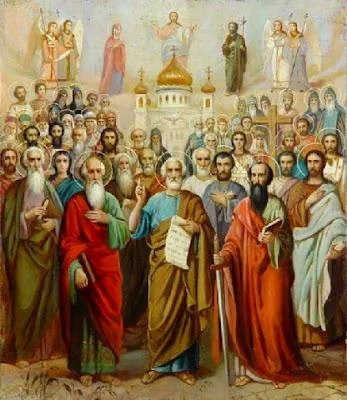
Today, as we honor St. John Leonardi and commemorate St. Dionysius and his companions, we consider the work of bringing souls to Christ. The Gospel calls us to pray for laborers in the Lord’s harvest, while the Epistle encourages us to serve faithfully without losing heart. As we continue our novena to St. Teresa of Avila, we ask for renewed trust in Jesus and the determination to love Him above all things.
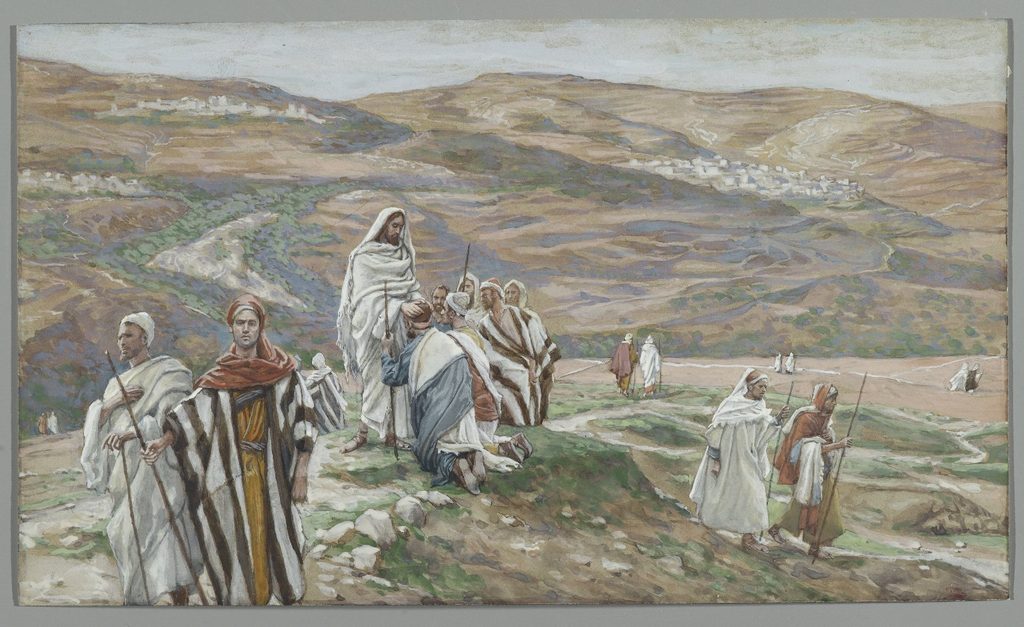
In the Gospel, Jesus appoints seventy-two disciples and sends them ahead of Him, two by two, into the towns and places He intends to visit. Their task is to prepare others to receive Him. He tells them that the harvest is great, but the laborers are few, and directs them to pray that the Lord of the harvest will send workers into His harvest.
This is a prayer we can make our own. We can ask God to raise up holy priests, faithful religious, and missionaries willing to bring the Gospel wherever He sends them. We can pray especially for young people discerning their vocation, that they may hear His call clearly and have the courage to answer. Those already serving also need our prayers, encouragement, and practical support.
Jesus sends His disciples as lambs among wolves. They must travel simply, depend upon the hospitality offered them, and remain attentive to their mission. His instruction to greet no one along the way emphasizes the urgency of their work. They are to bring peace to the homes they enter, heal the sick, and announce that the Kingdom of God has drawn near.
We, too, can help prepare someone to receive Jesus. A sincere invitation to Mass, a patient answer to a question about the Faith, or an offer to accompany someone returning to Confession may open a door. Sometimes the opportunity begins with listening carefully to a person who is lonely, troubled, or uncertain. We should ask the Holy Spirit to help us recognize these moments and respond with kindness and truth.
Before we speak to others about Jesus, we need to spend time with Him ourselves. A visit to the Blessed Sacrament gives us an opportunity to place the people we love before Him and ask how He wishes us to serve them.
In the Epistle, St. Paul describes a ministry received through God’s mercy. He rejects deceit and the distortion of God’s word. His preaching directs people to Jesus Christ as Lord, and he presents himself as their servant for Jesus’ sake. The light he brings comes from God, and shines in his heart.
This gives us a clear guide for sharing the Faith. We must receive the Church’s teaching faithfully, take care with our words, and be willing to learn when we do not know an answer. Our conduct should support what we say. People should find honesty, humility, and charity in those who speak to them of Christ.
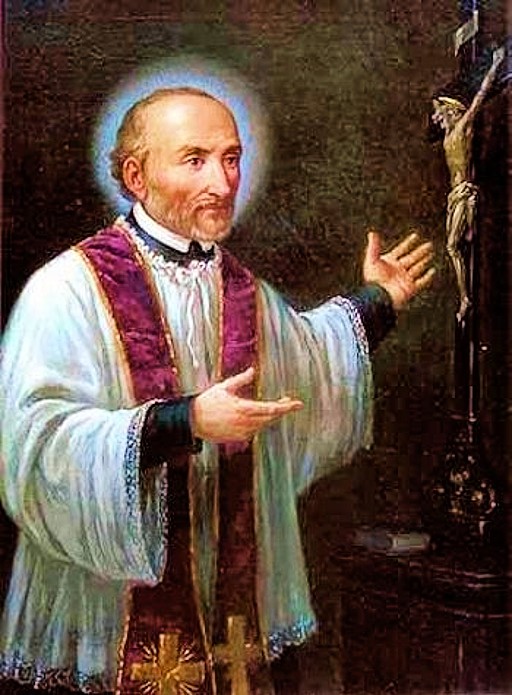
St. John Leonardi devoted his life to helping others know and follow Christ. Born near Lucca, Italy, in 1541, he trained as an apothecary before preparing for the priesthood. His concern for healing found its deepest expression in bringing people to Jesus, the Crucified and Risen Lord.
He worked zealously to teach the Faith, especially to children. In 1574, he founded the community that became the Clerics Regular of the Mother of God. He also labored for renewal within the Church. His charity continued to the end. While ministering to people suffering during an epidemic in Rome, he contracted influenza and died in 1609. His life reminds us that concern for souls must become personal: teaching the young, caring for the suffering, and giving ourselves generously to the people God places before us.
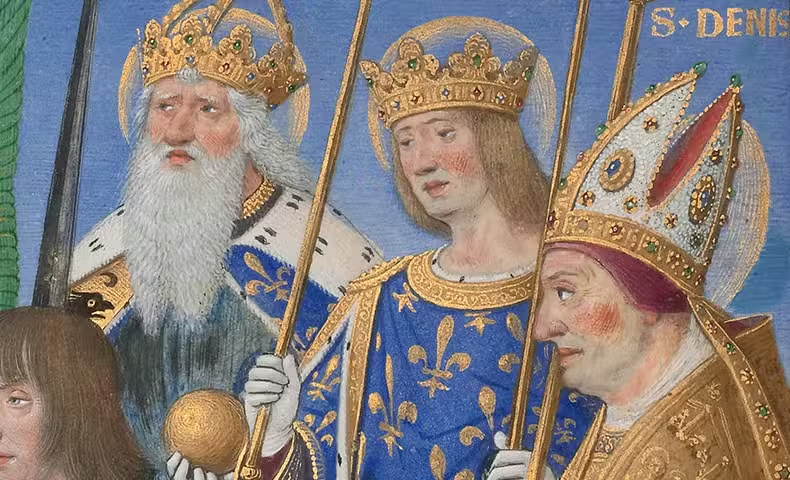
We also commemorate St. Dionysius, known as St. Denis, the first bishop of Paris, and his companions, St. Rusticus, a priest, and St. Eleutherius, a deacon. These missionaries proclaimed Christ in Gaul and suffered martyrdom by beheading. Their witness belongs to the early centuries of the Church.
Their fidelity helps us understand St. Paul’s confidence in the things that are eternal. They entrusted their lives to Christ even when doing so brought suffering and death. Through their intercession, may we have courage when our own faithfulness is tested and a greater love for those who still need to hear the Gospel.
Novena to St. Teresa of Avila
Pray this each day (October 6-14) leading up to the feast on October 15.
Daily novena prayer taken from the manual of prayers of the Carmelite Sisters
Eternal Father, by Your Holy Spirit, You raised up our peerless Mother, St. Teresa of Avila, to show Your Church the way to perfection. May her inspired teaching awaken in us a longing for true holiness. May these prayers of preparation for her feast keep us faithful to Christ and help us to work in the Church for the salvation of all mankind. Amen.
V. Holy Mother St. Teresa, look down from heaven and see.
R. Take care of this vine and protect what your right hand has planted.
(Here make your petition)
V. Let us pray:
(All) Lord, our God, watch over this religious family You nourish with the Bread from heaven. Help us to follow the example of our Holy Mother, St. Teresa, and sing Your merciful love forever. We ask this through Christ our Lord. Amen.
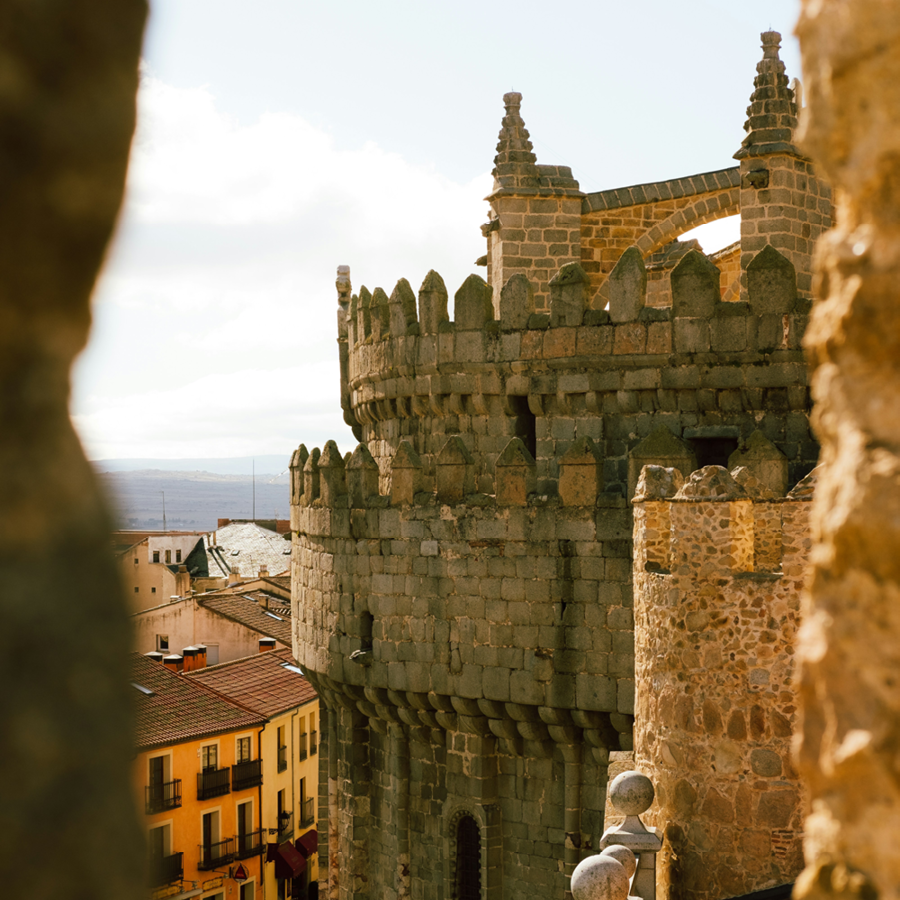
Novena | Day 4 (October 9)
When I was in this terrible state of exhaustion… these words alone were sufficient to remove it and give me complete tranquility: ‘Be not afraid, daughter, for it is I and I will not abandon you: fear not.’” – St. Teresa
Dear Jesus, grant us a great desire and determination to love You above all things like St. Teresa did.
St. Teresa of Jesus, pray for us!
QUESTIONS FOR THE HEART
Which priest, religious, or missionary will I remember by name in prayer today?
Who might welcome an invitation to Mass, a conversation about the Faith, or my patient companionship?
Will I spend time before the Blessed Sacrament, entrusting a soul to Jesus and asking how He wishes me to help?
A LITTLE POEM FOR THE JOURNEY
O Jesus, let Your light shine through
The little things I say and do,
For souls who have not heard Your call,
Give me a love that offers all.
When weary hours obscure the way,
Renew my heart from day to day.
“For we preach not ourselves, but Jesus Christ our Lord.” (2 Corinthians 4:5)
THE VALUE OF HEAVEN
FEAST OF ST. BRIDGET OF SWEDEN, WIDOW
Commemoration of Saints Sergio, Baccho, Marcello, and Apulejo, Martyrs
Day 3 of the Novena to St. Teresa of Avila
October 8, 2026
TODAY’S GOSPEL: Matthew 13:44-52
EPISTLE: I Timothy 5:3-10
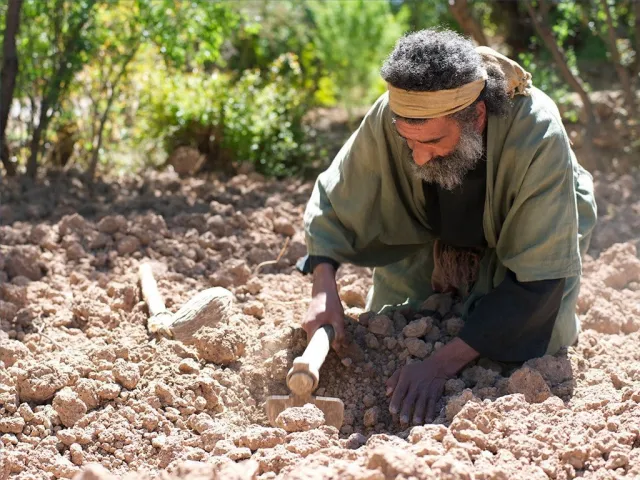
Today, as we honor St. Bridget of Sweden, Jesus invites us to consider the priceless treasure of His Kingdom. We also commemorate Saints Sergio, Baccho, Marcello, and Apulejo, who remained faithful to Christ even unto death. As we continue our novena to St. Teresa of Avila, we ask for greater charity and the grace to love God above all things.
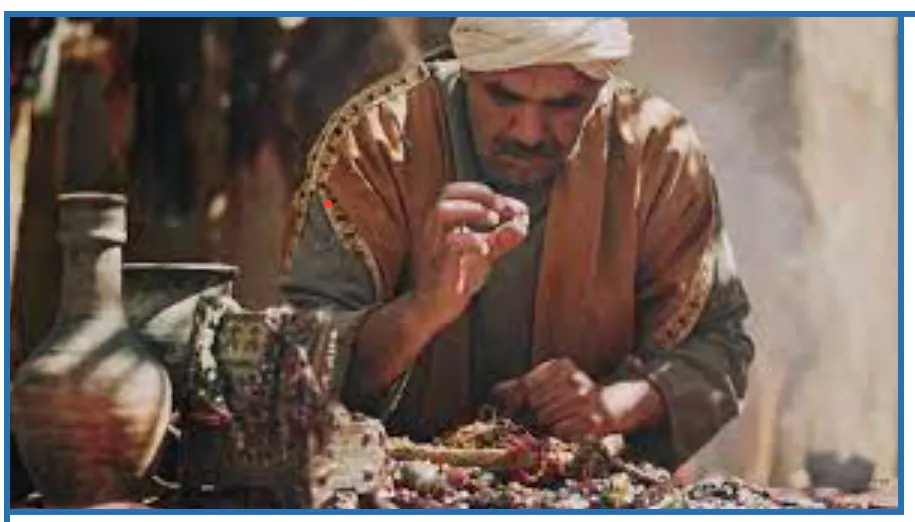
In the Gospel, Jesus compares the Kingdom of Heaven to a treasure hidden in a field. A man discovers it and, filled with joy, sells all that he has to buy that field. Jesus then describes a merchant seeking beautiful pearls. When he finds one pearl of great price, he sells everything he possesses to obtain it. Both men recognize something so precious that they willingly surrender everything else to make it their own.
These parables invite us to examine what we treasure most. Eternal life with God is worth every sacrifice that faithfulness to Him requires. His grace is a gift we could never purchase, yet receiving that gift calls for a willing response. We must turn away from sin, surrender whatever draws us away from Him, and allow His love to order our lives. The joy of finding the treasure helps us understand why the saints could give so generously: they knew the worth of the One they loved.

The third parable brings a solemn warning. A net cast into the sea gathers fish of every kind. When it is full, the fishermen keep the good and cast away the bad. Jesus explains that at the end of the world, the angels will separate the wicked from the just. He speaks plainly of the furnace of fire, where there will be weeping and gnashing of teeth. His words remind us that judgment is real and that our response to God has eternal consequences.
We should receive this warning with humility, repentance, and trust in God’s mercy. Today, He gives us time to return to Him. If we have fallen into serious sin, we can seek His forgiveness in the Sacrament of Penance. If we have grown careless in prayer or charity, we can begin again. Let us ask for the grace to persevere in His friendship until the end of our lives.
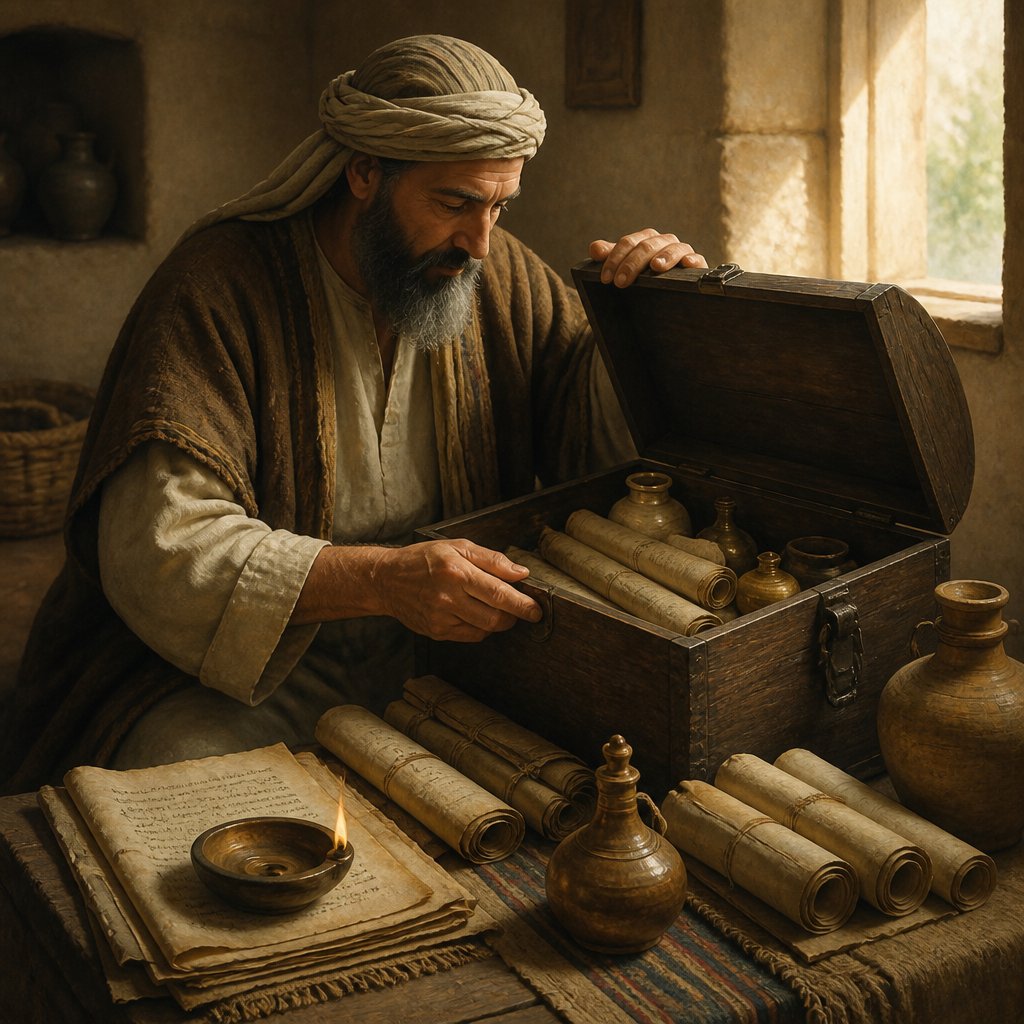
Jesus then asks His disciples whether they have understood these things. He compares the scribe instructed in the Kingdom of Heaven to a householder who brings forth treasures both new and old. The promises and teachings of the Old Testament find their fulfillment in Christ. As we listen to His word, we too are called to receive this treasury of truth faithfully and let it bear fruit in our daily lives.
In the Epistle, St. Paul directs the Church to honor widows who are truly in need. He also reminds children and grandchildren of their responsibility to care for their own families. Faith must shape the way we treat those entrusted to us. An elderly parent, a widowed relative, or someone left alone may need practical assistance, patient companionship, and the reassurance that they have not been forgotten.
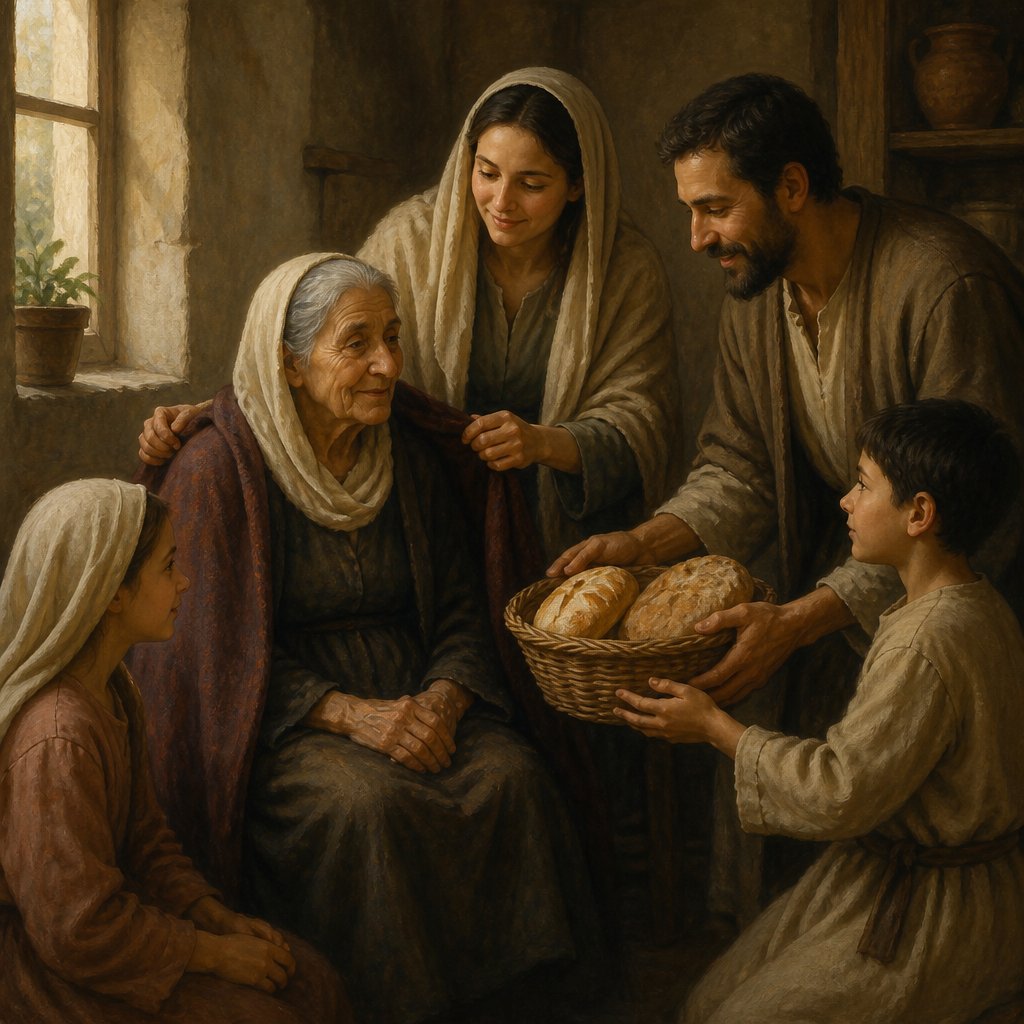
St. Paul describes the faithful widow as one who places her hope in God and perseveres in prayer. He also speaks of a life marked by good works: raising children, offering hospitality, serving the faithful, and relieving the afflicted. These ordinary acts of charity help us see how love for God becomes visible in service to our neighbor. Our daily duties can become offerings of love when we carry them out for Him.
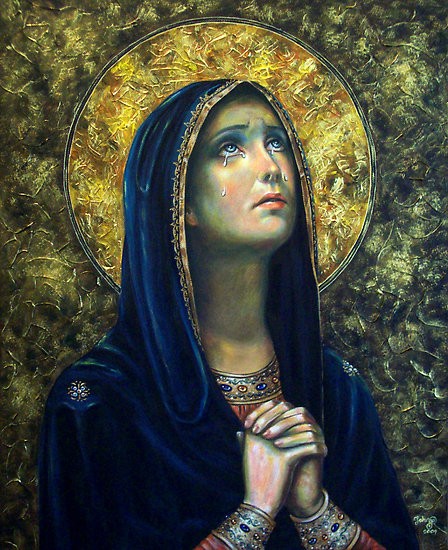
St. Bridget of Sweden lived this charity as a wife and mother of eight children. With her husband, Ulf, she practiced prayer and works of mercy, caring for the poor and sick. Her daughter Catherine is also honored as a saint. Bridget’s life reminds us that family responsibilities provide daily opportunities to grow in holiness.
After her husband’s death, Bridget devoted herself more deeply to prayer, penance, and service. She received extraordinary mystical graces and founded the Order of the Most Holy Savior, known as the Bridgettines. In Rome, she urged the popes residing at Avignon to return to the See of Peter and called for renewal in the Church. She died in 1373, before the pope’s definitive return. Her example teaches us to fulfill the work God gives us with patience, leaving its final fruits in His hands.
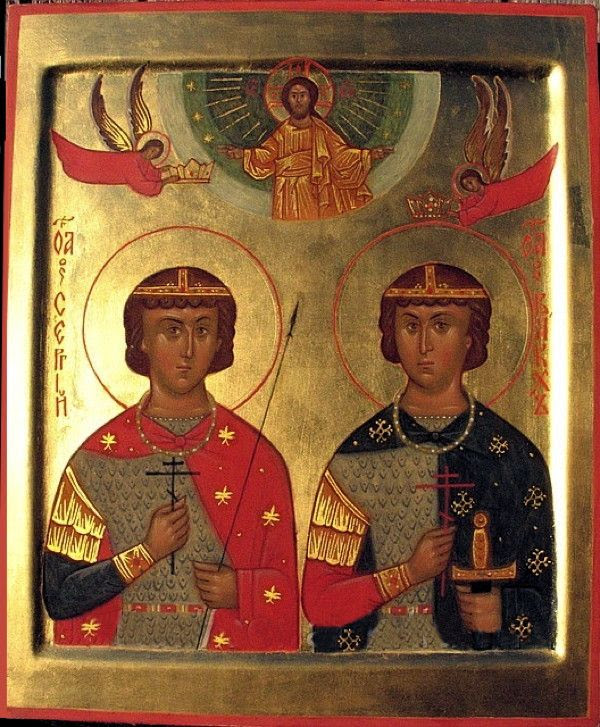
Today we also commemorate Saints Sergio, Baccho, Marcello, and Apulejo. Sergio and Baccho suffered martyrdom in the East; Marcello and Apulejo are remembered as martyrs at Rome. Together, these witnesses remind us that fidelity to Christ is more precious than earthly security or even life itself.
Their witness brings us back to the treasure and the pearl. When faithfulness becomes costly, do we still recognize the worth of belonging to Christ? We may be called to defend the truth, resist temptation, forgive an injury, or fulfill a difficult duty. Each day offers opportunities to choose Him. Through the intercession of today’s saints, may we recognize these opportunities and respond with courage and love.
Novena to St. Teresa of Avila
Pray this each day (October 6-14) leading up to the feast on October 15.
Daily novena prayer taken from the manual of prayers of the Carmelite Sisters
Eternal Father, by Your Holy Spirit, You raised up our peerless Mother, St. Teresa of Avila, to show Your Church the way to perfection. May her inspired teaching awaken in us a longing for true holiness. May these prayers of preparation for her feast keep us faithful to Christ and help us to work in the Church for the salvation of all mankind. Amen.
V. Holy Mother St. Teresa, look down from heaven and see.
R. Take care of this vine and protect what your right hand has planted.
(Here make your petition)
V. Let us pray:
(All) Lord, our God, watch over this religious family You nourish with the Bread from heaven. Help us to follow the example of our Holy Mother, St. Teresa, and sing Your merciful love forever. We ask this through Christ our Lord. Amen.
Novena | Day 3 (October 8)
“Accustom yourself continually to make many acts of love, for they enkindle and melt the soul.” St. Teresa
Dear Jesus, increase our charity as You did in St. Teresa. Teach us to love You above all things and our neighbor for love of You. Amen.
St. Teresa of Jesus, pray for us!
QUESTIONS FOR THE HEART
What attachment is keeping me from seeking God’s Kingdom with my whole heart?
Who in my family or community needs my care, companionship, or practical help today?
What act of love will I offer Jesus today, especially when faithfulness requires a sacrifice?
A LITTLE POEM FOR THE JOURNEY
O Jesus, treasure of my heart,
Your grace to me each day impart.
When lesser things would draw me near,
Help me to hold Your kingdom dear.
In those who need my loving care,
Teach me to serve and find You there.
“For where thy treasure is, there is thy heart also.” (Matthew 6:21)
BE IT DONE TO ME ACCORDING TO YOUR WORD
FEAST OF OUR LADY OF THE ROSARY
Commemoration of St. Mark I, Pope and Confessor
Day 2 of the Novena to St. Teresa of Avila
October 7, 2026
TODAY’S GOSPEL: Luke 1:26-38
EPISTLE: Proverbs 8:22-24, 32-35
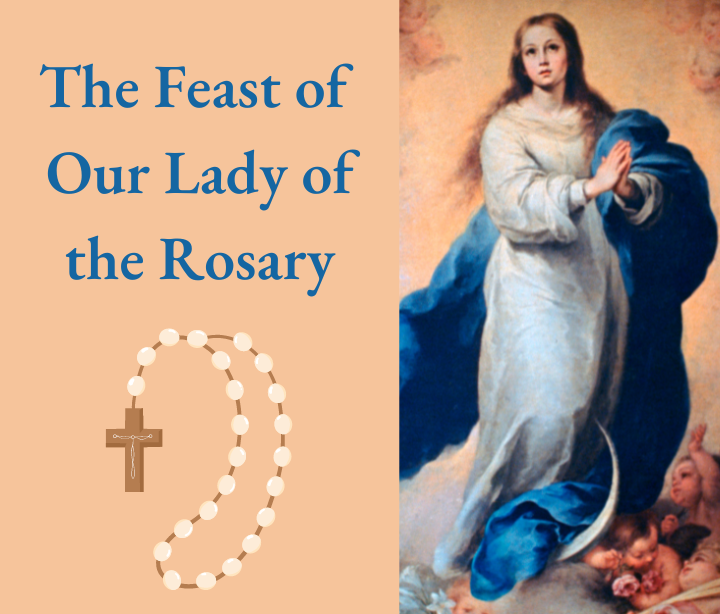
Today, as we honor Our Lady of the Rosary, the Gospel brings us to the Annunciation, the first Joyful Mystery. We behold Mary listening to the message of an angel and offering herself completely to God. As we commemorate St. Mark I and continue our novena to St. Teresa of Avila, we ask for hearts ready to listen, willing to obey, and steadfast in prayer.
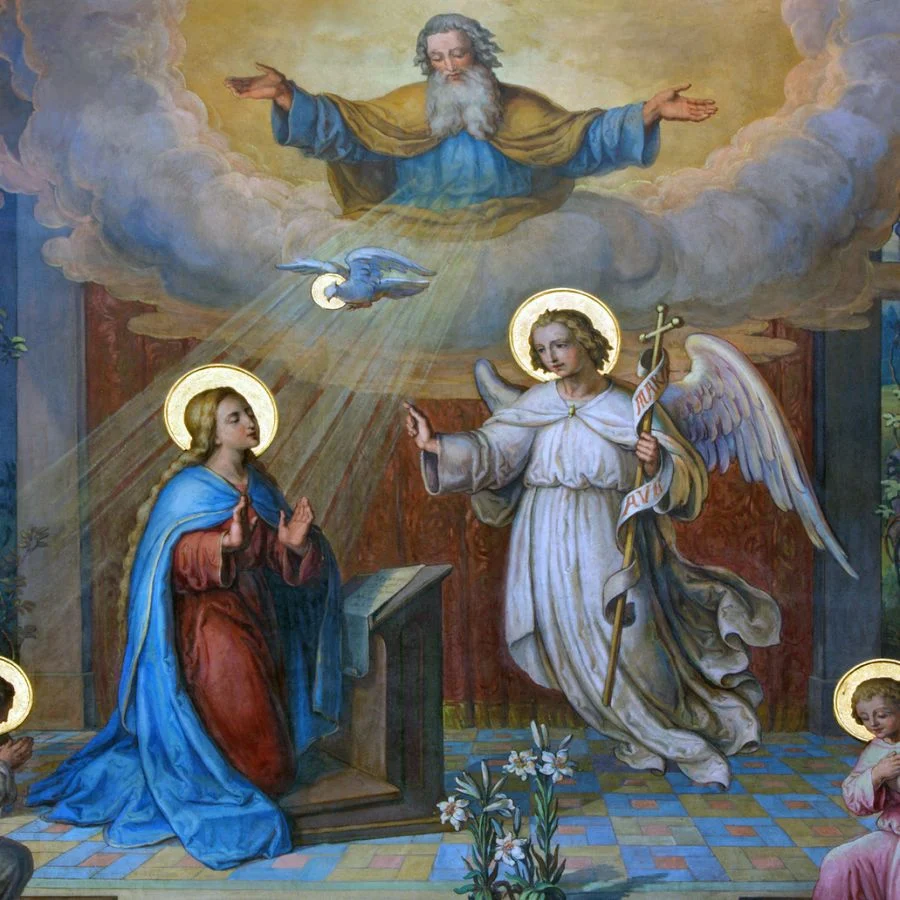
In the Gospel, the angel Gabriel is sent by God to Nazareth, to a virgin named Mary, betrothed to Joseph. He greets her as full of grace and announces that she will conceive a Son whom she is to name Jesus. This Child will be called the Son of the Most High, and His kingdom will have no end. In this humble place, God reveals the fulfillment of His promise: the Savior is coming into the world.
Mary asks how this will happen, since she has known no man. Gabriel explains that the Holy Spirit will come upon her and the power of the Most High will overshadow her. The Child to be born will be holy, the Son of God. The angel also tells her that Elizabeth, once called barren, has conceived a son in her old age. Nothing is impossible with God.
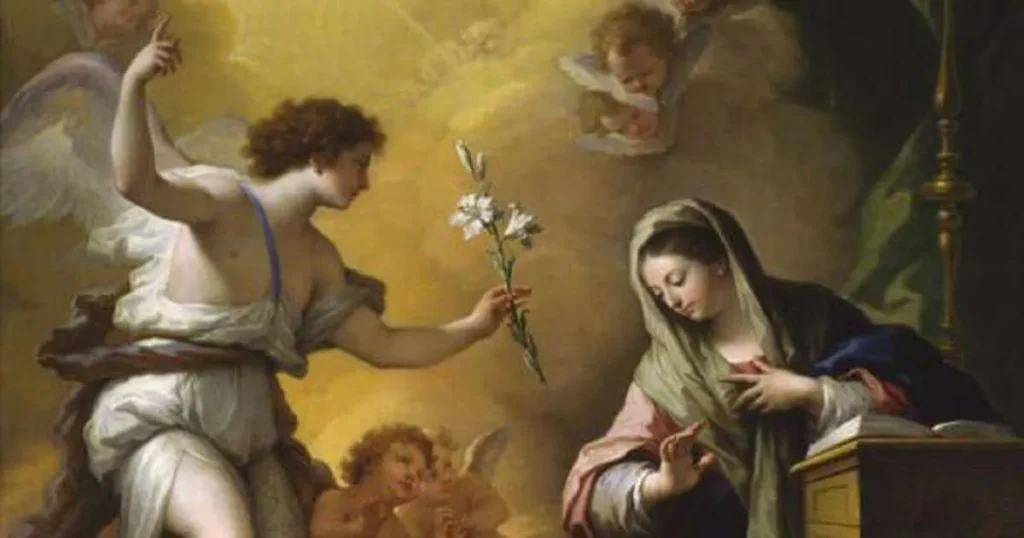
Mary responds with her fiat, her loving consent: “Behold the handmaid of the Lord; be it done to me according to thy word.” She does not know every sorrow or sacrifice that lies ahead, but she trusts the One who calls her. By the power of the Holy Spirit, the eternal Son of God takes flesh in her womb. Her answer invites us to examine our own response to God. Are we willing to follow Him when we cannot yet see where the road will lead?
The Epistle presents Wisdom speaking of her presence before the earth was formed, then calling us to listen, receive instruction, and keep her ways. In applying this reading to Our Lady, the Church honors Mary’s place in God’s loving plan and her nearness to Christ, the eternal Wisdom. Mary is a creature, wholly dependent upon God, yet chosen and prepared by His grace to become the Mother of His Son. Her life shows us the blessedness of hearing God’s word and faithfully responding.
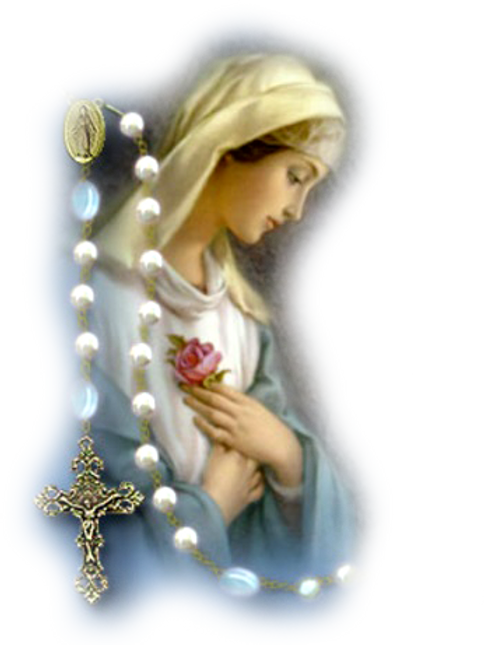
The Feast of Our Lady of the Rosary recalls the victory at Lepanto on October 7, 1571, associated with the prayers of the faithful and Our Lady’s intercession. Pope St. Pius V established a celebration of thanksgiving under the title Our Lady of Victory. Today’s feast continues to direct our hearts toward confidence in God and gratitude for the help of the Blessed Mother.
When we pray the Rosary, we accompany Mary in contemplating the mysteries of her Son’s life. We ponder His coming among us, His suffering and death, His Resurrection, and His glory in Heaven. The familiar prayers give us time to remain with these mysteries, allowing them to shape our thoughts, our choices, and our love.
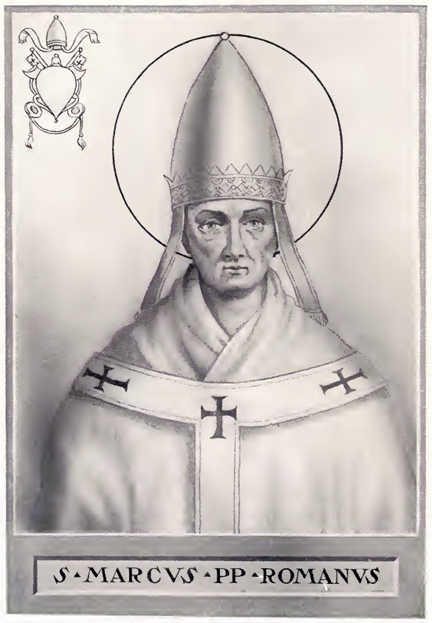
Today we commemorate St. Mark I, Pope and Confessor, whose brief pontificate began and ended in the year 336. His short time as pope reminds us that the value of our service to God cannot be measured simply by its length. Whatever time and responsibilities we have been given, we can offer them faithfully for the good of the Church.
Novena to St. Teresa of Avila
Pray this each day (October 6-14) leading up to the feast on October 15.
Daily novena prayer taken from the manual of prayers of the Carmelite Sisters
Eternal Father, by Your Holy Spirit, You raised up our peerless Mother, St. Teresa of Avila, to show Your Church the way to perfection. May her inspired teaching awaken in us a longing for true holiness. May these prayers of preparation for her feast keep us faithful to Christ and help us to work in the Church for the salvation of all mankind. Amen.
V. Holy Mother St. Teresa, look down from heaven and see.
R. Take care of this vine and protect what your right hand has planted.
(Here make your petition)
V. Let us pray:
(All) Lord, our God, watch over this religious family You nourish with the Bread from heaven. Help us to follow the example of our Holy Mother, St. Teresa, and sing Your merciful love forever. We ask this through Christ our Lord. Amen.
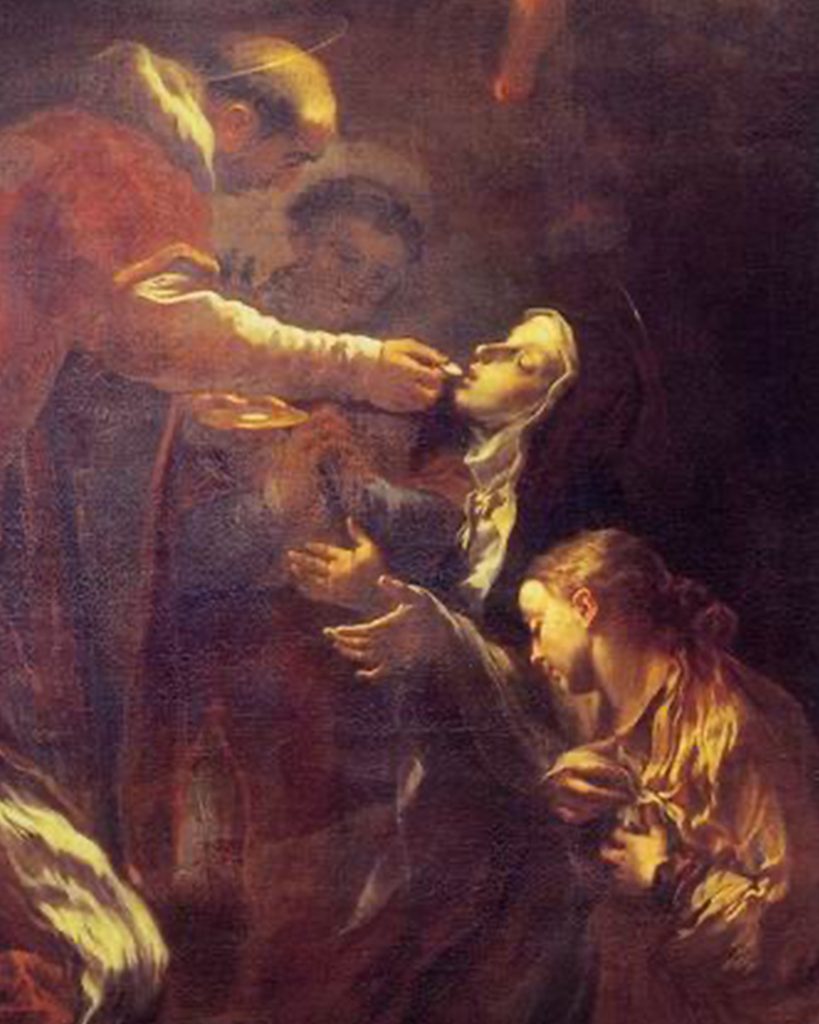
Novena | Day 2 (October 7)
“Hope, O my soul, hope.” – St. Teresa
Dear Jesus, as You did for St. Teresa, increase in us the gift of hope.
St. Teresa of Jesus, pray for us!
QUESTIONS FOR THE HEART
Where is God asking me to respond with greater trust and obedience?
What time will I set aside today to pray the Rosary and contemplate the mysteries of Christ?
How can I carry the faith, humility, and charity of these mysteries into my daily duties?
A LITTLE POEM FOR THE JOURNEY
O Mary, teach our hearts to pray,
And walk with Jesus day by day.
Through joys and sorrows, help us see
The love that calls us faithfully.
When fear makes trust seem hard to do,
Help us say yes to God with you.
“Behold the handmaid of the Lord; be it done to me according to thy word.” (Luke 1:38)
BE YOU THEN ALSO READY
Commemoration of St. Bruno, Confessor
Day 1 of the Novena to St. Teresa of Avila
October 6, 2026
TODAY’S GOSPEL: Luke 12:35-40
EPISTLE: Ecclesiastes 31:8-11
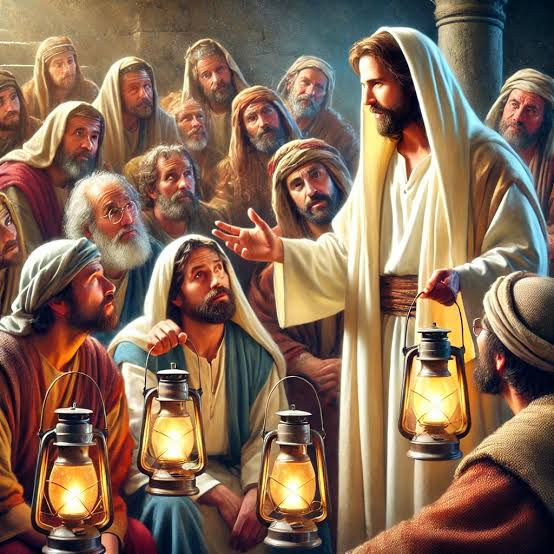
Today, as we honor St. Bruno and begin our novena to St. Teresa of Avila, the readings call us to examine what holds our hearts. Are we anchored in Christ? Are we making room for Him in prayer, remaining faithful when tempted, and preparing to welcome Him whenever He comes?
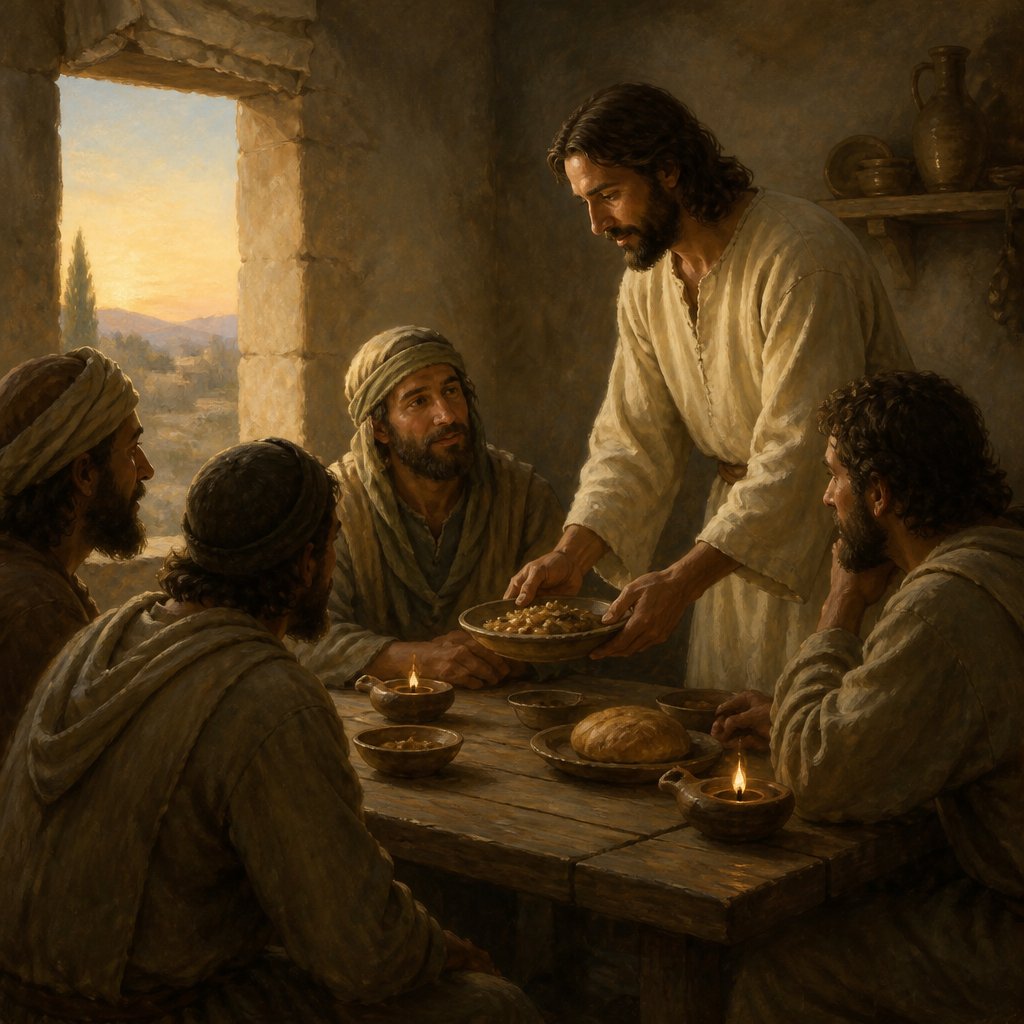
In the Gospel, Jesus tells His disciples to keep their lamps burning and to be like servants awaiting their master’s return. When he comes and knocks, they are ready to open immediately. This watchfulness belongs to our daily Christian life. We prepare for the Lord through repentance, prayer, obedience, and the faithful fulfillment of our duties. Each day gives us opportunities to choose His will and grow in His love.
Then Jesus reveals the remarkable generosity of the master: he will have those faithful servants sit down at table and will serve them himself. The Lord who asks us to remain watchful also promises a joy beyond anything we could earn. He desires to bring us into the fullness of life with Him. His warning that the Son of Man will come at an unexpected hour urges us to respond to that love today. We must not keep postponing the conversion He asks of us.
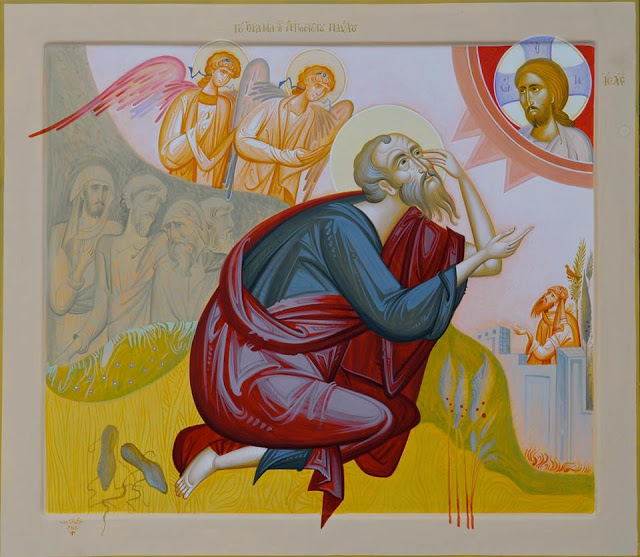
The Epistle praises the person who possesses riches without becoming their servant: one who has been tested and remained faithful, who could have transgressed but did not, and who could have done evil but chose to refrain. These words bring holiness into the decisions we make when temptation is close and compromise seems easy. Will we choose what pleases God, even when no one else will know?
Money and wealth can serve good purposes, but they cannot give us lasting security. Wealth can disappear, comforts can be lost, and circumstances can change. When our hearts are anchored in Christ, we can use what we have with gratitude and generosity, without allowing it to govern our lives. Our greatest concern becomes remaining faithful to the One who loves us and calls us to eternal life.
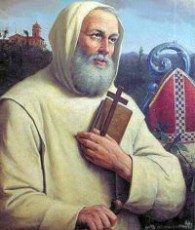
St. Bruno’s life gives us a striking witness to this freedom. A learned teacher, he sought a life devoted to God in silence and prayer. In 1084, he withdrew with six companions into the mountains of Chartreuse, where the Carthusian way of life began. His example invites us to make room for God amid our own responsibilities. A quiet time faithfully offered each day can help to recognize the distractions and attachments that have crowded prayer out of our lives.
Today we also begin our novena to St. Teresa of Avila.
Novena to St. Teresa of Avila
Pray this each day (October 6-14) leading up to the feast on October 15.
Daily novena prayer taken from the manual of prayers of the Carmelite Sisters
Eternal Father, by Your Holy Spirit, You raised up our peerless Mother, St. Teresa of Avila, to show Your Church the way to perfection. May her inspired teaching awaken in us a longing for true holiness. May these prayers of preparation for her feast keep us faithful to Christ and help us to work in the Church for the salvation of all mankind. Amen.
V. Holy Mother St. Teresa, look down from heaven and see.
R. Take care of this vine and protect what your right hand has planted.
(Here make your petition)
V. Let us pray:
(All) Lord, our God, watch over this religious family You nourish with the Bread from heaven. Help us to follow the example of our Holy Mother, St. Teresa, and sing Your merciful love forever. We ask this through Christ our Lord. Amen.
Novena | Day 1 (October 6)
“I am quite sure that if we could but once approach the Most Holy Sacrament with great faith and love, it would suffice to make us rich. How much more so if we approach it often!” – St. Teresa
Dear Jesus, as You did for St. Teresa, increase in us the gift of faith, especially in the Most Blessed Sacrament!
St. Teresa of Jesus, pray for us!
QUESTIONS FOR THE HEART
What possession, comfort, or concern has begun to claim too much of my heart?
When temptation comes, do I remain faithful even when no one is watching?
What time will I set aside today to be alone with Our Lord in prayer?
A LITTLE POEM FOR THE JOURNEY
O Lord, amid the passing day,
Keep all our wandering thoughts Your way.
When comforts fade and fears arise,
Let faith in You lift up our eyes.
Keep bright our lamps, our hearts sincere,
And teach us, Lord, to hold You dear.
“Be you then also ready: for at what hour you think not, the Son of man will come.” (Luke 12:40)
SEEK HOLINESS
Commemoration of St. Placid and Companions, Martyrs
October 5, 2026
TODAY’S GOSPEL: Matthew 22:1-14
EPISTLE: Ephesians 4:23-28
Today, Monday after the Nineteenth Sunday after Pentecost, we commemorate St. Placid and his companions, martyrs. As we begin another week, the readings bring Sunday’s call to holiness into our daily lives.
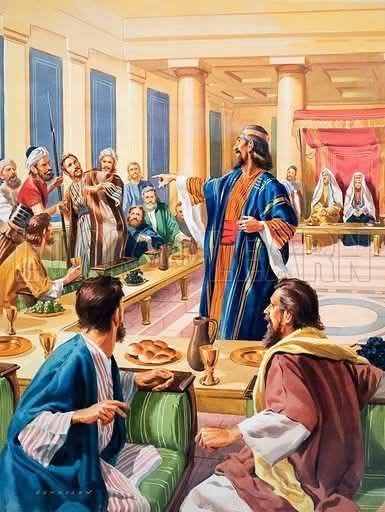
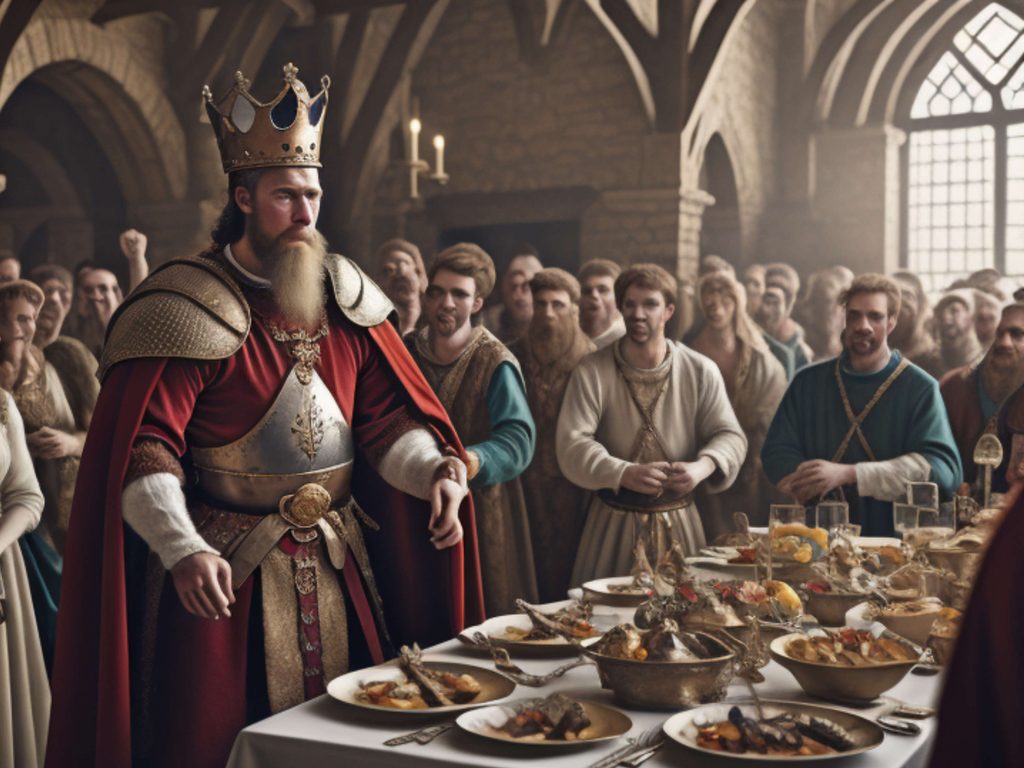
In the Gospel, the king prepares a marriage feast for his son and sends his servants to gather the guests. The invitation reminds us of God’s generosity in calling us to share His life. Yet the wedding garment reminds us that we must respond to His grace with repentance and charity. The Lord welcomes us, and He calls us to conversion.
The Epistle shows how this renewal takes shape. St. Paul speaks of putting on the new man, created according to God in justice and holiness. Truthfulness, restraint in anger, honest work, and generosity toward those in need belong to this renewed life. Holiness grows through grace in the ordinary duties of each day.
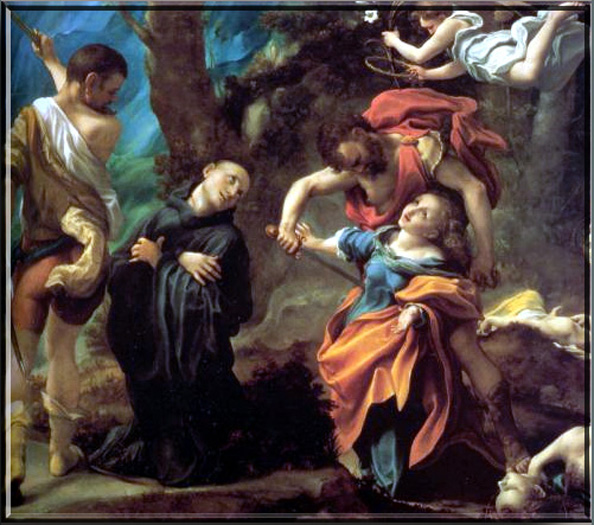
Today’s commemoration places before us the witness of St. Placid and his companions, honored as martyrs. Their remembrance turns our thoughts toward fidelity to Christ, even when that fidelity requires sacrifice. We ask their intercession for the courage to remain faithful in our own circumstances.
The Gospel’s wedding garment and the Epistle’s new man draw our attention to the same inward renewal. Through prayer, a good confession, and worthy reception of Holy Communion, we receive the grace to live more closely united to Christ. That grace bears fruit in the way we speak, work, forgive, and care for others.
As the Church carries us from Sunday into the week, let us keep these readings close. May St. Placid and his companions pray for us, that we may welcome God’s invitation and persevere in His love.
QUESTIONS FOR THE HEART
What ordinary duty can I carry out with greater love today?
Is there an anger I need to surrender or a truth I need to speak with charity?
How can I share what I have with someone in need?
A LITTLE POEM FOR THE JOURNEY
O Lord, renew our hearts today,
And guide our steps along Your way.
In words of truth and deeds of care,
May love take root and blossom there.
With all Your saints, help us remain
Faithful in joy and faithful in pain.
“And be renewed in the spirit of your mind …” (Ephesians 4:23)
FRANCIS, REPAIR MY CHURCH
Solemnity of St. Francis of Assisi
October 4, 2026
TODAY’S GOSPEL: Matthew 22:1-14
EPISTLE: Ephesians 4:23-28
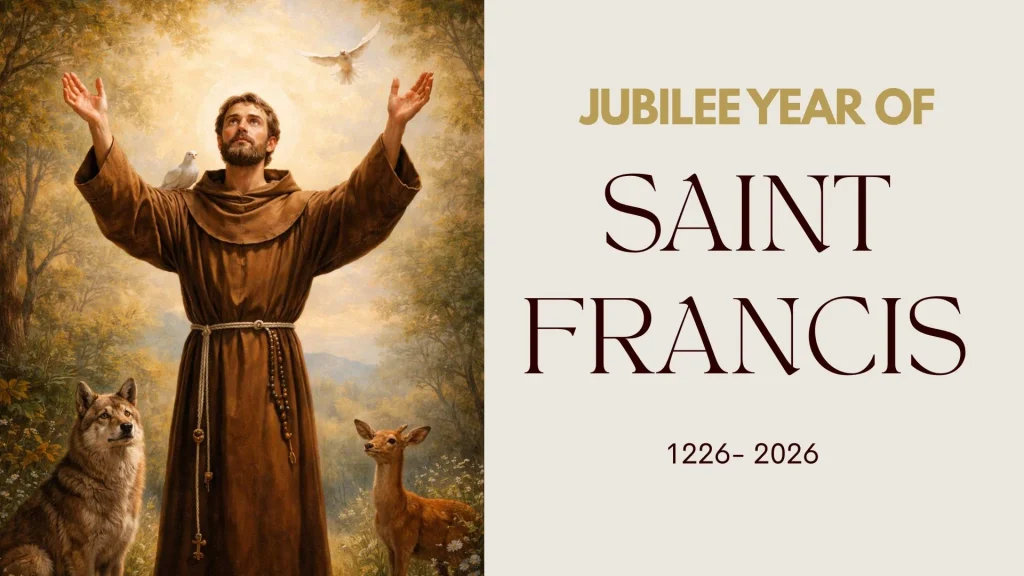
Today is the Nineteenth Sunday after Pentecost in the traditional liturgical calendar. We honor St. Francis of Assisi, whose celebration holds the rank of a solemnity in the Franciscan calendar. Having completed our novena, we ask this beloved saint to help us live more faithfully the Franciscan spirit.
In today’s Gospel, Jesus describes a king who prepares a marriage feast for his son. When those invited refuse to come, the king sends his servants into the highways to gather others. The invitation is generous, but the man who enters without a wedding garment reminds us that accepting God’s invitation calls for a real response. We are called to allow His grace to change us, clothing our lives with faith, repentance, and charity.
The Epistle brings that renewal into our daily conduct. St. Paul tells us to be renewed in the spirit of our minds and to put on the new man, created according to God in justice and holiness. We must speak truth, resist sinful anger, give no place to the devil, and work honestly so that we have something to share with those in need. The life God offers us takes shape in our words, our choices, and our treatment of one another.
St. Francis answered this invitation with his whole life. Born in Assisi in 1181, the son of a prosperous cloth merchant, he grew up with opportunities for comfort and dreams of worldly distinction. War, imprisonment, and illness interrupted those dreams. Gradually, through prayer and conversion, he began to desire a life given entirely to Jesus.
In 1205, while Francis was praying before a crucifix in the little church of San Damiano, which had fallen into disrepair, he heard Christ speak to him: “Francis, go repair my house, which, as you see, is falling completely to ruin.” Francis began by repairing the church building itself. As his vocation unfolded, the deeper meaning became clear: he was being called to serve the renewal of the Church through a life of poverty, holiness, and love.
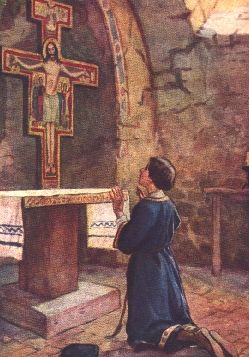
Francis’s response gives us much to consider. He began with the work placed before him. He prayed, listened, and obeyed. For us, too, the work of repair begins with allowing Christ to enter our own hearts. A resentment surrendered, a fault acknowledged, forgiveness sought, or an act of obedience accepted can become a place where His grace restores what has been wounded.
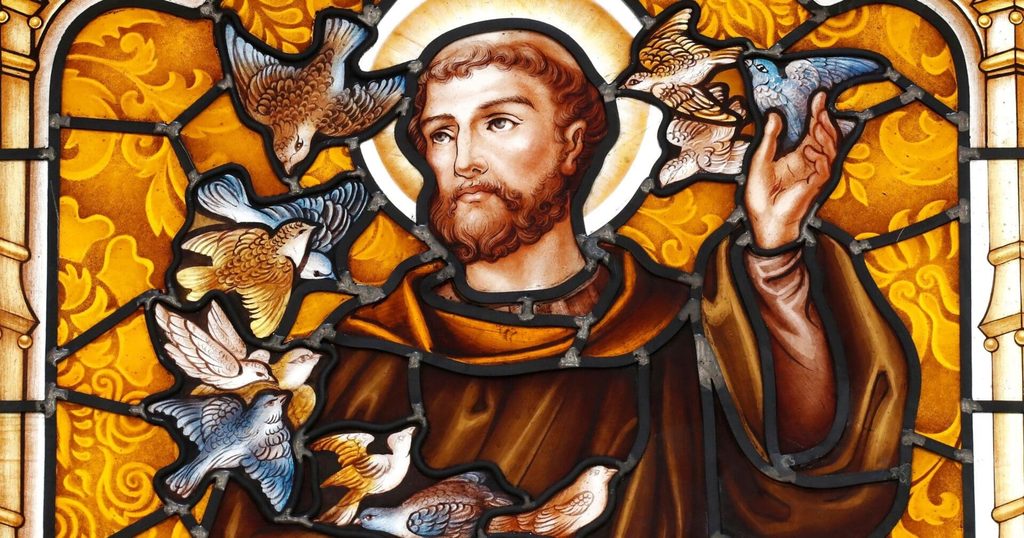
Francis embraced poverty and cared for the sick and those pushed to the margins of society. Companions gathered around him, and their brotherhood received the approval of Pope Innocent III in 1210, as the Franciscan Order. From this beginning grew the Order of Friars Minor, a family devoted to following Christ and proclaiming His Gospel. The friars moved to Portiuncula, and the Third Order was also started. Francis’s love for creation flowed from his love for the Creator: the world around him became an invitation to gratitude and praise.
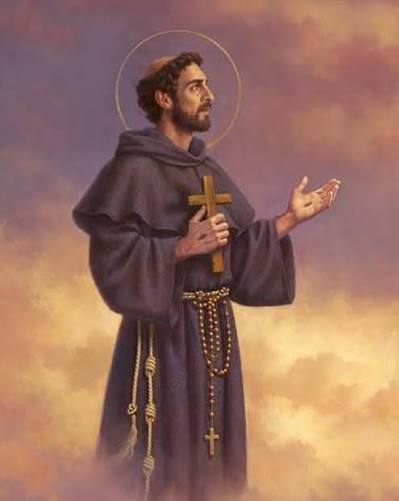
St. Francis and St. Clare of Assisi shared a deep spiritual friendship rooted in their love for Jesus and their desire to live the Gospel in poverty and humility. Around 1212, inspired by Francis’s example and supported by his guidance, Clare began the community of women known today as the Poor Clares, devoted to prayer and a life of holy poverty. Together, they remind us that friendship can lead us closer to Christ as we encourage one another to answer God’s call.
Francis also had a profound reverence for the Holy Eucharist. He recognized the humility of the Lord who gives Himself to us in the Blessed Sacrament. His devotion invites us to approach the altar with gratitude and reverence, asking that the Lord we receive may shape the life we live.
In 1224, while praying at Mount La Verna, Francis received the stigmata, the wounds of Christ impressed upon his hands, feet, and side. The Franciscan accounts describe a vision of a seraph bearing the image of the crucified Savior. Francis bore these wounds for the remaining two years of his life. The Church venerates this extraordinary gift as a sign of his deep conformity to Christ Crucified.
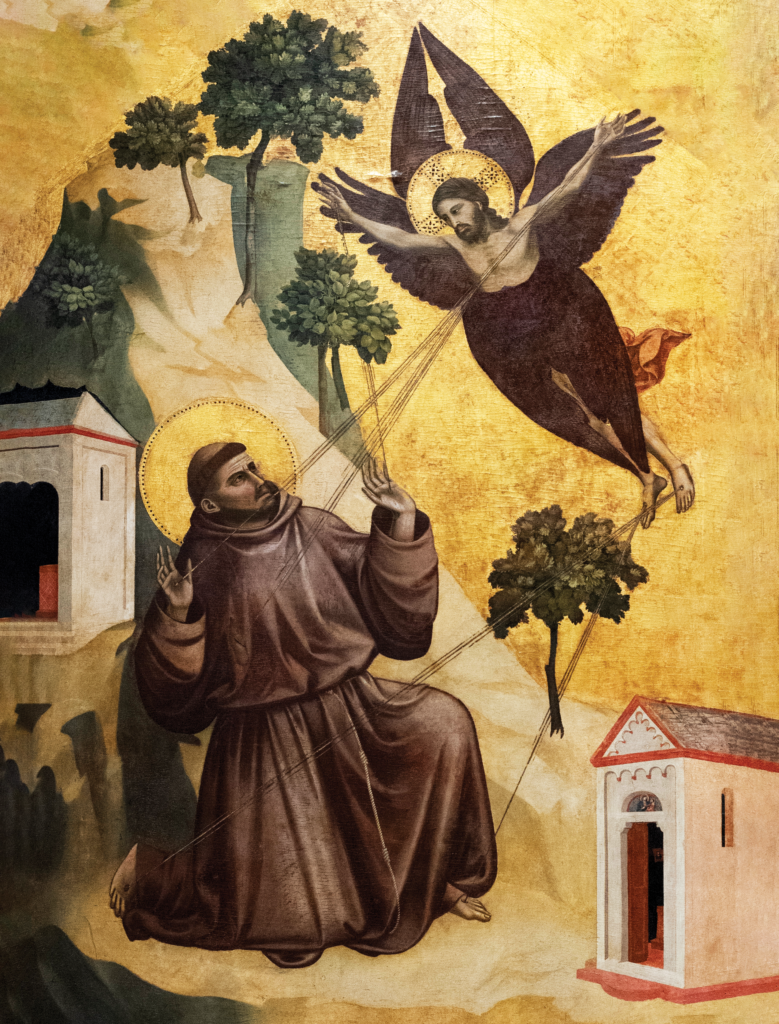
The stigmata bring us to the heart of Francis’s vocation: his love for Jesus, who gave Himself for our salvation. Before the crucifix at San Damiano, Francis had heard the call to repair. At La Verna, his body bore the wounds of the One he had followed. His journey invites us to remain close to Christ when love asks sacrifice of us – when serving is tiring, patience is difficult, or faithfulness requires us to surrender our own preferences.
Francis died on the evening of October 3, 1226, at Portiuncula, and was canonized in 1228. This year marks eight hundred years since his death. His witness continues to call us back to the Gospel and to a wholehearted response to the Lord.
Today, let us renew that response. May we welcome the invitation of the King, receive the renewal described by St. Paul, and follow Francis in the work entrusted to us. May Christ find hearts willing to listen and hands ready to serve.
QUESTIONS FOR THE HEART
What part of my life needs the renewal St. Paul describes today?
Where is Jesus asking me to begin the work of repair – with repentance, forgiveness, or an act of faithful service?
How can I live the Franciscan calling more fully through simplicity, humility, and love for another person?
A LITTLE POEM FOR THE JOURNEY
Before the Cross, he heard the call,
And gave to Christ his heart, his all.
With humble hands he worked and prayed,
And followed where his Savior bade.
O Francis, help our hearts renew,
And love the Lord in all we do.
“And be renewed in the spirit of your mind: And put on the new man, who according to God is created in justice and holiness of truth.” (Ephesians 4:23-24)
THE LITTLE WAY
Feast of St. Therese of the Infant Jesus and the Holy Face
Ninth Day of Novena to St. Francis of Assisi
October 3, 2026
TODAY’S GOSPEL: Matthew 18:1-4
EPISTLE: Isaias 66:12-14
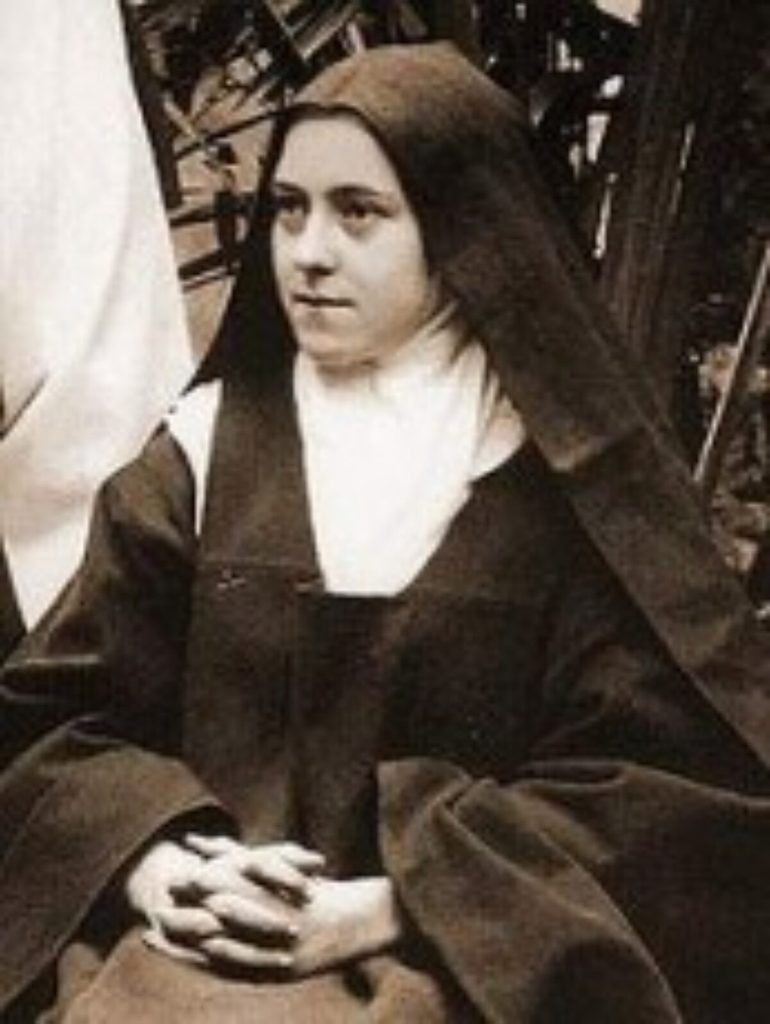
Today, in the traditional liturgical calendar, the Church celebrates St. Therese of the Infant Jesus, the Carmelite nun lovingly known as the Little Flower. The Gospel and Epistle bring us to the heart of her Little Way: humility, trust in God’s mercy, and love expressed in the ordinary duties of each day.
In today’s Gospel, the disciples ask Jesus who is the greatest in the kingdom of heaven. He calls a little child to Himself and places the child in their midst. His answer turns their thoughts toward humility: they must be converted and become as little children. Greatness in His kingdom begins with acknowledging our dependence on God and receiving what He gives with a trusting heart.
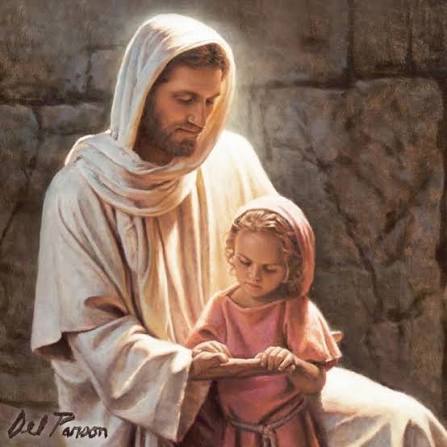
In the Epistle, the Lord promises peace to Jerusalem and describes the tender care His people will receive. They will be carried and comforted, and He compares His consolation to that of a mother comforting her child. These words helped Therese understand how God meets us in our littleness. When she saw the heights of holiness and felt unable to reach them by her own strength, she placed her confidence in Jesus, trusting Him to lift her in His arms.
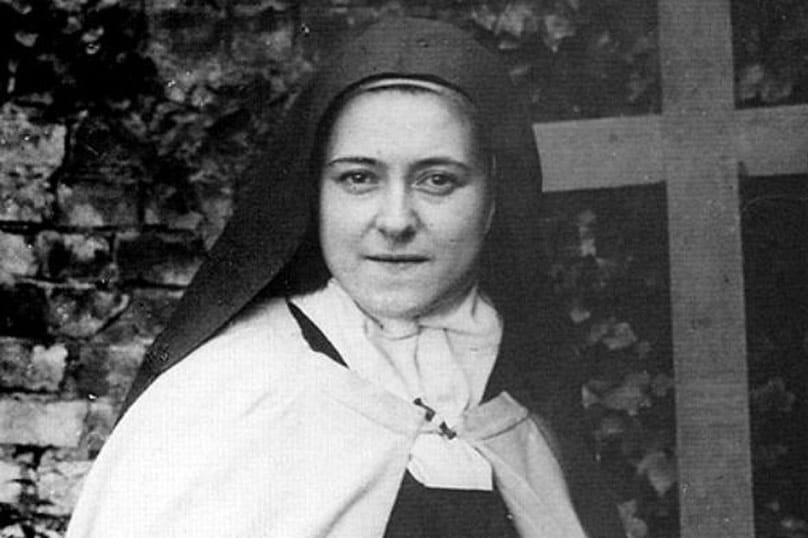
Therese was born in Alencon, France, on January 2, 1873, the youngest of nine children born to Louis and Zelie Martin, both now canonized saints. Four of their children died young. When Therese was four, her mother died, leaving a wound that deeply affected her sensitive heart. Her father and older sisters surrounded her with loving care, and her sister Pauline because especially important to her as a second mother. All four of her surviving sisters eventually entered religious life.
On Christmas night in 1886, when she was thirteen, Therese received a grace she later described as her complete conversion. She found new strength to turn her attention outward and give herself more generously to others. At fifteen, she entered the Carmel of Lisieux, where her love for Jesus grew through prayer, community life, sacrifice, and faithful service.
Her Little Way teaches us to place our confidence in God’s merciful love and respond to His grace in the circumstances before us. A patient answer, a hidden kindness, a task completed faithfully, or a small sacrifice offered for another can become an act of love for Jesus. We bring Him our weakness as well as our willingness, asking Him to make fruitful what we could never accomplish alone.
This childlike trust requires courage and perseverance. Therese continued to love through painful illness and a severe trial of faith. She died of tuberculosis on September 30, 1897, at only twenty-four years of age. Her writings, especially Story of a Soul, carried the wisdom of her hidden life far beyond the walls of Carmel. In 1997, St. John Paul II declared her a Doctor of the Church, recognizing the depth of her teaching.
Like a little wildflower blooming where God had planted her, Therese offered Him the life she had been given. Her example invites us to do the same. We need not wait for a different life or a greater opportunity before beginning to love. Today already holds someone to serve, something to offer, and a moment in which to trust.
As we complete our novena to St. Francis of Assisi, these two saints help us turn our hearts toward Jesus. Francis followed Him in poverty and humility; Therese followed Him through the Little Way of trust and love. Through their intercession, may we receive the grace to surrender more fully to God and serve Him faithfully in whatever He asks of us.
Novena to St. Francis of Assisi – Day Nine
In the name of the Father, and of the Son, and of the Holy Spirit, Amen.
Holy Saint Francis, through your kind intercession we seek holiness above all things. We seek the faith, hope and love that allowed you to joyfully renounce the pleasures of earthly life and to radically follow our Lord Jesus Christ. Pray for us that we enjoy the privilege of suffering with and for the poor in the example of Jesus. Help us to be always grateful for all the blessings we have received and the strength to overcome our most pressing concerns, especially… (Mention your intentions here).
Almighty Father, through the kind intercession of St. Francis, we humbly ask for the grace to be free of the fears and anxieties that beset us, especially (repeat your special intentions and requests here). May we be relieved of the causes of our distress, that we may be able to better serve as the instruments of your Divine Purpose on earth.
St. Francis, help us in praying for the grace to truly repent for our sins and actively seek reconciliation with God. May the blessings we obtain through your intercession deepen our faith, and inspire us to store treasures in Heaven, where we hope to spend eternity with the Almighty Father.
Glory be to the Father and to the Son and to the Holy Spirit, as it was in the beginning, is now and forever shall be, world without end. Amen
St. Francis of Assisi, Pray for us! In the name of the Father, and of the Son, and of the Holy Spirit, Amen.
QUESTIONS FOR THE HEART
Can I place today’s worries in Jesus’ hands and trust His loving care?
What ordinary duty or small sacrifice can I offer Him with greater love?
When I become discouraged by my weakness, will I ask for His grace and begin again?
A LITTLE POEM FOR THE JOURNEY
A little flower, a hidden place,
A heart made strong by Jesus’ grace,
A humble task, a kindness shown,
A seed of love to God alone,
With Francis, teach our hearts to pray,
And walk with Christ the little way.
“Whosoever therefore shall humble himself as this little child, he is the greater in the kingdom of heaven.” (Matthew 18:4)
“BEHOLD I WILL SEND MY ANGEL WHO SHALL GO BEFORE THEE”
FEAST OF THE HOLY GUARDIAN ANGELS
Eighth Day of Novena to St. Francis of Assisi
October 2, 2026
TODAY’S GOSPEL: Matthew 18:1-10
EPISTLE: Exodus 23:20-23
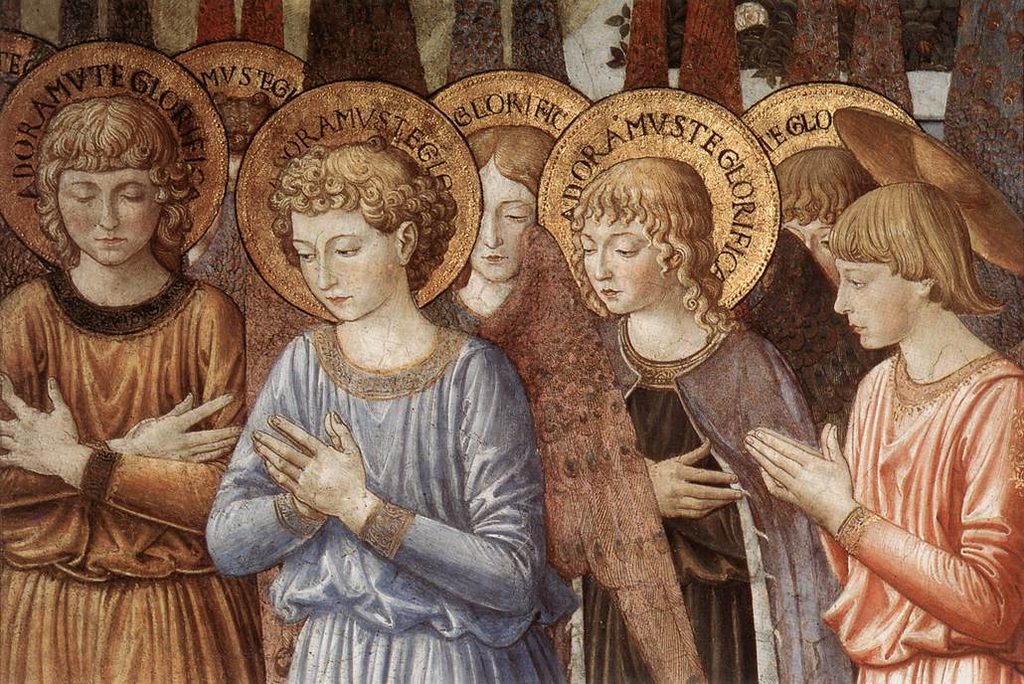
Today the Church celebrates the Holy Guardian Angels. Only a few days after honoring St. Michael the Archangel, she turns our attention to the angels whose quiet care accompanies us through our earthly lives. This feast gives us a day to remember these heavenly companions and to thank God for His loving providence.
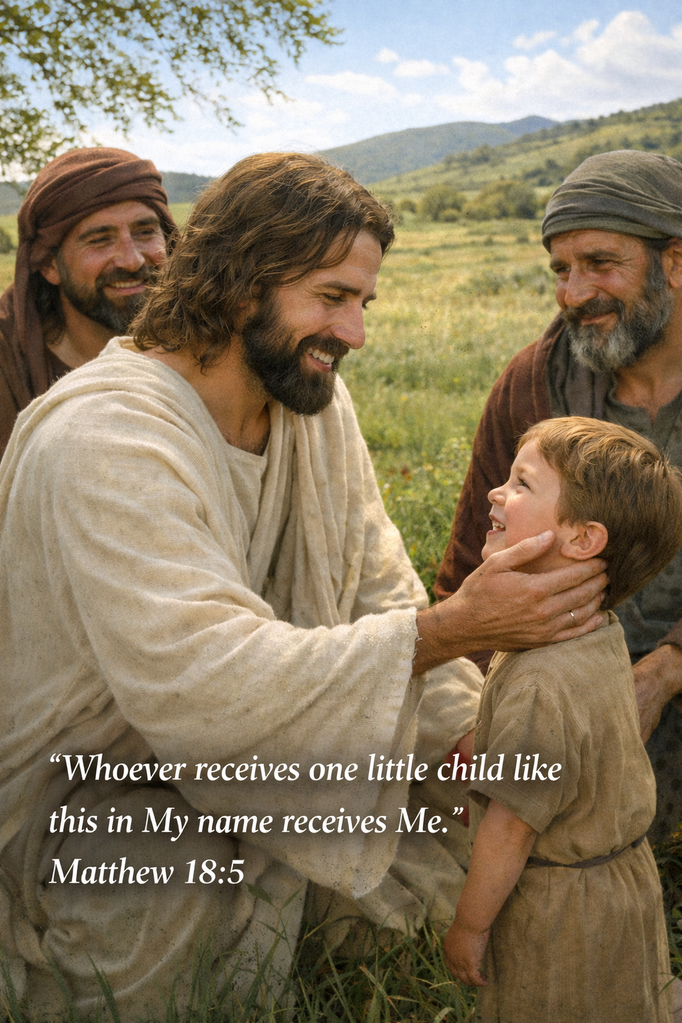
In today’s Gospel, the disciples ask Jesus who is the greatest in the kingdom of heaven. He calls a little child to Him and places the child in their midst, telling them that whosoever humbles himself as this little child is the greatest in the kingdom of heaven. The reading closes with the words that belong so especially to today’s feast: “Their angels in heaven always see the face of my Father who is in heaven.”
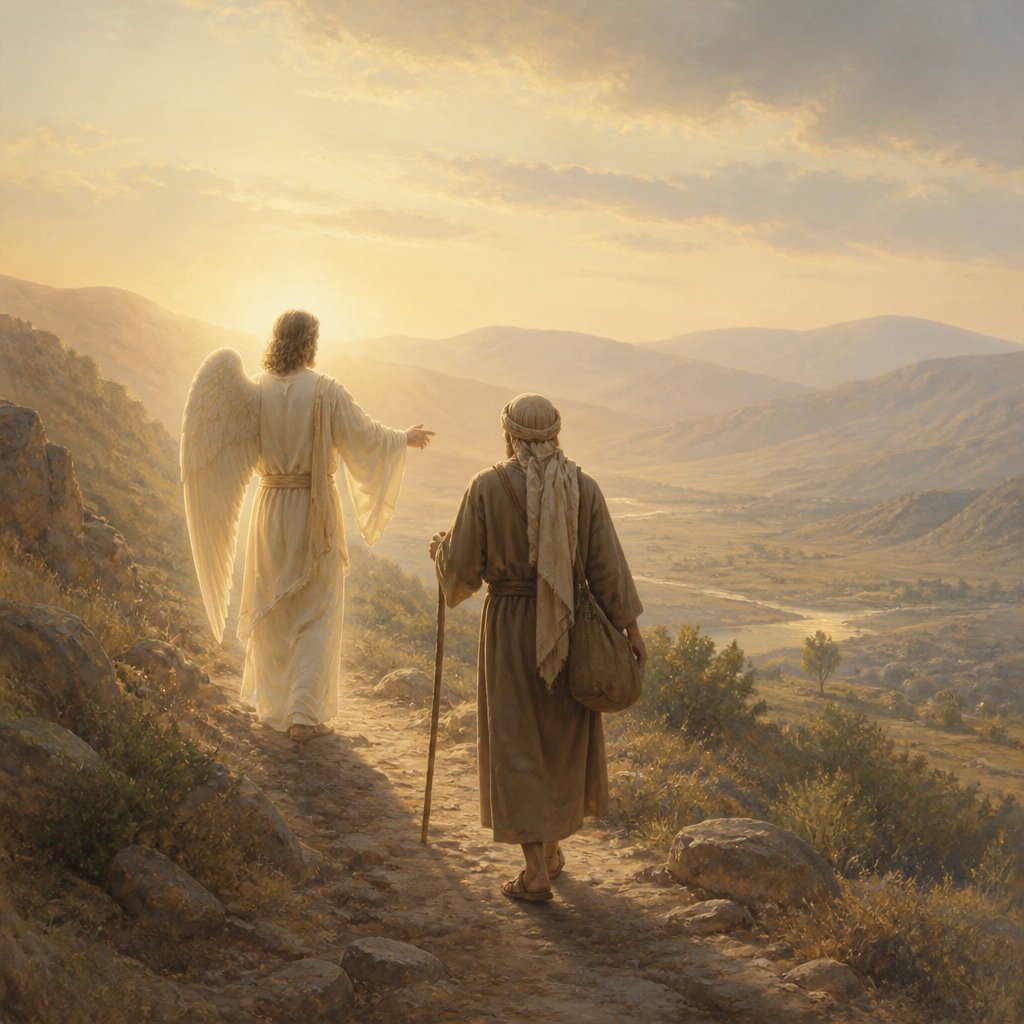
In the Epistle, God promises to send His angel before the Israelites to keep them on their journey and bring them into the place He has prepared. As God’s people travel toward the Promised Land, they are accompanied by a heavenly messenger sent to guide them. Both the Gospel and the Epistle place before us the care of God, reaching from heaven into the daily journey of His people.
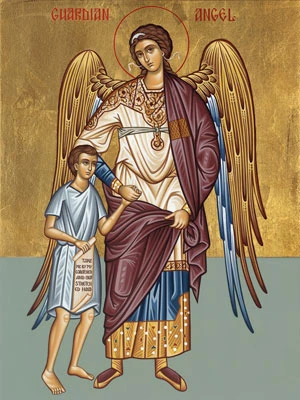
The Holy Guardian Angels belong to the life of the whole Church and to the lives of each of us. The Catechism recalls their watchful care and intercession throughout our lives (CCC 336). Today we remember their presence in the familiar places of our days: our homes, our work, our travels, and our prayer. The Church gives us these simple words with which to greet our Guardian Angel:
Angel of God, my guardian dear,
To whom God’s love commits me here,
Ever this day be at my side,
To light and guard, to rule and guide. Amen.
Novena to St. Francis of Assisi – Day Eight
In the name of the Father, and of the Son, and of the Holy Spirit, Amen.
Holy Saint Francis, through your kind intercession we seek holiness above all things. We seek the faith, hope and love that allowed you to joyfully renounce the pleasures of earthly life and to radically follow our Lord Jesus Christ. Pray for us that we enjoy the privilege of suffering with and for the poor in the example of Jesus. Help us to be always grateful for the all blessings we have received and the strength to overcome our most pressing concerns, especially… (Mention your intentions here).
Holy St. Francis, you spent your life evangelizing and won over many people to God. We beseech you to have pity on us poor sinners, that through your intercession, God may grant that our doubts be replaced with the certainty that the Holy Spirit will continue to guide us through life’s many trials towards His eternal kingdom. St. Francis, help us in praying for the grace to truly repent for our sins and actively seek reconciliation with God. May the blessings we obtain through your intercession deepen our faith, and inspire us to store treasures in Heaven, where we hope to spend eternity with the Almighty Father. Glory be to the Father and to the Son and to the Holy Spirit, as it was in the beginning, is now and forever shall be, world without end. Amen
St. Francis of Assisi, Pray for us! In the name of the Father, and of the Son, and of the Holy Spirit, Amen.
A LITTLE POEM FOR THE JOURNEY
October’s days begin in prayer,
With heaven’s friends beside us here,
An angel guards the path we roam,
While Mary’s beads recall our home,
And Francis’ feast is drawing near,
Within the Church’s turning year.
“Their angels in heaven always see the face of my Father who is in heaven.” (Matthew 18:10)
Be of Good Heart, Son, Thy Sins Are Forgiven Thee
Commemoration of St. Remigius, Bishop and Confessor
Seventh Day of Novena to St. Francis of Assisi
October 1, 2026
TODAY’S GOSPEL: Matthew 9:1-8
EPISTLE: I Corinthians 1:4-8
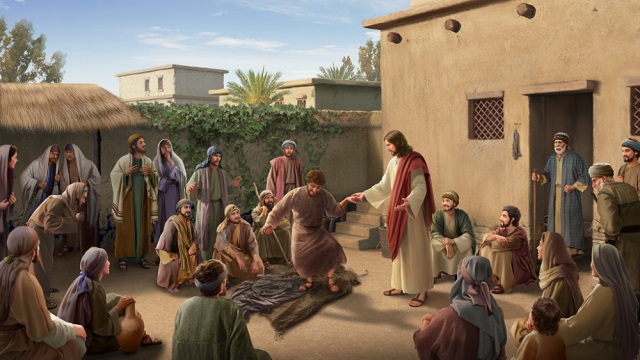
In today’s Gospel, Jesus returns to His own city, where a man sick of the palsy is brought to Him lying on a bed. Seeing their faith, Our Lord says to the man, “Be of good heart, son, thy sins are forgiven thee.” Before the man rises from his bed, he is told that his sins are forgiven him. Those who brought him sought help for his bodily suffering; Jesus also attends to the needs of his soul.
Some of the scribes are accusing Jesus of blasphemy within their hearts. Knowing their thoughts, He asks whether it is easier to declare sins forgiven or to command the man to rise and walk. Then, to show that the Son of Man has power on earth to forgive sins, He tells the paralytic to take up his bed and go home. The man rises and obeys. The multitude, filled with awe, glorifies God. The visible healing bears witness to the authority of Christ.
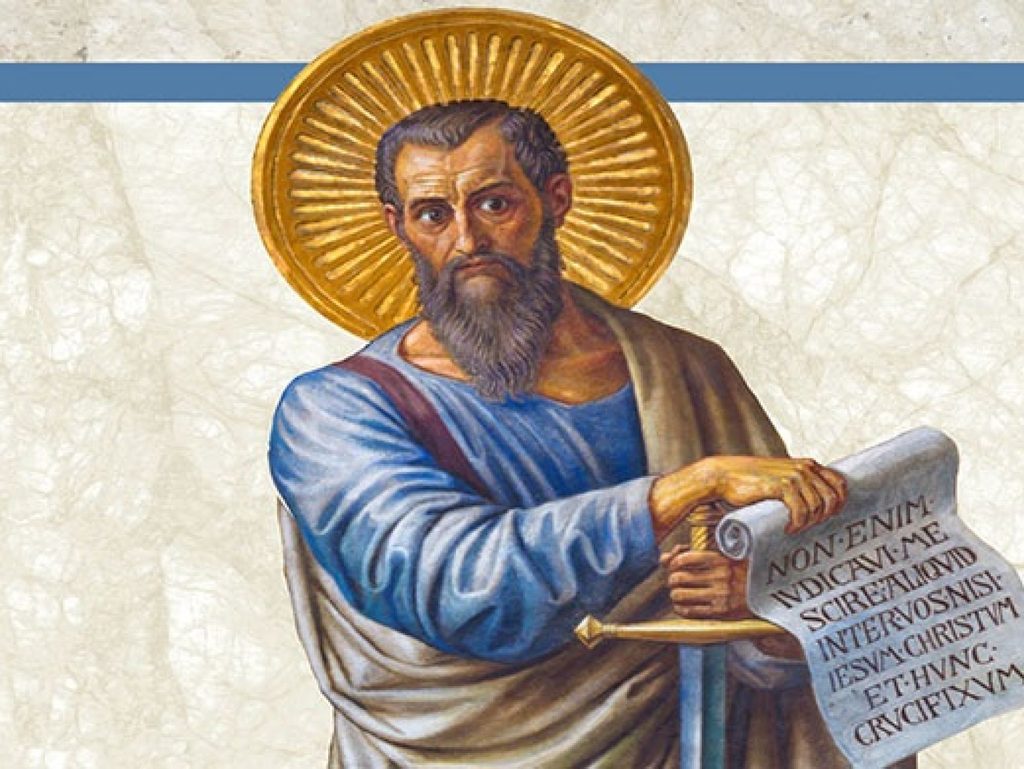
In the Epistle, St. Paul gives thanks for the grace bestowed upon the Corinthians in Christ Jesus. They have been enriched in speech and knowledge, and the testimony of Christ has been confirmed among them. As they await the coming of Our Lord, Paul assures them that Christ will strengthen them to the end. His words encourage gratitude for the gifts already received and confidence in the grace that sustains a faithful Christian life.
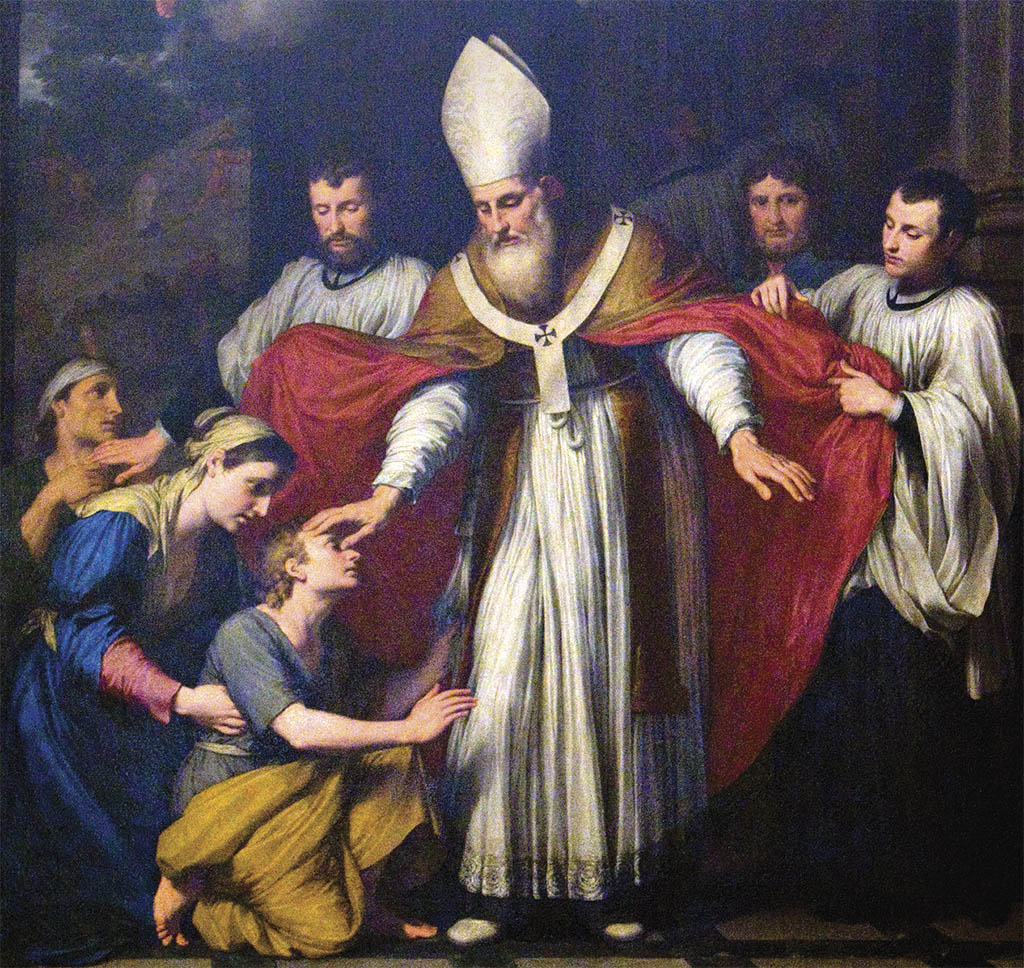
Today we commemorate St. Remigius, Bishop of Reims, remembered as the Apostle to the Franks. His long episcopal ministry helped establish the Catholic faith among them. He is especially known for baptizing Clovis, their king, whose conversion was encouraged by the Catholic wife, St. Clotilda. The king’s baptism became a significant event in the Christian history of France.
Today begins October, the month of the Holy Rosary. Let us pray the Rosary daily and contemplate the mysteries of the Incarnation, the Passion, and the glory of Our Savior, asking Our Lady to intercede for us and help us follow Him faithfully.

Novena to St. Francis of Assisi – Day Seven
In the name of the Father, and of the Son, and of the Holy Spirit, Amen.
Holy Saint Francis, through your kind intercession we seek holiness above all things. We seek the faith, hope and love that allowed you to joyfully renounce the pleasures of earthly life and to radically follow our Lord Jesus Christ. Pray for us that we enjoy the privilege of suffering with and for the poor in the example of Jesus. Help us to be always grateful for all the blessings we have received and the strength to overcome our most pressing concerns, especially… (Mention your intentions here).
Glorious St. Francis, you were untiring in your service to the poor. Obtain for us the same capacity for mercy and desire to give of ourselves that we may one day be considered worthy of the promises of Christ. St. Francis, help us in praying for the grace to truly repent for our sins and actively seek reconciliation with God.
May the blessings we obtain through your intercession deepen our faith, and inspire us to store treasures in Heaven, where we hope to spend eternity with the Almighty Father. Glory be to the Father and to the Son and to the Holy Spirit, as it was in the beginning, is now and forever shall be, world without end. Amen
St. Francis of Assisi, Pray for us! In the name of the Father, and of the Son, and of the Holy Spirit, Amen.
QUESTIONS FOR THE HEART

What stands out to me in Jesus’ words of forgiveness to the paralytic?
Whom can I bring before Our Lord in prayer today, encouraged by the example of St. Remigius?
How can I make time for the Holy Rosary during this month dedicated to it?
A LITTLE POEM FOR THE JOURNEY
They brought him where the Savior stood,
And trusted in His power for good,
Christ spoke forgiveness, calm and clear,
Then bade him rise and leave his fear.
With Mary, may our prayers convey,
The ones we love to Him today.
“Be of good heart, son, thy sins are forgiven thee.” (Matthew 9:2)
YOU ARE THE SALT OF THE EARTH, YOU ARE THE LIGHT OF THE WORLD
Feast of St. Jerome, Priest, Confessor, and Doctor of the Church
Sixth Day of Novena to St. Francis of Assisi
September 30, 2026
TODAY’S GOSPEL: Matthew 5:13-19
EPISTLE: 2 Timothy 4:1-8
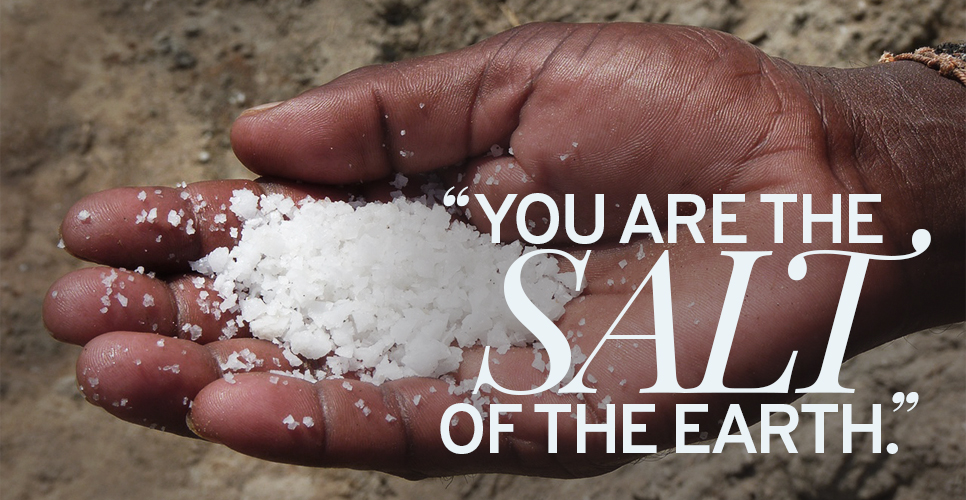
In today’s Gospel, taken from the Sermon on the Mount, Jesus calls His disciples “the salt of the earth” and “the light of the world.” Salt preserves and gives savor; light makes it possible to see. These familiar images describe the mission of His disciples, whose teaching and works will carry His truth into the world. The light is placed upon a candlestick so that it may illuminate the whole house, and the good works of His followers are to bring glory to their Father in heaven.

Jesus then declares that He has come to fulfill the law and the prophets. The Scriptures of the Old Testament find their fulfillment in Him: the promises, the prophecies, and the long preparation of God’s people lead to Christ. He also speaks of the importance of keeping God’s commandments and teaching them faithfully.
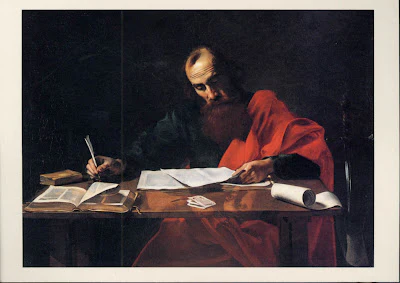
The Epistle brings us to St. Paul near the end of his life. He solemnly charges Timothy to preach the word and to persevere “in all patience and doctrine.” Paul foresees that people will turn away from sound teaching and seek teachers who suit their own desires. His instruction to Timothy is to remain watchful, endure hardship, and fulfill the ministry entrusted to him. The reading closes with Paul’s testimony: “I have fought a good fight. I have finished my course. I have kept the faith.”
These readings are especially fitting for the feast of St. Jerome, whose life was devoted to Sacred Scripture and the defense of the Catholic faith. A priest and one of the great Doctors of the Church, Jerome brought remarkable learning and tireless labor to the study of God’s Word. He studied Latin, Greek, and Hebrew, seeking to understand the biblical texts in their original languages. His work in translating and revising the Scriptures into Latin became central to the Bible known as the Vulgate, which served the Church for centuries.
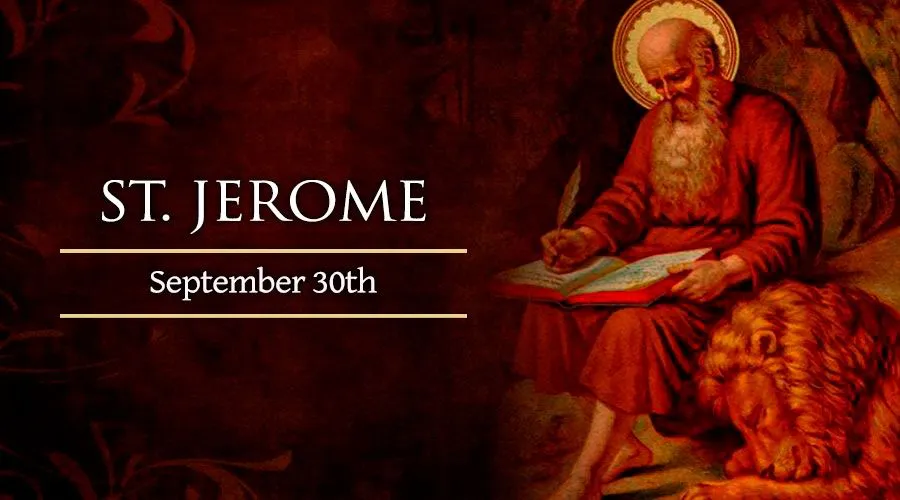
Jerome’s life took him from Rome to the East and eventually to Bethlehem. There, near the grotto of Our Lord’s Nativity, he spent his later years translating Scripture, writing commentaries, answering questions, and defending the faith against heresy. His community also welcomed pilgrims visiting the Holy Land. He died in Bethlehem in 420.
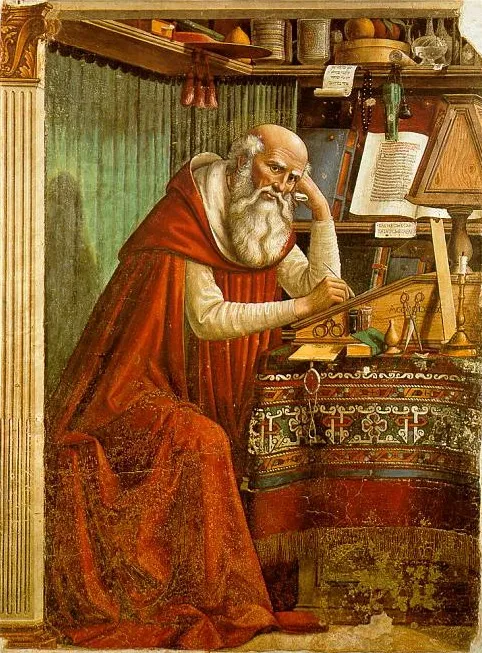
His scholarship was inseparable from his devotion to Christ. Jerome’s familiar saying, “Ignorance of the Scriptures is ignorance of Christ,” expresses the conviction behind his work: through the sacred writings, the Church comes to know the Lord whom she worships. On his feast, the Gospel’s image of a light shining through the house recalls the enduring service of this Doctor of the Church, whose labors helped generations hear and understand God’s Word.
Novena to St. Francis of Assisi – Day Six
In the name of the Father, and of the Son, and of the Holy Spirit, Amen.
Holy Saint Francis, through your kind intercession we seek holiness above all things. We seek the faith, hope and love that allowed you to joyfully renounce the pleasures of earthly life and to radically follow our Lord Jesus Christ.
Pray for us that we may enjoy the privilege of suffering with and for the poor in the example of Jesus. Help us to be always grateful for the blessings we have received and the strength to overcome our most pressing concerns, especially… (Mention your intentions here).
Holy St. Francis, through your prayers, may we be blessed with the desire to give all of our strength, and abilities towards serving God’s purpose in our lives. May our lives be filled with complete faith and the hope of spending eternity with our Heavenly Father.
St. Francis, help us in praying for the grace to truly repent for our sins and actively seek reconciliation with God. May the blessings we obtain through your intercession deepen our faith, and inspire us to store treasures in Heaven, where we hope to spend eternity with the Almighty Father.
Glory be to the Father and to the Son and to the Holy Spirit, as it was in the beginning, is now and forever shall be, world without end. Amen
St. Francis of Assisi, Pray for us!
QUESTIONS FOR THE HEART
What stands out to me in Jesus’ words about salt and light?
How can St. Jerome’s love of Scripture encourage me to know Our Lord more deeply?
What does St. Paul’s testimony, “I have kept the faith,” mean to me today?
A LITTLE POEM FOR THE JOURNEY
In Bethlehem, beside the place
Where earth first saw the Savior’s face,
Jerome gave years of thought and prayer
To words God left in human care.
Across the years, their light shines through,
The ancient Word, forever true.
“So let your light shine before men, that they may see your good works, and glorify your Father who is in heaven.” (Matthew 5:16)
THE DEDICATION OF ST. MICHAEL THE ARCHANGEL – MICHAELMAS
Fifth Day of Novena to St. Francis of Assisi
September 29, 2026
TODAY’S GOSPEL: Matthew 18:1-10
EPISTLE: Revelation 1:1-5
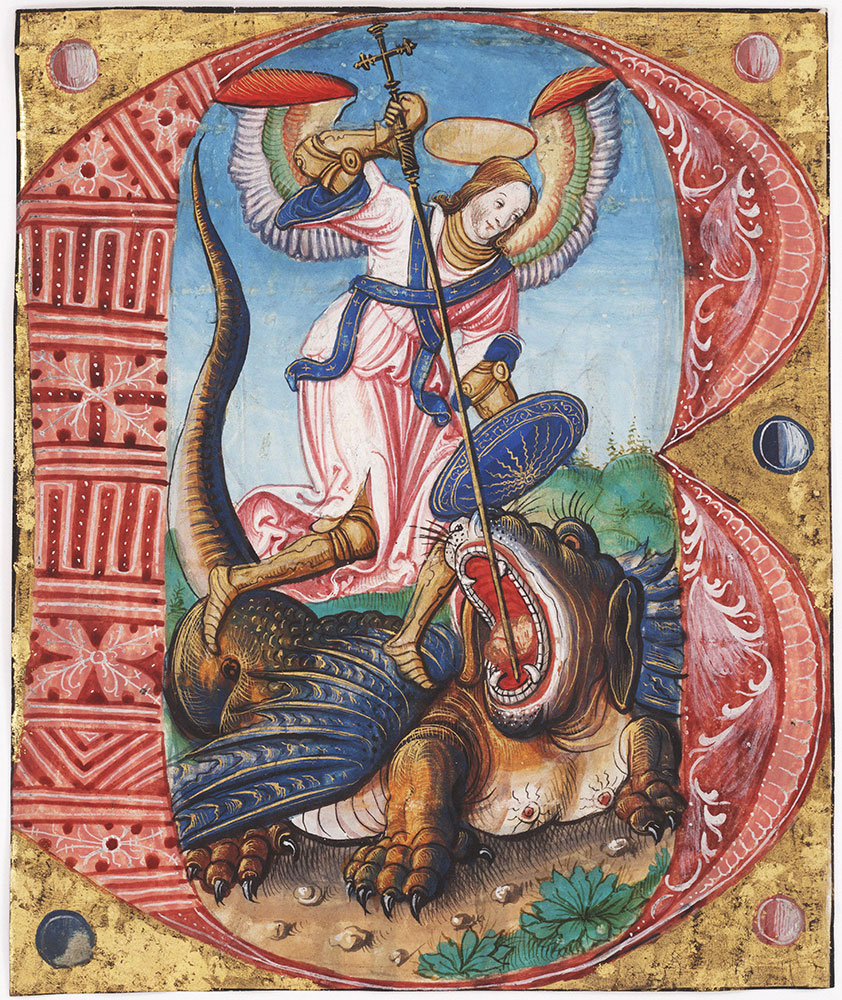
In today’s Gospel, the apostles ask Jesus who is greatest in the kingdom of heaven. He calls a little child to Him and tells them that they must become like children. Jesus then warns them not to despise one of His little ones, “for their angels in heaven always see the face of My Father who is in heaven.” On this feast of St. Michael, we are reminded that the mighty angels serve the Father who loves and watches over even the smallest among us.
The apostles’ question is one we may recognize in ourselves. We may want to be first, to be noticed, or to have our own way. Jesus asks us instead to come to Him with a child’s humility and trust. We do not need to make ourselves great to be precious to God. We belong to Him, and He does not overlook us.
In the Epistle, Jesus Christ sends His angel to make the revelation known to John. The reading directs us beyond the angel to the Lord he serves: Jesus Christ, “the faithful witness.” The angels are remarkable in their power and glory, but they never ask us to place our hope in them instead of God.
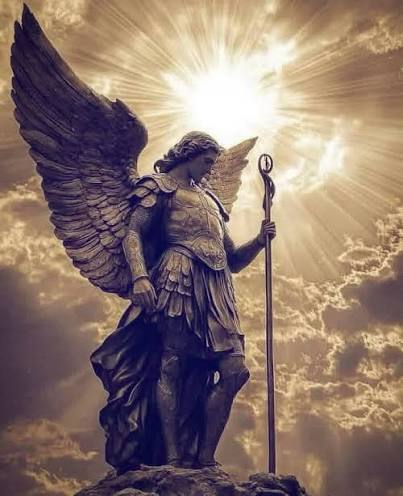
Today’s feast is called the Dedication of St. Michael the Archangel, or Michaelmas. St. Michael’s name means “Who is like God?” Scripture tells us of the great battle in heaven, when Michael and his angels fought against the dragon and his angels, and the dragon was cast down (Revelation 12:7-9). Michael stood against the rebellion that sought to take God’s place. His name still calls us to remember that no creature is like God.
We face a choice between pride and faithful obedience in the ordinary moments of our lives. When we are tempted to insist on our own importance, we can remember the child Jesus placed among the apostles. When we are frightened by evil, we can ask St. Michael to defend us and trust in the Lord whom he serves. The God who commands the heavenly host also sees His little ones.
Novena to St. Francis of Assisi – Day Five
In the name of the Father, and of the Son, and of the Holy Spirit, Amen.
Holy Saint Francis, through your kind intercession we seek holiness above all things. We seek the faith, hope and love that allowed you to joyfully renounce the pleasures of earthly life and to radically follow our Lord Jesus Christ. Pray for us that we enjoy the privilege of suffering with and for the poor in the example of Jesus.
Help us to be always grateful for the all blessings we have received and the strength to overcome our most pressing concerns, especially… (Mention your intentions here) Blessed St. Francis, when you were blessed with the decision to serve our Lord, you abandoned everything and surrendered yourself totally to God’s will. Obtain for us the same trust in God, that the Holy Spirit may guide our every thought, word and deed.
St. Francis, help us in praying for the grace to truly repent for our sins and actively seek reconciliation with God. May the blessings we obtain through your intercession deepen our faith, and inspire us to store treasures in Heaven, where we hope to spend eternity with the Almighty Father.
Glory be to the Father and to the Son and to the Holy Spirit, as it was in the beginning, is now and forever shall be, world without end. Amen
St. Francis of Assisi, Pray for us! In the name of the Father, and of the Son, and of the Holy Spirit, Amen.
QUESTIONS FOR THE HEART
Where am I tempted to seek my own importance instead of God’s will?
Who is one of the “little ones” Jesus is asking me to notice and care for today?
When I feel afraid, do I remember to ask God for help?
A LITTLE POEM FOR THE JOURNEY
Who is like God? The angels cry,
And Michael stands beneath His light,
Lord, make my proud heart meek as Thine,
Stay near and guard me through the night.
Help me to see the small and weak,
And serve Thee, Lord, in those I meet.
“See that you despise not one of these little ones: for I say to you, that their angels in heaven always see the face of my Father who is in heaven.” (Matthew 18:10)
TAKE UP YOUR CROSS
St. Wenceslaus, Martyr
Fourth Day of Novena to St. Francis of Assisi
September 28, 2026
TODAY’S GOSPEL: Matthew 10:34-42
EPISTLE: Wisdom 10:10-14
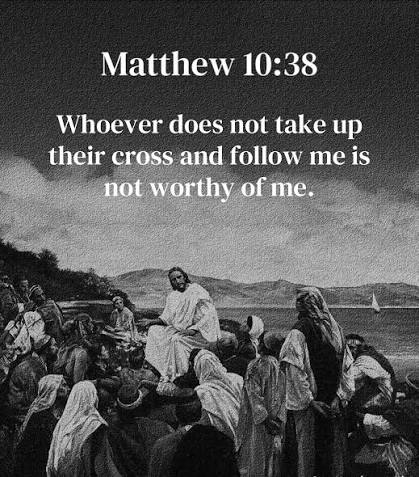
In today’s Gospel, Jesus tells His apostles, “He that taketh not up his cross, and followeth me, is not worthy of me.” He asks for more than our admiration, He asks us to follow Him through the duties, sacrifices, and trials that come with loving Him faithfully. We may wish for an easier road, but we do not have to walk this one alone. The Lord who calls us to carry the cross walks with us.
Jesus also teaches that whoever loses his life for His sake will find it. Each time we set aside our own way to do what is right, forgive an injury, or care for someone in need, we give something of ourselves to Him. Even a cup of cold water offered to one of His little ones matters to Jesus. No act of love is too small when it is given for His sake.

In the Epistle, Wisdom guides Jacob when he flees his brother’s anger. The reading then turns to Joseph, who was sold into slavery and imprisoned. Wisdom does not abandon either man in his trial. When our own crosses feel heavy, we can ask for the wisdom to take the next faithful step and trust Him with what follows.
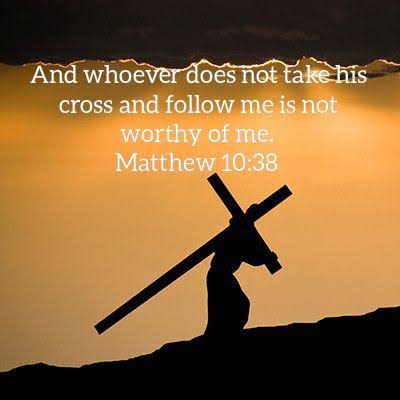
Today we remember St. Wenceslaus, Duke of Bohemia. Taught the faith by his grandmother, St. Ludmilla, he cared for the poor and worked to strengthen the Church. He remained faithful amid opposition and was killed through a plot involving his brother. St. Wenceslaus took up his cross in the life God had given him. His witness encourages us to follow Christ with courage and charity.
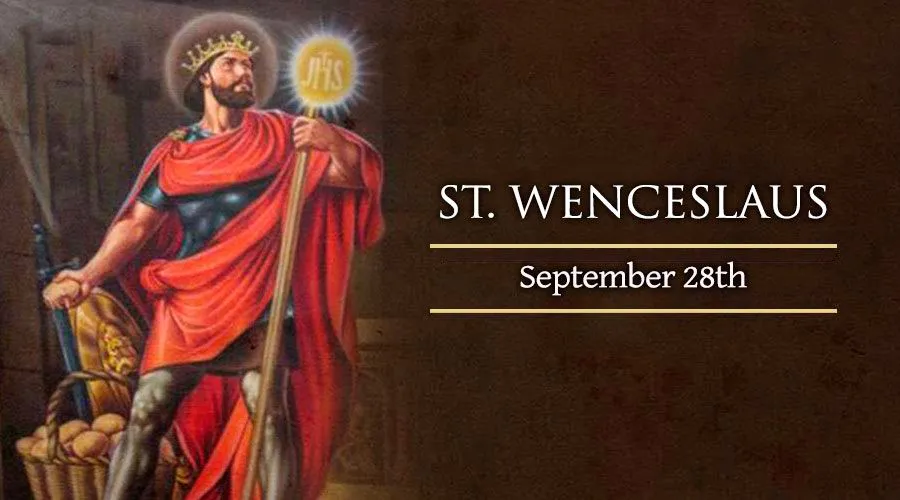
Novena to St. Francis of Assisi – Day Four
In the name of the Father, and of the Son, and of the Holy Spirit, Amen.
Holy Saint Francis, through your kind intercession we seek holiness above all things. We seek the faith, hope and love that allowed you to joyfully renounce the pleasures of earthly life and to radically follow our Lord Jesus Christ. Pray for us that we enjoy the privilege of suffering with and for the poor in the example of Jesus. Help us to be always grateful for the all blessings we have received and the strength to overcome our most pressing concerns, especially… (Mention your intentions here).
Holy St. Francis, may we, through your prayers, follow your footsteps in being good stewards of all of creation which God our Almighty Father has provided. May we also be faithful stewards of the skills and abilities we have been given. St. Francis, help us in praying for the grace to truly repent for our sins and actively seek reconciliation with God. May the blessings we obtain through your intercession deepen our faith, and inspire us to store treasures in Heaven, where we hope to spend eternity with the Almighty Father.
Glory be to the Father and to the Son and to the Holy Spirit, as it was in the beginning, is now and forever shall be, world without end. Amen
St. Francis of Assisi, Pray for us! In the name of the Father, and of the Son, and of the Holy Spirit, Amen.
QUESTIONS FOR THE HEART
What cross am I being asked to carry faithfully today?
Did I ask Jesus for help when that cross feels heavy?
What small act of love can I offer for His sake?
A LITTLE POEM FOR THE JOURNEY
The cross I bear may seem too great,
Its weight may make my footsteps slow,
But Lord with Thee beside me still,
I’ll take the path Thou bidst me go.
And in the smallest gift I give,
Teach me to love as Thou dost live.
“And he that taketh not up his cross, and followeth me, is not worthy of me.” (Matthew 10:38)
UNSHAKABLE FAITH
Saints Cosmas and Damian, Martyrs
Third Day of Novena to St. Francis of Assisi
September 27, 2026
TODAY’S GOSPEL: Matthew 9:1-8
EPISTLE: I Corinthians 1:4-8
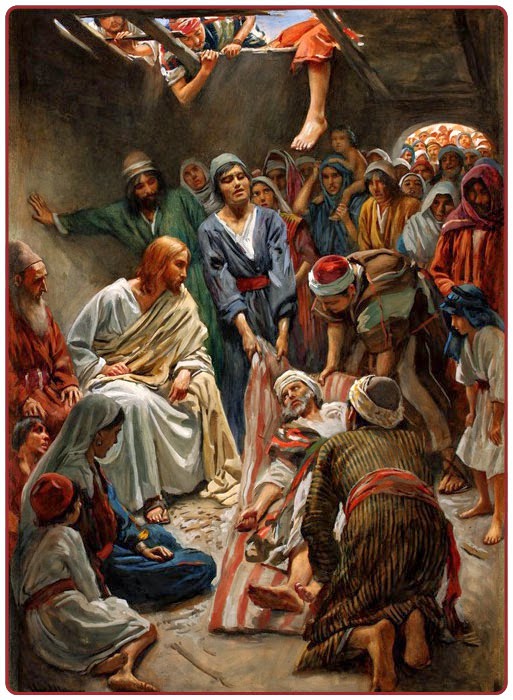
In today’s Gospel, people bring a paralyzed man to Jesus because they believe He can heal him. Jesus sees their faith and tells the man to take courage. He calls him “son” and forgives his sins. Some of the scribes think that Jesus is blaspheming. Rather than believe that God is showing mercy to this suffering man, they look for fault in His words.
Jesus knows their thoughts. To show that He has authority on earth to forgive sins, He tells the man to arise, take up his bed, and go home. The man does so, and the crowd glorifies God. Those who carried him to Jesus had come seeking help for his body. Jesus gave him that gift, but first He offered the mercy his soul needed.
St. Paul gives thanks in the Epistle for the grace God has given through Jesus Christ. In Him, the Corinthians have been enriched in speech and knowledge, and Paul assures them that Christ will strengthen them to the end. The faith that brought the paralyzed man to Jesus is a gift we, too, must keep bringing to Him. When our confidence falters, we can ask Christ to strengthen us and lead us back to His mercy.
Today we also remember Sts. Cosmas and Damian. These twin brothers were physicians who cared for the sick without charge, expressing their faith through charity and service. During the persecution under Diocletian, they were arrested and refused to renounce Christ. They used their skill to relieve suffering and remained faithful when their own lives were at stake. Their witness still encourages those who care for the sick, and all of us who are called to place our gifts at the service of others.
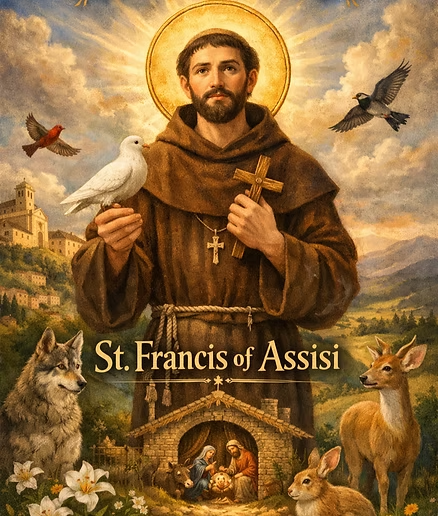
Novena to St. Francis of Assisi – Day Three
In the name of the Father, and of the Son, and of the Holy Spirit, Amen.
Holy Saint Francis, through your kind intercession we seek holiness above all things. We seek the faith, hope and love that allowed you to joyfully renounce the pleasures of earthly life and to radically follow our Lord Jesus Christ. Pray for us that we enjoy the privilege of suffering with and for the poor in the example of Jesus.
Help us to be always grateful for the all blessings we have received and the strength to overcome our most pressing concerns, especially… (Mention your intentions here) Glorious St. Francis, you have acted as a peacemaker even in the face of extreme physical danger. Through your prayers, may we also be imbued with a desire to find peaceful resolutions to the problems that plague us, even in the most trying of times.
As an offering to our Almighty Father, I resolve to forgive all the wrongs I have suffered from my fellow men. St. Francis, help us in praying for the grace to truly repent for our sins and actively seek reconciliation with God. May the blessings we obtain through your intercession deepen our faith, and inspire us to store treasures in Heaven, where we hope to spend eternity with the Almighty Father.
Glory be to the Father and to the Son and to the Holy Spirit, as it was in the beginning, is now and forever shall be, world without end. Amen St.
Francis of Assisi, Pray for us! In the name of the Father, and of the Son, and of the Holy Spirit, Amen.
QUESTIONS FOR THE HEART
Jesus welcomes the repentant sinner. Do I seek His forgiveness in Confession?
Do I trust the grace He gives in the sacraments?
Is there someone with whom I can take a step toward peace?
A LITTLE POEM FOR THE JOURNEY
They carried him to Christ that day,
And mercy met him on the way,
Lord, when my faith is tried and weak,
Give me the grace Thy face to seek,
May I be healed so I can serve,
And trust the strength Thy hands preserve.
“Be of good heart, son, thy sins are forgiven thee.” (Matthew 9:2)
THE PATIENCE OF MERCY
Ember Saturday in September
Sts. Cyprian and Justina, Martyrs
The North American Martyrs
Second Day of Novena to St. Francis of Assisi
September 26, 2026
TODAY’S GOSPEL: Luke 13:6-17
LESSONS: Leviticus 23:26-32; Leviticus 23:39-43; Micah 7:14,16,18-20, Zechariah 8:14-19, Daniel 3:47-51
EPISTLE: Hebrews 9:2-12
In today’s Gospel, Jesus tells of a fig tree that has borne no fruit for three years. Its owner wants it cut down, but the gardener asks for more time to care for it. Later, Jesus sees a woman who has been bent over for eighteen years. He calls her to Him, lays His hands upon her, and she stands upright. The crowd rejoices, though the ruler of the synagogue objects because Jesus has healed her on the sabbath.
The gardener’s patience gives the fruit tree another opportunity to bear fruit. Jesus’ compassion frees a woman who has waited many years for relief. He sees her suffering before she asks Him for anything. When others object, He calls her a daughter of Abraham and defends the mercy shown to her. We can bring Him both the parts of our lives that have remained unfruitful and the burdens we have carried for a long time.
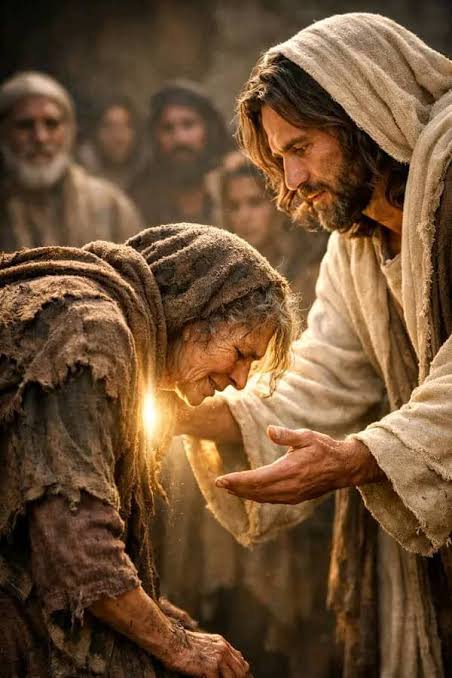
The Epistle turns our eyes to Christ, our High Priest. The old sanctuary could be entered only in a limited way, but Christ has entered the greater sanctuary through His own Blood and obtained eternal redemption. The lessons prepare us to hear this good news. They speak of repentance and thanksgiving, of God’s willingness to forgive, of truth and peace, and of His protection of the three young men in the furnace. In Christ, we find the mercy toward which these readings point.
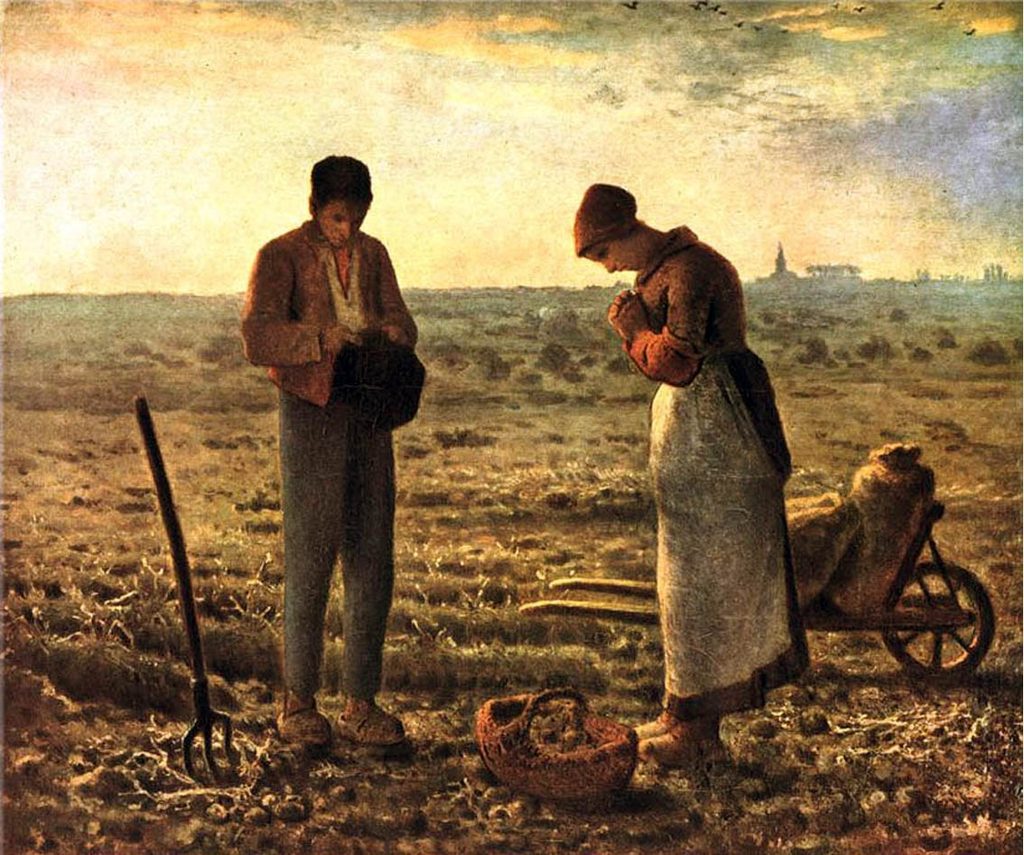
Today is Ember Saturday, the last of the September Ember Days. These traditional days of prayer, fasting, and thanksgiving invite us to offer the fruits of the season to God, and to pray for those called to serve His Church. The fig tree asks us to consider what fruit our own lives are bearing. Even a small act of repentance, generosity, or truthfulness can be a response to the care God has given us.
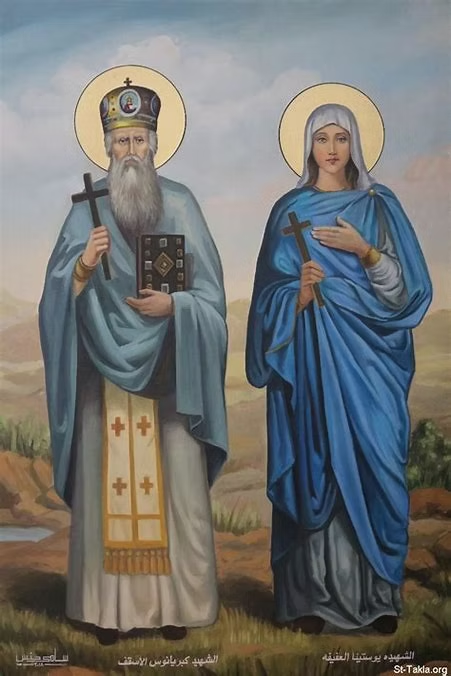
We also remember Sts. Cyprian and Justina, commemorated in today’s Mass, and the North American Martyrs, honored on this date in the traditional calendar in the United States. Cyprian’s conversion and Justina’s steadfast faith remind us that a life can be changed by grace. The North American Martyrs gave their lives while carrying the faith to others. Their witness encourages us to trust Christ and remain faithful when following Him is costly.
Novena to St. Francis of Assisi – Day Two
In the name of the Father, and of the Son, and of the Holy Spirit, Amen.
Holy Saint Francis, through your kind intercession we seek holiness above all things. We seek the faith, hope and love that allowed you to joyfully renounce the pleasures of earthly life and to radically follow our Lord Jesus Christ.
Pray for us that we enjoy the privilege of suffering with and for the poor in the example of Jesus. Help us to be always grateful for all the blessings we have received and the strength to overcome our most pressing concerns, especially… (Mention your intentions here)
Holy St. Francis, when you decided to serve in the manner of our Lord Jesus Christ you entrusted your whole life to his Divine Providence. Emboldened by your example, I resolve to entrust the favorable resolution of my situation to God our Father, through your most kind intercession. St. Francis, help us in praying for the grace to truly repent for our sins and actively seek reconciliation with God. May the blessings we obtain through your intercession deepen our faith, and inspire us to store treasures in Heaven, where we hope to spend eternity with the Almighty Father.
Glory be to the Father and to the Son and to the Holy Spirit, as it was in the beginning, is now and forever shall be, world without end. Amen
St. Francis of Assisi, Pray for us! In the name of the Father, and of the Son, and of the Holy Spirit, Amen.
QUESTIONS FOR THE HEART
What part of my life needs the patient care of Christ today?
Is there a burden I have carried so long that I have stopped asking Him for help?
What small fruit of repentance or mercy can I offer Him?
A LITTLE POEM FOR THE JOURNEY
The patient hand tends barren ground,
And lifts the weary, long bowed down,
Lord, turn my heart to Thee today,
Help what is good take root and stay.
Where I have waited, let me see
Thy mercy bearing fruit in me.
“Woman, thou art delivered from thy infirmity.” (Luke 13:12)
THE HEART OF MERCY
Ember Friday in September
St. Firmin of Amiens, Bishop and Martyr
St. Finbarr of Cork, Bishop
First Day of Novena to St. Francis of Assisi
September 25, 2026
TODAY’S GOSPEL: Luke 7:36-50
EPISTLE: Osee (Hosea) 14:2-10
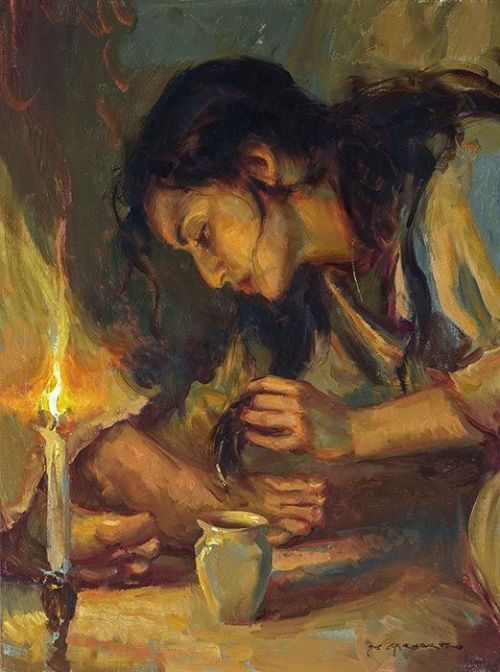
In today’s Gospel, Jesus is dining in the house of Simon the Pharisee when a woman known as a sinner comes to Him. She stands at His feet weeping, bathes them with her tears, wipes them with her hair, and anoints them with ointment. She risks the judgment of everyone in the room because she has come seeking mercy.
Simon sees her sins, Jesus sees her love and repentance. To help Simon understand, Our Lord tells him of two debtors whose debts were forgiven. The one forgiven more, Simon agrees, would love more. Jesus then points to what the woman has done for Him, acts of welcome and love that Simon had failed to offer. Turning to her, He says, “Thy faith hath made thee safe, go in peace.”
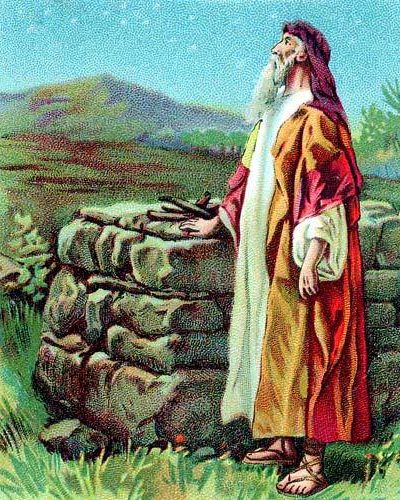
The Epistle begins with a call that could be spoken to anyone who has wandered from God: “Return, O Israel, to the Lord thy God.” The prophet urges the people to bring words of repentance rather than trust in what they can offer by their own strength. God promises to heal and love them. The woman in Simon’s house shows us what such a return can look like. She comes to Jesus as she is, trusting that He will receive her.
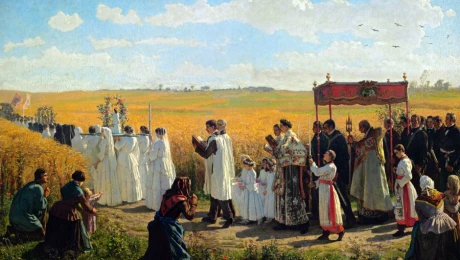
Today is Ember Friday, the second of the September Ember Days. These are days set aside for prayer, fasting, and thanksgiving as one season gives way to another. The Church invites us to remember our dependence on God and to turn toward Him with sincere hearts. The woman’s tears and the prophet’s plea remind us that we can begin with honest repentance and trust in His mercy.
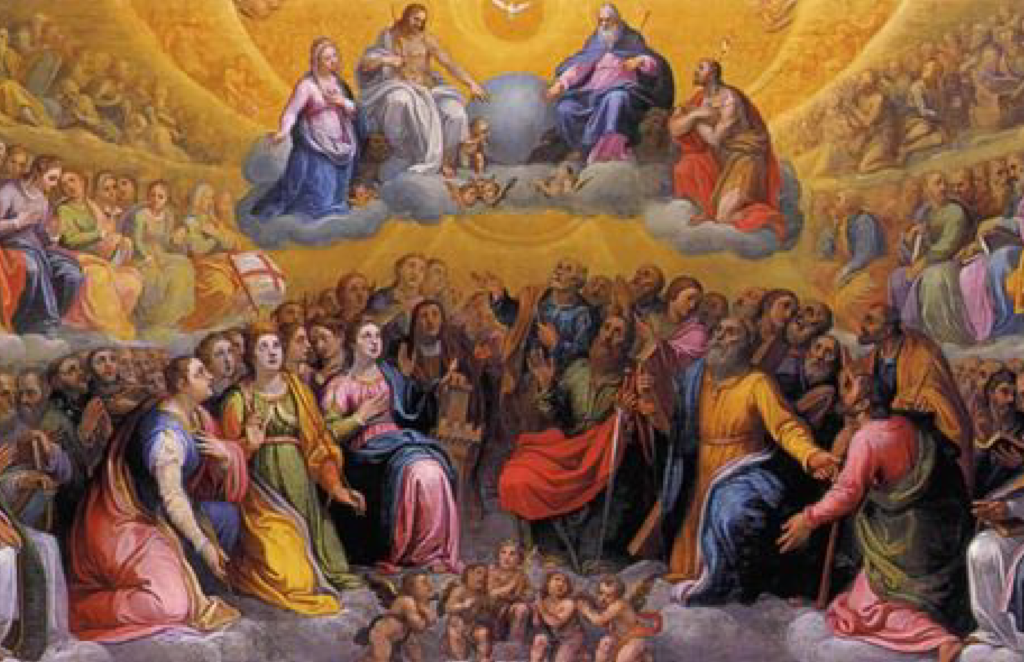
We also remember St. Firmin of Amiens and St. Finbarr of Cork. Firmin is honored as a bishop and martyr who preached the faith in France. Finbarr, a bishop in Ireland, founded a monastery at Cork that became a center of Christian life. Each served Christ among the people entrusted to him. Their lives invite us to carry the faith beyond our own prayers, through the way we care for and guide others.
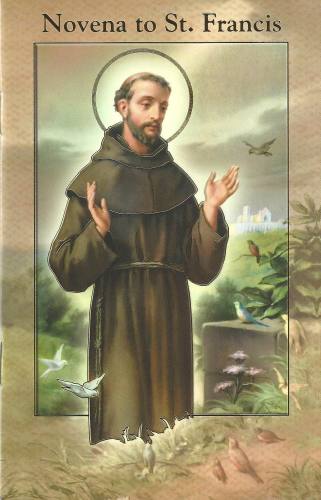
Novena to St. Francis of Assisi – Day One
In the name of the Father, and of the Son, and of the Holy Spirit, Amen.
Holy Saint Francis, through your kind intercession we seek holiness above all things. We seek the faith, hope and love that allowed you to joyfully renounce the pleasures of earthly life and to radically follow our Lord Jesus Christ. Pray for us that we enjoy the privilege of suffering with and for the poor in the example of Jesus. Help us to be always grateful for all the blessings we have received and the strength to overcome our most pressing concerns, especially… (Mention your intentions here).
St. Francis, as you left a comfortable life to lead a life of poverty and service to our Lord Jesus Christ, we ask you to pray that we also realize the folly of seeking to amass material gains and experience worldly pleasures. This day I humbly forego (_____) as an offering to God our Father, hoping this act signals a start of my conversion.
St. Francis, help us in praying for the grace to truly repent for our sins and actively seek reconciliation with God. May the blessings we obtain through your intercession deepen our faith, and inspire us to store treasures in Heaven, where we hope to spend eternity with the Almighty Father.
Glory be to the Father and to the Son and to the Holy Spirit, as it was in the beginning, is now and forever shall be, world without end. Amen
St. Francis of Assisi, Pray for us!
QUESTIONS FOR THE HEART
Is there something I have been afraid to bring honestly before Jesus?
How can I make room today for prayer, repentance, and gratitude?
Who might need me to offer the patience and kindness I have received from God?
A LITTLE POEM FOR THE JOURNEY
I come with little I can bring,
And lay my tears before my King,
He sees the heart I dare to show,
And calls me close; He lets me go
In peace, to love as I’ve been loved,
With mercy given from above.
“Thy faith hath made thee safe, go in peace.” (Luke 7:50).
BLESSED ARE THEY WHO HEAR
Commemoration of Our Lady of Ransom
September 24, 2026
TODAY’S GOSPEL: Luke 11:27-28
EPISTLE: Ecclesiasticus 24:14-16
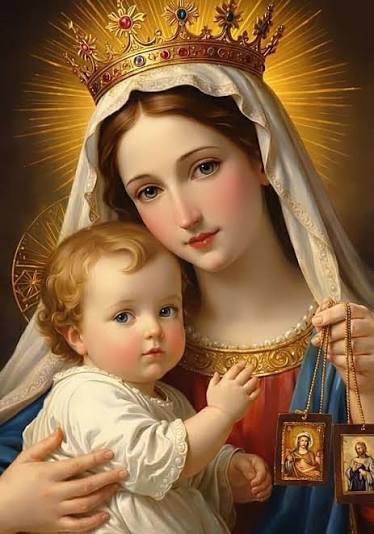
In today’s Gospel, a woman in the crowd calls out to Jesus, “Blessed is the womb that bore thee.” She recognizes that His Mother is blessed. Our Lord replies, “Yea rather, blessed are they who hear the word of God, and keep it.”
Jesus invites the woman, and all who hear Him, to look more deeply at Mary’s life. Our Lady did more than bear Him; she received God’s word and remained faithful to it. At the Annunciation, she accepted what God asked of her, though she could not see all that lay ahead. She continued to trust Him through the years of raising Jesus and through the sorrow of His Passion. The blessing Jesus speaks of in the Gospel shines especially clearly in His Mother.
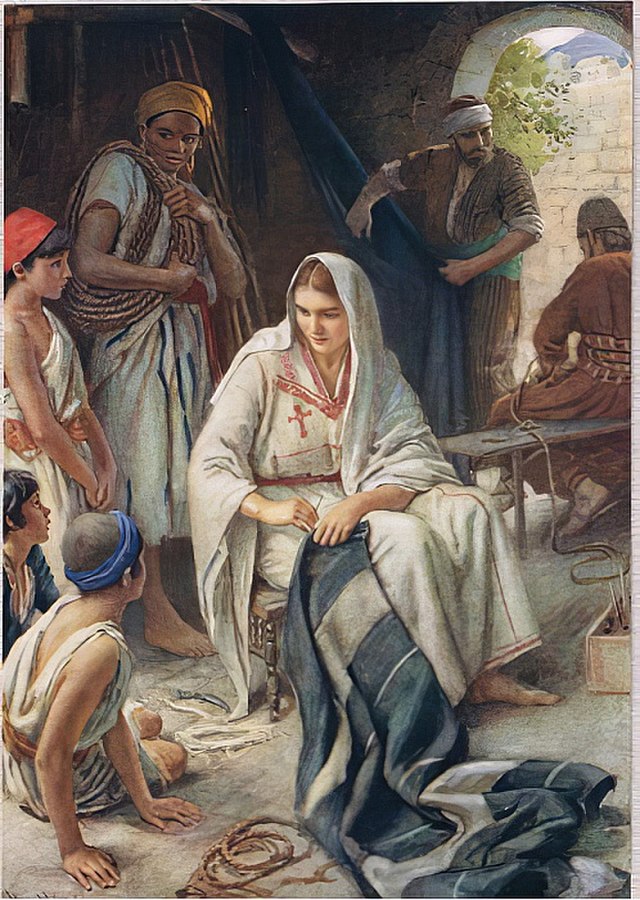
The Epistle gives us the image of wisdom dwelling among God’s people and taking root in an honored inheritance. In the liturgy, these words help us contemplate Mary’s place in God’s plan. Her life was firmly rooted in Him. She welcomed the Son of God into the world and kept His word in her heart. When we ask her to teach us to listen, she leads us to her Son.
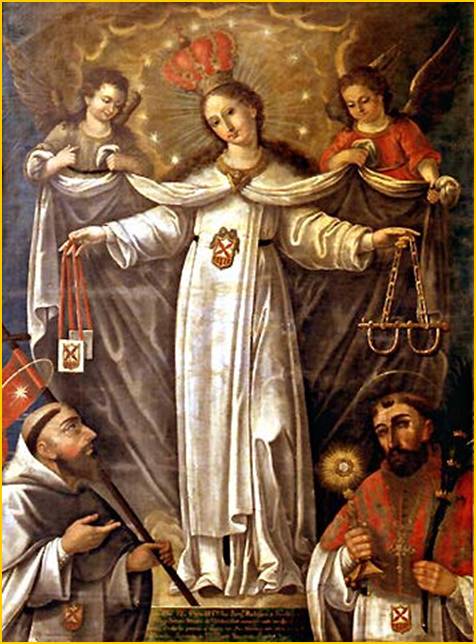
Today, the traditional calendar commemorates Our Lady of Ransom. The title recalls a work of mercy that began in the thirteenth century. Christians held captive faced suffering and, in some cases, pressure to abandon their faith. St. Peter Nolasco founded the Mercedarian Order to seek their freedom. Its members gathered what was needed to ransom captives and were prepared to give even their own lives for them. They honored Mary as their mother and foundress.
Our Lady of Ransom reminds us that these were particular people who needed help. Someone had to hear of their suffering, go to them, and pay the cost of bringing them home. The Mercedarians answered that need with remarkable courage. Their devotion to Mary strengthened them to follow Jesus, who gave Himself for our redemption.
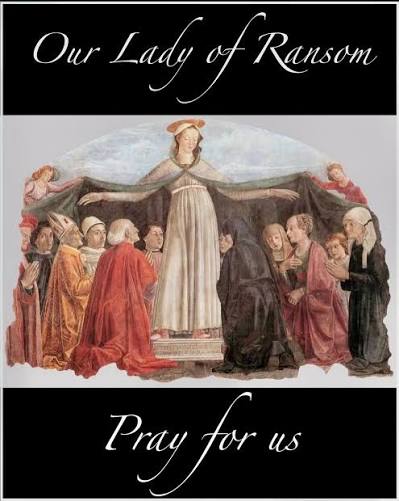
The need to care for people in danger has not ended. Some are deprived of freedom, others live under fear or face pressures that threaten their faith. We can pray for them through Our Lady’s intercession and support those who can reach them. We can also notice the person near us who feels trapped by grief, illness, or hardship. We may not be able to remove that burden, but we can listen, offer practical help, and stay beside them.
QUESTIONS FOR THE HEART
What word of God have I heard but found difficult to put into practice? I can ask Our Lady to help me take one step today.
Who needs someone to notice their suffering, pray for them, or offer practical help?
A LITTLE POEM FOR THE JOURNEY
O Mother, teach my heart to hear,
The word of God and hold it dear,
When He asks more than I can see,
Help me to answer faithfully.
And when a captive cries for aid,
Let me not turn from what is prayed,
Lead me to Christ, whose love makes free,
And show me what He asks of me.
“Blessed are they who hear the word of God, and keep it.” (Luke 11:28)
LORD, HELP MY UNBELIEF
Ember Wednesday in September
St. Pio of Pietrelcina (Padre Pio)
St. Linus, Pope and Martyr
St. Thecla, Virgin and Martyr
September 23, 2026
TODAY’S GOSPEL: Mark 9:16-28
THE LESSON: Amos 9:13-15
THE EPISTLE: 2 Esdras 8:1-10 (Nehemiah 8:1-10)
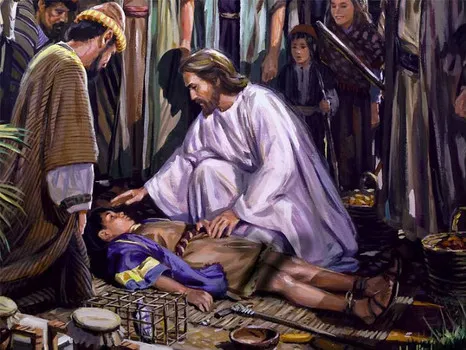
In today’s Gospel, a father brings his son to Jesus after the disciples have been unable to help him. The boy has suffered terribly, and his father has watched over him for years. He asks Our Lord to have compassion on him. When Jesus speaks of faith, the father answers, “I do believe, Lord; help my unbelief.”
The father does not wait until his faith feels strong before approaching Jesus. He brings his son, his anguish, and even his weakness of faith to Our Lord. Jesus heals the boy. Later, when the disciples ask why they could not cast out the spirit, He speaks to them of prayer and fasting.
On this Ember Wednesday, the Gospel reminds us that we need God’s help in struggles we cannot overcome by our own strength. Ember Days may be unfamiliar to many Catholics today. In the Church’s traditional calendar, they are sets of three days – Wednesday, Friday and Saturday – observed four times throughout the year. These days are devoted to prayer and fasting. The September Ember Days come at harvest time, giving us an occasion to thank God for the fruits of the earth and to ask His blessing upon our labor. They are also a time to pray for priests and for those preparing to serve the Church.
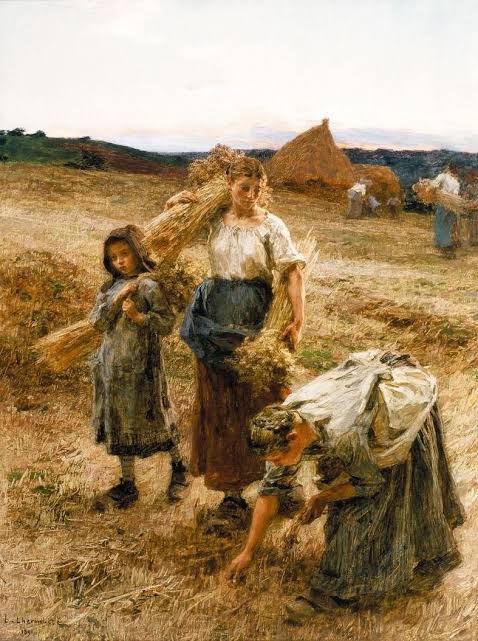
The first reading, from the prophet Amos, speaks of an abundant harvest. The Lord promises to restore His people, and they will plant vineyards and gardens and enjoy their fruit. The harvest is a gift from His hand. As we thank Him for the food that sustains our bodies, we can also consider the fruit He desires to bring forth in our souls.
In the second reading, Esdras reads the Law of God before the assembled people. They listen attentively, and its meaning is explained to them. Hearing the word of God moves them to tears, but they are also told that the day is holy and that they should rejoice. God’s Word reveals where we need to turn back to Him. It also reminds us that He has not abandoned His people.
Today, Holy Mother Church commemorates St. Linus who succeeded St. Peter as Pope about the year 67. He served at a time when the Church was still young. Much about his life remains unknown, but Our Lord continued to care for His Church through the successors of Peter.
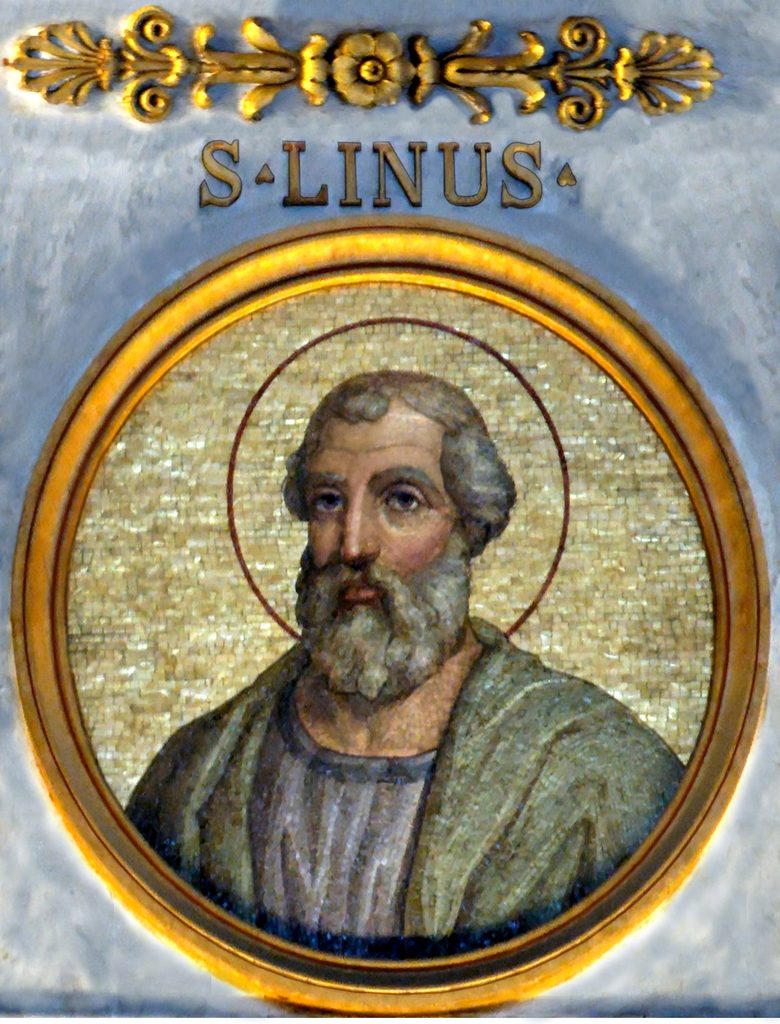
The traditional calendar honors St. Linus as a pope and martyr. On an Ember Day, his memory gives us a particular reason to pray for the Holy Father, bishops, and priests, and to pray they will be faithful and protect that which they have received.
We also remember St. Thecla, a virgin and martyr, honored in the Church’s tradition for her steadfast devotion to Christ. Early Christian accounts associate her with the preaching of St. Paul and describe the trials she faced because she chose to follow Our Lord. St. Thecla reminds us that listening to the word of God asks something of us. The people in today’s second reading did more than hear the Law, they received it with attentive hearts.
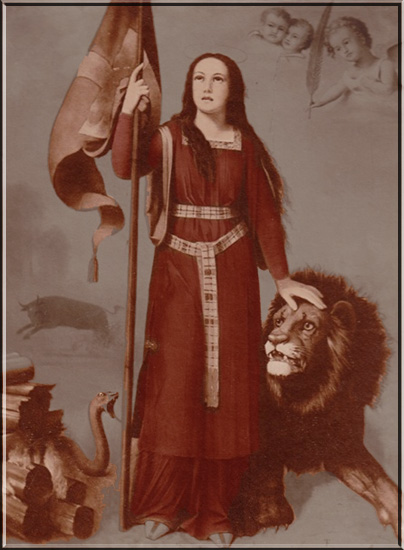
September 23 is also the memorial of St. Pio of Pietrelcina, lovingly known as Padre Pio. A Capuchin priest, he spent long hours in prayer and the confessional. People came to him carrying sins, sorrows, and questions, and he directed them toward the mercy of Jesus Christ. Padre Pio knew suffering in his own life, yet he continued to offer himself in service to God and others. As we pray during these Ember Days, let us ask God to raise up priests who will care for souls with such perseverance and love.
Today’s readings and saints invite us to listen to God’s word, thank Him for His gifts, and bring Him the needs we cannot resolve alone. The father’s prayer can become our own. Whether our faith is steady or struggling, we can still come to Jesus and ask Him to help us.
QUESTIONS FOR THE HEART
What sorrow or struggle am I trying to carry without asking Jesus for help? Can I pray with the father in the Gospel, “Lord, help my unbelief”?
Have I thanked God for the gifts He has provided, and am I allowing His word to bear fruit in my life?
A LITTLE POEM FOR THE JOURNEY
Lord, when my faith is frail and small,
Still hear my voice when I shall call,
Plant deep Your word, let grace increase,
And bring my troubled heart Your peace.
“I do believe, Lord: help my unbelief.” (Mark 9:23)
GIFTS GIVEN
St. Thomas of Villanova, Bishop and Confessor
Franciscan Calendar: St. Ignatius of Santhia, Priest, Capuchin
September 22, 2026
TODAY’S GOSPEL: Matthew 25:14-23
EPISTLE: Ecclesiasticus 44:16-27, 45:3-20
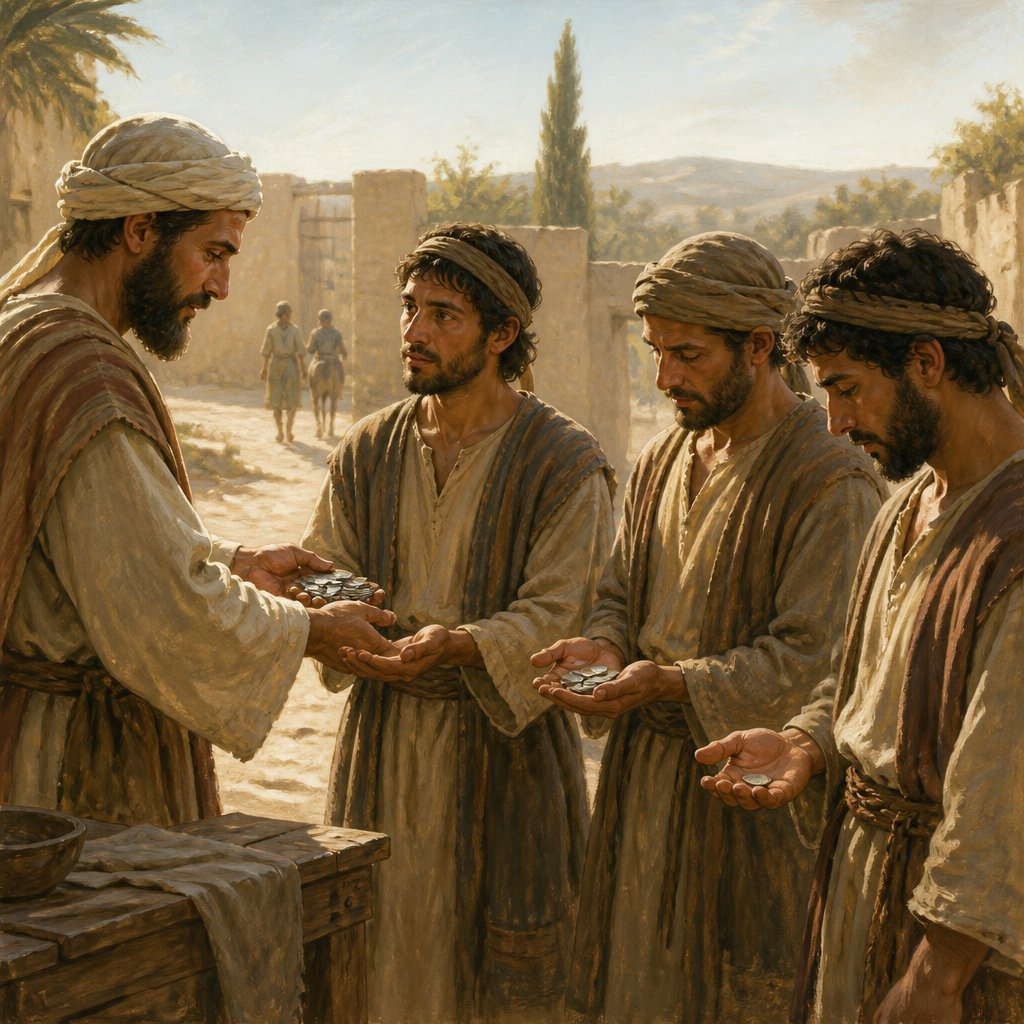
In today’s Gospel, Jesus tells His disciples about a man who, before leaving on a journey, entrusted his possessions to his servants. To one he gave five talents, to another two, and to another one, “to every one according to his proper ability.” The master did not give the same amount to each servant, but he entrusted something valuable to every one of them.
The servant who received five talents gained five more, while the servant who received two talents gained another two. The master did not compare them to one another. Both received the same praise: “Well done, good and faithful servant.” Their reward was based upon their faithfulness in using it, not on what they received.
In the verses that follow today’s reading, the final servant returns the one talent which he had buried in the ground. Fear had caused him to hide the talent instead of putting it to use. To the first two servants, the master says: “Enter thou into the joy of thy lord.”
Today’s Epistle recalls the faithful men through whom God carried forward His plan of salvation. Enoch pleased the Lord. Noah was found righteous and persevered through the flood. Abraham believed God and received the covenant. Isaac and Jacob inherited the promises. Moses was chosen to deliver the Israelites from slavery and receive the commandments. Aaron was consecrated to serve God in the priesthood.
Each man received a different calling, but each had a place in God’s providence. Noah was entrusted with the ark, Abraham with the covenant, Moses with the Law, and Aaron with the priesthood. What God gave them was not meant for their benefit alone. Their faithfulness served His people and prepared the way for the coming of Jesus Christ.
The events of the Old Testament point beyond themselves toward their fulfillment in Our Lord. The manna in the wilderness prepared God’s people for the true Bread from Heaven.
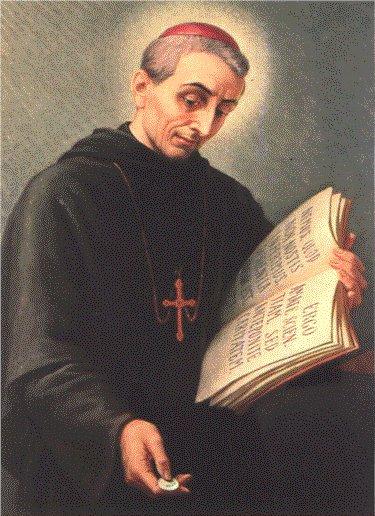
Today Holy Mother Church commemorates St. Thomas of Villanova, a faithful shepherd who used the gifts God gave him in service to the Church and the poor. Born in Spain in 1486, Thomas was raised in a devout Catholic family. From childhood, he possessed a compassionate heart and was known to give food and even his own clothing to those in need.
Thomas received an excellent education and eventually became a professor, but worldly advancement could not satisfy his soul. At the age of thirty, he entered the Order of St. Augustine. After his ordination to the priesthood, he became known for his holiness, learning, powerful preaching, devotion to the Blessed Virgin Mary, and deep knowledge of Sacred Scripture.
He entered the hidden life of a friar, but obedience eventually called him to become Archbishop of Valencia. He lived simply and cared for the poor, and he was called the “Father of the Poor.” He promoted holiness and discipline among the clergy. Near the end of his life, he ordered that the money remaining in his possession be distributed to those in need.
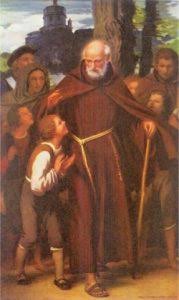
On the Franciscan calendar, we also honor St. Ignatius of Santhia, a priest of the Order of Friars Minor Capuchin. Born Lorenzo Maurizio Belvisotti in Italy in 1686, he was ordained a diocesan priest and served faithfully for several years. He was offered positions of honor, but God was calling him to the poverty, humility, and obedience of the Capuchin life.
He received the name Ignatius, and placed himself in the hands of God. He served as a master of novices, forming young friars. During a period of war and disease, he ministered to wounded soldiers in military hospitals. He became known for his ability to help people wounded by sin. He brought sinners to the truth through patience, mercy, and fatherly love. In the Sacrament of Penance, he helped them encounter Jesus Christ, the Divine Physician who heals the contrite heart and restores sanctifying grace to the soul.
We may never be called to work in the midst of war, form religious novices, or become known for great works of charity, but every day God gives us opportunities to love our neighbor and use our talents. If we are faithful, we too may hear the words that every saint longs to hear: “Well done, good and faithful servant: enter thou into the joy of thy lord.”
QUESTIONS FOR THE HEART
What gifts has God entrusted to me? Am I using them for His glory and the good of others, or have I buried them beneath fear, selfishness, distraction, or laziness?
Like St. Thomas of Villanova, do I see Jesus Christ in the poor, the sick, the lonely, and those who need my help?
A LITTLE POEM FOR THE JOURNEY
The gifts we hold are not our own,
But seeds the hand of God has sown,
Through faithful deeds and works of love,
They bear eternal fruit above.
“Well done, good and faithful servant: because thou hast been faithful over a few things, I will place thee over many things: enter thou into the joy of thy lord.” (Matthew 25:21).
FOLLOW ME
St. Matthew, Apostle
St. Jonah, Prophet
September 21, 2026
TODAY’S GOSPEL: Matthew 9:9-13
EPISTLE: Ezekiel 1:10-14
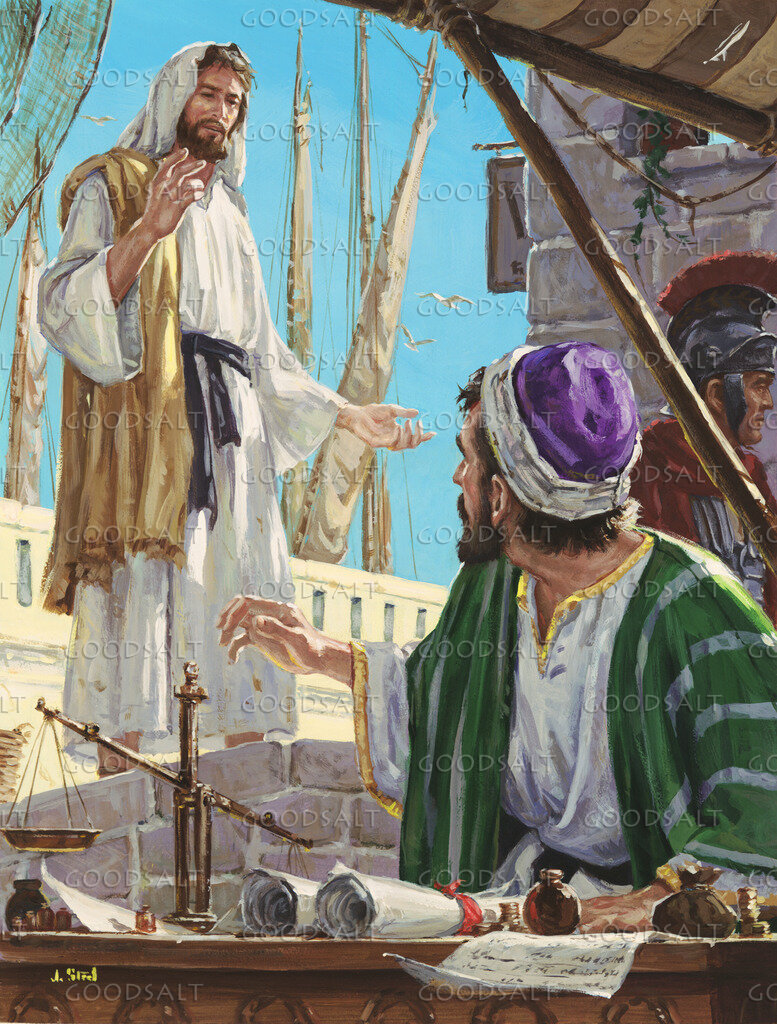
Today Holy Mother Church celebrates the Feast of St. Matthew, one of the twelve Apostles of Jesus Christ and one of the four Evangelists. The Roman Martyrology also commemorates the Holy Prophet Jonah on this day.
St. Matthew, also called Levi, was a Jewish tax collector who worked under Roman authority. Tax collectors were despised by many of their own people because they served the occupying power and were often associated with dishonesty, extortion, and cooperation with the enemies of Israel. How did Matthew go from being a despised publican to a follower of Christ, and an Apostle, an Evangelist, and a martyr for the truth?
We do not know the whole story of his conversion. We know only that Jesus saw a man named Matthew sitting at the receipt of custom and said to him, “Follow Me.” According to today’s Gospel, Matthew arose and followed Him. He walked away from his profitable occupation, his wealth, and the security his position offered to follow the Messiah.
Jesus was afterward sitting and eating a meal with a large company of publicans and sinners, and the Pharisees saw this, and they asked why Jesus would eat with publicans and sinners. Our Lord answered: “They that are in health need not a physician, but they that are ill.”
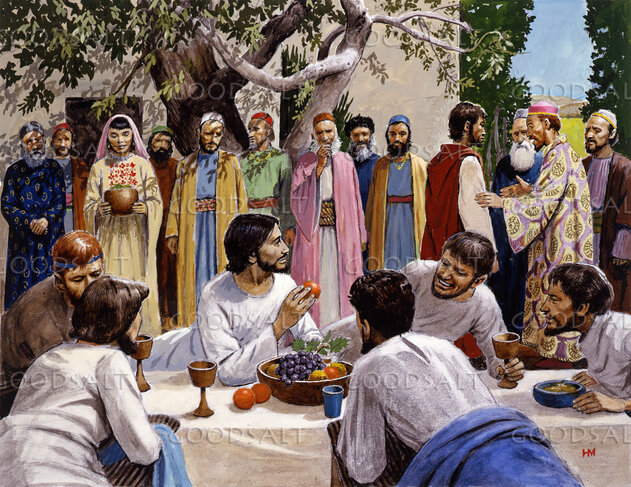
Most of us can relate to Matthew and his friends. We are all sinners and fall short. But Christ came to seek the lost, and His mercy is inexhaustible for those who seek Him with repentance, faith, and love.
The words of Jesus must have touched a place in Matthew’s heart. Jesus did not call Matthew to remain in his former way of life. He called him to arise, leave his sins and other lifestyle behind, and begin a new life of grace. In time, Matthew would understand more fully that the Savior of the world had looked upon him and called him by name.
Today’s Epistle comes from the Prophet Ezekiel who was a prophet during the fall of Jerusalem and the exile of the Israelites to Babylon. Written centuries before Christ came to dwell on earth, his prophetic vision is filled with mystery. “And in the midst thereof the likeness of four living creatures: and this was their appearance: there was the likeness of a man in them.” Christian tradition associates the four faces that were seen in the vision – the man, the lion, the ox, and the eagle – with the four Evangelists. St. Matthew is represented by the man because his gospel begins with the human genealogy of Jesus Christ and directs our attention to the mystery of the Incarnation. St. Mark is the lion, St. Luke the ox, and St. John the eagle. Together, they proclaim the Gospel of Jesus Christ.
“And every one of them went straight forward: whither the impulse of the spirit was to go, thither they went, and they turned not when they went.” St. Irenaeus, an early Father of the Church, helps us understand this vision. He teaches that, as the world has four quarters and four principal winds, the Church has received the one Gospel in a fourfold form, and all bear witness to the same Lord Jesus Christ. Matthew, like most of the Apostles, would give his life for His Savior.
The Church also remembers the Holy Prophet Jonah who God called to preach repentance to the people of Nineveh, but Jonah boarded a ship going the opposite direction. A large storm came and threatened to break the boat apart. The sailors threw Jonah into the sea, and the sea became calm. God sent a giant fish to swallow Jonah, and Jonah was inside the fish for three days and nights. The fish spat Jonah out on dry land, and Jonah then obeyed God and went to Nineveh. The people of Nineveh listened and repented.
The Lord presents Jonah as a sign pointing to His own death and Resurrecton: “For as Jonah was in the whale’s belly three days and three nights, so shall the Son of man be in the heart of the earth three days and three nights.”
QUESTIONS FOR THE HEART
Have I prayerfully read the Gospel according to St. Matthew? Can I set aside time each day to read a passage, reflect upon its meaning, and allow the Word of God to speak to my heart?
Is Christ calling me to leave behind a sin, attachment, or way of life so that I may follow Him more faithfully?
When God asks something difficult of me, do I arise like Matthew or do I attempt to flee like Jonah?
A LITTLE POEM FOR THE JOURNEY
Christ passed where Matthew sat that day,
And called him from his former way,
“Come, follow Me,” the Savior said,
And Matthew rose, by mercy led.
Though Jonah fled acreoss the sea,
God called him back to ministry,
May we arise when Christ draws near,
And follow Him in faith, not fear.
“And he saith to him: Follow Me. And he rose up and followed Him.” (Matthew 9:9)
THE GREATEST COMMANDMENT
St. Eustachius and Companions
September 20, 2026
TODAY’S GOSPEL: Matthew 22:34-46
EPISTLE: Ephesians 4:1-6
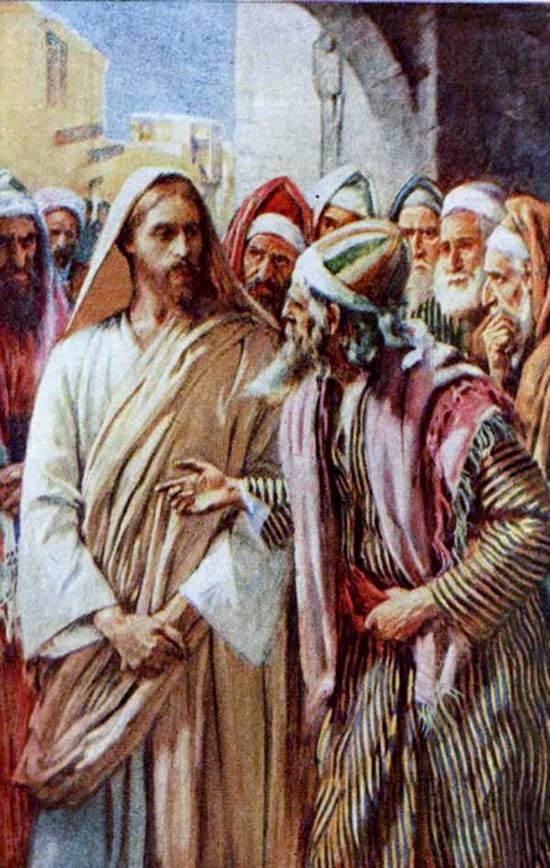
In today’s Gospel, a doctor of the law approaches Our Lord and asks Him a question intended to snare Him: “Master, which is the great commandment in the law?” Jesus answers, “Thou shalt love the Lord thy God with thy whole heart, and with thy whole soul, and with thy whole mind,” and, “Thou shalt love thy neighbor as thyself.”
Everything begins with the love of God. He does not ask for a small corner of the heart or a few moments left over at the end of the day. He asks for the whole heart, the whole soul, and the whole mind. God must be loved above every created thing – because every good and holy love finds its proper order in Him.
The second commandment flows from the first. We cannot truly love God while refusing to love those whom He has created in His image. Love of neighbor requires patience with weakness, forgiveness of injuries, compassion for suffering, and a willingness to sacrifice for the good of another soul.
In the Epistle today, St. Paul shows us what this love should produce within the Church. He urges Christians to walk worthy of their vocation “with all humility and mildness, with patience, supporting one another in charity,” and to remain “careful to keep the unity of the Spirit in the bond of peace.”
Today we also remember St. Eustachius and his companions – his wife, Theopistes, and their sons, Agapitus and Theopistus. According to ancient tradition, Eustachius was a distinguished Roman officer. While hunting, he saw a stag bearing a crucifix between its antlers and heard the voice of Christ calling him to the faith. He and his family received Baptism and remained faithful through severe trials.
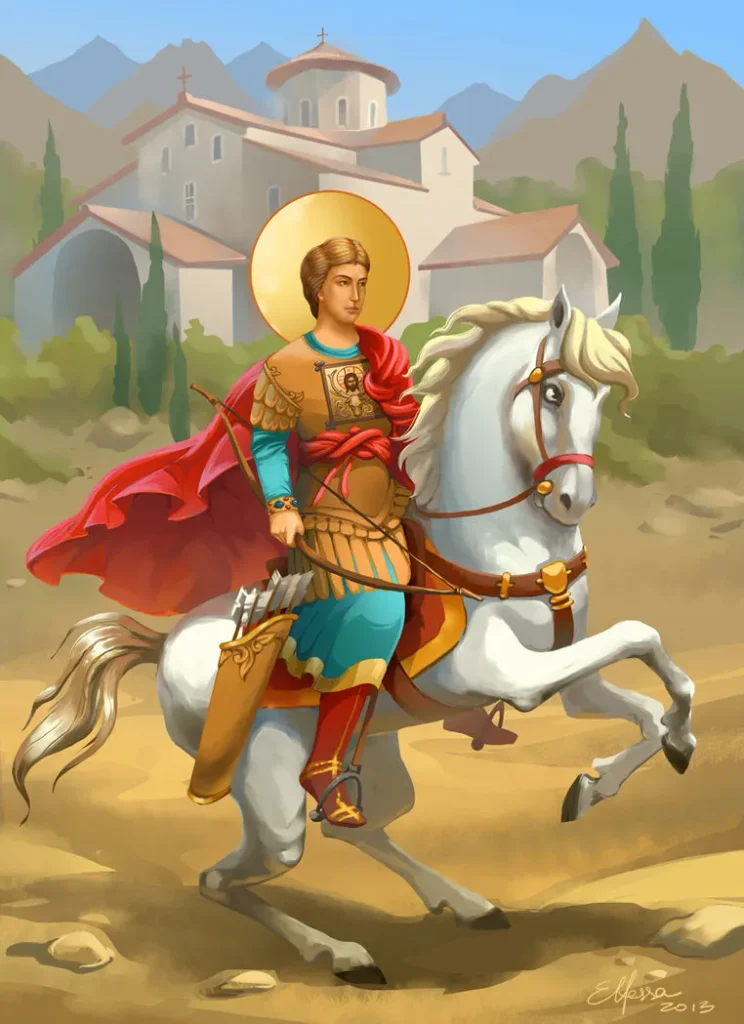
Their family was separated, stripped of earthly security, and eventually reunited. Under the Emperor Hadrian, they refused to offer sacrifice to false gods. Tradition relates that they were first condemned to wild beasts but remained unharmed, after which they were enclosed within a heated brazen ox and completed their martyrdom together.
Today’s Epistle calls us to preserve the unity of the Spirit. The Gospel commands us to love God above all else, and our neighbor as ourselves. St. Eustachius and his family show us what this love looks like when it is tested: fidelity to Christ, courage in suffering, and perseverance together unto the end.
QUESTIONS FOR THE HEART
Do I love God with my whole heart, soul, and mind, or do I give Him only what remains after everything else?
Does my love for others lead me to patience, sacrifice, truth, and prayer for their eternal good?
Is there resentment, pride, or an unwillingness to forgive in my heart?
A LITTLE POEM FOR THE JOURNEY
One Lord, one faith, one saving call,
One bond of peace to gather all,
With heart and soul, let charity
Unite our lives eternally.
“Careful to keep the unity of the Spirit in the bond of peace.” (Ephesians 4:3)
FOR MY NAME’S SAKE
St. Januarius and Companions
Our Lady of LaSalette
September 19, 2026
TODAY’S GOSPEL: Matthew 24:3-13
EPISTLE: Hebrews 10:32-38
In today’s Gospel, the disciples ask Our Lord about His coming and the consummation of the world. Jesus does not satisfy their curiosity with dates or calculations. Instead, He prepares their souls. He tells them there will be deceptions, wars, famine, pestilence, earthquakes, persecution, and betrayal. False prophets will arise, and because iniquity has abounded, the charity of many will grow cold.
These words are solemn, but they are not meant to leave us afraid. Christ gives His disciples the remedy: fidelity. “He that shall persevere to the end, he shall be saved.” The Christian does not persevere because he is naturally strong, but because Jesus Christ is faithful. Grace enables us to reman steadfast when the world grows hostile, when suffering becomes heavy, and when love seems to be disappearing around us.
One of the gravest warnings in this Gospel is that “the charity of many shall grow cold.” Our faith can be weakened not only by open persecution, but also by gradual indifference. Prayer becomes hurried, sin is excused, Sunday worship is neglected, and the needs of others cease to move the heart. A soul rarely becomes cold all at once. The fire ordinarily fades when it is no longer fed.
The Epistle calls us back to the fervor of our first faith. This group in the early Church had endured reproaches, tribulations, and the loss of possessions, yet they had borne these trials with joy because they knew that they possessed “a better and a lasting substance.” They are therefore told: “Do not therefore lose your confidence, which hath a great reward.”
Christian confidence is not the belief that suffering will never come. It is the certainty that suffering in unity with Christ is never wasted. The just man lives by faith, not by what he can presently see, but instead by trust in the Lord Who has promised to come and Who cannot deceive.
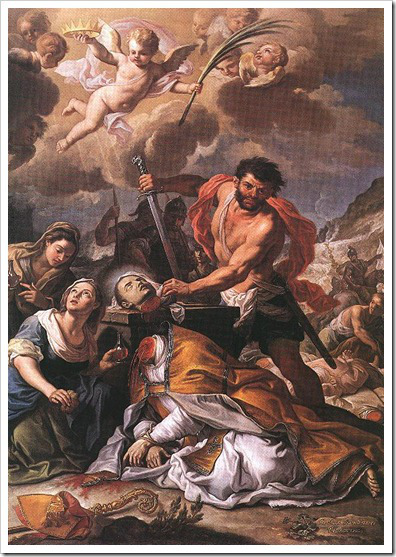
St. Januarius and his companions lived this Gospel with their blood. Januarius, traditionally honored as the Bishop of Benevento, was martyred with his companions during the persecution under Diocletian in the early fourth century. Threats could not make them deny Christ. Death could take their earthly lives, but it could not take from them the “better and lasting substance” promised to those who remain faithful.
For centuries, the faithful of Naples have also venerated a relic traditionally held to contain the blood of St. Januarius. The dark, solid substance has repeatedly been observed to become liquid, most especially on his feast of September 19, as well as on the Saturday before the first Sunday of May and on December 16. The faithful receive this supernatural occurrence with reverence and wonder. Yet the greatest testimony of St. Januarius and his companions is the testimony that every martyr gives – that they loved Christ more than their own life and persevered to the end.
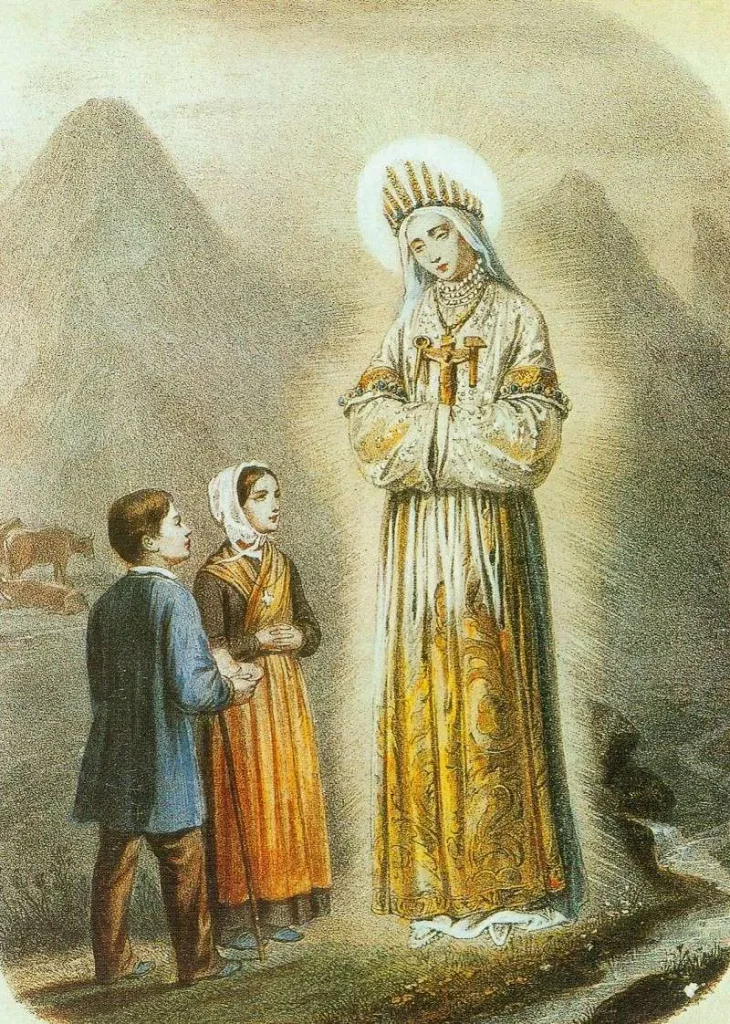
We also remember Our Lady of LaSalette. On September 19, 1846, the Blessed Virgin appeared in the French Alps to two shepherd children, Melanie Calvat and Maximin Giraud. The apparition was later approved by the Bishop of Grenoble. The children first saw the beautiful lady seated and weeping. Her message was a maternal summons to convcrsion, prayer, and reverence for the Holy Name of God, and the sanctification of Sunday.
At LaSalette, the Mother of Sorrows grieved over sins that offend her Son and destroy souls. Her main warning was that humanity’s increasing sinfulness and indifference to God would bring down divine chastisement.
The martyrs show us the cost of fidelity. Our Lady shows us the sorrow of a mother calling her wandering children home to her Son. Sacred Scripture gives us this promise: “He that shall persevere to the end, he shall be saved.”
QUESTIONS FOR THE HEART
Has my love for God grown cold in any part of my life?
When fidelity becomes difficult, do I rely upon Christ’s grace or only upon my own strength?
Do I keep Sunday holy and speak the Holy Name of Jesus with reverence?
A LITTLE POEM FOR THE JOURNEY
When charity grows faint and cold,
And trials gather on the way,
Keep bright the faith the martyrs held,
Hold fast to Christ and watch and pray.
“Do not therefore lose your confidence, which hath a great reward.” (Hebrews 10:35)
CLOTHED IN THE GARMENT OF CHARITY
St. Joseph of Cupertino, Confessor
September 18, 2026
TODAY’S GOSPEL: Matthew 22:1-14
EPISTLE: I Corinthians 13:1-8
In today’s Gospel, Jesus tells the chief priests and Pharisees that the Kingdom of Heaven is like a king who prepared a marriage feast for his son. The feast is ready. The tables have been set, the meal has been prepared, and the king sends his servants to summon those who had been invited. But the invited guests refuse to come.
The king does not immediately withdraw his invitation. He sends other servants with a more urgent message: “Behold, I have prepared my dinner … and all things are ready: come ye to the marriage.” Still, the guests will not come. One goes away to his farm and another to his business. The rest seize the king’s servants, mistreat them, and put them to death.
When the king hears what has happened, he sends his armies against the murderers and burns their city. Then he turns to his servants and tells them that the marriage feast is ready, but those who had been invited were not worthy. He sends them out into the highways with a new command: “As many as you shall find, call to the marriage.” The servants go out upon the roads and gather everyone they find, both good and bad, until the wedding hall is filled with guests.
The king then enters the hall to see those who have come. Among them he notices a man who is not wearing a wedding garment. The king asks him, “Friend, how camest thou in hither not having a wedding garment?” The man has no answer. He stands silent before the king. The king orders the attendants to bind his hands and feet and cast him into the exterior darkness, where there will be weeping and gnashing of teeth. Jesus ends the parable with the solemn words: “For many are called, but few are chosen.”
Today’s Epistle shows us what this wedding garment looks like in the life of a Christian. St. Paul speaks of extraordinary gifts: the tongues of men and angels, prophecy, knowledge of mysteries, faith that could move mountains, and even giving away of all one’s possessions. Yet he says that if he possesses all those things but does not have charity, he is nothing.
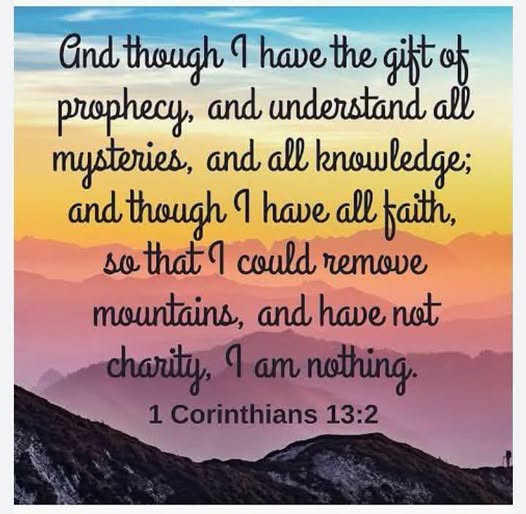
This is the garment we must wear when we meet the king in the wedding hall. It is woven throughout the ordinary choices of each day: forgiving when we have been wounded, remaining patient when we are tried, speaking the truth with love, refusing resentment, serving without seeking praise, and loving God above all else.
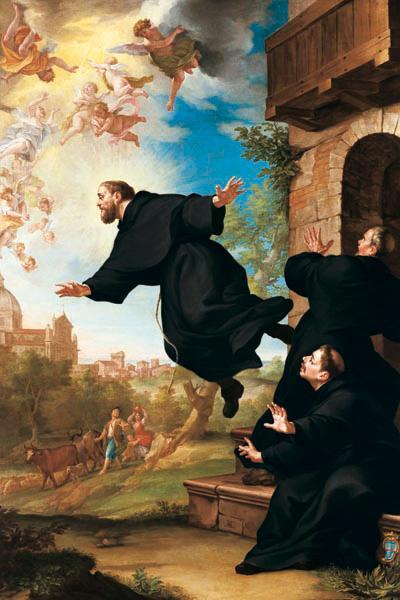
Today the Church puts before us a saint who had extraordinary spiritual gifts. St. Joseph of Cupertino was born in 1603 in the town of Cupertino in southern Italy. His family was very poor, and his childhood was filled with hardship. His father died before Joseph was born, and his mother struggled to provide for him. As a boy, Joseph was often sick, absent-minded, awkward, and slow to learn. The people in the town mocked him and called him “the gaper” because he frequently wandered around with his mouth hanging open, seemingly unaware of everything around him.
Joseph tried to learn a trade, but little seemed to go well for him. He broke things, made mistakes, and was dismissed from the work given to him. He longed to enter religious life, but the communities to which he applied did not think him capable of becoming a friar. The Capuchins accepted him for a time, but his clumsiness made even the simplest duties difficult, and he was sent away.
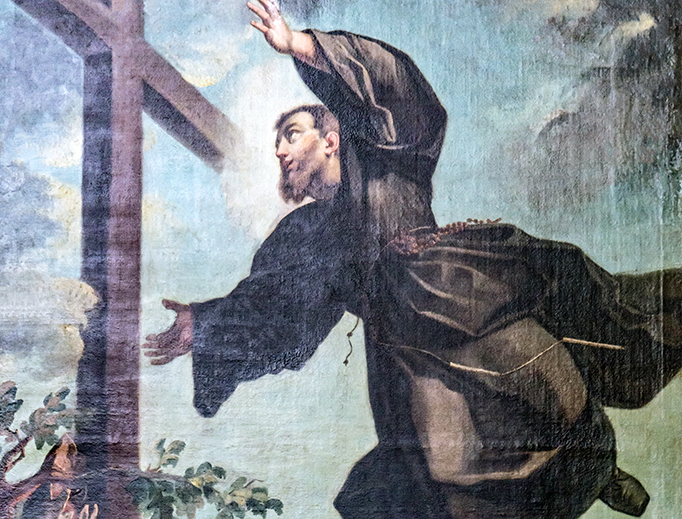
Eventually Joseph was permitted to live with another group of Franciscans. He was given a servant’s clothing and sent to care for the mule. The friars began to see that beneath his awkward manner was a soul of remarkable gentleness, purity, humility, and love for God. In time, they admitted him to the Order. Joseph hoped to become a priest, but he had great difficulties with the studies. He could remember little of what he read. However, Joseph was finally ordained a priest in 1628.
After his ordination, extraordinary events began to surround him. At times, the mere mention of Jesus, Mary, Bethlehem, or Calvary filled him with such love that he rose from the ground. Witnesses reported seeing him lifted high into the air, sometimes remaining there for a considerable time. He became known as “the Flying Friar.” Crowds came to see him which caused him more distress as he was moved from one location to another, and he was forbidden at times to celebrate Mass publicly or join his brothers in the choir. He died on September 18, 1663, reportedly whispering the Holy Name of Jesus.
The man who seemed incapable of succeeding in the eyes of the world was so in love with Our Lord that he entered deeply into the mysteries of God.
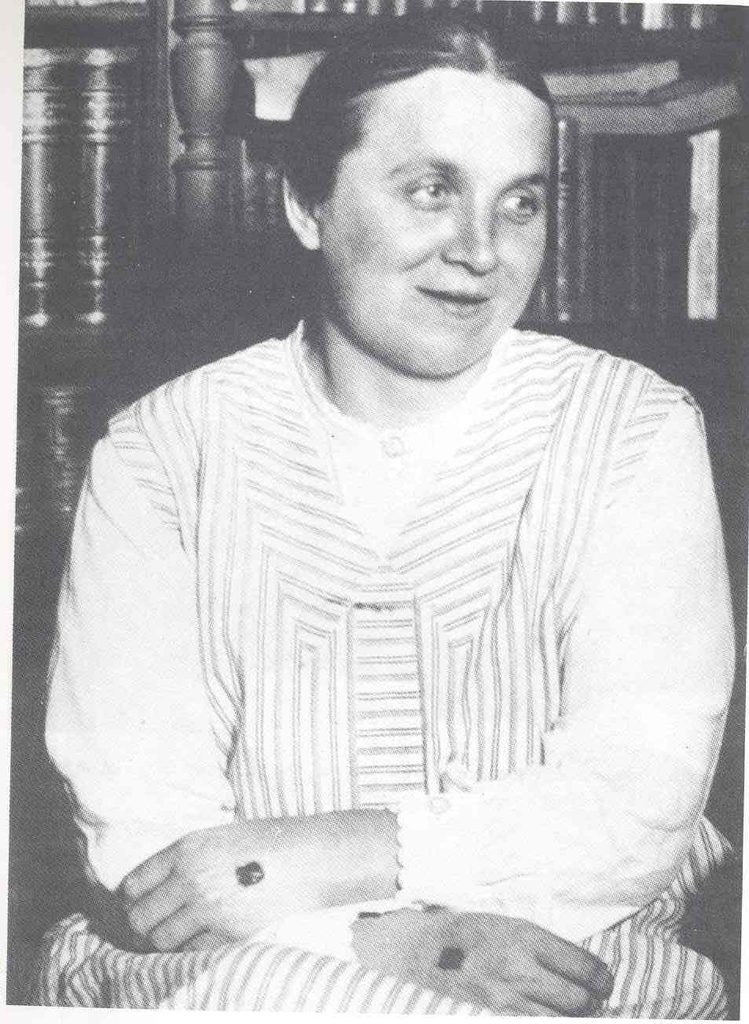
September 18 also marks the anniversary of the death of Therese Neumann in 1962. She was a German Catholic mystic and stigmatist whose life attracted great interest because of extraordinary spiritual gifts. She is not a canonized saint, but her cause was opened in 2005, giving her the title Servant of God.
Have the ordinary concerns of work, possessions, entertainment, and comfort become more important to me than God’s invitation to holiness?
When I examine my words and actions, do I find the marks of charity described by St. Paul – patience, kindness, humility, truth, perseverance, and freedom from resentment?
A LITTLE POEM FOR THE JOURNEY
The King has called, the feast is spread,
The Lamb has come, His Blood was shed,
O soul, arise – no more delay
Put on His love, and with Him stay.
“Charity is patient, is kind: charity envieth not, dealeth not perversely: is not puffed up … Charity never falleth away.” (I Corinthians 13:4,8)
THE WOUNDS OF DIVINE LOVE
THE SACRED STIGMATA OF ST. FRANCIS
Commemoration of St. Hildegard of Bingen, Virgin and Doctor of the Church
Commemoration of St. Lambert, Bishop and Martyr
September 17, 2026
TODAY’S GOSPEL: Luke 14:1-11
EPISTLE: Ephesians 3:13-21
In today’s Gospel, Jesus enters the house of one of the chief Pharisees to eat bread on the Sabbath. He has not been received with the simplicity of genuine hospitality. St. Luke tells us that those gathered there are watching Him. Their eyes are fixed upon Jesus, but their hearts are not open to Him. They are not watching so that they may learn, believe, and be changed. They are watching for something they can use against Him.
Before Jesus stands a man afflicted with dropsy, a painful condition that causes the body to swell with fluid. The man’s suffering is visible, yet the Pharisees appear far more concerned with whether Jesus will violate their interpretation of the Sabbath than with whether this suffering man will be made whole. Jesus asks the lawyers and Pharisees a direct question: “Is it lawful to heal on the sabbath day?” They remain silent.
Their silence reveals the hardness of their hearts. They cannot say that mercy is unlawful, yet they are unwilling to admit that Jesus is showing them the true heart of God’s law. Jesus takes the man, heals him, and sends him away. Then He asks whether any one of them, seeing his donkey or ox fall into a pit, would not immediately pull it out, even on the Sabbath. Once again, they cannot answer Him.
The Pharisees know the words of the law, but they are in danger of losing sight of the One to whom the law points. We can fall into the same danger. It is possible to defend what is true while allowing our hearts to become cold. It is possible to speak about holiness while failing to show compassion to the person suffering beside us. Jesus calls us to something deeper.
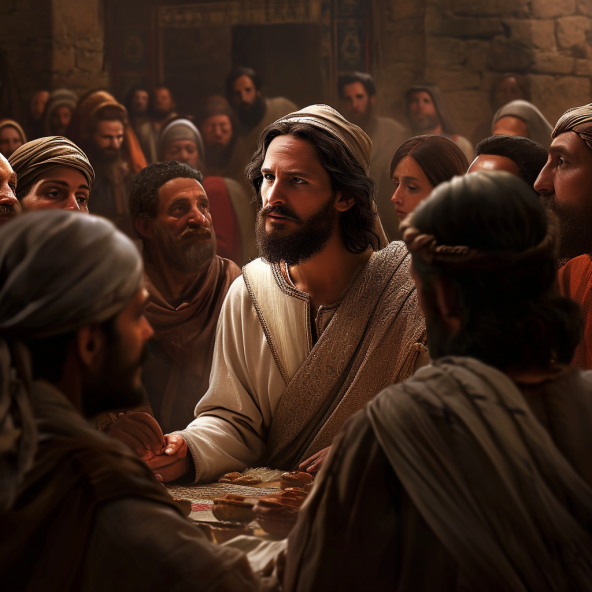
Jesus then turns his attention toward the guests who are choosing the places of honor. He sees how eagerly they seek to be noticed, respected, and placed above others. He tells them that when they are invited to a wedding feast, they should not take the highest place. Someone more honorable may arrive, and the host may ask them to move lower, causing them to withdraw in shame. Instead, they should choose the lowest place and allow the host to call them higher. He says: “Everyone that exalteth himself, shall be humbled: and he that humbleth himself, shall be exalted.”
The world teaches us to make ourselves visible, to protect our position, to seek recognition, and to measure our worth by the honor we receive from others. Christ teaches us to descend. He asks us to take the lower place. Jesus does not merely teach this path. He lives it. The eternal Son of God descends from Heaven, takes our human nature, and accepts poverty, rejection, suffering, and death. He kneels before the disciples and washes their feet. He allows Himself to be stripped, mocked, wounded, and fastened to the Cross. He chooses the lowest place – and from that place of perfect humility, the Father exalts Him.
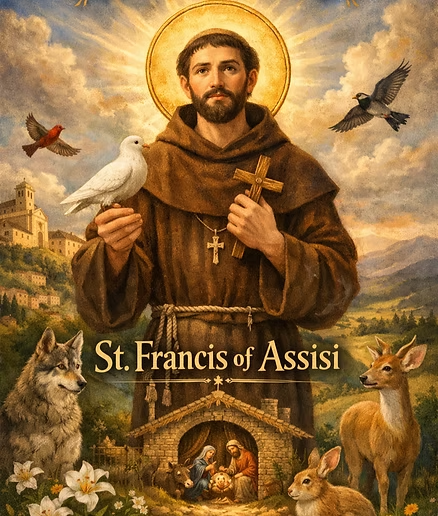
Today the Church places before us one of the most beautiful and mysterious examples of a soul who followed Christ into that lowest place: St. Francis of Assisi. In September of 1224, two years before his death, Francis withdrew to Mount LaVerna in the Tuscan Apennines. The mountain was rugged, silent, and remote – a place well suited for prayer, penance, and contemplation. Francis had gone there to observe a period of fasting in preparation for the Feast of St. Michael the Archangel. His body had been weakened by years of poverty, illness, fasting, and labor, but his heart burned with an ever-deepening love for Jesus Crucified.
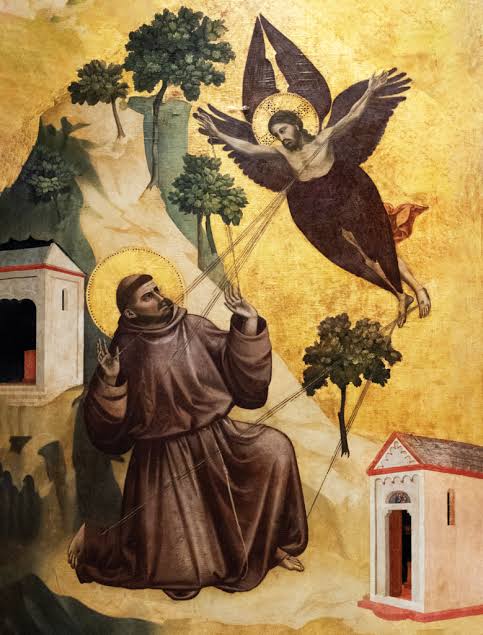
According to the Franciscan tradition, Francis had long desired two graces before he died: to understand, as far as a human creature could, the suffering Christ endured in His Passion, and to experience something of the immeasurable love that moved Christ to suffer for sinners. Francis did not seek suffering for its own sake. He sought Jesus. He desired to be so completely united to his Crucified Lord that nothing within him would remain withheld. Now, hidden upon the mountain, he opened his whole being to the mystery of the Cross.
Near the feast of the Exaltation of the Holy Cross, as the light of dawn began to appear, Francis saw a heavenly vision. A Seraph with six radiant wings descended toward him. Between the wings appeared the form of a man crucified, with hands and feet extended upon a cross. Francis was overwhelmed. The beauty of the Seraph filled him with wonder and joy, but the sight of the crucified figure pierced him with sorrow.
When the vision disappeared, the wounds of Christ were impressed upon the body of Francis. Marks resembling nails appeared in his hands and feet, and in his side was a wound like that made by the lance which had pierced the Sacred Heart of Jesus. The wound in his side frequently bled, staining his tunic. This was not an honor Francis had sought before men. His first response was not to display the wounds, speak about himself, or claim a place of distinction. Francis had taken the lowest place, and the Divine Host called him higher.
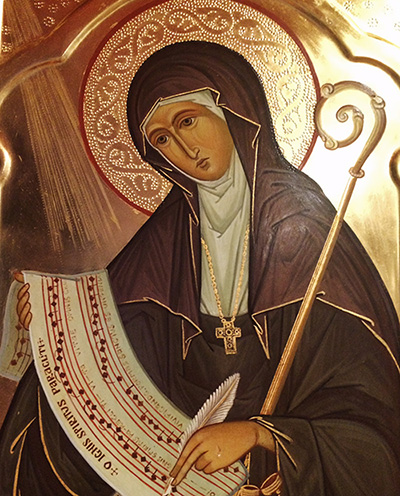
The Church commemorates St. Hildegard of Bingen, the remarkable Benedictine abbess, mystic, writer, composer, teacher, and Doctor of the Church. Within the silence and discipline of the Benedictine monastery her soul was formed by prayer, Sacred Scripture, the Divine Office, and obedience. Hildegard wrote about the mysteries of God, the beauty and order of creation, the moral life, and the Church. She composed sacred music, founded monasteries, and called both clergy and laity to repentance and fidelity. Though physically frail and frequently ill, she traveled and preached with remarkable courage.
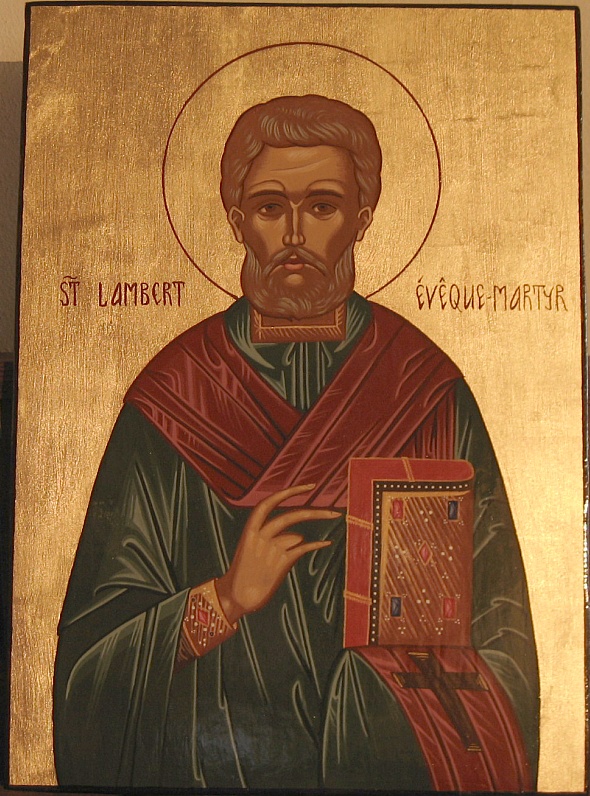
We also remember St. Lambert, Bishop of Maastricht and martyr. He lived during the seventh century and shepherded the Church during a period of political violence and instability. Driven from his episcopal see for a time, he endured exile before returning to care for his flock. Ancient tradition remembers St. Lambert as a bishop who would not remain silent in the face of grave wrongdoing, even when powerful men were involved. His fidelity eventually cost him his life. He was murdered at Liege around the beginning of the eighth century and was honored as a martyr.
Do you seek places of honor through recognition, praise, influence, or the need to be proven right?
What lower place might Jesus be inviting you to accept with peace and humility?
When suffering enters your life, do you see it only as something meaningless from which you must escape, or do you ask Jesus to unite it to His Cross and use it to draw you more deeply into His love?
A LITTLE POEM FOR THE JOURNEY
Upon the mountain, hushed and still,
One humble heart embraced God’s will,
And Love, which always the Savior bore,
Was traced in Francis evermore.
O mark us, Lord, though none may see,
With mercy, truth, humility,
Till rooted in Thy charity,
Our lives reveal our love for Thee.
“To know also the charity of Christ, which surpasseth all knowledge, that you may be filled unto all the fullness of God.” (Ephesians 3:19)
THE SOULS OF THE JUST
Saints Cornelius, Pope and Martyr, and Cyprian, Bishop and Martyr
Commemoration of Saints Euphemia, Lucy, and Geminianus, Martyrs
September 16, 2026
TODAY’S GOSPEL: Luke 21:9-19
EPISTLE: Wisdom 3:1-8
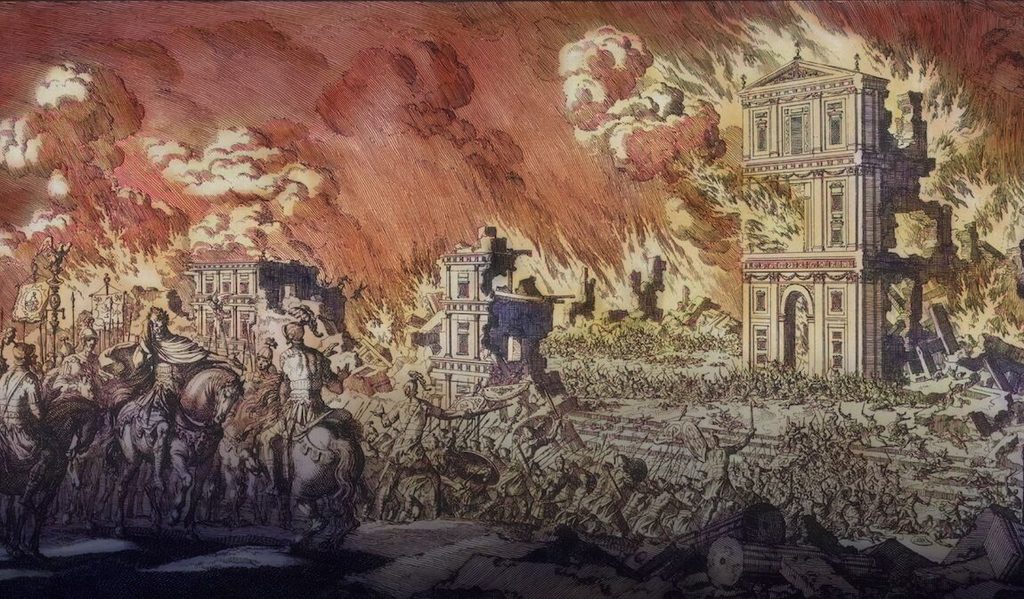
Today’s Gospel from St. Luke speaks prophetically about what is to come. Within this discourse, Jesus prepares the Apostles for the trials and persecutions they will face. He foretells the destruction of the Temple and the fall of Jerusalem at the hands of the Romans, and he speaks of upheavals that will take place throughout the world. Yet even amid these troubling events, He calls His followers to remain steadfast in faith, trusting in Divine Providence and persevering as they await the fulfillment of God’s plan.
This Gospel is also a prophetic mirror of the history of the world and, in many ways, of our own time. There has never been lasting peace in this fallen world. Nations rise against nations, kingdoms pass away, and the hearts of men are often troubled. But Jesus tells His Apostles not to be terrified: “These things must first come to pass.”
Jesus calls them – and us – to detach our hearts from temporary human structures and place them firmly in the Kingdom of God. We must not place our ultimate hope in man-made ideas, systems, or institutions, for our hearts will never find true and lasting peace in them. Instead, we must turn to God and devote ourselves to the things of God. Then, when trials come, we will possess, through His grace, the faith, strength, and courage necessary to endure them.
We cannot control every hardship that enters our lives, but by cooperating with God’s grace, we can choose whom we will follow through those hardships. Jesus is telling us to trust Him and to walk with Him.
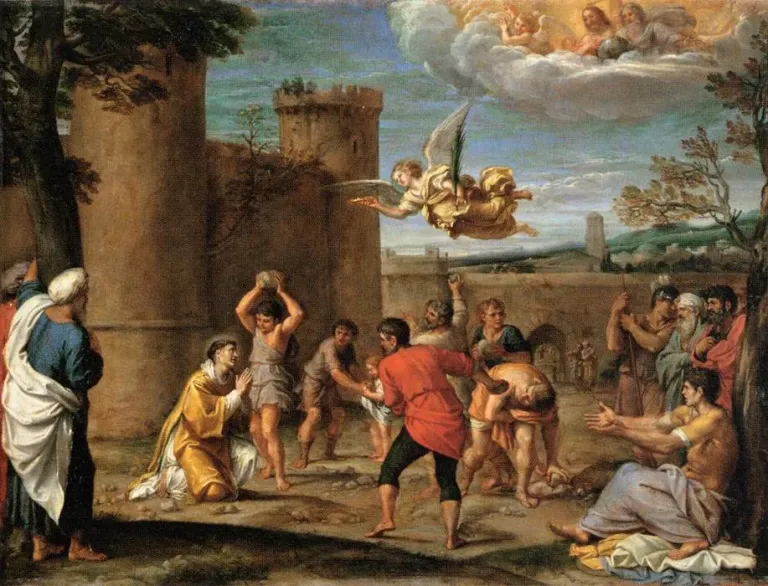
Jesus tells His Apostles that they will be arrested, persecuted, imprisoned, condemned, and even betrayed by those closest to them. Some will suffer death for His name. It is easy to imagine that the Apostles may once have expected glory to look very different – that following Christ would lead to honor and earthly recognition rather than suffering and sacrifice. Instead, the Apostles are invited to share more deeply in the Cross and to bear witness to the truth. Jesus is not abandoning them. He is offering them a share in a glory that never fades: the glory of remaining faithful to Him at whatever cost.
This call belongs not only to the Apostles but to every disciple in every age – past, present, and future – who is willing to stand firm in faith and bear witness to Christ. Even in the midst of these trials, Jesus promises: “I will give you a mouth and wisdom, which all your adversaries shall not be able to resist and gainsay.” His disciples are not to depend merely upon carefully prepared defenses or their own natural strength. They are to place their complete trust in God’s grace, confident that Christ will give them the wisdom they need, and that the Holy Ghost will guide and sustain them when that moment comes.
Beneath these sobering warnings is a profound invitation to trust. Jesus does not speak of these things merely to frighten His disciples, but to prepare their hearts to remain faithful when everything around them seems to be falling apart. Earthly temples, cities, kingdoms, and institutions may pass away, but God’s promises endure forever. Jesus calls us to place our lives completely into His hands, keeping our eyes fixed on Him and our hearts anchored in His Kingdom, which will never pass away.
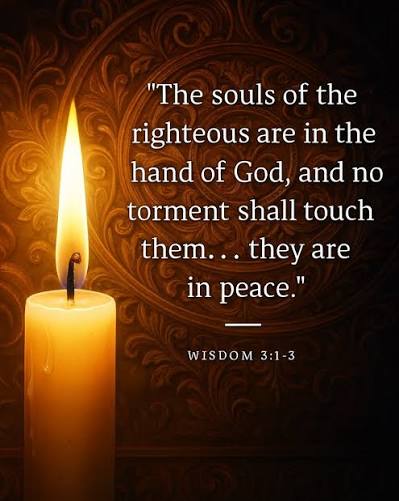
In the Epistle from the Book of Wisdom, the message of the Gospel is confirmed: “But the souls of the just are in the hand of God, and the torment of death shall not touch them.”
God’s word turns the world’s way of thinking upside down, revealing that His ways are often radically different from the judgments of men. The world may look upon the suffering of the Apostles, saints, martyrs, and all the souls of the just as a tragedy. It may even regard their suffering as a punishment for a consequence of foolishness. But God has found them worthy. He permits them to be tested, and through these trials, their faithfulness, devotion, obedience, and love are manifested.
“The just shall shine, and shall run to and fro like sparks among the reeds. They shall judge nations, and rule over people, and their Lord shall reign for ever.”
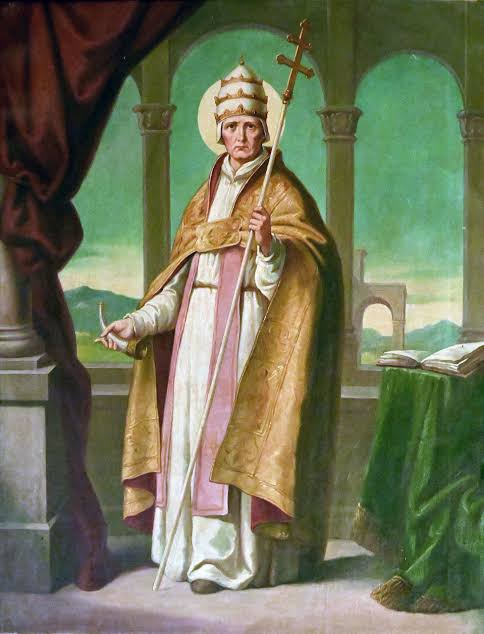
St. Cornelius served as Pope from A.D. 251 to 253. His pontificate came during a time of persecution and serious division within the Church. After the persecution of Emperor Decius, many Christians who had denied the Faith out of fear desired to return to the Church. They were known as the lapsi, or the fallen. The antipope Novatian and his followers took a rigorist position, maintaining that Christians who had apostatized could not be absolved and readmitted to the communion of the Church. St. Cornelius defended both the seriousness of the sin and the greatness of God’s mercy.
He taught that those who had fallen could be reconciled to the Church when they were truly repentant and willing to undertake the penance required of them. St. Cornelius was arrested and exiled under Emperor Gallus. He died in exile in A.D. 253 after suffering great hardship and has long been honored by the Church as a martyr.
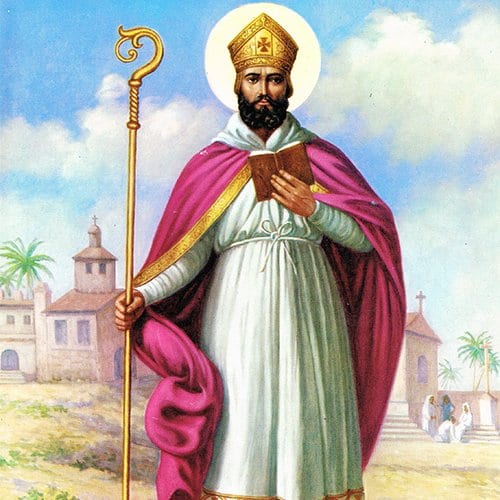
St. Cyprian served as Bishop of Carthage. He was a great early Father of the Church and is named with St. Cornelius in the Roman Canon of the Mass. Cyprian converted to Christianity as an adult. After his conversion, he devoted his considerable gifts to Christ and His Church. As bishop, he became a strong supporter and friend of Pope Cornelius. Together, they opposed the Novatian schism and defended the Church’s true teaching concerning repentance, forgiveness, unity, and the authority Christ entrusted to His Church.
St. Cyprian courageously shepherded his flock through persecution and controversy. Under the persecution of Emperor Valerian, he was arrested, tried, and commanded to offer sacrifice to the pagan gods. He refused to deny Christ and was beheaded in A.D. 258.
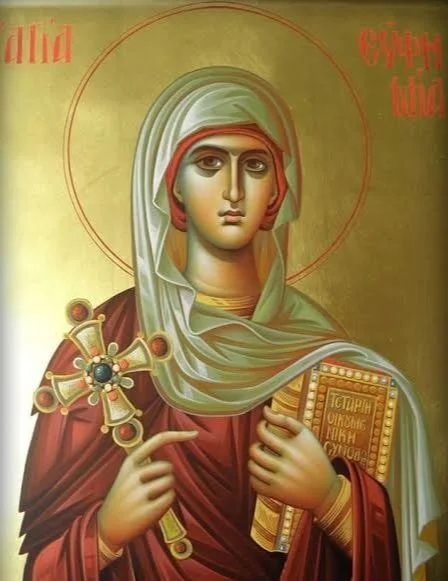
The Church also commemorates Saints Euphemia, Lucy, and Geminianus. St. Euphemia was a young virgin of Chalcedon who suffered martyrdom during the persecution of Emperor Diocletian. Although threatened and tortured, she would not offer sacrifice to the false gods. Her veneration became widespread, especially in the Christian East.
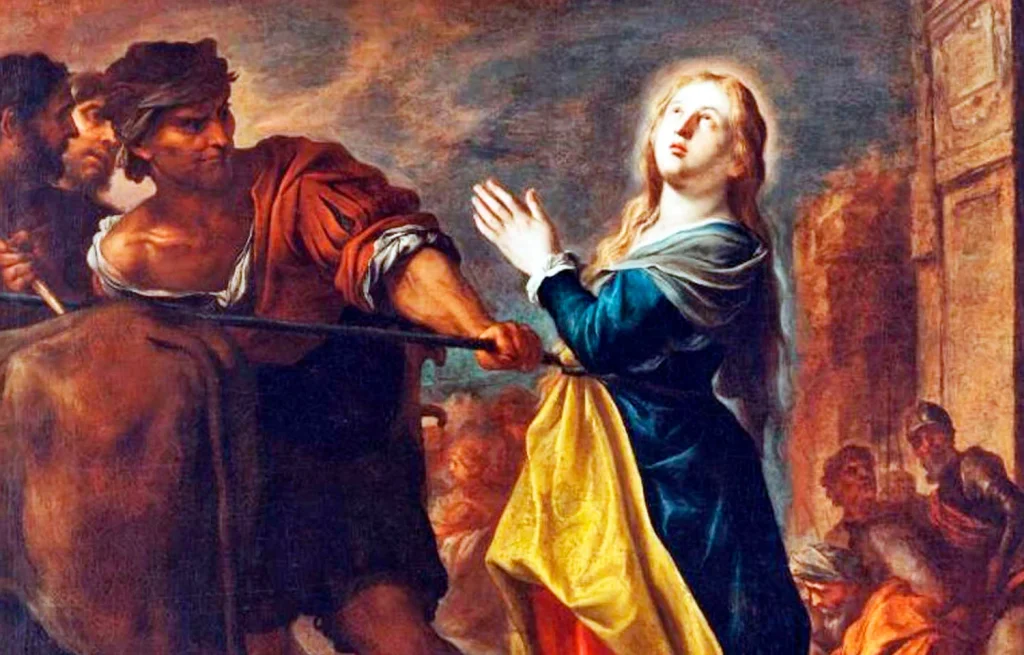
Lucy and Geminianus are honored by the traditional Roman calendar as martyrs who bore witness to Christ. Although the historical details surrounding them are uncertain, the Church’s ancient commemoration directs our attention to what matters most: their steadfastness in faith and their willingness to surrender everything rather than abandon Christ.
When you read the news or reflect upon the condition of the world and the hearts of men today, do you become anxious or overwhelmed? Do you respond by placing greater trust in Christ and praying for peace, strength, and deeper fidelity to Him?
Have you placed too much hope in earthy leaders, institutions, systems, or circumstances? Is Jesus asking you to detach your heart from something temporary and anchor it more firmly in His eternal Kingdom?
When you are asked to defend the truth, do you rely solely upon your own intelligence and preparation, or do you ask Christ to give you the wisdom and courage you need?
A LITTLE POEM FOR THE JOURNEY
When kingdoms tremble, walls give way,
And earthly glory fades away,
The soul that rests within God’s hand,
Upon a rock of peace shall stand.
Though tried like gold within the flame,
The faithful still confess His name,
For neither prison, sword, nor grave,
Can conquer those whom Christ shall save.
“For I will give you a mouth and wisdom …” (Luke 21:15)
FEAST OF THE SEVEN SORROWS OF THE BLESSED VIRGIN MARY
Commemoration of St. Nicomedes, Priest and Martyr
September 15, 2026
TODAY’S GOSPEL: John 19:25-27
EPISTLE: Judith 13: 22, 25
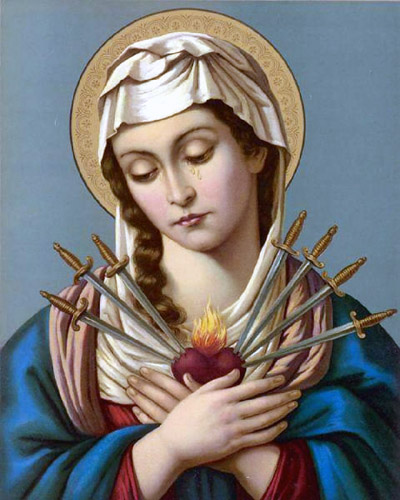
In the Catholic devotion known as the Seven Dolors (Sorrows) of the Blessed Virgin Mary, we reflect upon the profound moments of grief and maternal suffering that Mary endured in union with her Divine Son.
The Seven Sorrows are the prophecy of Simeon, the flight into Egypt, the loss of Jesus in the Temple, Mary’s meeting with Jesus on the way to Calvary, the Crucifixion of Jesus, Jesus being taken down from the Cross and placed in His Mother’s arms, and the burial of Jesus.
Each sorrow is represented by a sword piercing Mary’s heart, recalling the prophecy spoken by Simeon when Jesus was presented in the Temple as an infant. “And thy own soul a sword shall pierce.” The devotion has long been cherished by the faithful, who traditionally meditate upon each of Mary’s sorrows while praying seven Hail Mary’s.
Mary suffered beneath the Cross of her Divine Son as He gave His life for the salvation of the world. She felt the bitterness of His Passion as only a mother could. Today’s Gospel brings us to the ground beneath the Cross. “Now there stood by the Cross of Jesus, His Mother, and His mother’s sister, Mary of Cleophas, and Mary Magdalen.”
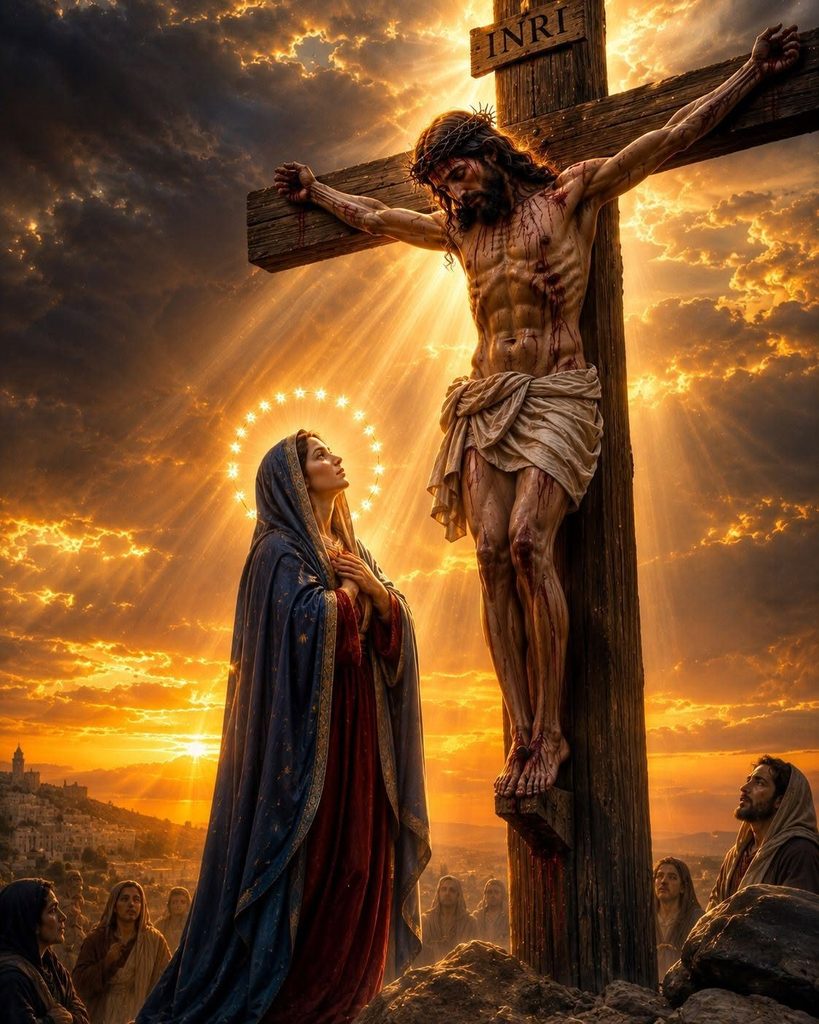
Beneath the Cross, Mary stands in profound sorrow, witnessing the suffering of her Son: the injustice of His trial, the brutal scourging, the crowning with thorns, the abandonment and isolation, the ridicule and mocking, the nails driven through His hands and feet, and then being raised upon the Cross. She remains there. She does not turn away.
Mary sees the face she first kissed in Bethlehem now bruised and covered with blood. She sees the hands she once held in her own now nailed to the wood. She sees the feet that took their first steps in Nazareth now fastened to the Cross. She hears the mocking laughter of the soldiers, and the anguished breathing of her Son. She watches His precious Blood flow from the wounds and drip upon the earth that He created. And she can do nothing to relieve His suffering.
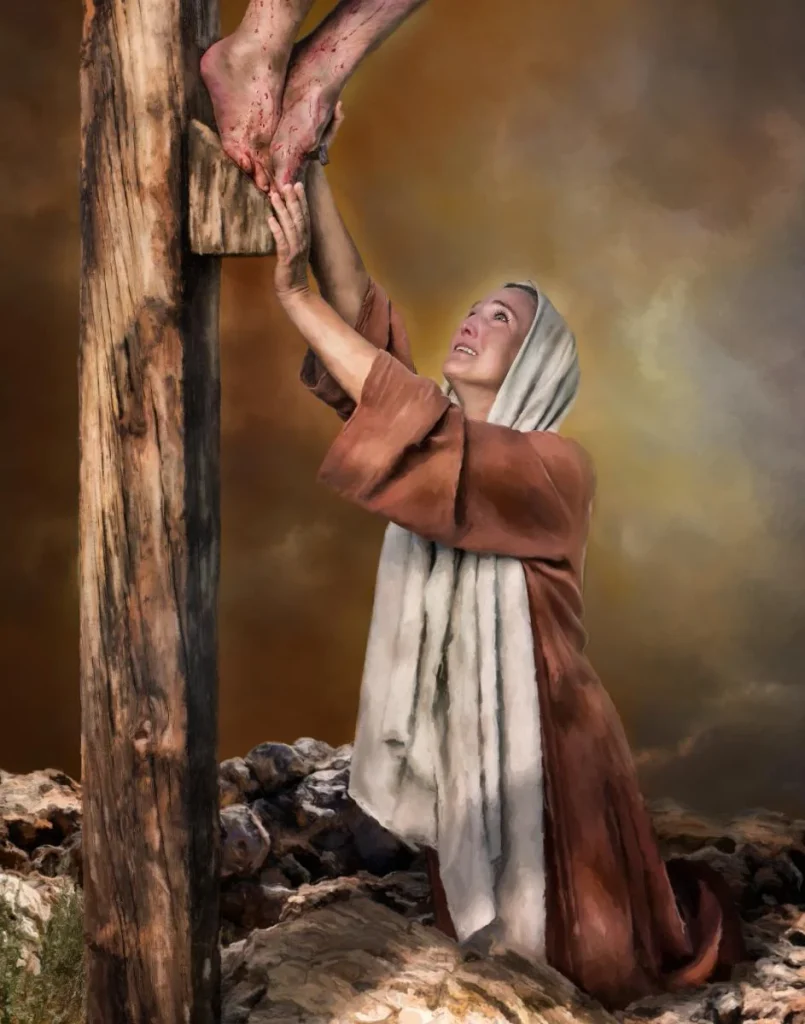
She cannot take Him down from the Cross. She cannot bind His wounds, give Him rest, or protect Him. She cannot hold Him close as she held Him in Bethlehem, or hide Him safely against her heart as she did on the flight to Egypt. She can only remain near Him, the love in her heart for Him poured out in sorrow.
Her heart is pierced as His Body is pierced. Every wound inflicted upon Him enters her soul. Every insult directed at Him deepens her anguish. His abandonment becomes her loneliness, His pain a sword into her heart. Every memory of His goodness, gentleness, and love makes the cruelty of Calvary even more unbearable. Love remembers everything.
But Mary’s sorrow did not begin at Calvary. The sword had followed her throughout her motherhood. She had heard Simeon’s prophecy,
She had fled with Him to Egypt when Herod sought to extinguish His life.
She had searched for Him in anguish three days when he was lost.
She had met Him on the road to Calvary.
Now she was witnessing His Crucifixion and death. Our Lady of Sorrows teaches us to remain.
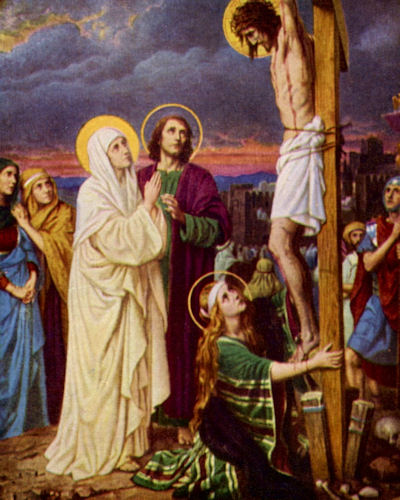
Jesus looks down from the Cross. He beholds His beloved Mother and the disciple whom He loves. Even in the midst of His agony, His Sacred Heart is moved for those who stand beneath Him. “When Jesus therefore had seen His Mother and the disciple standing whom He loved, He saith to His Mother: Woman, behold thy son. After that, He saith to the disciple: Behold thy Mother. And from that hour, the disciple took her to his own.”
Jesus asks us to do the same. Take her to our homes, our prayers, our joys, and our sorrows, and allow her to be Our Mother too. Mary does not take the place of Jesus. She tells us, as at Cana, “Whatsoever He should say to you, do ye.” Wherever Mary is faithfully loved, Jesus is more faithfully known, and loved.
She would hold Him in her arms when He was taken off the Cross. She would cradle the head that had been crowned with thorns. She would wipe the blood from the face she loved so much. She would hold Him close to her heart.
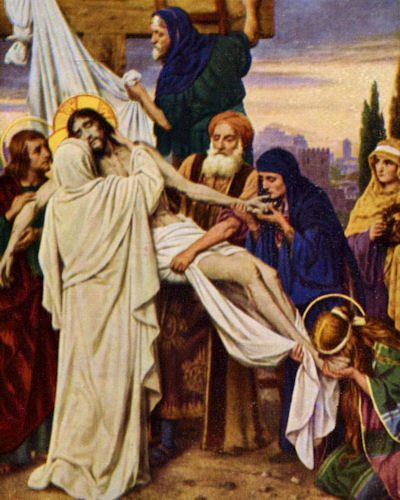
And then she would endure the sorrow of Her Divine Son being placed in the tomb. She walks away carrying a grief too deep for words, and the pain of a broken and sword-pierced heart.
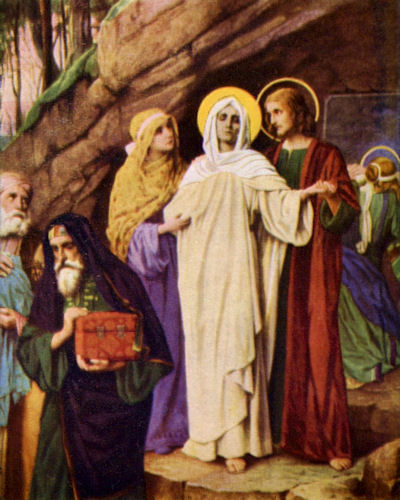
All the sorrows of her life culminated at the Cross. She is a Mother who knows the depths of human suffering. And she is there for us in our sufferings and sorrows.
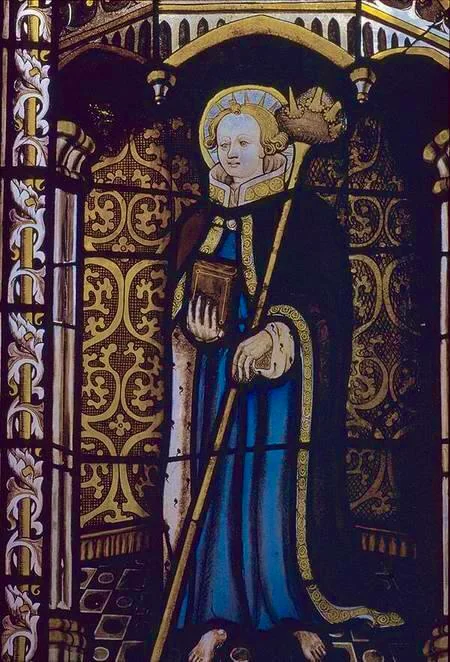
Today the Church also commemorates St. Nicomedes, an ancient Roman martyr. Although little is known about his earthly life, tradition remembers his courage and his faith. When commanded to sacrifice to idols, St. Nicomedes refused, and he was beaten, and gave his life rather than deny the Faith. His love was stronger than his fear.
QUESTIONS FOR THE HEART
It is right to place our sorrows into Mary’s loving hands for she is the Mother who knows and understands. Do I turn to Mary when I am most sorrowful and ask for her strength and guidance?
When someone I love is suffering and I cannot remove the pain, do I imitate Mary by remaining faithfully and lovingly as I pray?
Have I truly heeded the words of Jesus from the Cross – “Behold thy Mother” – and welcomed Mary into my home, my prayers, and my heart?
A LITTLE POEM FOR THE JOURNEY
Beneath the Cross, O Mother dear,
Thou didst not flee or turn away,
Thy heart was pierced by every wound,
Yet faithfully thou there did stay.
When sorrow leaves me without words,
And I can only watch and weep,
Then hold me near thy wounded heart,
And lead me where thy Son doth keep.
“Woman, behold thy son. After that, He saith to the disciple: Behold thy Mother.” (John 19:26-27)
EXALTATION OF THE HOLY CROSS
Victory Over Death
September 14, 2026
TODAY’S GOSPEL: John 12:31-36
EPISTLE: Philippians 2:5-11
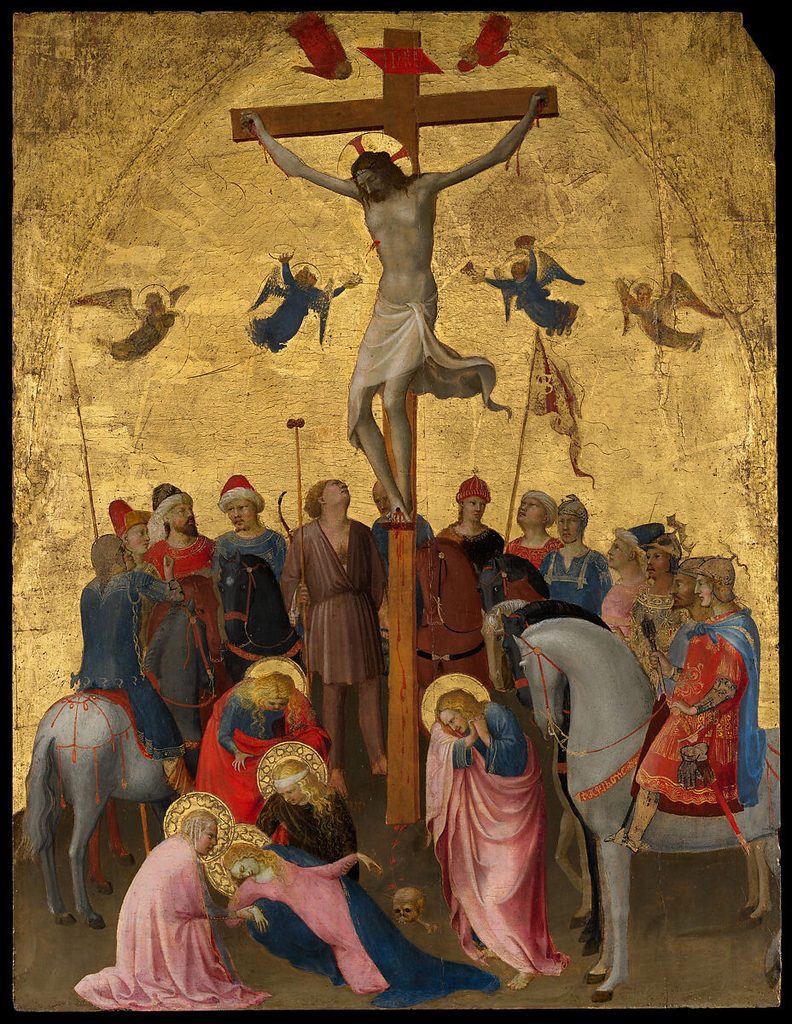
“Now is the judgment of the world: now shall the prince of this world be cast out. And I, if I be lifted up from the earth, will draw all things to Myself.”
There is something astonishing in these words of Our Lord. Jesus is speaking of His approaching Passion. He knows that He will soon be betrayed, condemned, scourged, crowned with thorns, and fastened to a Cross. To the eyes of the world, it will appear to be the hour of His defeat. His enemies will believe that they have silenced Him. The crowds will scatter. His disciples will flee. His Body will hang wounded before those who mock Him.
Yet Jesus speaks of that hour as judgment. He speaks of Satan being cast out. He speaks of drawing all things to Himself. What the world will see as defeat, Heaven knows to be victory.
The Cross exposes the false judgment of the world. Fallen man looks upon power as the ability to dominate, possess, command, and destroy. The Cross reveals another kind of power: the power of divine love to surrender itself completely for the salvation of the world.
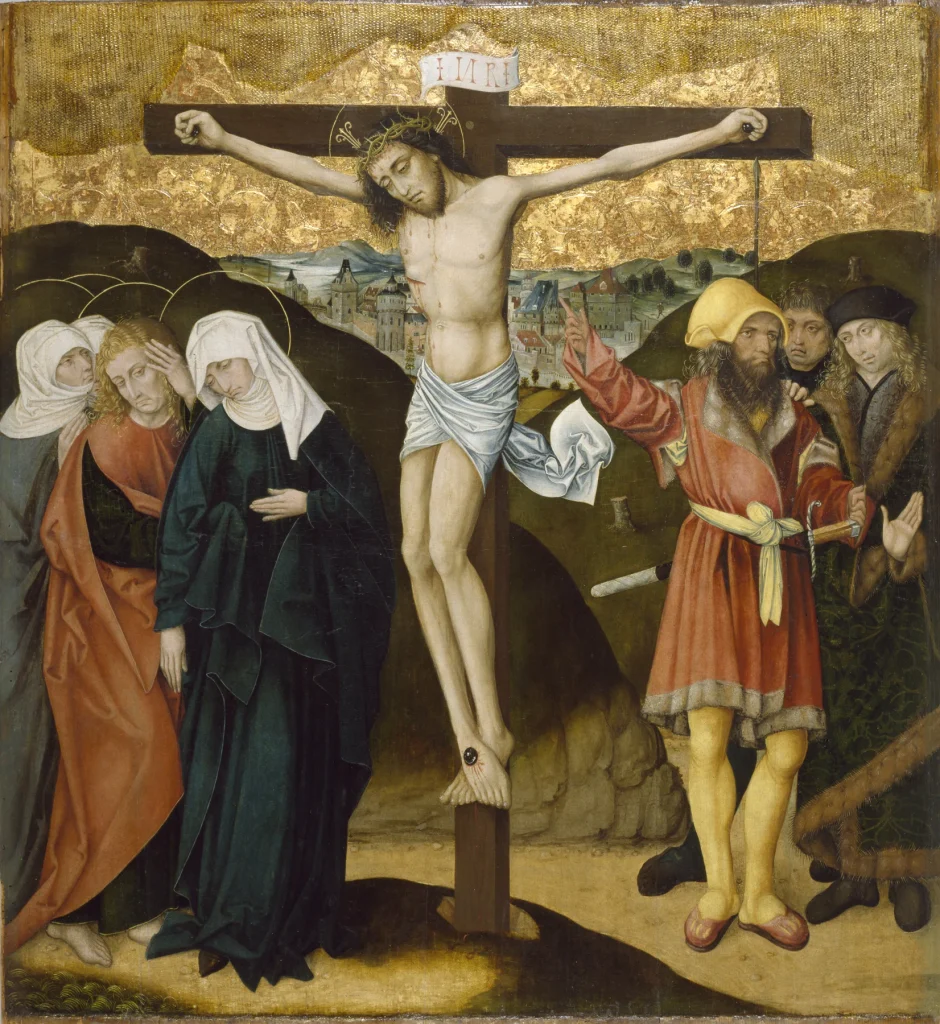
“And I, if I be lifted up from the earth, will draw all things to Myself.”
The Cross was meant to proclaim shame. Christ transformed it into the sign of salvation. It was meant to inspire terror. Christ made it the hope of sinners. It was meant to end a life. Christ made it the instrument through which eternal life was restored.
This is why the Church does not hide the Cross. She raises it high. She places it above her altars, in her homes, and over the graves of her children. Catholics “cross” themselves when they begin and end their prayers. The priest signs with it in blessing. Parents trace it upon the foreheads of their children. The dying cling to it in their final hour.
That crowd listening to Jesus does not understand. They answer Him, “We have heard out of the law, that Christ abideth for ever; and how sayest Thou: The Son of man must be lifted up? Who is this Son of man?”
He tells the crowd: “Yet a little while, the light is among you. Walk whilst you have the light, that the darkness overtake you not.”
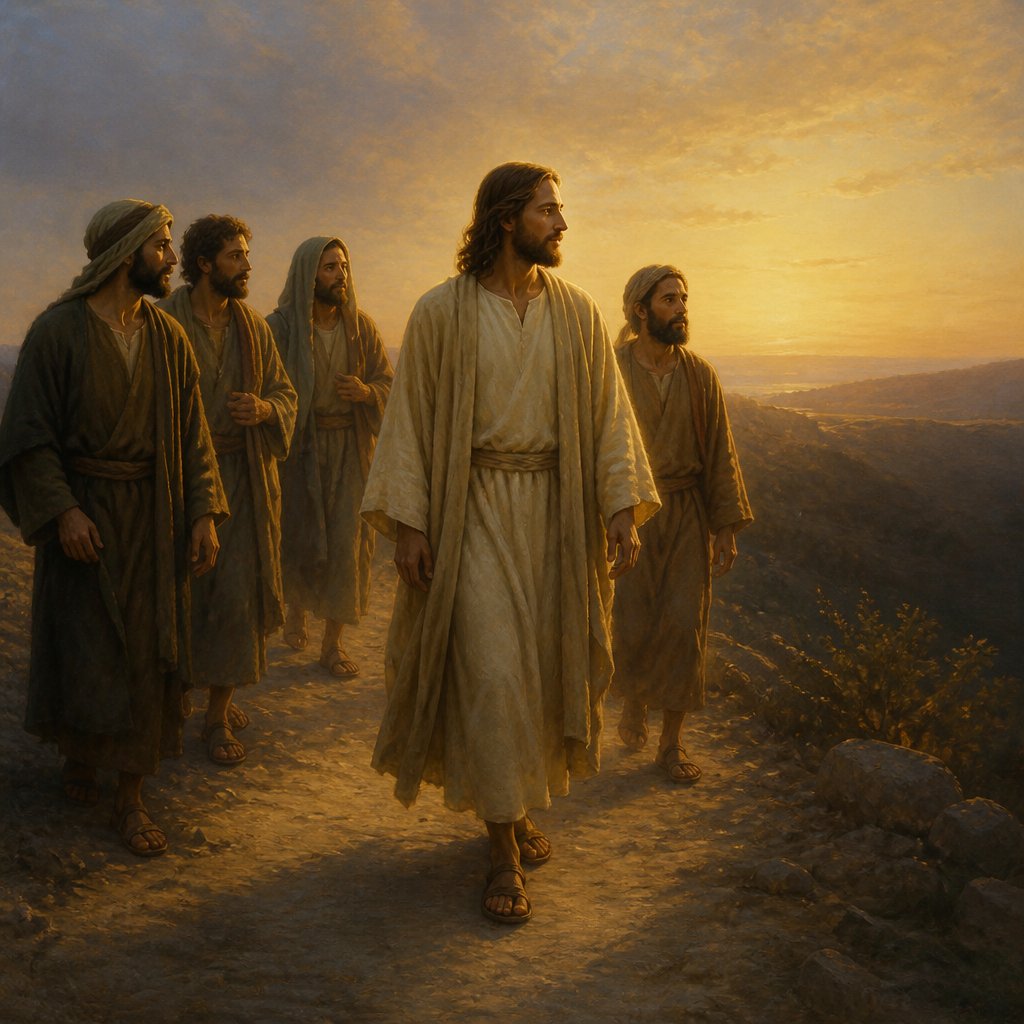
Today’s Epistle takes us more deeply into this mystery. St. Paul tells us: “Christ Jesus, Who being in the form of God, thought it not robbery to be equal with God: but emptied Himself, taking the form of a servant, being made in the likeness of man, and in habit found as a man.”
Then His humility descended still further. “He humbled Himself, becoming obedient unto death, even to the death of the Cross.” St. Paul does not speak only of death. He deliberately brings us to the Cross. Crucifixion was a death of terrible suffering and public humiliation. The One before Whom every angel bows allowed men to strip Him, mock Him, and nail Him to the Cross. The Cross, then, reveals both the horror of sin and the immensity of divine love.
Yet never was His Kingship more clearly revealed. Earthly kings preserve their lives by sending others to die. Jesus Christ, the true King, gives His life so that men might live.
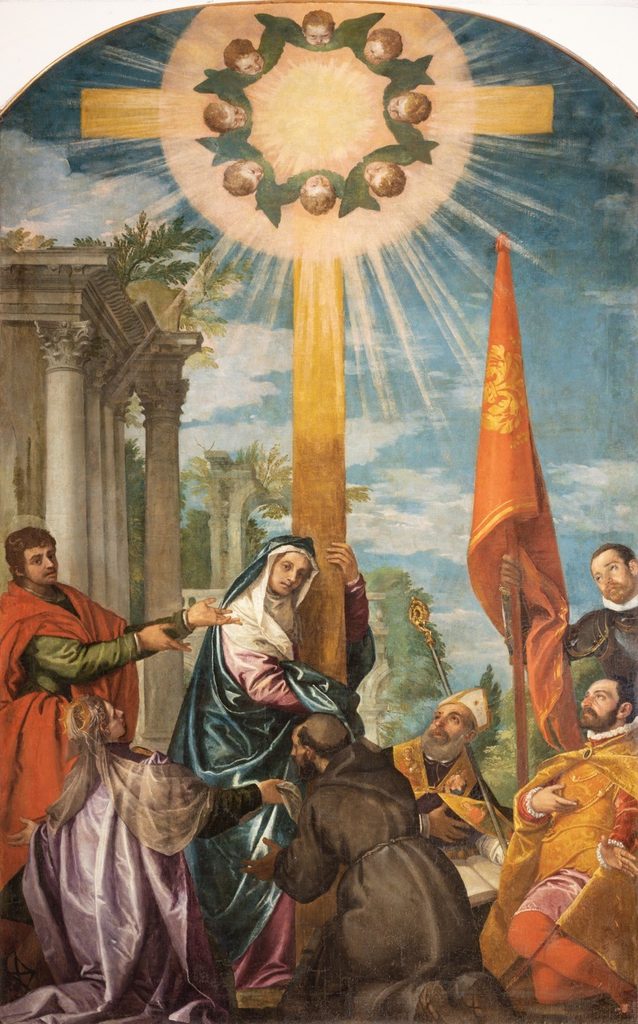
The Feast of the Exaltation of the Holy Cross has ancient roots in Jerusalem. It is associated with the finding and public veneration of the True Cross in the fourth century, during the time of St. Helena and her son, the Emperor Constantine. The feast is also connected with the later recovery of the relic of the Cross after it had been carried away from Jerusalem.
But today the Church directs our attention beyond the historical events to the mystery they honor. She raises the Cross before us so that we may behold the price of our redemption and the standard under which every Christian must live.
The Cross stands above the ruins of every earthly kingdom. It remains when honors disappear, strength fails, and human wisdom reaches its limits. It guards us in life, consoles us in suffering, and gives us hope in the presence of death.
We adore Thee, O Christ, and we bless Thee, because by Thy Holy Cross Thou hast redeemed the world.
QUESTIONS FOR THE HEART
When I look upon the Cross, do I recognize the depth of Christ’s personal love for me?
Do I make the Sign of the Cross reverently, remembering the price of my redemption?
Is there a cross in my life that I have not yet entrusted to Jesus?
Am I walking faithfully in the light Christ has given me, or am I allowing darkness to overtake some part of my life?
A LITTLE POEM FOR THE JOURNEY
Beneath the Cross I kneel today,
Where Love endured the sinner’s blame,
The darkness sought to hide His light,
But could not overcome His Name.
O Jesus, draw me to Thy Heart
And teach me how to follow Thee,
Through every sorrow, every cross,
Lead me at last to victory.
“But God forbid that I should glory, save in the cross of Our Lord Jesus Christ“ (Galatians 6:14).
FRIEND, GO UP HIGHER
St. Eulogius of Alexandria
Blessed Apollinaire Franco
September 13, 2026
TODAY’S GOSPEL: Luke 14:1-11
EPISTLE: Ephesians 3:13-21
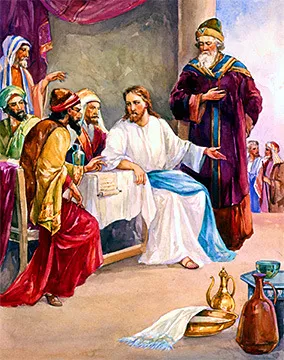
There is something uncomfortable about the opening words of today’s Gospel. Jesus has entered the house of one of the chief Pharisees to eat bread on the Sabbath, and St. Luke tells us simply: “And they watched Him.” They are not watching because they want to learn from Him. They are watching for a mistake. They are waiting for Jesus to do something they can condemn. And standing before Him is a suffering man.
The man has dropsy, a painful condition in which the body becomes swollen with fluid. Yet while everyone else is watching, Jesus is watching the man. That difference matters. The Pharisees see a problem to debate. Jesus sees a person who is suffering. So Our Lord asks them: “Is it lawful to heal on the sabbath day?” They say nothing. Jesus takes the man, heals him, and sends him away.
Then He asks those gathered around Him which of them, if an animal belonging to them fell into a pit on the Sabbath, would not immediately pull it out. Again, they cannot answer Him. Their silence reveals something that can happen to any religious person. We can become so occupied with whether everything around us conforms to our expectations that we fail to recognize the person standing directly in front of us. We can know the rules and forget charity. We can become so busy watching others that we stop watching our own hearts.
Jesus does not reject the law of God. He reveals its heart. The commandments of God are not obstacles to charity. They form us in charity, because the God who commands us is the same God who loves us.
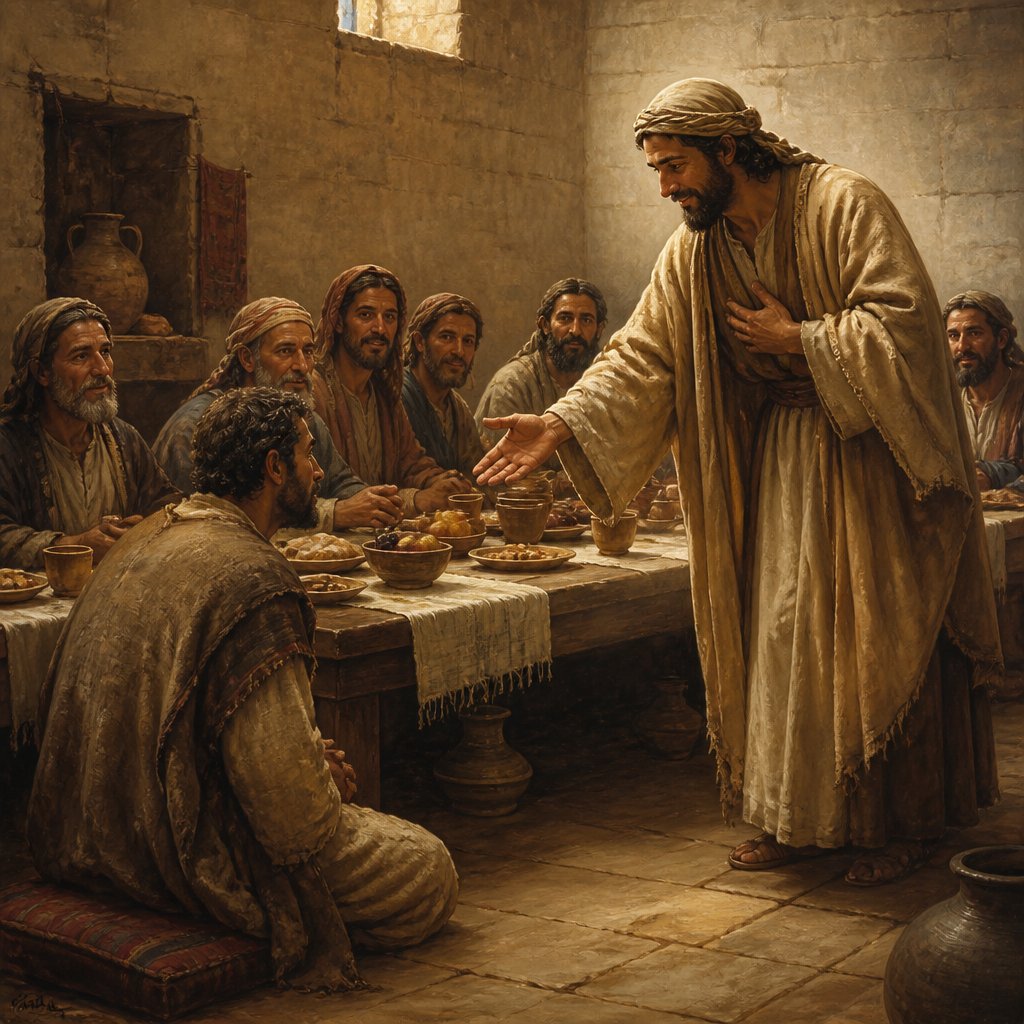
But Our Lord has another lesson for the people gathered around the table. He has noticed something else. The guests are choosing the best places. Perhaps no words were spoken. They did not need to be. Jesus could see the quiet competition unfolding before Him – the desire to be noticed, to be important, to sit where important people sit.
So He tells them that when they are invited to a wedding feast, they should not take the highest place. Someone more honorable may arrive, and the host may say, “Give this man place.” Instead, Jesus tells them: “Go, sit down in the lowest place.” And then perhaps the host will come and say: “Friend, go up higher.” There is tremendous freedom hidden in those words.
The humble person does not have to spend his life establishing his own importance. He does not have to make certain everyone recognizes what he has accomplished. He does not have to win every argument, receive every acknowledgement, or occupy the place he thinks he deserves. He can take the lower place. Why? Because he trusts the Host. God knows where we belong.
That can be difficult for us. There is something in the fallen human heart that wants to move upward – to be admired, consulted, praised, remembered, or recognized. Even our service to God can quietly become entangled with the desire to be noticed for serving Him.
Jesus asks us to surrender all of that. Take the lowest place. Serve when no one notices. Love when no one thanks you. Do the good that God places before you without wondering who will recognize it. And leave the seating arrangements to Him. For Our Lord ends His lesson with a promise: “Every one that exalteth himself, shall be humbled; and he that humbleth himself, shall be exalted.”
Jesus did not merely teach these words. He lived them. The eternal Son of God came down from Heaven. He was born in poverty. He lived hidden for thirty years. He washed the feet of His Apostles. He allowed Himself to be mocked, stripped, scourged, crowned with thorns, and crucified between thieves. No one has ever taken a lower place than Jesus Christ. And no one has ever been more greatly exalted. Perhaps, then, the lowest place is not something for a Christian to fear. Perhaps it is one of the places where we are most likely to find Him.
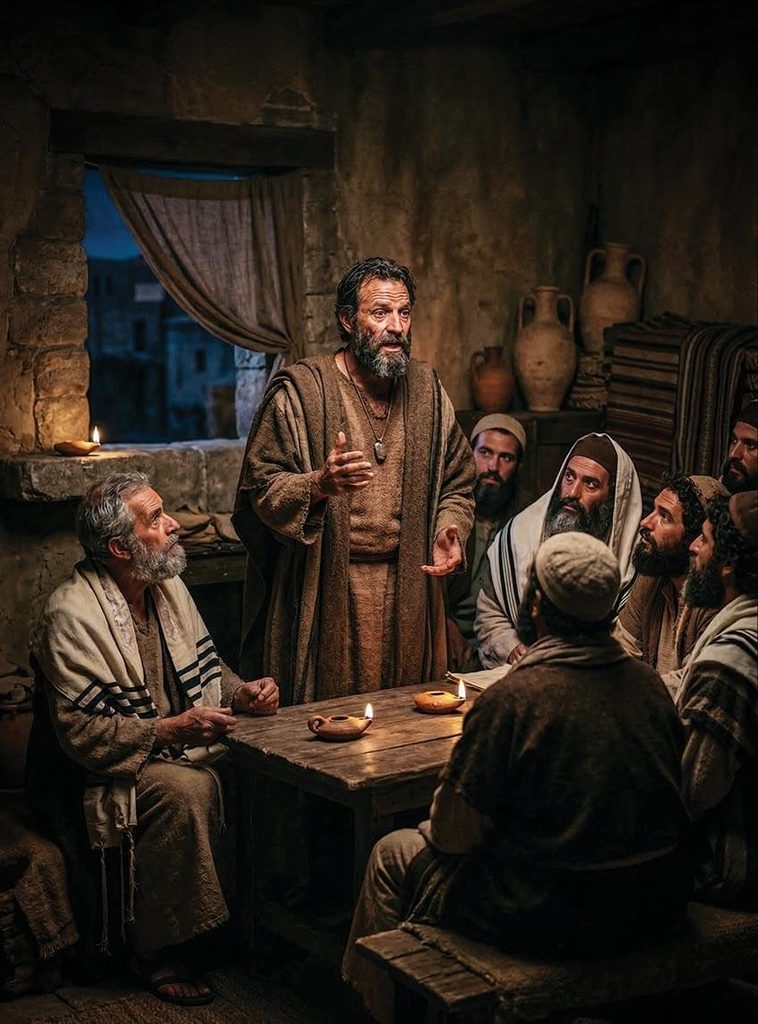
If the Gospel teaches us to take the lowest place outwardly, today’s Epistle shows us what must happen within if we are ever going to live that way. St. Paul is suffering. He has endured persecution and imprisonment for preaching Jesus Christ. Yet his concern is not primarily for himself. He is concerned that the Ephesians might become discouraged because of what is happening to him. And so Paul does something beautiful. He kneels. “For this cause I bow my knees to the Father of our Lord Jesus Christ.”
Paul cannot control everything happening around him, but he knows where to go with it. He goes to the Father. And what does he ask? Not first that his suffering disappear. Not that his enemies be defeated. Not even that his circumstances change. He prays that the faithful may be “strengthened by His Spirit with might unto the inward man.” That is where so many of our battles are fought. The world sees what happens around us. God sees what happens within us.
He sees the discouragement we do not speak about. He sees the wounds we carry quietly. He sees the fear beneath our confidence, the weariness beneath our service, and the struggles that no one else knows are there. And St. Paul reminds us that there is an inward man who can be strengthened by God. St. Paul prays: “That Christ may dwell by faith in your hearts; that being rooted and founded in charity, you may be able to comprehend, with all the saints, what is the breadth, and length, and height, and depth: to know also the charity of Christ, which surpasseth all knowledge.”
We know Whose we are. And once we begin to understand – even faintly – the breadth and length and height and depth of the love of Christ, the places of honor in this world begin to seem very small indeed.
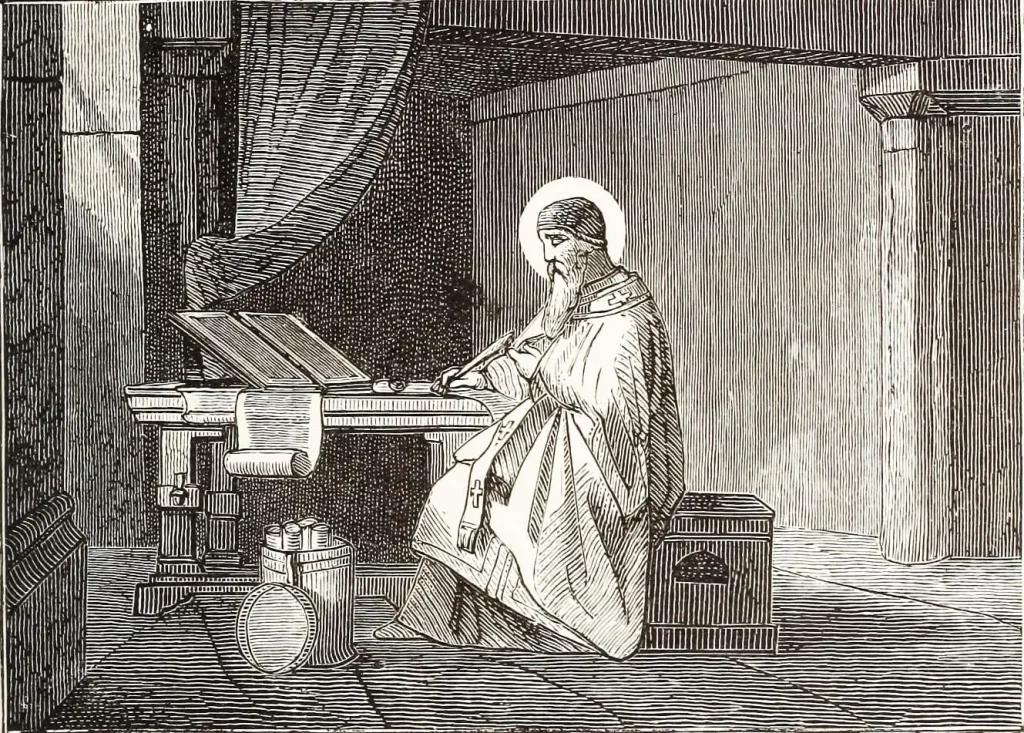
St. Eulogius lived in an age when the Church was deeply troubled by doctrinal controversy. As Patriarch of Alexandria, he carried a tremendous responsibility: to guard the Faith entrusted to the Church and to defend the truth concerning Jesus Christ. Yet the importance of his office was not meant to bring honor to himself. It was meant to serve Christ.
St. Eulogius labored to preserve the true Faith against errors concerning the Person and natures of Our Lord. He understood that truth matters because Jesus Christ matters. To distort the truth about Christ is ultimately to distort our understanding of the One who came to save us. His life reminds us of something important in light of today’s Gospel. Humility does not mean that truth is unimportant. And charity does not mean remaining silent about error. True humility places ourselves beneath the truth; it does not place the truth beneath ourselves.
St. Eulogius used the authority entrusted to him not to create his own teaching, but to guard what the Church had received. His honor was not in being a patriarch. His honor was in being faithful. That distinction matters for every Catholic. Whatever place God has given us – parent, priest, teacher, religious, employer, employee, grandparent, friend – our task is not to make that place important. Our task is to be faithful within it.
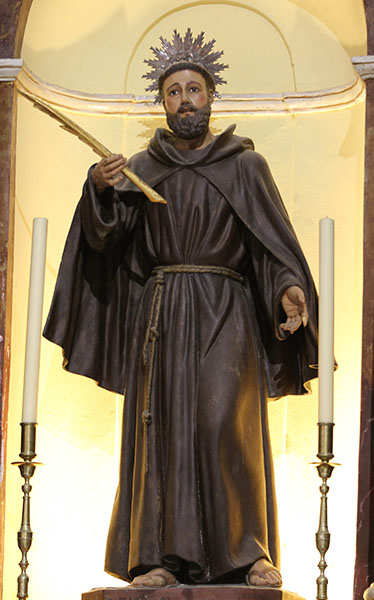
Blessed Apollinaire Franco shows us another kind of place altogether. He was a Franciscan priest and missionary who carried the Gospel far from his homeland to Japan, where the young Christian communities were facing terrible persecution. There was very little earthly honor waiting for a missionary there. There was danger. There was secrecy. There was imprisonment. And there was death. Yet Blessed Apollinaire remained because souls needed Christ.
He ministered to Christians living under persecution, encouraged them to remain steadfast, and continued his mission despite the danger to his own life. Eventually, he was captured and imprisoned. Still he remained a priest. Still he encouraged the faithful. Still he belonged to Christ. Finally, Blessed Apollinaire gave the greatest earthly possession he had left – his life. He was burned alive for the Faith.
The world would hardly have recognized his place as one of honor. But Heaven measures differently. Today’s Gospel gives us the words with which to understand the life of a martyr: “Friend, go up higher.” Blessed Apollinaire had gone down willingly – down into danger, down into persecution, down into imprisonment, down even into death – because that was where fidelity to Christ led him. And Christ raised him up.
Do not spend your life worrying about where you are seated. Simply make certain that wherever you are, you are there with Christ.
QUESTIONS FOR THE HEART
When I look at other people, do I see them with compassion – or am I often watching for their faults?
Have I ever become so concerned with being “right” that I failed to be charitable to the person standing before me?
Do I secretly desire recognition for the good things I do? How do I react when someone else receives the praise or place I hoped would be mine?
Can I accept the place God gives me – even when it is unnoticed, difficult, or far different from the place I would have chosen for myself?
A LITTLE POEM FOR THE JOURNEY
Take the little place today,
The one the world may pass away.
Do the good no eyes can see,
And leave the praise, O Lord, to Thee.
Put down the roots where none can know,
For hidden things are first to grow.
Let charity sink deep within,
Where grace takes hold and conquers sin.
And should my place seem poor or small,
Remind me, Lord, You chose it all –
The manger, workshop, Cross, and grave,
The lowest place, the world to save.
So I will leave to Thee my chair,
My name, my honor, every care,
Enough for me, when life is through,
To hear Thy voice and follow You.
“Friend, go up higher.”
AND THE VIRGIN’S NAME WAS MARY
FEAST OF THE MOST HOLY NAME OF MARY
Commemoration of St. Guy of Anderlecht
September 12, 2026
TODAY’S GOSPEL: Luke 1:26-38
EPISTLE: Ecclesiasticus 24:23-31
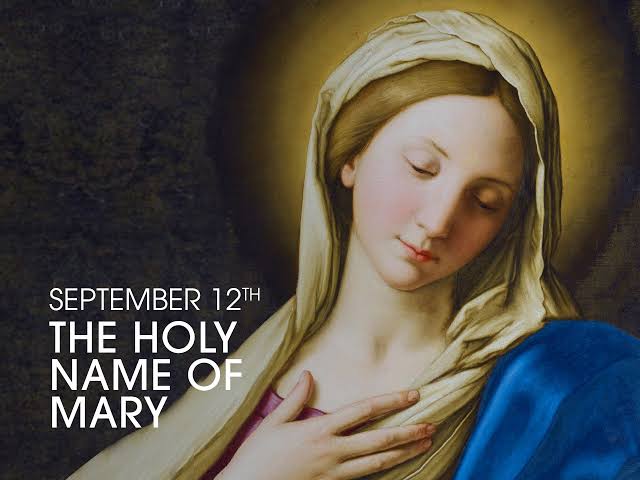
Today the Church celebrates the Most Holy Name of Mary. It is a name spoken countless times each day in churches, homes, hospitals, monasteries, battlefields, and at the bedsides of the dying. It is whispered in sorrow, called upon in temptation, and spoken with love in the Rosary: “Holy Mary, Mother of God, pray for us sinners, now and at the hour of our death.”
Yet before generations of Christians ever spoke her name, before churches and shrines were built in her honor, before the world knew anything about her, Sacred Scripture introduces her with extraordinary simplicity: “And the virgin’s name was Mary.” She was almost entirely unknown to the world. But she was known to God.
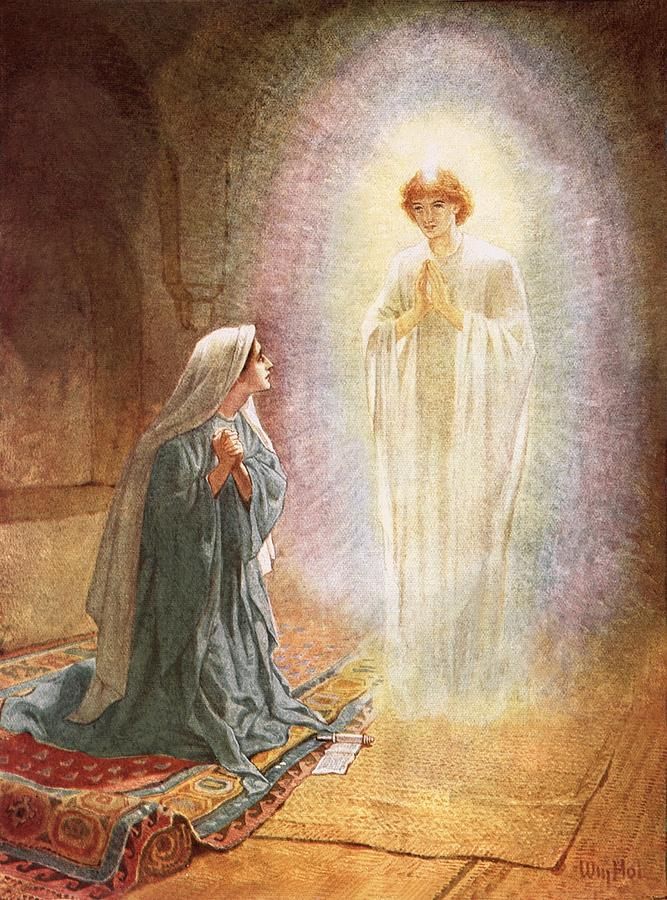
In today’s Gospel, the angel Gabriel is sent from God to Nazareth, “to a virgin espoused to a man whose name was Joseph, of the house of David; and the virgin’s name was Mary.” The angel greets her: “Hail, full of grace, the Lord is with thee: blessed art thou among women.” Then Heaven speaks her name: “Fear not, Mary, for thou hast found grace with God.”
There is something beautiful about hearing these words on the Feast of her Holy Name. God knows her name. Heaven knows the hidden Virgin of Nazareth. And now Gabriel reveals the vocation for which God has prepared her: “Behold thou shalt conceive in thy womb, and shalt bring forth a son; and thou shalt call his name Jesus.”
Within only a few verses, Sacred Scripture places before us two names: Mary and Jesus. The angel speaks Mary’s name, and Mary receives the Name of her Son. We cannot understand devotion to the Holy Name of Mary apart from the Holy Name of Jesus. Everything Mary has comes from God, and everything about her leads us to her Son. She receives Him. She carries Him. She gives Him to the world. The name of Mary is precious to Christians because it is the name of the woman God chose to be the Mother of Jesus Christ.
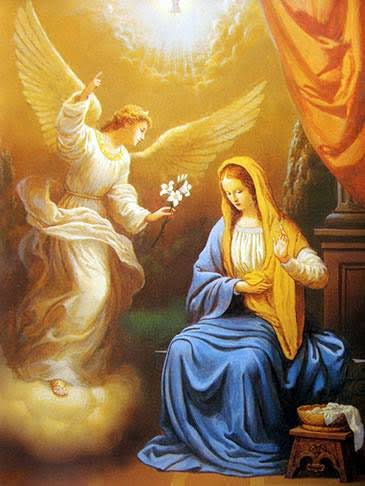
Gabriel tells Mary that her Son “shall be great, and shall be called the Son of the most High,” and that “of his kingdom there shall be no end.” Mary asks, “How shall this be done, because I know not man?” The angel reveals that what is about to happen will be entirely the work of God. “The Holy Ghost shall come upon thee, and the power of the most High shall overshadow thee.” The eternal Son of God will take flesh within her.
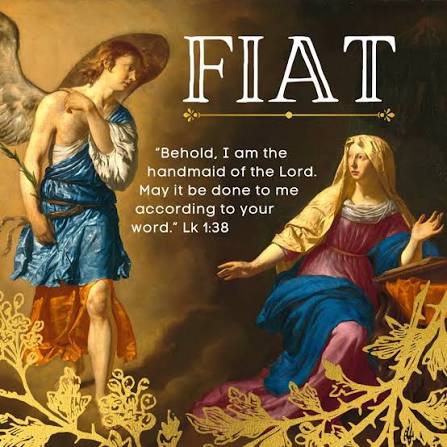
And then comes the answer that tells us so much about the woman whose name we honor today: “Behold the handmaid of the Lord: be it done to me according to thy word.” Mary does not know everything yet. She does not yet see Bethlehem, the flight into Egypt, the hidden years at Nazareth, or the sword that will pierce her heart at Calvary. She knows only that God has spoken. And she places herself completely into His hands.

This is what the name Mary should call forth within our hearts. Humility. Faith. Purity. Obedience. Trust. Surrender to the will of God. The Mother of God calls herself His handmaid. The woman whom all generations would call blessed seeks nothing for herself. Her greatness lies precisely in her complete belonging to God.
Today’s Epistle comes from the wisdom Scripture of the Old Testament. In its scriptural context these words speak of Wisdom, but the Church places them before us in her liturgy on this feast and invites us to contemplate their beautiful application to the Blessed Virgin Mary: “As the vine I have brought forth a pleasant odour: and my flowers are the fruit of honour and riches. I am the mother of fair love, and of fear, and of knowledge, and of holy hope.”
We see reflected in these words Mary, full of grace, the Mother who carried within herself Jesus Christ, the Incarnate Word of God. The Epistle continues: “Come over to me, all ye that desire me, and be filled with my fruits.” And what is the greatest fruit Mary gives to the world? Jesus. The blessed fruit of her womb. This is why true devotion to Mary can never draw us away from Christ. Her entire life points toward Him. Her maternal love draws us toward Him. Her words at Cana remain the direction of every authentic Marian devotion: “Whatsoever he shall say to you, do ye.”
The history of today’s feast also reminds us why Christians have called upon Mary’s name in times of great danger. In 1683, Ottoman forces had advanced upon Vienna, threatening Christian Europe. King Jan III Sobieski of Poland joined the forces coming to the city’s defense, and the Christian cause was entrusted in a particular way to the intercession of the Blessed Virgin Mary. On September 12, the Battle of Vienna ended in a decisive Christian victory. Pope Innocent XI later extended the celebration of the Holy Name of Mary to the universal Church in thanksgiving.
Today the Church also remembers St. Guy of Anderlecht, a humble layman whose life became a lesson in the emptiness of worldly security and the riches found in belonging completely to God. Guy lived simply, served others, and eventually undertook long pilgrimages of penance and devotion. His life was marked not by earthly greatness, but by humility, poverty, prayer, and trust in Divine Providence.
Today, when we speak the name Mary, let us remember the life behind that name. And perhaps our prayer can be very simple: Mary, teach me to give God my yes.
QUESTIONS FOR THE HEART
How often do we call upon the Holy Name of Mary? In moments of fear, temptation, sorrow, or uncertainty, do we remember that Christ has given us His Mother?
When we hear the words, “And the virgin’s name was Mary,” what does her name call forth within our hearts? Do we desire the humility, faith, purity, obedience, and trust that marked her life?
Mary said, “Be it done to me according to thy word.” Where is God asking for our fiat? Is there something He is asking of us that we resist because we cannot see what will come afterward?
If we seek Mary’s intercession and protection, are we also willing to imitate the virtues by which she lived – faith, humility, purity, obedience, prayer, and complete surrender to God?
A LITTLE POEM FOR THE JOURNEY
Before the crowns, before the shrines,
Before her name crossed lands and time,
A hidden Virgin, scarcely known,
Was seen and chosen by God alone.
“Fear not, O Mary,” Heaven said,
And grace upon her pathway spread,
Then came the Name above all names,
“Call Him Jesus,” Heaven proclaimed.
She offered neither wealth nor fame,
No earthly power adorned her name,
She simply bowed before His word,
“Be it done to me, O Lord.”
And still her holy name we say,
When sorrow clouds the narrow way,
A mother’s name, both sweet and mild,
That leads us always to her Child.
So Mary, when our faith grows small,
Teach us to hear the Father’s call,
And when His will we cannot see,
Teach us to answer faithfullly.
AND THE VIRGIN’S NAME WAS MARY
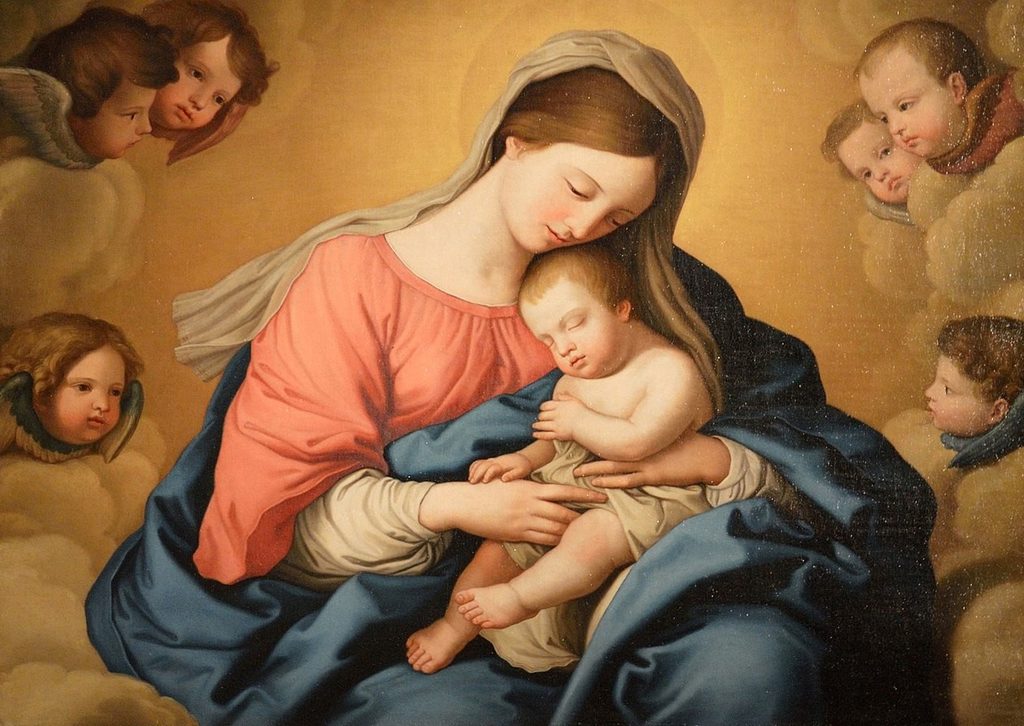
THE SPIRIT WITHIN US
Commemoration of Sts. Protus & Hyacinth
September 11, 2026
TODAY’S GOSPEL: Luke 7:11-16
EPISTLE: Galatians 5:25-26, 6:1-10
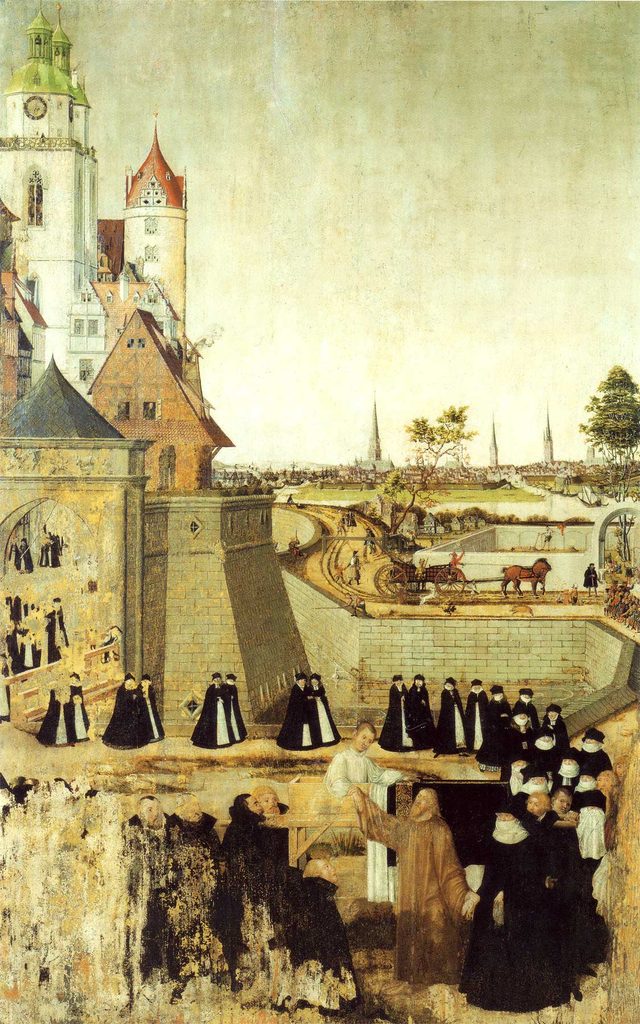
In today’s Gospel, just outside the gates of the city of Naim, two crowds meet. Jesus is approaching the city with His disciples and a great multitude follows Him. Coming out of the city is another crowd. But this crowd is following a dead man. At the center of it is a grieving mother. She is a widow, and her only son has died.
When Jesus sees her, He has compassion on her and says, “Weep not.” The mother has not asked for a miracle. They are simply going about the sorrowful duty that death has placed before them. The young man has died, and they are carrying him to burial. But standing before them is the Son of God. The One who has authority over both life and death.
Jesus approaches the bier and touches it. The bearers stand still. Then He speaks: “Young man, I say to thee, arise.” And the dead man sits up and begins to speak. Christ has restored physical life to the young man. But perhaps another kind of awakening is taking place as well. The crowd has just witnessed something they could never have imagined. The ordinary course of human events has been interrupted by the presence of God.
They have encountered Someone greater than Solomon, greater than the prophets, greater than anyone who has ever walked among them. God has visited His people. And while the crowd does not yet fully understand Who stands before them, we do. This is Jesus Christ, the Son of God. The Lord of life and death.
In today’s Epistle, St. Paul tells us, “If we live in the Spirit, let us also walk in the Spirit.” We are stewards of the life He has given us, and therefore we are called to live in a way that is pleasing to Him. The living Christ dwelling within us becomes the source, focus, and transforming presence of our daily lives.
St. Paul also gives us a warning and a promise: “Be not deceived, God is not mocked. For what things a man shall sow, those also shall he reap.” Every day we are sowing something. Through the things we permit to take root within our hearts. If we sow according to the flesh, St. Paul warns that we will reap corruption. But: “He that soweth in the spirit, of the spirit shall reap life everlasting.” And so Paul tells us: “Whilst we have time, let us work good to all men.”
Today the Church also remembers the Roman martyrs Sts. Protus and Hyacinth. Their witness and martyrdom belong to the ancient memory of the Church. Tradition remembers them as brothers associated with St. Eugenia of Rome, who served in her household and shared with her a desire to leave behind the comforts and status the world offered. They embraced the Christian faith, devoted themselves to Sacred Scripture and the spiritual life, and eventually returned to Rome, where their faith would be tested.
When commanded to sacrifice to pagan gods, they refused. They chose Christ. And they paid for that choice with their lives. Their witness gives flesh to the words we heard from St. Paul: “If we live in the Spirit, let us also walk in the Spirit.” Protus and Hyacinth did not merely profess Christianity with their lips. They lived it. And when the final test came, what had been cultivated within them was revealed. A willingness to place everything – even life itself – into the hands of God.
Today is also September 11. Twenty-five years ago, thousands of ordinary people began an ordinary Tuesday morning without knowing what the day would bring. We remember those who lost their lives, those who gave their lives attempting to save others, and the families who still carry the sorrow of that day. As Catholics, our remembrance becomes prayer. We entrust the dead to the mercy of God. And perhaps today’s Gospel gives us something especially important to remember. Death is real. Grief is real. But neither has the final word. At the gates of Naim stands Jesus Christ. And before Him, even death must stand still.
QUESTIONS FOR THE HEART
Do we allow the Spirit of Christ to dwell within us? Is our faith more than words, or do we allow it to inspire, strengthen, and transform us?
What are we sowing through our words, our actions, our habits, our love, and our faith?
Is there someone whose burden God may be asking us to help carry?
While we still have time, what good is God asking us to do?
A LITTLE POEM FOR THE JOURNEY
Two crowds met beside the gate,
One walked with joy, one walked with fear,
A mother wept beside her son,
Until the Savior to her drew near.
No prayer was spoken, none had asked,
No heart imagined what could be,
He touched the bier and spoke the word,
And death surrendered instantly.
Yet still He walks our roads today,
And sees what lies within the heart,
The places cold, the faith grown weak,
The wounds we hide, the broken parts.
“Arise,” He whispers to the soul,
“Walk now according to My way,
Bear one another’s burdens well,
Sow what will live beyond today.”
So while there still is time to love,
While mercy still may yet be shown,
O Spirit, make our hearts like Christ,
That others see we are His own.
“YOUNG MAN, I SAY TO THEE, ARISE.” (Luke 7:14)
WHERE OUR TREASURE IS
Commemoration of St. Nicholas of Tolentino, Friar and Priest
September 10, 2026
TODAY’S GOSPEL: Luke 12:32-34
EPISTLE: I Corinthians 4:9-14
In today’s Gospel, Our Lord speaks tenderly to His disciples: “Fear not, little flock, for it hath pleased your Father to give you a kingdom.” These words are both reassuring and revealing. Before Jesus asks His disciples to let go of anything, He reminds them of what the Father desires to give them. Their security is not found in what they can gather or preserve for themselves, but in the goodness of the Father and the Kingdom He has promised.
Our Lord continues: “Sell what you possess and give alms. Make to yourselves bags which grow not old, a treasure in heaven which faileth not: where no thief approacheth, nor moth corrupteth.”
The images are simple. Purses grow old. Possessions decay. What is accumulated can be lost or taken away. Jesus turns the eyes of His disciples toward something altogether different – a treasure that does not diminish and cannot be stolen. Then He brings the matter directly to the heart: “For where your treasure is, there will your heart be also.”
Our treasures are not limited to material possessions. We can store many things within the heart: our plans, our desire for recognition, our need for security, old disappointments, resentments, fears, or an insistence that life unfold according to our own expectations. Whatever we treasure begins, little by little, to claim the heart.
In today’s Epistle, St. Paul gives us a striking picture of men whose treasure cannot be measured by what they possess. The apostles are described as weak, dishonored, hungry, thirsty, poorly clothed, persecuted, and without a secure place in the world. “We are made a spectacle to the world, and to angels, and to men.”
St. Paul is not suggesting that weakness, poverty, or suffering are good simply because they are painful. Nor is he condemning strength, security, or the ordinary goods of life. Rather, he shows us what happens when belonging to Christ becomes more important than possessing the things the world calls valuable. The apostles can endure the loss of honor, comfort, and security because those things are no longer their greatest treasure.
The Church places before us today St. Nicholas of Tolentino, whose life quietly reflects this same truth. Born in the thirteenth century, Nicholas entered the Augustinian religious life as a young man and was later ordained a priest. He became known for his life of prayer and penance, his charity toward the poor and sick, and his concern for those who had wandered away from the Church.
He is remembered especially for his devotion to the Holy Souls in Purgatory. Traditions surrounding his life recount souls appearing to him and asking for his prayers and for the offering of the Holy Sacrifice of the Mass. His devotion to the faithful departed became so closely associated with him that generations of Catholics have sought his intercession for the souls awaiting the fullness of heaven.
There is also the beloved tradition of St. Nicholas Bread. After Nicholas had weakened himself through severe fasting, he was instructed to eat bread moistened with water, and his strength returned. From this account developed the Augustinian custom of blessing bread in his honor, particularly for the sick.
There is something beautifully ordinary about the treasures found in the life of St. Nicholas: a Mass offered for a soul, a prayer for someone who had died, bread shared with another, a visit to the sick, a sacrifice quietly offered to God. None of these things would have made Nicholas wealthy in the eyes of the world. Yet heaven measures treasure differently.
Perhaps that is what draws today’s Gospel, Epistle, and saint together so naturally. St. Paul could appear to have nothing and still possess everything that mattered. St. Nicholas could spend his life on hidden acts of prayer, penance, and charity because he believed that what is offered to God is never wasted. And Our Lord gives us the measure by which to examine our own lives: “For where your treasure is, there will your heart be also.”
QUESTIONS FOR THE HEART
What are the things I store away in my heart? Why do I hold on to them?
Where do my thoughts and desires return again and again? What might they reveal about what I have made my treasure?
Is there something – possessions, comfort, recognition, plans, fear, resentment, or my own will – that I am holding so tightly that it has begun to occupy a place in my heart meant for God?
A LITTLE POEM FOR THE JOURNEY
Not every treasure fills the hand,
Nor every gift is seen,
Some rest within a whispered prayer,
Some hide in deeds unseen.
A little bread, a sacrifice,
A prayer for souls who wait,
The smallest gift, when given to God,
May carry heaven’s weight.
The things we gather fade with time,
The things we guard may flee,
But love that gives itself to God
Lives on eternally.
So teach our hearts to loosen, Lord,
Their hold on passing things,
And seek instead the lasting wealth
That life with Jesus brings.
For where our treasure waits for us,
Our hearts will follow too,
May all we treasure here on earth
Lead every heart to You.
HE SAW HER
FEAST OF ST. PETER CLAVER, PRIEST
Commemoration of St. Gorgonius of Rome, Martyr
September 9, 2026
TODAY’S GOSPEL: Luke 7:11-16
EPISTLE: Galatians 5:25-26, 6:1-10
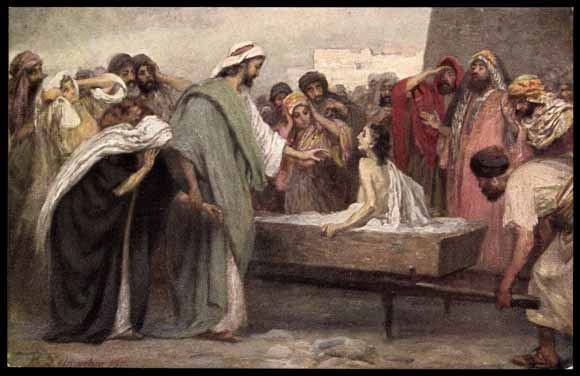
There is a small detail in today’s Gospel that we might easily pass over. Jesus sees her.
Our Lord is approaching the city of Nain with His disciples and a great multitude when another crowd comes through the city gate. This crowd is very different from the one accompanying Jesus. It is a funeral procession. At the center of it is a mother.
She is a widow, and the young man being carried to burial is her only son. St. Luke does not tell us that she approached Jesus. He does not tell us that she cried out to Him, fell at His feet, or asked Him for a miracle. He simply tells us: “Whom when the Lord had seen, being moved with mercy towards her, he said to her: Weep not.”
He saw her. Before she asked anything of Him, Jesus saw the sorrow she was carrying. He saw a woman who had already buried her husband and was now walking behind the body of her only son. He saw not merely the funeral procession, but the mother within it. And His Sacred Heart was moved with compassion.
Jesus came near and touched the bier. Those carrying it stood still. Then came words that no grieving mother could ever have expected to hear beside the body of her child: “Young man, I say to thee, arise.” The dead man sat up and began to speak.
Then St. Luke gives us another beautiful detail: “And he gave him to his mother.” The crowd had been walking toward a grave. Jesus stopped the procession. Where there had been death, there was life. Where there had been weeping, there was astonishment. Where a mother had been following the body of her son, she now received him alive into her arms.
The people understood that they had witnessed something extraordinary: “And there came a fear on them all: and they glorified God, saying: A great prophet is risen up among us: and, God hath visited his people.”
God had indeed visited His people. But they had witnessed more than the compassion of a prophet. Standing before them was the Lord of life and death. Christ spoke with authority. “Young man, I say to thee, arise.” Death obeyed Him.
The miracle at Nain points us toward the greater victory still to come, when Christ Himself would enter death and conquer it through His Resurrection. But before Christ revealed His power over death, He revealed something about His Heart. He noticed suffering. And that brings us directly to the words of St. Paul in today’s Epistle: “Bear ye one another’s burdens; and so you shall fulfill the law of Christ.”
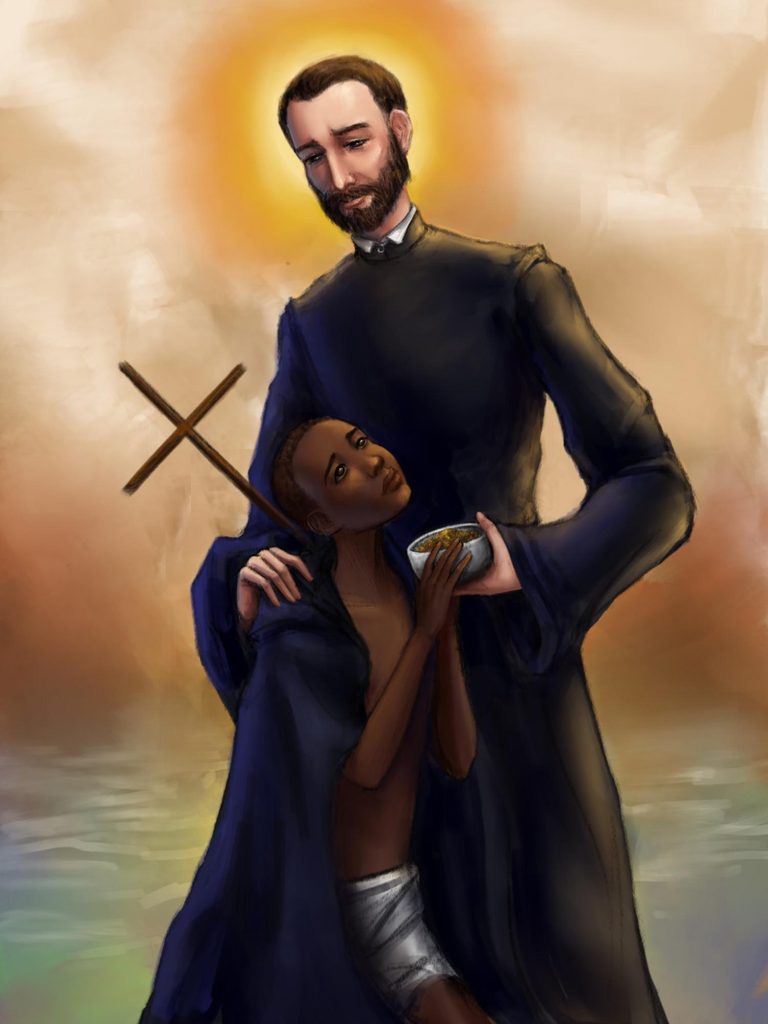
Today the Church also remembers St. Peter Claver, a Jesuit priest whose life became an extraordinary example of what it means to see suffering and refuse to look away. Peter Claver spent much of his priesthood in Cartagena, in present-day Colombia, one of the principal ports through which enslaved Africans were brought into the Spanish colonies.
Men, women, and children arrived after horrific voyages across the Atlantic. Many were sick, hungry, frightened, grieving, and exhausted. The slave trade treated human beings created in the image and likeness of God as commodities to be bought and sold. Peter Claver did not look away. He went to them.
When the ships arrived, he entered among those who were suffering. He bought food and water. He tended the sick. He comforted the frightened. He instructed them in the Faith. He tried to show people who had been stripped of almost everything that there was something no human master could take from them: Their dignity before God.
Peter Claver famously described himself as “the slave of the slaves forever.” The world around him had learned not to see these suffering men and women. Peter Claver saw them. And because he saw them through the eyes of Christ, he acted.
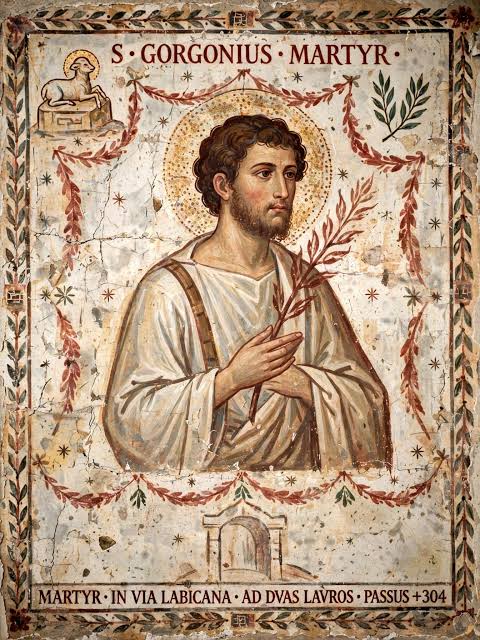
Today the Church also commemorates St. Gorgonius of Rome, Martyr, an early Christian martyr whose memory has been preserved by the Church even though very little about his earthly life has come down to us. St. Gorgonius belonged to those early Christians who gave the ultimate testimony to Christ: their lives. The details may have faded from human memory, but his name did not disappear from the memory of the Church.
In St. Gorgonius and St. Peter Claver, we see two very different expressions of the same Christian fidelity. St. Gorgonius reminds us to remain faithful to Christ even when fidelity costs us. St. Peter Claver reminds us to go toward those who are suffering, especially those whom the world would rather overlook.
QUESTIONS FOR THE HEART
Jesus saw the widow before she ever spoke to Him. Is there someone in my life whose suffering I have failed to notice because I have been too occupied with my own concerns?
St. Gorgonius gave the ultimate witness of fidelity to Christ. When living my Catholic Faith costs me something – approval, comfort, acceptance, or reputation – am I willing to remain faithful?
St. Peter Claver went toward people whom much of the world preferred not to see. Are there people I unconsciously overlook because their suffering makes me uncomfortable or because helping them would require something of me?
A LITTLE POEM FOR THE JOURNEY
Two crowds met beside the gate,
One walked with Life, one mourned;
A mother followed her only son,
Her heart with sorrow torn.
She did not call the Savior’s name,
Nor ask what He could give,
He saw the tears upon her face,
And bade her son to live.
So many walk beside us, Lord,
With burdens none can see,
Give us a heart that notices
Their hidden misery.
And when we cannot heal the wound
Or make the sorrow cease,
Then teach us how to share the load
And bring a little peace.
When works seem small and prayers seem lost,
Like deeply buried seed,
Keep us from growing weary, Lord,
But faithful in each deed.
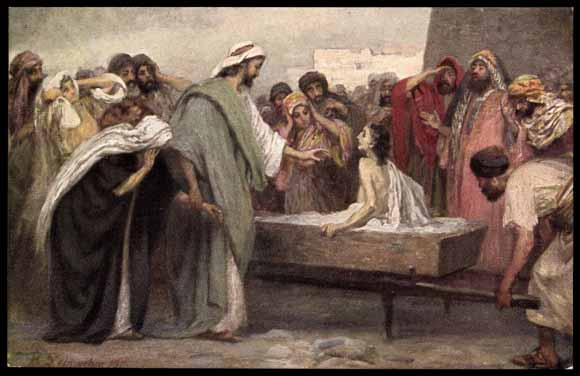
THE DAWN OF SALVATION
FEAST OF THE NATIVITY OF THE BLESSED VIRGIN MARY
Commemoration of St. Adrian of Nicomedia, Martyr
September 8, 2026
TODAY’S GOSPEL: Matthew 1:1-16
EPISTLE: Proverbs 8:22-35
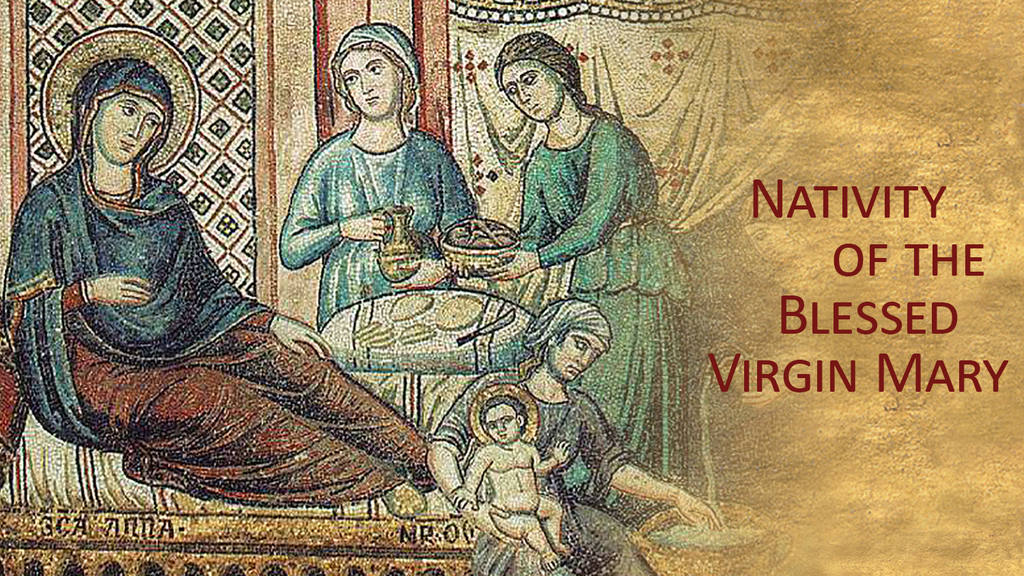
The Feast of the Nativity of the Blessed Virgin Mary is celebrated on September 8, exactly nine months after the Feast of the Immaculate Conception on December 8. The celebration of Mary’s Nativity is ancient, reaching back some 1,500 years in the life of the Church. The liturgical calendar beautifully joins these two mysteries: on December 8 we celebrate Mary’s Immaculate Conception in the womb of St. Anne, and nine months later, on September 8, we joyfully celebrate her birth. It is one of only three birthdays given particular celebration in the Church’s liturgical year, together with the Nativity of Our Lord and the Nativity of St. John the Baptist.
The Gospel today is St. Matthew’s genealogy of Our Lord, tracing His lineage from Abraham, through King David, and ultimately to Joseph, the husband of Mary. This genealogy reveals the unfolding of the promises God made centuries earlier: the promise to Abraham that through his descendants all the nations of the earth would be blessed, and the promise to David that his royal line would endure. In Christ, these promises reach their fulfillment, as He is the long-awaited Messiah, the Son of David and the Son of Abraham.
Mary is the vital human link through whom the Messiah entered human history, and this is why we rejoice in the birth of the woman chosen by God to become the Mother of His Son. The Church sees in Mary’s Nativity the dawning of salvation.
The reading from Proverbs in today’s Epistle takes us beyond the earthly genealogy and into the mystery of the wisdom and providence of God: “The Lord possessed me in the beginning of His ways, before He made anything from the beginning.” The Church places these words of Wisdom before us today and applies them in her liturgy to the Blessed Virgin Mary, contemplating the singular place prepared for her in God’s plan of salvation.
At the same time, Mary’s entire place in that plan points us toward her Divine Son. Christ, the eternal Logos, the Word of God, was with the Father from all eternity, before the creation of the world. He was there before the heavens, before the skies and waters were made. He is eternally begotten of the Father, God from God, through whom all things were made. And in the fullness of time, this eternal Word would take His human nature from Mary.
Then comes one of the most beautiful lines in today’s Epistle: “Playing in the world: and my delights were to be with the children of men.”
Jesus came to dwell among us. He entered into the world He created and took joy in being with us. His love for humanity was so profound that, within the eternal plan of God, He chose to unite Himself to our human nature. The Son of God humbled Himself, taking on flesh within the womb of God’s chosen vessel, the Blessed Virgin Mary. The child whose birth we celebrate today would become the immaculate dwelling place of the Only-Begotten Son of God.
Blessed are St. Anne and St. Joachim, who through their years of waiting, even under great pressure from the world around them, never broke faith with God. And this child, conceived without original sin and with a heart already attuned to Heaven, would bring forth the Light of the World.
There is something beautiful in imagining St. Anne and St. Joachim looking upon Mary that first day. They could not yet know everything God would ask of their daughter. They simply received the child God had entrusted to them. Yet Heaven knew who this little girl would become.
Today the Church also commemorates St. Adrian of Nicomedia, a Roman official who suffered martyrdom during the Christian persecutions in the early fourth century. Tradition tells us that Adrian witnessed a group of Christians enduring terrible suffering for their faith. He was so moved by their courage and fidelity that he openly declared himself a Christian on the spot. He was immediately imprisoned, tortured, and ultimately executed for the Faith he had embraced.
Even on days of rejoicing, we are called to remember the suffering and persecutions of the early Church martyrs. Joy and suffering are intertwined.
Mary’s heart is Immaculate, yet seven swords will pierce it. The Church survived the terrible persecutions of her early centuries because these first Christians would not abandon Christ, even when fidelity required their blood.
And perhaps that makes the title of today’s reflection even more beautiful – The Dawn of Salvation. A dawn does not mean that there has never been darkness. It means that light has entered in.
Today the Church looks upon a little girl born to St. Anne and St. Joachim and sees the first light on the horizon. The world does not yet see Bethlehem. It does not yet hear the angels. The shepherds have not yet come from their fields, and the Magi have not yet begun their journey. But Mary is here. The Mother of the Redeemer has been born. The dawn has appeared, and the Light of the World is drawing near.
QUESTIONS FOR THE HEART
“My delights were to be with the children of men.” How often do I notice God’s created world? Do I look upon creation with wonder and see the hand of the Divine Craftsman?
St. Anne and St. Joachim remained faithful through years of waiting. Where is God asking me to remain faithful even though I cannot yet see what He is preparing?
St. Adrian was brought to Christ by witnessing the courage and faith of other Christians. What does my own witness say to those who see how I live, suffer, and believe?
A LITTLE POEM FOR THE JOURNEY
Before the star shone in the night,
Before the angels sang,
Before the shepherds left their fields
And Heaven’s praises rang.
Before a Mother held her Son
Against her heart so mild,
There came into this waiting world
A tiny, spotless child.
No crown was resting on her head,
No nations knew her name,
Yet Heaven knew the little one
Through whom the Savior came.
The night of waiting lingered still,
The world had yet to see,
But on the day that Mary came,
The dawn broke silently.
O Mary, on thy natal day,
Receive the gifts we bring:
Our prayers, our sorrows, and our hearts,
And lead us to thy King.
WHILST WE HAVE TIME
Day Nine of the Novena to the Nativity of the Blessed Virgin Mary
Commemoration of St. Cloud (Clodoald)
September 7, 2026
TODAY’S GOSPEL: Luke 7:11-16
EPISTLE: Galatians 5:25-26, 6:1-10
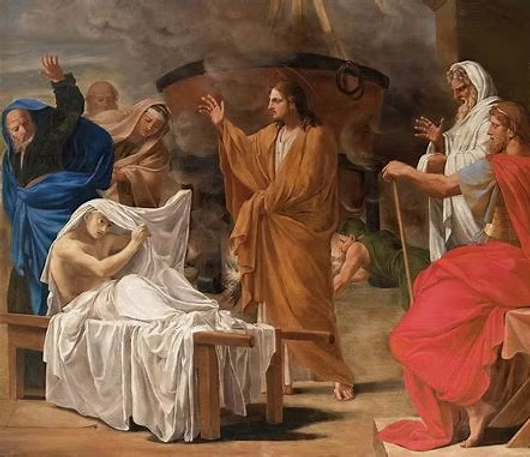
Today the Church gives us again the Gospel of the widow of Naim. Yesterday we stood beside this grieving mother and watched as two processions met at the gate of the city: one accompanying death, the other following the Lord of Life. Today, perhaps, we can remain with the same Gospel but notice something different.
St. Luke tells us simply: “Whom when the Lord had seen, being moved with mercy towards her, He said to her: Weep not.”
There is a tenderness in the compassion of Christ that runs quietly through this Gospel. Jesus sees the widow. He knows what she has lost. He approaches the bier, touches it, and speaks the words that only the Lord of life can speak: “Young man, I say to thee, arise.”
And then comes that beautiful phrase we noticed yesterday: “And He gave him to his mother.”
Today those words seem to rest gently beside the Epistle. St. Paul writes: “Bear ye one another’s burdens; and so you shall fulfill the law of Christ.” In the Gospel we see the compassion of Christ; in the Epistle we see something of the shape that compassion is meant to take within the life of the Church.
St. Paul speaks of restoring the fallen “in the spirit of meekness,” of bearing one another’s burden, and of persevering in goodness. There is nothing noisy about the Christian life he describes. Much of it belongs to the hidden places where one soul quietly helps another along the road to Heaven.
Then St. Paul gives us one of those small phrases that seems to contain an entire meditation: “Therefore, whilst we have time, let us work good to all men.” Whilst we have time.
Time is one of the quiet gifts of God. A lifetime can seem long when we look ahead and astonishingly brief when we look behind. The Church, in her liturgical year, teaches us to receive time differently. Days become feasts and fasts, Sundays and vigils, seasons of penance and seasons of joy. The passing year becomes a way of walking again through the mysteries of Christ.
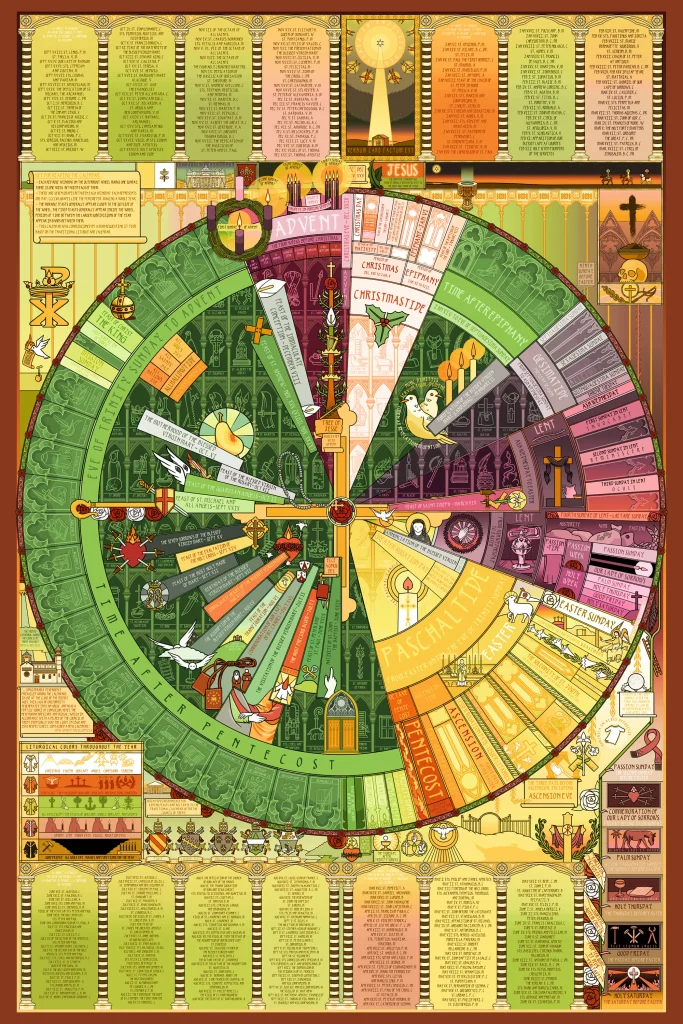
And today we have arrived at the ninth and final day of our preparation for the Nativity of the Blessed Virgin Mary. Tomorrow the Church will celebrate Mary’s birth. Today there is still the quietness of preparation.
The birth of Mary belongs to one of those hidden beginnings in salvation history. Nothing outwardly announced what this child would become. Yet within the providence of God, the Mother of the Redeemer had entered the world.
Her little life began quietly, while God alone knew the place she would hold in the mystery of the Incarnation. The child whose Nativity we celebrate tomorrow would become the Mother of the Word made flesh. Through her fiat, the Savior would take His human nature from her. Through her, the long expectation of Israel would move toward Bethlehem.
And so, on this last day of the novena, there is a fitting stillness in waiting for tomorrow.
Today we also remember St. Cloud, or Clodoald, whose life unfolded far differently from what his royal birth might have suggested. Cloud was born in the sixth century, a grandson of King Clovis I and St. Clotilde. His father died when he was very young, and the struggle surrounding the Frankish throne brought terrible violence into the family. Two of Cloud’s brothers were killed, while Cloud escaped and eventually turned away from the royal life into which he had been born.
The grandson of a king became a hermit and later a priest. He renounced his claim to earthly power and devoted himself to prayer and the service of God. His possessions were given for the poor, and a life that might have been spent in pursuit of a crown became instead a life hidden in Christ.
His story rests beautifully beside St. Paul’s warning today against “vain glory” and envy. The royal world into which Cloud had been born had shown him something of the terrible cost of ambition. He chose instead the quiet life of the Spirit. There is also something fitting about remembering him on the day before Mary’s Nativity.
The world measures lives by what can be seen – rank, possessions, influence, accomplishment. God so often begins His greatest works in what is hidden. A prince disappears into solitude and becomes a saint. A little girl is born in obscurity and becomes the Mother of God. A widow walks toward a grave believing everything has been lost, while Christ is already approaching the city gate. The liturgy gathers all of these things together today.
QUESTIONS FOR THE HEART
Can I trust the hidden work of God even when I cannot yet see what He is bringing forth?
Is there someone whose burden I can help carry quietly, in the “spirit of meekness” of which St. Paul speaks?
As these nine days of preparation come to an end, has my heart become more attentive to the place of Our Lady in the mystery of Christ?
A LITTLE POEM FOR THE JOURNEY
The seed beneath the earth is still,
Its hidden promise none can see,
Yet silently, beneath God’s will,
It waits for what it soon will be.
A prince lays down an earthly crown,
A mother sees her son restored,
And quietly the years count down
Until a Virgin bears the Lord.
So much of Heaven starts unseen,
A little seed, a hidden way,
And God alone knows what has been
Prepared within an ordinary day.
Tonight we wait, the nine days done,
While Heaven’s promise draws more near,
Tomorrow Mary greets the sun,
And all the Church rejoices here.
NOVENA FOR THE NATIVITY OF THE BLESSED VIRGIN MARY – Day Nine
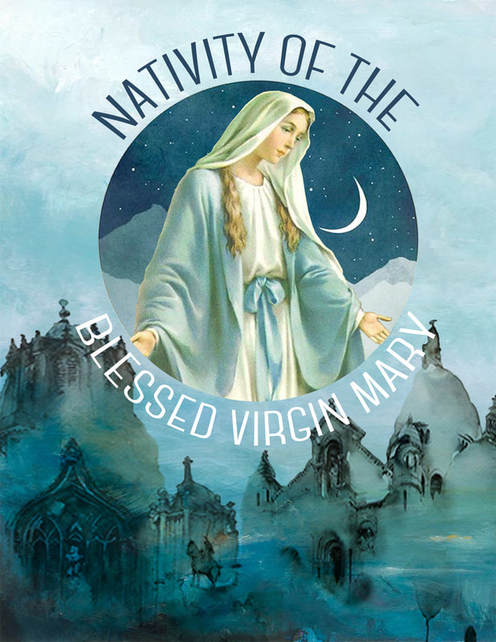
For nine days we have prepared for the Nativity of the Blessed Virgin Mary, and now we have reached the final day. Tomorrow the Church rejoices at the birth of the Mother of God.
Mary’s Nativity reminds us of the hiddenness with which God so often begins His greatest works. The world could not yet see what Heaven knew. The child whose birth brought joy to Joachim and Anne had been chosen for a place at the very heart of salvation history.
On this final day of preparation, we remain for a little while longer in that hiddenness, waiting with the Church for tomorrow’s joy.
NOVENA FOR THE NATIVITY OF THE BLESSED VIRGIN MARY – DAY NINE
Most holy Virgin Mary, chosen by God from all eternity to be the Mother of His beloved Son, we rejoice as the feast of thy holy Nativity draws near.
O Mary, whose hidden beginning was known and cherished by God, teach us to trust His providence when His purposes remain hidden from our sight.
Help us to walk in the Spirit, to bear one another’s burdens with meekness, and to remain faithful in the quiet works of charity known to God alone.
As these nine days of preparation come to their end, obtain for us the grace we seek in this novena, if it be according to God’s holy will, and prepare our hearts to celebrate thy Nativity with joy.
O Mary, conceived without sin, pray for us. Amen.
WHEN JESUS DRAWS NEAR
Day Eight of the Novena to the Nativity of the Blessed Virgin Mary
September 6, 2026
TODAY’S GOSPEL: Luke 7:11-16
EPISTLE: Galatians 5:25-26, 6:1-10
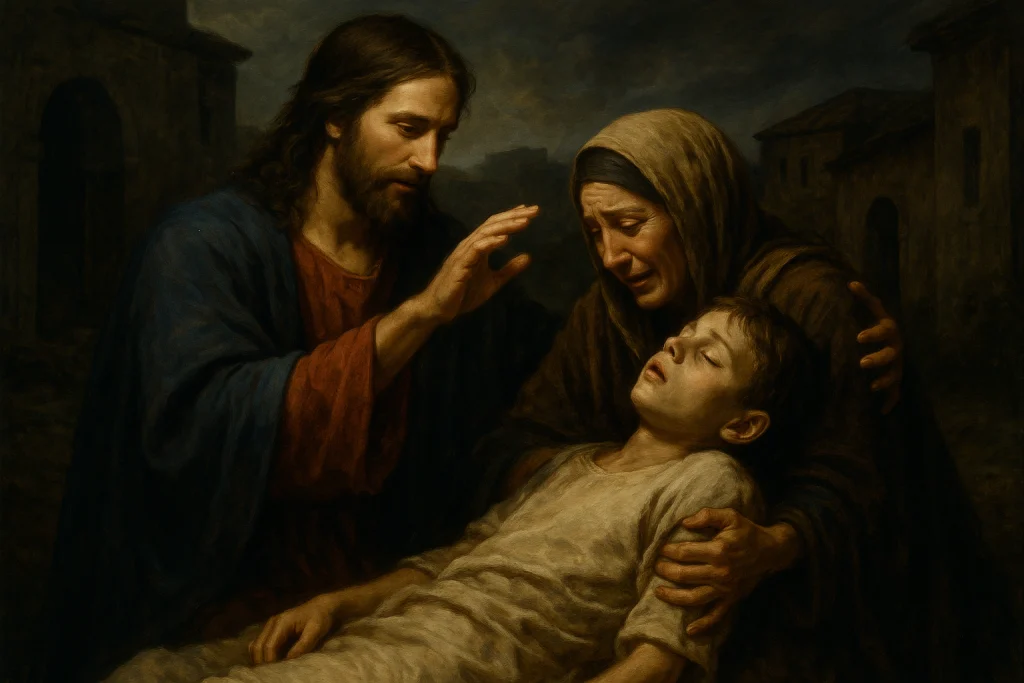
There are moments in the Gospel when someone seeks Jesus. They hear that He is near, and they go looking for Him. They call out to Him. They press through the crowd to touch Him. They ask Him to come. But today is different. Today, no one calls for Jesus.
A grieving mother does not know that He is coming. She does not ask Him for a miracle. She does not even speak. She is simply walking behind the body of her son.
St. Luke tells us that Jesus was approaching a city called Naim when a funeral procession was coming out through the gate. The dead man was the only son of his mother, and she was a widow. In only a few words, the Gospel gives us the whole sorrow of this woman. She had already buried her husband. Now she was burying her only son.
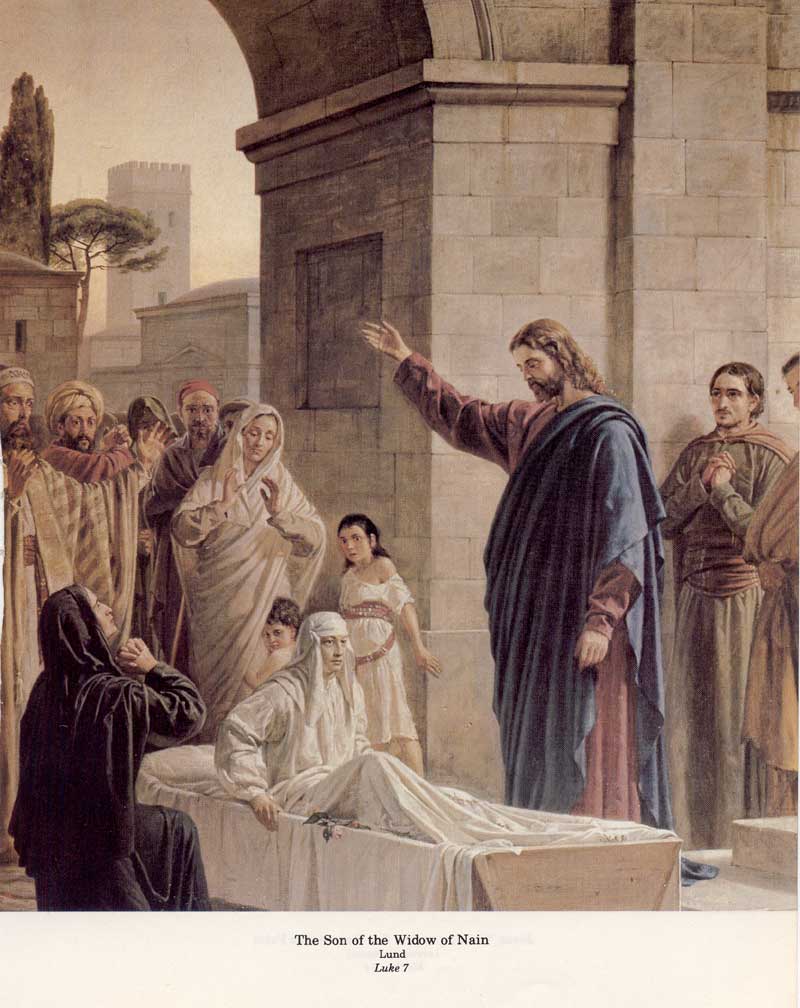
And as one procession leaves the city, another approaches it. The widow walks with death. Jesus comes with life. And they meet at the gate. “Whom when the Lord had seen, being moved with mercy towards her, He said to her: Weep not.”
There is something especially tender in those words because the widow has done nothing to draw His attention. Jesus sees her. Before she notices Him, He notices her. Before she speaks, He knows her sorrow. Before she asks, His Sacred Heart is moved with compassion.
The Gospel does not tell us that Jesus first speaks to the dead young man. He first speaks to his mother. “Weep not.” These words would seem almost impossible from anyone else. Her son is dead. Of course she weeps. But they are spoken by the One who knows what He is about to do. Jesus approaches the bier and touches it. The bearers stand still.
For one extraordinary moment, everything seems suspended – the funeral procession, the mourners, the sorrow of the mother. And then Christ speaks: “Young man, I say to thee, arise.” The young man sits up and begins to speak. And then St. Luke gives us one of the most beautiful little phrases in this Gospel: “And He gave him to his mother.” He gave him back. The son whom she believed she had lost forever is placed once more into her arms.
There is something here that reaches beyond the miracle at Naim. The Church reads this Gospel knowing that another Mother will one day stand beneath the Cross of her only Son. Our Lady will know the sword foretold by Simeon. She will see the lifeless Body of Jesus taken down from the Cross. And yet death will not have the final word there either.
Perhaps that is especially beautiful to remember as we draw near to the feast of Mary’s Nativity. The little child whose birth we are preparing to celebrate will one day become the Mother of Sorrows – and then the Mother who rejoices in the Resurrection of her Son.
At Naim, Christ gives a son back to his mother. At Easter, the Son Himself rises never to die again. And hidden within today’s sorrowful Gospel is already the quiet promise of resurrection.
In the Epistle today, St. Paul writes: “If we live in the Spirit, let us also walk in the Spirit.” His words are remarkably gentle in today’s Epistle. If someone is overtaken in a fault, he is to be restored “in the spirit of meekness.” “Bear ye one another’s burdens; and so you shall fulfill the law of Christ.”
There is a beautiful harmony between the Epistle and the Gospel. St. Paul speaks of bearing another’s burden. At Naim, Christ enters into the burden of a woman who has not even asked Him to do so. He sees what she carries. He draws near to her sorrow. The Christian life described by St. Paul has something of that same tenderness: seeing the burden another person carries, treating weakness with meekness, and quietly helping to bear what has become too heavy.
And St. Paul closes with words worth lingering over: “And in doing good, let us not fail. For in due time we shall reap, not failing.” There are things whose fruit we cannot yet see. There are prayers that seem unanswered. There are sorrows whose meaning remains hidden. There are seeds planted in tears.
The widow of Naim began that day walking behind the bier of her son. She could not have imagined how the road would end. But Jesus was already coming toward her.
QUESTIONS FOR THE HEART
Is there a sorrow in my heart where I need simply to remember that Jesus sees me?
Whose burden might I quietly help to carry with the meekness St. Paul describes?
Can I trust that Christ may already be drawing near, even when I cannot yet see Him?
A LITTLE POEM FOR THE JOURNEY
A mother walked beneath her grief,
Her only son before her,
No prayer remained upon her lips,
No earthly hope to hold her.
“Do not weep,” the Savior said,
And touched the silent bier,
The Voice that called the world to life,
Was suddenly so near.
“Young man, arise” – and death released
The one it could not keep,
And Jesus gave him back to her,
Who thought she could but weep.
Two roads that met outside the gate,
Where death and Life drew near –
And she who thought all hope was gone
Found Christ was already there.
NOVENA FOR THE NATIVITY OF THE BLESSED VIRGIN MARY – Day Eight
For centuries, Christians have rejoiced in Mary’s Nativity because her birth belongs to the quiet beginning of God’s preparation for the coming of Christ. No one looking upon the infant Mary could yet have seen Bethlehem, Nazareth, Cana, Calvary, or the empty tomb. All of that remained hidden. Yet God’s providence was already unfolding.
Today, beside the widow of Naim, we can contemplate Mary as the Mother who would herself know both sorrow and joy – the Mother who stood beside her Son in His Passion and rejoiced in His victory over death.
NOVENA FOR THE NATIVITY OF THE BLESSED VIRGIN MARY – DAY EIGHT
Most holy Virgin Mary, chosen by God from all eternity to be the Mother of His beloved Son, we rejoice as the feast of thy holy Nativity draws near.
O Mary, Mother of Sorrows and Mother of holy hope, thou who didst remain faithful beneath the Cross, stay near to all who grieve and to all who carry sorrows known only to God.
Teach us to trust in thy Son when we cannot yet see what He is doing, and to remember that He is never far from those whose hearts are broken.
Obtain for us the grace we seek in this novena, if it be according to God’s holy will, and lead us always closer to Jesus.
O Mary, conceived without sin, pray for us. Amen.
TALENTS THAT ARE FRUITFUL
FEAST OF ST. LAWRENCE JUSTINIAN, BISHOP & CONFESSOR
First Saturday – Devotion to the Immaculate Heart of Mary
Day Seven of the Novena to Our Lady’s Nativity
September 5, 2026
TODAY’S GOSPEL: Matthew 25:14-23
EPISTLE: Ecclesiasticus 44:16-27, 45:3-20
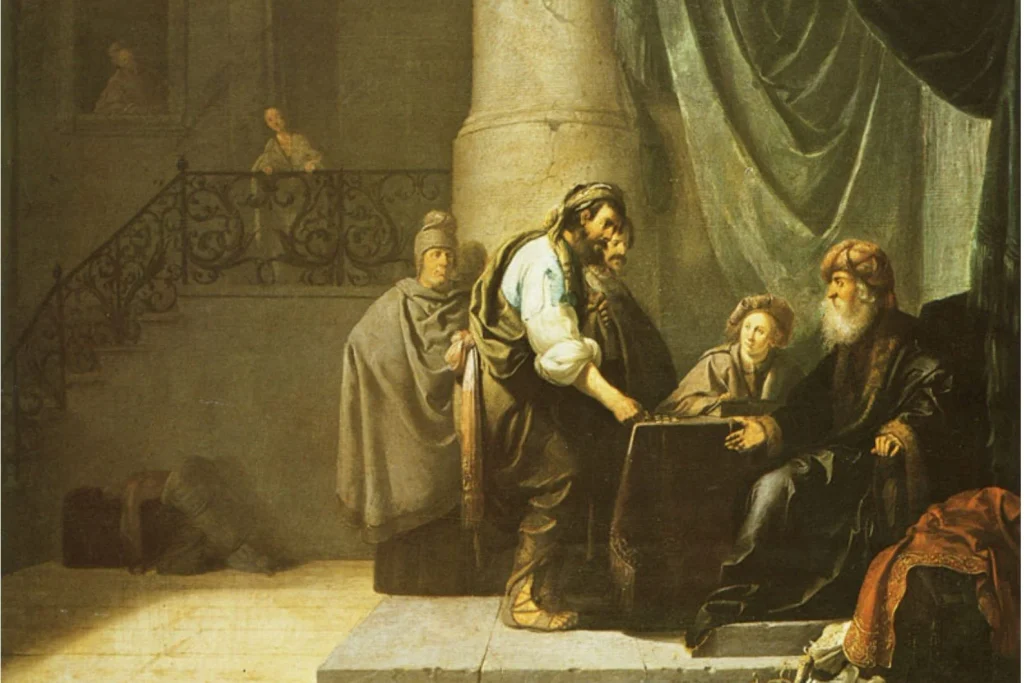
Today’s Gospel brings us the familiar parable of the talents. A master, preparing to travel into a far country, entrusts his goods to three servants; five talents to one, two to another, and one to the third, “to every one according to his proper ability.”
There is a quiet beauty in that detail. Each receives something from the master, although what is entrusted to each is different.
The first two servants put what they have received to use. The five talents became ten, and the two became four. When the master returns, the first two servants come before him carrying not only what had originally been entrusted to them, but also the fruit it has borne. And remarkably, although the amounts are different, the master receives them with the same words:
“Well done, good and faithful servant: because thou hast been faithful over a few things, I will place thee over many things: enter thou into the joy of thy lord.”
The Gospel does not measure one servant against the other. The servant who received two talents is not judged according to the five given to someone else. Each stands before the master with what was placed into his own hands.
There is something very tender in that image of the Christian life. Grace is given differently. Vocations are different. Opportunities are different. Even among the Apostles, personalities, abilities, and particular missions differed greatly. Yet each life had its place within the work of Christ. The talents of the parable ultimately belong to the master. They are received from him, bear fruit during his absence, and are placed before him again upon his return.
So it is with so much that passes through out own lives. What begins as a gift can, through grace and faithfulness, become fruitful – and what has borne fruit can finally be returned to the One from Whom it first came.
The Epistle seems almost to continue the thought of the Gospel, but across the long landscape of salvation history. The Church places before us Enoch, Noah, Abraham, Jacob, Moses, and Aaron – men separated by generations, yet joined by their place within the unfolding plan of God.
Enoch “pleased God.” Noah was found just and became the beginning of a new covenant after the flood. Abraham received the promises of God, promises that would extend far beyond the boundaries of his own lifetime. The covenant continued through Isaac and Jacob, from whom would come the twelve tribes of Israel. Moses was chosen to stand before Pharaoh, lead Israel from bondage, and receive the Law. Aaron was set apart for the priesthood, clothed in sacred vestments, and entrusted with the service of the altar.
None was given precisely the same work. Seen together, however, their lives reveal something of the patient providence of God. One generation receives what another has handed on. One man is entrusted with a covenant, another with a people, another with the Law, another with the priesthood. Across centuries, these individual lives become part of one history of salvation.
What must have seemed, within the lifetime of each man, to be only one portion of the story can be seen from our vantage point as part of something immeasurably greater. And all of it was moving toward Christ.
St. Lawrence Justinian was born in Venice in 1381 into the noble and wealthy Giustiniani family. The world into which he was born offered him position, comfort, and the privileges belonging to one of Venice’s distinguished families. Yet the course of his life would move in another direction.
While still a young man, Lawrence experienced what is traditionally described as a vision of Eternal Wisdom. It became a decisive moment in his life. The attractions of worldly honor began to give way to a desire for God. Looking upon a crucifix, he is remembered as saying: “It is Thou, O Lord, Who art my hope; in Thee are consolation and strength.” Lawrence entered the Canons Regular of San Giorgio in Alga where he embraced the common religious life according to the Rule of St. Augustine.
His early desire for solitude and prayer gradually opened into responsibilities he had not sought for himself. He served his community as superior and later became Bishop of Castello. When the ancient Patriarchate of Grado was transferred to Venice, Lawrence became the first Patriarch of Venice. The contemplative young man who had turned away from the honors available to him eventually found himself carrying responsibility for the spiritual life of an entire people.
Prayer remained at the center of his life. He wrote extensively on divine love, humility, the interior life, and the soul’s union with God. His writings also reveal a tender devotion to the Blessed Virgin Mary and confidence in her maternal intercession.
There is a beautiful harmony between his life and today’s Gospel. Gifts that might have served worldly advancement became fruitful in another way. What Lawrence possessed – his intellect, position, spiritual insight, capacity for leadership, and above all his love of God – was gradually drawn into the service of the Church. His life began amid the wealth of Venice and ended in the greater richness he had sought from his youth: the things of God.
Today is also the First Saturday of September, drawing our attention in a particular way to the Immaculate Heart of Mary.
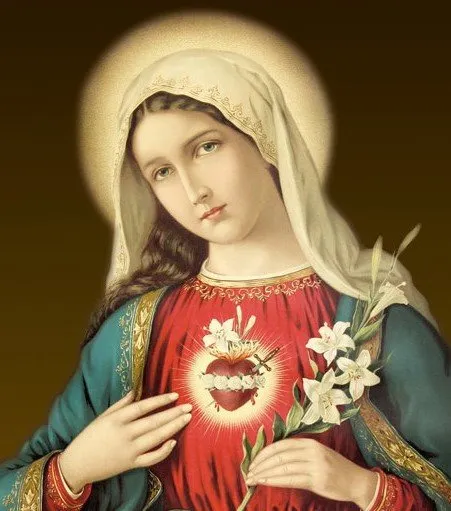
And here the theme running quietly through today’s readings reaches Our Lady. The Gospel speaks of something precious being entrusted to another. To Mary was entrusted Jesus Christ Himself. At Nazareth, she received the message of the Angel and answered with her fiat. From that moment, the hidden life of the Incarnate Word unfolded beneath her Immaculate Heart.
St. Luke gives us one of the most beautiful glimpses into that Heart when he tells us that Mary “kept all these words, pondering them in her heart.” She received the Word of God not only into her mind, but into the depths of her being. She carried the Word made flesh beneath her heart at Nazareth, adored Him at Bethlehem, lived beside Him through the hidden years, followed Him through His public life, and remained near Him at Calvary. This is the Heart remembered on First Saturday – a heart completely open to God, filled with love for her Son and pierced by sorrow with Him.
The devotion of First Saturday brings us close to that interior life of Mary, her love, her fidelity, her sorrows, and her desire that souls should belong entirely to her Divine Son. And today, with the Nativity of Our Lady drawing very near, the Church’s calendar allows us to remain with Mary a little longer.
QUESTIONS FOR THE HEART
What gifts has God entrusted particularly to me? Have I allowed them to become fruitful, or are there gifts I have scarcely recognized?
When I look at the seemingly small and hidden parts of my life, can I trust that God may see a purpose in them that I cannot yet see?
Mary kept and pondered the things of God within her heart. What has God placed within my heart that I need to treasure more carefully?
A LITTLE POEM FOR THE JOURNEY
Not ervery gift is meant to shine,
Where all the world can see,
Some blossom in the hidden place
Known only, Lord, to Thee.
A talent placed within the hand,
A grace within the heart,
May seem so small – and yet with Thee
May hold some greater part.
So too, the infant Mary lay
Unknown to earthly eyes,
While Heaven knew the little one
From whom the Sun would rise.
And what Thou place within my hands,
However small it be,
May it bear fruit within Thy grace
And find its way to Thee.
NOVENA FOR THE NATIVITY OF THE BLESSED VIRGIN MARY – Day Seven
We have reached the seventh day of our novena in preparation for the Nativity of the Blessed Virgin Mary.
As the Feast of Our Lady’s Nativity approaches, Day Seven leaves us contemplating something wonderfully hidden: before Mary ever spoke her fiat, before she carried Jesus, before anyone called her blessed, she was simply a little child whose entire future rested within the providence of God.
NOVENA FOR THE NATIVITY OF THE BLESSED VIRGIN MARY – DAY SEVEN
O Blessed Virgin Mary, as we draw near to the celebration of thy holy Nativity, keep us close to thy Immaculate Heart. May the hidden beginnings of thy life remind us of the quiet providence of God, Who sees from the beginning what only He knows a life may become.
Teach us not to despise the hidden work of God in our own lives. When we cannot see where He is leading us, help us to know that His Providence is already at work.
We place before thee during this novena the intentions we carry in our hearts. Present them to thy Divine Son. If what we ask is according to His holy will, obtain it for us, and above all obtain for us those graces that will lead us more faithfully to Him.
Mary, conceived without sin, pray for us. Amen.
YOU CANNOT SERVE TWO MASTERS
FIRST FRIDAY DEVOTION TO THE SACRED HEART OF JESUS
St. Rose of Viterbo – Virgin of the Third Order of St. Francis
St. Rosalia – Virgin and Hermit
Novena for the Nativity of the Blessed Virgin Mary
September 4, 2026
TODAY’S GOSPEL: Matthew 6:24-33
EPISTLE: Galatians 5:16-24
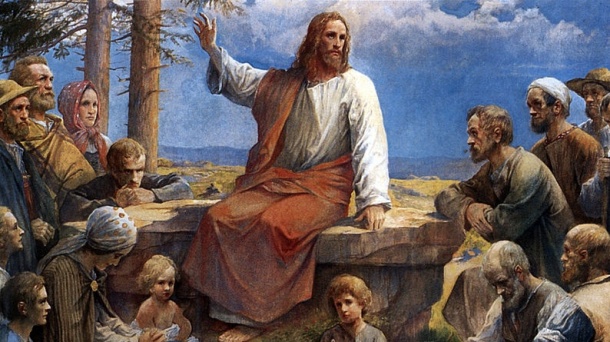
Today Our Lord turns our attention toward some of the simplest things in creation: the birds of the air and the lilies of the field. Before He does, however, He gives us a sentence that orders everything that follows: “No man can serve two masters.”
There is a simplicity in these words that leaves little room for compromise. Our lives may contain many responsibilities, possessions, relationships, and concerns, but there can only be one first love. Everything else must find its proper place beneath God.
This is what Our Lord means when He tells us that we cannot serve both God and mammon. The things of this world are not evil simply because they are earthly. Our homes, work, possessions, plans and daily responsibilities are part of the life that has been given us. The danger comes when something created begins to occupy the place of the Creator. Then the Gospel changes its imagery. Our Lord asks us to look upward: “Behold the birds of the air.”
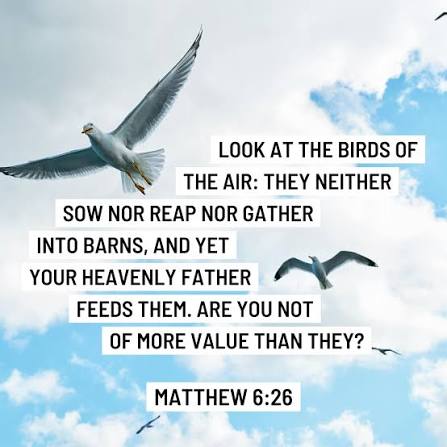
And then downward: “Consider the lilies of the field.”
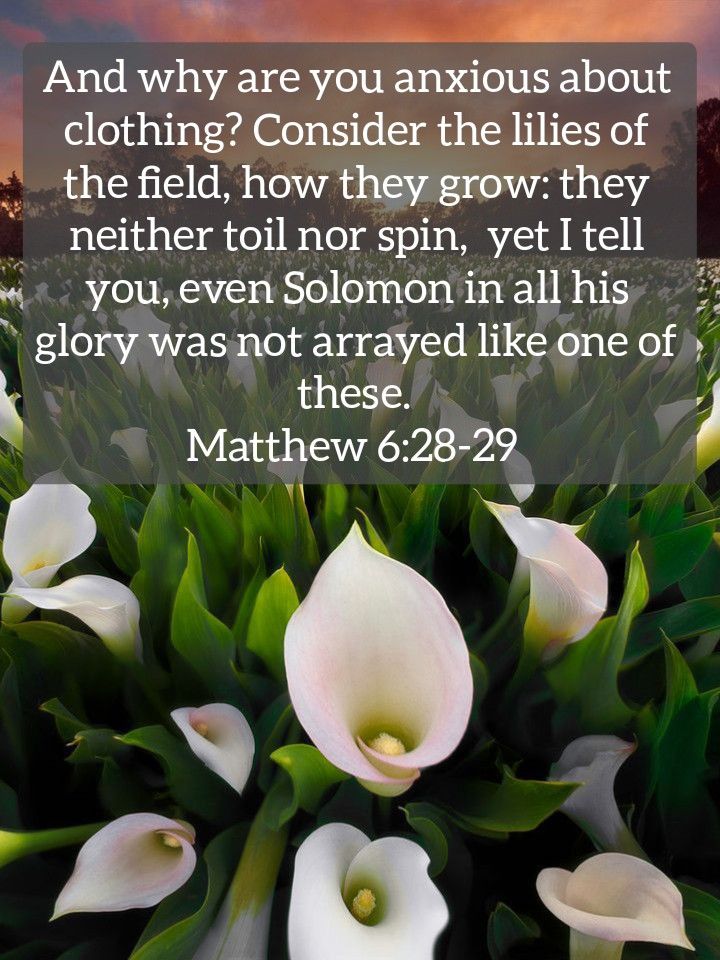
There is something lovely about the simplicity of this instruction. Christ could have given His disciples a long explanation. Instead, He points toward creation. Look at the birds. Look at the flowers. The Father has not forgotten them.
Christ is not telling us to abandon prudence or neglect the duties of our state in life. He is restoring those duties to their proper place. We work, provide, plan, and care for those entrusted to us, but we do these things beneath the Providence of God. And so the Gospel arrives at the words that gather the whole passage together: “Seek ye therefore first the kingdom of God, and His justice: and all these things shall be added unto you.” First – that little word matters. God first. Everything else finds its proper order afterward.
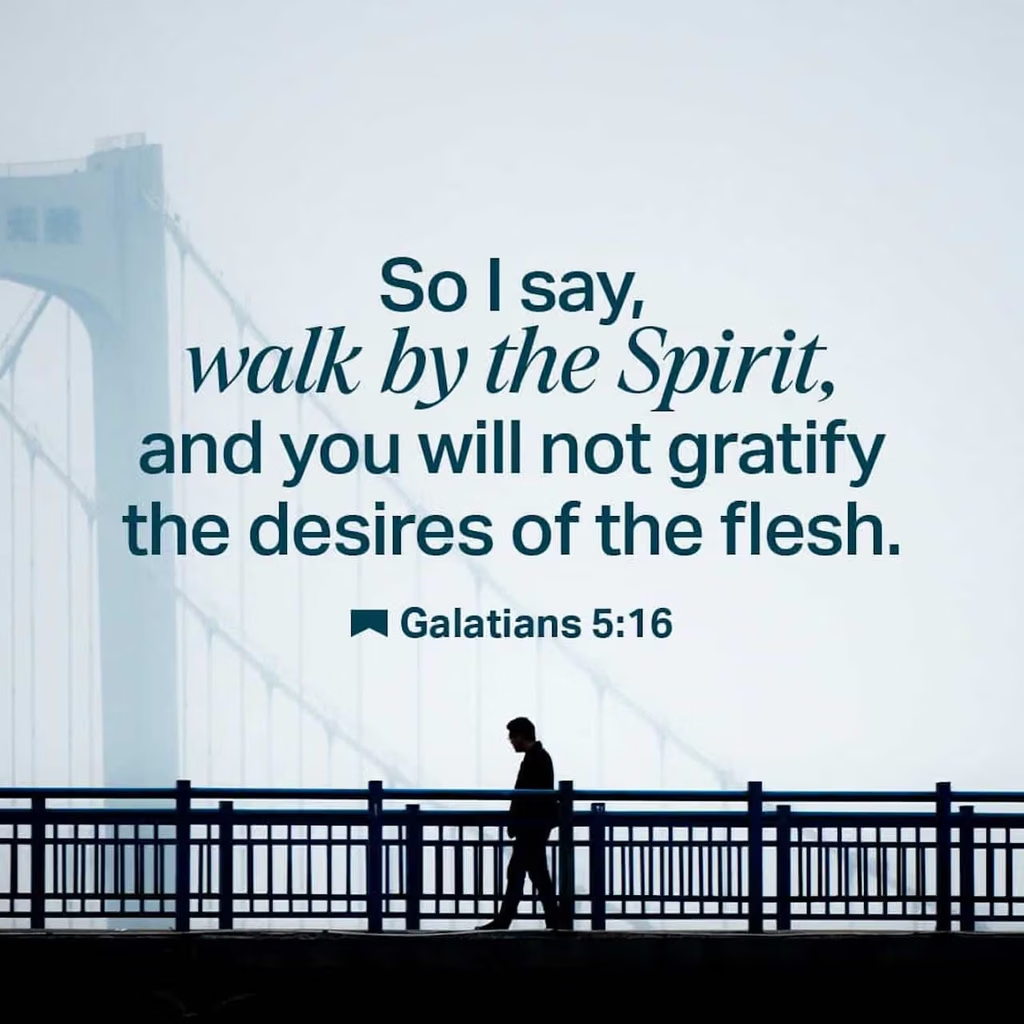
Today’s Epistle from Galatians quietly deepens the same thought. St. Paul also places two ways of living before us: the works of the flesh and the fruit of the Spirit. The contrast is striking. On one side are the disorders that divide and diminish the soul: impurity, idolatry, hatred, contention, envy, anger, drunkenness, and the other works of fallen nature.
On the other St. Paul gives us: “Charity, joy, peace, patience, benignity, goodness, longanimity, mildness, faith, modesty, continency, chastity.” Perhaps one of the simplest ways to understand today’s Epistle is to notice that St. Paul calls these things fruit. Fruit grows. The Gospel tells us where to place our treasure. The Epistle helps us recognize what is growing in the soul when that treasure is rightly placed.
And as we continue walking through this September day on the Church’s calendar, we meet two women whose lives were very different, yet who both left the things of this world behind for the things of God.
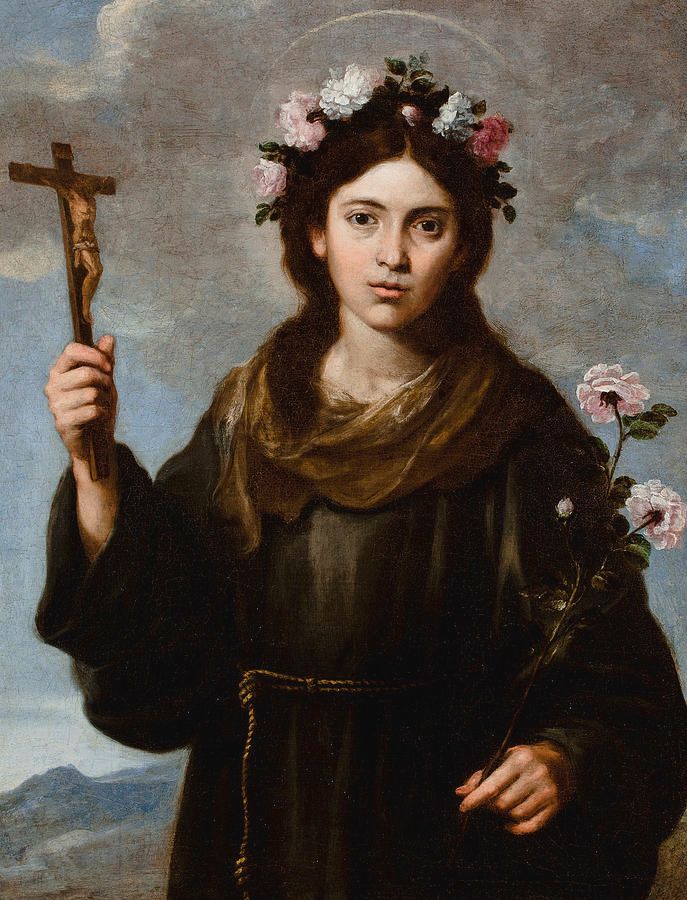
September 4 has a special place in the Franciscan calendar because today we remember St. Rose of Viterbo. Rose was born in Viterbo, Italy, around the year 1233. Her life would last only about 18 years, yet those few years left a memory the Church has carried for centuries.
From childhood Rose was drawn toward prayer and penance. Tradition tells us that after a serious illness she experienced a vision of the Blessed Virgin Mary and was directed toward the Franciscan penitential life. She became associated with the Third Order of St. Francis, wearing the Franciscan habit and embracing prayer, poverty, penance, and simplicity.
She lived during turbulent years in Italy, and Viterbo was caught in a struggle between the papacy and Emperor Frederick II, and Rose began speaking publicly, encouraging fidelity to the Church. Her family was exiled at one time from Viterbo, but later was able to return. Rose continued her life of prayer and penance and died while still very young. Several years later, Pope Alexander IV ordered her body transferred to the monastery she had once wanted to enter, St. Mary of the Roses. Her body had remained an object of veneration and was regarded as incorrupt.
St. Rose of Viterbo is a beautiful saint to encounter because she reminds us that the Franciscan family has never belonged only to friars and cloistered religious. The Franciscan penitential movement also took root among ordinary men and women living in the world – people seeking to follow Christ in the Franciscan way. Rose was one of them. And more than seven centuries later, the Church still remembers her.
September 4 also introduces us to St. Rosalia, a twelfth-century Sicilian virgin whose life took a very different path from that of St. Rose. Much of Rosalia’s early life is hidden. According to tradition, she was born into a noble family in Sicily but left behind the privileges that might have been hers and chose instead a solitary life dedicated to God.
She lived as a hermit, eventually making her home in a cave on Monte Pellegrino, overlooking Palermo. There she devoted herself to prayer and penance. Centuries passed, then during a terrible plague in Palermo in the seventeenth century, devotion to her was renewed following the discovery of her relics. Her relics were carried through Palermo in procession, and the end of the plague soon followed. She remains the beloved patroness of Palermo.
There is something beautiful about meeting Rose and Rosalia on the same September day. Rose of Viterbo lived her vocation publicly, and Rosalia disappeared into the silence of a mountain. One is remembered for her voice, and the other for her solitude. Yet the Church remembers them both. God calls some souls into public witness and others into hidden prayer. As we walk through the Church’s calendar, we meet them all.
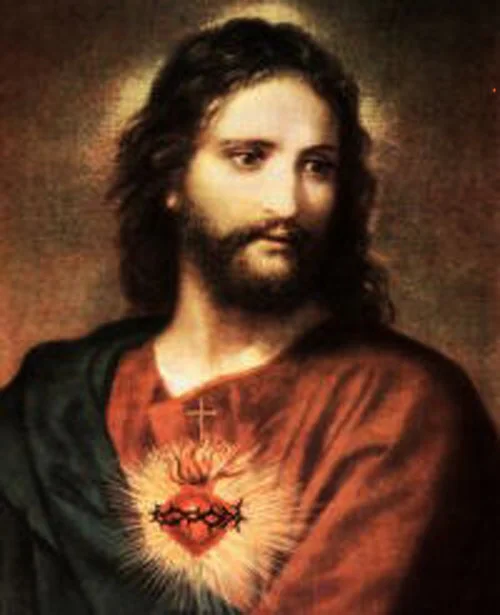
There is another rhythm in the Church’s devotional life today. Because September 4 falls on the First Friday of the month, Catholics traditionally turn with particular love toward the Sacred Heart of Jesus. First Friday devotion is closely associated with the revelations of the Sacred Heart received by St. Margaret Mary Alacoque in the seventeenth century and with Our Lord’s request for Holy Communion in reparation on the first Fridays of nine consecutive months.
And today’s Gospel gives us a particularly fitting phrase to carry into this First Friday: “No man can serve two masters.” We must give Him first place. On this first Friday, spend a few moments before a crucifix, the Blessed Sacrament, or an image of the Sacred Heart and simply return your heart to Him.
QUESTIONS FOR THE HEART
Our Lord begins today’s Gospel with the warning that no one can serve two masters. If we look honestly at our own lives, what has the first place in our hearts? It is easy to answer “God,” but what receives most of our attention, energy, worry, sacrifice, and desire?
Jesus points toward the birds and the lilies and asks us to trust the Providence of His Father. Where is trust most difficult for us right now? Are we carrying tomorrow before tomorrow has arrived? Can we place one particular worry into God’s hands today and resist taking it back?
St. Rosalia gives us something different to consider. Her holiness was largely hidden from the world. Are we content to do good when nobody notices? Can we pray, sacrifice, serve, and remain faithful without needing recognition?
A LITTLE POEM FOR THE JOURNEY
September lilies softly grow,
Their Maker knows each petal there,
The sparrow rises with the dawn,
Already held within His care.
A little Rose once walked this earth,
Her courage stronger than her years,
While on a mountain Rosalia
Found God within the silent spheres.
And Mary’s birthday soon will come –
The Church prepares with quiet prayer,
While from His Sacred Heart, Our Lord,
Reminds us He is always there.
NOVENA FOR THE NATIVITY OF THE BLESSED VIRGIN MARY – Day Six
We are continuing our Novena for the Nativity of the Blessed Virgin Mary, preparing for Our Lady’s birthday on September 8. There is something especially tender about preparing for Mary’s Nativity. Nothing outwardly announced what God was preparing. Yet with Mary’s birth, the dawn of the New Covenant was approaching. The woman who would give her flesh to the Son of God had entered human history.
During these novena days, the Church teaches us something simply by making us wait. A feast approaches. We prepare. We anticipate. We pray. And gradually the calendar itself teaches us to live differently. Perhaps today we might place a flower before an image of Our Lady, pray the Rosary as a family, or simply remind our children: We are getting ready for Mary’s birthday.
NOVENA FOR THE NATIVITY OF THE BLESSED VIRGIN MARY – DAY SIX
Blessed Mother, on this sixth day of our novena, teach us to receive the will of God with the quiet faith with which thou didst receive it throughout thy life. Before the angel ever came to Nazareth, God was already preparing thy heart for the great mystery He would entrust to thee. In the hidden years of thy childhood, unseen by the world, He formed thee in grace and drew thee ever more deeply into His love.
Teach us not to despise the hidden work of God in our own lives. When we cannot see where He is leading us, help us to trust Him. When His will asks something difficult of us, obtain for us the grace not merely to endure it, but to surrender ourselves to Him with love.
O Mary, teach us thy holy fiat. Help us to say with thee, in the ordinary duties of each day and in the crosses we would never have chosen: “Behold the handmaid of the Lord; be it done to me according to thy word.”
As we draw nearer to the feast of thy holy Nativity, prepare our hearts to welcome thee with joy. May thy birth remind us that God often begins His greatest works quietly, and that long before we can see His purposes, His Providence is already at work.
We place before thee during this novena the intentions we carry in our hearts. Present them to thy Divine Son. If what we ask is according to His holy will, obtain it for us, and above all obtain for us those graces that will lead us more faithfully to Him.
Mary, conceived without sin, pray for us. Amen.
FEED MY SHEEP
Pope St. Pius X
Day Five – Novena for the Nativity of the Blessed Virgin Mary
September 3, 2026
TODAY’S GOSPEL: John 21:15-17
EPISTLE: I Thessalonians 2:2-8
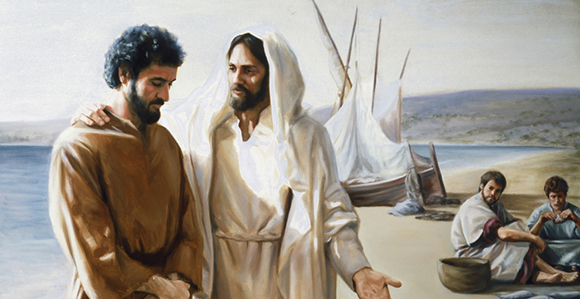
Shortly after Jesus was arrested during His Passion, Peter denied knowing Him three times, just as Jesus had foretold. Yet after the Resurrection, Jesus met Simon Peter on the shore of Galilee. There Our Lord asked him three times: “Simon, son of John, lovest thou me?”
And Peter answered: “Yea, Lord, thou knowest that I love thee.” Three times Peter had denied Him. Three times Christ now gives him the opportunity to profess his love. There is something deeply moving about this scene. Jesus does not pretend that the denial never happened, but Peter stands with the Savior with his soul laid bare. And Peter says, “Lord, thou knowest all things: thou knowest that I love thee.”
There is something here that helps us understand Confession. We do not enter the confessional to tell Jesus something He does not already know. He knows every sin before we speak of it. We come because we love Him, because we are sorry for having offended Him, and because we need His mercy. Peter cannot undo his three denials. Neither can we undo our sins. But we can place them before Christ with sorrow and love.
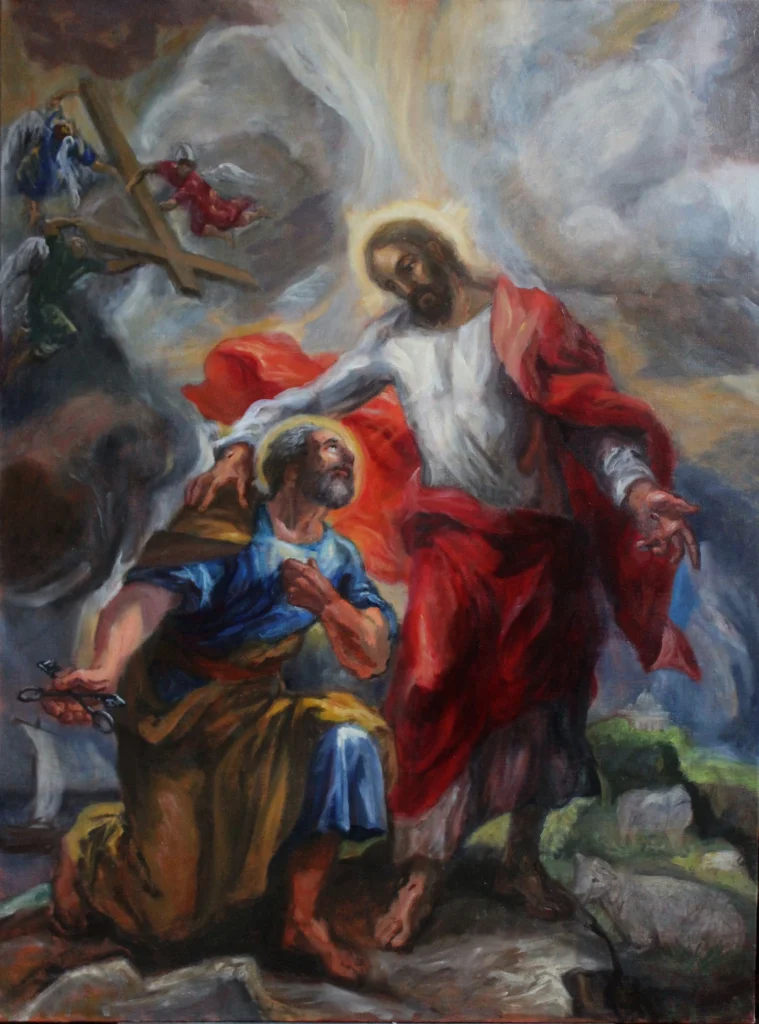
And Christ says to Peter, “Feed my lambs.” He does not merely forgive him. He restores him to his apostolic mission and entrusts His flock to his care. The same Peter who had fallen so profoundly is called once again to serve the Church and will eventually give his life for the Christ he once denied.
The Epistle today shows us what that responsibility would require of Peter and the other Apostles. St. Paul says that although they had suffered and been shamefully treated, they continued “to speak unto you the gospel of God.” Why? Because the Gospel had been entrusted to them. “Even so we speak, not as pleasing men, but God, who proveth our hearts.”
The Apostles did not have the authority to reshape Christ’s teaching according to what people wanted to hear. They were responsible for feeding His sheep with the truth entrusted to them. But St. Paul shows us that fidelity to truth must come from love: “So desirous of you, we would gladly impart unto you not only the gospel of God, but also our own souls: because you were become most dear unto us.” They gave the Gospel, and then they gave themselves. Truth and charity belong together.
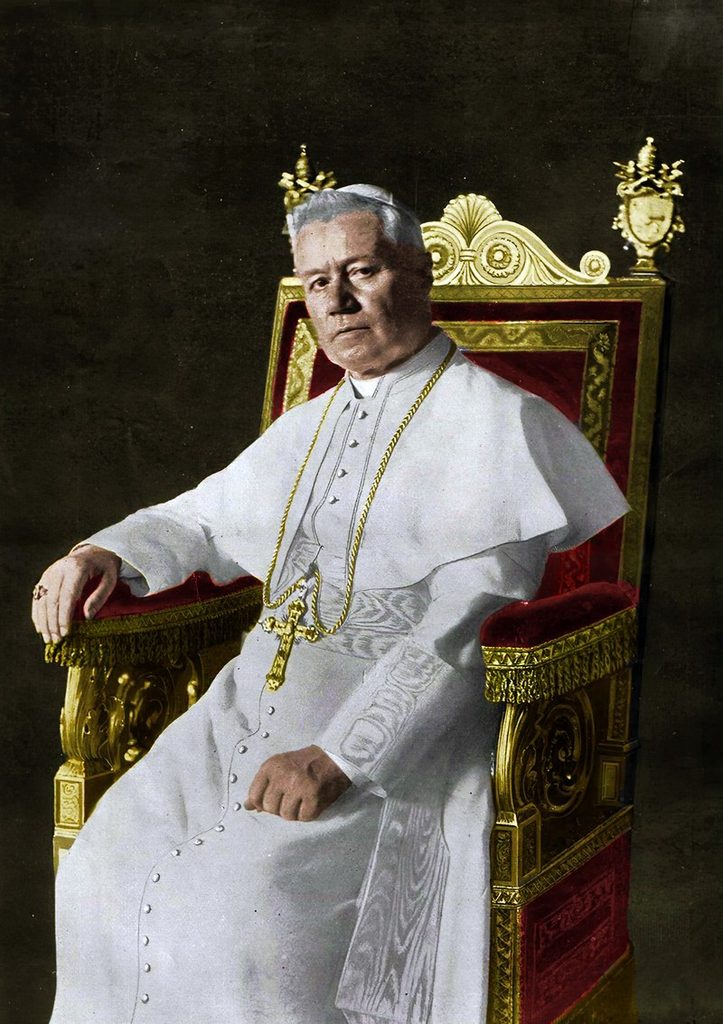
And today the Church gives us a successor of Peter who understood this very well. St. Pius X held the Papal Office from 1903 until his death in 1914. Born Giuseppe Sarto into a humble Italian family, he never lost his simplicity or his concern for the ordinary people. As a priest he was known for his piety, generosity, and love for the poor.
But he recognized that poverty was not only material. People could be spiritually poor because they did not know their Faith. He therefore placed great importance upon religious instruction and the teaching of the Catechism. His great desire was “to restore all things in Christ.”
St. Pius X understood that a shepherd must feed his sheep, and the greatest food Christ has given His Church is Himself. He encouraged frequent Holy Communion and promoted the reception of First Holy Communion by children once they had reached the age of reason. He also worked for the restoration of sacred music, especially Gregorian chant, and began the enormous work of gathering the Church’s laws into a unified Code of Canon Law.
But St. Pius X is perhaps especially remembered for his battle against Modernism, which he called the “synthesis of all heresies.” He understood the danger of allowing Christ’s teaching to be manipulated, watered down, or changed to suit the times. The challenge remains today.
St. Pius reminds us that Christ’s sheep must be fed with the truth – not because truth is always easy, but because we love the souls who need it. And St. Paul reminds us how that truth must be given: “Not only the gospel of God, but also our own souls.” Today everything comes back to the question Jesus asked Peter, “Lovest thou me?” Peter answered with his life. And today Christ asks us the same question.
QUESTIONS FOR THE HEART
When I approach Confession, do I come only because I know I should confess, or because I am truly sorry for having offended the One I love? Can I place even the sins of which I am most ashamed before Christ and say with Peter, “Lord, thou knowest all things: thou knowest that I love thee”?
Are there places where I have begun fitting the Faith around my life rather than allowing Christ to shape my life according to His truth – perhaps regarding Confession, Sunday Mass, prayer, forgiveness, sacrifice, or a teaching of the Church that I find difficult?
St. Paul spoke “not as pleasing men, but God,” yet loved souls enough to give them his very life. Am I afraid to stand for the truth because of what others may think? And when I do speak the truth, do I remember to speak it with charity?
A LITTLE POEM FOR THE JOURNEY
Three times the frightened Peter said,
“I know Him not,” and turned away,
Three times the risen Savior asked,
“Dost thou love Me?” beside the sea that day.
“Thou knowest, Lord, that I love Thee,
Thou knowest all within my heart,”
And Christ did not cast Peter off,
But gave His sheep into his charge.
When I have fallen, Lord, like him,
And sorrow brings me back to Thee,
Give me the grace to answer still:
“Thou knowest, Lord, that I love Thee.”
NOVENA FOR THE NATIVITY OF THE BLESSED VIRGIN MARY – Day Five
Yesterday our novena contemplated Our Lady receiving what God entrusted to her and answering: “Be it done to me according to thy word.” Today the Gospel asks what love for Jesus does. No human creature ever loved Jesus more perfectly than His Mother.
Mary’s whole life was a giving of Jesus to others. She carried Him to Elizabeth. She presented Him to the shepherds and to Simeon. At Cana she directed the servants toward Him: “Whatsoever he shall say to you, do ye.” And at Calvary she stood faithfully beneath His Cross. Mary never kept Jesus for herself.
Perhaps this is what Our Lady can teach us on the fifth day of our novena. If we truly love Jesus, we will want others to know and love Him too. Most of us will do this quietly, among the souls God has already placed around us – our families, our friends, someone who has fallen away, someone who needs encouragement, or simply a soul who needs our prayers. There are many ways to “feed My lambs.”
NOVENA FOR THE NATIVITY OF THE BLESSED VIRGIN MARY – DAY FIVE
Blessed Mother, on this fifth day of our novena, teach us to love thy Divine Son with a love that does not remain only in words.
Thou didst love Jesus more perfectly than any other creature and throughout thy life thou didst bring Him to others. Teach us also to bring Christ to the souls God has placed around us.
Obtain for us the courage to remain faithful to the truths of our holy Faith when they are difficult or unpopular, and give us the charity to speak those truths with love.
When we fall through weakness or sin, lead us back to thy Son and help us trust in His mercy. Teach us to say with Peter: “Lord, thou knowest all things: thou knowest that I love thee.”
We place before thee during this novena the intentions we carry in our hearts. Present them to thy Divine Son. If what we ask is according to His holy will, obtain it for us, and above all obtain for us those graces that will lead us more faithfully to Him.
Mary, conceived without sin, pray for us. Amen.
WHAT WILL I DO WITH WHAT GOD HAS GIVEN ME?
Commemoration of St. Stephen of Hungary, King and Confessor
Day Four – Novena for the Nativity of the Blessed Virgin Mary
September 2, 2026
TODAY’S GOSPEL: Luke 19:12-26
EPISTLE: Ecclesiasticus 31:8-11
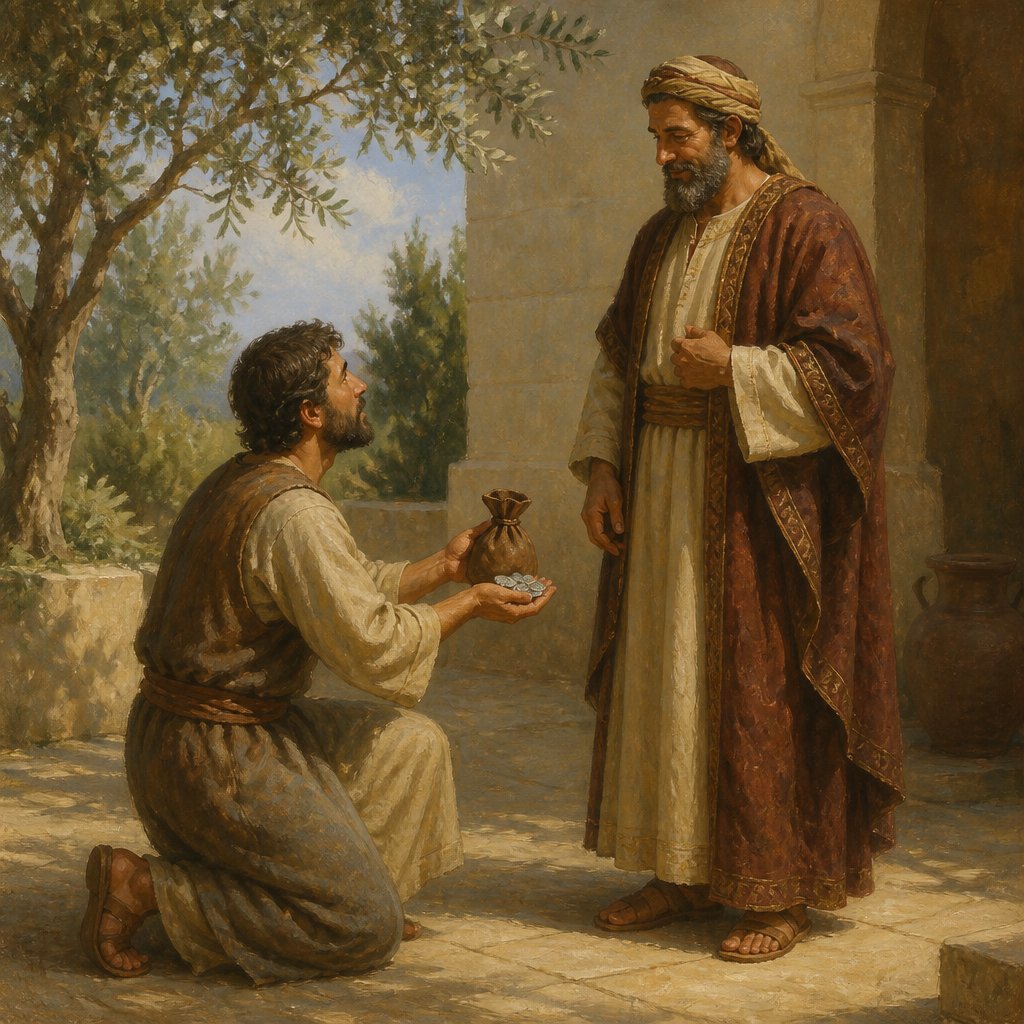
In the Gospel today, Jesus gives us a parable about three servants entrusted with ten gold pounds who were told to trade until their Master returned from his journey to obtain a Kingdom. The servants do not know how long their master will be gone. But they know two things: something valuable has been placed into their hands, and some day they will have to give an account of what they did with it.
When the nobleman returns, the first servant comes forward and says that he has gained ten pounds. The second has gained five. Both have taken what belonged to their master and allowed it to bear fruit. Then comes the third servant. He has not squandered the money. He has not spent it upon himself. He has not even lost it. He simply did nothing with it. He wrapped it in a napkin and hid it away.
And perhaps this is what makes the Gospel particularly searching for us. We often think of the spiritual life primarily in terms of the evil things we must avoid. Certainly we must avoid sin. But Our Lord reminds us today that the Christian life is about more than simply avoiding what is wrong. God has entrusted something to us. And He expects it to bear fruit.
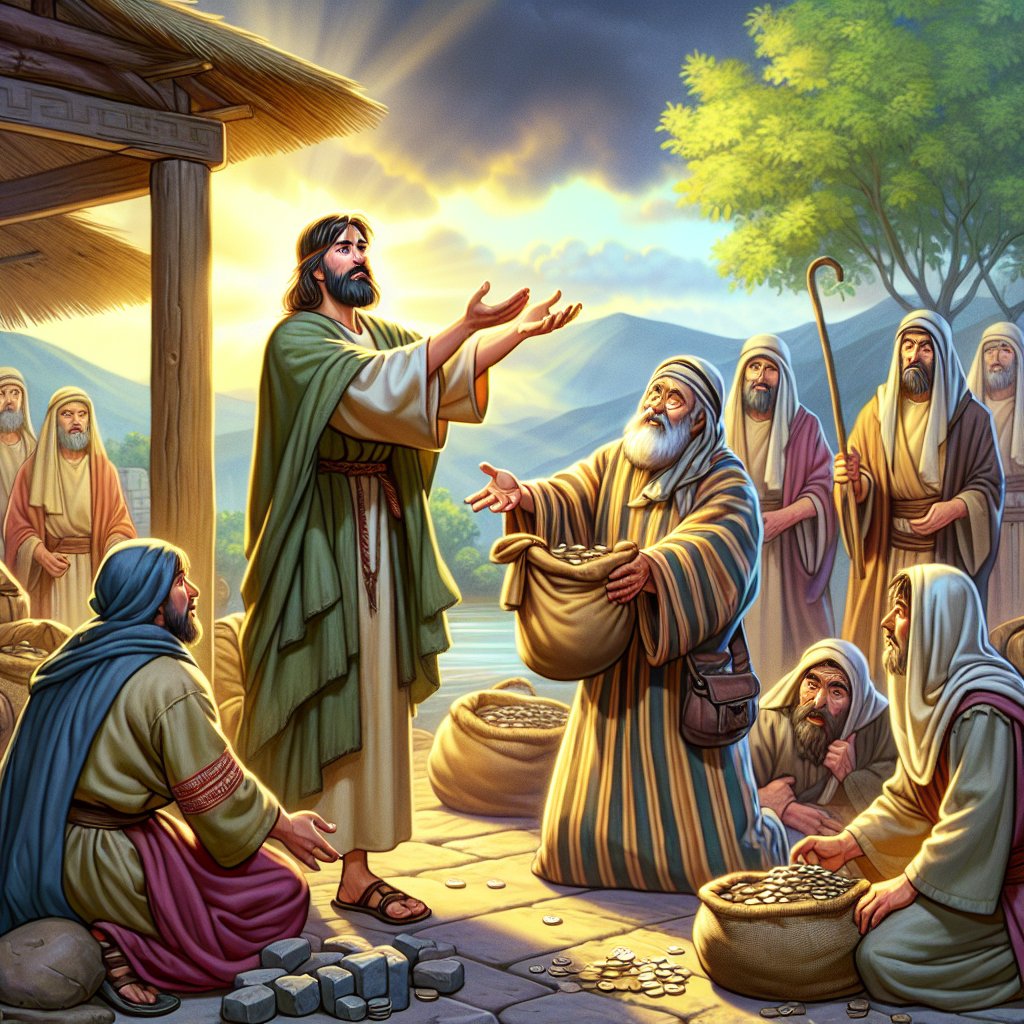
Jesus Christ has indeed gone to receive a Kingdom. Before His Passion He told his Apostles: “I go to prepare a place for you. And if I shall go, and prepare a place for you, I will come again, and will take you to myself.” Between His going and His return lies the time entrusted to us.
We have been given the Catholic Faith. We have been given the Sacraments. We have been given Sacred Scripture. We have been given prayer, opportunities for sacrifice, people to love, people to forgive, works of mercy to perform, crosses to carry, truths to defend, souls for whom we can pray, and countless opportunities to cooperate with grace.
Some have been given great influence. Others live lives almost completely hidden from the world. The amounts entrusted to the servants were not the point. Faithfulness was. The gifts God gives us are certainly meant for our sanctification, but they are not meant to end with us. Grace is meant to bear fruit. The Faith handed down to us is meant to be lived, protected, taught, and handed on. Charity received from Christ is meant to become charity offered to another.
One day the King will return. And the question will not simply be: What did you possess? It will be: What did you do with what I gave you? This makes the third servant especially important. He seemed almost paralyzed by fear. He tells his master that he was afraid, and therefore he hid what had been entrusted to him. Fear can do that. So can distraction. So can attachment to comfort.
We can become so occupied with the noise of the world, that we allow the gifts of God to remain wrapped in the napkin. We need to step away from the constant noise and look at the beauty of God’s creation, sit quietly before the Blessed Sacrament, open Sacred Scripture, or simply remain still enough to hear Him. Because before we can multiply what God has given us, we must remember Who gave it.
And today’s Epistle brings us directly to the question of what we value. “Blessed is the rich man that is found without blemish: and that hath not gone after gold.” There is something beautiful about the Church placing these words beside a Gospel filled with servants, pounds, trading, and accounting. Money itself is not condemned. The blessed man described by Ecclesiasticus could possess wealth. What distinguishes him is that wealth does not possess him. “Who is he, and we will praise him? for he hath done wonderful things in his life.”
He had the opportunity to place his hope in gold and did not do so. He could have allowed possessions to become his treasure, and instead remained faithful to something greater. The Epistle even asks who could transgress and did not transgress, who could do evil and did not do it. There is virtue hidden in that question.
The first servant’s one pound became ten. The second servant’s became five. Something placed faithfully into the hands of God can become far greater than it appeared when we began. And today the Church gives us a remarkable example of this truth in a man who was entrusted not merely with a household or a few possessions, but with a kingdom.
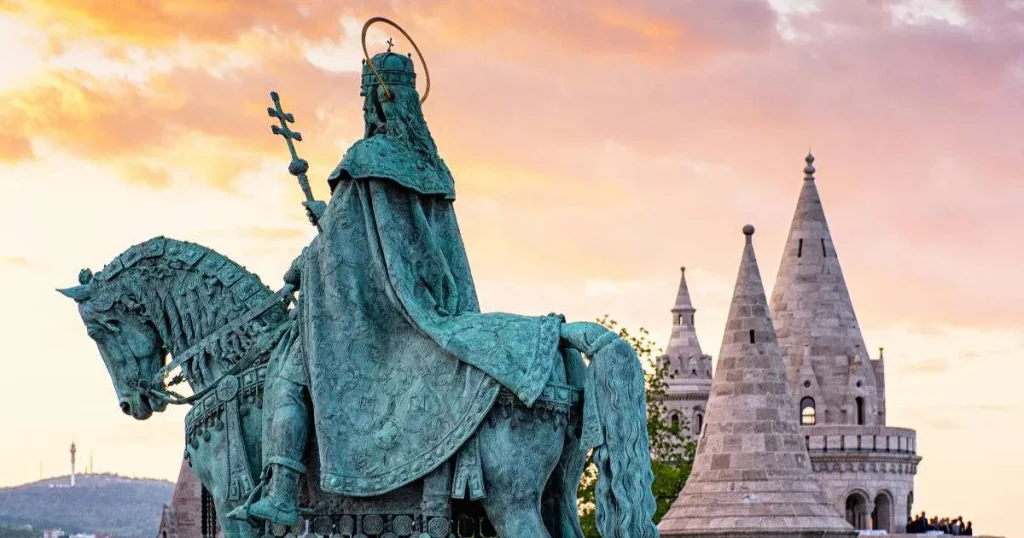
St. Stephen became the first King of Hungary and one of the great Christian rulers of his people. He was born near the end of the tenth century, the son of Geza, ruler of the Hungarians. Stephen received the Christian Faith while Hungary itself was still undergoing a profound conversion from paganism. He married Gisela, sister of the future Emperor St. Henry II, and after succeeding his father, he undertook the task of establishing Christianity more firmly throughout the Kingdom.
Stephen had been entrusted with authority. A crown can become an instrument of vanity, ambition, luxury, and domination. Or it can be understood as something received from God and therefore something for which an account must eventually be rendered. Stephen chose to place his kingship at the service of Christ.
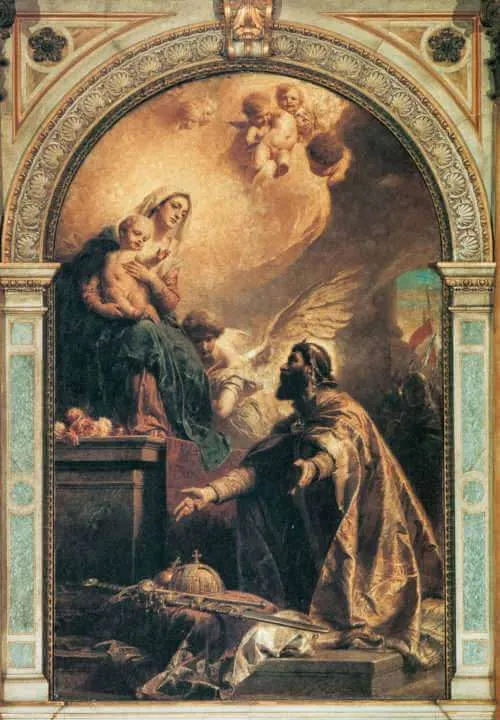
He worked to establish the Church throughout Hungary, organized dioceses, supported churches and clergy, founded monasteries and religious houses, and provided for Christian worship. His laws included provisions for the support of churches, and he required towns to provide for their establishment. He also founded hospices for pilgrims beyond Hungary, including at Rome and Jerusalem. But the king who built churches did not forget the poor.
Stephen understood that Christianity could not remain merely an arrangement of buildings, laws, and institutions. The Gospel had to become charity. Tradition remembers him as particularly attentive to those in need, and his kingship was marked by concern for the poor and for the strengthening of Christian life among his people.
This did not mean his reign was easy or without conflict. The Christian transformation of Hungary met resistance, including revolts associated with those who opposed the changes. Stephen sometimes had to exercise the firmness required of a ruler responsible for the peace of his people. Love sometimes comforts, sometimes gives, sometimes forgives, sometimes waits patiently – and sometimes must stand firmly for what is good. But Christian firmness must always be ordered toward justice and the true good, never toward cruelty or vengeance.
Stephen’s later years also remind us that fidelity to God does not purchase a life free from sorrow. His beloved son Emeric, whom Stephen hoped would succeed him as a faithful Christian ruler died before him. Stephen’s final years were burdened by illness, family troubles, and political conflict. He died in 1038, and he and his son Emeric were canonized together in 1083. The servant who had been given a kingdom eventually had to surrender it. Every king does. And then there will remain only what was done for eternity.
The Gospel asks what we are doing with what has been entrusted to us. The Epistle asks whether the things entrusted to us possess our hearts. And St. Stephen shows us that even something as great as a kingdom can be received as a stewardship and offered back to God.
QUESTIONS FOR THE HEART
What has God entrusted particularly to me – my Faith, time, abilities, resources, influence, relationships, sufferings, opportunities or responsibilities? If Christ asked me today what I have done with these gifts for His Kingdom, what would I want to be able to place before Him?
Is there some gift, calling, work of charity, act of forgiveness, or responsibility that I have kept “wrapped in a napkin” because of fear, distraction, discouragement or attachment to comfort? What small act of faithfulness could I begin today?
Ecclesiasticus praises the person who could have chosen what was wrong but instead remained faithful. Where is God presently giving me an opportunity to choose Him freely – to choose prayer instead of distraction, charity instead of resentment, generosity instead of attachment, courage instead of silence, or trust instead of fear?
A LITTLE POEM FOR THE JOURNEY
A treasure rests within my hand,
Not mine to bury in the land,
The Master gave, and He will come,
To gather every harvest home.
One servant gained, another grew,
One feared the work he had to do,
O Lord, let fear not bury grace,
Nor worldly gold take Heaven’s place.
A king once held a nation’s crown,
And knew one day he’d lay it down,
He gave his strength, his throne, his days,
To build for Christ and spread His praise.
What Thou hast placed today with me,
However small the gift may be,
Give grace to use it for Thy Son,
And hear at last: “Well done, well done.”
NOVENA FOR THE NATIVITY OF THE BLESSED VIRGIN MARY – Day Four
Yesterday our novena placed before us the heart of Mary seeking first the Kingdom of God. Today we take another step. The Gospel asks what we will do with what God has entrusted to us. And no human person ever received a greater gift or a greater responsibility than the Blessed Virgin Mary received when the Angel Gabriel announced that she would become the Mother of the Son of God.
Before Bethlehem, before Calvary, before Pentecost, there was Nazareth. There was a young Virgin listening to the message of God. And there was her answer: “Behold the handmaid of the Lord: be it done to me according to thy word.”
Mary was given something beyond anything she could have imagined, and she trusted. She did not know every sorrow her fiat would eventually contain. She simply knew Who was asking. And that was enough. Perhaps this is what Our Lady can teach us on the fourth day of our novena. We do not need to know everything God will do with our offering. We only need to place it into His hands.
NOVENA FOR THE NATIVITY OF THE BLESSED VIRGIN MARY – DAY FOUR
Blessed Mother, on this fourth day of our novena, teach us to receive faithfully whatever God places into our hands.
Thou didst receive the message of the Angel with humility and trust, offering thyself completely to the will of God. Obtain for us the grace not to bury His gifts through fear, distraction, selfishness, or discouragement.
Help us recognize the graces we have already received and the responsibilities God has entrusted particularly to us. Teach us not to compare our gifts with those of others, but to use faithfully what Our Lord has placed into our own hands.
O Blessed Virgin Mary, whose holy Nativity brought joy to the world because from thee would come Jesus Christ our Savior, teach us to say with thee, “Be it done to me according to thy word.”
We place before thee during this novena the intentions we carry in our hearts. Present them to thy Divine Son. If what we ask is according to His holy will, obtain it for us, and above all obtain for us those graces that will lead us more faithfully to Him.
Mary, conceived without sin, pray for us. Amen.
TWO OPPOSING MASTERS
St. Giles, Abbot
Commemoration of the Twelve Holy Brothers, Martyrs
Day Three – Novena for the Nativity of the Blessed Virgin Mary
September 1, 2026
TODAY’S GOSPEL: Matthew 6:24-33
EPISTLE: Galatians 5:16-24
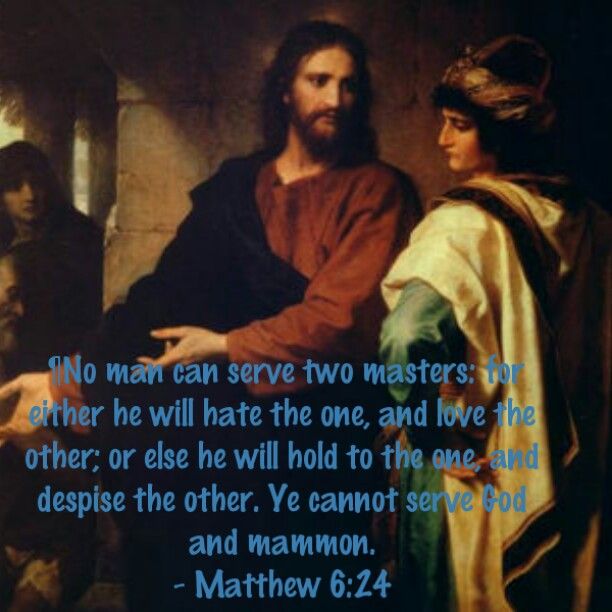
Our Lord begins today’s Gospel with words that leave very little room for compromise. “No man can serve two masters. For either he will hate the one, and love the other: or he will sustain the one, and despise the other. You cannot serve God and mammon.”
Jesus is not simply warning us against possessing money. During His earthly life, Our Lord accepted the assistance of those who possessed worldly goods, and the needs of the Apostles were sometimes supplied by the generosity of others. Money itself is not the master Christ condemns. The danger begins when the things of this world cease to be servants and begin to rule the heart.
Mammon promises security. It tells us that if we possess enough, plan enough, control enough, and protect enough, we can make ourselves safe. And slowly, almost without noticing it, the heart can begin to depend upon what it possesses rather than upon the God from whom every good thing comes.
This is why Our Lord immediately turns our eyes away from human striving and toward the world His Father created. “Behold the birds of the air.” They neither sow nor reap nor gather into barns, and yet the heavenly Father feeds them.
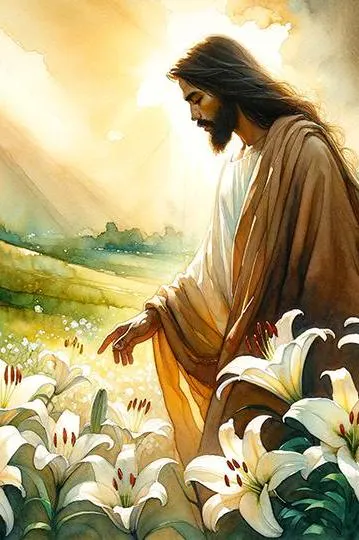
“Consider the lilies of the field.” They neither labor nor spin, and yet Christ tells us that “not even Solomon in all his glory was arrayed as one of these.”
The birds and lilies possess nothing. They build no storehouses against tomorrow. They cannot guarantee what the next day will bring. And yet the Providence of God reaches even to them. “Are not you of much more value than they?”
Our Lord is not teaching idleness, nor is He telling us that prudence and preparation have no place in Christian life. He is teaching us where our confidence must finally rest. There is a difference between providing responsibly for tomorrow and attempting to possess tomorrow.
We can work, save, prepare, and fulfill the duties God has placed before us, while still knowing that none of these things is ultimately our security. A storm can destroy a house. War can overturn a nation. Illness can change a family overnight. Fortunes can disappear, plans can fail, and possessions accumulated over a lifetime can be gone in a moment.
The Gospel therefore asks a deeper question than how much we possess. What possesses us? Our Lord knows how easily fear about tomorrow can fill the space that should belong to trust. And so He tells us, “Be not solicitous therefore, saying, What shall we eat: or what shall we drink, or wherewith shall we be clothed?”
Then He gives us the order by which the Christian life must be lived: “Seek ye therefore first the kingdom of God, and his justice: and all these things shall be added unto you.” And this is where today’s Epistle meets the Gospel so beautifully. Christ places two masters before us. St. Paul places two ways of life before us.
“Walk in the spirit, and you shall not fulfill the lusts of the flesh. For the flesh lusteth against the spirit, and the spirit against the flesh: for these are contrary one to another.” Again we encounter opposition. There are not two roads which eventually arrive at the same destination. There is the life governed by fallen human desires, and there is the life increasingly surrendered to the Holy Ghost. St. Paul does not leave either one vague.
He names the works of the flesh: fornication, uncleanness, immodesty, luxury, idolatry, enmities, contentions, wraths, quarrels, dissensions, envies, drunkenness, and the other sins that flow from a heart turned away from God. And then, against them, he places something entirely different: “The fruit of the Spirit is charity, joy, peace, patience, benignity, goodness, longanimity, mildness, faith, modesty, continency, chastity.” Notice that St. Paul calls these not merely the works of the Spirit, but the fruit of the Spirit. Fruit grows from something living.
God wants the whole heart. The problem with mammon – and with every other false master – is that it competes for territory that belongs to God. St. Paul therefore gives us the image of what must happen within every Christian who truly belongs to Christ: “They that are Christ’s, have crucified their flesh, with the vices and concupiscences.” There are things we cannot carry with us if we intend to follow Our Lord.
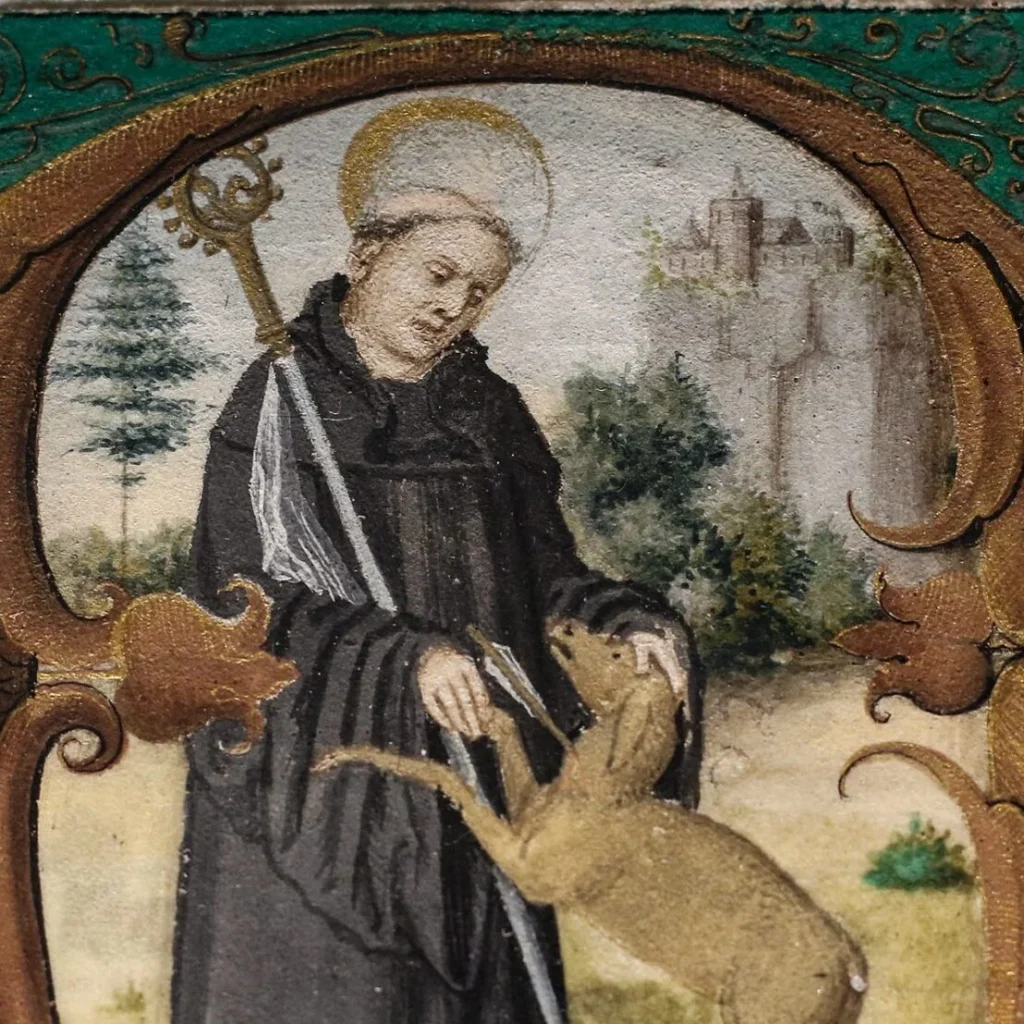
And sometimes God shows us this truth through the lives of the saints. St. Giles, whom the Church commemorates today, is traditionally said to have been born in Athens into a wealthy family sometime around the seventh century. After the death of the parents, tradition tells us that he distributed his inheritance to the poor and eventually withdrew from the world to live a life of prayer and solitude.
There is something striking about meeting St. Giles on the very day when Christ tells us, “You cannot serve God and mammon.” Tradition remembers him living as a hermit in a forest near the mouth of the Rhone, sustaining himself on the simple provisions available to him and giving himself to prayer.
One of the best known stories from his life tells of a hind that came regularly to him and provided milk for his nourishment. During a royal hunt, the animal fled toward the hermit’s refuge. An arrow intended for the deer struck Giles instead. The king, discovering the holy man, came to honor him and eventually offered gifts which Giles refused. In time, a monastery arose there, and Giles became its first abbot.
St. Giles would become one of the Fourteen Holy Helpers, saints whose intercession was especially sought throughout medieval Europe, and devotion to him spread widely. Churches, hospitals, and houses of charity were placed beneath his patronage, and he became particularly associated with the poor, the sick, and those burdened by physical affliction.
Yet perhaps the simplest witness is the one most closely connected with today’s Gospel. The man who once possessed wealth discovered that possessing God was enough.
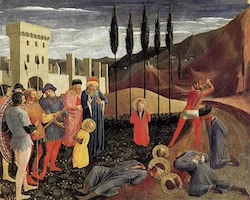
The liturgy also remembers today the Twelve Holy Brothers, Martyrs – Donatus, Felix, Arontius, Honoratus, Fortunatus, Sabrinian, Septimius, Januarius, another Felix, Vitalis, Sator, and Repositus – martyrs traditionally associated with the persecution of the early centuries of the Church. Their title calls them brothers, not necessarily because they shared one earthly family, but because they were united in something deeper: the brotherhood of faith and the blood of martyrdom.
For the martyrs, fidelity to Christ was not an abstract spiritual preference. The powers of this world could threaten their bodies, their freedom, and finally their lives. But there was one thing earthly power could not take from them. It could not take Christ. “Seek ye therefore first the kingdom of God.” St. Giles sought it in poverty and prayer. The Twelve Holy Brothers sought it through fidelity unto death.
Most of us will never stand before a persecutor and be commanded to deny Christ. But every day brings moments in which the same choice is hidden.
QUESTIONS FOR THE HEART
Our Lord tells me that I cannot serve two masters. If I look honestly at the things that occupy my thoughts, fears, plans, time, and desires, what most often governs my decisions? Is there something in my life that I am finding difficult to place completely into God’s hands?
St. Paul tells us that the life of the Spirit produces visible fruit. Which fruit of the Holy Ghost – charity, joy, peace, patience, goodness, faith, modesty, continency, or chastity – does God seem to be asking me to cultivate more faithfully right now?
A LITTLE POEM FOR THE JOURNEY
Two masters call upon the heart,
And each would claim the greater part,
But Christ asks not a little place –
He asks the whole, and gives His grace.
The birds awake beneath His sky,
The lilies bloom and never ask why,
The Father’s hand that clothes the field,
Will guard the heart to Him we yield.
One saint left wealth for solitude,
Twelve gave their lives and faithful stood,
They chose the treasure none can take,
And left the lesser for His sake.
So first His Kingdom let me seek,
In strength, in want, when I am weak,
With open hands, my heart set free –
One God, one Master, Lord of me.
NOVENA FOR THE NATIVITY OF THE BLESSED VIRGIN MARY – Day Three
Yesterday our novena placed before us the watchful heart of Mary – a heart already turned toward God and therefore ready when His messenger came. Today the Gospel takes us deeper into that disposition of soul: “Seek ye therefore first the kingdom of God.” No creature ever lived those words more perfectly than the Blessed Virgin Mary.
Before the Angel Gabriel came to Nazareth, before she knew the extraordinary path along which God would lead her, Mary’s heart belonged to Him. The world teaches us to build security first and surrender afterward. Our Lady teaches the opposite. She surrendered first, and then allowed God to lead her wherever His will required.
NOVENA FOR THE NATIVITY OF THE BLESSED VIRGIN MARY – DAY THREE
Blessed Mother, as we continue these nine days with thee, teach us to seek first the Kingdom of God. Thy heart belonged wholly to Him, and because thou trusted Him, thou wast able to receive His will even when the road ahead remained hidden.
Help us to recognize the false masters that compete for our hearts. Teach us to loosen our grasp upon the things of this world and to trust more completely in the Providence of our Heavenly Father.
O Blessed Virgin Mary, whose holy Nativity brought joy to the world because from thee would come Jesus Christ our Savior, look with maternal kindness upon us as we prepare to celebrate thy birth. Obtain for us hearts detached from passing things, lives fruitful in the Holy Ghost, and the grace always to seek first the Kingdom of God and His justice.
We place before thee during this novena the intentions we carry in our hearts. Present them to thy Divine Son. If what we ask is according to His holy will, obtain it for us, and above all, obtain for us those graces that will lead us more faithfully to Him.
Mary, conceived without sin, pray for us. Amen.
SEEK YE FIRST THE KINGDOM OF GOD
KEEP YOUR LAMPS BURNING
ST. RAYMOND NONNATUS, CONFESSOR
Commemoration of Sts. Joseph of Arimathea and Nicodemus
Day Two – Novena for the Nativity of the Blessed Virgin Mary
August 31, 2026
TODAY’S GOSPEL: Luke 12:35-40
EPISTLE: Ecclesiasticus 31:8-11

“Let your loins be girt, and lamps burning in your hands.”
Our Lord begins today’s Gospel with the image of servants waiting for their master to return from a wedding. They do not know when he will come, and so the house must remain ready. Their garments are gathered for action, their lamps are burning, and when the knock finally comes, they are prepared to open the door immediately.
In the world in which Jesus spoke these words, a wedding celebration could continue late into the night, and the servants could not know precisely when their master would return. Their task was simply to remain attentive until he came. And it is this watchfulness that Christ praises: “Blessed are those servants, whom the Lord when he cometh, shall find watching.”
But then the Gospel gives us a beautiful reversal. The master who finds his servants faithfully waiting “will gird himself, and make them sit down to meat, and passing will minister unto them.” The servants have been waiting to receive their lord, and instead their lord receives them at his table.
The Gospel then moves from the waiting servant to the watchful householder. If the master of a house knew when the thief would come, he would certainly remain awake and guard his house. But the hour is unknown. And so Our Lord ends with the words that explain both images: “Be you then also ready: for at what hour you think not, the Son of man will come.”
Today’s Epistle gives us another picture of a man who has remained watchful. “Blessed is the rich man that is found without blemish: and that hath not gone after gold, nor put his trust in money nor in treasures.”
There is a quiet connection between the Epistle and Gospel. The servant is blessed because he remains faithful while he waits. The man in Ecclesiasticus is blessed because, when given the opportunity to choose otherwise, he remains faithful. One guards the lamp entrusted to him; the other guards the treasure of a heart that belongs to God.
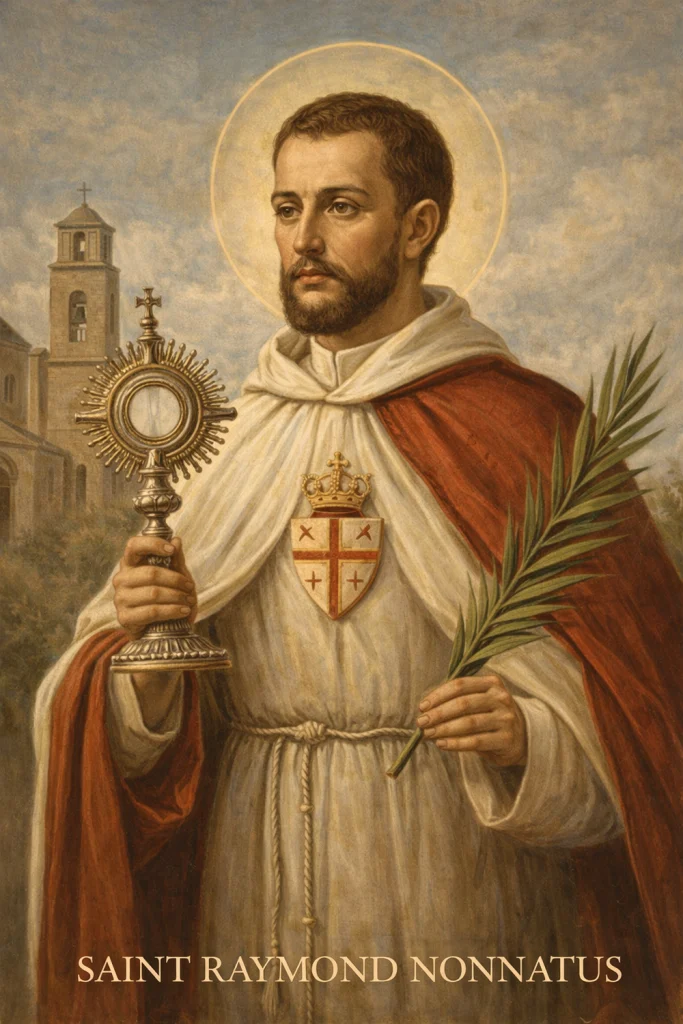
And then the liturgical calendar brings us to St. Raymond Nonnatus. St. Raymond lived in thirteenth-century Spain and became a member of the Order of the Blessed Virgin Mary of Mercy, commonly called the Mercedarians. The Order had been founded for one extraordinary work of charity: the ransom of Christians who had fallen into captivity. Its members were prepared, when necessary, to offer themselves in place of a captive whose freedom could not otherwise be obtained.
According to the tradition surrounding Raymond’s birth, his mother died before he could be delivered, and the child was taken from her womb after her death. From this came the name by which he would always be known – Nonnatus, “not born.” Having entered the Mercedarian Order, Raymond eventually traveled to North Africa to ransom Christian captives.
There he spent the money entrusted to him freeing as many prisoners as he could. When the funds were exhausted and others remained in bondage, Raymond stayed behind as a hostage for their sake. Tradition tells us that even in captivity he continued speaking of Christ, until his captors pierced his lips and fastened them with a lock to prevent him from preaching. He was eventually ransomed and returned to Spain. He died in 1240, remembered as a man who had been willing to exchange his own freedom for the freedom of another.
There is another reason St. Raymond belongs beautifully to these days leading toward September 8. His religious life was lived beneath the mantle of Our Lady. He belonged to an Order bearing her name – the Order of the Blessed Virgin Mary of Mercy – and the spirituality surrounding his life remembers a profound filial devotion to the Mother of God.
August 31 also remembers two men who appear quietly but importantly in the Gospel: St. Joseph of Arimathea and St. Nicodemus. Joseph had been a disciple of Jesus “but secretly, for fear of the Jews.”
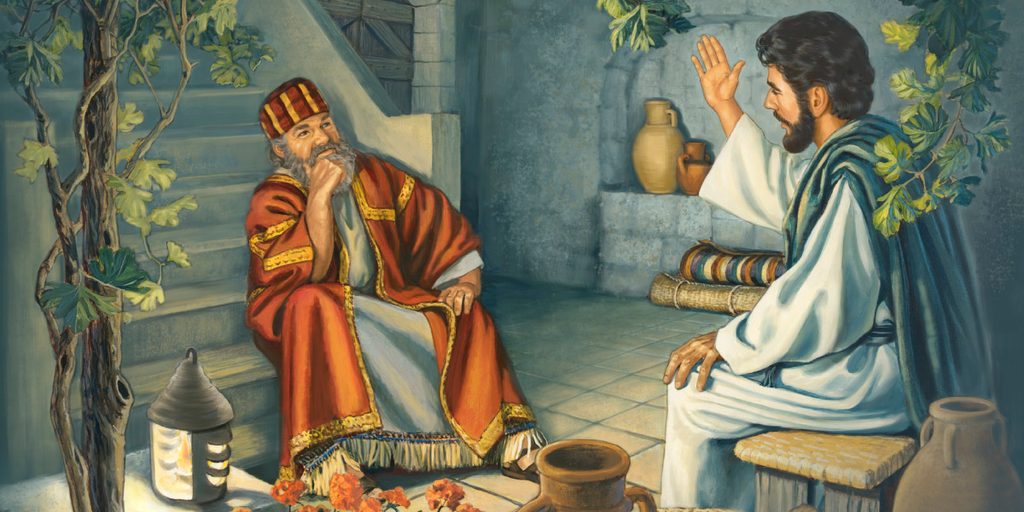
Nicodemus had first come to Our Lord by night. Yet after the Crucifixion, when the Apostles had scattered and the Body of Jesus remained upon the Cross, these two men stepped forward.
Joseph went boldly to Pilate and asked for the Body of Christ. Nicodemus came bringing myrrh and aloes. Together they took the sacred Body of Our Lord, wrapped it in linen with the spices, and laid it in the new sepulchre.
There is something fitting about remembering them on the day when the Gospel speaks of servants whose lamps remain burning through the night. Nicodemus had once approached Christ beneath the darkness of night: Joseph had once followed him secretly. But when their hour came, both were there.
And so August closes with three saints standing before us in very different circumstances. Raymond among captives, Joseph before Pilate, and Nicodemus carrying spices toward Calvary. Each, in his own way, was found ready when something was asked of him.
QUESTIONS FOR THE HEART
Our Lord praises the servants who are still watching when their master returns. If I look at my own spiritual life, is my lamp burning as brightly as it once did? Have I grown careless about something that once kept me close to God?
Ecclesiasticus praises the man who could have transgressed but did not. When I have a choice that no one else may ever see, what usually governs that choice – what is easiest for me, or what is pleasing to God?
A LITTLE POEM FOR THE JOURNEY
Keep thou the little lamp alight,
Though long the road and deep the night,
The servant knows not when the door
Shall sound beneath his Master’s hand once more.
One carried ransom, two drew near,
When Calvary was dark with fear;
And each was ready when the call
Asked faith to rise and give its all.
So through the night my vigil keep,
Nor let the lamp within me sleep,
For blessed is the soul He’ll find,
With burning lamp and watchful mind.
NOVENA FOR THE NATIVITY OF THE BLESSED VIRGIN MARY – Day Two
Yesterday we began nine days of preparation for the Nativity of the Blessed Virgin Mary. Today, as the Gospel places a burning lamp into the hands of the waiting servant, our novena turns toward the watchful heart of Mary.
Long before the Annunciation, long before Bethlehem, Cana, or Calvary, the Blessed Virgin belonged to God. Her hidden life was already a preparation for the moment when the Angel would come and God would ask of her the Fiat upon which the mystery of the Incarnation would unfold.
NOVENA FOR THE NATIVITY OF THE BLESSED VIRGIN MARY – DAY TWO
Blessed Mother, as we continue these nine days with thee, teach us to keep watch with hearts turned toward God. Thou wast ready when the Angel came to thee, because thy heart already belonged entirely to Him. Help us to guard the light of faith and to remain faithful in the quiet places where God prepares us for whatever He may ask.
O Blessed Virgin Mary, whose holy Nativity brought joy to the world because from this would come Jesus Christ our Savior, look with maternal kindness upon us as we prepare to celebrate thy birth. Obtain for us watchful hearts, steadfast faith, and the grace to be ready when thy Divine Son calls us to follow Him more closely. We place before thee during this novena the intentions we carry in our hearts.
Present them to thy Divine Son. If what we ask is according to His holy will, obtain it for us, and above all, obtain for us those graces that will lead us more faithfully to Him. Mary, conceived without sin, pray for us. Amen.
KEEP YOUR LAMPS BURNING
SEEK YE FIRST THE KINGDOM OF GOD
ST. ROSE OF LIMA, VIRGIN
Day One – Novena for the Nativity of the Blessed Virgin Mary
August 30, 2026
TODAY’S GOSPEL: Matthew 6:24-33
EPISTLE: Galatians 5:16-24
There are Sundays when Holy Church seems to gather us away from all the noise of the world and place before us one question that reaches quietly into the heart: What are we seeking first?
Today Our Lord tells His disciples: “No man can serve two masters.” And then He names the two: “You cannot serve God and mammon.” There can be many things in our lives that are good and necessary. We have families to care for, work to accomplish, responsibilities to fulfill, bills to pay, decisions to make, and plans that must sometimes be made for tomorrow. Christ knows this, and He also knows how easily the things we need can become the things that rule us.
There is a difference between having something and serving it. Mammon is not merely the coin held in the hand. It is what happens when the things of this world begin claiming the place in our hearts that belongs to God. Money can do this. So can comfort, recognition, ambition, security, possessions, plans, and even our determination to control what happens next. And perhaps that is why Our Lord immediately begins speaking about worry.
“Behold the birds of the air.” He tells us. They neither sow nor reap nor gather into barns, “and your heavenly Father feedeth them.” Then Christ turns our eyes toward the lilies of the field. They neither labor nor spin, and yet “not even Solomon in all his glory was arrayed as one of these.”
It is such a beautiful moment in the Gospel. Our Lord asks us to stop looking anxiously toward tomorrow and, for a moment, simply look at what God has made. Look at the birds. Look at the lilies. Look at the care of the Father written across creation. And then remember that you are His child. “Are not you of much more value than they?”
The Christian life does not free us from responsibility, nor does trust in Providence mean that we cease working, planning, or caring for those God has entrusted to us. But there comes a point where prudence ends and fear begins. There comes a point where we have done what we can do, and the rest must be placed into the hands of God. How difficult that can be.
We want to know what will happen. We want to know how the problem will be solved. We want to know whether the prayer will be answered as we hope, whether the door will open, whether the person we love will be all right, whether there will be enough, whether tomorrow will look anything like the tomorrow we have imagined.
And into all those questions Christ speaks one quiet sentence: “For your Father knoweth that you have need of all these things.” The Father knows. Perhaps today that is enough. We do not always know what God is doing, but He knows what we need. We cannot see tomorrow, but He already holds it. We cannot control every circumstance, but no circumstance escapes Him.
And today’s Epistle shows us why this ordering of the heart matters so much. St. Paul tells us, “Walk in the spirit, and you shall not fulfill the lusts of the flesh.” The flesh and the spirit are contrary to one another. There is something within fallen man that continually pulls toward self, while grace continually draws us toward God.
St. Paul does not pretend that this struggle disappears simply because we belong to Christ. Instead, he tells us how the Christian must live in the midst of it: walk in the Spirit. And today Holy Church places before us St. Rose of Lima.
Rose was born in Lima, Peru, in 1586, and from an early age her heart was drawn intensely toward God. She was remarkably beautiful, and the admiration she received became something she feared might distract either herself or others away from Christ. Her desire for penance became severe, sometimes startling to us centuries later, but beneath those outward practices was a soul determined that nothing should take the first place that belonged to God.
Her family did not always understand her vocation. Her parents hoped she would marry, while Rose desired to give herself entirely to Christ. Eventually she became a tertiary of St. Dominic and lived much of her religious life within her family home. But Rose did not love Christ only in solitude.
When her family experienced financial difficulty, she worked with her hands, gardening and doing needlework to help support them. She cared for the sick and the poor, bringing those in need into her family’s home and serving them personally. Rose sought first the Kingdom of God, but that did not make her careless about the people around her. It made her love them more. Her detachment from the world was not a refusal to serve: it freed her to serve without needing the world to repay her.
She had chosen her Master. And once the heart knows whom it serves, everything else begins to find its proper place.
Today also begins another little journey through the liturgical calendar. Nine days from now Holy Church will celebrate the Nativity of the Blessed Virgin Mary, and so today we begin our novena in preparation for her birth. And Our Lady, whose Nativity we now begin preparing to celebrate, reminds us that some of God’s greatest works begin silently, hidden from the eyes of the world. We do not need to possess tomorrow. We need only seek His Kingdom today.
QUESTIONS FOR THE HEART
Our Lord tells me that no one can serve two masters. If I look beyond what I say and examine the way I actually live, what receives the first place in my heart? What occupies my thoughts, determines my decisions, consumes my attention, or frightens me most when I imagine losing it? Is there something that has slowly begun asking from me the trust, dependence, or devotion that belongs to God alone?
Christ tells me, “Your Father knoweth that you have need of all these things.” Do I really live as though I believe this? After I have fulfilled my responsibilities and done what prudence requires, can I place what remains beyond my control into the Father’s hands? What particular worry about tomorrow is Christ asking me to entrust to Him today?
A LITTLE POEM FOR THE JOURNEY
The lilies rise beneath His care,
The birds are fed beneath the air,
And shall the child He calls His own
Believe that he is left alone?
I cannot see what waits for me,
Nor all that Providence can see,
But this I know when fears depart,
One Master must possess my heart.
So first His Kingdom I will seek,
When I am strong, when I am weak,
Tomorrow rests within His hand,
Today I follow His command.
NOVENA FOR THE BLESSED VIRGIN MARY
Today we begin nine days of preparation for the Nativity of the Blessed Virgin Mary. Before we arrive at the joy of September 8, we allow the Church to teach us how to wait.
Mary’s birth was one of those quiet moments upon which the history of salvation was turning, though the world did not know it. God knew the “Fiat” she would one day speak. He knew Bethlehem, Nazareth, Cana, and Calvary. He knew that from her He would take the human nature in which the Son would redeem the world.
On this first day of our novena, let us ask for the grace to trust what God may be preparing even when we cannot yet see it.
NOVENA FOR THE NATIVITY OF THE BLESSED VIRGIN MARY – DAY ONE
Blessed Mother, as we begin these nine days with thee, teach us to wait upon God without fear. Teach us not to demand that He reveal tomorrow before we will trust Him today. Help us to seek first His Kingdom and to believe that His Providence is at work even in the hidden places of our lives.
O Blessed Virgin Mary, whose holy Nativity brought joy to the world because from thee would come Jesus Christ our Savior, look with maternal kindness upon us as we prepare to celebrate thy birth. Obtain for us a heart that seeks God above all things, trusts His Providence, and receives His holy will with humility and love. We place before thee during this novena the intentions we carry in our hearts.
Present them to thy Divine Son. If what we ask is according to His holy will, obtain it for us, and above all, obtain for us those graces that will lead us more faithfully to Him. Mary, conceived without sin, pray for us. Amen.
SEEK YE FIRST THE KINGDOM OF GOD
.
HE MUST INCREASE
BEHEADING OF ST. JOHN THE BAPTIST
Commemoration of St. Sabina, Martyr
August 29, 2026
TODAY’S GOSPEL: Mark 6:17-29
EPISTLE: Jeremias 1:17-19
There is a remarkable contrast in today’s Gospel. Herod sits upon a throne, surrounded by princes, tribunes, and the chief men of Galilee. St. John the Baptist sits in a prison cell. By every worldly measure, Herod possesses the power and John possesses nothing. Yet when we look more closely, we begin to see who is truly free.
Herod is bound by his passions, by human respect, by a rash oath, and by his desire to please those sitting at his table. John, though bound in chains, remains free because he belongs completely to God.
St. Mark tells us: “For Herod feared John, knowing him to be a just and holy man: and kept him, and when he heard him, did many things: and he heard him willingly.” There is something deeply tragic in those words. Herod heard John willingly. He recognized something holy in him. He knew that the man standing before him was just. John had told Herod plainly: “It is not lawful for thee to have thy brother’s wife.”
There was no ambiguity in the Baptist’s words. Herod had taken Herodias, the wife of his brother Philip, and John would not remain silent simply because the man committing the sin happened to possess earthly power. John understood that the law of God does not change according to the rank of the person standing before it.
John spoke the truth even when speaking it would cost him his freedom and eventually his life. Herod heard him willingly. But Herod did not repent. The Baptist was calling a sinner away from sin. Repentance was still possible. But Herod would not. Then came the banquet.
Herodias had already desired John’s death. When her daughter danced before Herod and his guests, Herod was so pleased that he promised her whatever she might ask, even to half of his kingdom. The girl went to her mother and asked what she should request. Herodias answered, “The head of John the Baptist.” The Gospel tells us that Herod “was struck sad.”
He knew. He knew John was just. He knew John was holy. He feared him. He had listened to him willingly. And now his conscience confronted him once again. Yet because of his oath and because of those who were with him at table, Herod would not refuse her. The approval of those sitting around his table were more important to him than the life of an innocent man. And St. John the Baptist was beheaded in prison.
What an extraordinary reversal the Gospel places before us. Herod appears to have everything, yet he cannot master himself. John appears to have nothing, yet no one can take from him the one thing that matters most: his fidelity to God. Herod has a kingdom, but he is a slave to his passions. John is in chains, but John is free.
The world might have looked upon the Baptist and seen only a strange man from the desert, clothed in camel’s hair, preaching repentance and calling sinners back to God. Yet Our Lord revealed the true measure of this man when He said: “Amen I say to you, there hath not risen among them that are born of women a greater than John the Baptist.” He was the Precursor. He was the voice crying in the wilderness. He prepared the way of the Lord. He called Israel to repentance.
John pointed away from himself and toward Christ. “Behold the Lamb of God, behold him who taketh away the sin of the world.” Those words reveal the heart of St. John’s entire life. John understood who he was because he understood who Christ was. And so he could say: “He must increase, but I must decrease.”
Even his martyrdom seems to bear the mysterious mark of those words. John decreases before the eyes of the world, while the One whose coming he announced moves toward the fulfillment of His saving mission. The voice that cried in the wilderness is silenced by men, but the Truth to whom that voice bore witness can never be silenced.
Today’s Epistle from the Prophet Jeremias seems almost written across the life of St. John the Baptist: “Thou therefore gird up thy loins, and arise, and speak to them all that I command thee. Be not afraid at their presence: for I will make thee not to fear their countenance.” God spoke these words to the Prophet Jeremias, strengthening him for the difficult mission placed before him. Holy Church places them before us today as we contemplate another fearless prophet who would stand before kings and speak what God commanded.
Herod’s banquet ended. His guests departed. His earthly power disappeared long ago. But the voice of St. John the Baptist still echoes through the Church: repent, prepare the way of the Lord, behold the Lamb of God.
Holy Church also commemorates St. Sabina today. According to the traditional account handed down concerning her martyrdom, Sabina was a Roman woman of noble birth who was brought to the Christian Faith through the influence of her servant, St. Serapia. After Serapia suffered martyrdom for Christ, Sabina honored her remains and eventually suffered martyrdom herself.
St. John and St. Sabina remind us in different ways that holiness does not depend upon the place the world assigns to us. One stood before a king. One received the Faith through a servant. Both ultimately had to decide whether Christ was worth more than the life this world could take away. And both answered with their blood.
Herod heard John. But hearing was not enough. The Word of God is meant to penetrate the heart, call us to repentance, and lead us to Christ. We cannot merely admire truth. We must live according to it. John did not fear losing his life because his life already belonged to Christ. And perhaps that is why the man in chains was freer than the king upon the throne.
QUESTIONS FOR THE HEART
St. John the Baptist knew the mission God had entrusted to him, and he remained faithful even when that mission became costly. Have I lost sight of the mission God has given me in my own state of life? Have distractions, fear, comfort, or the opinions of others begun to determine my choices more than the will of God? When I realize that I have wandered from what God is asking of me, am I willing to return through prayer, repentance, and the next faithful act of obedience?
Herod heard St. John willingly, yet hearing the truth did not lead him to surrender the sin to which he remained attached. Is there some truth of the Catholic Faith that I am willing to hear but reluctant to obey? Do I ask God to change my heart, or do I sometimes hope that His truth will somehow change to accommodate what I want? When my conscience speaks, do I respond quickly to grace, or do I postpone the conversion God is asking of me?
A LITTLE POEM FOR THE JOURNEY
A king sat high upon his throne,
Yet feared the truth his heart had known,
A prophet stood in prison bound,
Yet freedom in his soul was found.
The sword could still the prophet’s breath,
But truth was stronger still than death.
The voice grew silent – not the Word,
Through every age his cry is heard.
Prepare the way. Let pride decrease.
Behold the Lamb, our Life, our Peace,
For kingdoms fade and crowns depart,
But Christ shall reign within the heart.
I MUST DECREASE
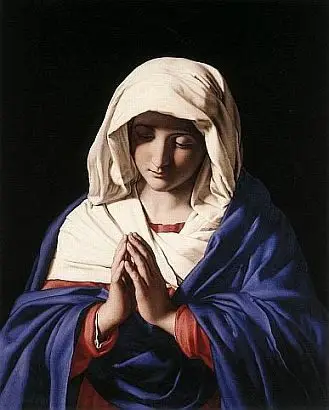
A RESTLESS HEART
Feast of St. Augustine, Bishop and Doctor of the Church
Commemoration of St. Hermes, Martyr
August 28, 2026
TODAY’S GOSPEL: Matthew 5:13-19
EPISTLE: 2 Timothy 4:1-8

Today in the Gospel of Matthew, Jesus sets before His disciples the mission entrusted to them: “You are the salt of the earth … You are the light of the world.” The light they are to carry into the world is not their own. It comes from Christ. Having known Him, having heard His words, and having witnessed His works, they are to bear that light into a world waiting to receive it.
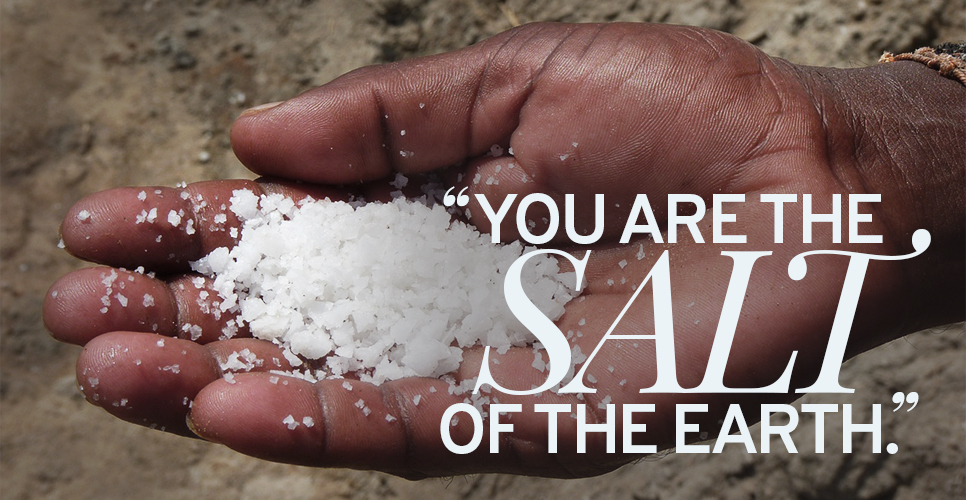
There is something especially fitting about hearing those words on the feast of St. Augustine. Augustine was a man who spent much of his early life searching for light. His brilliant and restless mind carried him through philosophy, worldly ambition, false teachings, and many desires that promised happiness but could not give his heart lasting peace. Beneath all of that searching was a deeper hunger – a desire for Truth, even before Augustine understood the One for whom he was searching.
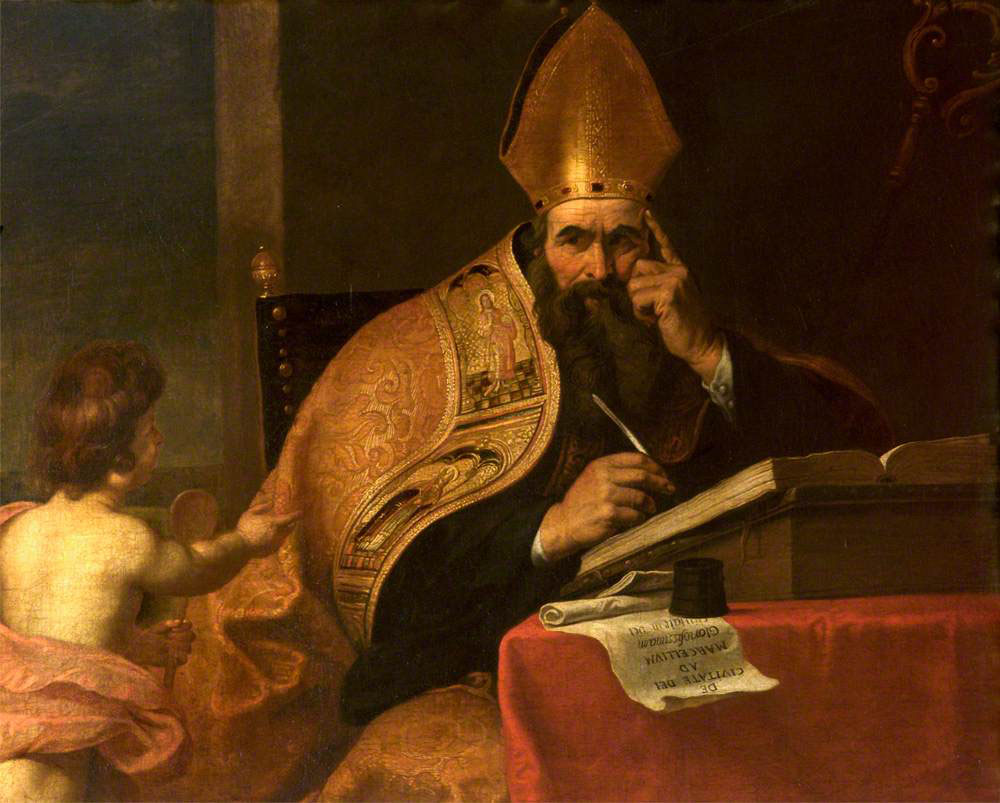
His mother, St. Monica, understood something of this. For years she prayed for her son, carrying him before God when her own words could no longer reach him. She waited through his wandering and trusted that grace could find Augustine wherever he went. And grace did find him.
When Augustine finally encountered Christ, the truth he had sought for so long was no longer merely something to be studied or debated. Truth had a face. Truth was a Person. Truth was Christ. Augustine would later express the mystery of his long search in words that have echoed through the centuries: Our hearts are restless until they rest in God.
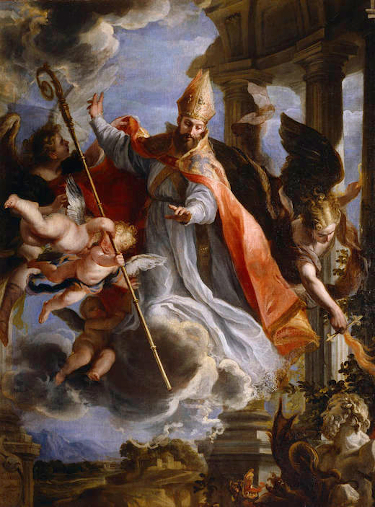
His conversion did not erase the years that had come before. Grace transformed them. The questions, the searching, the failures, and even the long road home became part of the testimony Augustine would leave to the Church. The restless seeker became a bishop. The student of so many philosophies became a Doctor of the Church. The man who had wandered through shadows became one of the great lights of Christian history.
And so the words of today’s Gospel seem almost to rest upon his life: “You are the light of the world. A city set on a mountain cannot be hidden.” The saints do not shine because they possess some light of their own. They shine because the light of Christ has entered their lives and, through grace, has become visible in them.
Today’s Epistle places another great witness before us. St. Paul knows that his earthly life is nearing its end. Writing to Timothy, he speaks with the peace of a man who knows where his life has been going. “I have fought the good fight. I have finished the race. I have kept the faith.”
These are not the words of a man whose life was easy. Paul’s path has been marked by preaching, persecution, imprisonment, rejection, suffering, and sacrifice. Yet as the end approaches, he does not measure his life by success or failure in the eyes of the world. He has kept the faith. There is a beautiful stillness in those words.
The Apostle who once persecuted Christ has poured out His life for Christ. The man who once walked toward Damascus breathing threats against the followers of Jesus became the man who carried the Gospel across the ancient world. Like Augustine, Paul knew something about having his life interrupted by grace. And like Augustine, once he encountered Christ, everything changed.
The Church also remembers today St. Hermes, Martyr. We know far less about Hermes than we know about Augustine or Paul. We have no great collection of his writings. His words have not been preserved. Yet his name remains in the memory of the Church. His witness was written differently. It was written in fidelity unto death.
There is something quietly beautiful about the Church placing these different witnesses before us within the same liturgical day. Paul finishes his race. Hermes seals his witness with martyrdom. Augustine’s restless heart finally finds its rest in God. Three very different lives. Three very different roads. Yet all of them lead us back to the words of Christ: “You are the light of the world.”
This seems to be the quiet thread running through today’s liturgy. Christ enters human lives that are remarkably different from one another and makes each capable of bearing His light. Paul carried that light through his preaching and missionary journeys. Hermes carried it through the witness of martyrdom. Augustine carried it through his preaching, teaching, and extraordinary search for the truth, leaving words that continue to illuminate the Church centuries after his death. None of them was the source of the light. CHRIST WAS.
And perhaps this is one of the reasons the Church gives us her liturgical calendar. Day after day, she places before us the mysteries of Christ and the men and women whose lives were transformed by those mysteries. Their circumstances differ. Their personalities differ. Their paths to holiness differ. But the Light is always the same. IT IS CHRIST.
QUESTIONS FOR THE HEART
St. Augustine spent years searching for the truth before his restless heart finally found its rest in God. Where does my own heart become restless, and what does that restlessness reveal about what I am seeking? Are there things of this world that I expect to give me a peace they cannot give? Am I willing to bring those desires honestly before Christ and allow His light to show me what my heart is truly longing for?
St. Paul could look toward the end of his life and say, “I have fought the good fight, I have finished the race, I have kept the faith.” What would it mean for me to keep the faith faithfully in the life God has given me? Like St. Augustine, St. Paul, and St. Hermes, am I allowing the light of Christ to be seen through the particular circumstances of my life? Where is Christ asking me simply to remain faithful today – not dramatically, but quietly, steadfastly, and with my heart resting in Him?
A LITTLE POEM FOR THE JOURNEY
The heart goes searching, far and wide,
For something only God can provide,
Through every shadow, every night,
He quietly leads us toward the Light.
The race is run,
The searching done –
The restless heart
Has found the Son.
THE RESTLESS HEART HAS FOUND THE SON
UNLESS YOU BECOME AS A LITTLE CHILD
Commemoration of St. Joseph Calasanctius (Calasanz), Confessor
August 27, 2026
TODAY’S GOSPEL: Matthew 18:1-5
EPISTLE: Wisdom 10:10-14
“At that hour the disciples came to Jesus saying: Who thinkest thou is the greater in the kingdom of heaven?” This is a natural question for the Apostles to ask. When you have the Son of God walking beside you – One who came from Heaven and can speak with divine authority about the Kingdom – how amazing it must have been to hear His answer.
“And Jesus calling unto him a little child, sat him in the midst of them, and said: Amen I say to you, unless you be converted, and become as little children, you shall not enter into the kingdom of heaven. Whosoever therefore shall humble himself as this little child, he is the greater in the kingdom of heaven.”
Jesus calls a little child to Him. The Apostles may have expected Jesus to point to one of them, perhaps someone who had followed Him closely or demonstrated wisdom, courage, or devotion. Instead, Our Lord places a little child in their midst.
What a lesson in humility. True greatness in the Kingdom of Heaven is not found in position, recognition, intelligence, or worldly importance. It is found in humility and dependence upon God.
Our Lord is not asking us to become childish, but childlike. A little child knows that he needs his parent: He trusts. He reaches out his hand. He does not pretend that he can provide everything for himself. This is how we must approach our Heavenly Father.
Children have wonder. They are crying one moment and laughing the next. They are curious, asking questions, discovering the world around them. They readily receive what is given to them in love.
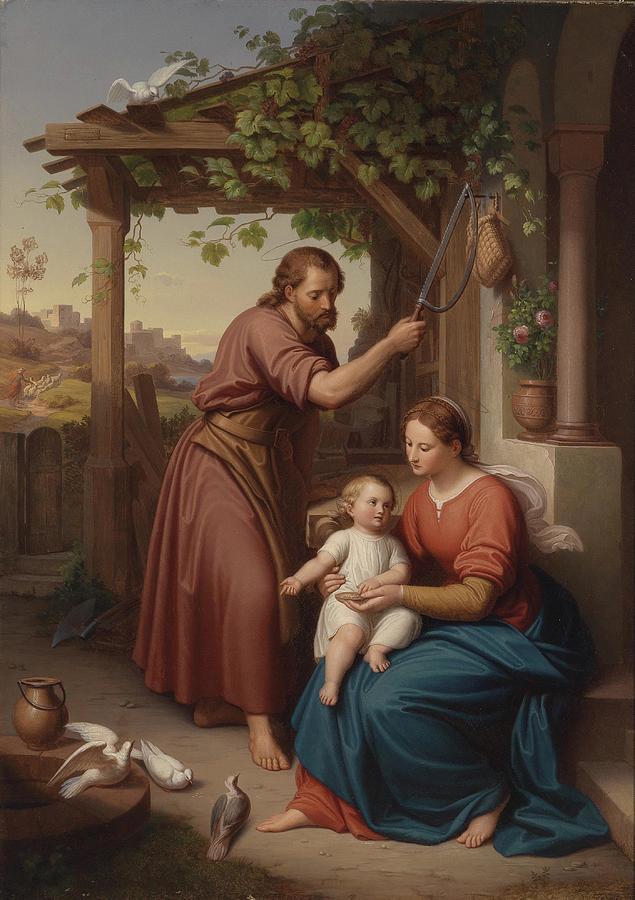
And perhaps there is something especially beautiful in contemplating Jesus Himself as a Child, living beneath the loving care of Mary and Joseph in the Holy House of Nazareth. The Eternal Son truly became a little Child. He allowed Himself to be carried in Mary’s arms and protected by St. Joseph. The Almighty made Himself little.
If Christ humbled Himself so profoundly for us, how can we refuse to humble ourselves before Him? “And he that shall receive one such little child in My name, receiveth me.” And this lesson extends beyond children. When we welcome and serve those who are vulnerable, forgotten, helpless, or considered unimportant by the world, we follow Our Lord.
It is easy to “stay in our own lane” and remain untouched by the lives around us. Yet every encounter with another person can become an opportunity to welcome a soul in His Name. We should ask ourselves whether others can see something of Christ in us.
In the Epistle today, the story is shown of Joseph who was betrayed by his brothers, sold into slavery, falsely accused by the wife of his Egyptian master, and cast into prison. Yet God did not abandon Joseph.
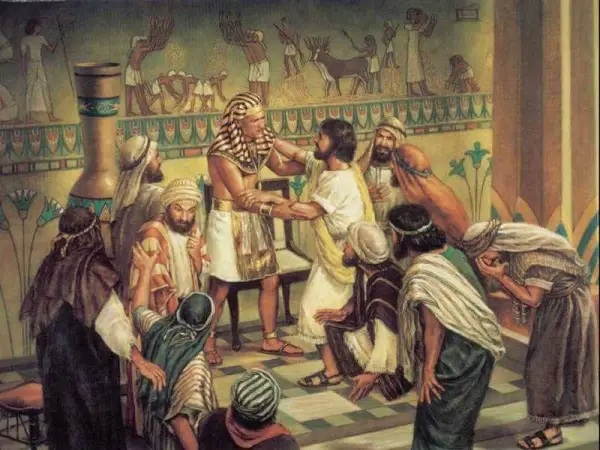
This epistle speaks of Wisdom – “In the deceit of them that overreached him, she stood by him, and made him honourable. She kept him safe from his enemies, and she defended him from seducers, and gave him a strong conflict, that he might overcome, and know that wisdom is mightier than all.”
God’s protection does not always mean that He prevents the trial. Sometimes His Providence carries us through the trial, and He uses it to accomplish something we could never have foreseen. Joseph trusted God with a childlike faith even when he could not possibly understand where God was leading him. Joseph could not see the end of his story from the dungeon, but God could. And Joseph trusted his Father even when he could not understand.
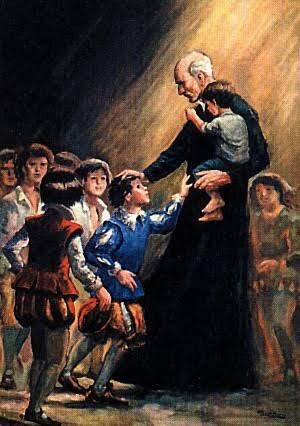
St. Joseph Calasanctius (Calasanz) was a Spanish priest born in 1557 who devoted himself especially to the education of poor children. He was highly educated, studying philosophy, theology, and law, and was ordained to the priesthood in 1583. Eventually he went to Rome, where he encountered children living in horrible poverty, many of whom had little or no opportunity for an education. He could not simply walk past them.
Joseph recognized that these children possessed souls of infinite value before God. They needed not only instruction but also formation in the Catholic Faith. In Rome, he helped establish what became one of the first free schools in Europe dedicated to educating poor children. The work grew rapidly as more and more children came seeking instruction.
Eventually Joseph and his companions formed the Order of Poor Clerics Regular of the Mother of God of the Pious Schools, commonly known as the Piarists. Their vocation united the priesthood and religious life with the education of youth, especially the poor. St. Joseph understood that education should help form the whole person – mind, character, and soul – and ultimately lead him to God.
His later years were filled with tremendous suffering, persecution, and conflicts, which eventually led to the suppression of the Order during his lifetime. He endured the humiliation with remarkable patience and trust in Divine Providence. He died in 1648 at 90 years of age. He did not live to see the complete restoration of the work he had founded. Yet the Piarist Order was later fully restored, and the mission to which he had devoted his life continued. St. Joseph saw Christ in the little souls whom much of society had overlooked. How beautifully he echoes today’s Gospel: “Ane he that shall receive one such little child in my name, receiveth me.”
QUESTIONS FOR THE HEART
When you look at, or remember, or spend time with your children or grandchildren, do they remind you of what Our Lord meant when He told us to become like little children? Does their innocence, wonder, dependence, and trust remind you of the trusting way you should approach your Heavenly Father?
Do you try to recognize Christ in the people God places before you – especially those who are difficult, forgotten, lonely, or vulnerable? Sometimes a smile, a kind word, or simply taking the time to listen can become a genuine act of Christian charity.
A LITTLE POEM FOR THE JOURNEY
When darkness surrounds me and I cannot see,
Teach me, like Joseph, to truly be wholly in Thee,
To know that Thy Wisdom is guiding my way,
Though answers may wait for another bright day.
Like Calasanz, teach me, the little to see,
The forgotten, the helpless, the souls dear to Thee,
To welcome each child with compassion and care,
And find, in receiving them, Jesus is there.
O make me a child at Thy feet, dearest Lord,
Not seeking the honors this world can afford,
But holding Thy hand till my journey is done,
And trusting the Father, through Jesus the Son.
UNLESS YOU BECOME AS A LITTLE CHILD
RETURN TO HIM
St. Zephyrinus, Pope & Martyr
Our Lady of Czestochowa
August 26, 2026
TODAY’S GOSPEL: Luke 17:11-19
EPISTLE: Galatians 3:16-22
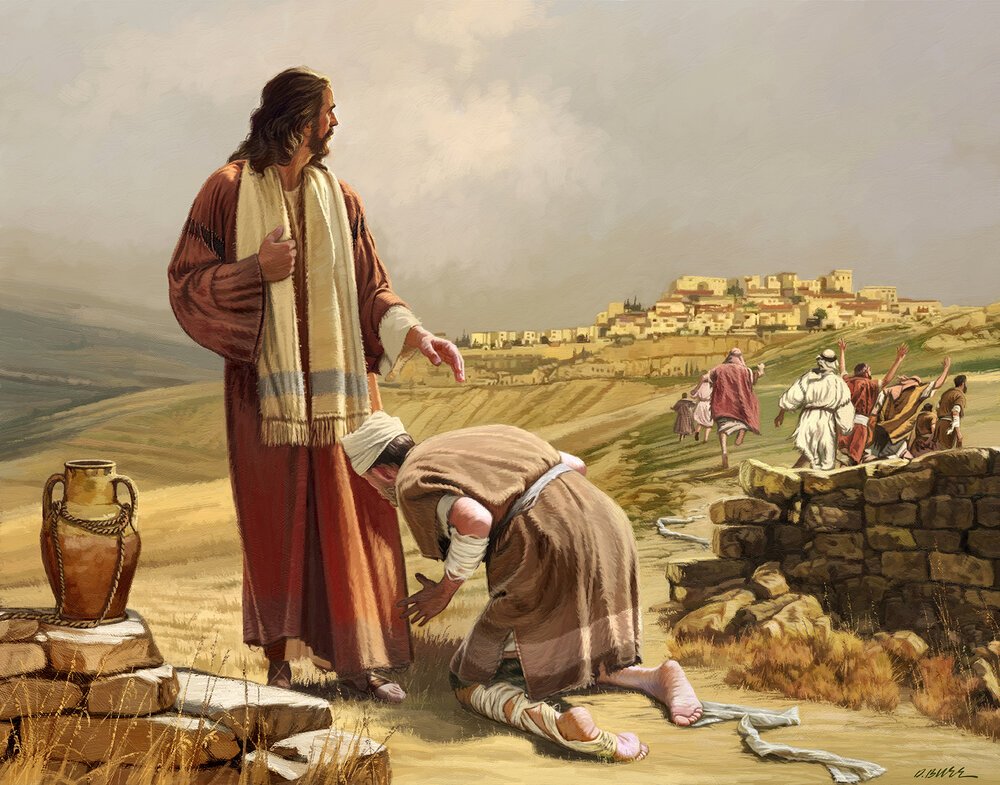
In today’s Gospel, ten lepers stood afar off and lifted up their voices, crying, “Jesus, Master, have mercy on us.” Word had spread that Jesus was healing the blind, the deaf, the lame, and those afflicted with sickness. These ten men suffered from a terrible disease that separated them from their families and from ordinary life. They were outcasts, forced to remain at a distance, with no earthly cure to which they could turn. But distance could not keep their voices from Jesus.
They had come to the place where their hope was in Him, and with faith and humility they cried out for mercy. There comes a moment when we all must meet the Savior in this way – when we recognize our need for His mercy and realize that there are wounds, especially those of the soul, that we cannot heal ourselves.
Jesus did not heal them immediately where they stood. He said, “Go, show yourselves to the priests.”
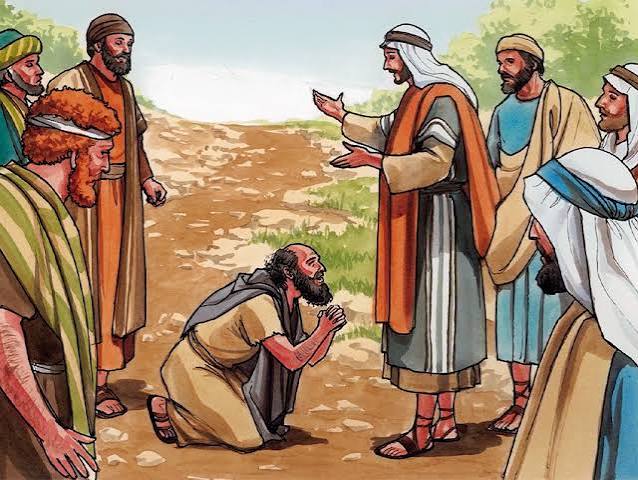
And they went. They could have looked at their diseased bodies and said, “But nothing has changed.” They could have demanded to see the miracle before obeying His command. Instead, they trusted His word enough to begin walking. And “as they went, they were made clean.”
Sometimes the answer to our prayer does not appear at the precise moment we ask. Sometimes Our Lord asks us first to trust Him and take the next faithful step. We may not understand what He is doing, and we may not yet see the answer, but obedience requires us to trust the One Who has spoken.
All ten lepers received the healing for which they had cried. But only one returned. “And one of them, when he saw that he was made clean, went back, with a loud voice glorifying God. And he fell on his face before His feet, giving thanks: and this was a Samaritan.
The others received the gift and continued on their way. The Samaritan received the gift and returned to the Giver.
Gratitude acknowledges the Giver, not merely the gift. How easy it is for us to cry out to God when we need something. When someone we love is sick, when we are frightened, when circumstances seem impossible, or when we cannot see the road ahead, our prayers become fervent. And then the prayer is answered. The danger passes. The burden becomes lighter. And Our Lord asks, “Were not ten made clean? And where are nine?”
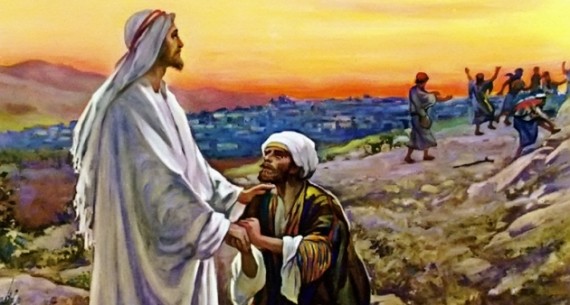
Perhaps that question is not only about nine lepers who lived long ago. Perhaps Our Lord allows us to hear it today so that we will ask whether we have sometimes been among them. How many prayers has God answered that we no longer remember praying? How many times has He protected us from something we never even knew was near? How many graces have we received and simply continued on our way?
Every day is a gift. Our families are gifts. Our Catholic Faith is a gift. The Holy Mass is a gift. Confession is a gift. Every opportunity to repent and begin again is a gift. And above all, Our Lord has given us Himself. Yet we can become so accustomed to His generosity that we begin to take His gifts for granted. The Samaritan did not. He turned around. He returned to Jesus. He glorified God with a loud voice and fell upon his face at the feet of Christ giving thanks.
And Jesus said to him, “Arise, go thy way; for thy faith hath made thee whole.”
There is something beautiful in this for us as Catholics, because the very word Eucharist speaks of thanksgiving. We return again and again to the altar where Jesus gives us not merely a gift apart from Himself, but His own Body, Blood, Soul, and Divinity. After receiving Our Lord in Holy Communion, what better place can there be for our souls than spiritually beside the grateful Samaritan, at the feet of Jesus, giving thanks?
In the Epistle today, St. Paul speaks of the promise made by God to Abraham and to his seed, “which is Christ.” The Law, which came afterward, did not destroy the promise God had already made. It was given because of transgressions and served its purpose in God’s plan while mankind awaited the fulfillment of the promise in Christ. “But the Scripture has concluded all under sin, that the promise, by the faith of Jesus Christ, might be given to them that believe.”
The Law could reveal transgression and awaken the conscience, but it could not of itself give fallen man the supernatural life. Man needed something he could not give himself. He needed a Savior. The lepers could not cleanse themselves, and neither can we redeem ourselves. Salvation is a gift of God’s grace, but grace calls for a response. We must hear His voice and obey. And like the Samaritan, having received His mercy, we must return to Him in faith, love, worship, and thanksgiving.
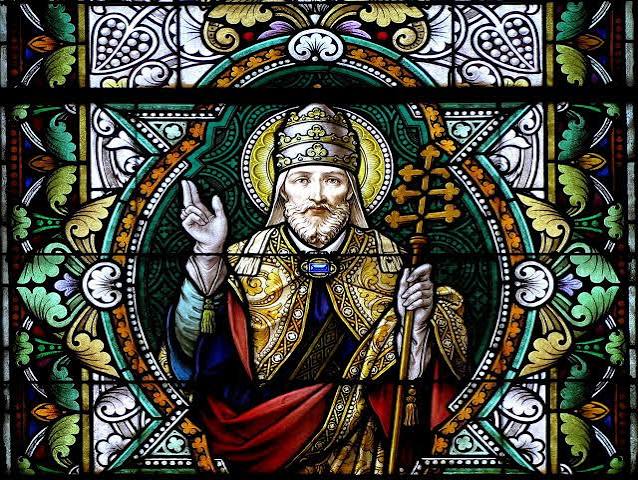
Holy Mother Church places before us today St. Zephyrinus, Pope and Martyr, who shepherded the Church near the beginning of the third century during difficult and turbulent years. The Church suffered persecution from without while also facing serious controversies from within. All of the controversy depended on the answer to one question: Who is Jesus Christ? That same question lies beneath today’s Gospel. Who is this Man to Whom ten lepers cry, “Jesus, Master, have mercy on us”? Who is this Man Whose word possesses such power that diseased bodies are cleansed while the lepers are still walking down the road?
Jesus is not simply a healer. He is not simply a good man whose example we admire. He is the eternal Son of God, the Word made flesh, Our Lord and Our Savior.
St. Zephyrinus lived during a time when the Church had to guard the truth concerning Christ amid persecution and theological confusion. Holy Mother Church venerates him as a martyr, and his life reminds us to give thanks for those who guarded the Faith before us. Generation after generation, faithful Catholics suffered, taught, defended preserved, and handed down what they themselves had received. Because they refused to surrender the truth, we can still profess today the Faith handed down from the Apostles. And now that Faith has been entrusted to us.
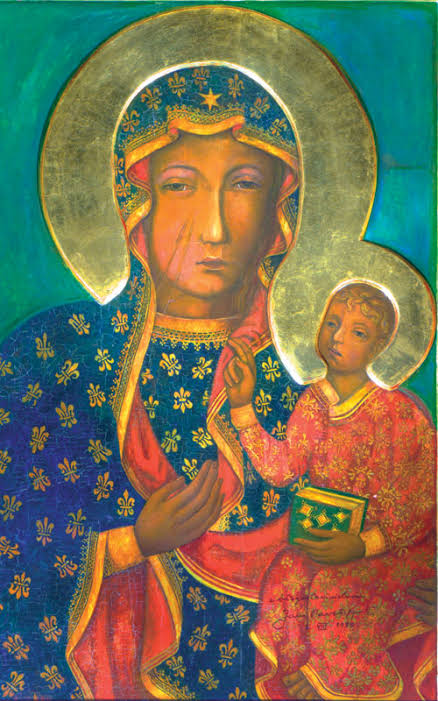
On this August 26, we also remember Our Lady of Czestochowa, whose ancient and beloved image has been venerated for centuries, especially by the faithful people of Poland. Generations have come before her image carrying their sorrows, fears, petitions, and thanksgiving, seeking the intercession of the Mother who always leads her children to her Divine Son.
The image of Our Lady of Czestochowa bears visible scars upon her face, which makes her remembrance especially touching beside today’s Gospel of the ten lepers. They came to Christ bearing the wounds of their affliction, and Our Lady reminds us that suffering and wounds do not mean that God has abandoned us. She herself stood beneath the Cross.
QUESTIONS FOR THE HEART
When you are suffering, it may be easy to cry out, “Jesus, Master, have mercy on me.” But when the prayer is answered, do you remember to return?
The lepers began walking before they could see that they had been healed. Is Our Lord asking you to obey Him in something right now even though you cannot yet see where that obedience will lead? Are you willing to take the next faithful step simply because He has asked it of you?
A LITTLE POEM FOR THE JOURNEY
Ten voices cried from far away,
“Have mercy, Master, hear us pray.”
And at His word they took the road,
Trusting the One who bore their load.
Ten received the gift that day,
Yet only one turned back His way,
He fell in thanks at Jesus’ feet –
Where grateful hearts and mercy meet.
St. Zephyrinus kept the Faith,
And Mary points us toward His grace;
“Do what He tells you” – trust Him still,
And follow Him with faithful will.
RETURN TO HIM
UNTIL I COME
FEAST OF ST. LOUIS IX, KING & CONFESSOR
August 25, 2026
TODAY’S GOSPEL: Luke 19:12-26
EPISTLE: Wisdom 10:10-14
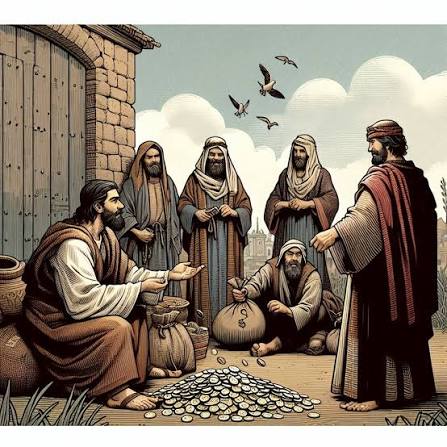
In today’s Gospel, Jesus gives us a parable about three servants, each entrusted with ten gold pounds, who were told to trade until their Master returned from his journey from obtaining a Kingdom.
Upon the Master’s return, he summoned the servants to give accounts of their trading. The first servant had obtained for the Master ten more gold pieces, the second five more gold pieces, and the third had hidden his pounds under a napkin, therefore making no return on his money.
The Master said to the first one, “Well done, thou good servant, because thou hast been faithful in a little, thou shalt have power over ten cities.” And he said to the second one, “Be thou also over five cities.” But regarding the third one, he said to the bystanders, “Take the pound away from him and give it to him that hath ten pounds.”
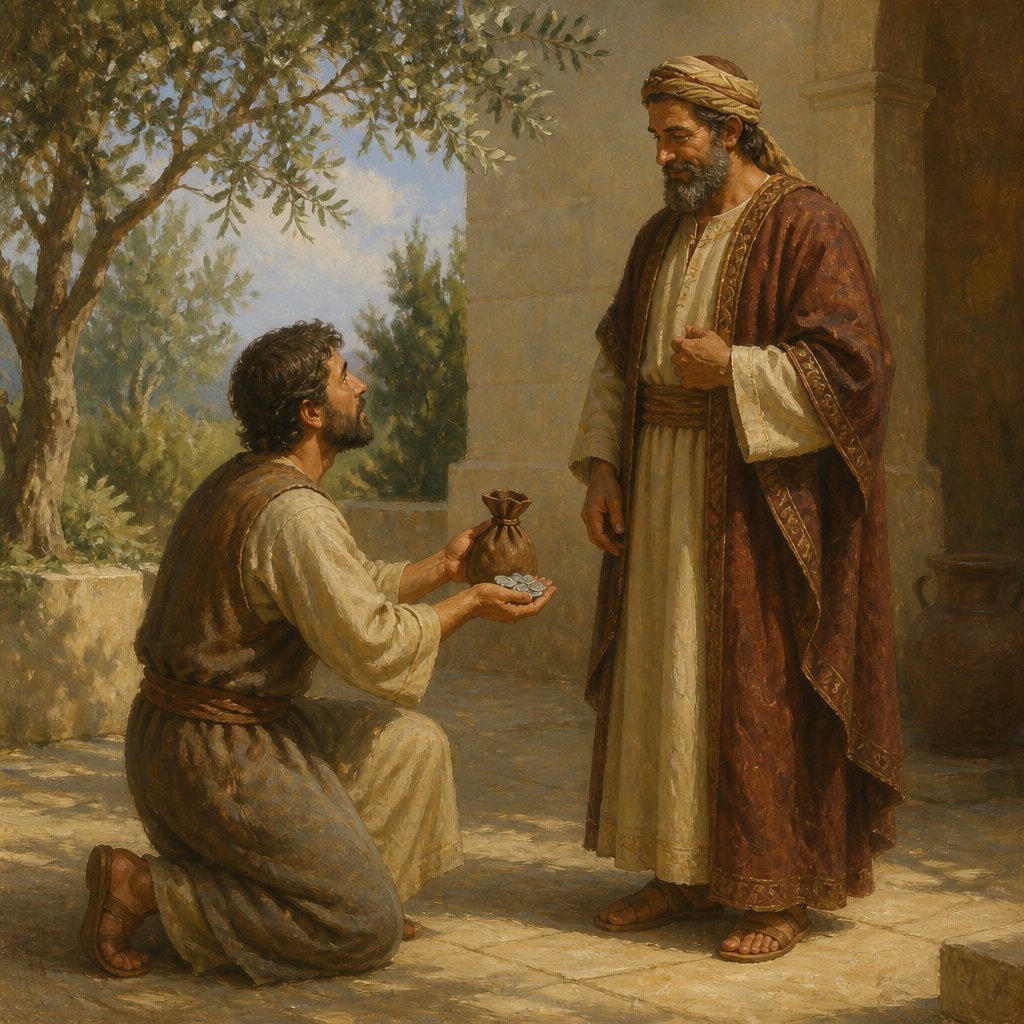
But they said to him, “Lord, he hath ten pounds.” But the Master said, “I say to you that to every one that hath shall be given, and he shall abound; and from him that hath not, even that which he hath, shall be taken from him.”
Jesus has obtained a Kingdom for us, and He will come back and take us unto Himself if we have been good and faithful servants. We have been given gifts, not to hide under a napkin, but to use to go forth and gather souls for the Kingdom. In this parable, Jesus is showing His Apostles their mission, and thereby we are shown ours also. And to each of us is given gifts of varying degrees, but each uniquely suited to the person to whom it is given.
The gifts that are given are a sacred trust, and those that use them to gather more souls will reap a reward, but as to those who do nothing, it shall be demanded of them even the little that they have. Jesus calls each of us to be good and faithful stewards of our gifts – and we should respond, not out of fear, but out of love for our King.
Jesus is hated and despised by the world as is the nobleman in the Gospel whose citizens hated him and sent a delegation after him to say, ” We will not have this man to reign over us.” The world refuses to acknowledge Him as King, but we must persevere, and multiply that which we have been given, until the day when every knee shall bow at the eternal King.
Wisdom is a gift of the Holy Ghost, a divine gift. The Epistle today is from the book of Wisdom and is a passage that refers to Joseph being sold into slavery by his brothers. In Egypt, Joseph was falsely accused by Potiphar’s wife and thrown into a dungeon, but Joseph was justified by his righteousness, for He had the power of God on his side. “She kept him safe from his enemies, and she defended him from seducers, and gave him a strong conflict that he might overcome, and know that wisdom is mightier than all.”
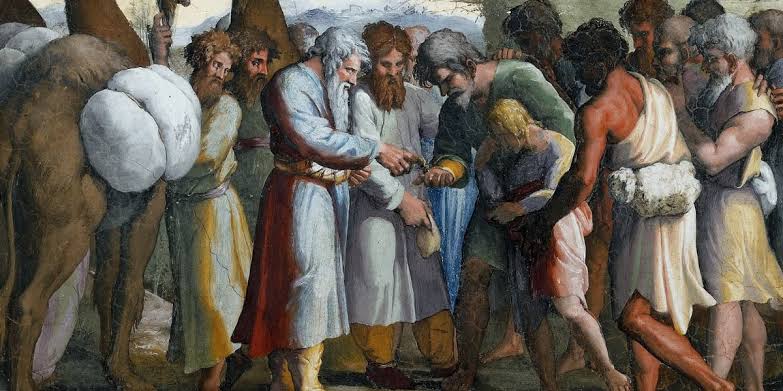
The Apostles, the Martyrs, and all the Saints will one day be vindicated because their actions were righteous. They have carried the truth and fought the good fight. And Our Lord will invite them to inherit the Kingdom with Him where His glory is everlasting. It is hard to imagine that we, too, can walk in their footsteps and also inherit the Kingdom, but we can and we must, by persevering in being good stewards of what we have been given.
Holy Mother Church puts before us today St. Louis IX, a King who was a good and faithful servant to Christ, His true King. Louis became the King of France at the age of twelve. His Mother, Queen Blanche of Castile, raised him to crave death rather than commit a mortal sin. King Louis believed that the title of Christian was his most glorious title, and that the only pleasure he should have was to please Christ, the true King.

After recovering from a serious illness, he vowed to undertake a crusade to reconquer Jerusalem, but was captured and imprisoned. After his release, he spent five years in the East helping Christians. He founded hospitals, cared for the sick and the lepers, and regularly fed the poor.
St. Louis died in North Africa when disease swept through a camp where he was stationed during a crusade. His dying words famously whispered the name of Jerusalem, the city he never managed to win back. But he had valiantly fought for the true King all of his life.
QUESTIONS FOR THE HEART
If ten gold pieces had been given to you, and the Master asked you to trade them until he came again, what would you do? Do you realize that you have been given something even more valuable? Have you spent time in prayer and asked that you might see what gifts you have indeed been given? And have you asked Our King what you should do with them until His return?
Just as St. Louis IX realized that true authority was not in his hands as King of an earthly realm, but instead in the hands of Our Heavenly King, do you realize that whatever authority you have on this earth, whether over children, employees, or in other roles, should indeed be yielded always to the authority of God when making a decision, by asking for His guidance?
A LITTLE POEM FOR THE JOURNEY
The King entrusts His treasure, then journeys far away,
And asks us to be faithful with the gifts we hold today.
Not ours to hide in fear, nor bury what He gives,
But spend it for His Kingdom in the ordinary lives we live.
Saint Louis wore an earthly crown, yet sought the Crown above;
He ruled not for his glory, but in justice, truth, and love.
Like servants waiting for their King to come again,
May we be faithful with each grace entrusted until then.
And when at last our King returns and calls us each by name,
May He find His gifts have multiplied into a living flame—
And hear the words for which each faithful heart has yearned:
“Well done, my servant”—for the King has now returned.
UNTIL THE MASTER COMES
CHOSEN AND CALLED
FEAST OF ST. NATHANIEL (BARTHOLOMEW), APOSTLE
August 24, 2026
TODAY’S GOSPEL: Luke 6:12-19
EPISTLE: I Corinthians 12:27-31
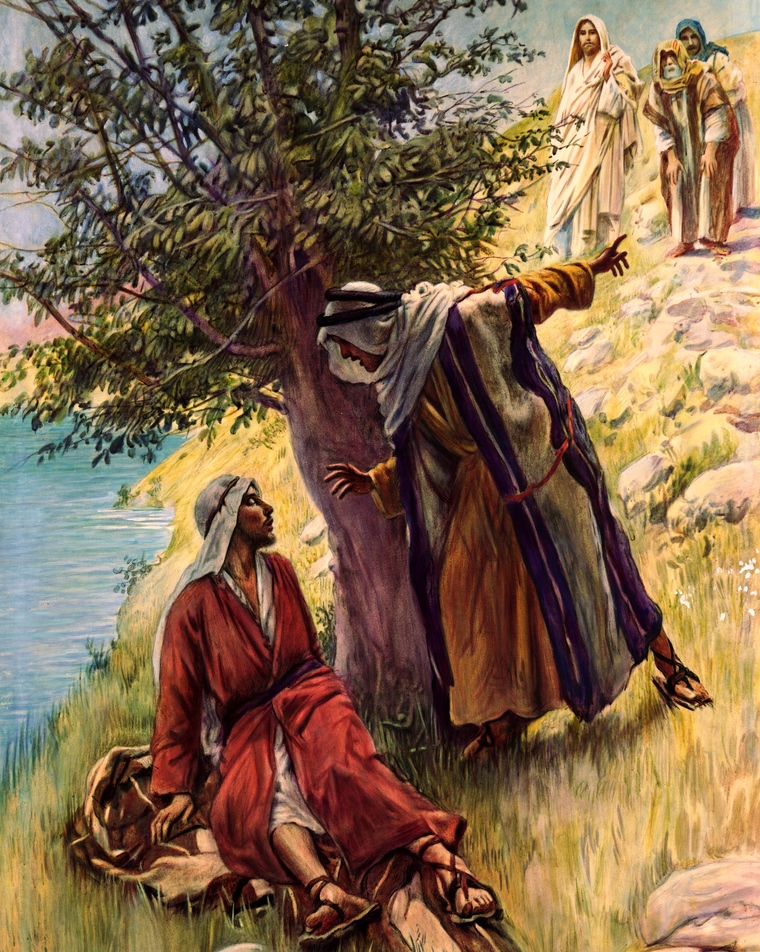
In today’s Gospel, before Jesus does anything else, he goes up into a mountain to pray. St. Luke tells us that He “passed the whole night in the prayer of God.” And when morning came, He called His disciples to Him and from among them He chose twelve – twelve men who would be called Apostles.
And one of those men was Nathaniel (Bartholomew) – the Apostle whose feast Holy Mother Church celebrates today. Before Nathaniel preached the Gospel, before he traveled to distant lands, before he suffered for Christ, and before he became the great saint whom we honor today – HE WAS CHOSEN.
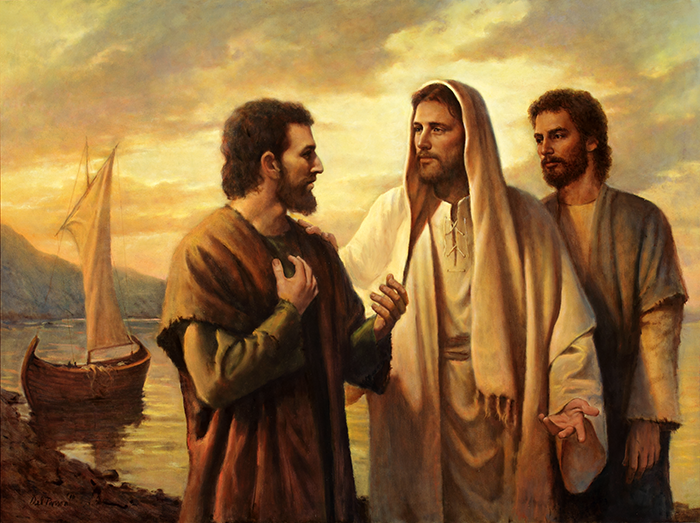
We sometimes think of the apostles just as a list of names – but they were men whom Our Lord personally called to Himself. They had different personalities, different gifts, different weaknesses, and eventually they would be sent in different directions to evangelize – but each belonged to Christ.
And that brings us to today’s Epistle because St. Paul tells us, “Now you are the body of Christ,” and He goes on to say that God has placed different members within His Church – first apostles, secondly prophets, thirdly doctors – and then he speaks of miracles, healings, and more. The point is – everyone is called! That can be easy to forget. If we are members of the Body of Christ, then our concern should not be whether another member has been given something different to do – our concern should be whether we are faithfully doing what God has given us to do.
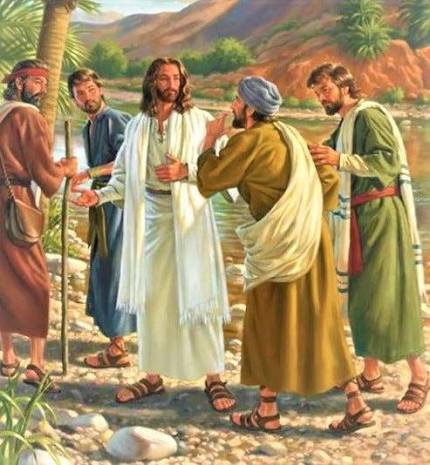
We first meet Nathaniel in St. John’s Gospel when Philip comes looking for him with astonishing news, “We have found him of whom Moses in the law, and the prophets did write, Jesus the son of Joseph of Nazareth.” And Nathaniel’s response? “Can anything of good come from Nazareth?”
He had questions. But Philip gave him one of the simplest invitations imaginable, “Come and see.” And Nathaniel did! And when he encountered Jesus, everything changed. Before Nathaniel could tell Christ who he was, Christ revealed that he already knew. He said, “Behold an Israelite indeed, in whom there is no guile.” Nathaniel asked, “Whence knowest thou me?” And then the Lord told him, “Before that Philip called thee, when thou wast under the fig tree, I saw thee.” And suddenly Nathaniel knew! He proclaimed, “Rabbi, thou art the Son of God, thou art the King of Israel.”
And that is one of the reasons that St. Nathaniel is dear to us. His faith was not built upon pretending never to have questions. He brought an honest heart to Christ – a heart “in whom there is no guile” – and when he recognized the truth, he gave himself to it.
Tradition tells us that St. Nathaniel carried the truth far beyond his homeland, preaching Christ to people who had never heard His Holy Name. Ancient traditions associate his apostolic labors with several regions of the East, and especially with Armenia, where he has long been venerated. And finally, the Apostle who had once sat quietly beneath a fig tree sealed his testimony to Christ with his own blood.
The Gospel ends today with a great multitude coming from all around to hear Jesus and to be healed by Him. St. Luke tells us that “virtue went out from Him, and healed all.”
QUESTIONS FOR THE HEART
Do I believe that God has given me a particular place within the Body of Christ – or do I spend too much time comparing my gifts, my calling, or my circumstances with those of someone else? Am I faithfully doing the work that He has placed before me today?
When I have questions or doubts, do I bring them honestly to Our Lord as Nathaniel did – willing to “come and see” – or do I allow those questions to keep me at a distance from Him?
Is there someone in my life who needs an invitation to come closer to Christ? Rather than believing that I have to change that person’s heart myself, can I simply be a faithful Philip – pointing the way and trusting Jesus to do the rest?
A LITTLE POEM FOR THE JOURNEY
Beneath the fig tree Christ had seen, a heart both true and free,
And Philip came with simple words – “Come now, and you shall see.”
Nathaniel then beheld the Lord, and faith replaced surprise,
“Thou art the Son of God,” he cried, with newly opened eyes.
Then chosen with the Twelve, he went where Christ would have him go,
To carry forth the saving truth that every soul should know.
St. Nathaniel, teach us too, whatever be our call,
To lead the searching heart to Christ – the Lord and King of all.
COME AND SEE
A THANKFUL HEART
FEAST OF ST PHILIP BENIZI
August 23, 2026
TODAY’S GOSPEL: Luke 17:11-19
EPISTLE: Galatians 3:16-22
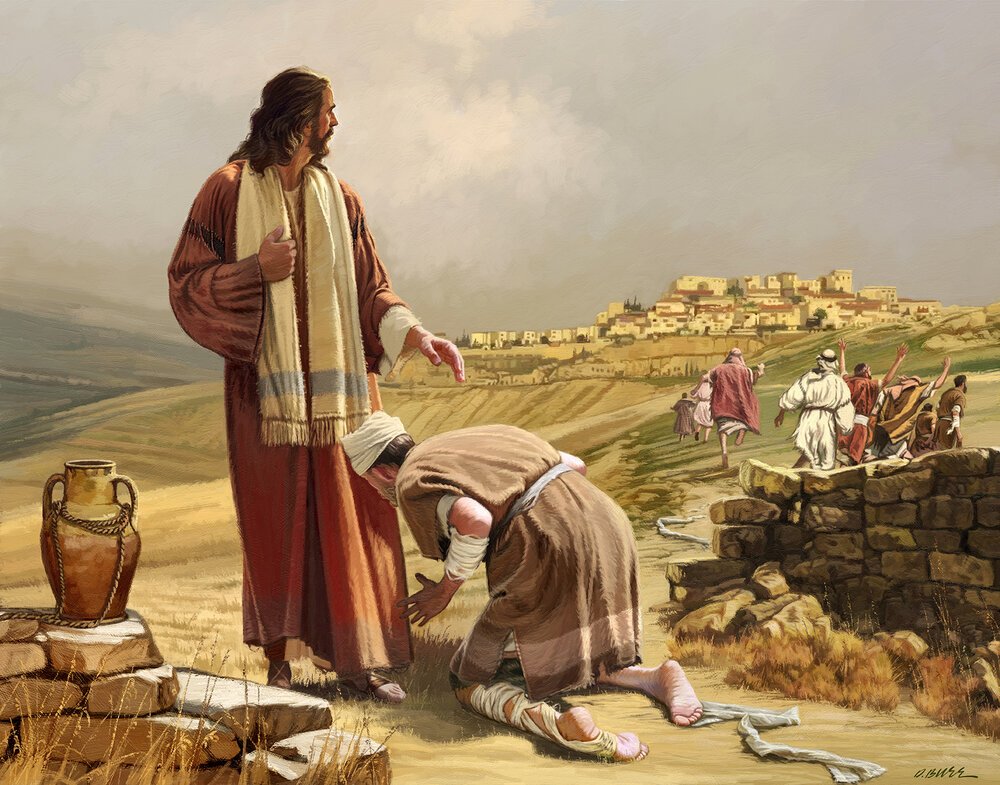
In today’s Gospel, the word must have spread – Jesus was nearby – for ten lepers who knew it was likely they would die from their disease – were looking for Him. They had no doubt heard the rumors – that He was able to heal – and they figured there was little to lose from trying. So they stood at a distance from him and cried, “Jesus, master, have mercy on us.”
After all, they were already outcasts – and humility they had aplenty – for it came easily to those whom nobody wanted. But He had something to say to them, too – “Go, show yourselves to the priests.” And the amazing thing is that they turned immediately to do that – and became clean as they went in that direction – but my question is why did they turn in the first place just because He had said that? Did they just know? Did they just believe it was going to happen?
But even more amazing, realizing that they were healed, only one turned and went back to Christ, and with a loud voice glorified God. And Jesus answered, “Were not ten made clean? And where are the nine? There is no one found to return and give glory to God, but this stranger.”
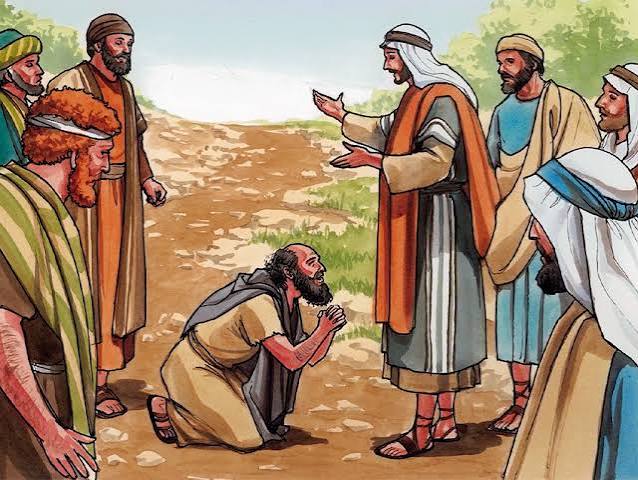
The Gospel does not leave out this detail – the one who came back? – he was a Samaritan, of all people! I mean, who didn’t know they were outcasts? So why let us know about him being a Samaritan? Actually, we are told this fact for several reasons, but the first is to let us know that Christ does not see people as we do – and thank goodness – because otherwise we might find ourselves on the outside, too!
And second of all, we are told this fact to make the point that if you happen to think you are an “insider,” be aware! It is often those who think they are on the inside who never really see God at all, and instead it is one who has been pushed to the outer circle who recognizes the grace of God before anyone else can see! And oh how Jesus loved the “outsider,” the one who had been so humbled by grace that he saw immediately where he stood before God, and how much he needed that grace!
And the Epistle for today – it is about some “insiders,” too! Those who prided themselves on being the children of Abraham, for after all, God had made them a promise! However, what many failed to see is that there was not one thing that they had done that had earned that promise! Instead, it was the gracious initiative of God, or as it has also been called, the “miraculous condescension of God!” Isn’t it amazing how often people pat themselves on the back for something they were never responsible for anyway! St. Paul also reminds them in this Epistle that the law was preparation, and it was given until “the offspring should come.” And who is that offspring? He just happens to be the One who healed those ten lepers!
What this means for us today is that there is a lot of hope here – even if we haven’t always been the one on the “inside,” even if at times we were the one that was rejected, or just didn’t quite “fit in.” Guess what, God seems to see us first, and what is really great – is that we usually respond first – because nothing makes one more aware of being loved than of feeling unloved. So keep your eyes open – for that amazing, gracious initiative of God!
Holy Mother Church remembers St. Philip Benizi today. He joined the Servite Order, and after his ordination set about reforming it. He is known particularly for his humility, once hiding in a cave because he feared that he would be chosen as Pope. Therefore, he also recognized those who felt undeserving, and reached out to them especially. He started out as a medical doctor, but it turned out that his call was to care for souls, and he became one of the foremost preachers of his era.
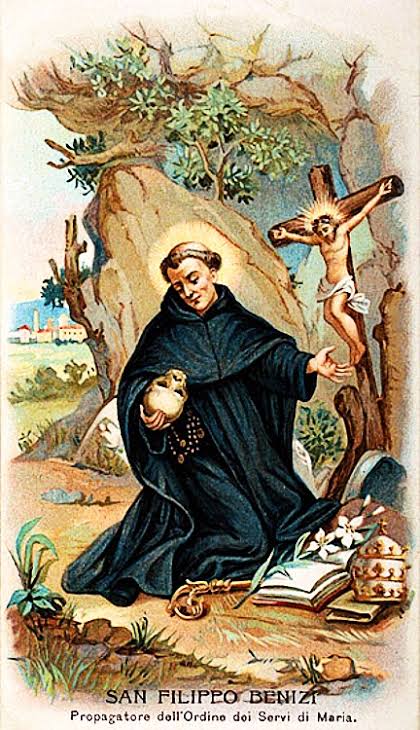
QUESTIONS FOR THE HEART
The story of the ten lepers highlights the importance of having a thankful heart. Do I make it a practice to say a quick thank you to those who do things for me each day that are easy to overlook? And the most important – do I remember to thank God every day for all the many small blessings I am given – or do I take them all for granted?
Do I give God thanks for the wonderful gift of the Holy Eucharist on this blessed Lord’s Day where Jesus Christ is present among us – Body, Blood, Soul and Divinity!
A LITTLE POEM FOR THE JOURNEY
Ten cried for mercy, and Christ heard every plea,
Yet one turned back in thanks, his heart at last set free,
St. Philip walked in meekness, seeking no acclaim,
Content to serve in silence, for the glory of God’s name.
The leper knelt in gratitude, Philip bowed in grace,
Both teach us where the humble heart will find its proper place,
May I return to Jesus, thankful for all He gives,
And serve with Philip’s humility, so Christ in me may live.
GOD LOVES A THANKFUL HEART
FEAST OF THE IMMACULATE HEART OF THE BLESSED VIRGIN MARY
Commemoration of Saints Timothy, Hippolytus, and Symphorian, Martyrs
August 22, 2026
TODAY’S GOSPEL: John 19:25-27
EPISTLE: Ecclesiasticus 24:23-31
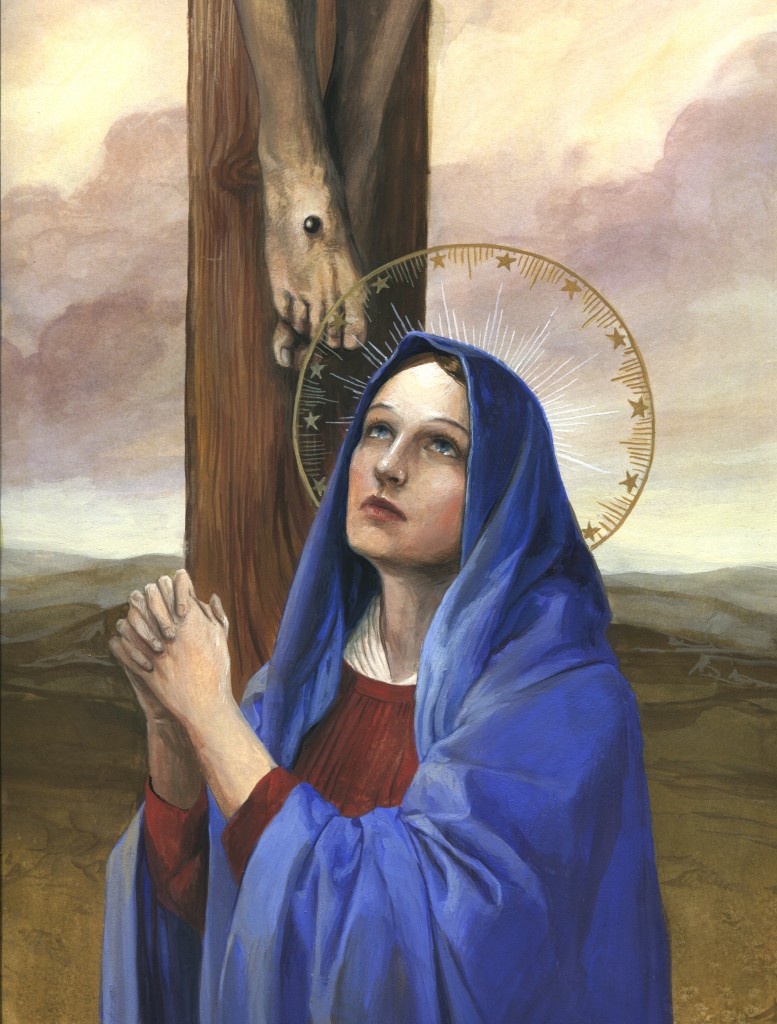
In today’s Gospel, we are brought to the foot of the Cross. “Now there stood by the cross of Jesus, His mother.” Mary could not take away the suffering of her Son, but she would not leave Him to suffer alone. She remained beside Him with a sorrowful but faithful heart.
Seeing His Mother and the disciple whom He loved, Jesus said to her, “Woman, behold thy son.” Then He said to the disciple, “Behold thy mother.”
Even while suffering upon the Cross, Jesus was providing for those He loved. He entrusted Mary to St. John, and in St. John He entrusted her to all His beloved disciples. From that hour, the Gospel tells us, the disciple took her into his home.
Christ gives His Mother to us as well. To receive Mary is to welcome her into our homes, our families, our suffering, and our daily lives. She does not draw us away from Jesus. Her entire mission is to lead us more deeply into union with Him.
Today the Church honors the Immaculate Heart of Mary. Her heart represents the whole of her interior life: her love, purity, faith, compassion, obedience, and complete surrender to God. Her heart was immaculate because it was never divided. She withheld nothing from the Lord.
The Epistle speaks of this beautiful and fruitful heart: “I am the mother of fair love, and of fear, and of knowledge, and of holy hope.” Mary’s heart was fruitful because it belonged entirely to God. Through her, Jesus Christ – the greatest gift ever given to the world – came to us.
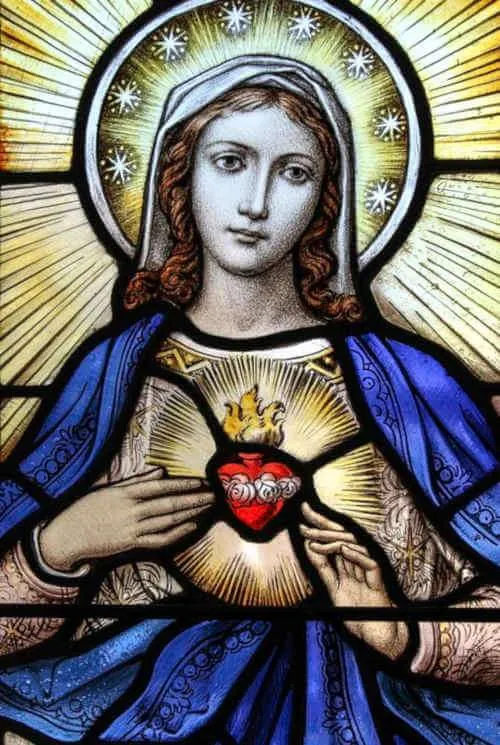
Mary’s Immaculate Heart knew great joy, but it also knew tremendous sorrow. Simeon had foretold that a sword would pierce her soul. At Calvary, that prophecy was fulfilled as she watched her Son rejected, mocked, and crucified. Yet suffering did not cause Mary to turn away from God. She remained faithful.
This is one of the great lessons of her Immaculate Heart. Faithfulness does not mean that we will be spared sorrow. It means that, in the midst of sorrow, we continue to trust, love, and remain near to Jesus.
At Bethlehem, Mary gave Jesus to the world. At Calvary, Jesus gave Mary to the world. The question for each of us is whether we will receive her as St. John did.
We receive Mary by asking for her prayers, following her example, and listening to her words at Cana: “Whatsoever He shall say to you, do ye.” We receive her when we allow her to teach us how to pray, how to surrender, and how to stand faithfully beneath the crosses that we cannot remove.
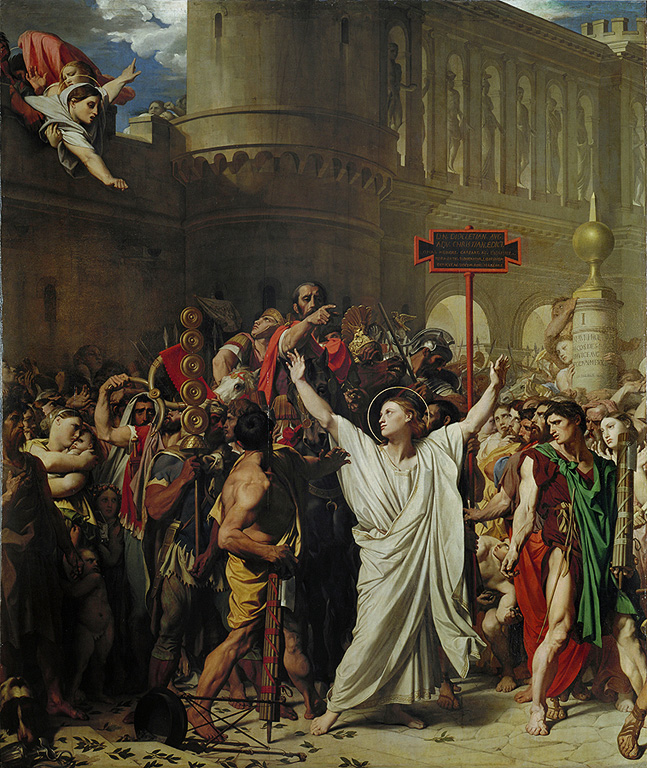
The Church also commemorates Saints Timothy, Hippolytus, and Symphorian, who remained faithful to Christ even unto death. Like Mary standing at Calvary, they did not turn away when discipleship required suffering and sacrifice.
Today, let us place our wounded and divided hearts within the Immaculate Heart of Mary. May she help us surrender more completely to God, remain faithful in times of suffering, and love Jesus with an undivided heart.

QUESTIONS FOR THE HEART
Have I truly received Mary “into my own,” allowing her example and prayers to lead me closer to Jesus?
When suffering or uncertainty enters my life, do I remain faithfully near the Cross, or am I tempted to turn away?
What desires or attachments keep my heart divided and prevent me from surrendering completely to God?
A LITTLE POEM FOR THE JOURNEY
Beneath the Cross, our Mother stood,
Her heart united to her Son,
She did not flee the saving wood
Nor turn away till all was done.
O Mary, keep us near the Cross
When sorrow comes and hope seems dim,
Teach us to count the world as loss
And give our heart entirely to Him.
THE HEART THAT STOOD BY THE CROSS
THE TREASURE THAT ENDURES
Feast of St. Jane Frances de Chantal, Widow and Religious Foundress
August 21, 2026
TODAY’S GOSPEL: Matthew 13:44-52
EPISTLE: Proverbs 31:10-31
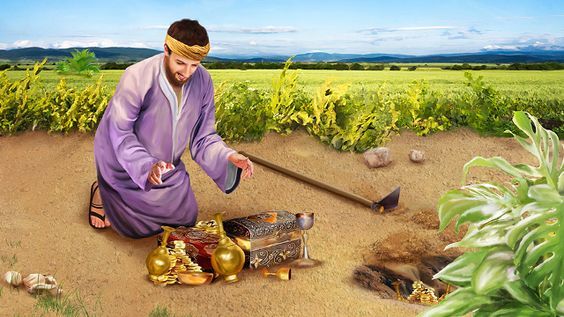
In today’s Gospel, Jesus speaks this parable to His disciples: “The kingdom of heaven is like unto a treasure hidden in a field. Which a man having found, hid it, and for joy thereof goeth, and selleth all that he hath, and buyeth that field.”
Again, the Kingdom of Heaven is like a merchant seeking good pearls. Who when he had found one pearl of great price, went his way, and sold all that he had, and bought it.”
Christ is the treasure, and life with Him is worth more than anything the world can offer. Yet lesser things can easily claim our attention. We may spend our time pursuing comfort, approval, possessions, or success while neglecting the one treasure that lasts forever. Jesus invites us to examine what we value most and whether our daily choices lead us closer to His Kingdom.
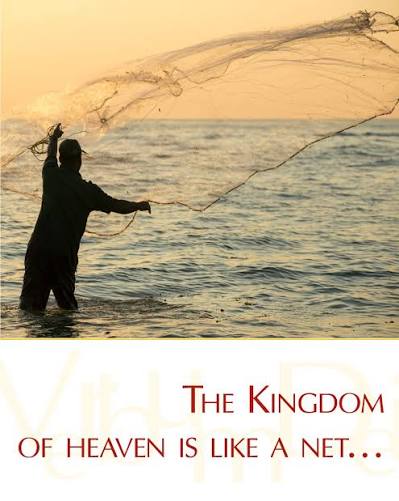
The Gospel also speaks of a net cast into the sea, gathering fish of every kind. When the net is brought ashore, the good are separated from the bad.
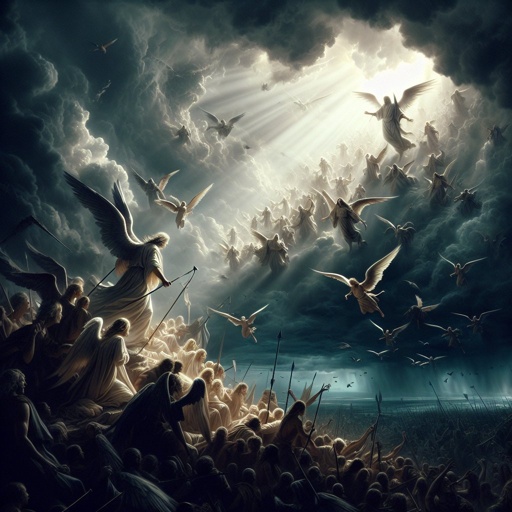
“So shall it be at the end of the world. The angels shall go out, and shall separate the wicked from among the just.” The invitation to enter God’s kingdom is offered to all, but each person must respond. The final judgment belongs to God alone; our task is to remain faithful, turn away from sin, and help others discover the treasure we have found.
Jesus asked the disciples, “Have ye understood all these things?” The disciples answered Him, “Yes.” Jesus concludes by telling them that every scribe instructed in the Kingdom of Heaven is like a householder who brings forth from his treasure things both new and old.
The Church has been entrusted with an unfailing treasure of truth. From her storehouse she brings forth the teachings from the Deposit of Faith and helps us apply them to our lives.

The Epistle today describes the worth of a faithful and virtuous woman. “Who shall find a valiant woman?” Her value is found not merely in what she accomplishes, but in the wisdom, strength, generosity, and reverence for God with which she lives her vocation. She cares faithfully for those entrusted to her, opens her hand to the poor, and speaks with wisdom and kindness.
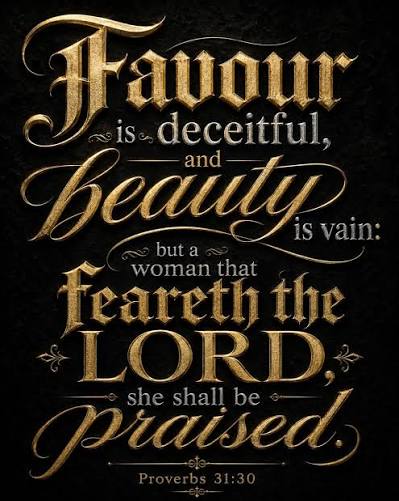
Proverbs offers a truth that stands in sharp contrast to the values of our culture. “Favor is deceitful, and beauty is vain: the woman that feareth the Lord, she shall be praised.” The beauty of a soul centered upon God is a treasure that does not pass away.
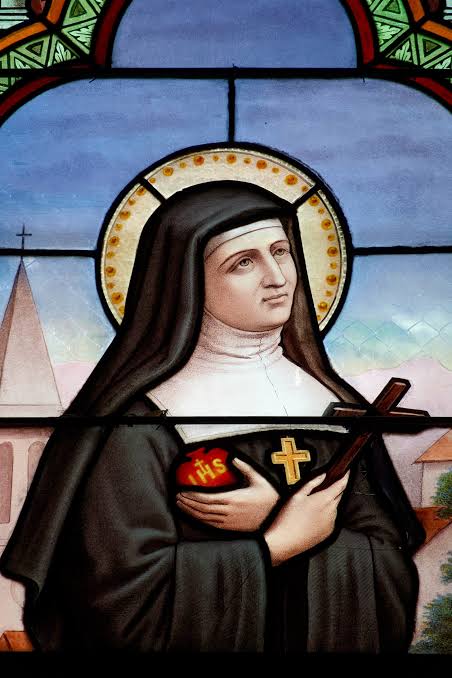
St. Jane Frances de Chantal understood what it meant to treasure Christ above all else. As a wife, mother, widow, and later a religious foundress, she lived this truth through many different seasons of life. She was a wife and mother who cared devotedly for her family and generously served the poor. After the death of her husband, she endured deep sorrow and many trials, but continued to seek God’s will.
Under the spiritual direction of St. Francis de Sales, she helped found the Order of the Visitation. The new community welcomed women who desired religious life but could not endure the severe practices required by other orders. St. Jane suffered periods of spiritual darkness, yet she remained faithful in prayer and service.
Through marriage, motherhood, widowhood, religious life, and suffering, St. Jane continued to choose the pearl of great price. Her life teaches us that holiness does not depend upon having an easy path. It comes from recognizing Christ as our greatest treasure and remaining faithful to Him wherever He places us.
QUESTIONS FOR THE HEART
What occupies the greatest place in my heart, and is anything keeping me from seeking Christ above all else?
Do I carry out my ordinary duties with the wisdom, kindness, and generosity described in today’s Epistle?
When I experience suffering or spiritual dryness, do I remain faithful and trust that God is still at work?
A LITTLE POEM FOR THE JOURNEY
The treasure hidden from our sight
Is Christ, our pearl of greatest price;
No passing joy can match His love
Or equal His great sacrifice.
Through work and sorrow, joy and prayer,
May we be faithful to the end,
And find the treasure that endures,
Our Savior, Bridegroom, Lord, and Friend.
THE TREASURE THAT ENDURES
LET YOUR LIGHT SHINE
Feast of St. Bernard of Clairvaux, Abbot and Doctor of the Church
August 20, 2026
TODAY’S GOSPEL: Matthew 5:13-19
EPISTLE: Ecclesiasticus 39:6-14

In today’s Gospel, Jesus entrusts His disciples with a clear mission: “You are the salt of the earth” and “You are the light of the world.” By grace and the gifts of the Holy Ghost, the Apostles were strengthened to go forth and proclaim the life, death, and Resurrection of Christ.
Their light was never their own. It came from Christ and was meant to be shared, not hidden. Through their preaching and example, many were converted, saints and martyrs were formed, vocations were awakened, and the Church carried Christ’s light through the ages.
We, too, have received gifts that must be used for God’s glory. Our words, choices, sacrifices, and acts of charity affect others – especially within our families. A single grace-filled act can bear fruit far beyond what we see.
Christ says: “So let your light shine before men, that they may see your good works, and glorify your Father who is in heaven.” We are not meant to draw attention to ourselves. A lamp exists to give light so others may find their way to God.
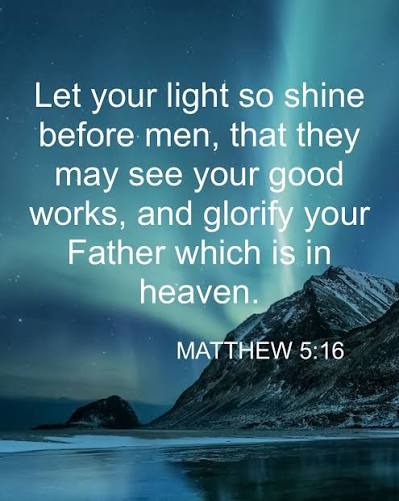
Jesus also teaches that He has come not to abolish the law or the prophets, but to fulfill them. He then speaks of the one who “shall do and teach.” The order matters: we must first live the truth, then teach it. Our witness loses strength when our actions do not match our faith.
The Epistle reminds us that the just man first turns his heart to God in prayer and repentance. If it pleases the Lord, He fills him with “the spirit of understanding” and pours out “showers of wisdom.” Prayer must come before action, for all lasting good begins with grace.
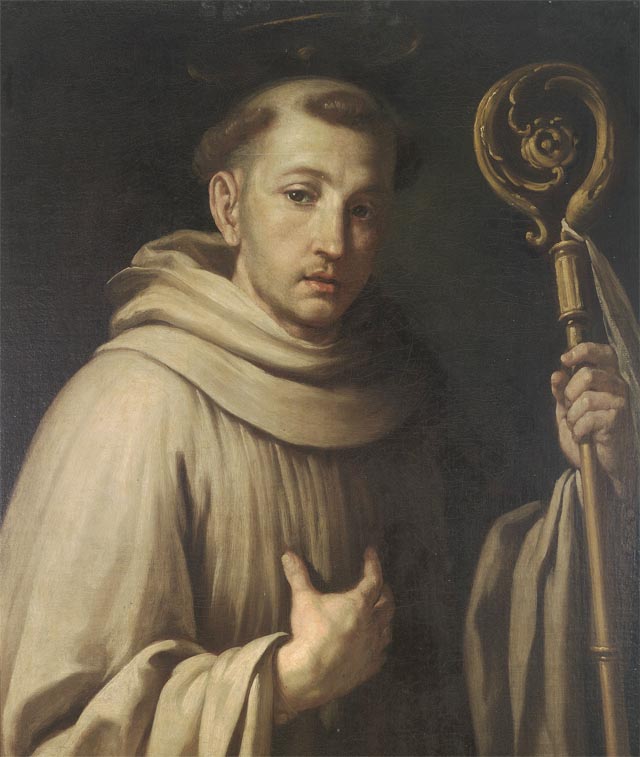
We see this clearly in St. Bernard of Clairvaux. As a young man, he entered the Cistercian monastery of Citeaux and soon brought about thirty relatives and companions with him. Later, he was sent to found a monastery in a remote valley known as the Valley of Wormwood. That house became Clairvaux, and from it a great renewal of monastic life spread across Europe.
Though Bernard longed for hidden prayer, the needs of the Church often drew him into public life. He advised popes and rulers, helped resolve a papal schism, preached widely, and worked for the reform of religious life.
He was also a gifted writer with deep devotion to the Blessed Mother. His writings on Christ, Mary, and divine love were so rich that he became known as the “Mellifluous Doctor” – the honey-sweet Doctor. His teaching flowed from a life rooted in prayer.
St. Bernard did not hide the gifts he received. Through prayer, study, labor, and faithful service, he let his light shine – and that light continues to guide souls to Christ even today.
QUESTIONS FOR THE HEART
Do I consider how my actions affect those around me, especially within my family?
What gifts of the Holy Ghost has God given me, and what keeps me from using them well?
How can I grow in love and devotion to the Blessed Mother in my daily life?
A LITTLE POEM FOR THE JOURNEY
A lamp is small, yet still can show
The path another trod;
So let each word and work of ours
Lead wandering hearts to God.
By prayer keep bright the flame of faith,
By charity let it shine;
Then every gift entrusted us
Returns to Love Divine.
LET YOUR LIGHT SHINE
WATCHING FOR THE MASTER
Feast of St. John Eudes, Confessor
Commemoration of St. Louis of Toulouse, Bishop
August 19, 2026
TODAY’S GOSPEL: Luke 12:35-40
EPISTLE: Ecclesiasticus 31:8-11
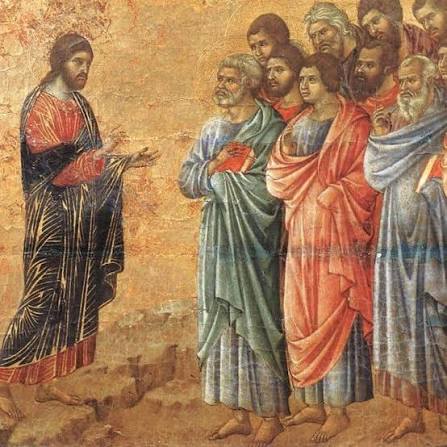
In today’s Gospel, Our Lord tells His disciples: “Let your loins be girt, and lamps burning in your hands.” They are to be like servants awaiting their master’s return from a wedding, ready to open the door the moment he knocks.
To have our loins girt means to be prepared for action. To keep our lamps burning means to remain spiritually awake, nourished by faith, prayer, and grace. Christ does not ask us to know the hour of His coming. He asks us to be ready whenever He comes.
Our Lord then gives an astonishing promise concerning the servants found watching: “He will gird himself, and will make them sit down to meat, and passing will minister unto them.” The master serves his faithful servants. This points us toward the heavenly banquet, where Christ will welcome those who have persevered in His friendship. Their reward is not something they have earned apart from grace. Even their faithfulness has been made possible by the grace of God working within them.
We must therefore remain watchful without becoming fearful or discouraged. Christian readiness is not anxious guessing about when the Master will return. It is the steady fidelity of a soul living in sanctifying grace: confessing its sins, receiving the sacraments, fulfilling its duties, and beginning again whenever it falls.
In today’s Epistle, the Church praises the man who could have pursued riches dishonestly but refused to do so: “He could have transgressed, and hath not transgressed: and could do evil things, and hath not done them.” His virtue has been tested and found faithful. He possesses earthly goods without allowing those goods to possess his heart.
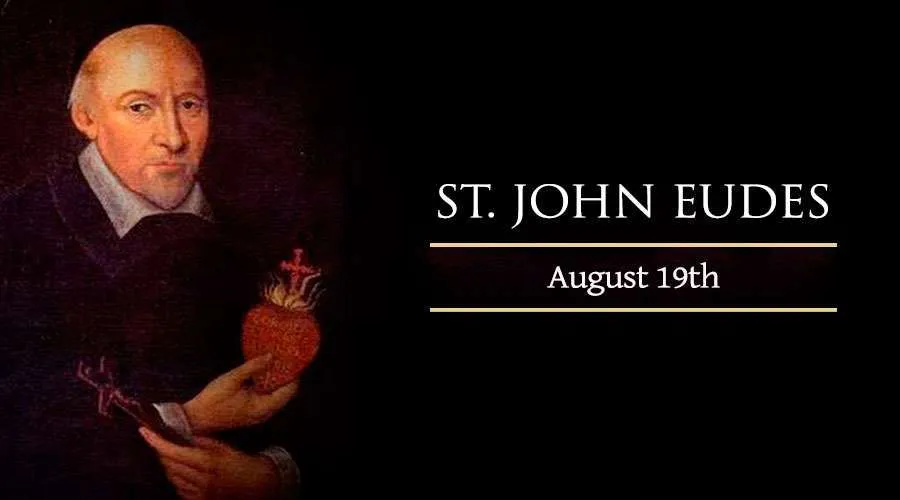
This fidelity was beautifully lived by St. John Eudes. Ordained a priest at twenty-four, he gave himself tirelessly to preaching parish missions, hearing confessions, caring for the suffering, and working for the renewal of the clergy. Recognizing the need for holy and well-formed priests, he founded the Congregation of Jesus and Mary, commonly called the Eudists, and established seminaries for priestly formation. He also founded the Order of Our Lady of Charity to assist women seeking to escape lives of sin and exploitation.
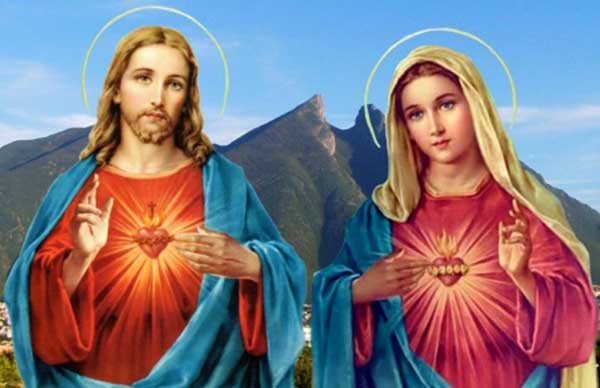
St. John Eudes is especially remembered for spreading devotion to the Sacred Heart of Jesus and the Immaculate Heart of Mary. These devotions did not begin with him, but through his preaching and liturgical work they became more widely known.
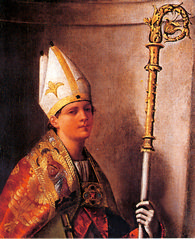
The Franciscan calendar also honors St. Louis of Toulouse today. Born into royalty and expected to inherit a throne, Louis renounced his earthly claims to become a Franciscan. After his ordination, he was made Bishop of Toulouse, but continued to live with Franciscan simplicity and devoted much of his income to feeding the poor.
St. Louis could have pursued wealth, comfort, and power, but he chose the better treasure. He is a living illustration of today’s Epistle: a man tested by riches who remained faithful to God. He died at only twenty-three years of age.
St. John Eudes and St. Louis of Toulouse kept their lamps burning in very different circumstances. One labored through long years of missions, priestly formation, and religious foundations. The other surrendered a crown and completed his earthly journey while still very young. Both were ready because their hearts belonged to Christ.
QUESTIONS FOR THE HEART
Is my lamp being kept alive through prayer, the sacraments, and daily fidelity, or have distraction and sin allowed it to grow dim?
If Christ knocked today through an unexpected duty or a person needing my charity, would I recognize Him and open the door?
Do I use the possessions and responsibilities entrusted to me for God’s glory, or have they begun to possess my heart?
A LITTLE POEM FOR THE JOURNEY
Keep bright the lamp entrusted thee,
Though long may seem the night,
The Master comes at hours unknown –
Be watching for His light.
Let neither wealth nor worldly care
From Christ thy spirit sever
The heart that waits in faithful love
Shall feast with Him forever.
WATCH FOR THE MASTER
GO, AND DO THOU IN LIKE MANNER
Commemoration of St. Agapitus of Palestrina, Martyr
August 18, 2026
TODAY’S GOSPEL: Luke 10:23-37
EPISTLE: 2 Corinthians 3:4-9
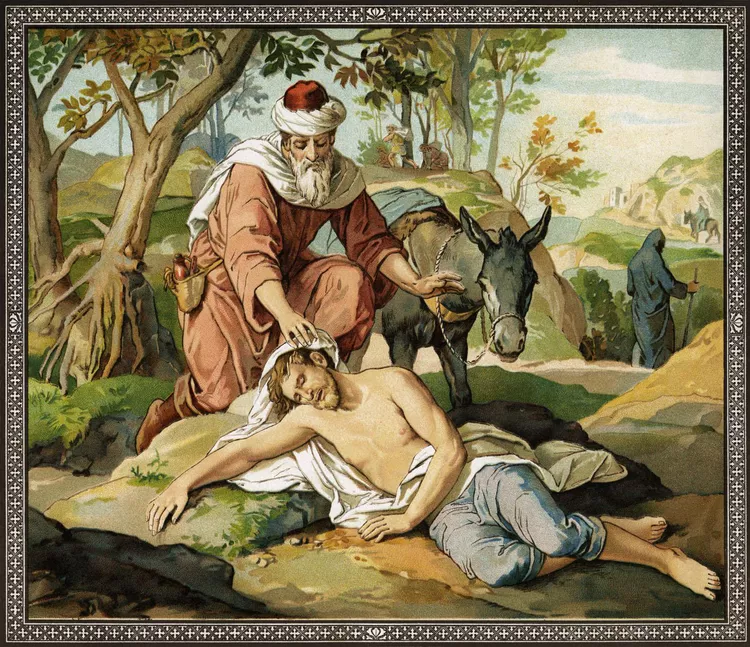
In today’s Gospel, Our Lord turns privately to His disciples and says: “Blessed are the eyes that see the things which you see.” Kings and prophets had longed to behold the fulfillment of God’s promises, but the Apostles were looking upon the promised Messiah with their own eyes. They heard His voice, witnessed His miracles, and walked beside the Word made flesh. This was no ordinary teacher and no ordinary moment. In Jesus Christ, everything foretold by the prophets was being fulfilled.
Yet immediately after this declaration, a lawyer stands up to test Him: “Master, what must I do to possess eternal life?” Our Lord directs him to the law, and the lawyer answers correctly: “Thou shalt love the Lord thy God with thy whole heart, and with thy whole soul, and with all thy strength, and with all thy mind: and thy neighbor as thyself.” Jesus replies: “Thou hast answered right: this do, and thou shalt live.”
The lawyer knows the commandment, but he wishes to limit its demands. “And who is my neighbour?” he asks. Our Lord answers with the parable of the Good Samaritan.
A man traveling from Jerusalem to Jericho falls among robbers, who strip him, wound him, and leave him half dead. A priest sees him and passes by. A Levite also approaches, sees the wounded man, and passes by. Both recognize his suffering, but neither allows what he sees to interrupt his journey.
Then a Samaritan comes near. The Jews and Samaritans were deeply divided, yet it is this unexpected traveler who is “moved with compassion.” He does not merely feel pity from a distance. He approached the wounded man, binds his wounds, pours in oil and wine, places him upon his own beast, brings him to an inn, and personally takes care of him. His compassion becomes action, and that action costs him time, effort, comfort, and money.
Our Lord then asks which of the three proved himself a neighbor to the wounded man. The lawyer answers, “He that showed mercy to him.” Jesus concludes with words that leave no room for excuses: “Go, and do thou in like manner
The question is not merely, “Who is my neighbor?” as though we might determine whom we are permitted to pass by. The deeper question is whether we will make ourselves a neighbor to the suffering person whom God places in our path. Our neighbor is not only the person we naturally understand, admire, or find easy to love. Our neighbor may be someone outside our circle, someone whose needs inconvenience us, or even someone from whom we feel divided.
The Fathers of the Church also saw in the Good Samaritan an image of Christ Himself. Humanity lay wounded by sin and unable to save itself. Christ came near to us, was moved with compassion, treated our wounds, and carried us to safety. The inn represents the Church, where wounded souls receive the grace and care needed for healing. The oil and wine signify the remedies of divine grace poured into the wounds sin has inflicted. We cannot claim to love Christ while deliberately passing by those whom He asks us to serve.
In today’s Epistle, St. Paul reminds us that this work cannot be accomplished by our own strength. “Not that we are sufficient to think anything of ourselves, as of ourselves: but our sufficiency is from God.”
When St. Paul says, “The letter killeth, but the spirit quickeneth,” he is not dismissing the written word or the commandments of God. Rather, he teaches that the law, separated from its fulfillment in Christ and received without His life-giving grace, can expose sin but cannot heal it. The Holy Ghost does not abolish the command to love; He gives us the grace to fulfill it. The mercy demanded in the Gospel becomes possible because “our sufficiency is from God.”
St. Agapitus shows us what this grace can accomplish even in one very young. According to the Roman Martyrology, he was only fifteen years old when he was arrested during the reign of the Emperor Aurelian because of his fervent love for Christ. He was cruelly scourged and subjected to severe torments, yet he refused to deny the Faith.
Finally St. Agapitus was thrown before lions, but they did not harm him. He was then put to death by the sword and received the crown of martyrdom. The world may have seen only a defenseless youth, but the strength within him came from God. His sufficiency was not his own; it was the work of the Holy Ghost dwelling within him.
QUESTIONS FOR THE HEART
When I see someone suffering, do I allow compassion to interrupt my plans, or do I find a reason to pass by?
Am I trying to live the Christian life by my own strength, or do I humbly recognize with St. Paul that my sufficiency is from God?
By my words and example, am I helping the young people entrusted to me develop a faith strong enough to withstand the pressures of the world?
A LITTLE POEM FOR THE JOURNEY
I saw him wounded by the way
And heard the Savior say:
“Do not avert your eyes from him
Or hurriedly turn away.”
For mercy binds another’s wounds
And bears another’s load,
The heart that truly follows Christ
Stops for him on the road.
GO, AND DO THOU IN LIKE MANNER
BE PREPARED
Feast of St. Hyacinth, Confessor
August 17, 2026
TODAY’S GOSPEL: Luke 12:35-40
EPISTLE: Sirach 31:8-11

In today’s Gospel, Our Lord speaks with urgent clarity: “Let your loins be girt, and lamps burning in your hands.” This is not a suggestion but a command of watchfulness. Christ immediately adds the reason: “Be you then also ready: for at what hour you think not, the Son of man will come.” The entire passage turns on this single truth – He will come, and we must be found prepared.
Again He says: “And you yourselves like men waiting for their master’s return, when he shall return from the wedding; that when he cometh and knocketh, they may open to him immediately.” Here Our Lord defines the Christian life as waiting – not passive delay, but active readiness. The servant is not distracted or asleep; he is poised at the door, attentive to the slightest knock, because he expects his master.
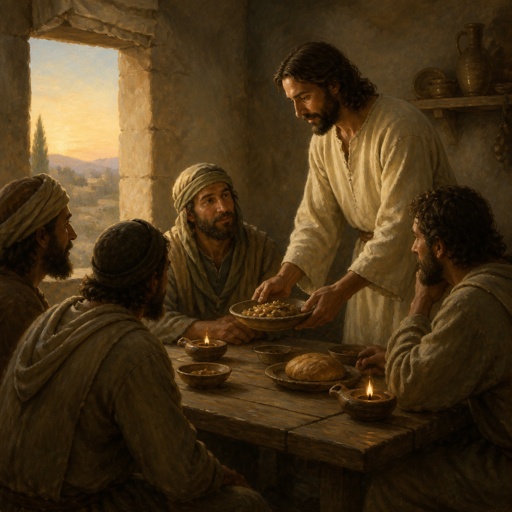
Christ deepens the teaching with a promise: “Blessed are those servants, whom the lord when he cometh shall find watching.” This blessing is not for those who merely begin well, but for those who persevere in vigilance until the end. The whole Christian life, then, is measured by this question: will the Lord find me watching?
Finally, Our Lord reveals the astonishing reward of such fidelity: “Amen I say to you, that he will gird himself, and make them sit down to meat, and passing will minister unto them.” The One whom we wait for becomes the One who serves us. Watchfulness leads not only to safety, but to communion – He Himself becomes our eternal joy.
Christ is teaching us, therefore, that readiness is not optional or occasional. It is the very posture of the soul that lives in expectation of His coming. We do not know the hour when He will call us from this life, nor do we know when He may come to us with a grace, a duty, or a moment of decision. For this reason He commands: “Let your loins be girt, and lamps burning.”
St. Hyacinth lived this holy detachment. Born in Poland, he met St. Dominic in Rome and received the habit of the newly founded Order of Preachers. Filled with zeal for the salvation of souls, he returned to his homeland and labored throughout Poland and neighboring lands, establishing religious houses, preaching the Catholic Faith, and bringing many souls to Christ. Because of his extensive missionary work, he became known as the “Apostle of the North.”
Like St. Dominic, St. Hyacinth possessed a tender devotion to the Blessed Virgin Mary. According to tradition, when invading forces threatened his priory, he hurried to rescue the ciborium containing the Blessed Sacrament. As he prepared to flee, he heard the Blessed Mother calling him not to leave her image behind. The alabaster statue was far too heavy for one man to carry, but it miraculously became light in his arms. Holding both the Holy Eucharist and the image of Our Lady, he carried them to safety and crossed the flooded river with his companions.
Worn out by years of missionary labor, St. Hyacinth became gravely ill near the end of his life. Still watchful and faithful, he offered Mass on the Feast of the Assumption and died that same day, August 15, 1257. When the Master came and knocked, He found His sevant with his lamp still burning.
QUESTIONS FOR THE HEART
If Christ called me today, would He find my soul prepared and living in His friendship?
Have the responsibilities and possessions of this world begun to occupy the place in my heart that belongs to God?
Like St. Hyacinth, when difficulties arise, do I turn first toward Our Lord in the Blessed Sacrament and seek the help of His Blessed Mother?
A LITTLE POEM FOR THE JOURNEY
Keep bright the lamp entrusted you;
Let prayer sustain its flame,
Through quiet duties, faithfully,
Give glory to His name.
And when the Master comes at last
And knocks upon your door,
May He find watching there a heart
That chooses Him before.
KEEP YOUR LAMP BURNING
COMMEMORATION OF ST. JOACHIM, FATHER OF THE BLESSED VIRGIN MARY
August 16, 2026
TODAY’S GOSPEL: Luke 10:23-37
EPISTLE: 2 Corinthians 3:4-9
Today Our Lord tells His disciples: “Blessed are the eyes that see the things which you see.” They had been given the privilege of seeing the promised Savior with their own eyes and hearing His words with their own ears.
We have not seen Jesus walking the roads of Galilee, yet we have been given eyes of faith. We see Him beneath the appearances of bread and wine in the Holy Eucharist. We hear His voice in the Gospel. We encounter Him in His Church – and in the suffering people He places along our path.
The lawyer in today’s Gospel asks Jesus, “Who is my neighbor?” Our Lord answers with the parable of the Good Samaritan. A man is robbed, beaten, and left half dead. A priest sees him and passes by. A Levite also sees him and continues on his way. The Samaritan, however, truly sees him. He allows another person’s suffering to interrupt his journey.
This is the heart of the parable. Christian charity is more than noticing that someone is hurting. It draws near. It binds wounds. It gives time, mercy, and practical help. Our neighbor is not merely the person we find agreeable or deserving. Our neighbor is the person God has placed before us who needs compassion.
The Good Samaritan also gives us an image of Christ Himself. Humanity lay wounded by sin, unable to save itself. Jesus did not pass us by. He came near, lifted us up, and brought us into the shelter of His Church. He paid the debt we could never pay and continues to heal us through His grace and the Sacraments.
In the Epistle, St. Paul reminds us that our sufficiency comes from God. We cannot live this life of charity by our own strength. The letter alone cannot give life; we need the Holy Ghost to write the law of love within our hearts. It is the Spirit who enables us to recognize Christ in our neighbor and to love when love requires sacrifice.
Today we commemorate St. Joachim, honored by ancient Christian tradition as the father of the Blessed Virgin Mary and husband of St. Anne. He was a hidden vocation, lived within the quiet holiness of family life. God entrusted to Joachim and Anne the child who would become the Mother of the Savior. St. Joachim reminds us that faithful lives, though unnoticed by the world, can hold an important place in God’s plan.
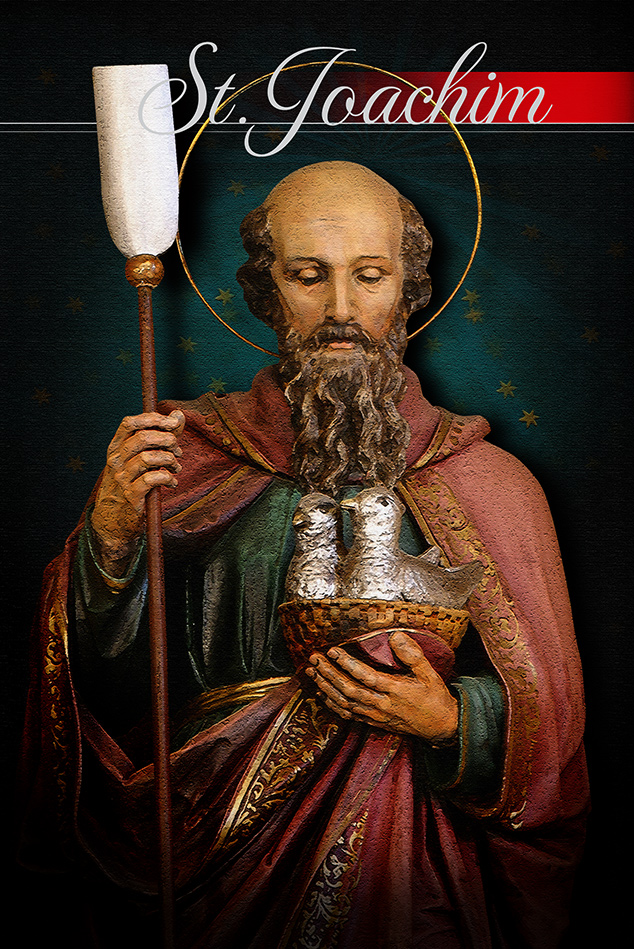
QUESTIONS FOR THE HEART
Do I merely notice the suffering of others, or am I willing to stop and help?
Is there someone within my own home who especially needs my patience, kindness, or forgiveness?
Like St. Joachim, can I remain faithful when God’s plan is hidden from me?
A LITTLE POEM FOR THE JOURNEY
Along the road a wounded soul
May wait for me to see,
O Lord, do not let hurried steps
Pass by his misery.
Give me the heart that You have shown,
Compassionate and true,
That in the neighbor at my side,
I may encounter You.
OPEN YOUR EYES
THE FEAST OF THE ASSUMPTION OF THE BLESSED VIRGIN MARY
August 15, 2026
TODAY’S GOSPEL: Luke 1:41-50
EPISTLE: Judith 13:22-25, 13:15, 13:10
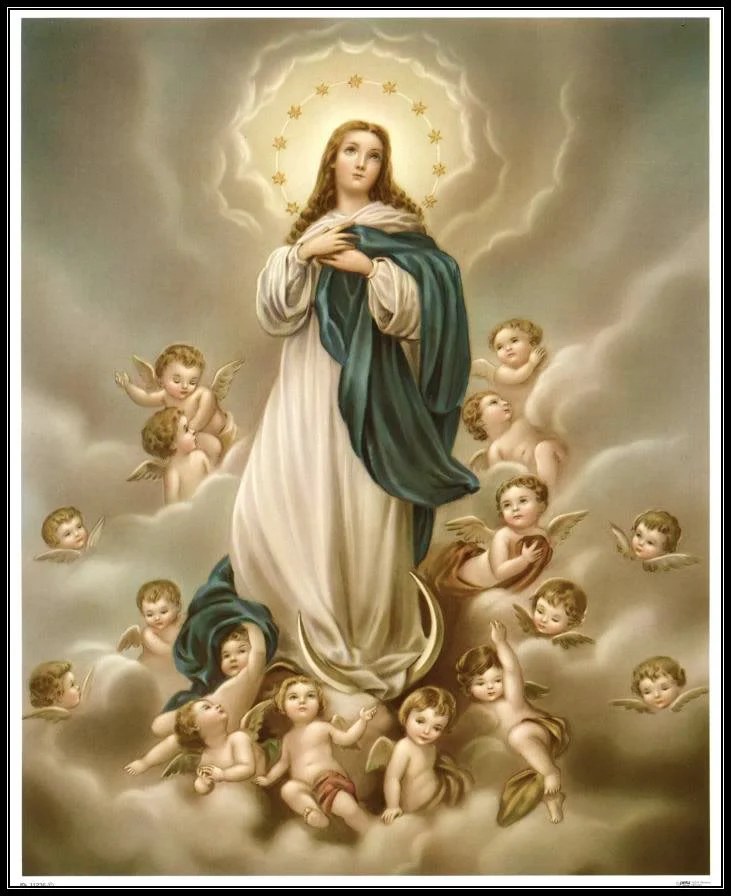
Today the Church lifts her eyes toward Heaven and rejoices in the glorious Assumption of the Blessed Virgin Mary. At the completion of her earthly life, Mary was taken body and soul into heavenly glory. She who had carried the Son of God within her womb, who had followed Him faithfully throughout His earthly life, and who had stood beneath His Cross now shares uniquely in the triumph of His Resurrection.
Mary did not ascend into Heaven by her own power. Our Lord Jesus Christ ascended because He is God; Mary was assumed by the power of God. Her Assumption is not a glory independent of Christ, but the splendid fruit of His victory.
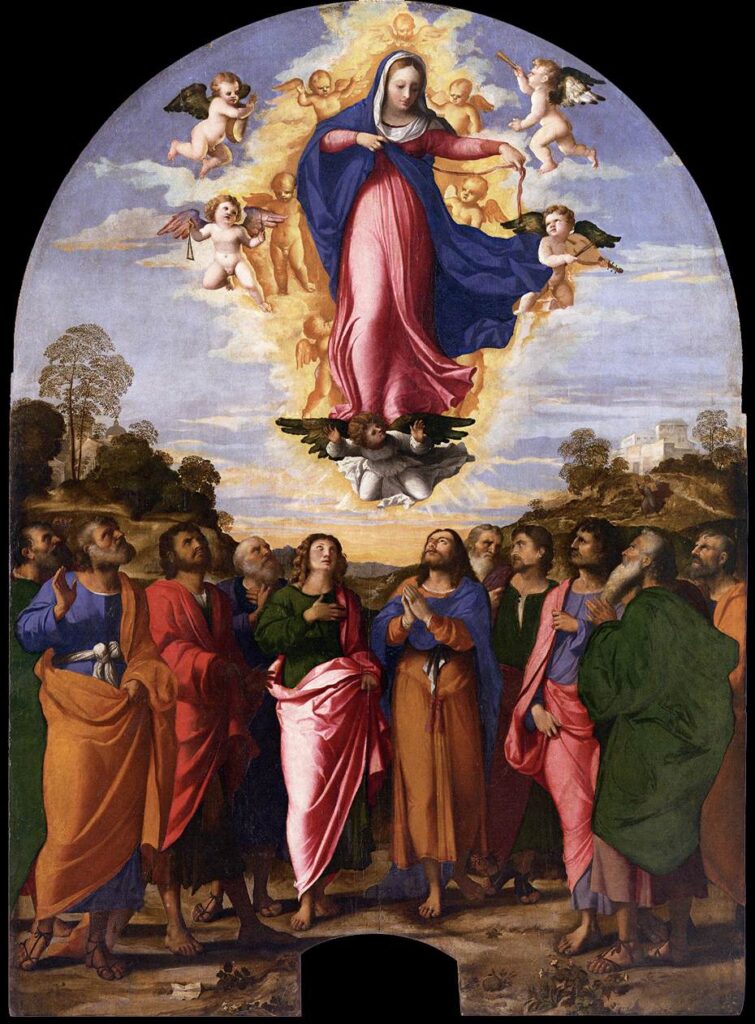
In 1950, Pope Pius XII solemnly defined the dogma of the Assumption, declaring that the Immaculate Mother of God, having completed the course of her earthly life, was assumed body and soul into heavenly glory. Yet his was not a new belief invented in modern times. It was the solemn definition of a truth long believed, celebrated, and handed down in the life of the Church.
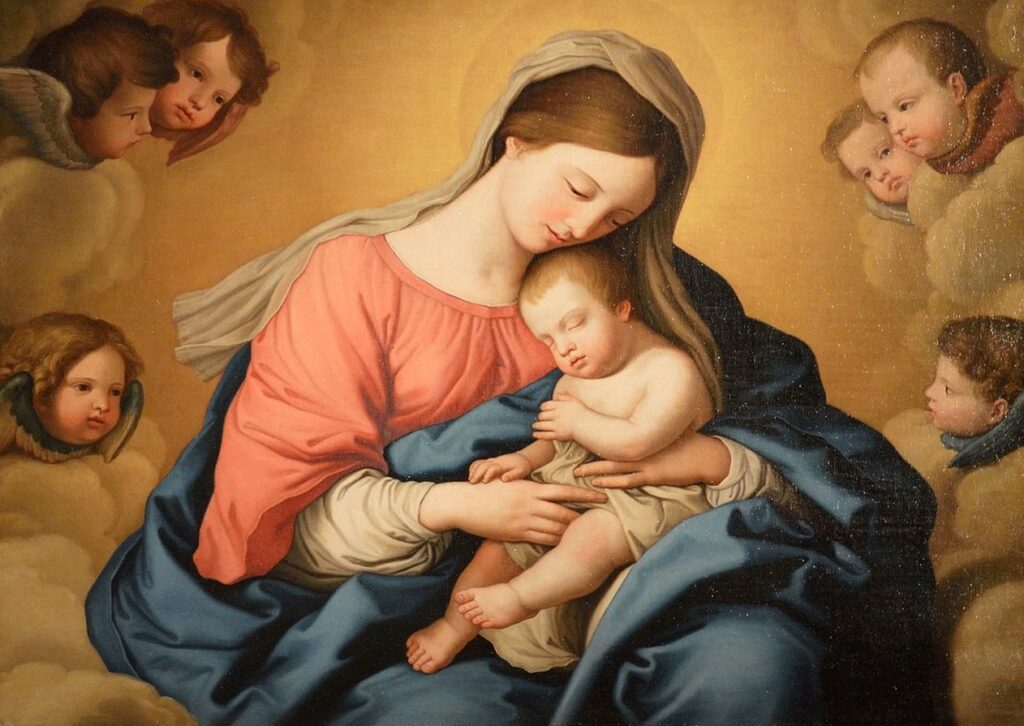
The Assumption is the fitting completion of Mary’s earthly vocation. Her body had been the first tabernacle of the Incarnate Word. From her flesh, the Son of God took His human nature. Within her womb, His Sacred Heart first began to beat. Her hands held Him at Bethlehem. Her arms carried Him during the flight into Egypt. Her eyes watched Him grow in the hidden life of Nazareth. Her feet followed Him to Calvary, and her heart was pierced as she stood beneath His Cross.
It was fitting that the body so intimately united with the mysteries of Christ should not be abandoned to the corruption of the grave. The Lord preserved Mary from original sin at her conception, filled her with grace, and prepared her to become His Mother. At the end of her earthly pilgrimage, He brought that work of grace to its glorious completion.
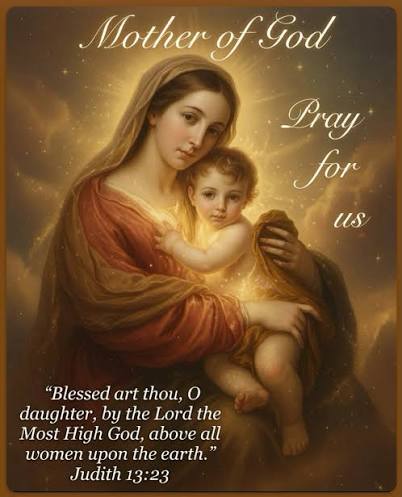
In today’s Epistle, the Church takes words originally spoken in praise of Judith and applies them to the Blessed Virgin Mary: “Blessed art thou, O daughter, by the Lord the most high God, above all women upon the earth.”
Judith had delivered Israel from a powerful enemy through her courage, faith, and complete confidence in God. She became the glory of Jerusalem, the joy of Israel, and the honor of her people. Yet Judith was also a figure pointing beyond herself toward the woman through whom an even greater victory would come.
Mary’s victory was accomplished not with earthly weapons, but through her faith, obedience, purity, and humility. Through her fiat, the Savior entered the world. Through the fruit of her womb, the ancient enemy was conquered and the dominion of death was broken. Where Eve listened to the serpent and disobeyed, Mary listened to the angel and believed. Through Eve came the wound of disobedience; through Mary came the One who would heal that wound.
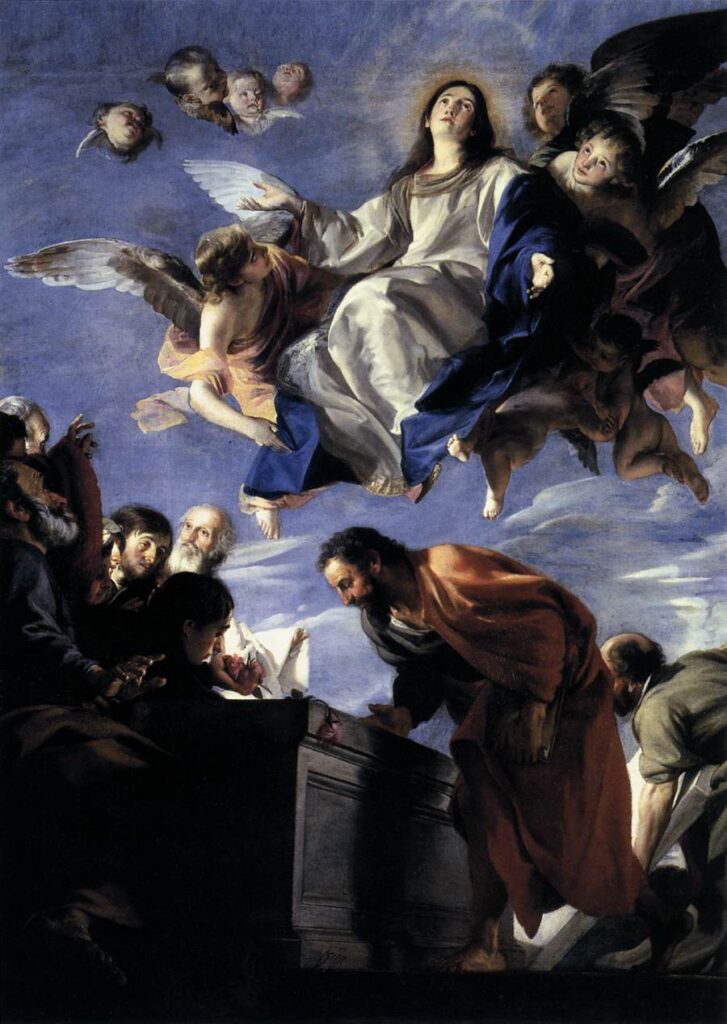
Today’s Gospel brings us to the Visitation. When Mary enters the house of Zachary and greets Elizabeth, the infant St. John leaps within his mother’s womb. Elizabeth, filled with the Holy Ghost, exclaims: “Blessed art thou among women, and blessed is the fruit of thy womb.”
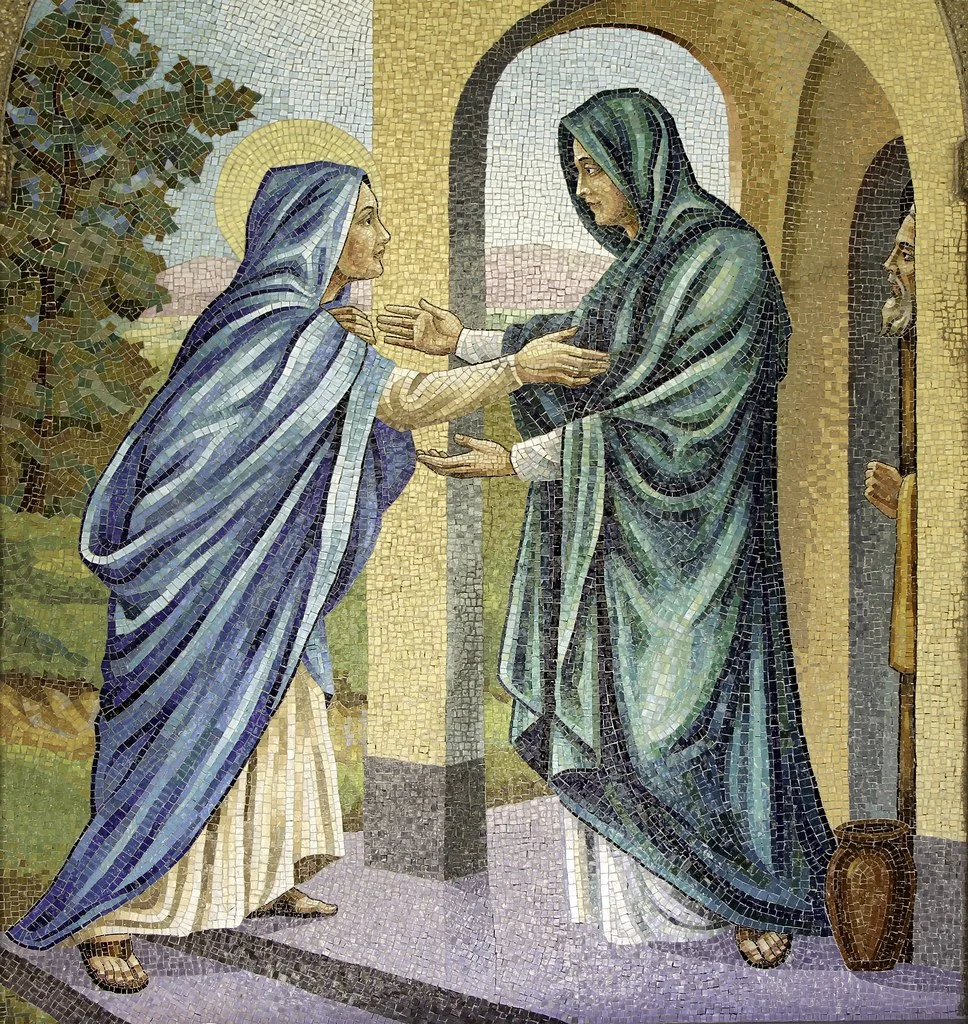
Elizabeth then says: “Blessed art thou that hast believed, because those things shall be accomplished that were spoken to thee by the Lord.”
Here we find the interior foundation of Mary’s life. She believed God. She believed before she could see how His promises would be fulfilled. Mary’s faith did not remove the sword of sorrow from her life. It gave her the strength to remain faithful while that sword pierced her heart.
Mary’s Assumption is a sign of hope for the whole Church. What has already been accomplished in her anticipates what Christ has promised to His faithful people. If we die in His grace, our souls will live with Him. Death will not have the final word.
This truth should change how we live in our bodies now. Our eyes were made to seek what is pure. Our lips were made to speak truth and praise God. Our hands were made for works of mercy. Our strength, our time, and even our sufferings can be offered to Christ. The body is not meaningless. It is destined for resurrection and must therefore be treated with dignity and governed according to the law of God.
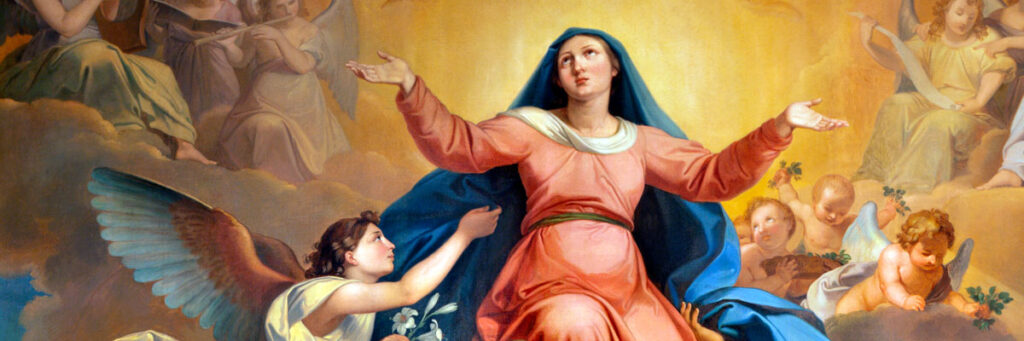
O Mary, assumed body and soul into Heaven, glory of Jerusalem, joy of Israel, and honor of your people, take us by the hand. Keep our eyes fixed upon your Son. Teach us to magnify the Lord in every circumstance, and lead us safely home to the glory of Heaven.
O Blessed Mother Assumed into Heaven, after years of heroic martyrdom on earth, we rejoice that you have at last been taken to the throne prepared for you in Heaven by the Holy Trinity.
Lift our hearts with you in the glory of your Assumption above the dreadful touch of sin and impurity.
Teach us how small earth becomes when viewed from heaven. Make us realize that death is the triumphant gate through which we shall pass to your Son and that someday our bodies shall rejoin our souls in the unending bliss of heaven.
From this earth, which we tread as pilgrims, we look to you for help.
In honor of your Assumption into Heaven, we ask for this favor…. (Mention your request)
At the hour of our death, lead us safely to the presence of Jesus to enjoy the vision of God for all eternity together with you.
Pray for us O Queen Assumed into Heaven, pray for us, that we may be made worthy of the promises of Christ. Amen
QUESTIONS FOR THE HEART
Mary’s Assuption reminds me that Heaven is my true homeland. Do my daily choices show that I am preparing for eternity, or have the passing concerns of this world become more important to me than the salvation of my soul?
Mary declared, “He that is mighty, hath done great things to me.” Do I recognize the work of God in my life and return the glory to Him, or do I take His gifts for granted?
Mary believed the word of God even when she could not see how His promises would be fulfilled. Where is God asking me to trust Him now? Can I place that fear, sorrow, or uncertainty into the hands of Our Lady and ask her to help me remain faithful?
A LITTLE POEM FOR THE JOURNEY
The angels welcome Heaven’s Queen,
Her earthly pilgrimage complete,
The Mother stands beside her Son,
All radiant in such blessedness.
O Mary, turn our hearts above,
Beyond this world of grief and strife,
And lead us safely to your Son,
Our only Way, our Truth, our Life.
LIFT UP YOUR HEART – OUR MOTHER IS IN HEAVEN
VIGIL OF THE ASSUMPTION OF THE BLESSED VIRGIN MARY
Commemoration of St. Eusebius of Rome, Priest and Confessor
St. Maximilian Mary Kolbe, Priest and Martyr
August 14, 2026
TODAY’S GOSPEL: Luke 11:27-28
EPISTLE: Ecclesiasticus 24:23-31
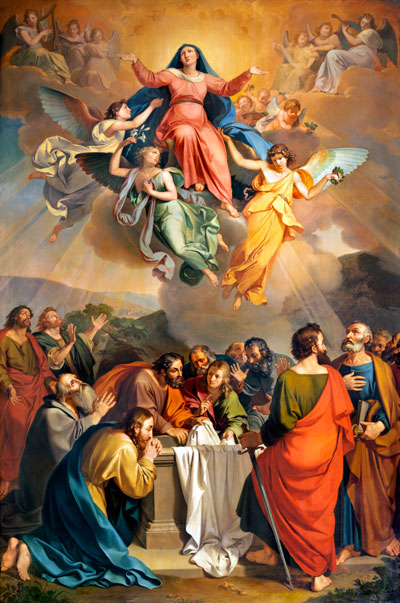
Today the Church stands at the threshold of one of her most glorious Marian feasts: the Assumption of the Blessed Virgin Mary. Before the celebration comes the Vigil – a day of preparation, watchfulness, and holy longing. The Church asks us not to rush thoughtlessly into tomorrow’s joy, but to pause, recollect ourselves, and prepare our hearts to contemplate the mystery that Mary, at the completion of her earthly life, was taken body and soul into the glory of Heaven.
A vigil reminds us that the greatest mysteries must be approached attentively. The world teaches us to move quickly from one thing to another, scarcely allowing anything to penetrate the heart. The Church teaches us to wait, to watch, and to prepare. Just as the faithful keep watch before a great feast, the Christian life itself is a vigil. We are preparing for the hour when our earthly lives will end and eternity will begin.
The Assumption reveals what God desires for His children. Mary’s privilege is unique, but it points toward the destiny promised to all who die in Christ. We profess in the Creed that we believe in the resurrection of the body and life everlasting.
Mary did not ascend into Heaven by her own power, as Christ ascended. She was assumed – taken up by the power of God. The Lord who preserved her from original sin, who chose her virginal womb as the dwelling place of the Incarnate Word and who invited her so intimately to the redemptive mission of her Son, would not permit corruption to have the final word over her body. Her Assumption is the fruit of Christ’s victory, not something apart from it. Everything in Mary comes from God, leads to God, and glorifies God.
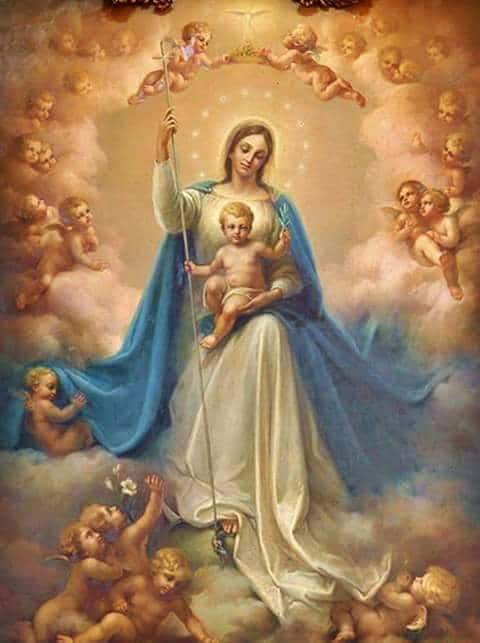
In today’s brief Gospel, a woman in the crowd raises her voice and says to Jesus: “Blessed is the womb that bore thee, …” Our Lord answers: “Yea rather, blessed are they who hear the word of God, and keep it.”
Jesus is not denying the blessedness of His Mother. He is revealing its deepest foundation. Mary is blessed because she is the Mother of God, but she is also blessed because she heard the word of God and kept it perfectly. Before she conceived Christ in her womb, she received the word of God in faith. Her entire life was an obedient response to God.
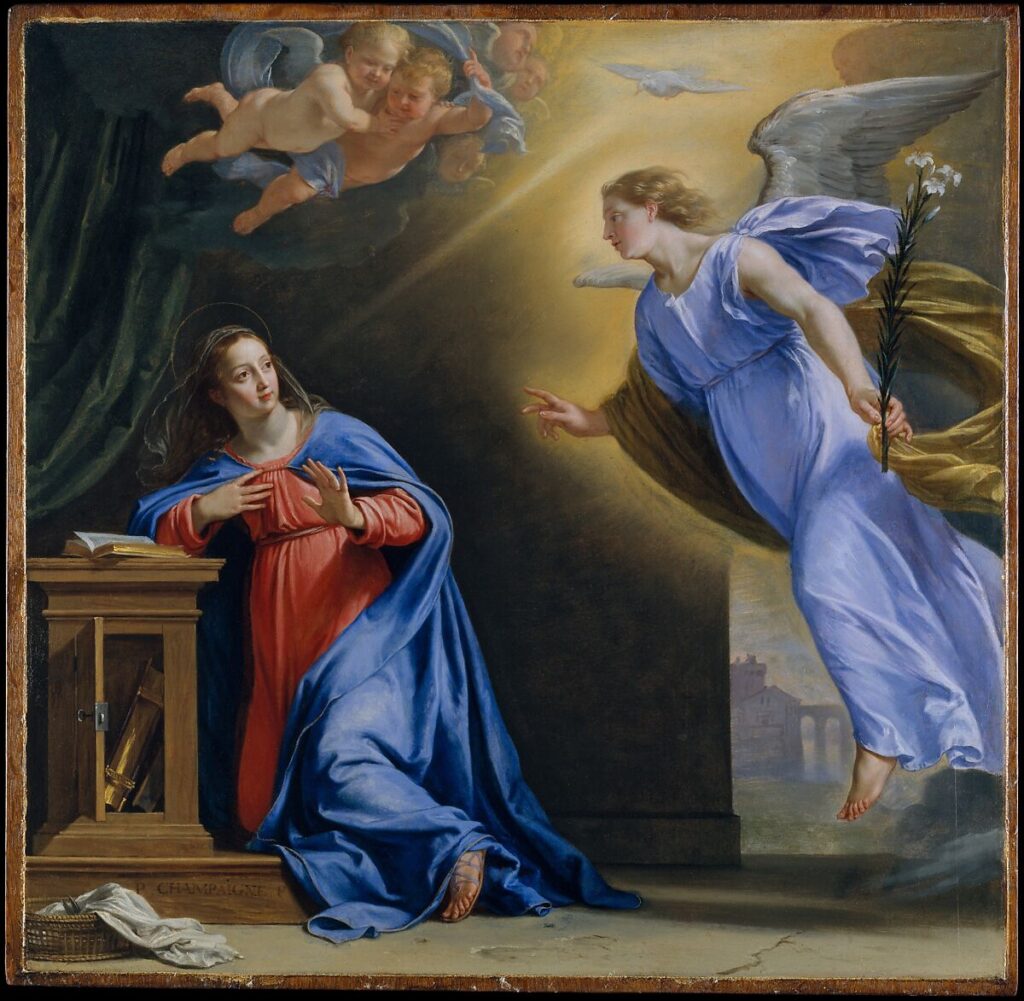
At the Annunciation, Mary heard and answered. At Bethlehem, she received the poverty and hiddenness chosen by God. During the flight into Egypt, she trusted without understanding where the path would lead. During the hidden years at Nazareth, she served faithfully without recognition. At Calvary, she remained when nearly everyone else had fled. After the Ascension, she prayed with the Infant Church and waited for the coming of the Holy Ghost.
Mary did not keep God’s word only when it was consoling. She kept it when it required sacrifice, silence, patience, exile, misunderstanding, and sorrow. Her fiat was not spoken only once. It became the pattern of her entire life. Every day, in every circumstance, she continued to say yes to God.
In today’s Epistle, we hear the words: “I am the mother of fair love, and of fear, and of knowledge, and of holy hope. In me is all grace of the way and of the truth, in me is all hope of life and of virtue.”
In their fullest sense, these words speak of divine Wisdom. Yet the Church fittingly applies them to the Blessed Virgin Mary because she bore within herself Jesus Christ, the eternal Wisdom and Incarnate Word of God. Mary is not the source of grace independently of Christ. Rather, she is full of grace because God filled her, and she brings us to the One who is the Way, the Truth, and the Life.
Today’s traditional calendar also commemorates St. Eusebius of Rome, a priest and confessor who defended the Catholic Faith during the turmoil caused by the Arian heresy. According to tradition, he was confined by order of the Emperor Constantius and spent seven months in prayer before dying in the Lord. Although shut away from the world, he remained free in the one way that mattered most: he belonged to Christ and would not surrender the truth.
We also remember St. Maximilian Kolbe, whose memorial is celebrated on August 14 in the present Roman calendar. Because he was canonized many years after the older traditional calendar was established, he does not appear in today’s traditional Mass propers. Nevertheless, his life beautifully illuminates this Vigil.
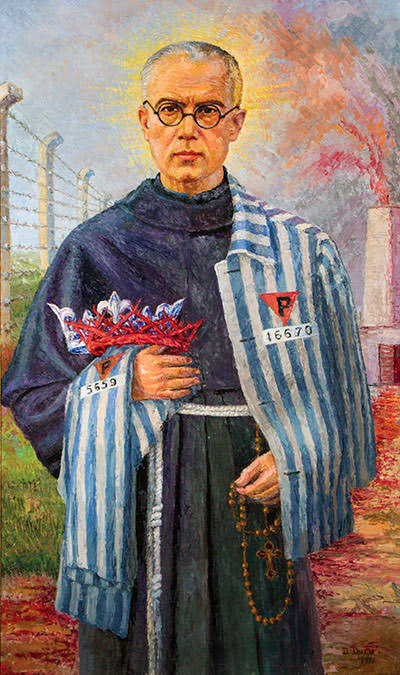
St. Maximilian possessed an ardent devotion to the Immaculate Virgin and desired to win souls for Christ through her. At Auschwitz, he offered his life in place of another prisoner, a husband and father, who had been condemned to death. In the starvation bunker, Father Kolbe encouraged the condemned men to pray and sing hymns. On August 14, 1941 – the Vigil of the Assumption – he completed his earthly sacrifice and entered eternity.
Let us keep vigil with Mary today. Let us turn away from distraction, examine our consciences, pray the Rosary, and prepare to assist at Holy Mass. Let us remember that we are pilgrims and that our true homeland is Heaven. May Our Lady take us by the hand, teach us to live her fiat, and lead us safely to her Son.
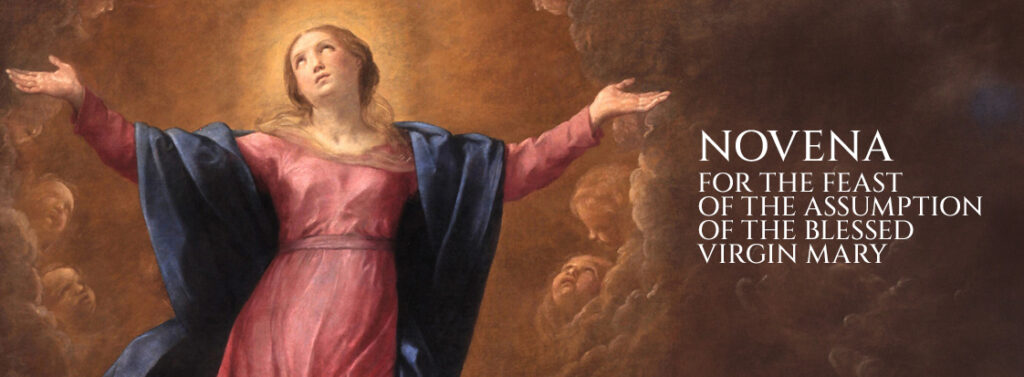
DAY NINE OF THE NOVENA IN PREPARATION FOR THE ASSUMPTION OF THE BLESSED VIRGIN MARY
Opening Prayer for each day:
Lord Jesus Christ, You have destroyed the power of death and given the hope of eternal life for body and soul. You granted your Mother a special place in your glory, and did not allow decay to touch her body. As we rejoice in the Assumption of Mary, grant us renewed confidence in the victory of life over death. Amen
Day 9

O Blessed Mother Assumed into Heaven, after years of heroic martyrdom on earth, we rejoice that you have at last been taken to the throne prepared for you in Heaven by the Holy Trinity.
Lift our hearts with you in the glory of your Assumption above the dreadful touch of sin and impurity.
Teach us how small earth becomes when viewed from heaven. Make us realize that death is the triumphant gate through which we shall pass to your Son and that someday our bodies shall rejoin our souls in the unending bliss of heaven.
From this earth, which we tread as pilgrims, we look to you for help.
In honor of your Assumption into Heaven, we ask for this favor…. (Mention your request)
At the hour of our death, lead us safely to the presence of Jesus to enjoy the vision of God for all eternity together with you.
Pray for us O Queen Assumed into Heaven, pray for us, that we may be made worthy of the promises of Christ. Amen
QUESTIONS FOR THE HEART
The Church gives me this Vigil as a time of preparation. What will I do today to prepare my soul for the Assumption? Will I set aside time for the Rosary, examine my conscience, or attend Holy Mass if possible?
Mary was blessed because she heard the word of God and kept it. What word of Christ have I heard but not yet obeyed? Is there a sin to abandon, a person to forgive, an injustice to repair, or a duty I have continued to postpone?
The Assumption reminds me that Heaven is real and that my body is destined for resurrection. Do my choices show that I believe this? Am I using my eyes, speech, hands, time, and physical strength in ways that honor God and prepare me for eternal life?
A LITTLE POEM FOR THE JOURNEY
Before the feast, the Church keeps watch,
Her heart turned upward through the night,
For Mary, faithful to the end,
Is clothed by God in Heaven’s light.
She heard His word and kept it well,
Through hidden years and Calvary,
O Mother, teach our hearts your yes,
And lead us home eternally.
KEEP VIGIL WITH MARY
Commemoration of Sts. Hippolytus and Cassian, Martyrs
Be Thou Opened
August 13, 2026
TODAY’S GOSPEL: Mark 7:31-37
EPISTLE: I Corinthians 15:1-10
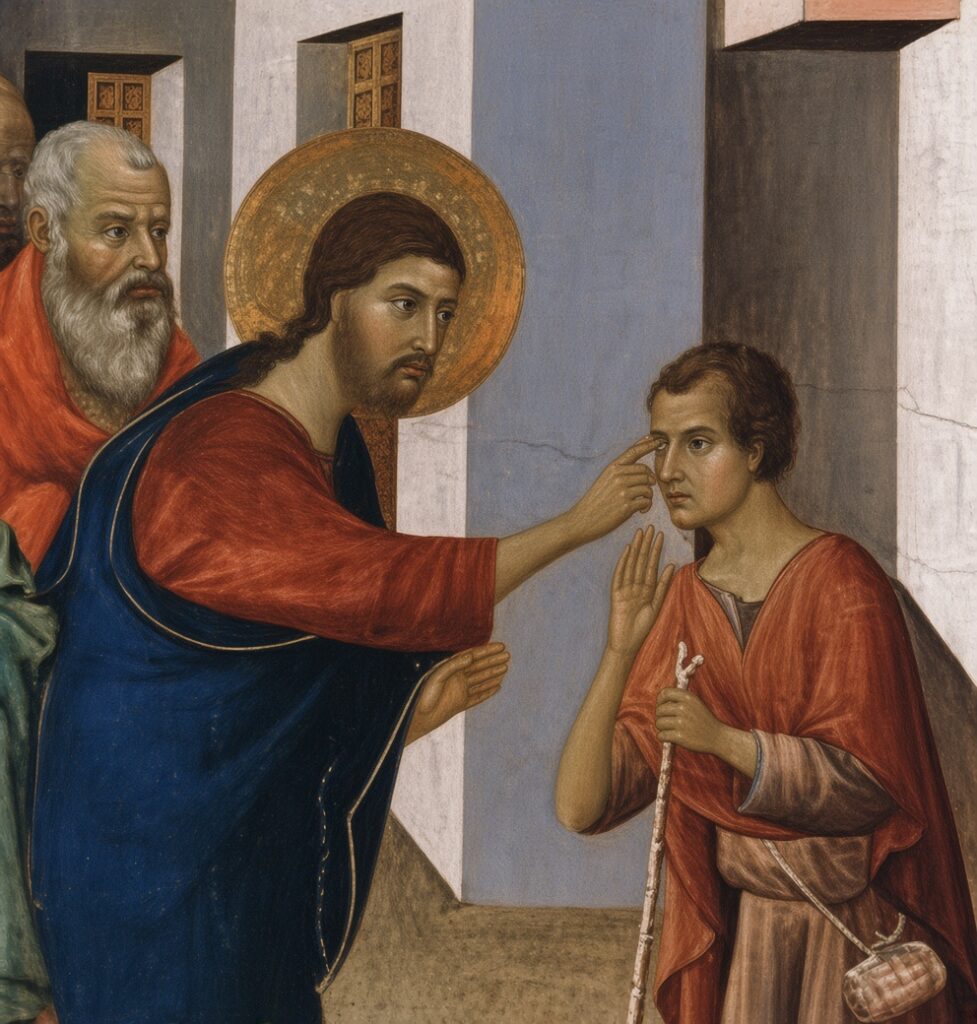
In today’s Gospel, a man who is deaf and unable to speak plainly is brought to Jesus. Those who bring him beg Our Lord to lay His hand upon him. We are not told who these people are. Perhaps they are his family, his friends, or simply compassionate people who have heard of the miracles of Jesus. What matters is that they believe that Jesus can help him, and carry him into the presence of the Divine Physician.
This is a beautiful image of intercessory prayer. There are times when someone we love cannot – or will not – come to Jesus on his own. Perhaps he is suffering, discouraged, confused, or has wandered far from the Faith. Perhaps he has closed his ears to the truth and no longer knows how to speak to God. At such times, we can do what these people that bring him to Jesus do through our prayers. We cannot force another person to believe, repent, or change, but we can place that person before Our Lord and ask Him to act.
Jesus does something very personal. He takes the man aside from the multitude. Away from the noise and curiosity of the crowd, the man encounters Christ alone. Jesus puts His fingers into the man’s ears, touches his tongue, looks up to Heaven, and groans. Then he speaks one commanding word: “Ephpheta,” which means, “Be thou opened.”
Immediately, the man’s ears are opened, the impediment of his tongue is loosed, and he speaks plainly.
This was a true physical miracle, but it also reveals something about our spiritual condition. We may possess perfectly good hearing and still be deaf to God. We may hear the Gospel proclaimed, the commandments taught, and the warnings of conscience repeated, yet close our ears because the truth requires something of us. Sometimes we do not want to hear that we must forgive, repent, abandon a sin, repair an injustice, or surrender our own will.
Spiritual deafness seldom announces itself. We continue to hear the words, but we no longer allow them to penetrate the heart. We begin listening only to those voices that confirm what we already want to believe. Gradually, the noise of the world becomes louder than the voice of Christ.
Spiritual deafness also affects the tongue. If we do not first listen to God, we will not speak as we should. Our words may become careless, false, harsh, profane, or uncharitable. We may remain silent when the truth must be defended and speak loudly when prudence calls for silence. Before our speech can be made right, our ears must first be opened to Christ.
At Baptism, the Church recalls this miracle in the Ephpheta rite, asking that our ears be opened to receive the word of God and our mouths be opened to profess the Faith. This prayer is not meant only for the beginning of the Christian life. It is one that we need throughout the whole of our lives: Lord, open my ears to Your truth. Loosen my tongue to proclaim it. Open my heart to Your grace.
Christ may also need to take us aside from the multitude. We cannot hear Him clearly if we are constantly surrounded by noise, distraction, and the opinions of the world. We need moments of silence before the Blessed Sacrament, in prayer, with the Holy Rosary, and in the reading of Sacred Scripture. In that silence, Christ touches what is wounded, confronts what is false, and opens what we have closed.
In today’s Epistle, St. Paul reminds the Corinthians of the Gospel he had preached to them and which they had received: that Christ died for our sins according to the Scriptures, that He was buried, and that He rose again on the third day. He appeared to Peter, then to the Apostles, and afterward to more than five hundred brethren at once. The Christian faith is not founded upon a vague feeling, a private opinion, or an inspiring philosophy. It is founded upon the truth of Jesus Christ – crucified, buried, and risen from the dead.
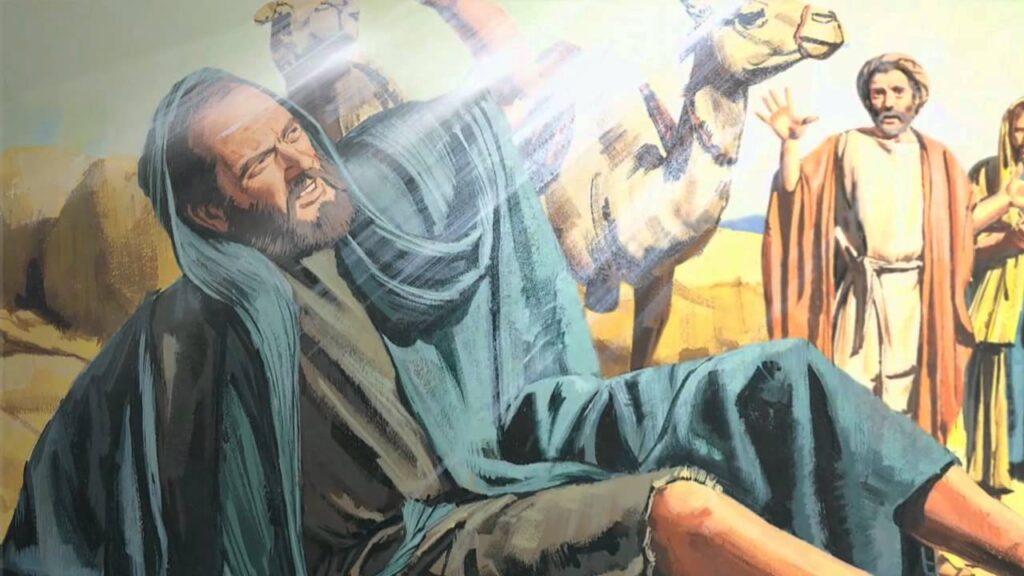
After speaking of the appearance of the risen Christ, St. Paul turns to himself with striking humility: “For I am the least of the apostles, who am not worthy to be called an apostle, because I persecuted the church of God. But by the grace of God, I am what I am; and his grace in me hath not been void.”
Today the Church also commemorates Saints Hippolytus and Cassian, two martyrs who heard the truth, professed it, and refused to deny it even under persecution.
DAY EIGHT OF THE NOVENA IN PREPARATION FOR THE ASSUMPTION OF THE BLESSED VIRGIN MARY
Opening Prayer for each day:
Lord Jesus Christ, You have destroyed the power of death and given the hope of eternal life for body and soul. You granted your Mother a special place in your glory, and did not allow decay to touch her body. As we rejoice in the Assumption of Mary, grant us renewed confidence in the victory of life over death. Amen
Day 8

Mary, Queen Assumed into Heaven, we rejoice that you are the Queen of Heaven and Earth. You have given your holy fiat to God and became the Mother of our Savior.
Obtain peace and salvation for us through your prayers, for you have given birth to Christ our Lord, the Savior of all mankind.
Intercede for us and bring our petitions before the Throne of God.
(Mention your request)
Through your prayers, may our souls be filled with an intense desire to be like you, a humble vessel of the Holy Spirit and a servant of the Almighty God.
Pray for us O Queen Assumed into Heaven, pray for us. Amen
QUESTIONS FOR THE HEART
Have I closed my ears to something Christ is asking of me because accepting the truth would require repentance, forgiveness, sacrifice, or change? Am I willing to step away from the noise and allow Him to say to my heart, “Be thou opened”?
Is there someone in my life who cannot or will not come to Jesus right now? Like the friends of the man in today’s Gospel, will I faithfully carry that person before Christ in prayer, trusting in His mercy while surrendering the outcome to His holy will?
When I profess the Creed and hear the truth of Christ’s Resurrection, do I truly consider what I am saying? Do I live as one who believes that Christ has conquered death, that Heaven is real, and that my entire life should be shaped by that truth?
A LITTLE POEM FOR THE JOURNEY
Away from the crowd and the clamor of men,
Christ touched what was closed and made whole again.
“Ephpheta,” He spoke, and the silence was stirred,
The deaf man could hear and his tongue spoke the word.
When noise fills our minds and the truth is unclear,
O Lord, touch our hearts and awaken our ear,
When fear seals our lips and the faithful grow few,
Give us courage to speak what is holy and true.
Ephpheta, Be Thou Opened
Feast of St. Clare, Virgin
Keep Your Lamp Burning
August 12, 2026
TODAY’S GOSPEL: Matthew 25: 1-13
EPISTLE: 2 Corinthians 10:17-18, 11:1-2
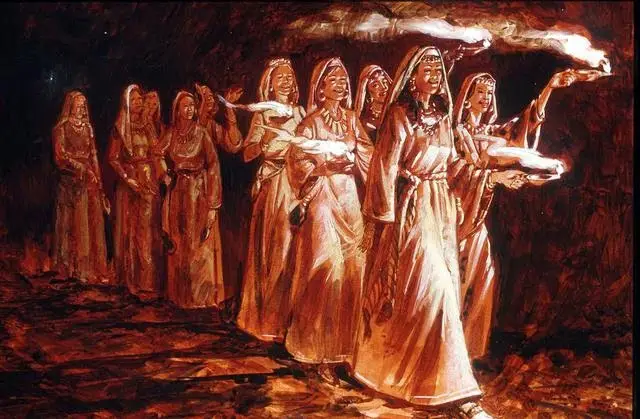
In the Gospel today, Jesus gives us the parable about the ten virgins, five who were wise because they had oil for their lamps, and five who were foolish because they did not. While waiting for the Bridegroom, the lamps of the five foolish virgins went out, and they left to go buy more oil. The Bridegroom came while they were gone, and they missed the wedding feast.
Jesus tells us that the Bridegroom was late in coming, and they all became drowsy and slept. However, the Kingdom of Heaven will be open only to those who have prepared themselves in advance of His coming and have not fallen asleep. So what happens when we are waiting, and the waiting becomes difficult?
There are times when our prayer life is “dry,” and we feel like grace is veiled. There are times when we feel far away from Jesus, and we feel abandoned, or that perhaps our sins have created a distance between us and God. St. Mother Teresa also suffered from profound spiritual dryness. She continued to do what Our Lord was calling her to do, but she described feeling a deep painful separation from Him. Perhaps we are being tested during those times, and if we give up, then our light might go out as did the lamps of the five foolish virgins.
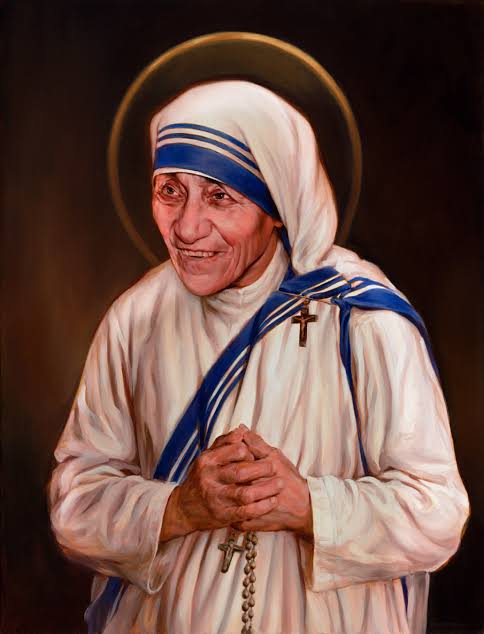
Let us pray instead that we might follow the example of Mother Teresa, and not surrender, but instead seek to remain always in His will. Mother Teresa continued to pour out her life because she understood that it was important not only to begin the journey, but also to persevere and to be faithful every day. She understood, as did the five wise virgins, that the Bridegroom was indeed coming, even when He was delayed. Their faith was not dependent upon the timing of His arrival, but rather on the truth – that He would arrive.
We are told the sad truth in this parable that the foolish virgins went to the door and called, “Lord, Lord, open to us. But he answering said: Amen I say to you, I know you not. Watch ye therefore, because you know not the day nor the hour.”
It is not enough to be partially prepared. It is not wise to wait until the last minute to “get right” with God because we do not know when our last minute will be.
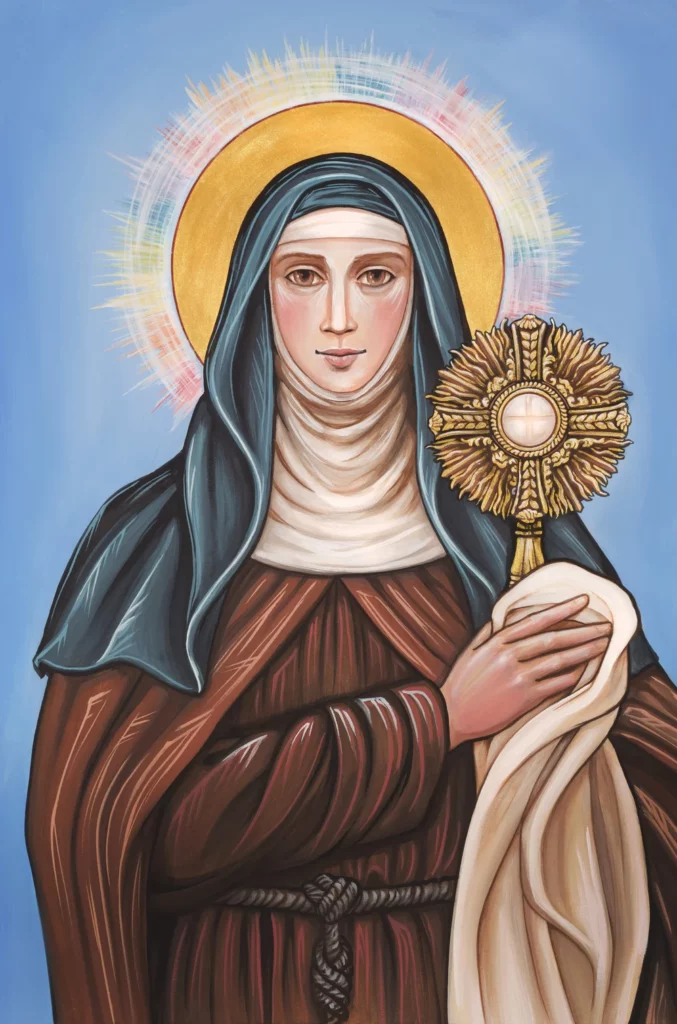
Today is the Feast of St. Clare of Assisi. St. Clare refused to marry at 15. She had been moved by the dynamic preaching of St. Francis. He would become her lifelong friend and spiritual guide.
At age 18, she ran away from home, and was met on the road by friars carrying torches, and in the little chapel called Portiuncula, she received a woolen habit, exchanged her jeweled belt for a rope, and cut off her long hair with Francis’ scissors. He placed her in a Benedictine convent.
Sixteen days later her sister Agnes joined her. Others came. They lived in great poverty and complete seclusion from the world. These poor ladies went barefoot, slept on the ground, ate no meat, and observed almost complete silence.
St. Clare founded the Poor Clares who live a cloistered, contemplative life centered on radical poverty, intense prayer, penance, and manual work. In their cloistered life, they intercede for the Church, for the world, and for each one of us. Through their prayers, sacrifices, and hidden lives of devotion, these nuns help to hold the world before God.
For the last 27 years of her life, St. Clare suffered with serious illness. However, her influence was so great that popes, cardinals, and bishops often came to consult her. Clare herself, though, never left the walls of San Damiano.
DAY SEVEN OF THE NOVENA IN PREPARATION FOR THE ASSUMPTION OF THE BLESSED VIRGIN MARY
Opening Prayer for each day:
Lord Jesus Christ, You have destroyed the power of death and given the hope of eternal life for body and soul. You granted your Mother a special place in your glory, and did not allow decay to touch her body. As we rejoice in the Assumption of Mary, grant us renewed confidence in the victory of life over death. Amen
Day 7

Mary, Queen of every heart, accept all that we are and bind us to Jesus with the bonds of love so that we may be yours forever and may be able to say in all truth: “I belong to Jesus through Mary”.
Our Mother, Assumed into Heaven and Queen of the Universe, ever-Virgin Mother of God, obtain for us what we ask, if it be for the glory of God and the good of our souls.
(Mention your request)
Our Mother, assumed into Heaven, we love you. Give us a greater love for Jesus and for you.
O Queen Assumed into Heaven, pray for us. Amen
QUESTIONS FOR THE HEART
When the lamp of faith begins to flicker and seems close to going out, what do you do? The choice is yours: to be prepared, to fight for grace and keep the flame alive, or to leave wondering why your lamp did not stay lit.
St. Paul expressed an intense longing to see the Church remain pure and undefiled. Today, as the Church passes through a time of confusion and ambiguity, we are called to ask ourselves a sobering question: Has Christ’s Bride remained pure and undefiled, and what can I do to help ensure that the Church retains what was given to her by Christ?
St Clare recognized truth when she heard St. Francis of Assisi preach and she gave up all to follow his path of righteousness, simplicity, and humility. Do we hear the truth and turn towards it knowing that it might require a change from within?
A LITTLE POEM FOR THE JOURNEY
The Bridegroom may tarry, the long night may fall,
Yet blessed are those who keep watch through it all
With lamps still burning and vessels supplied,
They wait through the darkness, prepared for the cry.
And Clare, when the enemy came to her door,
Raised Christ in the Host – and feared them no more.
So keep your lamp burning, though darkness appears,
For Christ is still coming – and Christ conquers fear.
Keep Your Lamp Burning!
Commemoration of Saints Tiburtius and Susanna, Martyrs
“Ephpheta,” Be Thou Opened
August 11, 2026
TODAY’S GOSPEL: Mark 7:31-37
EPISTLE: 1 Corinthians 15:1-10
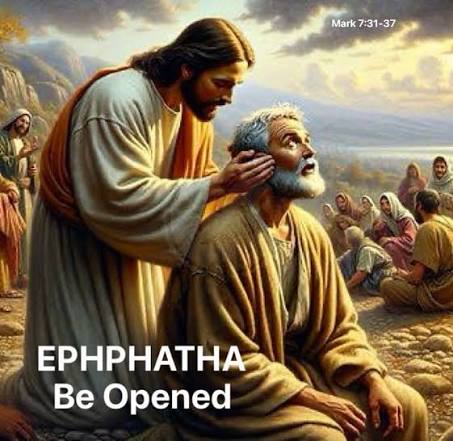
We continue today in the Eleventh Week after Pentecost, that long season in which the Church turns our attention to the life of grace within the soul. Pentecost has passed, the Holy Ghost has descended, and now the liturgy teaches us how the Christian is to live the life that has been given to him.
Today’s Gospel takes us into the country around the Sea of Galilee, where a man who is deaf and has difficulty speaking is brought to Our Lord. Those who bring him ask Jesus to lay His hand upon him.
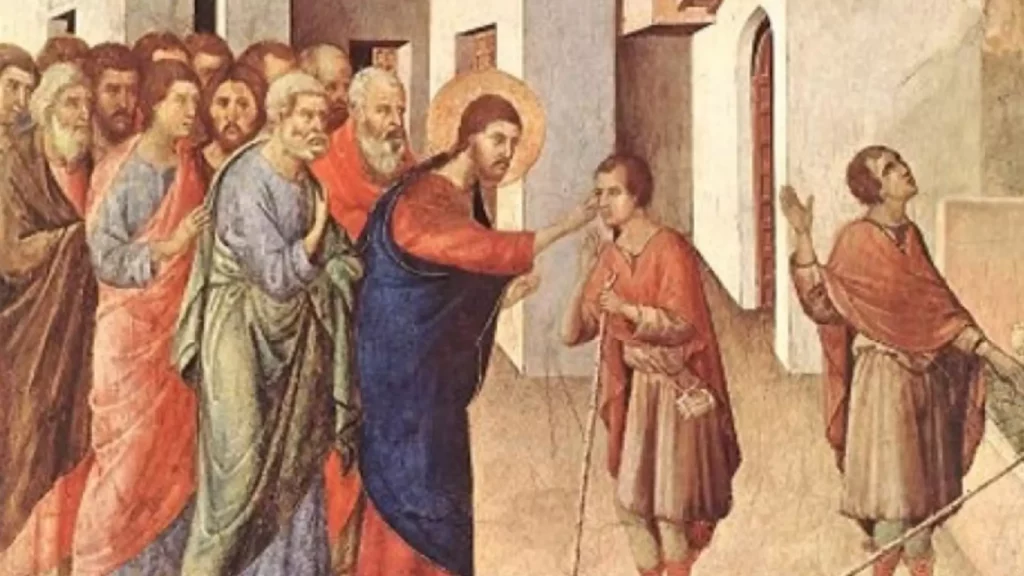
Our Lord takes the man apart from the multitude. He puts His fingers into his ears, touches his tongue, looks up to Heaven, and says: “Ephpheta, which is, Be thou opened” (Mark 7:34). Immediately, the man can hear and speak.
The Church has treasured this particular miracle so deeply that the word “Ephpheta” entered into the ancient rites surrounding Baptism. The physical healing in the Gospel points toward something greater: through grace, man is given ears capable of hearing the things of God and a tongue capable of professing the Faith.
That fits beautifully within the season after Pentecost. The Holy Ghost has been given to the Church. Now the Christian must learn to hear, to believe, and to profess what he has received.
And that brings us directly to today’s Epistle. St. Paul begins by reminding the Corinthians of the Gospel he had already preached to them: “For I delivered unto you first of all, which I also received” (I Corinthians 15:3). Those few words describe something fundamental about the life of the Church. St. Paul received, and then he handed on.
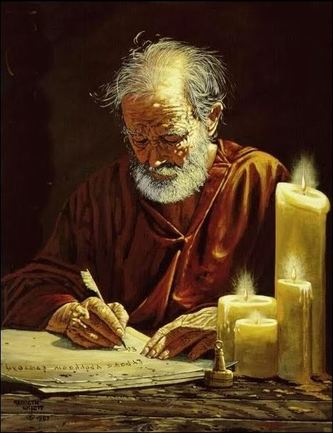
What did he hand on? That Christ died for our sins according to the Scriptures, that He was buried, that He rose again on the third day, and that He appeared to Peter, to the Apostles, and to many other witnesses. This is the apostolic Faith.
Christianity did not begin as an idea developed by later generations. The Apostles witnessed the risen Christ, proclaimed what they had seen and received, and handed that Faith on to the Church. At the center of everything is the Resurrection.
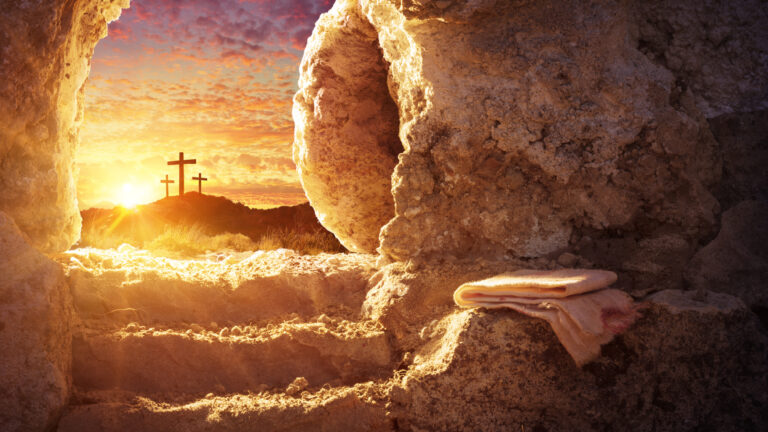
Without the Resurrection, Calvary would appear to be a defeat. With the Resurrection, the Cross becomes the instrument of victory. Death itself has been conquered.
St. Paul then turns briefly to his own place among the Apostles. He remembers that he had once persecuted the Church and calls himself “the least of the apostles.” Yet he adds: “But by the grace of God, I am what I am: and his grace in me hath not been void” (I Corinthians 15:10).
Here again we hear one of the great themes of the season after Pentecost: grace at work in the human soul. The same grace that opened the ears of the deaf man transformed Saul the persecutor into Paul the Apostle.
Today the Church also places before us Saints Tiburtius and Susanna, martyrs of the early Roman Church.
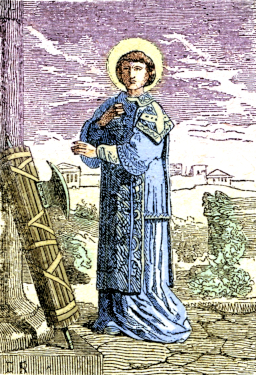
St. Tiburtius is remembered in the ancient tradition of the Roman martyrs during the persecution under Diocletian. Refusing to abandon Christ and sacrifice to the pagan gods, he remained steadfast in the Faith and was put to death.
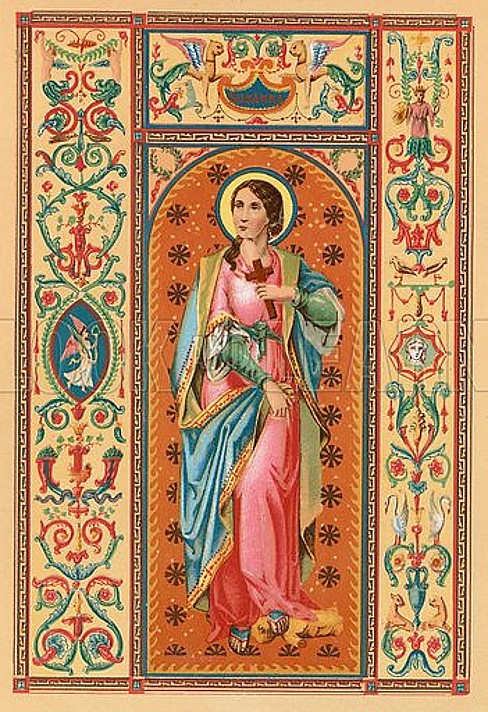
St. Susanna, virgin and martyr, likewise belongs to the ancient Roman tradition. She is remembered for refusing to renounce her consecration to Christ and for suffering martyrdom rather than abandon the Faith.
Their commemoration may be brief in today’s liturgy, but that itself tells us something about the rhythm of the Church’s year. Day after day, the names of the martyrs appear. Some are known throughout the world. Others are remembered almost quietly, sometimes with only a commemoration at Mass. Yet the Church refuses to forget them.
Their names remain woven into her calendar because the Faith St. Paul tells us was received and handed on was preserved at tremendous cost. The martyrs received it. They believed it. They refused to surrender it. And they handed it on, sometimes sealed with their own blood.
There is therefore a beautiful unity in today’s liturgy. In the Gospel, Christ opens the ears of a man so that he can hear. In the Epistle, St. Paul tells us what the Church has heard and received: Christ died, Christ was buried, and Christ rose again. And in Saints Tiburtius and Susanna, we see Christians who held fast to that Faith even unto death.
We are also drawing very near now to the Feast of the Assumption of the Blessed Virgin Mary. Today is Day Six of our Novena, and only a few days remain before the Church celebrates Mary’s being taken body and soul into heavenly glory. That approaching feast belongs beautifully beside St. Paul’s proclamation of the Resurrection.
The Assumption points us toward the destiny promised to the redeemed. Christ’s Resurrection is the victory; Mary’s Assumption shows us, in a singular way, the glory toward which that victory leads. Christ has risen. The martyrs believed Him. And Our Lady, assumed into Heaven, reminds us of the glory that awaits those who remain faithful to Him.
“He hath done all things well” (Mark 7:37).
DAY SIX OF THE NOVENA IN PREPARATION FOR THE ASSUMPTION OF THE BLESSED VIRGIN MARY
Opening Prayer for each day:
Lord Jesus Christ, You have destroyed the power of death and given the hope of eternal life for body and soul. You granted your Mother a special place in your glory, and did not allow decay to touch her body. As we rejoice in the Assumption of Mary, grant us renewed confidence in the victory of life over death. Amen
Day 6
Mary, our dear Mother and mighty Queen, take and receive our poor hearts with all their freedom and desires, all the love and all the virtues and graces with which they may be adorned.
All we are and all we might be, all we have and hold in the order of nature as well as of grace, we have received from God through your loving intercession.
Help us dear Mother to surrender to God all that we have, including our petitions.
(Mention your request)
Our Lady and Queen, into your gentle hands, we entrust all, that it may be returned to its noble origin.
O Queen Assumed into Heaven, pray for us. Amen
QUESTIONS FOR THE HEART
St. Paul says, “I delivered unto you … which I also received.” Do I recognize the Catholic Faith as a precious inheritance entrusted to me – something I am called not only to believe, but to hand on faithfully?
The Church continues to remember martyrs such as Tiburtius and Susanna many centuries after their deaths. What does their place in the liturgical calendar teach me about what the Church considers truly important?
As we approach the Assumption, do I live with an awareness that Heaven – not this world – is the final destination of the Christian life?
A LITTLE POEM FOR THE JOURNEY
“Be opened,” spoke Christ beside Galilee,
And ears long closed were suddenly free.
Paul handed onward the Faith he received,
The risen Lord whom the Church has believed.
Tiburtius, Susanna – their names still remain,
Witnesses faithful through suffering and pain.
The centuries pass, yet the Church does not cease,
To honor her children who rest now in peace.
And soon comes the feast when Our Lady we see,
Assumed into Heaven, from death ever free.
The calendar carries us onward until
We learn with the saints to trust God’s holy will.
“Ephpheta, which is, Be thou opened.” (Mark 7:34)
Feast of St. Lawrence, Deacon and Martyr
Unless the Grain of Wheat Fall
August 10, 2026
TODAY’S GOSPEL: John 12:24-26
EPISTLE: 2 Corinthians 9:6-10

“Amen, amen I say to you, unless the grain of wheat falling into the ground die, itself remaineth alone. But if it die, it bringeth forth much fruit” (John 12:24).
Today’s Gospel gives us the familiar image of the grain of wheat. A seed kept safely to itself remains only a seed. But when it falls into the earth and is buried, something remarkable happens. What seems to disappear becomes the beginning of new life.
Our Lord is speaking first of His own Passion and death. He will be the grain of wheat that falls into the earth. On Calvary, He will give Himself completely, and from that sacrifice will come the fruits of redemption and eternal life.
But Christ also applies these words to those who would follow Him: “He that loveth his life shall lose it; and he that hateth his life in this world, keepeth it unto life eternal” (John 12:25).
Our Lord is not asking us to despise the life God has given us or the good things He has created. He is teaching us that nothing in this world can be loved above God. There are things within each of us that must be surrendered if we are going to bear fruit: pride, resentment, selfishness, unhealthy attachments, the desire always to have our own way.
Today’s Epistle continues almost the same image. St. Paul writes: “He who soweth sparingly, shall also reap sparingly: and he who soweth in blessings, shall also reap blessings” (2 Corinthians 9:6). St. Paul also reminds us that “God loveth a cheerful giver” (2 Corinthians 9:7). Generosity is about much more than money. We can give our time, attention, forgiveness, encouragement, and compassion. Sometimes the greatest thing we can give another person costs nothing except a little of ourselves.
And God Himself provides the seed. St. Paul speaks of the One “who ministereth seed to the sower” and who will “multiply your seed, and increase the growth of the fruits of your justice” (2 Corinthians 9:10). Grace comes first. God gives, we respond, and then He can multiply what we have offered far beyond anything we could accomplish ourselves.
The life of St. Lawrence, whose feast we celebrate today, gives flesh to both the Gospel and the Epistle. Lawrence was chief among the seven deacons who served the Church of Rome in the middle of the third century. As archdeacon, he held a position of great trust. He assisted in the sacred liturgy, had responsibility for the goods of the Church, and distributed alms among the poor. He was entrusted with both the treasures of the altar and the treasures of charity.
Lawrence served closely under Pope St. Sixtus II, who recognized his abilities and placed great confidence in him. Ancient tradition describes a deep spiritual bond between the pope and his deacon. During the persecution of Emperor Valerian, Sixtus was arrested and condemned to death. Tradition preserves a moving account of Lawrence following after him, grieving that his spiritual father was going to martyrdom without him.
“Father, where are you going without your son? Where are you hastening, O priest, without your deacon? “Lawrence reminded Sixtus that he had faithfully assisted him at the altar and had been entrusted with distributing the Blood of the Lord. Why, then, should his bishop go to sacrifice without his deacon? Sixtus assured him that he had not been abandoned. His own martyrdom would soon follow. Only days later, Lawrence was arrested.
The Roman authorities knew that Lawrence administered the goods of the Church, and they demanded that he surrender her treasure. Lawrence asked for time to gather them. Then he gathered the poor, the sick, the widows, and those who depended upon the charity of the Church and presented them as the true treasures of the Church. It is one of the most beautiful images preserved in the story of St. Lawrence. Rome looked for gold and silver. Lawrence pointed to people.
He understood that the Church’s true riches were not measured by what she possessed but by the souls Christ had entrusted to her care. Those whom the world regarded as poor, weak, or insignificant were precious in the sight of God.
Lawrence was condemned to a particularly cruel death. Yet what Christian memory has preserved most strongly is not simply his suffering, but the remarkable courage and even joy with which he faced it. Lawrence is remembered as praying for Rome as he died. The city that was killing him was the city for whose conversion he prayed.
He could only offer the seed. “But if it die, it bringeth forth much fruit.”
And today, as we continue with Day Five of our Novena in preparation for the Assumption of the Blessed Virgin Mary, Our Lady gives us another example of a life completely surrendered to God. Mary’s fiat at Nazareth – “Behold the handmaid of the Lord; be it done to me according to thy word” – was the beginning of a lifetime of saying yes. That yes eventually brought her to Calvary, where she stood beneath the Cross and watched her Son become the grain of wheat that fell into the earth for the salvation of the world. But Calvary was not the end.
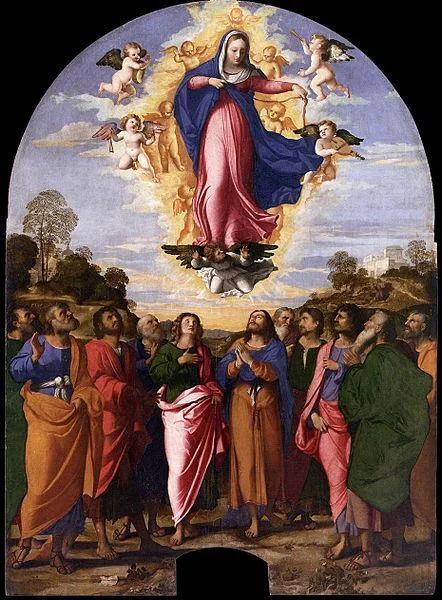
The Assumption reminds us where a life surrendered to God ultimately leads. Mary, who gave herself completely to His will on earth, was taken body and soul into the glory of Heaven.
Today’s Gospel therefore carries both a challenge and a promise. The grain must fall. But it does not fall in vain. Whatever God asks us to surrender – whether something great or one of the many small sacrifices hidden within an ordinary life – we can place it into His hands and trust Him with the fruit.
DAY FIVE OF THE NOVENA IN PREPARATION FOR THE ASSUMPTION OF THE BLESSED VIRGIN MARY
Opening Prayer for each day:
Lord Jesus Christ, You have destroyed the power of death and given the hope of eternal life for body and soul. You granted your Mother a special place in your glory, and did not allow decay to touch her body. As we rejoice in the Assumption of Mary, grant us renewed confidence in the victory of life over death. Amen
Day 5

O merciful and loving Mother, may your glorious beauty fill our hearts with a distaste for earthly things and an ardent longing for the joys of Heaven.
May your merciful eyes glance down upon our struggles and our weakness in this vale of tears.
Hear then loving Mother, our request and plead to Jesus for us.
(Mention your request)
Crown us with the pure robe of innocence and grace here, and with immortality and glory in Heaven.
O Queen Assumed into Heaven, pray for us. Amen.
QUESTIONS FOR THE HEART
Our Lord tells us that the grain of wheat must fall into the earth before it can bear fruit. What might God be asking me to surrender so that something better can grow?
St. Paul reminds us that we are always sowing seeds by the way we live. What am I sowing today in the lives of the people closest to me?
St. Lawrence looked at the poor and forgotten and called them the treasures of the Church. Do I recognize Christ in those who have little to offer me in return?
A LITTLE POEM FOR THE JOURNEY
Poured out from the Cross, His amazing grace,
In the eyes of the poor, I see His Face,
The treasures of the Church shine from the past,
Those who suffered most, the lowly and outcast.
The world sought treasure, wealth, and gold,
Lawrence saw riches in young and old,
The poor, the weak, the cast aside –
The souls for whom our Savior died.
So let me sow while I am here,
With open hands and heart sincere,
For every seed entrusted above,
May bear eternal fruit through love.
“ But if it die, it bringeth forth much fruit.” (John 12:24)
Vigil of St. Lawrence, Deacon and Martyr
Commemoration of St. Romanus, Martyr
August 9, 2026
TODAY’S GOSPEL: Mark 7:31-37
EPISTLE: 1 Corinthians 15:1-10
“And looking up to heaven, He groaned, and said to him: Ephpheta, which is, Be thou opened.” (Mark 7:34)
Today’s Gospel brings us one of the most vivid healing miracles of Our Lord. A man who is deaf and has difficulty speaking is brought to Jesus, and the people beg Him to lay His hand upon him.
But Jesus does something very personal. He takes the man aside from the multitude. He touches his ears and his tongue, looks up to Heaven, and says one word: “Ephpheta” – “Be thou opened.” Immediately the man can hear, and his speech is restored.
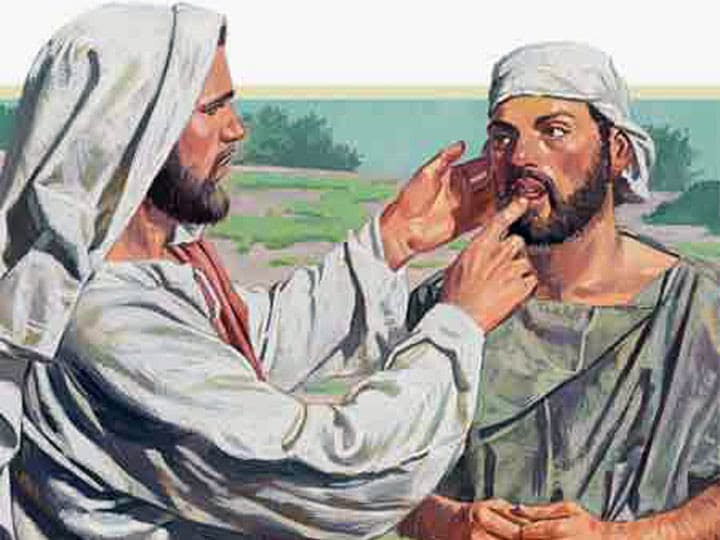
There is a tenderness in this miracle that is easy to overlook. Christ does not treat the man as part of a crowd. He takes him aside and meets him personally in his need. Throughout the Gospels, Jesus encounters people in this way – not as problems to be solved, but as individual souls known and loved by God.
The physical healing also carries a spiritual meaning the Church has long recognized. At Baptism, the ancient Ephpheta rite recalls this Gospel as the priest touches the ears and mouth, signifying that the Christian must have ears open to hear the word of God and a mouth ready to profess the Faith.
We too can become spiritually deaf. The voice of God competes with the noise of the world, our own worries, distractions, and opinions. Today’s Gospel is a quiet invitation to allow Christ to open again whatever has become closed within us: our ears to His word, our hearts to grace, and our lips to speak what is good and true.
The people who witnessed the miracle were astonished and said, “He hath done all things well: He hath made both the deaf to hear, and the dumb to speak.” (Mark 7:37)
These words echo the goodness of God. What sin has wounded, Christ has come to restore. The miracle points beyond the healing of one man toward the greater work of redemption.
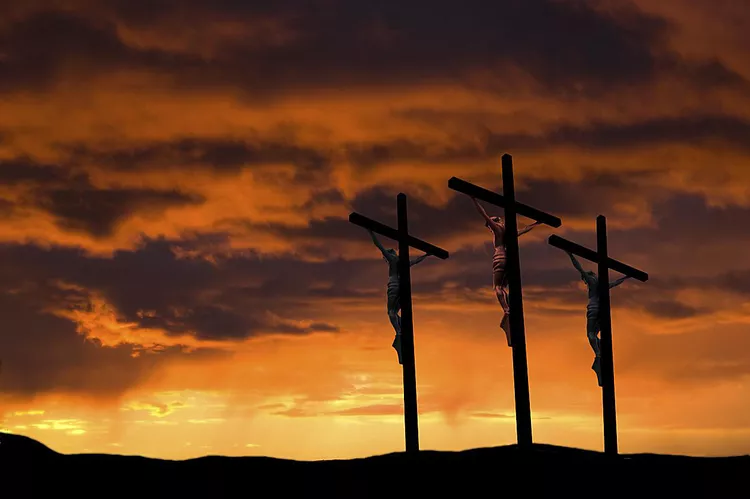
Today’s Epistle brings us directly to that mystery. St. Paul reminds the Corinthians of the Gospel he had preached to them: Christ died for our sins, was buried, rose again on the third day, and appeared to His disciples.
Paul then speaks very personally about his own place among the Apostles. He remembers that he once persecuted the Church and considers himself unworthy to be called an Apostle. Yet he adds one of the most beautiful statements in his letters: “But by the grace of God, I am what I am: and His grace in me hath not been void.” (I Corinthians 15:10)
Grace had changed Paul. The man who once persecuted Christians became one of Christianity’s greatest Apostles. His past was real, but it did not have the final word. God’s grace did. There is a beautiful connection between the Epistle and Gospel. Christ opens the ears and tongue of the deaf man; grace opens the heart and life of Paul. Both remind us that God is able to restore what seems beyond our own ability to repair.
August 9 is also traditionally the Vigil of St. Lawrence, whose feast the Church celebrates tomorrow. Lawrence was one of the seven deacons of Rome serving under Pope St. Sixtus II during the persecution of Emperor Valerian in the third century.
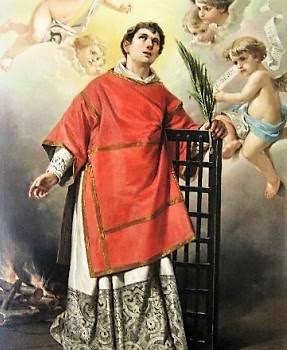
As a deacon, Lawrence had particular responsibility for the material goods of the Church and for distributing assistance to the poor. Ancient Christian tradition tells us that when Roman authorities demanded the treasures of the Church, Lawrence presented the poor and needy whom the Church cared for as her true treasures.
It is a beautiful expression of the Christian understanding of wealth. The Church certainly possessed material goods, but Lawrence understood that these existed for the service of God and souls. The poor whom the world overlooked were precious in the sight of Christ.
Lawrence himself would soon be called to live the words of today’s Gospel. He could preserve neither position nor safety and remain faithful to Christ. He chose Christ, and on August 10 he received the crown of martyrdom. His life gives a concrete meaning to Our Lord’s words: “He that shall lose his life for Me, shall find it.”
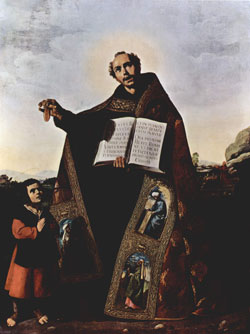
The Church also commemorates St. Romanus, whose story is closely connected with St. Lawrence. According to Christian tradition, Romanus was a Roman soldier who witnessed the constancy of Lawrence during his sufferings. Moved by what he saw, he professed the Christian Faith and received Baptism. His conversion quickly cost him his earthly life, and he too was martyred.
There is something especially beautiful in remembering Lawrence and Romanus together. The courage of one Christian helped awaken faith in another. Lawrence could not have known all the fruit his fidelity would produce. Neither do we. Sometimes the most powerful witness we give to Christ is simply remaining faithful when fidelity costs something.
And today, as we continue with Day Four of our Novena in preparation for the Assumption of the Blessed Virgin Mary, the Church turns our eyes toward the destiny for which every human soul was created.
Our Lady’s life also knew sacrifice. Her fiat at Nazareth was lived out through years of hidden fidelity and ultimately beneath the Cross of her Son. As we prepare for the Assumption, we ask her to help us hear God more clearly and respond more faithfully, so that our lives too may remain open to His grace.
Perhaps the simplest prayer we can carry from today’s liturgy is the single word spoken by Christ: “Ephpheta.” Lord, be pleased to open what has become closed in me.
DAY FOUR OF THE NOVENA IN PREPARATION FOR THE ASSUMPTION OF THE BLESSED VIRGIN MARY
Opening Prayer for each day:
Lord Jesus Christ, You have destroyed the power of death and given the hope of eternal life for body and soul. You granted your Mother a special place in your glory, and did not allow decay to touch her body. As we rejoice in the Assumption of Mary, grant us renewed confidence in the victory of life over death. Amen
Day 4

O Dearest Mother Mary, Assumed into Heaven, God placed you at His right hand that you may intercede for his little ones as the Mother of God.
In the midst of all the saints you stand as their Queen and ours — dearer to the Heart of God than any creation. You pray for your children and grant us every grace won by our loving Savior on the Cross.
Please intercede for us in our needs and ask Jesus to grant our request if it be for the good of our souls.
(Mention your request)
O Queen Assumed into Heaven, pray for us. Amen
QUESTIONS FOR THE HEART
When Christ says, “Take up your cross, and follow Me,” what cross has God permitted in my life that I need to carry with greater trust?
Our Lord asks what it would profit us to gain the whole world and lose our soul. Is my life presently ordered toward the things that will matter in eternity?
St. Romanus was moved toward Christ by witnessing the fidelity of St. Lawrence. What does the way I live my Faith communicate to the people who are watching me?
A LITTLE POEM FOR THE JOURNEY
The road to Heaven bears a cross,
Yet nothing borne for Christ is loss,
The treasures of this world depart,
But grace remains within the heart.
Like Lawrence, faithful to the end,
May we on Christ alone depend,
With Mary pointing us above,
May every cross lead home to Love.
“For what doth it profit a man, if he gain the whole world, and suffer the loss of his own soul?” (Matthew 16:26)
The Feast of St. John Mary Vianney, Confessor
Commemoration of Sts. Cyriacus, Largus, and Smaragdus, Martyrs
August 8, 2026
TODAY’S GOSPEL: Luke 12:35-40
EPISTLE: Ecclesiasticus (Sirach) 31:8-11
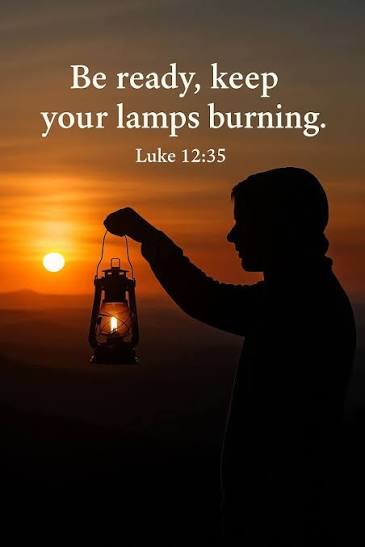
“Let your loins be girt, and lamps burning in your hands.” (Luke 12:35)
There is an urgency in Our Lord’s words today. Christ speaks of servants waiting through the night for their master to return. They do not know when he will come. Their task is simply to remain faithful, awake, and ready.
“Blessed are those servants, whom the Lord when he cometh, shall find watching.” (Luke 12:37)

There is a great temptation in the spiritual life to believe that there will always be more time. More time to pray. More time to change. More time to forgive. More time to make a good Confession. More time to surrender the sin we have been excusing. More time to become the person God is asking us to become.
But Our Lord tells us plainly: “Be you then also ready: for at what hour you think not, the Son of man will come.” (Luke 12:40)
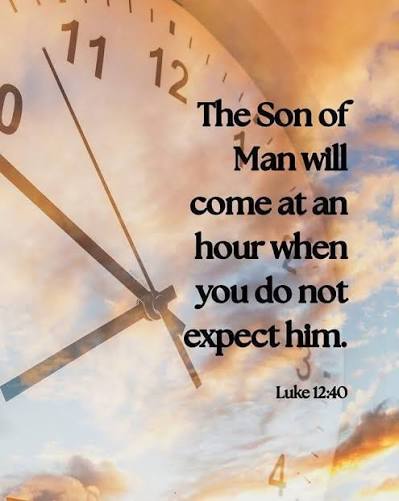
The Christian life cannot be lived someday. It must be lived today. Keep your lamp burning. That lamp is the life of grace within the soul. It is faith guarded when the world mocks it. It is prayer continued when prayer feels dry. It is fidelity when no one is watching. It is repentance when we have fallen. It is charity when love costs something. It is the determination, renewed every morning, to belong to Jesus Christ.
And perhaps few saints embody today’s Gospel more beautifully than St. John Mary Vianney, the humble Cure of Ars.
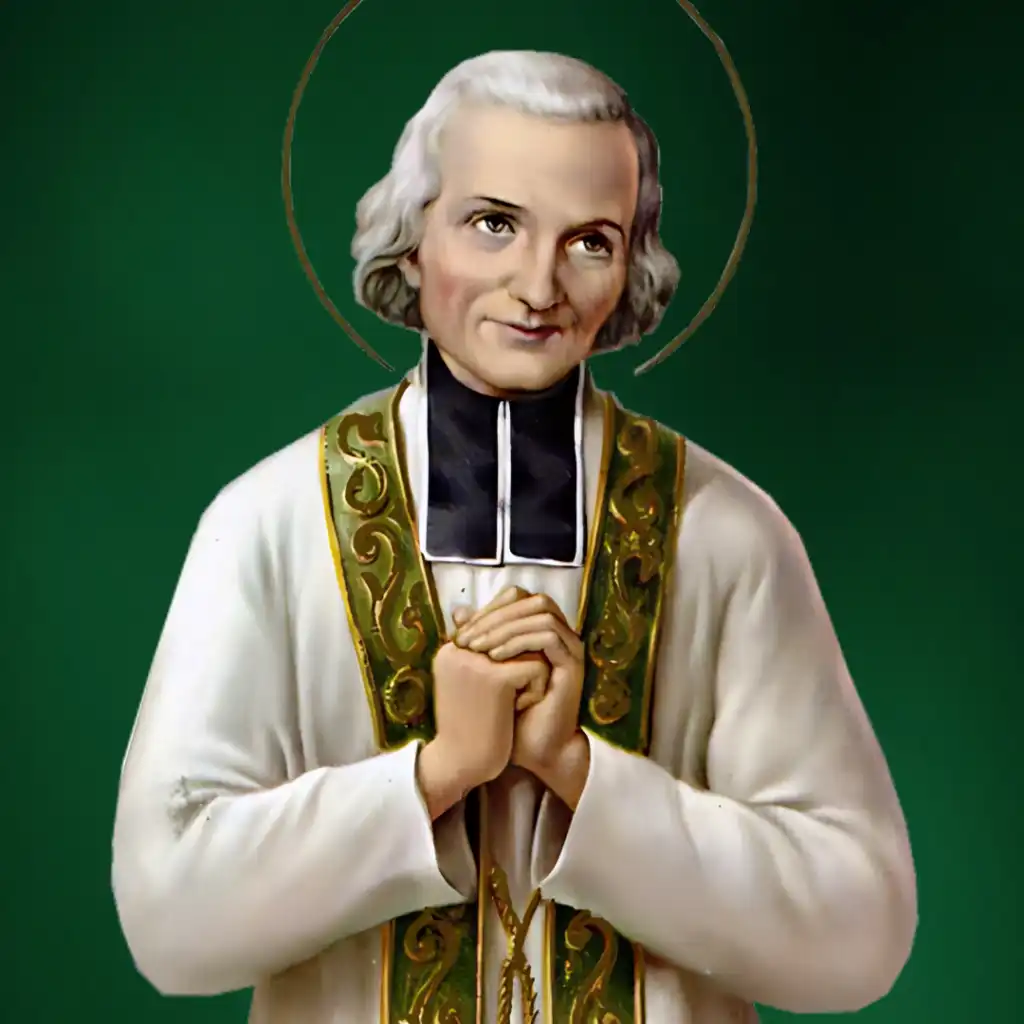
Born in France in 1786, St. John Vianney grew up amid the turmoil of the French Revolution, when faithful priests sometimes risked their lives simply to offer Mass and bring the Sacraments to the people. As a boy, he learned that the Catholic Faith was something worth suffering for.
His path to the priesthood was difficult. His early education had been interrupted, and he struggled greatly with his studies, particularly Latin. Yet what he lacked in scholarly ability he possessed abundantly in love for God, and perseverance. He was ordained in 1815 and eventually sent to the little village of Ars, where years of upheaval had left many people indifferent to the Faith.
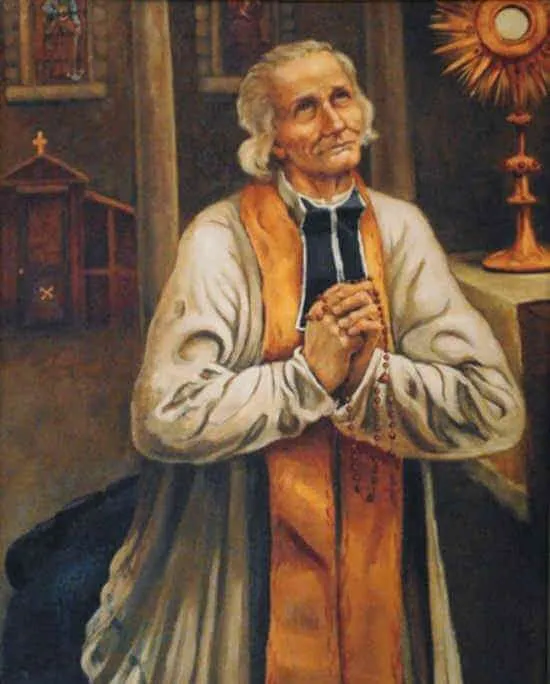
There was nothing remarkable about his assignment – only a small parish and the souls God had entrusted to him. So he began where every true renewal begins: on his knees. He spent long hours before the tabernacle, offered penance for his people, taught the Faith, cared for the poor, and patiently called sinners back to God. Slowly Ars began to change.
Then people began coming from far beyond the village, especially to seek him in Confession. Eventually thousands traveled to Ars each year, and St. John Vianney spent extraordinary hours in the confessional, sometimes as many as sixteen hours a day.
Why?
Because he believed eternity was real. He believed sin was real. He believed mercy was real. And he believed every soul was worth fighting for. His life became a living fulfillment of Our Lord’s command: “Let your loins be girt, and lamps burning in your hands.” St. John Vianney kept his lamp burning.
And perhaps this is what his life says most powerfully to us today. We too live in a time when faith can grow cold, sin is easily excused, and the troubles of the world – and even troubles within the Church – can leave us discouraged. But St. John Vianney did not spend his life merely lamenting the darkness around him. He became a light within it. That is something every one of us can do.
We may not be called to change a nation. God may simply ask us to be faithful in the little corner He has given us – to pray for our family, teach a child the Faith, encourage someone to return to Confession, care for someone who is suffering, speak the truth when it would be easier to remain silent, or refuse to give up on a soul who has wandered away. Soul by soul. Prayer by prayer. Day by day.
And St. John Vianney’s great ministry in the confessional reminds us of something essential about today’s Gospel: being ready for Christ does not mean that we have never fallen. It means that when we fall, we return to Him. The enemy whispers, “You have failed again. What is the use?” Christ says, “Come back.”
In Confession, the lamp that has grown dim – or even gone out through mortal sin – can burn again with sanctifying grace. There shame meets mercy, burdens are laid down, and the wandering soul is reconciled to God. St. John Vianney spent so much of his life in the confessional because he knew what was taking place there: Souls were being prepared for eternity.
Today’s Epistle gives us another side of this same readiness. Ecclesiasticus praises the man who could have placed his trust in riches but did not: “Blessed is the rich man that is found without blemish: and that hath not gone after gold, nor put his trust in money nor in treasures.” The question is not simply what we possess, but what possessed our hearts. We cannot prepare for Heaven while living as though this earth were our permanent home.
St. John Vianney possessed little by worldly standards, yet he possessed the treasure that matters: friendship with Jesus Christ. And because St. John Vianney is the patron saint of parish priests, today should also be a day of particular prayer for the priesthood.
Our priests needs our prayers. Pray for holy priests and courageous priests. Pray for priests who are tired or discouraged, for those undergoing temptation, and for those who have lost some of the fervor with which they began. Pray that God will raise up priests with the heart of the Cure of Ars – men who love the Holy Eucharist, love the truth, love Our Blessed Mother, and understand the value of a single soul.
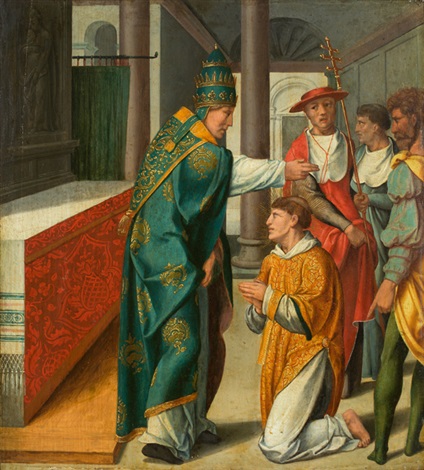
Today the Church also commemorates Sts. Cyriacus, Largus, and Smaragdus, martyrs of the early Church. When the hour came in which fidelity to Christ demanded everything, they were prepared to give everything. Their lamps were burning.
And as we enter Day Three of our Novena in preparation for the glorious Assumption of the Blessed Virgin Mary, we turn toward the woman whose lamp never ceased to burn. From Nazareth to Bethlehem, from Egypt to Calvary, Our Lady remained attentive to God. When she gave her fiat, she did not know every road that obedience would require her to walk. She simply remained faithful upon each one. Her life was one long readiness for God.
The Assumption reminds us what all this watching and preparation is for. We are not keeping vigil for nothing. We are waiting for Someone. We are going somewhere. Heaven is real. Eternity is real. And every ordinary day of our lives is carrying us toward it. So today, through the intercession of St. John Mary Vianney and Our Blessed Mother, let us ask ourselves: “If Christ came today, would He find my lamp burning?”
If the answer troubles us, there is no reason for despair. There is still Confession. There is still the Holy Eucharist. There is still prayer. There is still mercy. There is still time to begin again. But begin today. “Blessed are those servants, whom the Lord when He cometh, shall find watching.”
DAY THREE OF THE NOVENA IN PREPARATION FOR THE ASSUMPTION OF THE BLESSED VIRGIN MARY
Opening Prayer for each day:
Lord Jesus Christ, You have destroyed the power of death and given the hope of eternal life for body and soul. You granted your Mother a special place in your glory, and did not allow decay to touch her body. As we rejoice in the Assumption of Mary, grant us renewed confidence in the victory of life over death. Amen
Day 3

O Mother, Assumed into Heaven, because you shared in all the mysteries of our Redemption here below, Jesus has crowned you with glory.
With your most glorious and powerful intercession, help us O loving Mother and present to Jesus our request.
(Mention your request)
O Queen assumed into Heaven, pray for us. Amen
QUESTIONS FOR THE HEART
If Our Lord came for me today, is there anything in my life I would desperately wish I had changed, confessed, forgiven, or made right?
Where has my spiritual lamp begun to grow dim? Is it in my prayer life, Confession, charity toward others, fidelity to my duties, or courage in living the Faith?
St. John Vianney changed his little corner of France by becoming holy exactly where God placed him. What is one soul, one relationship, or one corner of my own life where God is asking me to carry His light?
A LITTLE POEM FOR THE JOURNEY
Keep the lamp of faith alight,
Though long the road and dark the night,
One prayer, one soul, one duty done,
May lead another toward the Son.
When we have fallen, rise once more,
His mercy waits with grace in store,
With Mary watching through the night,
Lord, find our lamps still burning bright.
“Let your loins be girt, and lamps burning in your hands.” (Luke 12:35)
The Feast of St. Cajetan, Confessor
Commemoration of St. Donatus, Bishop and Martyr
First Friday of the Month
August 7, 2026
TODAY’S GOSPEL: Matthew 6:24-33
EPISTLE: Ecclesiasticus (Sirach) 31:8-11
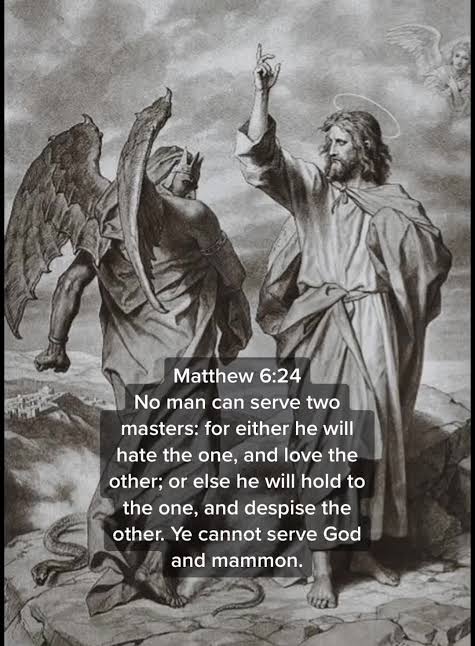
Today Our Lord speaks words that strike directly at one of the deepest struggles of the human heart: whom will we trust?
“No man can serve two masters.” We cannot belong completely to God while allowing our hearts to be ruled by the things of this world. Our Lord does not merely warn us against riches; He warns us against the divided heart – the heart that professes faith in God while still looking to possessions, security, success, human approval, or worldly power as though these things could ultimately save us.
Christ therefore tells His disciples, “Be not solicitous for your life, what you shall eat, nor for your body, what you shall put on.” These words do not call us to irresponsibility. They call us to confidence in Divine Providence.
Our Lord points to the birds of the air and the lilies of the field. They neither sow nor reap, and yet Our Heavenly Father provides for them. If God clothes the grass of the field with such beauty and feeds the creatures He has made, how much more will He care for His children?
Then comes the great command around which the Christian life must be ordered: “Seek ye therefore first the kingdom of God, and His justice, and all these things shall be added unto you.”
FIRST.
That little word changes everything.
God does not ask simply to be included somewhere among the many concerns of our lives. He must be first. Before our ambitions. Before our possessions. Before our plans. Before our fears. Before our desire for comfort or security. The Kingdom of God must become the organizing principle of everything else.
And this is precisely what we see in the life of St. Cajetan.
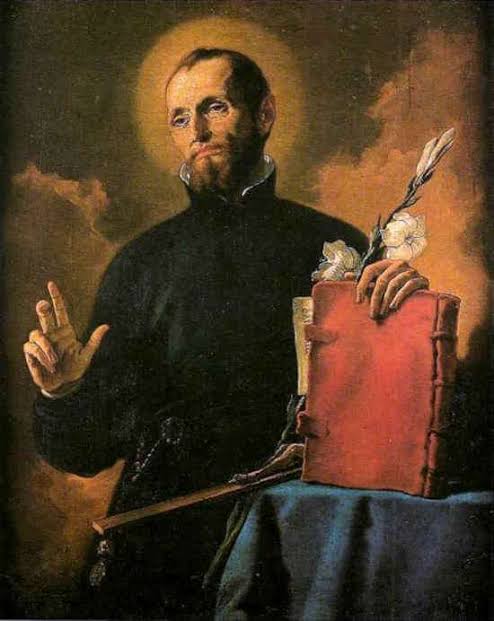
Born into a noble family in Vicenza in 1480, Cajetan possessed education, position, and the possibility of a comfortable and distinguished life. Yet his heart increasingly belonged to Christ, and he was ordained to the priesthood. When he was 42, he founded a hospital for incurables at Venice. At Vicenza, he joined a religious community that consisted only of men of the lowest stations of life – and was roundly censured by his friends. He sought out the sick and poor of the town and served them.
He devoted himself to prayer, works of mercy, care for the sick and poor, and especially to the renewal of the clergy at a time when corruption and worldliness had wounded the life of the Church.
St. Cajetan understood something desperately needed in every age: the Church is renewed through holiness. He did not respond to the disorders of his time by abandoning the Church. He sought instead to become a saint within her.
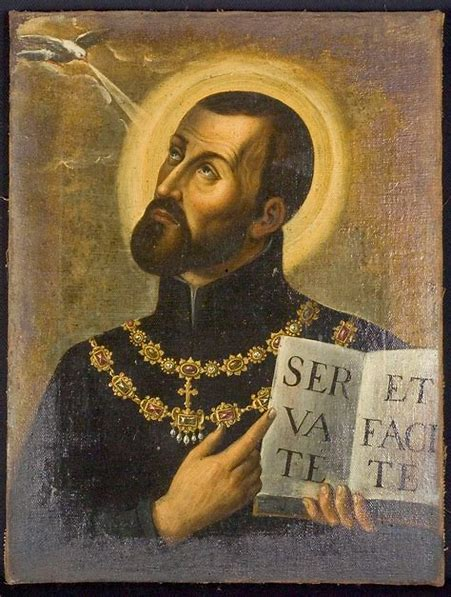
Together with companions, including the future Pope Paul IV, he founded the Congregation of Clerks Regular, commonly known as the Theatines. Their life was marked by prayer, apostolic zeal, and simplicity. They sought to live without the ordinary guarantees of earthly security, trusting that God would provide what was necessary for those who first sought His Kingdom.
For this reason, St. Cajetan became known particularly as a saint of Divine Providence. His life is almost a living commentary upon today’s Gospel.
Do not be anxious. Do not make an idol of earthly security. Do not imagine that everything depends upon you. Seek first the Kingdom of God. Trust your Father.
This same spirit appears in today’s Epistle from Ecclesiasticus, where Holy Scripture praises the man who could have pursued riches dishonestly but refused to do so: “Blessed is the rich man that is found without blemish: and that hath not gone after gold, nor put his trust in money nor in treasures.”
The question is not simply whether we possess earthly things. The deeper question is whether earthly things possess us. Where is our treasure? Where is our security? Where does the heart instinctively turn when everything around us begins to shake? St. Cajetan teaches us to answer: God alone.
How providential, then, that this feast falls this year upon the First Friday of the month, when Catholics throughout the world turn with particular love toward the Sacred Heart of Jesus.
The Sacred Heart is the perfect answer to the anxiety addressed in today’s Gospel. We worry because we forget how deeply we are loved. We become afraid because we begin to imagine that everything depends upon our own strength. We cling to earthly securities because we lose sight of the Heart that was pierced for us upon Calvary. But the Sacred Heart of Jesus calls us back to confidence.
Here is the Heart that loved mankind unto death. Here is the Heart that endured betrayal, abandonment, humiliation, scourging, thorns, nails, and the lance for our salvation. Can we truly believe that the Savior who gave His very life for us will suddenly cease to care for us? First Friday devotion therefore becomes a school of trust.
Sacred Heart of Jesus, I trust in Thee. When the future is uncertain – I trust in Thee. When earthly securities disappear – I trust in Thee. When prayer seems unanswered – I trust in Thee. When the Church herself passes through storms – I trust in Thee. When I cannot see the road ahead – I trust in Thee.
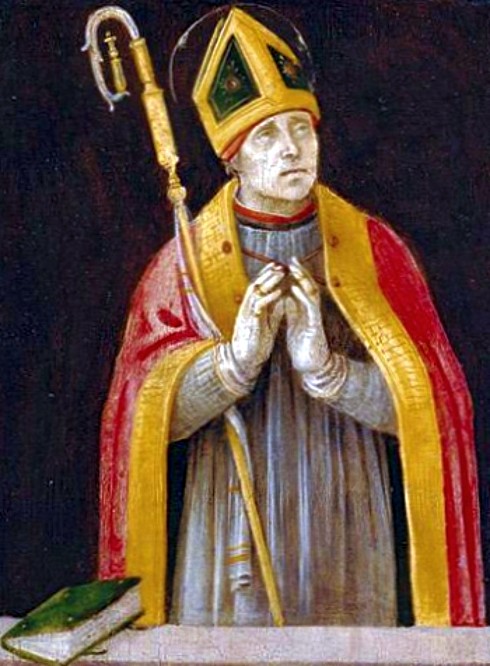
Today the Church also commemorates St. Donatus, Bishop and Martyr, traditionally honored as Bishop of Arezzo in Italy. Living during the persecutions of the fourth century, he faithfully shepherded the Christian people and ultimately gave his life rather than deny Christ.
And so St. Donatus joins St. Cajetan today in teaching us the same truth – both placed the Kingdom of God first – by two different paths. As we move into Day Two of our Novena in preparation for the glorious Assumption of the Blessed Virgin Mary, we find this same trust perfected in Our Lady. No human life was ever more completely surrendered to Divine Providence than hers. At Nazareth she said, “Behold the handmaid of the Lord; be it done to me according to thy word,” without knowing where that fiat would lead.
Her Assumption reminds us where a life of faithful surrender ultimately leads. The world tells us to grasp, accumulate, control, and secure everything for ourselves. Our Lady teaches us instead to open our hands to God.
DAY TWO OF THE NOVENA IN PREPARATION FOR THE ASSUMPTION OF THE BLESSED VIRGIN MARY
Opening Prayer for each day:
Lord Jesus Christ, You have destroyed the power of death and given the hope of eternal life for body and soul. You granted your Mother a special place in your glory, and did not allow decay to touch her body. As we rejoice in the Assumption of Mary, grant us renewed confidence in the victory of life over death. Amen
Day 2

Mary, Assumed into Heaven, we venerate you as the Queen of Heaven and earth.
As you tasted the bitterness of pain and sorrow with your Son on earth, you now enjoy eternal bliss with Him in Heaven.
Loving Queen, intercede for us in our needs.
(Mention your request)
We praise Jesus for giving us such a loving mother.
O Queen Assumed into Heaven, pray for us. Amen
QUESTIONS FOR THE HEART
What earthly security am I most tempted to trust more than I trust the Providence of God?
When uncertainty or fear enters my life, do I truly believe Our Lord’s words, “Seek ye first the kingdom of God, and His justice, and all these things shall be added unto you”?
On this First Friday, what burden, fear, attachment, or uncertainty do I need to place completely into the Sacred Heart of Jesus?
A LITTLE POEM FOR THE JOURNEY
Seek first His Kingdom, fear no more,
The Father knows what lies in store.
The birds are fed, the lilies dressed,
How much more us His Heart has blessed.
When earthly hopes and comforts flee,
O Sacred Heart, our refuge be.
With Mary teach our hearts to say,
“I trust in Thee” through every day.
“Seek ye therefore first the kingdom of God, and His justice, and all these things shall be added unto you.” (Matthew 6:33)
The Feast of the Transfiguration of Our Lord Jesus Christ
Commemoration of Sts. Sixtus II, Pope, and Felicissimus and Agapitus, Martyrs
August 6, 2026
TODAY’S GOSPEL: Matthew 17:1-9
EPISTLE: 2 Peter 1:16-19
The Feast of the Transfiguration stands among the Church’s most glorious celebrations because it reveals, if only for a brief moment, the hidden majesty of Jesus Christ. Upon Mount Thabor, before the eyes of Peter, James, and John, the veil of His humanity was drawn back, and the eternal glory of the Son of God shone forth. His face became radiant as the sun, His garments dazzling white, while Moses and Elias appeared speaking with Him concerning the Passion He was soon to accomplish in Jerusalem. Then the Father’s voice was heard from the bright cloud: “This is My beloved Son, in whom I am well pleased: hear ye Him.”
This extraordinary event was not given merely to inspire wonder, but to strengthen faith. The Apostles who would soon witness the agony of Gethsemane, the scourging, and the Crucifixion first needed to behold Christ’s divine glory. Our Lord prepared them to endure the scandal of the Cross by allowing them to glimpse the triumph that lay beyond it.
God often grants moments of light and consolation so that we may persevere faithfully when darkness, suffering, and trial inevitably come. St. Peter never forgot what he witnessed on that holy mountain. In today’s Epistle, written many years later as he prepared for his own martyrdom, he solemnly declares, “We have not followed cunningly devised fables.”
The Catholic Faith rests not upon myths or human philosophy, but upon the testimony of eyewitnesses who beheld the majesty of Christ. Peter heard the Father’s voice. He saw the glory of the Only-Begotten Son. Because of that certainty, he willingly laid down his life rather than deny the truth he had seen.
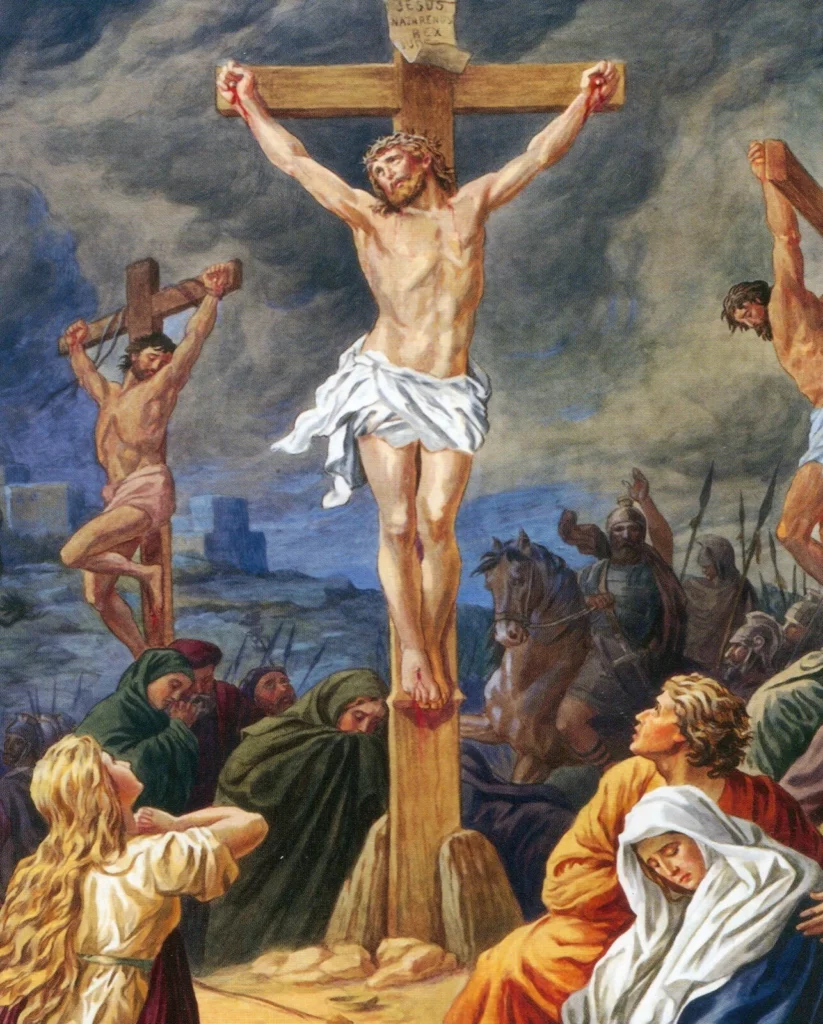
The Transfiguration also reminds us that Our Lord’s glory cannot be separated from His Cross. The same Christ who shone with heavenly splendor on Mount Thabor would soon ascend another mountain – Calvary – where His glory would be hidden beneath wounds, blood, and humiliation. Yet both mountains reveal the same Savior. On Thabor we behold His divinity unveiled; on Calvary we behold the immeasurable depth of His love.
The Cross is not a defeat but the pathway to glory, and every disciple who faithfully carries his cross will one day share in Christ’s everlasting triumph. The Transfiguration also foreshadows our own destiny. If we remain faithful to Christ through every trial, we too shall one day be transformed, sharing forever in the glory of His Resurrection.
Today the Church also commemorates Pope St. Sixtus II and his faithful companions, Saints Felicissimus and Agapitus, whose witness reminds us that the glory revealed on Mount Thabor demands courageous fidelity. During the persecution of the Emperor Valerian, an imperial edict ordered the execution of the leaders of the Christian clergy. On August 6, A.D. 258, while Pope Sixtus II was celebrating the Sacred Mysteries in the Catacombs of Rome, soldiers seized him together with his companions. Felicissimus and Agapitus, two of the Pope’s six deacons, were among those arrested, and they were beheaded by the sword for the holy Faith. They willingly chose fidelity to Christ over earthly life, knowing that no earthly ruler could take from them the eternal glory promised by their Divine Master.
Their martyrdom stands as a powerful testimony that the light revealed on Mount Thabor continued to burn brightly in the hearts of Christ’s disciples. A few days later, another of Pope Sixtus’ deacons, the beloved St. Lawrence, would likewise seal his faith with his own martyrdom.
Today also begins the traditional Novena in preparation for the Solemnity of the Assumption of the Blessed Virgin Mary. It is fitting that this novena begins beneath the light of the Transfiguration. No creature reflected the glory of Christ more perfectly than His Immaculate Mother. Throughout her earthly life she listened attentively to the Father’s command to “hear Him,” treasuring every word of her Divine Son within her heart and following Him all the way to Calvary.
Because she shared so completely in His sufferings, she now shares perfectly in His heavenly glory. As we begin these nine days of preparation, let us ask Our Lady to purify our hearts, strengthen our faith, and lead us ever more deeply into the transforming light of her Son, so that when we celebrate her glorious Assumption, we may also renew our hope in the resurrection promised to all who remain faithful to Christ.
DAY ONE OF THE NOVENA IN PREPARATION FOR THE ASSUMPTION OF THE BLESSED VIRGIN MARY
Opening Prayer for each day:
Lord Jesus Christ, You have destroyed the power of death and given the hope of eternal life for body and soul. You granted your Mother a special place in your glory, and did not allow decay to touch her body. As we rejoice in the Assumption of Mary, grant us renewed confidence in the victory of life over death. Amen
Day 1

Immaculate Virgin, Mother of Jesus and our Mother, we believe in your triumphant assumption into heaven where the angels and saints acclaim you as Queen of Heaven and earth.
We join them in praising you and bless the Lord who raised you above all creatures. With them we honor you.
We are confident that you watch over our daily lives and we ask that you intercede for us now.
(Mention your request)
We are comforted by our faith in the coming Resurrection and we look to you for prayers and comfort.
After this earthly life, show us Jesus, the blessed fruit of your womb, O kind, O loving, O sweet Virgin Mary.
O Queen Assumed into Heaven, pray for us. Amen
QUESTIONS FOR THE HEART
Do I allow the glory of Christ to strengthen my faith when I encounter suffering, uncertainty, or the trials of daily life?
Am I truly listening to the voice of Christ through Sacred Scripture, Sacred Tradition, and the perennial teaching of His Holy Church?
As I begin the Novena for the Assumption, how can I imitate Our Lady’s faithful obedience so that Christ may be more perfectly reflected in my own life?
A LITTLE POEM FOR THE JOURNEY
Upon the mount His glory shone,
The Father’s voice proclaimed the Son,
Yet down He walked the path of pain,
To conquer death and rise again.
Lord, lift our hearts above earth’s strife,
Transform our souls with holy life,
Through Mary’s prayers may we endure,
Till Heaven’s endless light is sure.
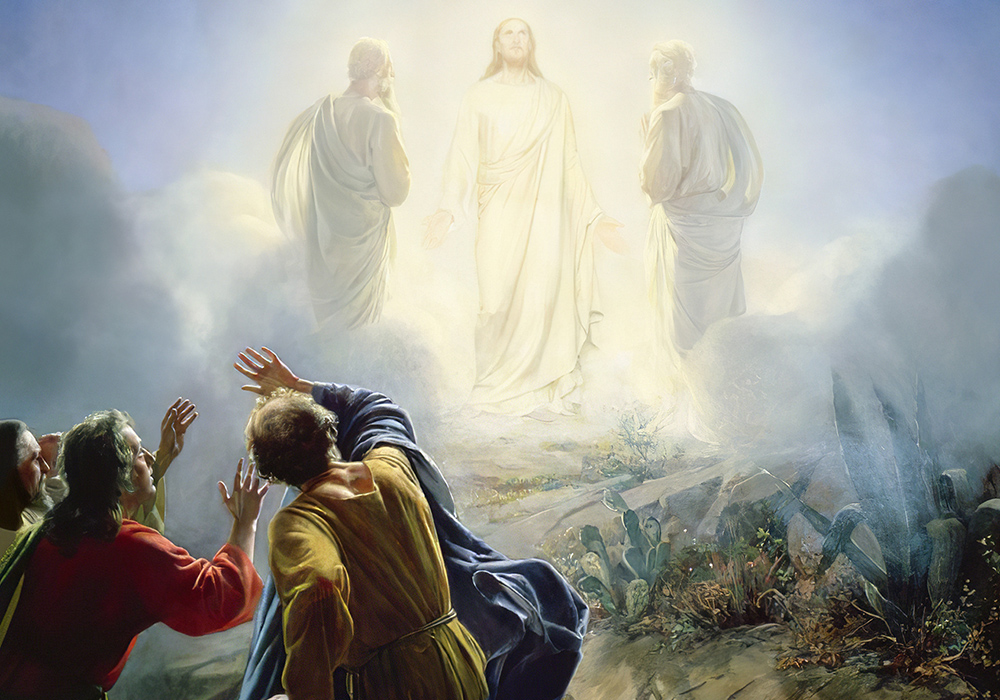
“This is My beloved Son, in whom I am well pleased: hear ye Him.” (Matthew 17:5)
The Mother Who Heard and Kept the Word
Dedication of the Basilica of Saint Mary of the Snows
Feast of Our Lady Salus Populi Romani
August 5, 2026
TODAY’S GOSPEL: Luke 11:27-28
EPISTLE: Ecclesiastes 24:14-16
As Our Lord taught the crowds, a woman, filled with admiration, cried out: “Blessed is the womb that bore Thee …” Her words sprang from a heart that recognized the extraordinary dignity of the Mother of the Savior. Yet Our Lord’s response leads us even more deeply into the mystery of His Blessed Mother: “Yea rather, blessed are they who hear the word of God, and keep it.”
Far from diminishing His Mother, Jesus reveals the deepest reason for her greatness. Mary is blessed not only because she bore the Son of God in her womb, but because she first received Him in perfect faith. Before she carried Him physically, she welcomed Him spiritually through her complete surrender to the will of the Father. At the Annunciation, her humble fiat – “Be it done unto me according to Thy word” – opened the door through which the Redeemer entered the world. Every privilege bestowed upon her flowed from her complete cooperation with God’s grace.
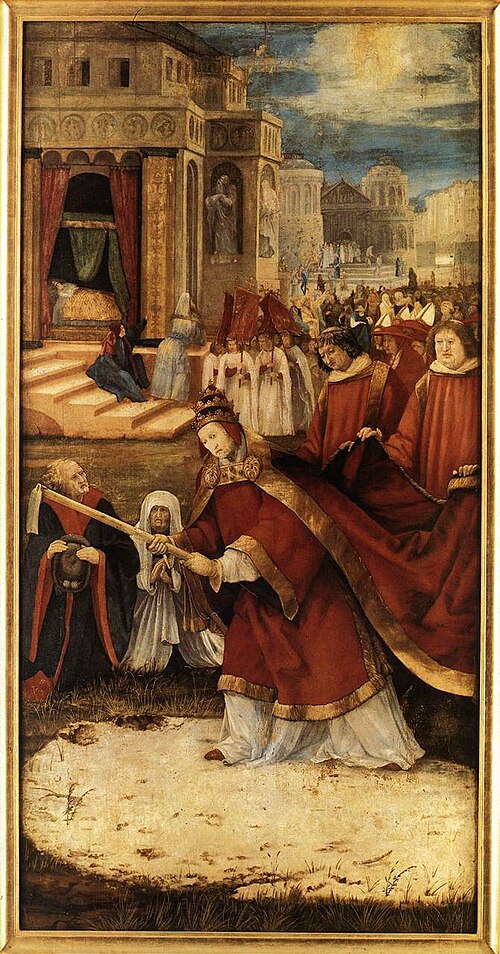
Today the Church commemorates the Dedication of the Basilica of Saint Mary of the Snows, one of the oldest and most beloved Marian shrines in Christendom. According to ancient tradition, Our Lady marked the site of the original church by a miraculous snowfall upon Rome’s Esquiline Hill during the heat of summer. Following the Council of Ephesus in A.D. 431, which solemnly proclaimed Mary as Theotokos, the Mother of God, Pope Sixtus III erected the magnificent basilica that stands today as a lasting testimony to the mystery of the Incarnation.
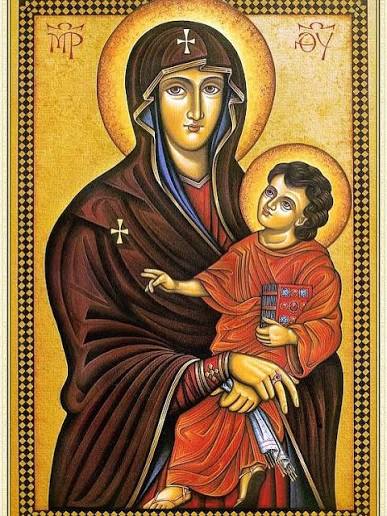
Within its walls is preserved the beloved icon known as Salus Populi Romani – “Health” or “Protectress of the Roman People” – before which generations of popes, saints, and pilgrims have entrusted themselves to the maternal care of the Blessed Virgin.
The title Mother of God is one of the Church’s greatest professions of faith. It is not merely a statement about Mary; it is a declaration about Christ. The Child she bore is one Divine Person – true God and true Man. By honoring Mary as the Mother of God, the Church safeguards the truth that Jesus Christ is Emmanuel, God-with-us, come to redeem the world.
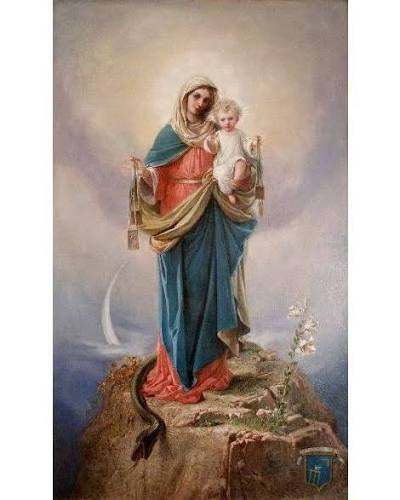
The Epistle beautifully complements today’s Gospel. The Church has long applied these words of Ecclesiastes to the Blessed Virgin because among all creatures she became the most perfect dwelling place prepared for the Word made Flesh. Like a fruitful vine and a flourishing cedar, Mary’s life bore abundant fruit because she was completely rooted in God’s will. Her greatness was not found in earthly power or recognition, but in her humility, purity, and unwavering fidelity to the Lord.
Throughout her life, Mary never sought herself. At Cana she simply instructed the servants, “Whatsoever He shall say to you, do ye.” At Calvary, she accepted us as her spiritual children. Throughout the centuries she continues to fulfill that same maternal mission, leading souls even more deeply to her Divine Son. Authentic devotion to Mary never ends with Mary herself; it always draws us into a closer union with Jesus Christ.
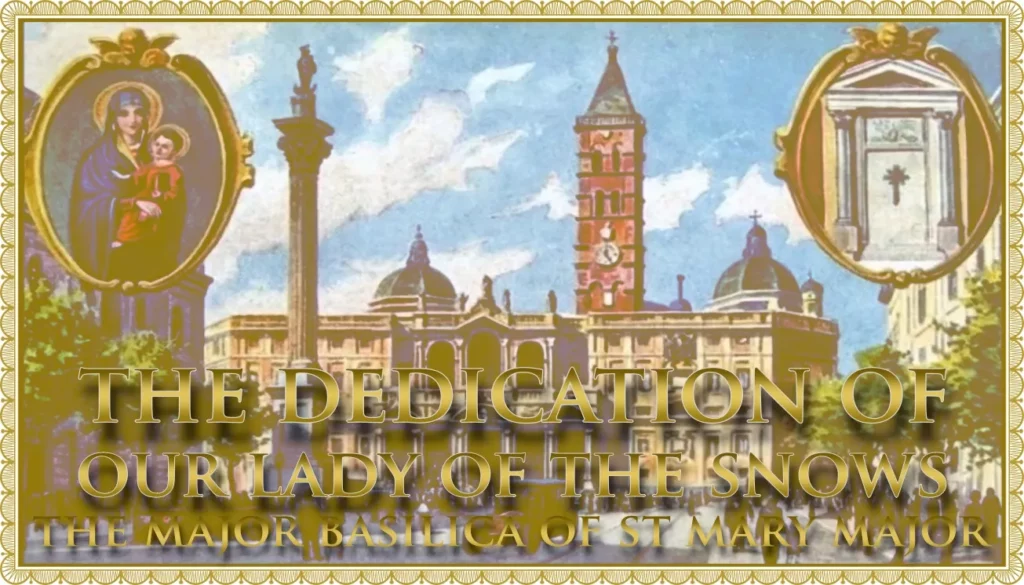
The Basilica of Saint Mary of the Snows reminds us that beauty has always been one of the Church’s great teachers. Its soaring ceilings, ancient mosaics, sacred relics, and centuries of prayer proclaim the glory of God and the dignity of His Mother. Such churches were built not merely as monuments of stone, but as places where souls encounter the living Christ in the Holy Sacrifice of the Mass and in His Real Presence within the Blessed Sacrament.
As we celebrate the Dedication of the Basilica of Saint Mary of the Snows and honor Our Lady under the cherished title Salus Populi Romani, let us place ourselves confidently beneath her maternal mantle. Tomorrow begins the traditional Novena in preparation for the Solemnity of the Assumption of the Blessed Virgin Mary. May these coming days become a time of deeper prayer, renewed trust, and greater love for the Mother whom Christ Himself has given to us. If we walk with Mary, she will always lead us safely to her Son, who alone is “the Way, the Truth, and the Life.”
QUESTIONS FOR THE HEART
Do I strive to imitate Mary’s example by hearing the Word of God with faith and putting it into practice each day?
Do I look upon the Blessed Virgin as my spiritual Mother, confidently seeking her intercession and allowing her to lead me ever more closely to Jesus?
How can I prepare my heart during the coming days to celebrate the Solemnity of the Assumption with greater faith, gratitude, and love?
A LITTLE POEM FOR THE JOURNEY
O gentle Mother, pure and fair,
Receive thy children in thy care,
Teach us to trust God’s holy will,
With humble hearts obedient still.
Lead every soul to Christ above,
The source of everlasting love,
Till, gathered with the saints above,
We praise God’s mercy and His love.
“Yea rather, blessed are they who hear the word of God, and keep it.” (Luke 11:28)
Keeping the Lamp of Truth Burning
Commemoration of St. Dominic, Confessor
August 4, 2026
TODAY’S GOSPEL: Luke 12:35-40
EPISTLE: 2 Timothy 4:1-8
Today’s Gospel begins with a simple but searching command from Our Lord: “Let your loins be girt, and lamps burning in your hands.” It is the image of servants waiting attentively for the return of their master – not sleeping, distracted, or indifferent, but watchful, faithful, and ready to open the door the very moment he arrives.
This watchfulness is far more than waiting for the end of the world. Our Lord calls us to live every day in readiness, knowing that we belong to Him and that each day is another opportunity to grow in holiness. The Christian who keeps his lamp burning is one who perseveres in prayer, remains faithful to the teachings of the Church, receives the Sacraments faithfully, practices charity, and seeks God’s grace in both ordinary duties and extraordinary trials. Such a soul is prepared not because it knows when the Master will come, but because it desires to be found faithfully serving whenever He does.
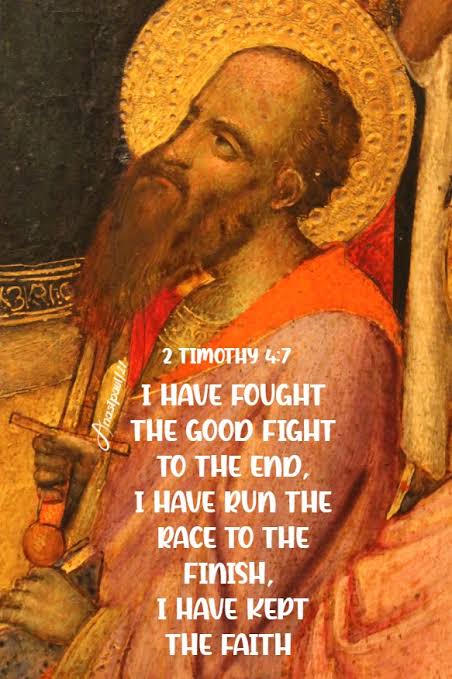
St. Paul gives us a beautiful picture of that lifelong vigilance in today’s Epistle. Knowing that his earthly mission is drawing to its close, he writes with remarkable peace: “I have fought a good fight, I have finished my course, I have kept the faith.” These are not the words of a man boasting of his accomplishments, but of a faithful servant who has spent his life guarding the treasure entrusted to him. He has preached the Gospel “in season and out of season,” endured suffering, corrected error with patience, and remained steadfast despite persecution. Having poured out his life in Christ’s service, he now awaits “a crown of justice,” not only for himself, but for all who love the appearing of the Lord.
The Gospel and Epistle together reveal that Christian readiness is not passive expectation but faithful perseverance. We remain ready for Christ’s coming by living each day in obedience to His will, allowing His grace to shape our hearts and strengthen our resolve. Every act of fidelity, every hidden sacrifice, every victory over temptation keeps the lamp of the soul burning brightly.
The Church sets before us today the example of St. Dominic, whose entire life became such a lamp in an age darkened by confusion and heresy. While a student, he sold his books to feed the poor, and offered himself in ransom for a slave. At the age of 25, he became superior of the Canons Regular of Osma, and accompanied his Bishop to France. During his travels through southern France, he encountered the Albigensian heresy, which denied the goodness of God’s creation, rejected the Sacraments, and led many souls away from the truth entrusted to the Church. St. Dominic recognized that error could not be overcome by argument alone. Souls needed holy preachers – men deeply rooted in Sacred Scripture, faithful to the Church’s teaching, devoted to prayer, and willing to embrace poverty for the sake of the Gospel.
Trusting entirely in Divine Providence, he founded the Order of Preachers and sent his first friars throughout Europe to proclaim the Catholic Faith. Though few in number, they carried the light of Christ wherever they went, preaching with learning, humility, and charity. God blessed the new Order, and Our Lady took them under her protection. In 1208, while St. Dominic was kneeling in the little chapel of Notre Dame de la Prouille, imploring Our Lady to save the Church, she appeared to him, gave him the Rosary, and instructed him to go forth and preach. Rosary in hand, he revived the courage of the Catholic troops, and led them to victory.
Those who knew St. Dominic spoke often of his profound compassion. He spent long hours in prayer, wept for sinners, and begged God to draw wandering souls back to Himself. His zeal for truth was never separated from charity. Like St. Paul, he understood that defending the faith was not about winning arguments but about leading souls to salvation. His lamp burned brightly because it was first kindled by love for Christ.
Our own age is full of confusion. We, too, are surrounded by voices that blur the distinction between truth and error or invite us to compromise what has been handed down through Sacred Scripture and Apostolic Tradition. The answer is the same today as it was in the days of St. Paul and St. Dominic: remain steadfast. Hold fast to the faith once delivered to the saints. Continue to pray, to study, to worship faithfully, and to bear witness to Christ through lives marked by humility, charity, and perseverance.
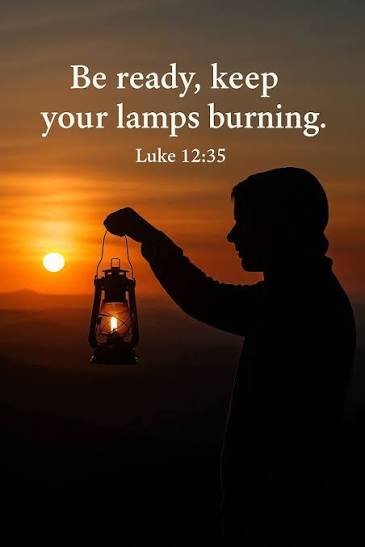
One day the Master will indeed come. For those whose lamps have been kept burning through faithful cooperation with His grace, His coming will not bring fear but joy. The Lord Himself promises an astonishing reward: He will welcome His faithful servants into His Kingdom and seat them at His heavenly banquet. Every hidden act of fidelity, every prayer offered in secret, every sacrifice made for love of Him prepares us for that blessed meeting. May we live each day as watchful servants, keeping the lamp of faith burning brightly until the moment we hear His voice and enter into the everlasting joy of our Master.
QUESTIONS FOR THE HEART
Do I live each day with the awareness that I belong to Christ and desire to be found faithful whenever He calls me?
What practical steps can I take to keep the lamp of my soul burning through prayer, the Sacraments, charity, and fidelity to the truths of the Catholic Faith?
Like St. Paul and St. Dominic, am I willing to remain steadfast in the truth with both courage and charity, even when it is difficult or unpopular?
A LITTLE POEM FOR THE JOURNEY
Lord, keep my little lamp alight,
Through darkest hour and longest night,
When trials come, my faith renew,
And keep my heart forever true.
Like Paul and Dominic of old,
May I Thy saving truth uphold,
Until I see Thee face to face,
And rest forever in Thy grace.
“Be you then also ready: because at what hour you know not, the Son of man will come.” (Luke 12:40)
The Humility That Receives Grace
Feast of the Finding of the Body of St. Stephen, Protomartyr
August 3, 2026
TODAY’S GOSPEL: Luke 18:9-14
EPISTLE: I Corinthians 12:2-11
The Church once again places before us the simple yet profound prayer of the Publican: “O God, be merciful to me, a sinner.” Few prayers in Sacred Scripture are shorter, yet few contain such depth. It is the prayer of a soul that has ceased to rely upon itself and has learned to trust entirely in the mercy of God.
Standing in the Temple, the Pharisee and the Publican present two very different hearts. The Pharisee speaks at length of his fasting, his tithes, and the life he has carefully lived. None of these things are unworthy. Indeed, they are good. Yet gratitude quietly gives way to self-satisfaction, and his attention turns from the holiness of God to the faults of another.
The Publican offers no defense of himself. He does not compare, excuse, or justify. Standing at a distance, he knows only that he is a sinner standing before an infinitely holy God. His confidence rests not in his own goodness, but in the inexhaustible mercy of the Lord. It is this humble confidence that Our Lord declares pleasing, for “this man went down into his house justified rather than the other.”
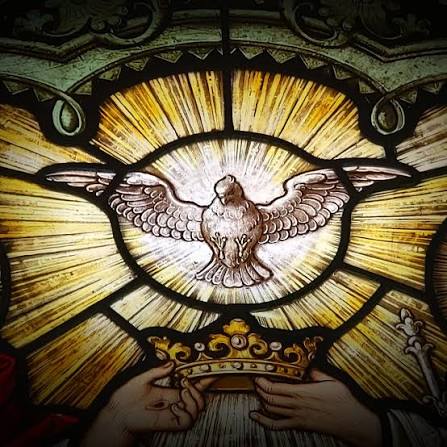
St. Paul opens this mystery still further in today’s Epistle. Every grace, every virtue, every gift bestowed upon the faithful is given by the Holy Ghost. Wisdom, knowledge, faith, healing, prophecy – none are earned, none are possessed as though they belonged to us. They are freely given by God and entrusted to His children according to His divine wisdom.
How beautifully the Gospel and Epistle speak with one voice. The Publican receives mercy because he knows his need of grace. St. Paul reminds us that, having received that grace, every spiritual gift continues to be God’s work within us. The Christian life begins in mercy and grows by grace.
Today’s feast offers us a living image of that truth.
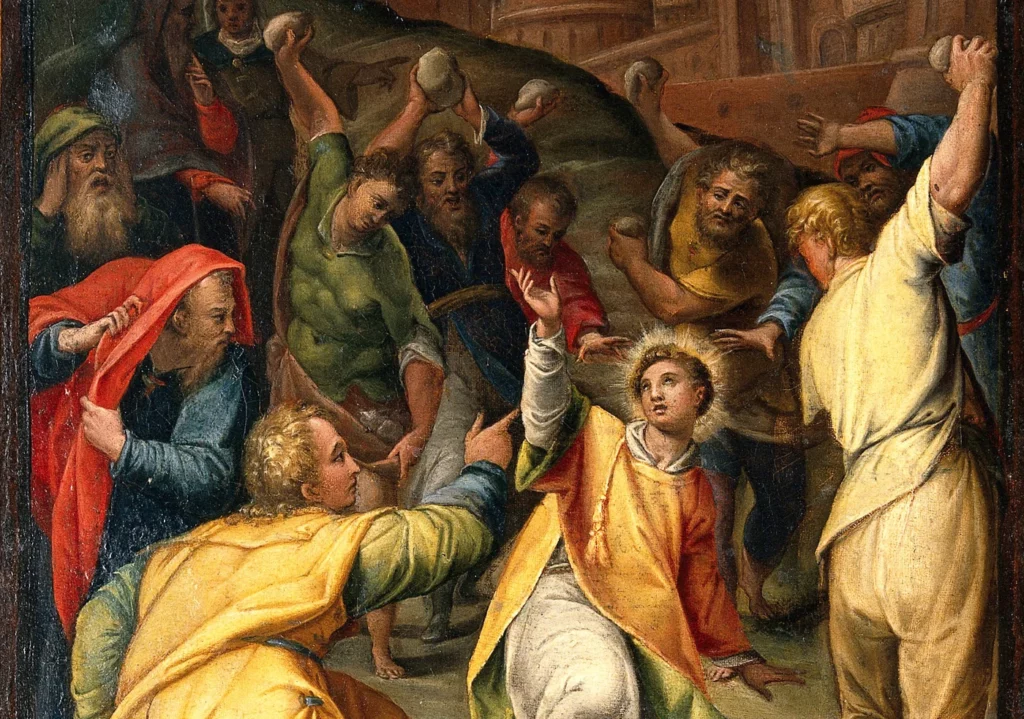
St. Stephen was chosen by the Apostles because he was “full of faith and of the Holy Ghost.” The wisdom with which he confounded his opponents was not his own. The courage that sustained him before the Sanhedrin was not his own. Even the charity by which he prayed for those who stoned him was the very charity of Christ alive within him. His life bears witness that a soul filled with the Holy Ghost no longer seeks its own glory but reflects the glory of God.
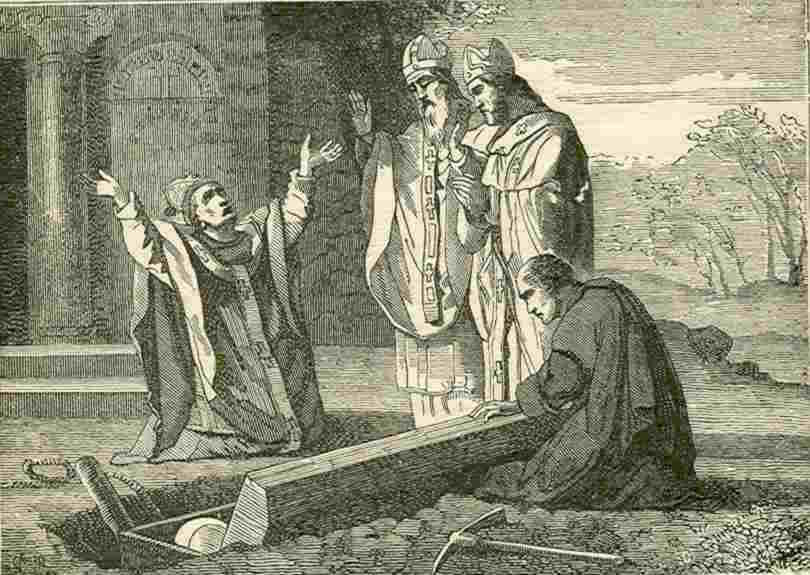
The Church today commemorates the finding of the body of St. Stephen, discovered several centuries after his martyrdom according to ancient Christian tradition. The body that had been broken beneath the stones was the body of the Church’s first martyr, who had sealed his testimony to Christ with his own blood. In honoring this relic, the faithful honored the sacrifice by which he had borne witness to the risen Lord even unto death. What persecutors had cast aside, the Church received as a precious memorial of courage, fidelity, and martyrdom.
There is something deeply consoling in this feast. The world may forget the works of the just, but God does not. Hidden acts of fidelity, quiet sacrifices, prayers offered in secret, and lives poured out in humble service are never lost before Him. In His providence, He reveals their beauty in the time He has appointed.
The liturgy gently reminds us today that holiness is never our own achievement. It is always the work of God’s grace received with humility and answered with fidelity. The Publican teaches us how grace enters the soul. St. Paul teaches us how it bears fruit. St. Stephen shows us what that grace can accomplish in a heart wholly surrendered to Christ.
QUESTIONS FOR THE HEART
Do I approach God each day with the humility of the Publican, recognizing my continual need for His mercy?
Do I remember that every grace, every virtue, and every opportunity to serve comes from the Holy Ghost and is entrusted to me for God’s glory?
How can I imitate the faithful witness of St. Stephen by allowing the grace I have received to bear fruit in charity, courage, and forgiveness?
A LITTLE POEM FOR THE JOURNEY
Lord, teach my heart the Publican’s plea,
To rest in Thy great mercy faithfully,
Each gift I hold Thy hand has first bestowed,
Each grace a light upon my pilgrim road.
Like Stephen, steadfast, gentle, true,
May all I am bear witness unto You,
In humble hearts Thy blessings ever stay,
And lead us home to everlasting day.
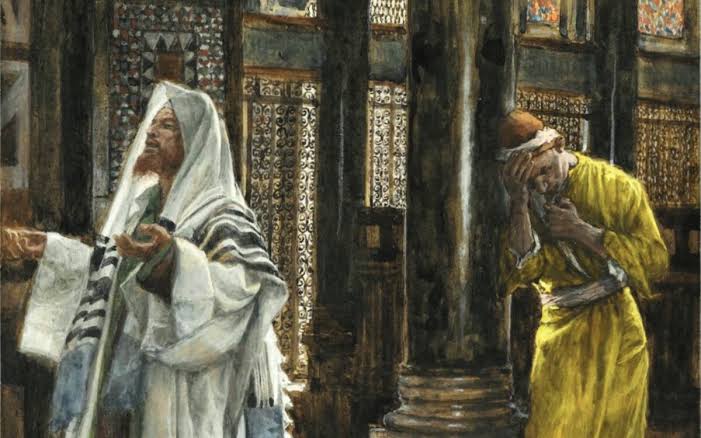
“For everyone who exalteth himself shall be humbled: and he that humbleth himself shall be exalted.” (Luke 18:14)
The Doorway to Grace
Commemoration of
St. Alphonsus de Liguori, Bishop and Doctor of the Church
St. Stephen I, Pope and Martyr
St. Peter Julien Eymard, Priest
Today in History – Destruction of the Temple (70 AD)
August 2, 2026
TODAY’S GOSPEL: Luke 18:9-14
EPISTLE: I Corinthians 12:2-11
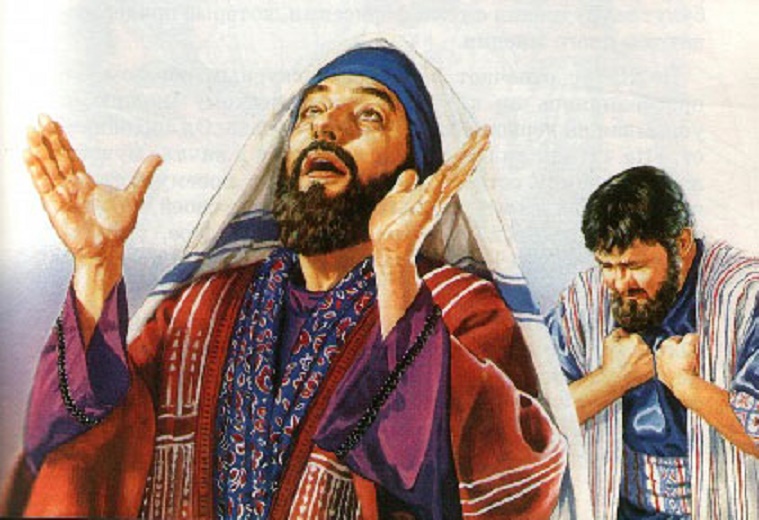
Today’s liturgy invites us to look beyond outward appearances and examine the condition of our own hearts. The Pharisee and the Publican both enter the Temple to pray. Both stand before God. Yet only one leaves justified. The difference is found not in their outward actions, but in the disposition of their hearts.
Throughout the spiritual life, humility has always been the doorway through which God’s grace enters the soul. It is no coincidence that the saints consistently speak of humility as the foundation of every virtue. Without it, even good works can become occasions for pride. With it, even our weaknesses become opportunities for God’s mercy to shine.
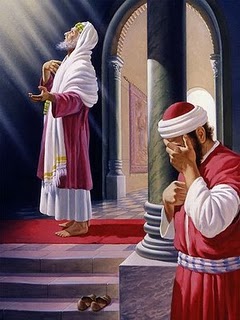
In today’s Gospel, the Pharisee stands confidently before God. He fasts. He gives tithes. He avoids the sins that have overtaken many. None of these things are wrong; indeed, they are commendable. Yet somewhere along the way, his attention has shifted. Instead of looking toward God with gratitude, he begins looking toward himself with satisfaction. His prayer quietly becomes a list of personal accomplishments. Worse still, he measures his goodness by comparing himself with another: “I am not like the rest of you … or even like this publican.”
The Publican offers no such comparison. Standing at a distance, unwilling even to raise his eyes toward Heaven, he strikes his breast and prays only, “O God, be merciful to me, a sinner.”
He makes no excuses. He presents no achievements. He simply places Himself before the infinite mercy of God. And it is this humble sinner – not the outwardly righteous Pharisee – who returns home justified.
Our Lord concludes with words that have echoed through every century of the Church: “Everyone who exalts himself shall be humbled, and he who humbles himself shall be exalted.”
These words challenge every generation because pride is remarkably subtle. It rarely announces itself openly. More often it hides beneath respectability. We may begin to compare ourselves with those who seem less faithful. We may quietly congratulate ourselves for our sacrifices, our knowledge, our service, or even our devotion. Yet the closer a soul draws to God, the more clearly it sees that every good thing comes from Him alone.
This is precisely the lesson St. Paul teaches in today’s Epistle. Speaking to the Corinthians, he reminds them that the Holy Ghost distributes many different gifts throughout the Church. One receives wisdom, another knowledge, another faith, another healing, another prophecy, another discernment. The gifts differ, but their source is one and the same.
How easily we admire the gift while forgetting the Giver.
Every talent entrusted to us, every opportunity to serve, every act of charity, every insight into truth, every vocation, every grace received in prayer, every strength of mind or body has first come from God. None of these are possessions to be claimed as our own. They are sacred trusts, given so that Christ may be made visible through our lives.
Humility, then, is not denying the gifts God has given us. Rather, it is recognizing that they belong first to Him. The humble soul receives them gratefully, uses them generously, and returns all glory to the One from whom they came. Today’s saints beautifully illustrate this truth.
St. Alphonsus de Liguori possessed extraordinary brilliance. As a young lawyer, success and prestige seemed certain. However, after eight years, he recognized that God was calling him away from earthly ambition toward the service of souls. He surrendered a promising career and became a priest, eventually founding the Redemptorists to preach the Gospel, especially to the poor and forgotten.
Although he became one of the Church’s greatest theologians and was later declared a Doctor of the Church, his greatest desire was never to impress scholars but to lead ordinary people to trust in the mercy of Christ. His sermons were simple enough for the uneducated, his writings practical enough for everyday Catholics, and his confessional became a place where sinners encountered not harshness but hope. His life reminds us that true greatness is measured not by recognition but by faithful service.
We also commemorate St. Stephen I, who guided the Church during a time of fierce persecution. As Successor of St. Peter, he understood that leadership in Christ’s Church was not a privilege but a sacrifice. According to ancient tradition, he was martyred while celebrating the Holy Sacrifice of the Mass. He remained at his post because he knew that fidelity to Christ mattered more than preserving his own life. His courage sprang not from confidence in himself but from confidence in the Lord whom he served.
St. Peter Julien Eymard devoted his priesthood to deepening love for Our Lord in the Most Blessed Sacrament. Before the Eucharist, all human pride fades away. The King of Kings hides Himself beneath the humble appearance of bread. There, Christ teaches us that true greatness is found not in self-exaltation but in self-giving love. The more time we spend before Him in adoration, the more our own hearts are purified of pride and filled with gratitude.
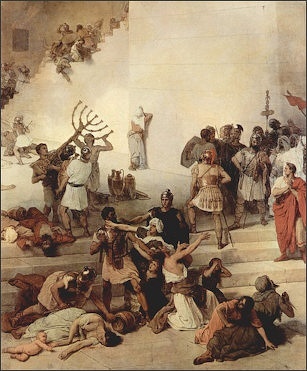
We also recall Our Lord’s prophecy concerning the destruction of Jerusalem and its magnificent Temple. The people admired its beauty and strength, yet many failed to recognize the Messiah standing in their midst. Outward splendor could not replace inward conversion. God has always desired hearts that are humble, contrite, and open to His grace. This lesson remains just as urgent today.
Our world encourages us to build our own reputation, promote our achievements, and measure our worth by success and recognition. Even our spiritual lives can become centered upon ourselves if we are not vigilant. But the saints walked another road. The holier they became, the more deeply they understood their dependence upon God’s mercy.
The Publican’s simple prayer has become the prayer of countless saints throughout the centuries: “O God, be merciful to me, a sinner.”
QUESTIONS FOR THE HEART
Do I find myself comparing my virtues or accomplishments with those of others, forgetting that every good gift comes from God?
When I pray, do I approach the Lord with gratitude and humble confidence in His mercy, or do I rely too much on my own efforts and accomplishments?
How can I use the gifts God has entrusted to me this week – not for my own recognition – but to glorify Him and serve those He places in my path?
A LITTLE POEM FOR THE JOURNEY
Lord, keep my heart from seeking praise,
Or trusting in my own poor ways,
Like him who bowed with tearful plea,
Have mercy, Lord, have mercy on me.
Whatever gifts Thy Spirit sends,
May all return to Thee, their end,
Through humble hearts Thy graces flow,
Lord, teach my soul Thy way to go.
“For everyone who exalteth himself shall be humbled: and he that humbleth himself shall be exalted.” (Luke 18:14)
The Chains That Bind Us
OUR LADY ON SATURDAY
Feast of St. Peter in Chains
Commemoration of the Holy Machabees, Martyrs
August 1, 2026
TODAY’S GOSPEL: Luke 11:27-28
EPISTLE: Ecclesiastes 24:14-16

Today’s liturgy brings together three remarkable witnesses to faithful obedience: Our Blessed Mother, St. Peter in Chains, and the Holy Machabees. At first glance, they may seem to have little in common. Yet each proclaims the same timeless truth: the soul that belongs entirely to God can never truly be imprisoned. Iron chains may bind the body, persecution may test the faithful, and suffering may pierce the heart, but no earthly power can overcome the one who hears the Word of God and keeps it.
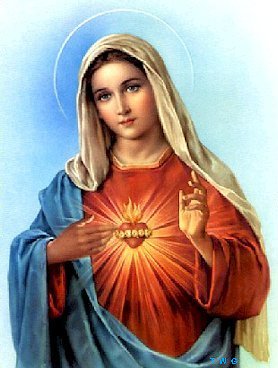
Throughout the month of August, the Church traditionally honors the Immaculate Heart of Mary, contemplating that Heart which loved God without reserve and remained steadfast through every joy and every sorrow. Saturdays have long been dedicated to Our Lady because, after the darkness of Good Friday, when so many lost hope, Mary’s faith never wavered. She remained faithful, trusting the promise of God even when she could not yet see their fulfillment.
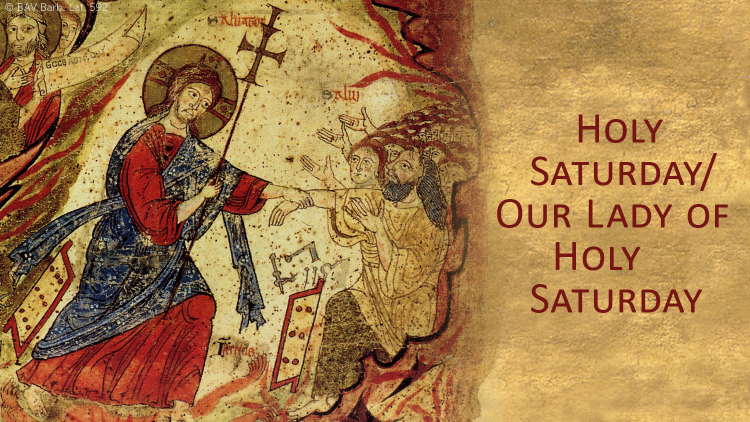
In today’s Gospel, a woman from the crowd raises her voice in admiration of Our Lord’s Mother: “Blessed is the womb that bore Thee …” Her words are beautiful and true. She recognizes the singular privilege granted to Mary, chosen from all eternity to bear the Son of God.
Yet Christ reveals something even deeper.
“Yea rather, blessed are they who hear the word of God and keep it.”
Our Lord is not diminishing His Mother; He is revealing the deepest reason for her blessedness. Mary is blessed above all because she believed. At the Annunciation she heard the Word of God and answered with her humble Fiat: “Be it done unto me according to thy word.” Throughout her life she continued to keep that Word, even when it led her to Bethlehem’s poverty, the flight into Egypt, the hidden years of Nazareth, and finally to Calvary, where she stood beneath the Cross with unwavering faith.
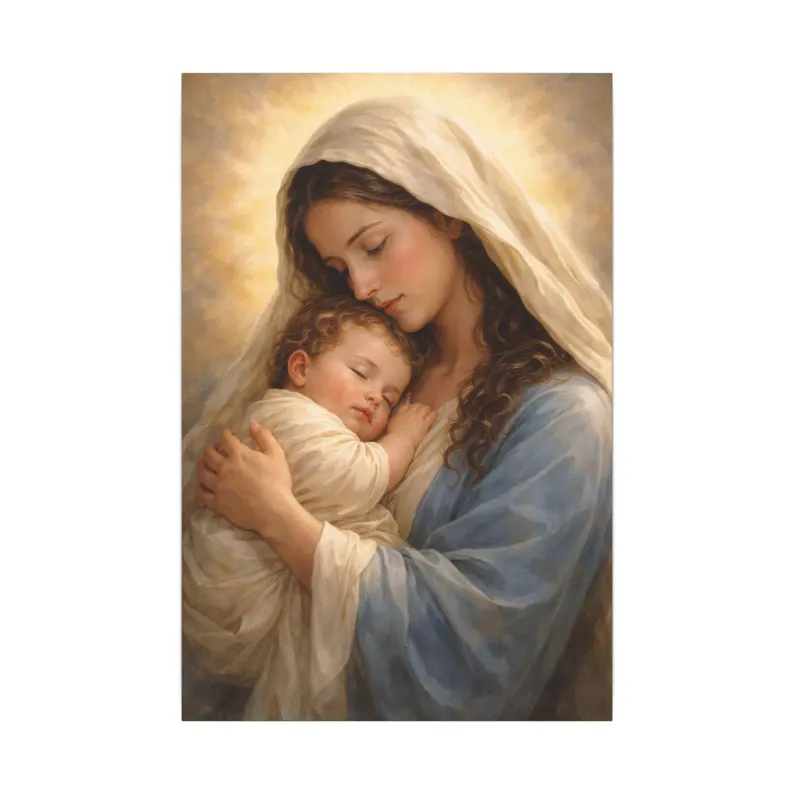
Our age often measures greatness by achievement, success, or influence. God chose another path. He entered the world through the hidden vocation of a Mother. In doing so, He forever revealed the sacred dignity of motherhood and the immeasurable value of every life. Mary’s greatness was not found in earthly honor but in perfect obedience. She teaches us that true freedom is found, not in doing our own will, but in surrendering ourselves completely to God’s.
The Epistle beautifully continues this theme. The Church has long applied these words of Ecclesiastes to Our Blessed Lady, presenting her as the one planted by God from all ages, flourishing like a fruitful vine and dwelling among His people. Firmly rooted in God’s grace, Mary became the living tabernacle of the Word made Flesh. Her life bore abundant fruit because she remained perfectly united to the Lord. The same invitation is extended to every Christian. The closer we remain to Christ, the more His grace bears fruit within us.
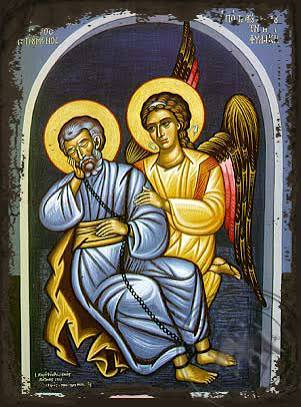
Today we also celebrate the Feast of St. Peter in Chains. Imprisoned by King Herod and bound with heavy iron chains, Peter seemed powerless before the might of the world. Yet during the night, an angel of the Lord awakened him, his chains fell away, the prison doors opened, and he walked out a free man.
Those broken chains are far more than a miracle of physical deliverance. They remind us that Christ alone has the power to break every chain that enslaves the human heart. Fear, discouragement, pride, resentment, attachment to sin, and trust in ourselves rather than in God can bind us far more securely than iron ever could. Through the authority Christ entrusted to Peter and his successors, especially in the Sacrament of Penance, the Church continues Christ’s work of loosing souls from the bondage of sin and restoring them to the freedom of God’s children.
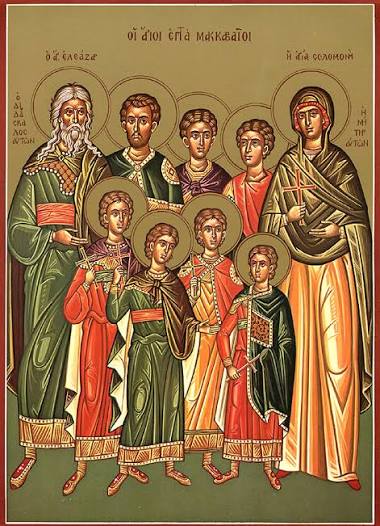
The Holy Machabees offer another witness to this same freedom. A courageous mother watched each of her seven sons suffer torture and death rather than violate God’s law. To the world, their refusal to compromise over what seemed a small matter appeared foolish. But they understood that every act of obedience is ultimately an act of love for God.
It is impossible not to see in this heroic mother a foreshadowing of Our Lady herself. One mother stood before the execution of her faithful sons, encouraging them to persevere unto eternal life. The other stood beneath the Cross as her Divine Son accomplished the redemption of the world. Neither allowed grief to extinguish faith. Both teach us that love sometimes requires the courage to suffer without surrendering hope.
Their witness speaks with particular urgency today. Christians may not always face prisons or martyrdom, but we encounter other chains: fear of speaking the truth, the desire to be accepted by the world, discouragement in times of trial, anxiety about the future, or the temptation to compromise our convictions for the sake of comfort. These chains can quietly imprison the soul if we do not entrust them to Christ.
Mary shows us how to hear God’s Word and keep it. Peter reminds us that no prison is stronger than God’s providence. The Holy Machabees teach us that fidelity is worth every sacrifice. Together they encourage us to live with the confidence expressed throughout Sacred Scripture: the one who belongs to God is never truly captive.
QUESTIONS FOR THE HEART
What chains keep me from following Christ more faithfully – fear, pride, resentment, attachment to comfort, anxiety, or sin?
Do I imitate Our Lady by hearing God’s Word each day and striving to keep it with a generous and obedient heart?
When fidelity to Christ becomes difficult, do I trust that His grace is greater than every trial and every chain?
A LITTLE POEM FOR THE JOURNEY
Lord, break the chains that hold me still,
And bend my heart unto Thy will,
Like Mary, may I trust Thy Word,
Though every promise seem deferred.
Like Peter, may I walk unbound,
Where grace and liberty are found,
Like martyrs strong, may I remain,
Till Hevaen’s joy is mine to gain.
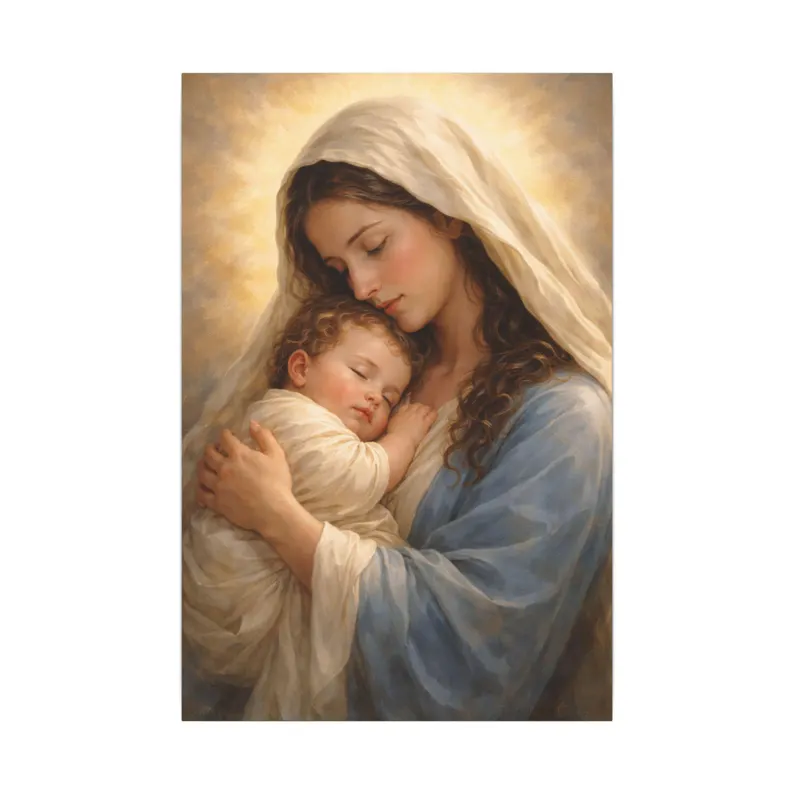
“Yea rather, blessed are they who hear the word of God and keep it.” (Luke 11:28)
Sent into the Harvest
Commemoration of St. Ignatius of Loyola, Confessor
July 31, 2026
TODAY’S GOSPEL: Luke 10:1-9
EPISTLE: 2 Timothy 2:8-10, 3:10-12
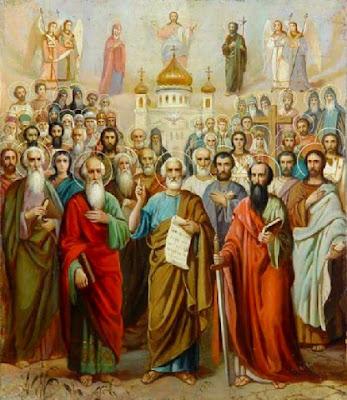
As Our Lord journeyed toward Jerusalem, He looked upon the crowds with the eyes of a Good Shepherd. He saw not merely faces but souls – souls longing for truth, mercy, and salvation. Moved with compassion, He appointed seventy-two disciples and sent them ahead of Him into every town and place He Himself intended to visit. Before sending them, however, He spoke words that remain just as urgent today: “The harvest indeed is great, but the laborers are few.”
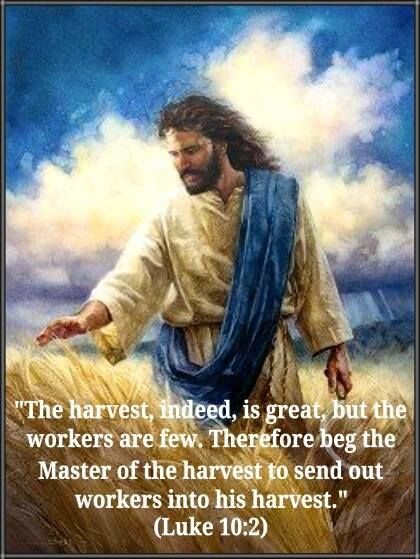
These words reveal the heart of Christ. He desires that every person come to know Him and receive the gift of eternal life. His mercy extends to every nation, every generation, and every soul. Yet throughout history He has chosen to accomplish much of His work through faithful men and women who willingly answer His call. Christ continues to invite ordinary people to become His instruments, carrying His peace into a world that longs for hope.
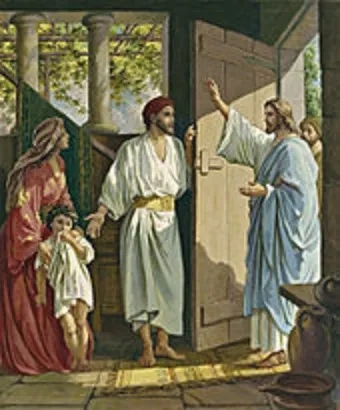
The instructions Our Lord gives His disciples are striking. He sends them with no purse, no provisions, and no earthly security. They are to place their confidence not in material possessions or human strength but entirely in God’s providence. Their mission will not succeed because of cleverness or influence, but because God Himself goes before them. Their first words are not arguments or condemnations, but a blessing: “Peace be to this house.” Wherever Christ is welcomed, His peace enters with Him. Wherever hearts remain open, His grace begins its quiet work of healing and conversion.
This Gospel speaks powerfully to our own age. The harvest has not grown smaller. If anything, the spiritual needs of our world have become even greater. So many hearts search for meaning while looking everywhere except to Christ. Many long for peace but seek it in passing pleasures, worldly success, or endless distractions. Others carry hidden burdens of grief, loneliness, fear, or discouragement. The Lord still sends laborers into this harvest, calling His followers to bring His truth with charity, His mercy with humility, and His light into places darkened by confusion.
Today’s Epistle reveals that this mission is not without sacrifice. St. Paul writes these words while enduring imprisonment for the sake of the Gospel, yet he proclaims with unwavering confidence, “The word of God is not bound.” Chains may restrain the preacher, but they cannot imprison the truth. Governments may oppose it, cultures may reject it, and individuals may attempt to silence it, yet God’s Word continues to accomplish His saving work in every generation.
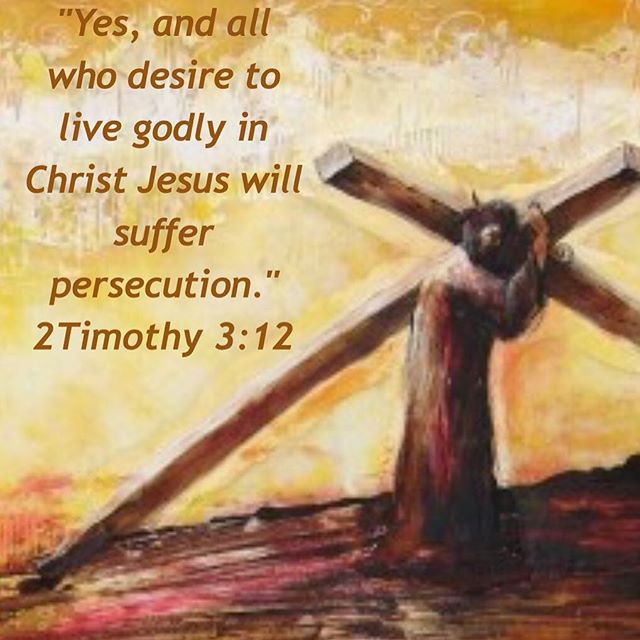
St. Paul reminds Timothy that faithful discipleship always requires perseverance. “All that will live godly in Christ Jesus shall suffer persecution.” These words are not meant to discourage us but to strengthen us. The Christian life has never been the easy path. From the Apostles to the martyrs, from the confessors of the Faith to the saints of every century, those who loved Christ most deeply often endured misunderstanding, ridicule, hardship, or suffering. Yet they persevered because they knew that no earthly trial can compare with the eternal glory Christ has prepared for those who remain faithful.
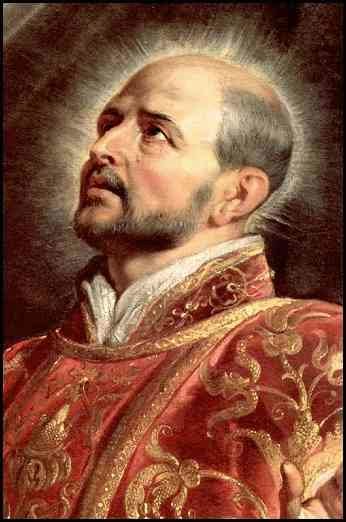
Today the Church commemorates St. Ignatius of Loyola, whose life beautifully illustrates both the Gospel and the Epistle. As a young soldier, Ignatius sought worldly honor and military glory. But after being seriously wounded in battle, God used that suffering to begin a profound conversion of heart. During months of recovery, he encountered the lives of Christ and the saints and discovered a far greater kingdom than any earthly empire. From that moment forward, he desired only to serve Christ, the true King.
Through prayer, sacrifice, and years of spiritual formation, St. Ignatius learned to discern God’s will with remarkable clarity. The Spiritual Exercises that grew from his own conversion have guided countless souls to a deeper love of God and a greater freedom from attachment to worldly things. When he founded the Society of Jesus, his desire was simple yet profound: to form men completely devoted to the service of Christ and His Church, ready to go wherever they were sent for the salvation of souls. Before his death, that missionary spirit had already carried the Gospel across continents, strengthening the Church during one of the most difficult periods of her history.
The example of St. Ignatius reminds us that the greatest laborers in Christ’s harvest are first formed in prayer. Before we can bring Christ to others, we must allow Him to transform our own hearts. The Lord does not ask us to accomplish extraordinary things through our own strength. He asks us to remain close to Him, to seek His will above our own, and to trust that His grace is sufficient for every task He places before us.
Each of us has been entrusted with a portion of the harvest. For some, it is within the family. For others, it is the workplace, the parish, the neighborhood, or a quiet act of charity known only to God. We may never preach before crowds or travel to distant lands, yet every faithful witness, every prayer offered with love, every word spoken in truth, and every sacrifice united to Christ helps prepare souls to receive His grace.
The harvest still awaits faithful laborers. Christ continues to send His disciples into the world, not with worldly power, but with humble hearts filled with His peace. May we answer His call with the generous spirit of St. Ignatius, trusting that God will accomplish through our faithful obedience far more than we could ever imagine.
QUESTIONS FOR THE HEART
Do I see myself as someone Christ has sent into His harvest, or do I leave that mission to others?
When difficulties arise because of my faith, do I become discouraged, or do I remember that “the word of God is not bound”?
Am I making time each day for prayer so that Christ may form my heart before He sends me to serve others?
A LITTLE POEM FOR THE JOURNEY
Lord, send me where Thy voice shall lead,
To sow with love each faithful seed.
Though strength be small and trials near,
Thy gentle whisper casts out fear.
Like Ignatius, may I always choose
The path that brings Thee greater use,
Until the harvest day is won,
And all give glory to Thy Son.
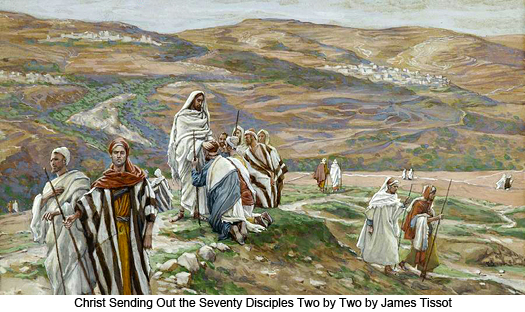
“The harvest indeed is great, but the laborers are few. Pray ye therefore the Lord of the harvest, that He send laborers into His harvest.” (Luke 10:2)
The Time of Our Visitation
Commemoration of Sts. Abdon and Sennen, Martyrs
July 30, 2026
TODAY’S GOSPEL: Luke 19:41-47
EPISTLE: 1 Corinthians 10:6-13
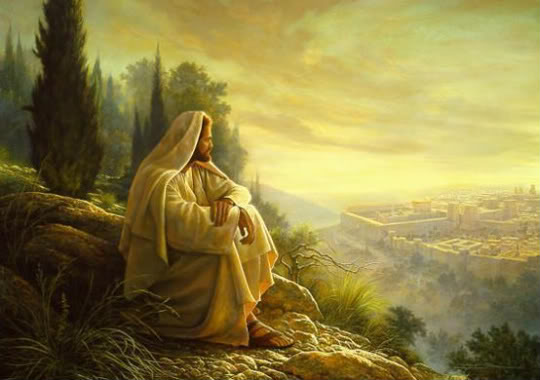
As Our Lord drew near Jerusalem, He paused and looked upon the holy city with profound sorrow. St. Luke tells us that “seeing the city, He wept over it.” He wept because the people He loved did not recognize “the time of thy visitation.” The long-awaited Messiah stood in their midst, yet many failed to receive Him. They had awaited His coming for generations, but when He arrived, too many expected a savior fashioned according to their own hopes rather than the One whom the Father had sent.

Throughout the history of salvation, God patiently prepared His people for this moment. He called Abraham, delivered Israel from Egypt, fed them with manna in the wilderness, gave them His holy Law through Moses, and sent prophets again and again to call them back whenever they wandered. Every promise, every sacrifice, every prophecy pointed toward Christ. Yet when the fullness of time had come, many hearts remained closed. Our Lord’s tears reveal not only His sorrow but also His immeasurable love. He desired to gather His people to Himself, yet many chose another path.
It is easy to wonder how Jerusalem could have failed to recognize the Messiah after so many centuries of preparation. Yet today’s Gospel gently invites us to ask a more personal question: Do we always recognize the ways Christ visits us? He comes to us in the Holy Eucharist, in Sacred Scripture, in the quiet voice of prayer, through the teachings of His Church, and in the countless graces He pours into our daily lives. We possess the fullness of the Catholic Faith handed down through the Apostles, preserved through Sacred Tradition, and witnessed by generations of saints and martyrs. Yet familiarity with these great gifts can sometimes lead us to take them for granted. Like Jerusalem of old, we can become so occupied with our own plans and expectations that we fail to recognize the Lord standing at the door of our hearts.
Today’s Epistle deepens this warning. St. Paul reminds the Corinthians that the history of Israel was recorded “for our instruction.” Although God had blessed His people abundantly, many fell into idolatry, immorality, and murmuring against Him. Their failures serve as a loving warning to every generation of Christians. We must never presume that simply belonging to God’s people guarantees our fidelity. Each day we must freely choose to remain faithful to the grace we have received.
The temptations surrounding us today may look different from those faced in the wilderness, yet they are not less dangerous. The world constantly competes for our attention through endless distractions, entertainment, material pursuits, and voices that encourage us to place ourselves before God. Temptation often begins quietly, with small compromises that slowly weaken our love for Christ. Left unchecked, those small choices can draw us further from the One who alone satisfies the deepest desires of the human heart.
St. Paul’s warning is also filled with great hope, for he immediately reminds us, “God is faithful.” The Christian never faces temptation alone. God never abandons those who seek Him sincerely. Whatever trial or temptation confronts us, the Lord always provides the grace necessary to remain faithful if we are willing to cooperate with that grace. He invites us to draw near to Him through fervent prayer, frequent reception of the Holy Eucharist, regular Confession, and devotion to Our Blessed Mother. In the Sacraments, Christ Himself strengthens and nourishes our souls, giving us the grace to persevere in the spiritual battle. The saints, who faced temptations and sufferings far greater than our own, testify that God’s grace is always sufficient for those who place their trust in Him.
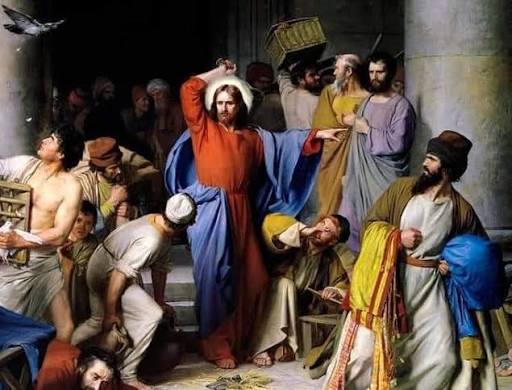
The Gospel concludes with Our Lord cleansing the Temple, reminding us that God’s house is a place of prayer and reverence. Christ’s zeal calls us to examine how we approach Him. Do we come before the Lord with attentive hearts, seeking His will above our own, or have the distractions of the world slowly crowded out true worship? May we always enter His presence with humility, gratitude, and love.
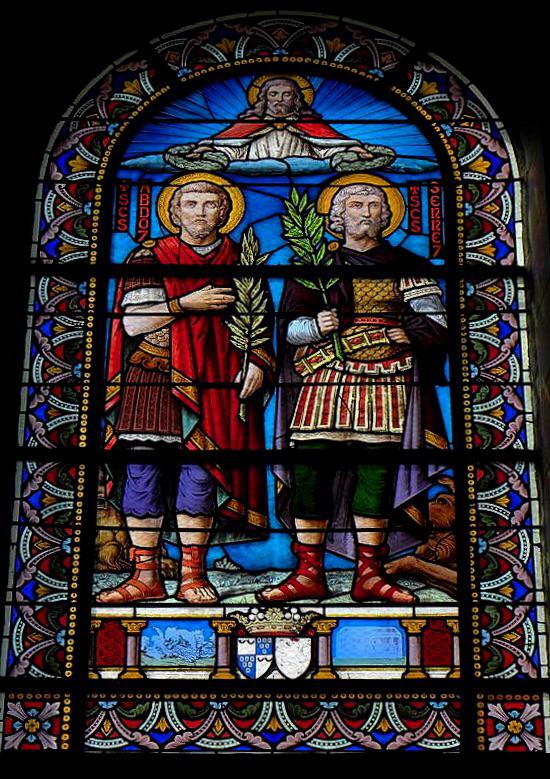
Today we also commemorate the holy martyrs Sts. Abdon and Sennen. Tradition tells us that these Persian noblemen courageously cared for the bodies of Christian martyrs and refused to deny their faith, even when threatened with death. Though exposed to wild beasts in the arena, they remained steadfast in their love for Christ. When the beasts would not harm them, they were ultimately put to death. Their courage was not born of human strength but of complete trust in God’s grace. They believed the promise we hear in today’s Epistle – that God is faithful – and they entrusted their lives entirely to Him.
Every day is a new visitation of the Lord. He comes quietly, patiently, lovingly, inviting us to deeper conversion and closer friendship with Him. May we never allow the distractions of this world or the temptations of the enemy to blind us to His presence. Instead, may we welcome Him with humble hearts, remain faithful to the treasures of the Catholic Faith, and follow Him with the courage of the saints. Then, He will always find hearts ready to receive Him with joy.
QUESTIONS FOR THE HEART
Do I recognize the many ways Christ visits me each day through prayer, the Holy Eucharist, Sacred Scripture, and the ordinary moments of life?
When temptation comes, do I rely on my own strength, or do I immediately turn to God’s grace through prayer and the Sacraments?
Is there anything in my heart that needs to be cleansed so that Christ may reign there more completely?
A LITTLE POEM FOR THE JOURNEY
When quietly my Savior draws near,
Lord, let me know that Thou art here,
Remove the idols from my heart,
And keep me faithful from the start.
In every trial, be Thou my stay,
My strength, my light, my guiding Way,
That when Thou callest, I may see
The day of Thy visitation unto me.
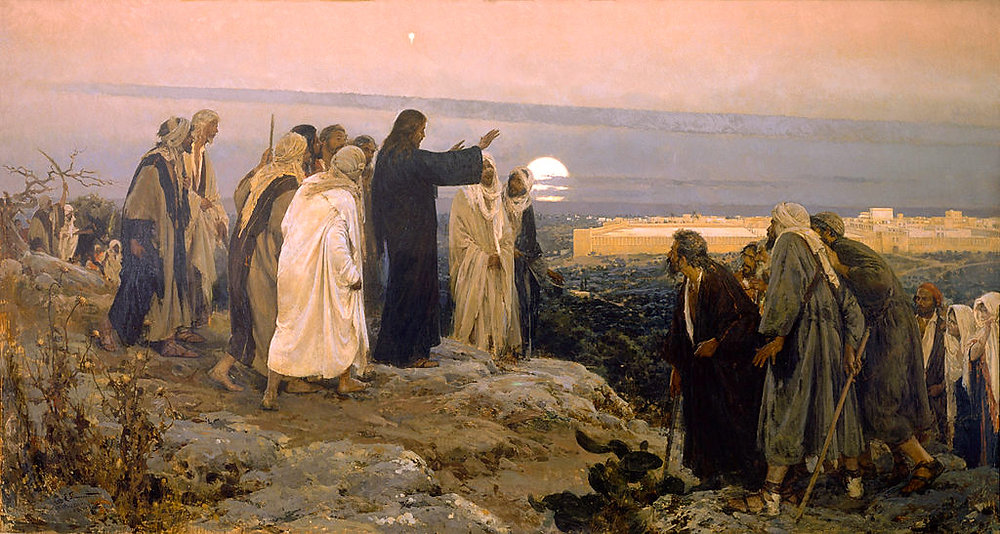
“ … God is faithful, who will not suffer you to be tempted above that which you are able: but will make also with temptation issue, that you may be able to bear it.” (I Corinthians 10:13)
Choosing the Better Part
Feast of St. Martha, Virgin
Commemoration of St. Felix, Pope & Martyr
Sts. Simplicius, Faustinus, & Beatrice, Martyrs
July 29, 2026
TODAY’S GOSPEL: Luke 10:38-42
EPISTLE: 2 Corinthians 10:17-18, 11:1-2
Today’s Gospel brings us into the peaceful home of Martha, Mary, and Lazarus, where Our Lord was welcomed not merely as a visitor but as a beloved friend. Martha devoted herself to serving Him with generous hospitality, while Mary sat quietly at His feet, listening to every word He spoke. When Martha asked Jesus to tell her sister to help with the work, Our Lord answered with great tenderness: “Martha, Martha, thou art careful, and art troubled about many things. But one thing is necessary. Mary hath chosen the best part, which shall not be taken away from her.”
These words are not a rebuke of faithful work. Rather, they reveal the proper order of the Christian life. The Church honors St. Martha precisely because of her loving service. Her generosity, diligence, and hospitality were true virtues. Yet even holy work can become a source of anxiety if it is no longer rooted in prayer. Christ gently reminds Martha – and each one of us – that before we can serve Him well, we must spend time with Him. Our work must flow from our union with Christ, or else even good works can leave our hearts weary and distracted.
How easily we find ourselves living as Martha did. Our days are filled with responsibilities, appointments, concerns for our families, and countless distractions. Even our efforts to serve the Church or help others can consume so much of our attention that we forget the One for whom we labor. The enemy is content to keep us busy if busyness slowly steals away our time for prayer. Today’s Gospel reminds us that the most fruitful souls have always been those who first learned to listen to the voice of the Master.

St. Paul reinforces this lesson in today’s Epistle. “He that glorieth, let him glory in the Lord.” Every gift we possess comes from God. Every opportunity to serve Him is itself a grace. The Christian does not seek recognition, praise, or admiration but desires only to please Christ. Our worth is not measured by how much we accomplish but by how faithfully we love Him. When our hearts remain fixed on Christ, even the smallest hidden acts of charity become precious in His sight.
St. Paul also speaks with the heart of a spiritual father, saying that he longs to present the faithful as “a chaste virgin to Christ.” His words remind us that every Christian soul is called to wholehearted fidelity to Our Lord. We belong to Him above all else. Like Mary seated at His feet, we are invited to give Christ our undivided attention each day, allowing His truth to shape our thoughts, our decisions, and our lives.
The saints we honor today beautifully reflect the Gospel. St. Martha teaches us that contemplation and action are never opposed but belong together. Her service was sanctified because it sprang from love for Christ. She is also remembered for her remarkable profession of faith after the death of her brother Lazarus: “Yea, Lord, I have believed that thou art Christ, the Son of the living God.” Even amid sorrow, her confidence rested firmly in Him.
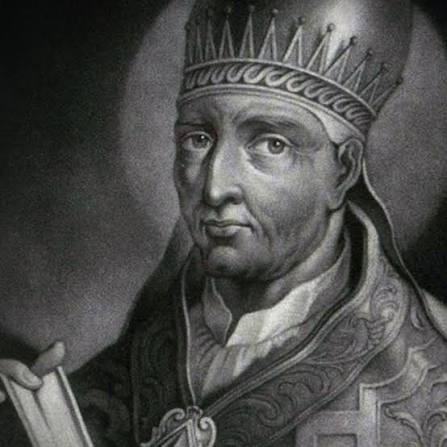
We also commemorate Pope St. Felix I, who courageously guided the Church during a time of persecution, preserving the Faith handed down by the Apostles. Alongside him, Sts. Simplicius, Faustinus, and Beatrice bore heroic witness to Christ through martyrdom. Their courage did not arise from human strength but from hearts firmly anchored in prayer and complete trust in God. Their lives remind us that those who remain close to Christ are given the grace to remain faithful whatever trials may come.
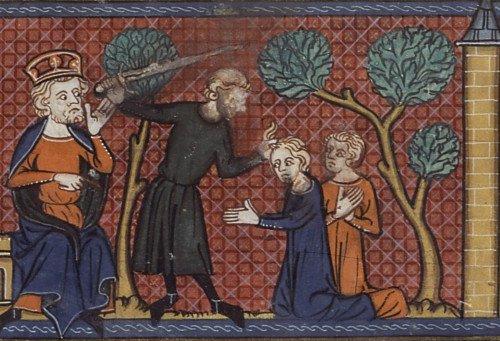
The world constantly urges us to do more, accomplish more, and fill every moment with activity. Yet Christ quietly repeats the same invitation He gave in Bethany: “One thing is necessary.” Before we speak, we must listen. Before we lead, we must follow. Before we serve, we must first kneel at the feet of the Savior. There we receive the wisdom, peace, and strength that make every duty fruitful and every sacrifice an offering of love.
May St. Martha teach us joyful service without anxiety. May Mary inspire us to treasure the presence of Christ above every earthly concern. Through the prayers of Pope St. Felix I and the holy martyrs we commemorate today, may we remain steadfast in the Catholic Faith, faithful to daily prayer, devoted to the Holy Eucharist, and ever attentive to the voice of Our Lord. Then we, too, will have chosen the better part – a treasure that can never be taken from us.
QUESTIONS FOR THE HEART
Do I allow the busyness of daily life to crowd out quiet time with Our Lord in prayer?
Does my service to my family, my parish, and others flow from a heart deeply united with Christ?
How can I make time each day this week to choose “the better part” by placing Jesus first?
A LITTLE POEM FOR THE JOURNEY
Lord, teach my restless heart to be
Content to sit in peace with Thee,
Before my hands begin their task,
To hear Thy voice is all I ask.
Then every duty, great or small,
Becomes an answer to Thy call,
for those who choose Thy love each day,
Have found the everlasting Way.
“Martha, Martha, thou art careful, and art troubled about many things. But one thing is necessary …” (Luke 10:41-42)
Trusting Christ Through Every Trial
Commemoration of Sts. Nazarius & Celsus, Martyrs
St. Innocent I, Pope & Confessor
St. Victor I, Pope & Martyr
July 28, 2026
TODAY’S GOSPEL: Luke 21:9-19
EPISTLE: Wisdom 10:17-20
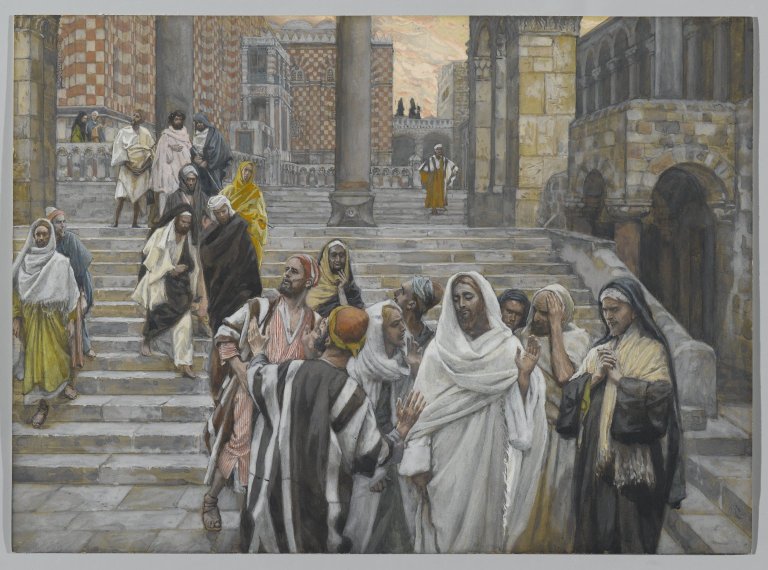
When we hear Our Lord speak of wars, earthquakes, famines, pestilences, persecution, and betrayal, it is easy to wonder whether these words were meant to inspire fear. Yet Christ tells us exactly the opposite: “Be not terrified.” He reveals these things not to alarm His disciples but to prepare them. He reminds us that while the world may be shaken, those who place their trust in Him have nothing to fear. The events of history never escape His providence, and no trial can separate us from His love if we remain faithful.
These words seem especially relevant in our own day. We witness violence, natural disasters, widespread confusion, attacks upon the dignity of human life, and growing hostility toward the truths of our holy Faith. Many hearts are tempted to discouragement or anxiety. Yet Christ does not call us to speculate endlessly about the signs of the times. Rather, He calls us to steadfast fidelity. Our peace does not come from knowing what tomorrow will bring but from knowing the One who holds tomorrow in His hands. As disciples of Christ, we are not called to live in fear but in faith, trusting that no darkness can overcome the Light of the world.
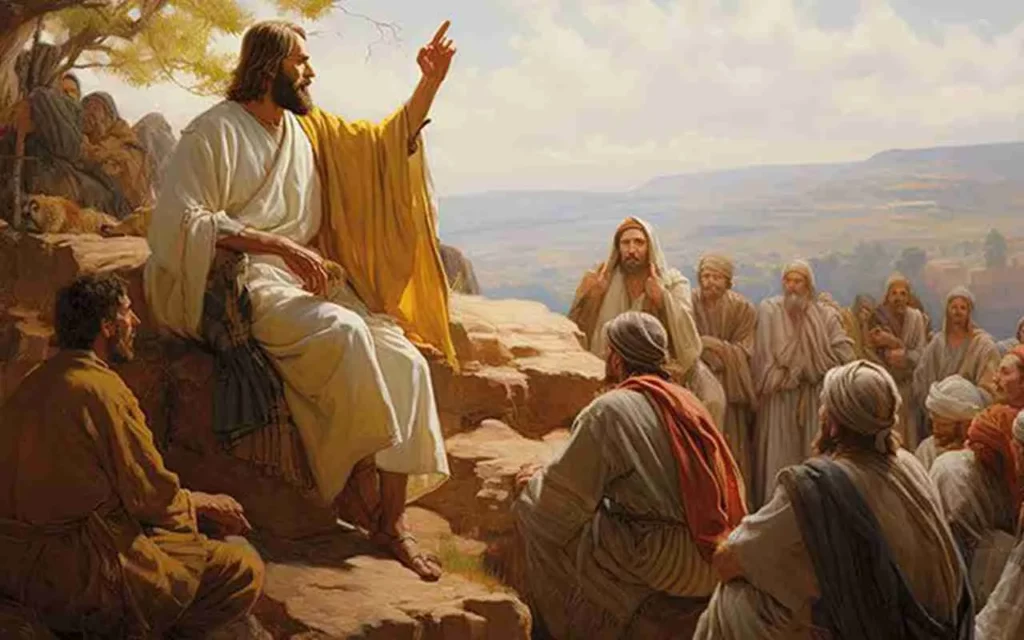
The Lord goes even further by warning His disciples that they themselves will suffer persecution for His Name. They will be brought before rulers, misunderstood, rejected, and even betrayed by those closest to them. Yet what appears to be defeat becomes an opportunity for grace. “It shall lead to your bearing witness.” God never wastes suffering. Every cross embraced with faith becomes a testimony to the truth of the Gospel and often bears fruit in souls in ways we may never fully know this side of eternity.
Jesus also gives a remarkable promise: “I will give you a mouth and wisdom which all your adversaries shall not be able to resist or gainsay.” How often do we worry about having the right words to defend the Faith or to comfort someone in need? The Lord reminds us that our first task is not to rely upon ourselves but to remain close to Him. Through daily prayer, frequent Confession, the Holy Eucharist, devotion to Our Lady, and fidelity to the ordinary duties of our vocation, He forms our hearts and provides the wisdom we need at the proper moment. What He asks of us, He also gives us the grace to accomplish.
Today’s Epistle beautifully illustrates this same truth. The Book of Wisdom recalls how God faithfully guided and protected His chosen people, leading them through dangers that seemed impossible to overcome. He was their light in darkness, their strength in weakness, and their deliverer from their enemies. The God who led Israel through the Red Sea has not changed. He continues to guide His Church and every soul that entrusts itself to Him. When we remember His faithfulness throughout salvation history, we find renewed confidence that He will never abandon those who seek Him with humble and trusting hearts.
The Church honors today Sts. Nazarius and Celsus, courageous martyrs who proclaimed Christ without counting the cost. Though they endured imprisonment and eventually gave their lives for the Gospel, they never wavered because their hope rested not in earthly security but in the promise of eternal life.
We also remember Pope St. Victor I and Pope St. Innocent I, who defended the integrity of the Catholic Faith during times of doctrinal confusion and grave challenges within the Church. They understood that fidelity to Christ sometimes demands courage, steadfast leadership, and an unwavering commitment to the truth handed down through Sacred Scripture, and Sacred Tradition. Their witness reminds us that every generation is called not to reinvent the Faith, but to receive it faithfully, live it courageously, and hand it on intact to those who follow.
Our Lord closes today’s Gospel with words that have strengthened Christians through every century: “In your patience you shall possess your souls.” Christian patience is not weakness, nor is it merely waiting for better days. It is a steadfast fidelity – a soul anchored firmly in Christ regardless of what surrounds it. The martyrs did not persevere because they were fearless, but because they trusted completely in the Lord who had already conquered sin and death. That same grace is offered to us today. If we remain faithful in prayer, steadfast in the sacraments, devoted to Our Lady, and obedient to the truth entrusted to the Church, we need not fear the future. Christ has already won the victory. Our task is simply to remain with Him until the end.
QUESTIONS FOR THE HEART
Do I allow the troubles of the world to steal my peace, or do I place my confidence firmly in Christ?
When opportunities arise to witness to my Faith, do I trust the Holy Spirit to give me the wisdom and courage I need?
How can I grow this week in patient perseverance through prayer, the sacraments, and deeper trust in God’s providence?
A LITTLE POEM FOR THE JOURNEY
When storms arise and shadows fall,
Your gentle voice still calms them all,
Though earth may shake and kingdoms fade,
In You my hope is unafraid.
Grant patient faith through joy and strife,
To follow You throughout this life,
Until at last Your face I see,
Forever safe in victory.
“In your patience you shall possess your souls.” (Luke 21:19)
RECOGNIZING CHRIST IN OUR MIDST
Commemoration of St. Pantaleon, Martyr
July 27, 2026
TODAY’S GOSPEL: Luke 19:41-47
EPISTLE: I Corinthians 10:6-13
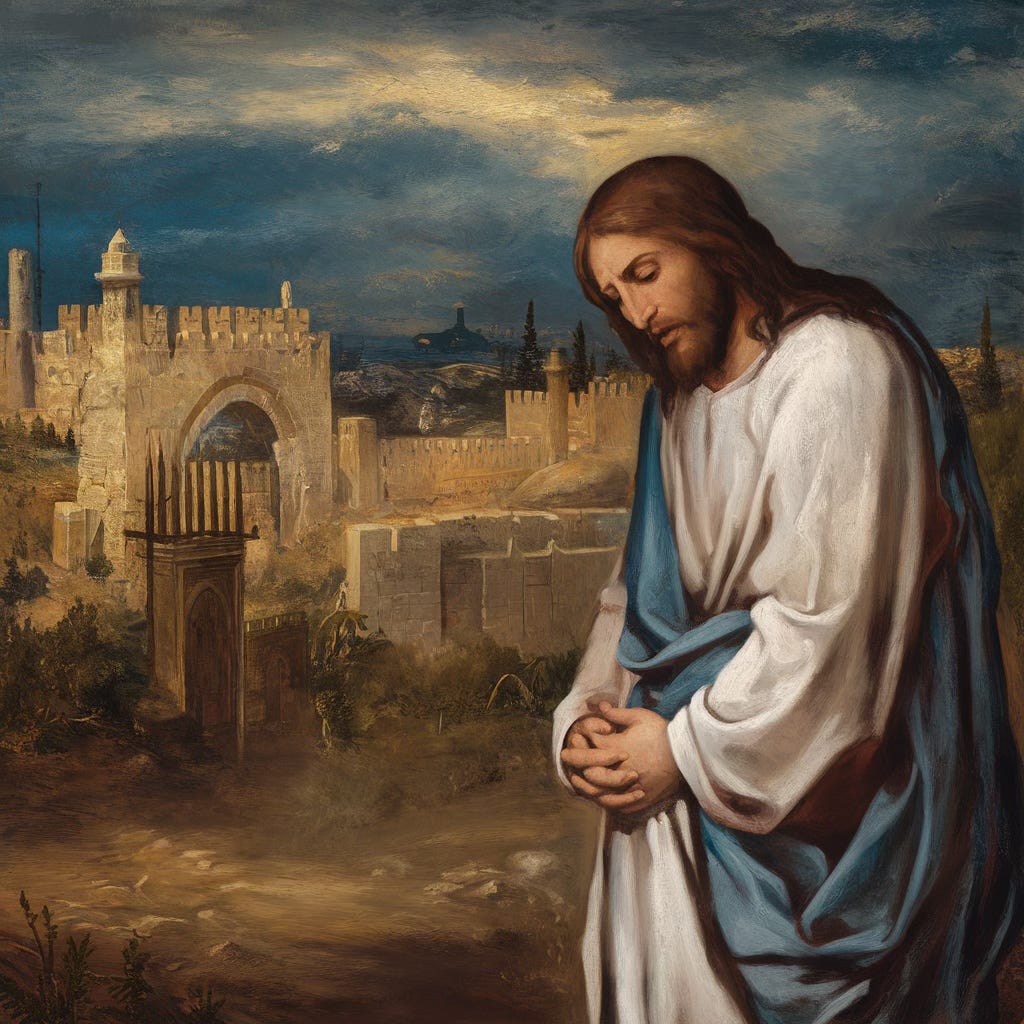
There is perhaps no greater tragedy than failing to recognize God when He comes to us. In today’s Gospel, Our Lord weeps over Jerusalem because His people “did not know the time of their visitation.” The Messiah they had awaited for centuries stood in their midst, yet many failed to recognize Him. It was not because God had hidden Himself, but because their hearts had become clouded by pride, false expectations, and attachment to their own ideas.
Many expected a Messiah who would restore Israel’s earthly kingdom, overthrow the Romans, and establish political power. Instead, Christ came in humility. He preached repentance, mercy, and conversion. He healed the sick, forgave sinners, welcomed the poor, and called all people to the Kingdom of God. His life fulfilled the promises of Sacred Scripture, yet so many overlooked the signs because He did not fit the image they had created for themselves.
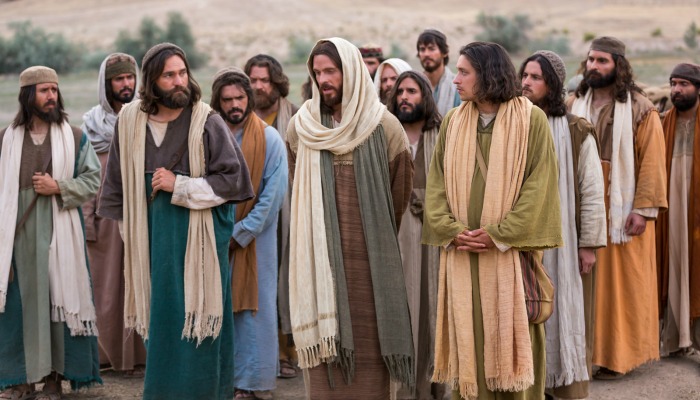
The Gospel invites us to examine our own hearts. Is it possible that Christ comes to us each day, yet we fail to recognize Him? He remains truly present in the Holy Eucharist, speaks to us through Sacred Scripture, strengthens us through the sacraments, and quietly calls us through the inspiration of His grace. Yet we can become distracted by the concerns of this world or so accustomed to these priceless gifts that we begin to take them for granted. Like the people of Jerusalem, we risk looking for God according to our own expectations rather than receiving Him as He truly comes.
St. Paul continues this lesson in today’s Epistle. Reflecting upon the history of Israel, he reminds us that those who had received extraordinary blessings nevertheless fell through disobedience and idolatry. “He that thinketh himself to stand, let him take heed lest he fall.” Spiritual blindness rarely comes all at once. It often begins with small compromises, neglected prayer, or a heart that slowly becomes less attentive to God’s grace.

Yet St. Paul immediately gives us great hope: “God is faithful.” He never abandons those who seek Him sincerely and never permits us to be tempted beyond the grace He is ready to provide. Every temptation is an invitation to rely more completely upon Him. As we remain faithful to daily prayer, frequent Confessions, the Holy Eucharist, devotion to Our Lady, and the ordinary duties of our vocation, our spiritual vision becomes clearer and our hearts more ready to recognize Christ whenever He comes.
Today the Church also honors St. Pantaleon, a physician who recognized in Christ the true source of every healing. After his conversion, he freely cared for the poor, offering his medical knowledge with humility while giving all glory to God. He understood that the gifts entrusted to him were not for his own honor but for the service of others. Even when threatened with torture and death, he refused to deny the Lord whom he had come to know. His witness reminds us that every good gift, including the knowledge and skill to care for the sick, comes ultimately from God. Physicians and all who minister to the suffering become instruments of His providence, while Christ remains the Divine Physician who alone can heal both body and soul.
May we never become so familiar with the things of God that we fail to recognize His presence. Instead, let us ask for the grace to see Him with hearts made humble by faith, ready to welcome Him whenever and however He comes.
QUESTIONS FOR THE HEART
Do I recognize Christ in the Holy Eucharist with renewed reverence and gratitude?
Have my own expectations or attachments made me less attentive to the ways God is working in my life?
What can I do this week to become more receptive to the quiet promptings of God’s grace?
A LITTLE POEM FOR THE JOURNEY
Lord, open now these eyes of mine,
To know Your presence, love divine,
When pride would cloud my heart today,
Lead me to walk Your humble way.
In Word and Sacrament may I see,
The Savior drawing close to me,
With faithful heart that never roams,
May I receive as I travel home.
“If thou hadst known, and that in this thy day, the things that are to thy peace: but now they are hidden from thy eyes.” (Luke 19:42)
RECOGNIZING CHRIST WHEN HE COMES
Commemoration of St. Anne, Mother of the Blessed Virgin Mary
July 26, 2026
TODAY’S GOSPEL: Luke 19:41-47
EPISTLE: I Corinthians 10:6-13
God is always speaking to His people. Sometimes he speaks through great miracles. Sometimes through suffering. Sometimes through the quiet voice of conscience. The tragedy in today’s Gospel is not that God remained silent, but that His people would not listen.
The tears of Christ reveal not weakness but the immeasurable depth of God’s love. He does not rejoice in judgment. He grieves when His children reject the grace He longs to give them. Throughout the history of Israel, God patiently formed His people. He gave them His Law, sent prophets to call them back whenever they strayed, performed mighty works in their midst, and prepared them for the coming of the Messiah. Every promise pointed to Christ. Yet many who knew the Scriptures best did not recognize the One to whom all those promises were leading.
Because of their unbelief Our Lord foretells the destruction of Jerusalem. Within a generation His prophecy would be fulfilled as the Romans destroyed the city and the Temple. The massive stones that were cast down still bear witness to the truth of Christ’s words. The tragedy was not that God failed to come to His people – it was that His people failed to recognize Him when He came.
As Jesus enters the Temple, He drives out those buying and selling within its courts, declaring, “My house is a house of prayer, but you have made it a den of thieves.” He is not simply cleansing a building. He is calling His people back to true worship and reminding them that nothing should take the place of God in their hearts. Even the holiest places can lose their purpose if hearts grow distracted and indifferent.
This Gospel invites each of us to ask a very personal question: Do I recognize Christ when He comes to me?
Our Lord continues to come to His people every day. He comes to us in the Holy Eucharist, where He gives us His very Body, Blood, Soul, and Divinity.
Yet it is possible to become so busy, so distracted, or so accustomed to this priceless gift that we bgin to take this gift for granted. Like Jerusalem, we can be surrounded by God’s blessings while failing to respond with grateful and faithful hearts.
St. Paul continues this warning in today’s Epistle. Looking back on the history of Israel, he reminds the Corinthians that many who had received extraordinary blessings nevertheless fell because of idolatry, immorality, and disobedience. These events, he says, were written for our instruction. Simply belonging to God’s people is not enough. We must respond to His grace with persevering faithfulness. As St. Paul warns us, “He that thinketh himself to stand, let him take heed lest he fall.”
Yet St. Paul’s message is also one of hope. He immediately reminds us that “God is faithful.” He never permits us to be tempted beyond what His grace will enable us to bear. Every temptation is accompanied by sufficient grace to overcome it if we remain close to Him. The Christian life is not lived by our own strength but by God’s.
That is why the Church continually encourages us to remain faithful to prayer, frequent reception of the Holy Eucharist, regular Confession, devotion to the Holy Rosary, Eucharistic Adoration, and daily fidelity to our duties. These ordinary acts of faith keep our hearts attentive to Christ and strengthen us to resist the distractions and temptation of the world.
Today the Church commemorates St. Anne, the mother of the Blessed Virgin Mary. Although Sacred Scripture tells us little about her, the Church has honored her from the earliest centuries, and ancient Christian tradition preserves the memory of her life with great reverence. According to that tradition, St. Anne and her husband, St. Joachim, endured many years without children, bearing this cross with patience, prayer, and unwavering trust to God’s providence. At a time when childlessness was often misunderstood as a sign of God’s displeasure, they remained faithful, refusing to lose hope in His goodness.
Ancient tradition also tells us that, after years of prayer, God blessed them with the birth of Mary, the child whom He had chosen from all eternity to become the Mother of His Divine Son. Whether or not St. Anne fully understood the extraordinary mission entrusted to her daughter, she faithfully embraced the vocation God had given her. In the quietness of family life, she helped guide the one who would one day answer the Angel Gabriel with her humble and trusting “Fiat”: “Be it done unto me according to thy word.”
St. Anne reminds us that God often accomplishes His greatest works through hidden and faithful souls. She preached no sermons, performed no recorded miracles, and held no place of earthly prominence. Yet through her fidelity to God in the ordinary duties of life, she became part of the unfolding mystery of our salvation. Her example encourages us to remain faithful in the quiet moments of our own lives, trusting that every act of obedience, every prayer offered with confidence, and every cross borne with love can become part of God’s greater plan.
QUESTIONS FOR THE HEART
Do I recognize Christ when He comes to me through the Holy Eucharist?
Have I allowed the distractions of the world to weaken my love for God or diminish my gratitude for the priceless gift of my Catholic faith?
What can I do this week to become more attentive to God’s grace and more faithful in responding to His call?
A LITTLE POEM FOR THE JOURNEY
Lord, keep my heart awake each day,
To see your hand along my way.
When quietly You call to me,
Help me respond with fidelity.
Like Anne, may trust my spirit fill,
Content to follow Heaven’s will,
May I receive Your gifts with love,
Until we meet in Heaven above.
“If thou hadst known, and that in this thy day, the things that are to thy peace: but now they are hidden from thy eyes.” (Luke 19:42)
SONS OF THUNDER
Feast of St. James the Greater, Apostle
Commemoration of St. Christopher, Martyr
July 25, 2026
TODAY’S GOSPEL: Matthew 20:20-23
EPISTLE: I Corinthians 4:9-15
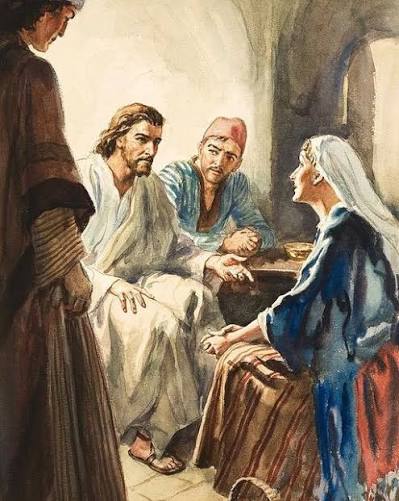
Among the Apostles, few possessed the zeal and fiery spirit of James and his brother John. So passionate were they that Our Lord Himself gave them the name “Boanerges,” meaning “Sons of Thunder.” Their love for Christ was sincere, but like all of us, it still needed to be purified and transformed by grace.
In today’s Gospel, the mother of James and John approaches Jesus with a bold request – that her sons might sit at His right and His left when He comes into His Kingdom. At first, her request may seem ambitious, yet every loving mother desires the very best for her children. More than earthly success, Christian parents long to see their children remain faithful to Christ and one day share in the glory of Heaven. She clearly believed Jesus to be the promised Messiah, and her request simply gave voice to the hope that already filled her heart.
Our Lord, however, gently redirects her attention from earthly honor to heavenly sacrifice. He asks James and John, “Can you drink the chalice that I shall drink?” At this point in their journey, following Jesus must have seemed extraordinary. They had witnessed the blind receive sight, the sick restored to health, storms calmed with a word, and demons driven out. Yet neither they nor the other disciples fully understood that the road to Christ’s Kingdom would first pass through Calvary.
The chalice of which Christ speaks is the cup of His Passion. James and John would indeed share in it – not by accomplishing the redemption that belongs to Christ alone – but by faithfully sharing in His sufferings for the sake of the Gospel. James would become the first of the Twelve Apostles to seal his witness with his blood, fulfilling the words of Christ that he would indeed drink of His chalice.
The Christian life remains a journey of wonder, miracles, and suffering. We cannot escape suffering in a fallen world. The question is not whether suffering will come, but what we will do with it. When our trials are united with the sufferings of Christ, they become a powerful offering of love. What the world sees as weakness, God transforms into grace. Every cross embraced with faith becomes an opportunity for our own sanctification and a source of blessing for others.
St. Paul echoes this same truth in today’s Epistle. Writing to the Corinthians, he reminds them that the Apostles are not honored by the world but often despised by it. They endure hunger, hardship, persecution, and humiliation because they belong to Christ. Their greatness is found not in earthly recognition but in faithful perseverance. They willingly embrace the life Christ has given them because they know the eternal reward awaiting those who remain faithful.
These words remain just as relevant today. The Christian life has never been a path of comfort or popularity. The world applauds success, power, and self-promotion, but Christ calls His followers to humility, sacrifice, and steadfast fidelity. Like the Apostles, we are called to be willing to carry whatever cross He permits, trusting that every sacrifice offered in love prepares us for the everlasting Kingdom.
St. James beautifully illustrates this transformation. A fisherman by trade and one of Christ’s closest companions, he witnessed the raising of Jairus’s daughter, the glory of the Transfiguration, and the agony of Our Lord in the Garden of Gethsemane. He saw Christ reveal His divine glory upon Mount Tabor, and later witnessed the profound mystery of His human anguish as He freely accepted the Father’s will before His Passion. These experiences prepared James to proclaim the Gospel with fearless courage. The fiery temperament that once earned him the title “Son of Thunder” was transformed into steadfast courage, leading him to lay down his life for Christ with unwavering faith.
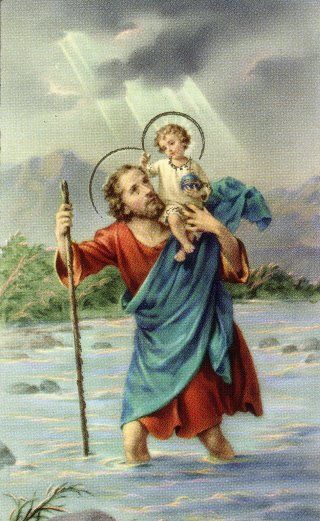
The Church also commemorates today St. Christopher, Martyr. According to ancient Christian tradition, he desired above all to serve the greatest King. His search ultimately led him to Jesus Christ, the King of Kings. Tradition tells us that he once carried a small child across a dangerous river, only to discover that the Child was Christ Himself, bearing the weight of the world. Whether remembered through history or pious tradition, St. Christopher remains a beautiful image of every Christian disciple – one who willingly bears Christ and helps others safely reach Him.
For most of us, discipleship will not involve standing before kings or facing martyrdom. Instead, it is to be found in the quiet choices that shape our lives day by day. We drink from Christ’s chalice whenever we forgive instead of resent, choose humility over pride, persevere in prayer despite dryness, faithfully receive the Sacraments, serve those in need, and carry our daily crosses with love. These hidden acts of fidelity prepare us for the Kingdom far more surely than any earthly honor ever could.
May St. James teach us holy courage. May St. Christopher help us bear Christ faithfully wherever He leads us. And may we, like the Apostles, become willing to drink whatever chalice Our Lord places before us, trusting that beyond every cross lies the joy of eternal life.
QUESTIONS FOR THE HEART
Do I seek Christ for earthly success and comfort, or am I willing to follow Him faithfully even when the path includes sacrifice and suffering?
When trials come into my life, do I unite them with Christ’s Passion and offer them in love for the salvation of souls?
How often do I ask the Saints to intercede for me, trusting that those who faithfully followed Christ now help us persevere on our journey toward Heaven?
A LITTLE POEM FOR THE JOURNEY
Lord, make my heart both strong and true,
To follow where You call me to,
When crosses come, let faith increase,
And fill my soul with lasting peace.
Like James, may courage light my way,
Like Christopher, Your love display,
Through every trial, great or small,
May I bear Christ – and give Him all.
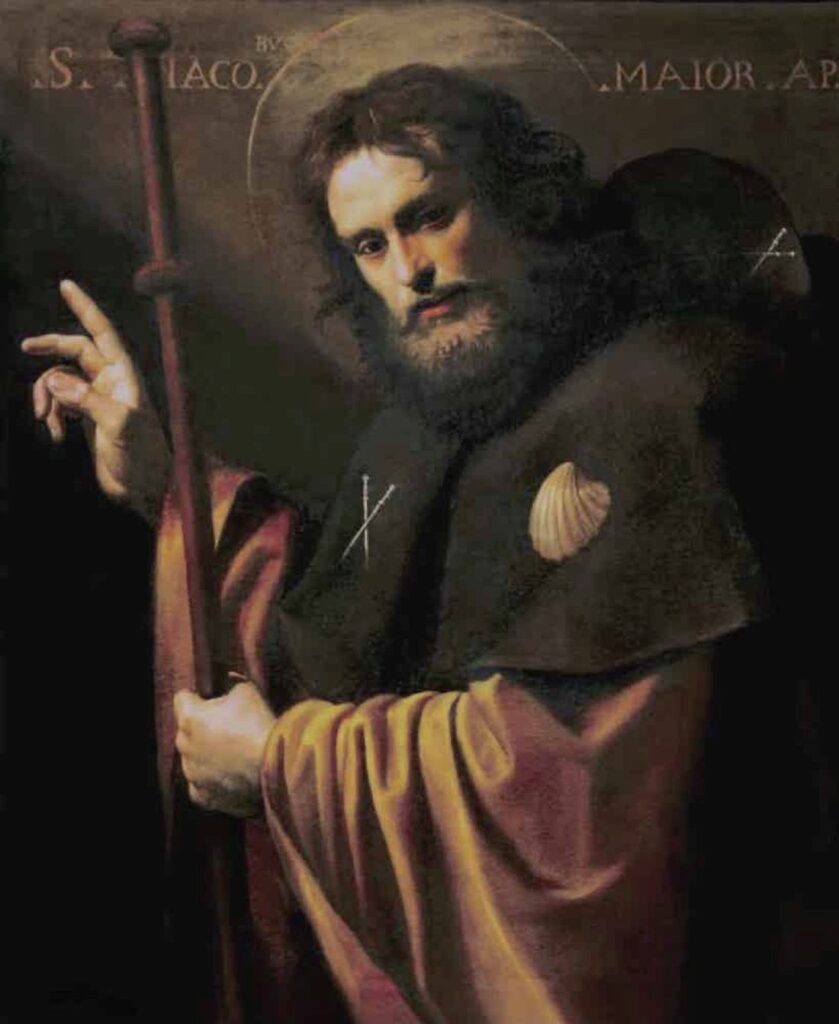
“Can you drink the chalice that I shall drink?” (Matthew 20:22)
THE WISE STEWARD OF ETERNITY
Commemoration of St. Christina of Bolsena, Virgin and Martyr
July 24, 2026
TODAY’S GOSPEL: Luke 16:1-9
EPISTLE: Romans 8:12-17
Few parables of Our Lord have prompted more reflection throughout the centuries than today’s account of the unjust steward. At first glance, it may seem surprising that the master praises a man who had squandered his goods and acted dishonestly. Yet Christ is not praising the steward’s injustice. Rather, He draws attention to the steward’s prudence. Once the steward realized that his time was short, he acted decisively. He understood that his present circumstances would soon come to an end, and he used every opportunity available to prepare for what lay ahead.
This is the lesson Our Lord places before us. The children of the world often labor tirelessly for temporary success. They devote great energy to securing wealth, comfort, influence, and earthly security – things that pass away. Christ asks why His followers should be any less diligent in preparing for eternity. If men will sacrifice so much for a future that lasts only a few years, how much more should Christians labor for the Kingdom that has no end?
Every one of us is a steward. Nothing we possess truly belongs to us. Our life, our family, our talents, our health, our time, our possessions, and even our faith have all been entrusted to us by God. One day, like the steward in today’s Gospel, each of us will be called to give an account of how we have managed these gifts. The question will not be how much we accumulated for ourselves, but how faithfully we used God’s gifts for His glory and for the salvation of souls.
Our Lord concludes the parable with a striking exhortation: “Make unto you friends of the mammon of iniquity: that when you shall fail, they may receive you into everlasting dwellings.” Earthly goods are never an end in themselves. They become treasures for Heaven when they are used with charity. Every act of generosity, every sacrifice made for Christ, every kindness shown to someone in need, every work of mercy offered out of love for God becomes an investment in eternity. What is spent for Christ is never lost.
The Epistle from St. Paul deepens this truth by reminding us of who we truly are. “For whosoever are led by the Spirit of God, they are the sons of God.” Through Baptism we have received far more than earthly blessings. We have been adopted into the very family of God. We are no longer slaves living in fear but beloved children who cry out with confidence, “Abba, Father.”
This divine adoption changes everything. If we are children of God, then our inheritance is not measured in earthly wealth but in eternal glory. We are, as St. Paul declares, “heirs indeed of God, and joint heirs with Christ.” No treasure this world offers can compare with what God has prepared for those who love Him.
Yet an inheritance must be lived toward. St. Paul reminds us that “if we suffer with Him, we may be also glorified with Him.” The Christian life is not merely waiting for Heaven; it is allowing the Holy Ghost to shape our hearts day by day. The gifts of the Holy Spirit – wisdom, understanding, counsel, fortitude, knowledge, piety, and holy fear of the Lord – are the spiritual riches God freely pours into our souls. They strengthen us to resist temptation, to discern His will, to persevere through trials, and to become more like Christ. The wise steward does not neglect these treasures but cooperates with the grace God continually provides.
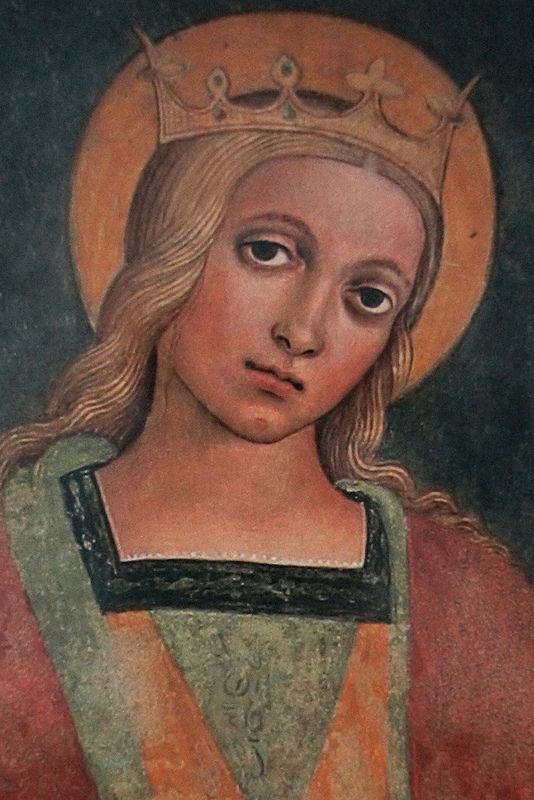
The life of St. Christina beautifully illustrates this wisdom. Although still very young, she refused to abandon Christ despite terrible persecution. According to ancient tradition, she endured imprisonment, cruel tortures, and repeated attempts upon her life rather than offer sacrifice to idols or deny her Savior. Earthly comfort, honor, and even life itself held little value compared to the eternal inheritance promised by Christ. Her persecutors could wound her body, but they could not rob her of the treasure she had laid up in Heaven.
St. Christina reminds us that fidelity is often measured not in extraordinary accomplishments but in steadfast perseverance. Most of us will never face the dramatic trials of the martyrs, yet every day presents countless opportunities to choose Christ over ourselves. We choose Him when we forgive instead of resent, when we speak truth rather than compromise, when we remain faithful in prayer despite dryness, when we fulfill our daily duties with love, and when we quietly bear the crosses God permits for our sanctification.
The world constantly urges us to live for the present moment. It tells us to accumulate, to indulge, and to seek security in possessions that cannot last. Christ calls us to something infinitely greater. He asks us to live with eternity always before our eyes. Every choice, every sacrifice, every act of charity becomes part of the account we will one day render before Him. May we therefore live as wise stewards, never forgetting that our true home is not here.
QUESTIONS FOR THE HEART
Am I living primarily for the passing concerns of this world, or do I make decisions each day with my eternal salvation always before my eyes?
God has entrusted me with many gifts – my faith, my family, my time, my talents, and His grace. How am I using these treasures to serve Christ and help others on the path to Heaven?
As an adopted child of God and an heir with Christ, do I trust my Heavenly Father enough to surrender my plans to Him and allow the Holy Spirit to guide my life?
A LITTLE POEM FOR THE JOURNEY
Lord, teach my heart to wisely live,
To treasure all the gifts You give,
Not wealth that fades, nor earthly fame,
But love that burns in Jesus’ Name.
When life is done and days are past,
May faithful service bring, at last,
The welcome every soul would hear:
“Well done, My child – your home is here.”
“For whosoever are led by the Spirit of God, they are the sons of God … And if sons, heirs also; heirs indeed of God, and joint heirs with Christ: yet so, if we suffer with Him, that we may be also glorified with Him. (Romans 8:14,17)
THE SERVANT’S CROWN
Commemoration of St. Apollinaris, Bishop and Martyr
July 23, 2026
TODAY’S GOSPEL: Luke 22:24-30
EPISTLE: I Peter 5:1-11
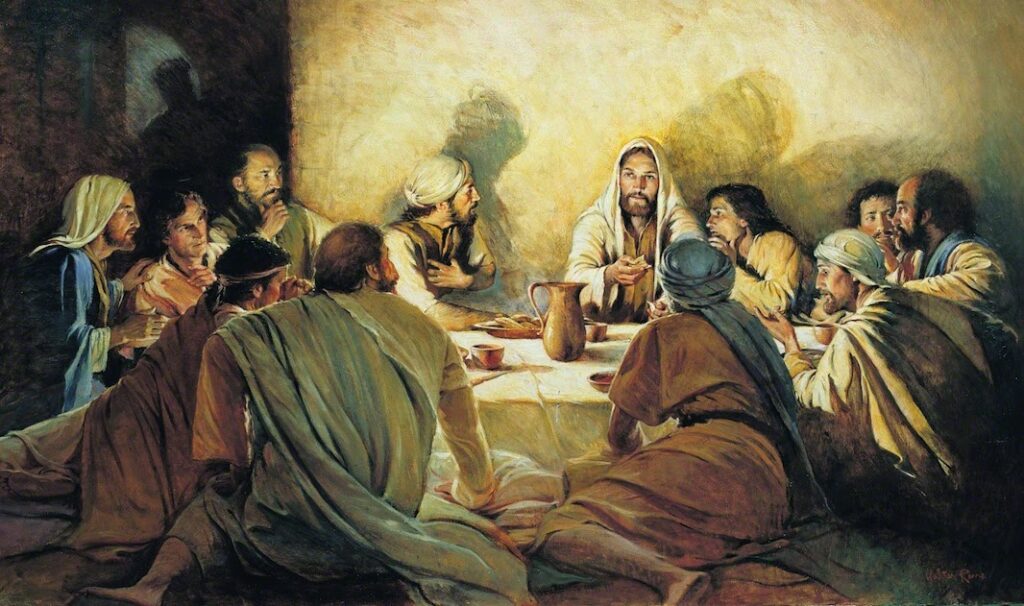
Few scenes in the Gospel reveal both the weakness of human nature and the patience of Christ as vividly as today’s Gospel. The setting is the Upper Room on the night before Our Lord’s Passion. In only a few short hours He will be betrayed, abandoned, scourged, crowned with thorns, and nailed to the Cross for the salvation of the world. Yet even in these sacred moments, a dispute arises among the Apostles over which of them should be considered the greatest.
How gently Our Lord responds. He does not shame them or dismiss them. Instead, He reveals a truth that turns every earthly ambition upside down. “The kings of the Gentiles lord it over them,” He says, “but you shall not be so.” In the Kingdom of God, greatness is not measured by power, influence, or honor. It is measured by humility, charity, and the willingness to serve.
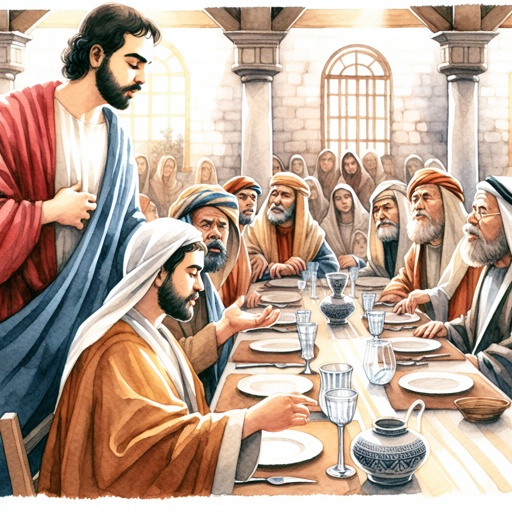
Then Jesus points to Himself as the perfect example. “I am in the midst of you as He that serveth.” The eternal Son of God, through whom all things were made, chose not to be served but to serve. He healed the sick, comforted the sorrowful, welcomed sinners, fed the hungry, and would soon kneel to wash the feet of the very men who had just been arguing about precedence. Before ascending the throne of His heavenly glory, He embraced the Cross.
Yet Our Lord does not leave the Apostles without hope. After teaching them the way of humility, He promises them a kingdom. “That you may eat and drink at My table in My kingdom: and may sit upon thrones judging the twelve tribes of Israel.” Christ does not condemn the desire for greatness; rather, He purifies it. He teaches that true greatness is found only by walking the road He Himself has walked. In God’s plan, the crown always follows the Cross, and glory follows faithful service.
The Epistle from St. Peter is especially moving when read alongside today’s Gospel. Years have passed since that evening in the Upper Room. The Apostle who once argued about greatness now speaks with the wisdom born of repentance, suffering, and grace. Having learned at the feet of Christ, Peter exhorts the shepherds of the Church to “feed the flock of God” willingly and generously, “not as lording it over the clergy, but being made a pattern of the flock.”
What Peter once struggled to understand, he now teaches with conviction. Authority in Christ’s Church is never a privilege to be enjoyed but a responsibility to be carried. Every Christian, whether bishop, priest, parent, employer, teacher, or friend, has been entrusted with souls to encourage, guide, or serve. The measure of that responsibility is not how many people follow us, but how faithfully we follow Christ.
Peter then extends this call beyond the shepherds to every believer: “Be you humbled therefore under the mighty hand of God.” Humility is not weakness. It is the quiet strength that acknowledges our complete dependence upon the Lord. The proud heart trusts in itself; the humble heart entrusts itself to God. For this reason Peter urges us to cast all our care upon Him, “for He hath care of you.”
The Apostle also reminds us that the Christian life is a spiritual battle. The devil “goeth about seeking whom he may devour.” Pride leaves us vulnerable because it persuades us that we are sufficient on our own. Humility, on the other hand, keeps us close to Christ, relying upon His grace rather than our own strength. Peter’s encouragement is filled with hope: after we have “suffered a little,” the God of all grace will perfect, strengthen, and establish us. Our trials are never meaningless when they are united to Christ.
The life of St. Apollinaris beautifully illustrates these sacred lessons. According to ancient tradition, he was a disciple of St. Peter and was sent by him to proclaim the Gospel in Ravenna. As its first bishop, he labored tirelessly to preach Christ, convert souls, and strengthen the faithful. His ministry was marked not by earthly success but by repeated suffering. He endured beatings, imprisonment, exile, and persecution. Time and again he was driven from his flock, yet time and again he returned to them, knowing well that each return might cost him his life.
St. Apollinaris did not cling to comfort or seek worldly honor. He shepherded as Christ had commanded and as Peter had taught. He understood that a true shepherd does not abandon his flock when danger approaches. His greatness did not consist in titles or authority but in his unwavering fidelity. At last, after years of faithful labor, he sealed his witness with martyrdom, receiving the crown that Christ had promised to those who persevere.
His example reminds us that the Christian vocation has never been one of comfort alone. Every disciple is called to carry the Cross in some way. Most of us will not be asked to shed our blood for Christ, but we are all called to die daily to pride, selfishness, resentment, impatience, and the desire to be recognized. These hidden sacrifices, offered with love, prepare our souls for the eternal Kingdom.
The world constantly encourages us to seek importance, applause, and influence. Christ asks something very different. He asks us to become servants after His own Heart. Whether our duties are great or small, public or hidden, He sees every act of faithful love. The smallest work performed for His sake possesses an eternal value that far exceeds the honors of this passing world.
QUESTIONS FOR THE HEART
Do I seek recognition and importance in the eyes of the world, or do I desire the quiet greatness that comes from serving Christ and others with humility?
When trials, disappointments, or sacrifices come into my life, do I accept them as opportunities to grow in faith and trust, remembering that the crown follows the Cross?
How can I imitate Christ’s servant-heart today through one hidden act of charity, patience, or self-forgetfulness toward someone God has placed in my life?
A LITTLE POEM FOR THE JOURNEY
Teach me, Lord, the humble way,
To serve in love from day to day,
When pride would seek the highest place,
Clothe me instead with gentle grace.
Through cross and trial keep me true,
My Shepherd, let me follow You,
Until the crown at last I see,
Prepared for those who cling to Thee.
“But the God of all grace, who hath called us into His eternal glory in Christ Jesus, after you have suffered a little, will Himself perfect you, and confirm you, and establish you.” (I Peter 5:10)
SEEKING THE BELOVED
Feast of St. Mary Magdalene
July 22, 2026
TODAY’S GOSPEL: Luke 7:36-50
EPISTLE: Canticle of Canticles 3:2-5, 8:6-7
Today’s Gospel is a beautiful meditation on repentance, humility, mercy, and love. While Our Lord is dining in the house of Simon the Pharisee, a woman known publicly for her sinful life enters quietly. She falls at the feet of Jesus, bathing them with her tears, wiping them with her hair, kissing them, and anointing them with precious ointment. She is unconcerned with the opinions of those around her. She has not come to defend herself, excuse her past, or preserve her reputation. Her only desire is to find Christ and to place herself completely at His mercy.
The woman in today’s Gospel is not identified by name. Over the centuries, many in the Western Church have associated her with St. Mary Magdalene, whose feast we commemorate today. However, Sacred Scripture does not identify her with St. Mary Magdalene. The Gospel does invite us, though, to contemplate something more important than her identity – the boundless mercy of Christ, who never refuses a humble and repentant heart.
Knowing Simon’s thoughts, Our Lord tells the parable of the two debtors. One owed a great debt, the other much less, yet both were freely forgiven. “Which therefore loveth him more?” Simon answers correctly: the one forgiven the greater debt. Then Jesus gently reveals the lesson Simon had failed to learn. The woman had shown extraordinary love because she had received extraordinary mercy. Her tears were not signs of despair but of hope. Her faith had opened her heart to the forgiveness that only God could give.
How striking that God Himself was a guest in Simon’s home, yet Simon failed to recognize the greatness of the One seated at his own table. His pride blinded him. He offered none of the customary signs of hospitality, while the repentant woman poured out everything she had in love. Pride kept one soul at a distance; humility drew the other into the very Heart of Christ. It is a sobering reminder that outward religion, without humility, can leave us standing near Christ without ever truly knowing Him.
The Epistle from the Canticle of Canticles beautifully expresses the longing of every soul created for God. “I sought Him whom my soul loveth.” The Bride searches through the streets and broad ways, refusing to abandon her search until she finds her Beloved. Once she finds Him, she clings to Him, and later the sacred author proclaims, “Set me as a seal upon thy heart … for love is strong as death.”
This is more than a beautiful love poem. It is an image of the soul seeking the Lord with perseverance, discovering that only He can satisfy the deepest longing of the human heart.
Today’s feast of St. Mary Magdalene naturally leads us to reflect upon another beautiful example of conversion and faithful love. Sacred Scripture tells us that Our Lord delivered her from seven demons, and from that moment she became one of His most devoted disciples. She followed Him throughout His public ministry, remained faithfully at the foot of the Cross with the Blessed Virgin and St. John when so many others had fled, and lovingly watched where His sacred Body was laid.
Before dawn on Easter morning, while it was still dark, Mary Magdalene returned to the tomb seeking the One whom her soul loved. Through her tears she searched for her Lord until the risen Christ spoke a single word: “Mary.” At the sound of His voice, sorrow was transformed into joy. She recognized her Master and became the first witness of the Resurrection, sent by Christ Himself to announce to the Apostles the greatest news the world has ever heard.
The repentant woman in today’s Gospel, the Bride in the Canticle of Canticles, and St. Mary Magdalene all teach us the same lesson. Every human heart is searching for something. The world offers many promises of happiness, yet only Christ can satisfy the longing He Himself has placed within us. Whether we come to Him burdened by sin, searching through darkness, or grieving beside an empty tomb, He never disappoints the soul that sincerely seeks Him. He calls each of us by name and invites us into a friendship that neither death nor eternity can destroy.
May we never allow pride, worldly distractions, or discouragement to keep us from seeking Christ. Like St. Mary Magdalene, may we remain faithful in times of darkness, confident that those who persevere in seeking the Lord will one day behold Him face to face.
QUESTIONS FOR THE HEART
Do I approach Our Lord with the humility of the repentant woman, trusting completely in His mercy, or do I allow pride to keep me at a distance from Him?
Do I make frequent use of the Sacrament of Penance, where Christ continues to forgive sins and restore souls to His friendship?
Can it truly be said of me, “I sought Him whom my soul loveth”? Is my deepest desire to know Christ more intimately and to remain faithful to Him, whatever the cost?
A LITTLE POEM FOR THE JOURNEY
Lord, let me seek Thee while I may,
With humble heart and trusting prayer,
When I have found Thy loving Face,
Keep me forever anchored there.
Like Magdalene before the dawn,
Still searching through the darkest night,
Until I hear Thee call my name,
And all my sorrow turns to light.
“I found Him whom my soul loveth: I held Him: and I will not let Him go ….” (Canticle of Canticles 3:4)
THE RIPPLE OF GRACE
Feast of St. Lawrence of Brindisi, Confessor and Doctor of the Church
Commemoration of St. Praxedes, Virgin and Martyr
July 21, 2026
TODAY’S GOSPEL: Matthew 5:13-19
EPISTLE: 2 Timothy 4:1-8
In today’s Gospel, Our Lord gives His disciples a remarkable mission: “You are the salt of the earth … You are the light of the world.” Salt preserves what is good and gives flavor where there is none. Light scatters darkness and reveals the path that leads home. Christ, the true Light of the world, came into history to dispel the darkness of sin and reveal the Father’s love. Through His Passion, Death, and Resurrection, He changed the course of history forever. The coming of Christ was like a stone cast into still waters – the ripple of His saving grace continues to spread through every age and every generation.
That same ripple continued through the Apostles. Filled with the Holy Ghost, they carried the light of Christ into a world that often rejected them. Their witness transformed hearts, strengthened families, founded churches, and raised up saints, martyrs, priests, religious, and faithful disciples whose lives continue to bear fruit even two thousand years later. The light entrusted to them was never meant to be hidden beneath a bushel basket but to shine brightly for the glory of God.

That mission now belongs to us. Every act of kindness, every word of truth, every hidden sacrifice offered for love of Christ sends another ripple into the world. Parents who faithfully teach their children the Faith, friends who gently encourage one another, neighbors who perform quiet acts of charity, and Christians who remain steadfast in difficult times all become instruments through whom Christ’s light reaches others. We may never see the full effect of our faithfulness, but God does. No act of love offered in His Name is ever wasted.
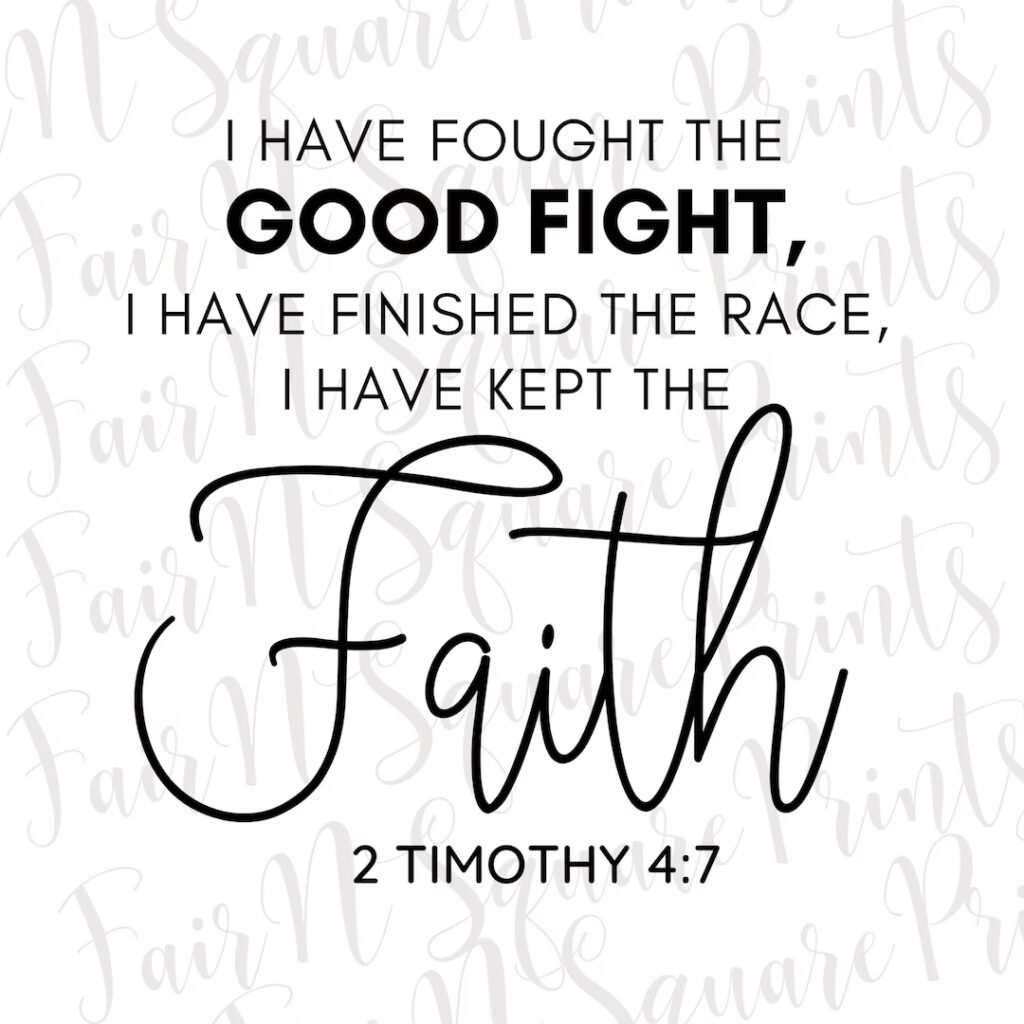
St. Paul echoes this same call in today’s Epistle. Knowing that his earthly race is nearly complete, he urges Timothy to “preach the word; be instant in season, out of season.” Whether welcomed or rejected, convenient or difficult, the Gospel must always be proclaimed with patience, courage, and fidelity. St. Paul knew that false teaching and spiritual confusion would arise, yet he never lost heart. His duty was not to guarantee success but to remain faithful to the mission Christ had entrusted to him.
His moving words challenge every Christian: “I have fought the good fight, I have finished my course, I have kept the faith.” What greater testimony could any soul hope to offer at the end of life? God does not ask each of us to accomplish the same work as St. Paul, but He does ask us to persevere faithfully in the vocation He has given us. Whether our witness is public or hidden, dramatic or quiet, we are all called to finish the race with unwavering trust in Him.
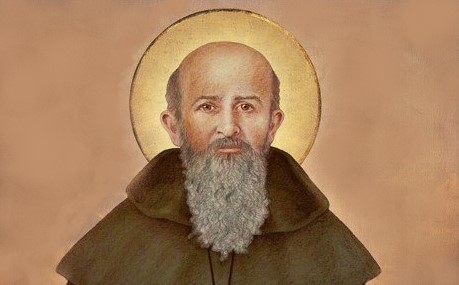
St. Lawrence of Brindisi beautifully embodied this perseverance. Blessed with extraordinary intelligence and a remarkable gift for languages, he devoted his life to preaching Christ with clarity, charity, and courage. From the time he was seven years old, he showed signs of sanctity, frequenting the church of the Conventual Franciscans, where he would often serve at Holy Mass. He would also gather other children and preach to them.
He entered the Capuchin Order at the age of 16. As a Capuchin friar, he defended the Catholic Faith during a time of great division, instructed both rulers and ordinary people in the truths of the Gospel, and worked tirelessly for the unity of the Church. Pope Clement VIII sent him to establish the Capuchin Order in Germany and to combat the Lutheran heresy. His profound knowledge was always joined to deep humility and an ardent love for Our Lord. He reminds us that truth spoken with charity has the power to illuminate minds and draw souls to Christ.
St. Praxedes offers a quieter but equally powerful witness. A young Roman virgin, she dedicated her life completely to Christ during a time of fierce persecution. Together with her sister, she cared for imprisoned Christians, brought them food and encouragement, and reverently buried those who had given their lives for the Faith. She knew the danger of her works of mercy, yet love proved stronger than fear. Her hidden acts of charity became a light shining in the darkness of pagan Rome, reminding us that holiness is often built through countless quiet acts of sacrificial love.
Today’s readings invite us to consider the influence our own lives have upon others. Every choice we make leaves its mark. A word of encouragement may strengthen a weary soul. A faithful example may inspire a child or grandchild for years to come. One quiet act of forgiveness may heal a family. We may never fully know how God uses our fidelity, but every act done for His glory sends forth another ripple of grace. May we never hide the light Christ has placed within us, but let it shine before others so that, seeing our good works, they may glorify our Father who is in Heaven.
QUESTIONS FOR THE HEART
Am I allowing the light of Christ to shine through my words, actions, and daily example, especially within my own family?
Like St. Paul, do I remain faithful to Christ “in season and out of season,” even when living the Faith is difficult or unpopular?
What one act of charity, encouragement, or sacrifice can I offer today that may become a ripple of grace in someone else’s life?
A LITTLE POEM FOR THE JOURNEY
Lord, make me salt upon the earth,
A faithful light that shines for Thee,
May every word and work of love,
Draw wandering hearts to Calvary.
When trials come, keep me steadfast,
To finish well the race begun,
Until I hear Thy welcome voice,
“Well done, good servant – faithful one.”
“You are the light of the world. Neither do men light a candle and put it under a bushel, but upon a candlestick, that it may shine to all that are in the house.” (Matthew 5:14-15)
LET THE LITTLE CHILDREN COME TO ME
Feast of St. Jerome Emiliani, Confessor
Commemoration of St. Margaret of Antioch, Virgin and Martyr
July 20, 2026
TODAY’S GOSPEL: Matthew 19:13-21
EPISTLE: Isaiah 58:7-11
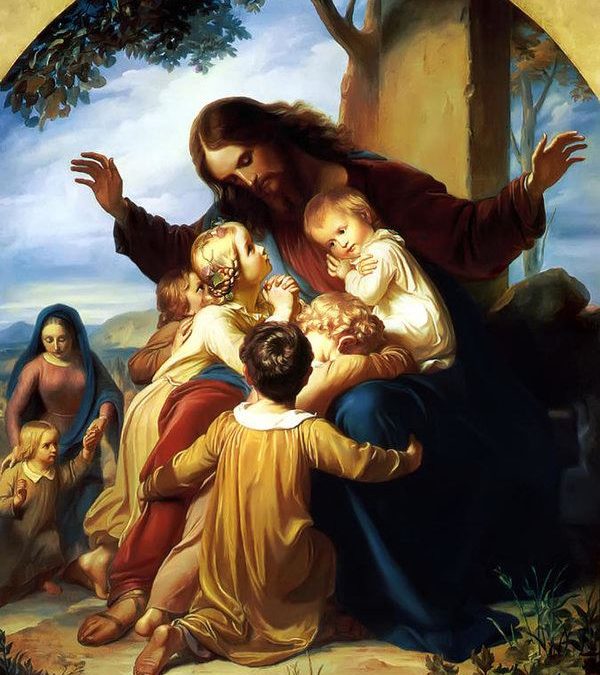
In today’s Gospel, little children are brought to Our Lord that He might bless them. The disciples, perhaps thinking they were protecting the Master from interruption, tried to send them away. But Jesus gently corrected them: “Let the little children come to Me, and do not hinder them, for of such is the kingdom of heaven.”
Children come without pride or pretense. They trust completely. They do not hesitate to run into loving arms, to ask for help, or to believe what they are told by those they love. Their confidence is simple, their hearts are open, and their love is freely given. Our Lord points to these little ones as examples because He desires that we approach our Heavenly Father with that same humility, confidence, and trust.
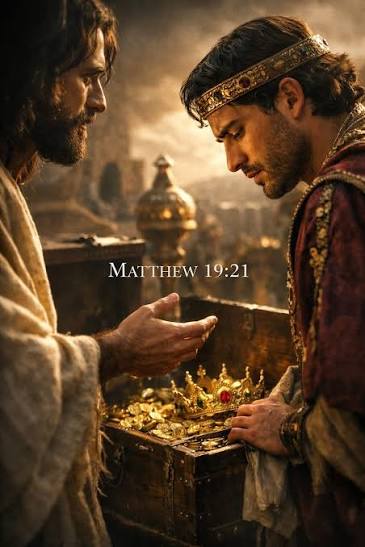
The Gospel then turns to the rich young man who sincerely desires eternal life. He has faithfully observed the commandments from his youth and asks Our Lord what more is required. Jesus lovingly invites him to something greater: “If thou wilt be perfect, go, sell what thou hast, and give to the poor, and thou shalt have treasure in heaven; and come, follow Me.”
The commandments are the indispensable foundation of the Christian life, but Christ always calls us beyond mere observance to complete surrender. The rich young man desired Heaven, yet his possessions held a stronger place in his heart than he realized. Sadly, he went away sorrowful because he was unwilling to entrust everything to Christ.
The lesson is not simply about wealth but about attachment. Whatever we place before God becomes an obstacle to following Him completely. True treasure is never measured by what we possess but by how fully we love God and generously love our neighbor. The more freely we give ourselves, the more closely we resemble Christ.
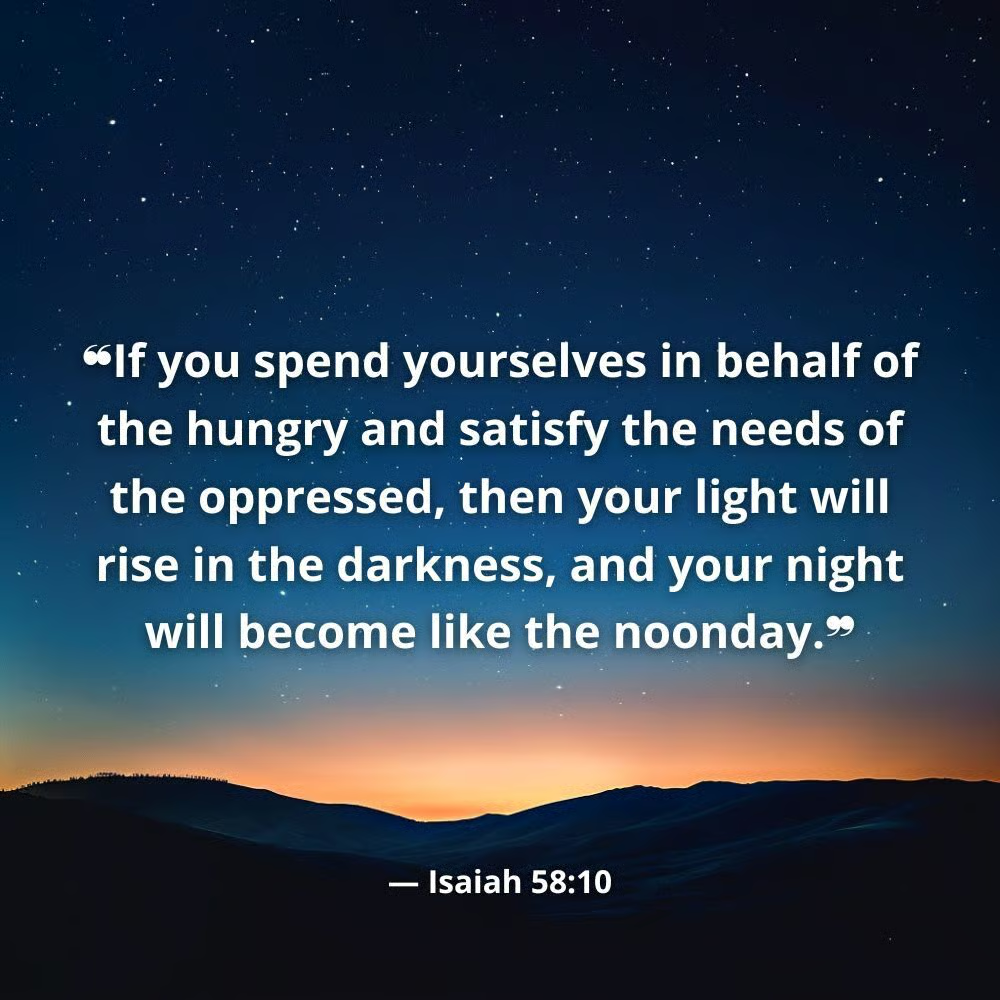
The Prophet Isaiah echoes this same call. True devotion to God is shown not only by prayer and worship but by works of mercy: sharing our bread with the hungry, sheltering the homeless, clothing the naked, and caring for those in need. God promises that those who live with such charity will walk in His light. He will guide them continually, strengthen them in times of trial, and satisfy the deepest longings of their souls. Mercy offered to others becomes the pathway through which God’s own mercy is poured back into our lives.
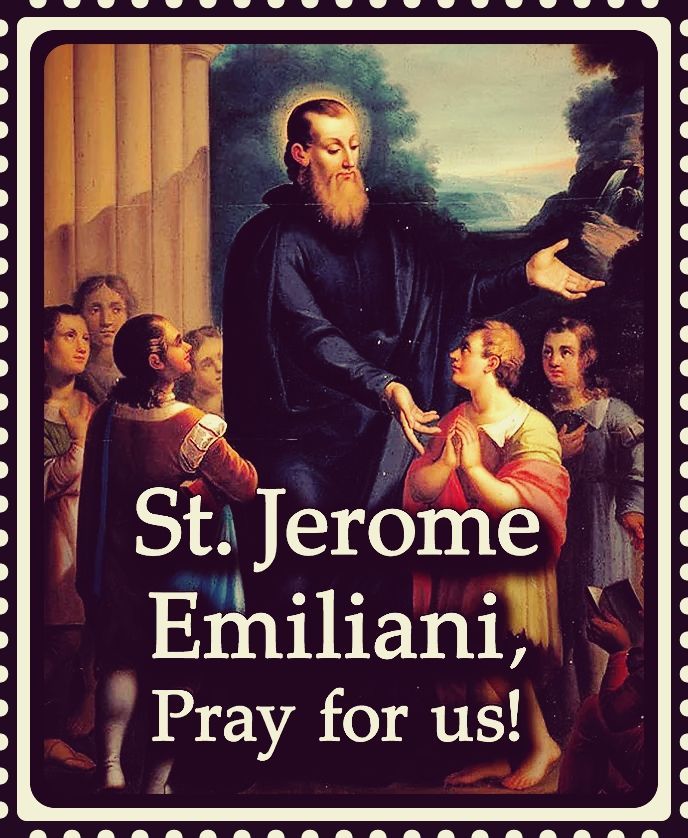
St. Jerome Emiliani beautifully lived these words. Once a soldier and military commander, he was captured during war and imprisoned. Turning to the Blessed Virgin Mary in his distress, he entrusted himself to her maternal care and later credited his remarkable escape to her intercession. That experience transformed his heart forever. Renouncing a life of worldly ambition, he dedicated himself to Christ by caring for orphans, educating abandoned children, and serving the victims of war, famine, and plague. He saw in every forgotten child the face of Christ Himself. His life reminds us that true greatness is found not in power or position but in humble service to the least among us.
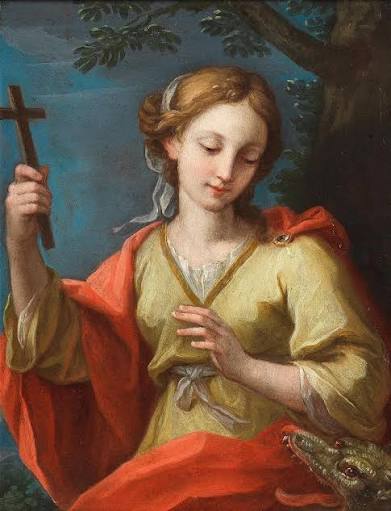
St. Margaret of Antioch offers another witness of complete surrender. Orphaned of her mother’s care and rejected by her pagan father because of her Christian faith, she remained steadfast in her love for Christ. Ancient Christian tradition tells of the many sufferings she endured before finally giving her life as a martyr during the persecution under Diocletian. Her witness proclaimed one unchanging truth: nothing in this world is worth exchanging for fidelity to Jesus Christ. Her steadfast faith inspired countless Christians to remain faithful even in the face of persecution.
Today’s readings invite us to examine our own hearts. Do we come before God with the trusting spirit of a little child? Are we willing to loosen our grip on whatever keeps us from following Him more perfectly? Do we recognize Christ in the poor, the suffering, and the forgotten? The Kingdom belongs to those who trust Him completely and whose love overflows into generous service of others.
QUESTIONS FOR THE HEART
Do I approach God each day with the simple trust, humility, and confidence of a little child, believing that my Heavenly Father desires only what is best for me?
Is there anything I cling to – possessions, ambitions, fears, or comforts – that prevents me from following Christ with my whole heart?
Like St. Jerome Emiliani, how can I show Christ’s love to children, the poor, the lonely, or those who have been forgotten by the world today?
A LITTLE POEM FOR THE JOURNEY
Lord, make my heart a child’s once more,
With humble trust to follow Thee,
Unburdened by the things of earth,
Yet rich in love and charity.
May every gift Thou hast bestowed,
Be used to serve in Thy dear Name,
Until I hear Thy gentle voice:
“Well done, come share My Father’s reign.”
“Let the little children come to Me, and do not hinder them; for of such is the kingdom of heaven.” (Matthew 19:14)
FAITHFUL IN LITTLE THINGS
Commemoration of St. Vincent de Paul, Confessor
July 19, 2026
TODAY’S GOSPEL: Luke 16:1-9
EPISTLE: Romans 8:12-17
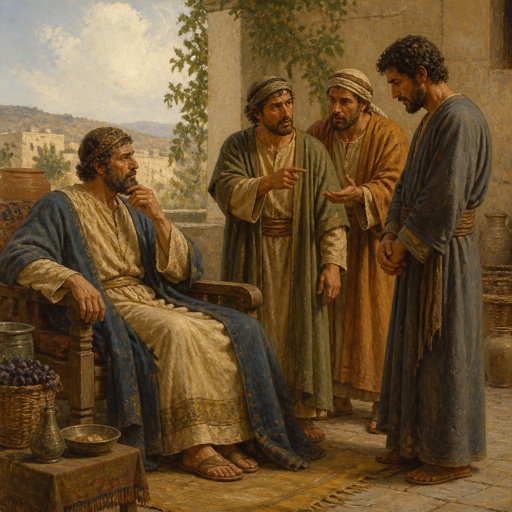
In today’s Gospel, Our Lord reminds us that this life is a preparation for eternity. Every day that God grants us is an opportunity to use wisely the gifts He has placed in our hands. Time, talents, material blessings, and the graces He pours into our souls are all entrusted to us for a little while. One day we will stand before Him and give an account of how we used them.
The steward in today’s parable understood that his future depended upon the choices he made in the present. While Our Lord certainly does not praise his dishonesty, He points to the steward’s determination to prepare for what lay ahead. If men labor so diligently for the passing things of this world, how much more should the children of God labor for treasures that endure forever.
Jesus teaches us to use the things of this world for the sake of the next. Earthly possessions pass away, but charity never does. Every work of mercy, every sacrifice offered for God, every act of generosity toward the poor, every word that strengthens another in the faith, and every hidden act of love becomes a treasure stored in Heaven. Nothing done for Christ is ever wasted.
St. Paul carries this same message deeper in today’s Epistle. He reminds us that we have not received a spirit of fear but the Spirit of adoption. “For whoever are led by the Spirit of God, they are the sons of God.”
What an extraordinary dignity has been given to us! Through Baptism we are no longer strangers before God but His beloved children. We can call Him “Abba, Father,” knowing that He desires not merely servants but sons and daughters who freely love Him. Our inheritance is not found in earthly success but in the eternal Kingdom prepared for those who remain faithful.
If we truly believe that Heaven is our inheritance, it should shape every decision we make. We begin to measure our lives differently. We ask not simply, “What do I want?” but rather, “What will help me love God more? What will help another soul reach Heaven?” This is the wisdom Our Lord calls us to embrace.
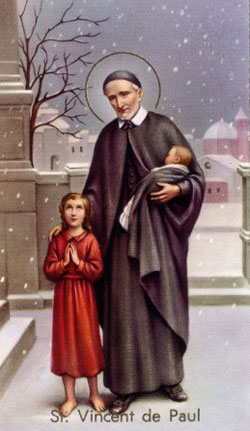
Today’s commemoration of St. Vincent de Paul gives us a beautiful example of this heavenly wisdom. He recognized that the goods of this world were entrusted to us so they might become instruments of God’s mercy. He saw Christ in the poor, the sick, the abandoned, and the forgotten, and he devoted his life to serving them. His charity was not merely generosity – it was faithful stewardship. He understood that whatever is given for the love of Christ is never lost but becomes treasure laid up in Heaven.
The world teaches us to accumulate as much as we can for ourselves. The Gospel teaches us to give generously, trusting that God is never outdone in generosity. Every grace He gives is meant to bear fruit. Every blessing is meant to become a blessing for others. In the end, only what has been done for the love of God will endure.
QUESTIONS FOR THE HEART
Everything I possess has been entrusted to me by God. Am I using my time, talents, and resources as a faithful steward, or have I begun to treat His gifts as though they belong only to me?
St. Paul reminds us that we are children of God and heirs with Christ. Do I live each day with the hope and confidence that belong to a son or daughter of my Heavenly Father?
Like St. Vincent de Paul, do I recognize Christ in those who are poor, lonely, forgotten, or suffering? What act of charity is God asking of me today?
A LITTLE POEM FOR THE JOURNEY
Lord, teach my heart to hold things lightly,
For all I have belongs to Thee,
May every gift become a blessing,
And every act be done faithfully.
Let mercy be the wealth I gather,
Let charity become my gain,
Until, by grace, I hear You call me
To share Your everlasting reign.
“For whoever are led by the Spirit of God, they are the sons of God.” (Romans 8:14)
LOVE ONE ANOTHER
Feast of St. Camillus de Lellis, Confessor
Commemoration of St. Symphorosa and her Seven Sons, Martyrs
July 18, 2026
TODAY’S GOSPEL: John 15:9–17
EPISTLE: 1 John 3:13–18
In today’s Gospel, Our Lord says:
“This is My commandment, that you love one another as I have loved you. Greater love than this no man has, that a man lay down his life for his friends.”
These words are not merely an invitation to kindness; they are the very heart of the Christian life. Christ calls us into His friendship and then shows us what true love looks like. It is a love that sacrifices, serves, forgives, and remains faithful even when it is costly.
The Apostles were ordinary men with different personalities, strengths, and weaknesses. Yet Our Lord patiently formed them, teaching and correcting them while always respecting their freedom. He did not force their love or obedience. Rather, He invited them day by day to trust Him more completely. In time, each would come to understand that the friendship Christ offered demanded everything. Following the example of their Master, nearly all would freely lay down their own lives for the Gospel.
Jesus reminds them, “You have not chosen Me, but I have chosen you and appointed you, that you should go and bring forth fruit.” Those words are spoken to every Christian. Before we ever sought Him, Christ sought us. Our task is to remain in His love and allow His grace to bear fruit through our lives. The fruit He desires is not worldly success but lives transformed by charity, humility, and fidelity.
St. John continues this theme in today’s Epistle:
“My little children, let us not love in word, nor in tongue, but in deed and in truth.”
Love is proven by action. It is easy to speak kindly of charity while overlooking the needs of those God places before us. St. John reminds us that if we close our hearts to our brother in need, we also close our hearts to the love of God. Christian charity is not merely an emotion; it is a daily decision to put Christ before ourselves and to see His image in every person.
St. Thérèse of Lisieux understood this well. She believed she could not imitate the extraordinary penances of many saints, so she chose instead to perform the smallest actions with extraordinary love. Her “Little Way” teaches us that holiness is found in countless hidden acts of charity: answering harsh words with gentleness, choosing patience over irritation, forgiving quickly, listening attentively, and quietly serving those around us. Every act of authentic love becomes fruit that remains.
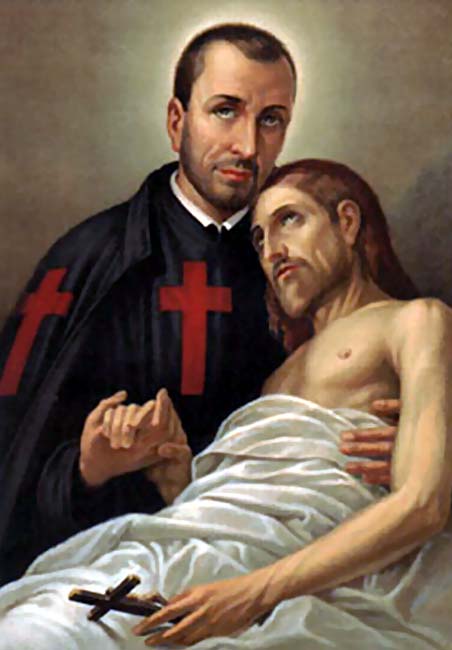
Today’s feast gives us a beautiful example of these readings in the life of St. Camillus de Lellis. After his own conversion, he devoted himself entirely to the care of the sick, especially those whom others neglected. He insisted that the suffering be treated with the same love and reverence one would show to Christ Himself. His life reminds us that love is most convincing when it costs us something. In serving the weakest and most vulnerable, he fulfilled Our Lord’s commandment to love as Christ Himself has loved us.
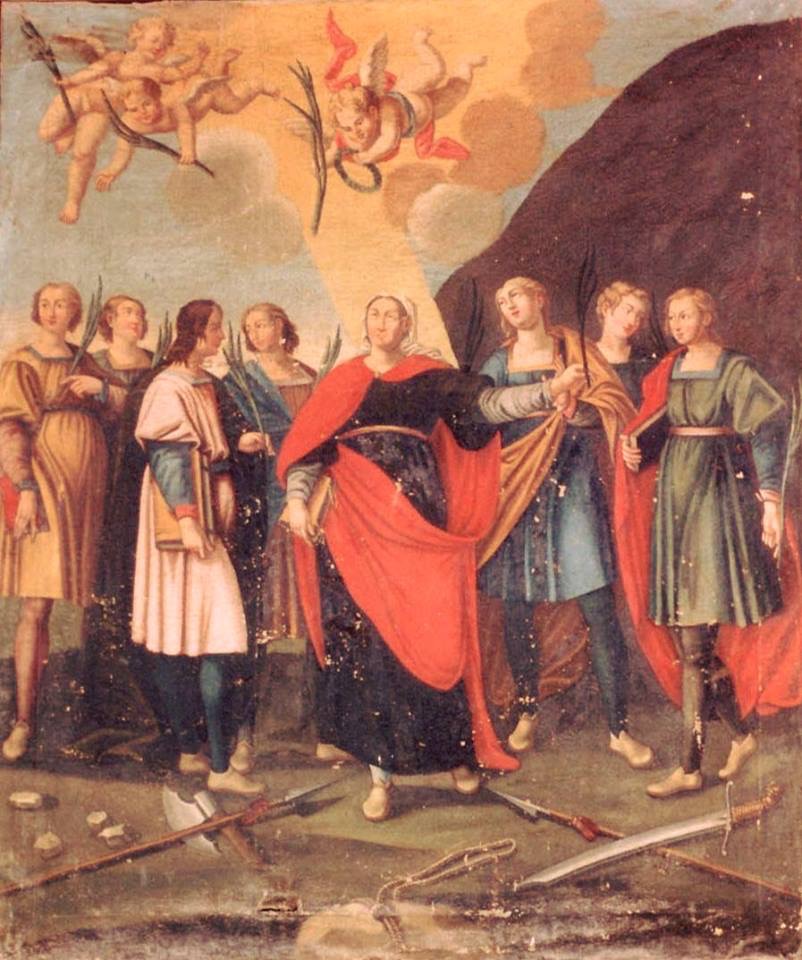
We also commemorate St. Symphorosa and her seven sons, who remained faithful to Christ even unto martyrdom. Their witness reminds us that love for God is stronger than fear and that true charity always remains faithful, no matter the cost.
QUESTIONS FOR THE HEART
“He who has the goods of this world and sees his brother in need and closes his heart to him, how does the love of God abide in him?”
This is the question St. John places before us today.
How do I respond to those who need my time, my patience, my forgiveness, or my compassion? Is my love merely spoken, or is it visible in the way I live each day?
Perhaps today the Lord is asking nothing extraordinary—only one hidden act of charity, done solely for love of Him.
A LITTLE POEM FOR THE JOURNEY
Lord, let me love as You have loved,
With quiet hands and heart.
Not seeking praise or earthly gain,
But choosing the better part.
To see Your face in every soul,
To serve with joy each day,
Until the fruit You planted here
Leads others to Your way.
Like Camillus, strong in mercy.
May I never pass one by.
May love be more than spoken words –
May it be the way I live and die.
May the Sacred Heart of Jesus teach us to love one another, not merely in word but in deed and in truth.
THE HIDDEN WORK OF GRACE
Commemoration of St. Alexius, Confessor
July 17, 2026
TODAY’S GOSPEL: Matthew 7:15-21
EPISTLE: Romans 6:19-23
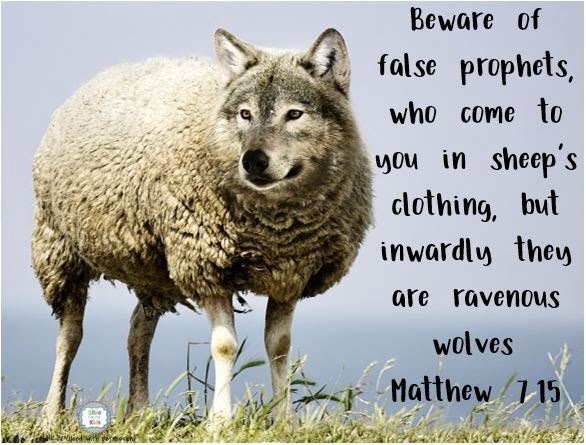
Today’s Gospel begins with a warning that is as necessary now as it was when Our Lord first spoke these words: “Beware of false prophets, who come to you in sheep’s clothing, but inwardly they are ravening wolves.” Throughout every age, appearances can deceive. What seems convincing to the eye or pleasing to the ear is not always faithful to the truth. For this reason, Christ gives us a sure measure by which all things are to be judged: “By their fruits you shall know them.”
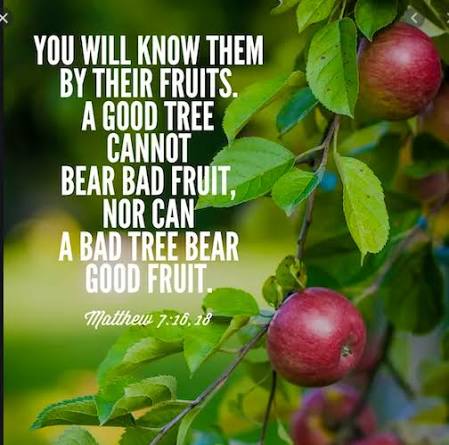
The fruits Our Lord speaks of are not merely outward accomplishments or visible success. Rather, they are the lasting fruits of a life transformed by God’s grace – humility instead of pride, charity instead of selfishness, fidelity instead of compromise, perseverance instead of discouragement. These virtues cannot be manufactured by human effort alone. They grow only in the soul that remains united to Christ.
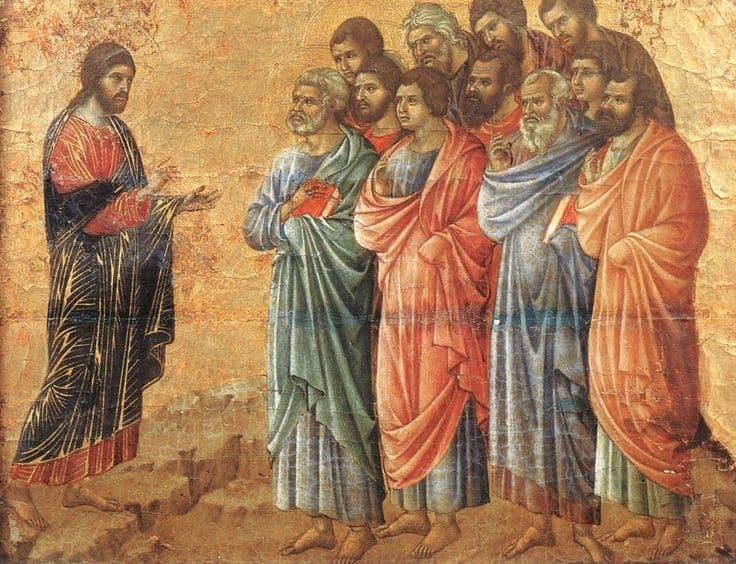
St. Paul continues this same theme in today’s Epistle. He reminds the Romans that they were once “servants of sin,” but through Christ they have become “servants of justice unto sanctification.” Grace does far more than forgive our sins; it gradually transforms our hearts so that we begin to desire what is pleasing to God. Holiness is not simply avoiding evil, but allowing the life of Christ to take deeper possession of us day by day. As St. Paul concludes, “The grace of God, life everlasting, in Christ Jesus our Lord.”
Today the Church commemorates St. Alexius, whose life beautifully reflects this hidden work of grace. Born into a noble and wealthy Roman family, he freely left behind every earthly privilege to seek the lasting riches of Heaven. Desiring only to belong to Christ, he embraced a life of poverty, prayer, and obscurity. Even when his sanctity became known, he withdrew from recognition, choosing to remain hidden rather than receive the praise of men.
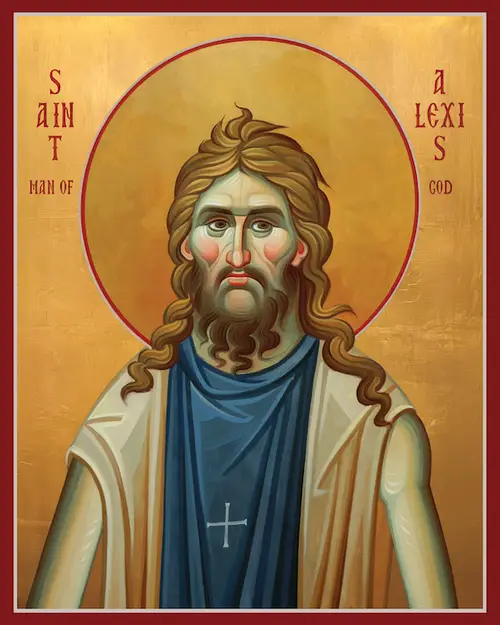
In many ways, St. Alexius stands in quiet contrast to the warning contained in today’s Gospel. False prophets seek admiration while concealing what lies within. St. Alexius concealed his holiness so that Christ alone would be seen. The world often teaches us to seek recognition, influence, and applause. The saints teach us that true greatness is found in humility, fidelity, and the quiet fulfillment of God’s will.
Our Lord closes today’s Gospel with words that invite each of us to examine our own hearts: “Not every one that saith to Me, Lord, Lord, shall enter into the kingdom of heaven: but he that doth the will of My Father who is in heaven.” The Christian life is not measured by what we claim to believe, nor even by occasional acts of devotion, but by a heart that is being steadily conformed to Christ through His grace.
This transformation often takes place quietly. It is found in the faithful reception of the sacraments, in daily prayer, in patient endurance of trials, in hidden acts of charity, in forgiveness freely given, and in the countless ordinary duties carried out for the love of God. These are the fruits that endure because they spring from the life of Christ within the soul.
QUESTIONS FOR THE HEART
Do I judge by outward appearances, or do I seek the lasting fruits that reveal a life truly rooted in Christ?
Am I allowing God’s grace to transform my heart each day, or am I content merely with outward expressions of faith?
What hidden acts of fidelity is the Lord asking of me today that no one else may ever notice?
How does the humble witness of St. Alexius encourage me to seek God’s approval above every earthly reward?
A LITTLE POEM FOR THE JOURNEY
Lord, teach my restless heart to hide
Securely at Thy wounded side,
Not seeking praise that fades away,
But grace to do Thy will each day.
Like Alexius, meek and true,
May all my hope be found in You,
And turning my face from earth’s delights,
I cherish only what is true and right.
“Not every one that saith to Me, Lord, Lord, shall enter into the Kingdom of Heaven: but he that doth the will of My Father who is in Heaven.” (Matthew 7:21)
THE FRUIT OF A LIFE UNITED TO CHRIST
Commemoration of Our Lady of Mount Carmel
July 16, 2026
TODAY’S GOSPEL: Matthew 7:15-21
EPISTLE: Romans 6:19-23
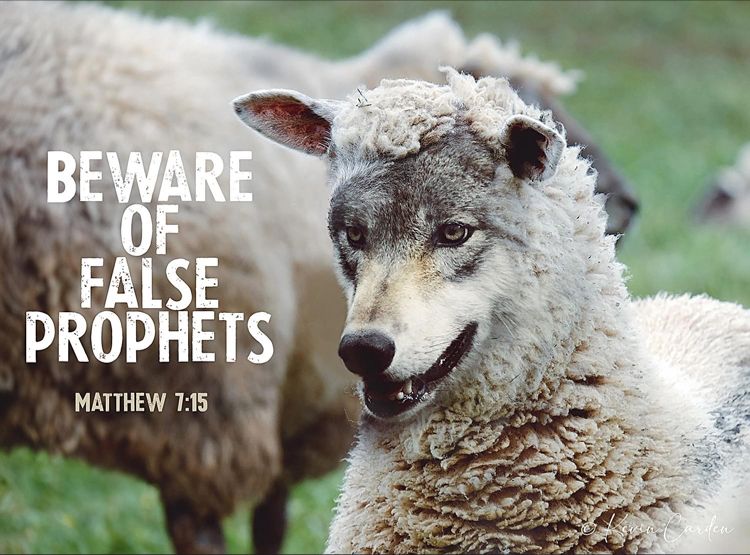
In today’s Gospel, Our Lord gives a solemn warning: “Beware of false prophets, who come to you in sheep’s clothing, but inwardly are ravenous wolves.” Yet He immediately gives us the means to discern what is true: “By their fruits you shall know them.” Christ reminds us that appearances alone can deceive. Fine words, impressive accomplishments, or outward displays of religion are not enough. A life truly rooted in God will bear the lasting fruits of humility, charity, obedience, purity, and perseverance.
While these words certainly teach us to exercise prudence in recognizing false teachers, they also invite each of us to look honestly into our own hearts. What kind of fruit is my life producing? Are my thoughts, words, and actions drawing others closer to Christ? Do those around me see in me the peace, patience, mercy, and joy that come from living in His grace? Every Christian is called to bear witness to the Gospel, not only by what we say, but by the example of our daily lives.
St. Paul continues this same theme in today’s Epistle. He reminds us that before Christ we were slaves to sin, but through His grace we have been set free to become servants of God. The fruit of sin leads only to death, while the fruit of a life surrendered to God is holiness and, ultimately, everlasting life. “For the wages of sin is death, but the gift of God is eternal life in Christ Jesus our Lord.” Sanctity is not achieved by our own strength but by faithfully cooperating with the grace God generously gives us each day.
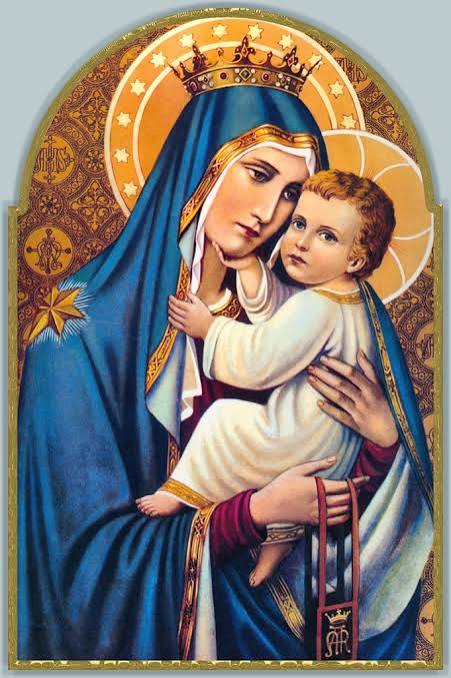
Today the Church also commemorates Our Lady of Mount Carmel, whose feast recalls the holy mountain where the Prophet Elijah courageously defended the worship of the one true God against the prophets of Baal. Elijah’s unwavering fidelity bore abundant fruit because he trusted completely in the Lord. Centuries later, Christian hermits settled on Mount Carmel, dedicating themselves to lives of prayer, silence, and contemplation under the loving patronage of the Blessed Virgin Mary. From their faithful witness grew the Carmelite Order, whose spirituality continues to lead countless souls to a deeper union with Christ.
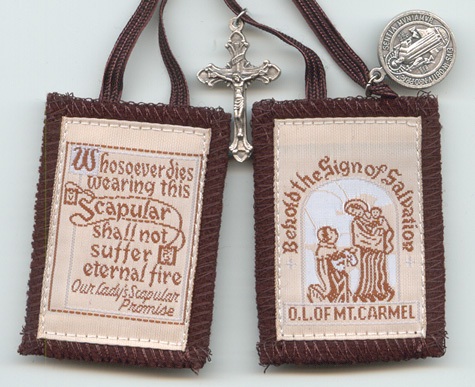
Our Lady herself is the perfect example of a life that bore good fruit. Her humble “yes” to God’s will brought forth the Savior of the world, and throughout her earthly life she remained completely faithful to His plan. As Mother of the Church, she continues to lead her children to her Divine Son, encouraging us to embrace lives of prayer, trust, purity, and loving obedience. Many Catholics wear the Brown Scapular as a cherished sacramental, a visible reminder of their desire to live under Mary’s maternal care and to imitate her faithful discipleship. Its greatest purpose is to draw us ever more closely to Christ through the loving guidance of His Blessed Mother.
Our Lord concludes today’s Gospel with words that invite serious reflection: “Not every one that saith to Me, Lord, Lord, shall enter into the kingdom of heaven: but he that doth the will of My Father who is in heaven.” The Christian life is not measured merely by what we profess but by how faithfully we live. Every act of kindness, every hidden sacrifice, every sincere prayer, every temptation resisted, and every humble act of obedience becomes fruit that glorifies God.
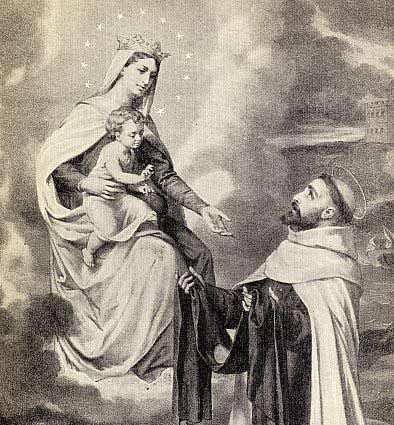
May Our Lady of Mount Carmel obtain for us the grace to remain steadfast in prayer and faithful in every circumstance. Through her loving intercession, may our lives bear the good fruit that comes from abiding in Christ, so that when we stand before Him, we may rejoice forever in the gift of eternal life.
QUESTIONS FOR THE HEART
What kind of fruit is my daily life producing and does it reveal a heart that truly belongs to Christ?
Do my words and actions reflect the humility, charity, and obedience that Our Lord desires of His disciples?
How can I deepen my devotion to Our Lady so that she may lead me to her Son?
What step can I take today to cooperate more fully with God’s grace and bear fruit that will last?
A LITTLE POEM FOR THE JOURNEY
O Carmel’s Queen, so pure and bright,
Lead me each day toward Heaven’s light,
Teach me to bear good fruit in love,
With eyes fixed always far above.
When trials come, be at my side,
In Christ alone may I abide,
Then may my life His goodness prove,
And bloom with fruits of faithful love.
“BY THEIR FRUITS YOU SHALL KNOW THEM.” (Matthew 7:20)
WATCHING FOR THE MASTER
Commemoration of St. Henry II, Emperor and Confessor
July 15, 2026
TODAY’S GOSPEL: Luke 12:35-40
EPISTLE: Sirach (Ecclesiasticus) 31:8-11
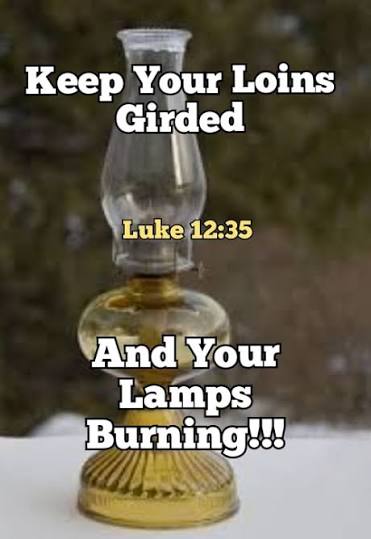
In today’s Gospel, Our Lord gives His disciples a simple but profound command: “Let your loins be girt and lamps burning.” These words call us to live in a state of constant readiness. Christ compares His followers to faithful servants waiting for their master’s return from a wedding feast. They do not know the hour of his arrival, but they remain awake, attentive, and prepared. Their vigilance is not born of fear but of love. They long for the master’s return because they desire nothing more than to welcome Him.
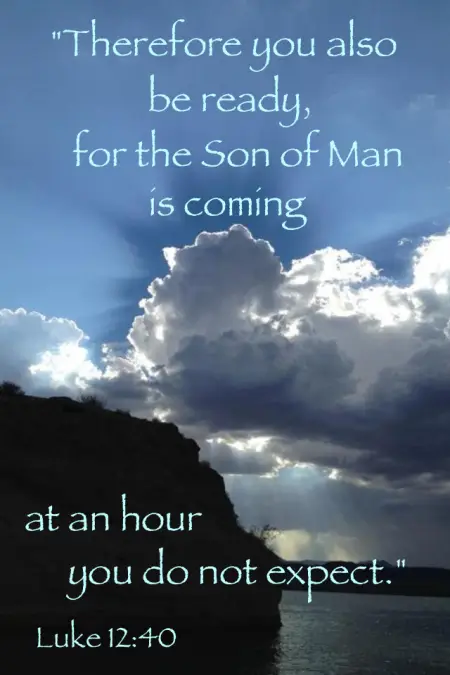
This call is no less urgent for us today. None of us know the day or the hour when the Lord will call us from this life or when He will come again in glory. Yet Christ does not ask us to speculate about the future. Instead, He asks us to live each day faithfully – to pray, to love, to forgive, to serve, and to remain steadfast in His grace. A heart that is watchful is a heart that seeks to remain close to Christ in every circumstance.
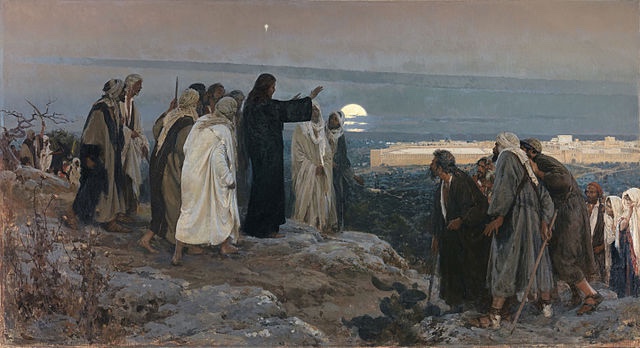
The promise Our Lord gives is remarkable. He tells us that when the Master finds His servants watching, He Himself will gird Himself, seat them at table, and serve them. What astonishing humility! The King of Heaven, who came not to be served but to serve, promises eternal joy and communion to those who faithfully persevere. Every sacrifice made for Christ, every hidden act of charity, every temptation resisted, and every cross patiently carried prepares us for that blessed banquet.
Today’s Epistle beautifully complements the Gospel. Sirach praises the one who has not placed his trust in riches or sought dishonest gain: “Happy the man found without fault, who turns not aside after gain, nor puts his trust in money nor in treasures.” Earthly possessions are not evil in themselves, but they become dangerous when they capture our hearts. Wealth can disappear, health can fail, and worldly success can pass away in an instant. But faith, hope, and love endure forever. When our treasure is Christ Himself, we possess a wealth that no earthly circumstance can take from us.
Our Lord desires something no earthly king can demand – our free and loving response. He does not force Himself upon us. Instead, He patiently invites us each day to open our hearts to Him. Every decision to trust Him, to obey His commandments, and to choose His will over our own keeps our lamps burning brightly as we await His coming.
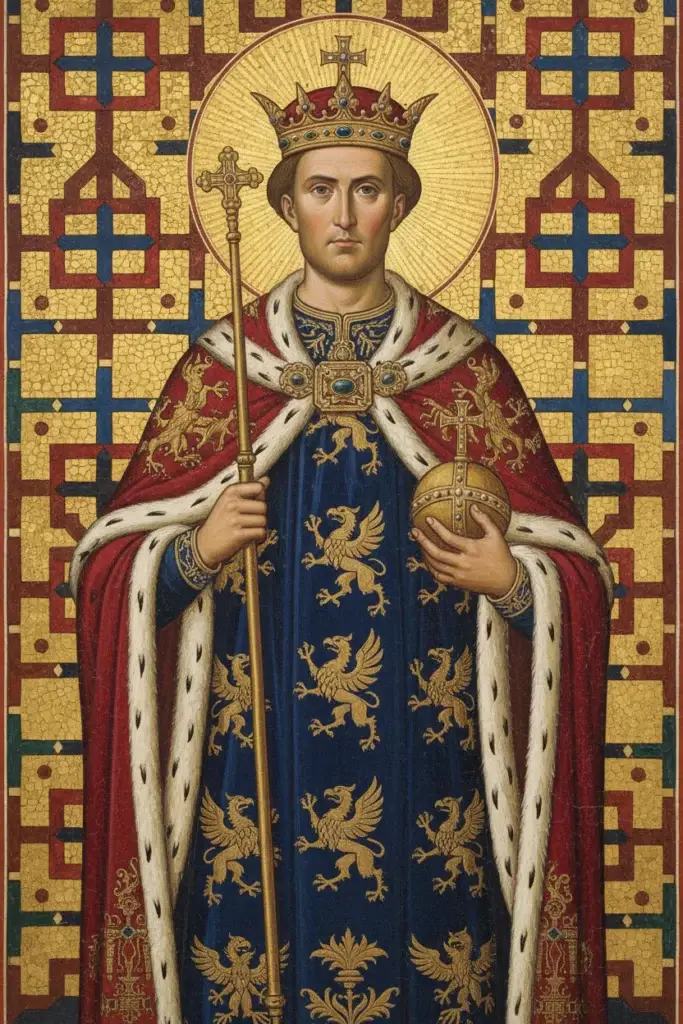
The Church today commemorates St. Henry II, the holy emperor who demonstrated that sanctity is possible even amid the responsibilities of leadership and public life. Though entrusted with great authority and considerable wealth, he never allowed worldly power to become his master. Instead, he used his position to defend the Church, promote justice, support the reform of the clergy, and care generously for the poor. At a time when corruption threatened both society and the Church, St. Henry stood courageously for what was right, seeking not his own glory, but the glory of God. His life reminds us that true greatness is measured not by earthly honors but by faithful service to Christ.
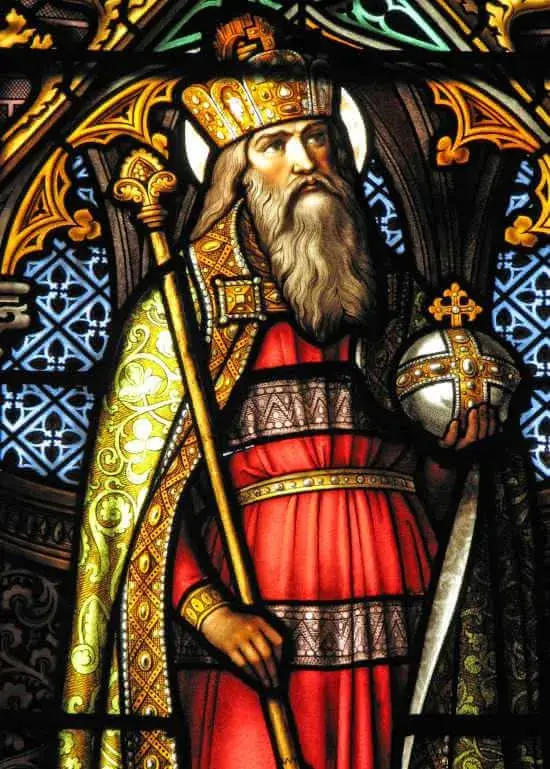
The Gospel calls us to watchfulness. Sirach teaches detachment from earthly riches. St. Henry shows us what those virtues look like when lived with courage and fidelity. Together they remind us that every day is an opportunity to prepare for eternity – not by extraordinary deeds alone, but by faithfully fulfilling the duties God has entrusted to us with humble and generous hearts.
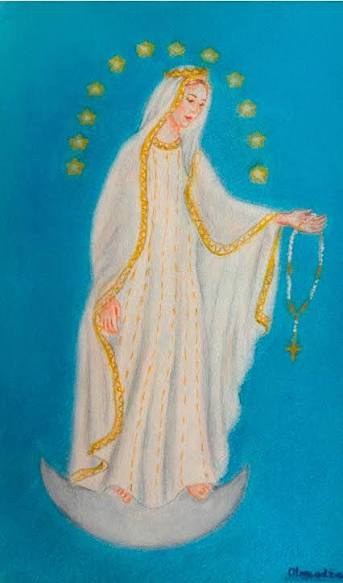
May Our Blessed Mother obtain for us the grace to keep our lamps burning with living faith, steadfast hope, and fervent charity. Through the intercession of St. Henry, may we use every gift God has given us for His glory, so that whenever the Master comes, He may find us ready to open the door with joyful hearts.
QUESTIONS FOR THE HEART
Do I live each day as though Christ could call me to Himself at any moment, or have I become spiritually complacent?
Have I allowed money, possessions, comfort, or worldly concerns to take the first place that belongs to God alone?
What practical steps can I take to keep my spiritual lamp burning through prayer, the sacraments, and works of charity?
Like St. Henry, am I willing to use whatever influence or gifts God has given me to defend truth, promote justice, and serve His Church with humility?
A LITTLE POEM FOR THE JOURNEY
Keep, Lord, my lamp with oil supplied,
And ever at my Savior’s side,
When Thou shalt knock upon my door,
May I be ready evermore.
Teach me to seek no passing gain,
But treasures that with Thee remain,
Then when Thou callest me above,
I’ll enter into endless love.
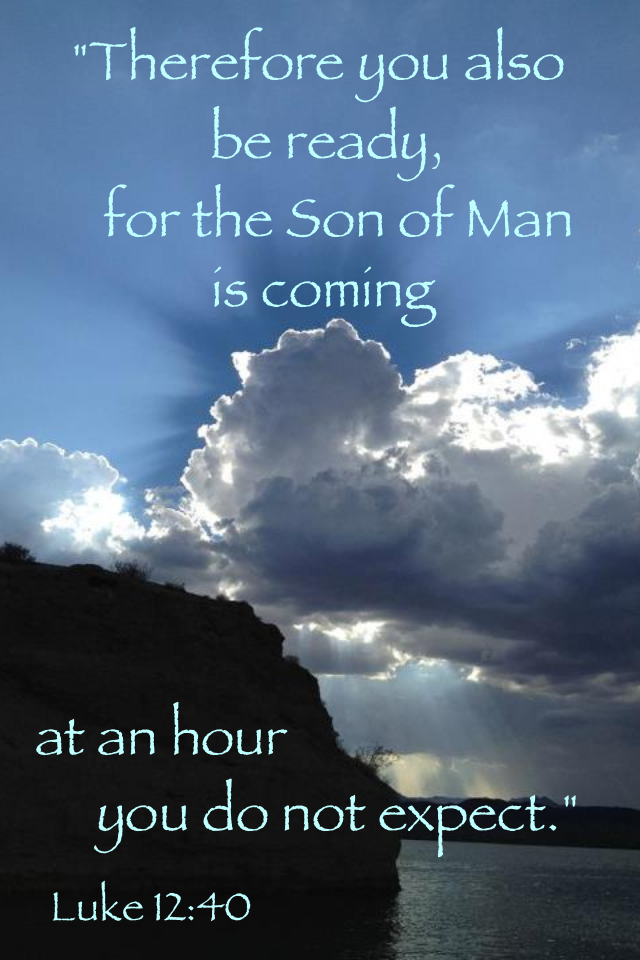
“YOU ALSO MUST BE READY, BECAUSE AT AN HOUR THAT YOU DO NOT EXPECT, THE SON OF MAN IS COMING.” (Luke 12:40)
THE SALT OF THE EARTH
Feast of St. Bonaventure, Bishop, Confessor, and Doctor of the Church
Commemoration of St. Kateri Tekakwitha, Virgin
July 14, 2026
TODAY’S GOSPEL: Matthew 5:13-19
EPISTLE: 2 Timothy 4:1-8
In today’s Gospel, Our Lord entrusts a great mission to His Apostles: “You are the salt of the earth … You are the light of the world.” These are not simply words of encouragement; they are a commission. Salt preserves what would otherwise decay, and light dispels darkness. Christ was preparing His Apostles to preserve the truth He entrusted to them and to carry the light of the Gospel into a world that desperately needed Him. Through the Apostles and their successors, that same mission continues in His Church today.

We, too, share in that mission. God has given each of us gifts to be nurtured and placed at the service of His Kingdom. Yet our witness is not merely about doing good works. Our lives must point others to Christ, reflecting His truth and His love. A lamp hidden under a bushel cannot give light, and salt that loses its savor no longer fulfills its purpose. Our faith must be lived openly, humbly, and courageously.
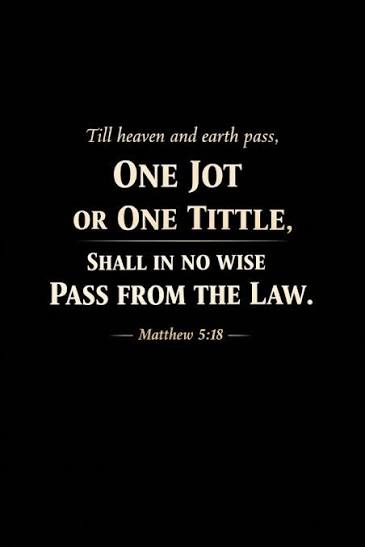
Our Lord then declares, “I have not come to destroy the law, but to fulfill it.” In Christ, every promise made through the prophets reaches its fulfillment. The Law given by God was not abolished but brought to perfection in Him. His truth is eternal. It does not change with the opinions of the age or the passing of generations.
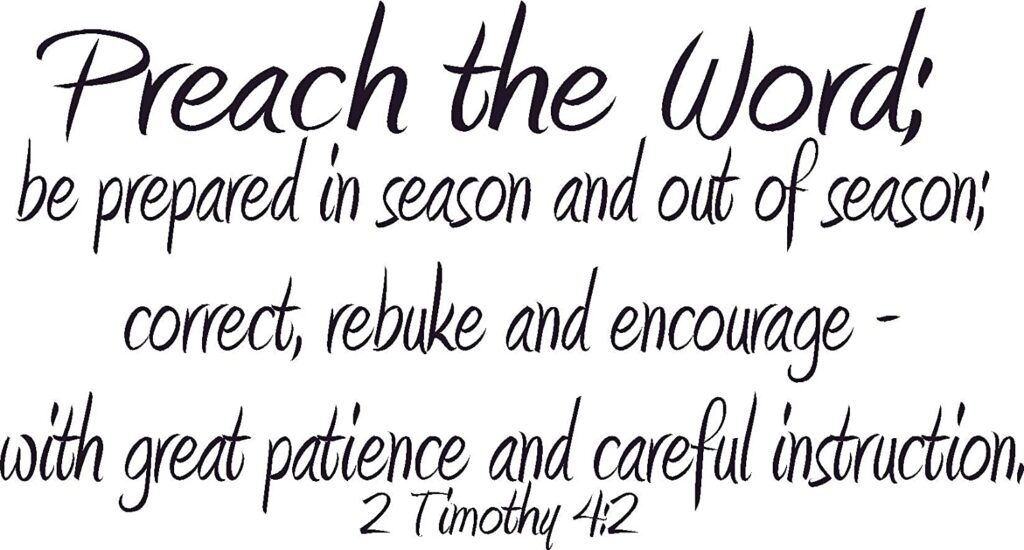
Today’s Epistle shows us how that mission is to be lived. As St. Paul prepares for his martyrdom, he solemnly charges Timothy: “Preach the word; be urgent in season and out of season.” Then he gives a warning that speaks powerfully to our own time: “For there shall be a time when they will not endure sound doctrine … but will turn away their hearing from the truth and will be turned unto fables.”

How clearly we see this today. Many choose opinions over truth and feelings over the Gospel. Yet Christ did not instruct His Church to invent new teachings for every age. He entrusted the Deposit of Faith to His Apostles, and through the Apostolic Church that truth has been faithfully handed down for two thousand years. Like salt, the Church is to preserve the truth from corruption. Like a city set upon a hill, she is to shine Christ’s light before the nations.
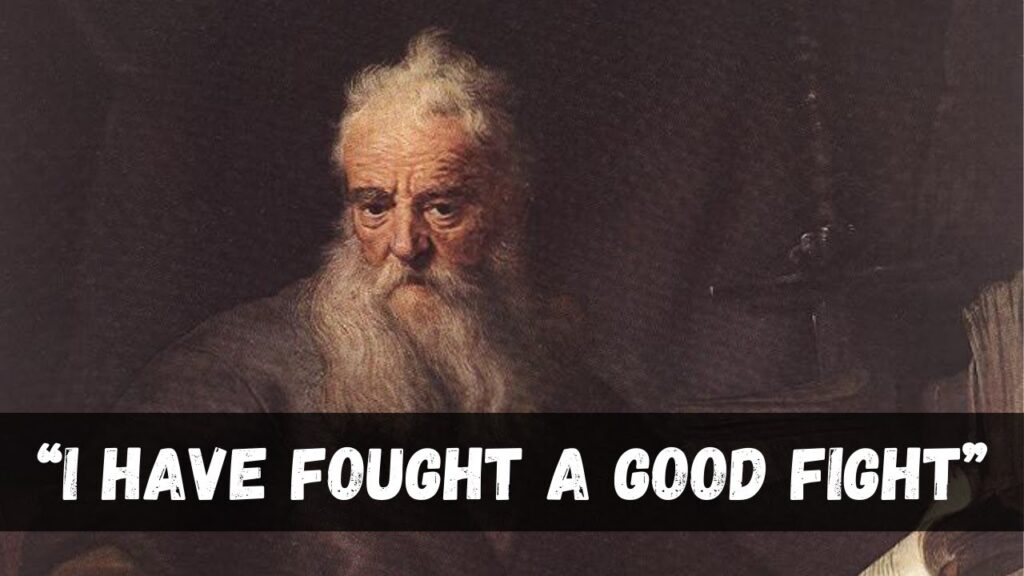
St. Paul concludes with words every Christian should hope to make his own: “I have fought the good fight, I have finished my course, I have kept the faith.” He did not arrive at those words easily. They were earned through perseverance, suffering, prayer, and unwavering fidelity to Christ. His example reminds us that remaining faithful is itself a victory.
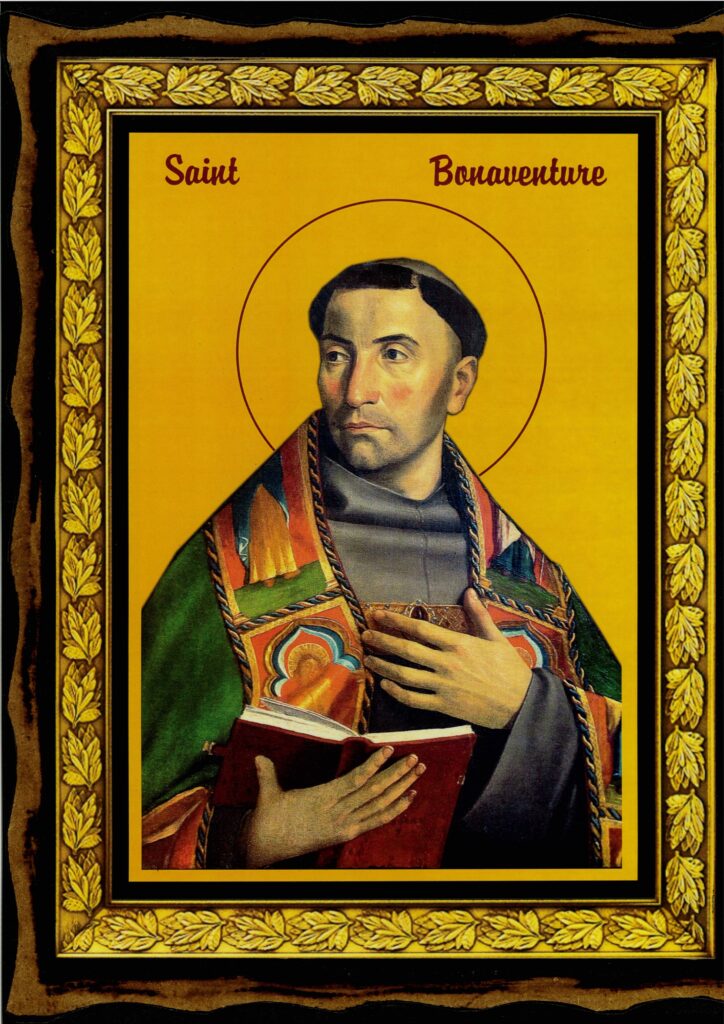
Today’s great Franciscan saint, St. Bonaventure, lived this mission with extraordinary wisdom and humility. Deeply formed by the spirituality of St. Francis of Assisi, he understood that truth and charity can never be separated. As the Seraphic Doctor, he defended the Catholic faith, strengthened the Franciscan Order, and taught that true wisdom is found not merely in knowing about God but in loving Him with one’s whole heart. His life reminds us that preserving sound doctrine must always be united with humility, holiness, and love.
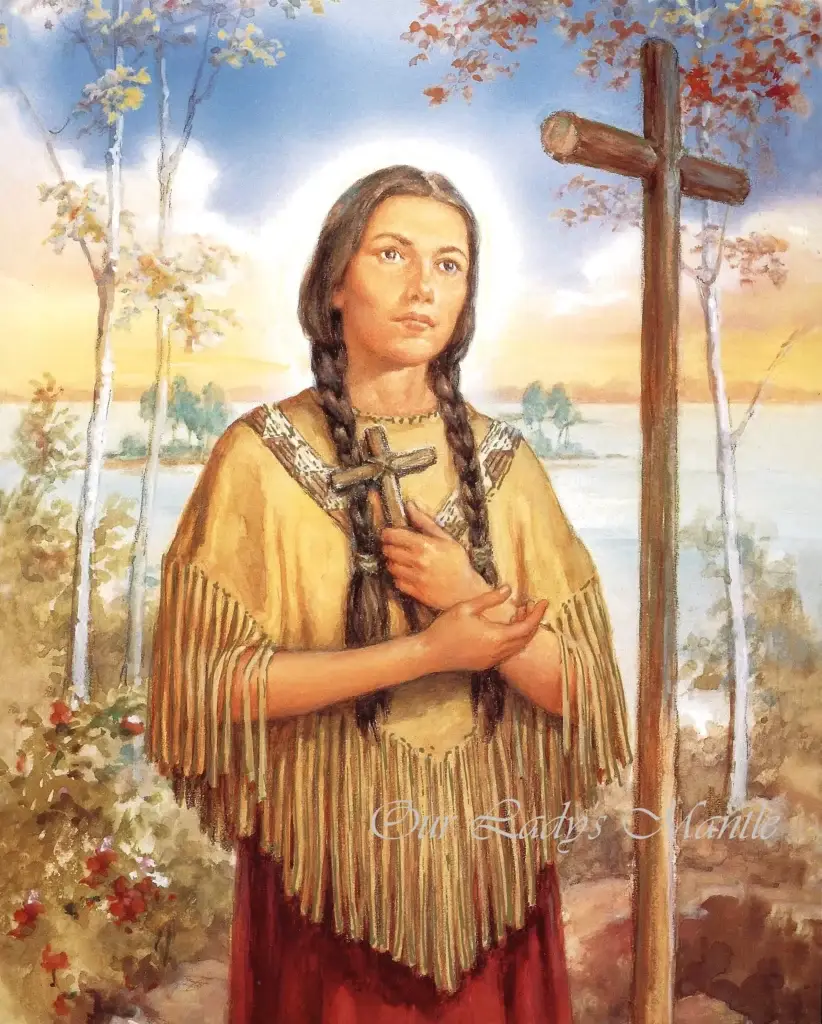
The Church also honors St. Kateri Tekakwitha, whose quiet fidelity became a brilliant light to her people. Though she suffered rejection for embracing the Catholic faith, she remained steadfast in her love for Christ. She did not preach from great pulpits, yet her holy life reflected the light of Christ so clearly that it continues to inspire the faithful today. She reminds us that every Christian, no matter how hidden his or her life may seem, is called to let that light shine.

May we ask the Lord today to make us faithful salt that preserves His truth and steadfast light that leads others to Him. Through the prayers of Our Blessed Mother, St. Bonaventure, and St. Kateri Tekakwitha, may we have the courage to remain faithful to Christ and His Church, so that one day we may echo the words of St. Paul, “I have kept the faith.”
QUESTIONS FOR THE HEART
Am I preserving and defending the truth of Christ in my own life, or have I allowed the spirit of the world to shape my thinking?
Does my life reflect the light of Christ to my family, friends, and those I meet each day?
Do I seek to know the teachings of the Catholic Church more deeply so that I may remain faithful to sound doctrine?
If my life were examined today, could it truly be called salt for the earth and light for the world?
A LITTLE POEM FOR THE JOURNEY
Lord, make me salt both true and pure,
To keep Thy saving truth secure,
Make me a light that others see,
Reflecting only Thee in me.
When falsehood calls and shadows fall,
May I still heed Thy gentle call,
With steadfast faith until life’s end,
Be Thou my Savior, Lord, and Friend.
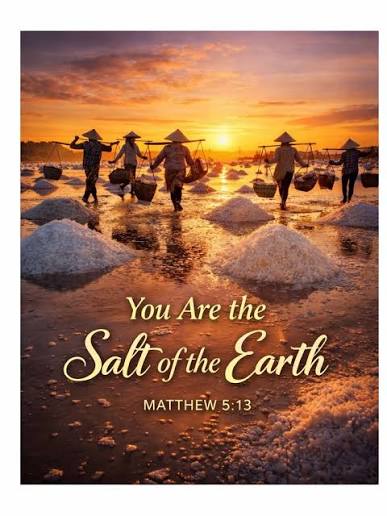
“YOU ARE THE SALT OF THE EARTH … YOU ARE THE LIGHT OF THE WORLD.” (Matthew 5:13-14)
REMAINING STEADFAST IN THE TRUTH
Commemoration of St. Eugenius of Carthage, Bishop and Confessor
Commemoration of St. Anacletus, Pope and Martyr
July 13, 2026
TODAY’S GOSPEL: Matthew 7:15-21
EPISTLE: Romans 6:19-23
In today’s Gospel, once again Our Lord warns us about false prophets and tells us that “by their fruits you shall know them.” Yet the Church, in placing these same words before us again, invites us to linger with them more deeply. Yesterday we considered the fruits by which truth and error may be recognized. Today we might ask a different question, “How does a soul bear good fruit?”
Our Lord begins with the image of a tree. A healthy tree does not strain to produce fruit. It bears fruit because it is alive, rooted, and continually nourished. In much the same way, the Christian life is not about simply appearing holy or trying harder to do good. It is about remaining deeply united to Christ, who alone is the source of every virtue. When our hearts stay close to Him through prayer, the sacraments, and daily fidelity, His grace quietly produces within us patience, charity, humility, purity, and perseverance.
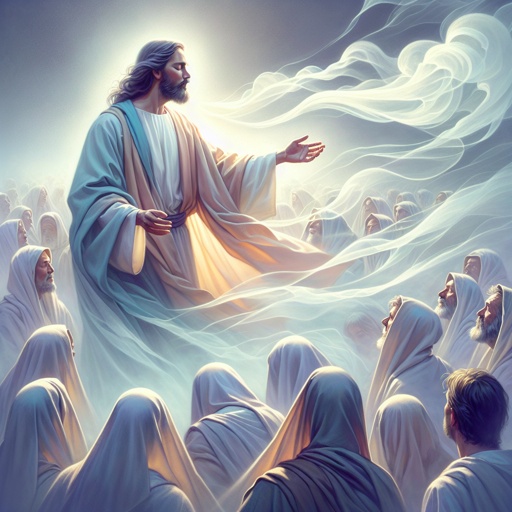
The world offers a very different message. It promises happiness without holiness, love without sacrifice, and even Christ without His Cross. Such promises may sound appealing, but they cannot satisfy the deepest longing of the human heart. Jesus Himself is the measure of all truth. His words, His life, His obedience to the Father, and His sacrifice on Calvary reveal what authentic love truly looks like. If we wish to know whether we are walking the right path, we need only ask whether our lives are becoming more like His.

The Gospel also invites us to examine our own hearts. It is possible to appear faithful while neglecting the interior life from which every good work must grow. God sees beyond appearances. He knows whether our prayers come from love or from habit, whether we receive Him with gratitude or distraction, whether our kindness flows from genuine charity or merely from a desire to be noticed. He desires not simply outward goodness but hearts transformed by His grace.
St. Paul continues this thought in today’s Epistle. Before Christ called us to Himself, we were slaves to sin. Now we have been given the freedom to become servants of righteousness. Every time we choose forgiveness over resentment, generosity over selfishness, purity over temptation, or prayer over distraction, the life of Christ takes deeper root within us. Little by little, the fruits Our Lord desires begin to ripen.
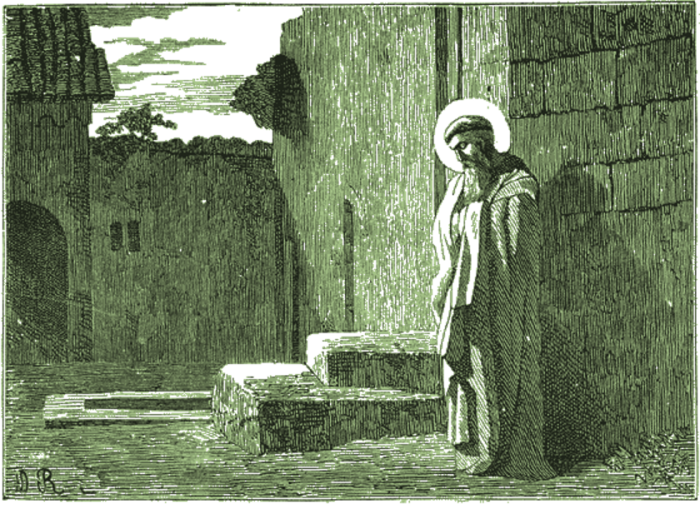
Today’s saints show us what such fruit looks like. St. Eugenius of Carthage lived during a time when many were pressured to abandon the true Faith. Though driven into exile and made to suffer greatly, he remained steadfast in his love for Christ and His Church. His courage was not born of human strength alone but of a heart firmly rooted in the truth.
The Church also commemorates St. Anacletus, one of the earliest successors of St. Peter. According to ancient tradition, he faithfully cared for the growing Church during its earliest years, preserving the unity and apostolic teaching entrusted to him. His quiet fidelity reminds us that the Church has always depended upon men and women who remain faithful in ordinary duties as well as extraordinary trials.
Perhaps the most important fruit we can cultivate today is simply remaining close to Christ. Even a few moments of sincere prayer offered throughout the day, a reverent visit to Our Lord in the Blessed Sacrament, a Rosary prayed with attention, or a hidden act of charity performed for love of God nourishes the soul far more than we often realize. The Lord is patient. And He does not ask us to bear fruit apart from Him. He asks us to remain with Him, trusting that, in His time, His grace will accomplish within us what we could never accomplish alone.
May our Blessed Mother, Seat of Wisdom, obtain for us the grace to remain faithful to her Divine Son. Through the prayers of St. Eugenius of Carthage and St. Anacletus, may our lives bear the quiet, lasting fruits that come only from abiding in Christ.
QUESTIONS FOR THE HEART
Am I spending enough time each day with Christ so that His grace can transform my heart?
Do the fruits of my life reveal patience, humility, charity, and fidelity, even in small daily circumstances?
Have I allowed the spirit of the world to influence my thinking more than the Gospel?
When suffering or sacrifice enters my life, do I unite it to the Cross of Christ?
What one simple step can I take today to remain more deeply rooted in Our Lord?
A LITTLE POEM FOR THE JOURNEY
Lord, plant my soul in fertile ground,
Where grace and truth may still abound,
When trials come or shadows fall,
Be Thou my strength, my guide, my all.
Let faith take root and hope increase,
Let charity bring gentle peace,
Until every fruit in my life shall bear,
And reflect Thy love and constant care.
Abide with me through joy and strife,
The living Vine, the source of life,
And when my earthly race is done,
Lead me at last to heaven’s run.
“WHEREFORE BY THEIR FRUITS YOU SHALL KNOW THEM.” (Matthew 7:20)
KNOWN BY OUR FRUITS
Commemoration of St. John Gualbert, Abbot
Commemoration of Sts. Nabor and Felix, Martyrs
July 12, 2026
TODAY’S GOSPEL: Matthew 7:15-21
EPISTLE: Romans 6:19-23
Our Lord begins with a warning that has lost none of its urgency: “Beware of false prophets.” Throughout every age, there have been those who claim to speak for God while leading souls away from Him. Some distort Sacred Scripture. Others replace the unchanging truths of the Catholic faith with the passing options of the world. Still others preach a Christianity without repentance, sacrifice, or the Cross. Such voices often appear sincere, compassionate, and convincing. Like wolves clothed in sheep’s clothing, they disguise error beneath an appearance of goodness.
Christ does not tell us to judge the secrets of another’s heart, for God alone sees the soul. Instead, He gives us a sure rule for discernment: “By their fruits you shall know them.” Good fruit cannot grow from a diseased tree. Likewise, teaching that departs from the Faith handed down by Christ and His Apostles cannot produce lasting holiness. Wherever authentic Catholic truth is embraced, we find humility, charity, purity, obedience, reverence for God, and fidelity to His commandments. Wherever error is welcomed, these virtues gradually give way to pride, confusion, compromise, and division.
Yet Our Lord’s words are meant to do more than help us recognize false teachers. They invite us to examine ourselves. What kind of fruit is my life producing? Do my words lead others closer to Christ? Is my home marked by peace, patience, and forgiveness? Do those who know me see someone becoming more humble, more charitable, more prayerful, more faithful? The Christian life is not measured by what we profess with our lips alone, but by the quiet witness of a heart transformed by grace.
Our Lord concludes with one of the most sobering statements in the Gospel: “Not every one that saith to Me, Lord, Lord, shall enter into the kingdom of heaven, but he that doth the will of My Father.” Faith is not merely believing certain truths or speaking the holy name of Jesus. True faith always seeks to obey. Love of God is proven by doing His will, even when it requires sacrifice, forgiveness, or perseverance through suffering.
Having warned us to examine the fruits of our lives, St. Paul explains in today’s Epistle how those fruits are formed. Before we belonged to Christ, we were slaves of sin. We often pursued our own desires without considering where they were leading us. Sin always promises freedom, yet it leaves the soul in bondage. Its apparent pleasures eventually give way to emptiness, regret, and separation from God. But through Christ, we have been set free.
St. Paul reminds us that Christian freedom is not the freedom to do whatever we please, Rather, it is the freedom to do what is right. Freed from the tyranny of sin, we become servants of righteousness, allowing God’s grace to shape our thoughts, our words, and our actions.
This transformation does not happen in a single moment. It is the work of a lifetime. Each confession made with sincere repentance, each Holy Communion received with devotion, each temptation resisted, each act of charity performed for love of God allows the Holy Ghost to produce within us the fruits of holiness.
St. Paul concludes with words that summarize the entire Christian life: “The wages of sin is death. But the grace of God, life everlasting, in Christ Jesus our Lord.” Every day we choose which fruit we desire to cultivate.
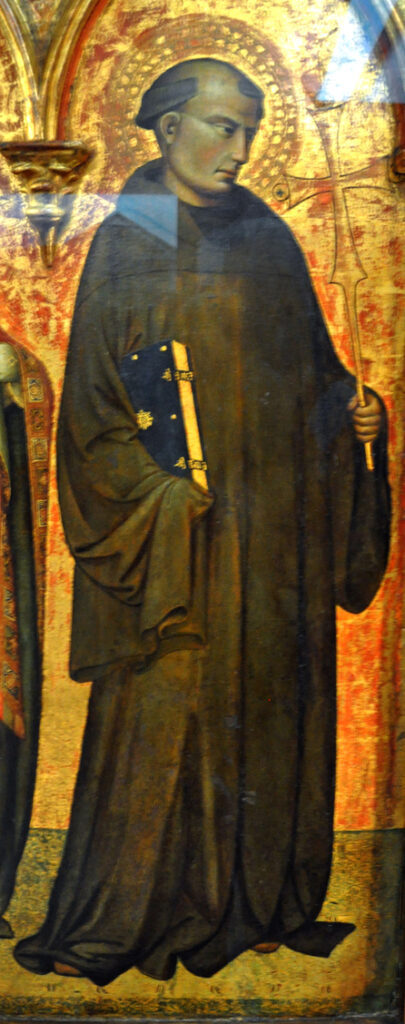
Today’s commemorated saints give us living examples of these Sacred Readings. As a young nobleman, St. John Gualbert burned with the desire to avenge the murder of his brother. When he finally confronted the killer, the man fell to his knees and begged for mercy for the sake of Christ. At that moment, John’s heart was pierced by the remembrance of Our Lord praying for those who crucified Him. Instead of taking revenge, he forgave the man completely.
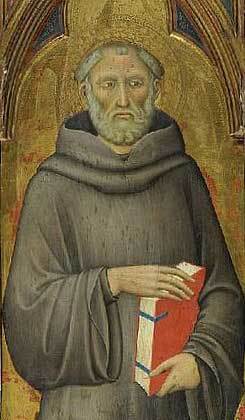
That single act of forgiveness became the good fruit from which an entire life of holiness grew. Leaving behind wealth and worldly ambition, John entered the Benedictine Order and eventually founded the Vallombrosan Congregation. He became known for his fidelity to the Rule of St. Benedict, his love of poverty, his defense of the Church against corruption, and his unwavering commitment to holiness. The fruit of God’s grace continued to multiply long after his own earthly life had ended.
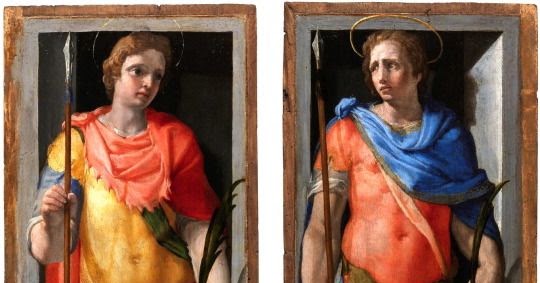
The Church also honors Saints Nabor and Felix, Roman soldiers who remained faithful to Christ during the persecution of Emperor Diocletian. Offered the opportunity to save their lives by denying their faith, they chose instead to suffer martyrdom. Their witness reminds us that the greatest fruit a Christian can bear is steadfast fidelity to Christ.
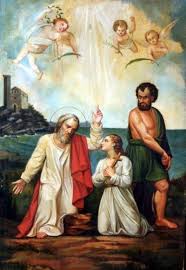
The Church places these readings and these saints before us today so that we may honestly examine our own hearts. Are we becoming the kind of tree that bears good fruit? The answer is found not in extraordinary deeds, but in the countless ordinary choices that shape each day – whether we forgive instead of resent, speak kindly instead of harshly, pray instead of neglecting God, choose humility over pride, and seek God’s will before our own.
May the Holy Ghost continue to cultivate within us the fruits of holiness. Through the prayers of St. John Gualbert and the holy martyrs Nabor and Felix, may our lives bear such abundant fruit that, when we stand before Christ, we may hear the words every faithful disciple longs to hear: “Well done, good and faithful servant.”
QUESTIONS FOR THE HEART
Am I careful to judge teachings by their fruits and by their fidelity to the Catholic Faith rather than by popularity or emotion?
What fruit is my own life producing? Would those closest to me recognize the fruits of the Holy Ghost growing within me?
Is there someone whom I need to forgive as generously as St. John Gualbert forgave his enemy?
Do I willingly accept the daily sacrifices that come with following Christ?
Am I striving each day to do the will of my Heavenly Father rather than simply speaking about my faith?
A LITTLE POEM FOR THE JOURNEY
Lord, make my soul a fruitful tree,
Deep-rooted in Thy charity,
Let every word and deed proclaim
The honor of Thy holy Name.
When falsehood seeks to lead astray,
Keep me upon the narrow way,
Like John, teach me to mercy show,
Like martyrs, steadfast faith bestow.
Until my earthly race is done,
And all life’s victories are won,
May every fruit my life has borne,
Give glory to my Savior’s throne.
“Not every one that saith to Me, Lord, Lord, shall enter into the Kingdom of Heaven: but he that doth the will of My Father who is in Heaven.” (Matthew 7:21)
HEARING THE WORD OF GOD AND KEEPING IT
In Honor of the Blessed Virgin Mary (Salve, Sancta Parens)
Commemoration of Saint Pius I, Pope and Martyr
July 11, 2026
TODAY’S GOSPEL: Luke 11:27-28
EPISTLE: Ecclesiastes 24:14-16
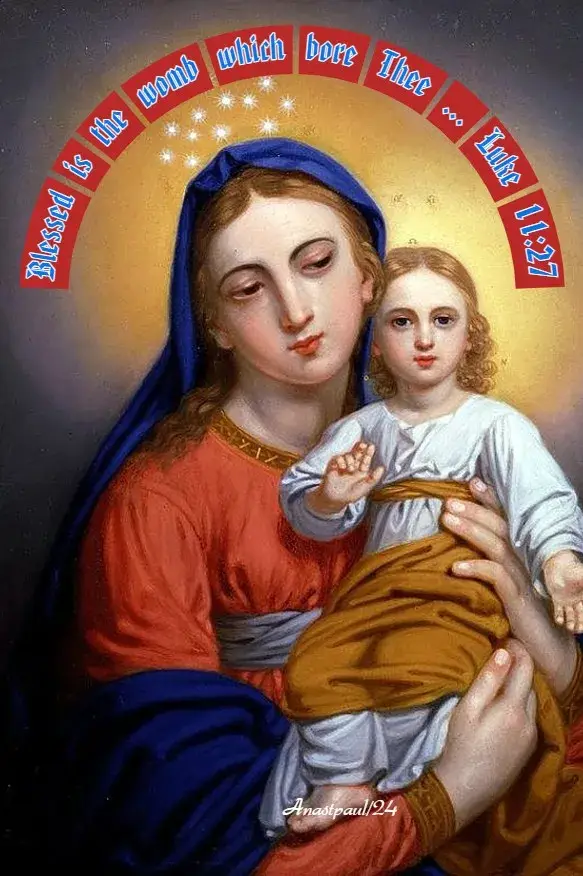
As Holy Mother Church continues through the Sixth Week after Pentecost, today’s Sacred Readings direct our hearts toward the perfect disciple of Christ: The Blessed Virgin Mary. The Church fittingly begins today’s Mass with the beautiful words, “Salve, Sancta Parens” – “Hail, Holy Mother, who didst bring forth the King Who ruleth Heaven and earth forever.”
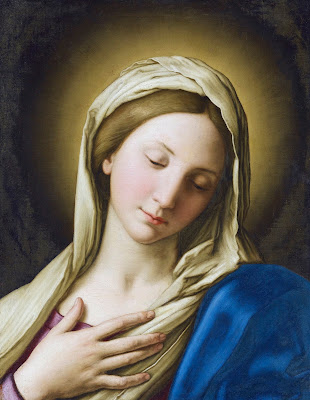
In the Gospel, a woman in the crowd blesses the Mother of Our Lord, while Christ reveals the deeper source of her blessedness. The Epistle proclaims the beauty and fruitfulness of Holy Wisdom, which the Church has long applied to Our Lady. Today we also commemorate St. Pius I, the ninth successor of St. Peter, who faithfully defended the truth of Christ during one of the Church’s earliest periods of trial.
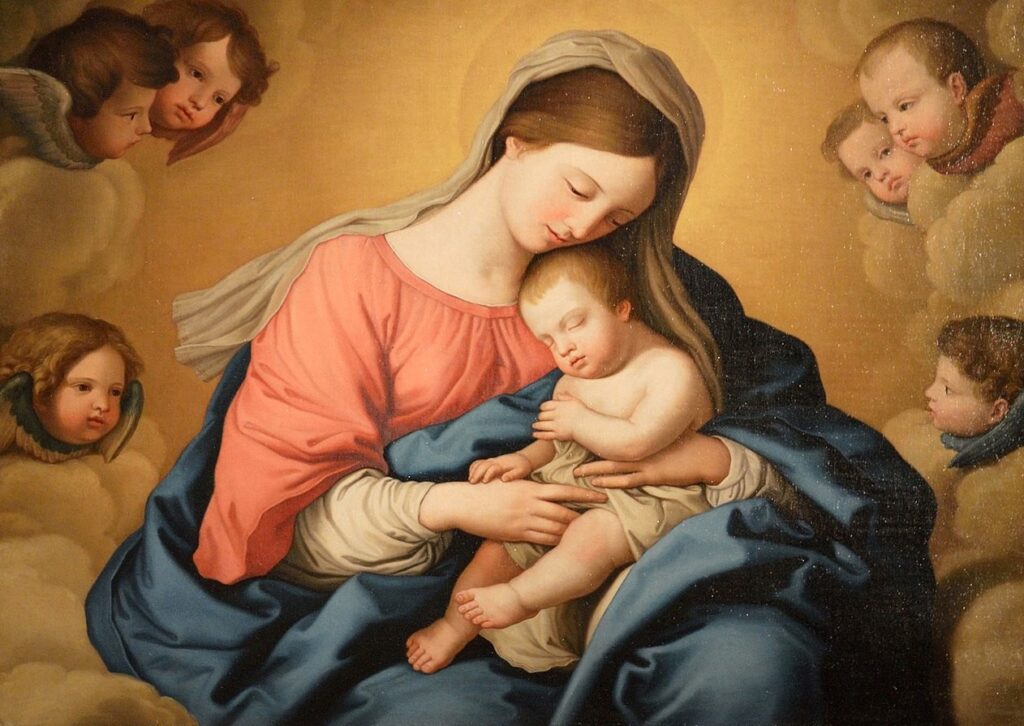
As Our Lord teaches the multitude, a woman, filled with admiration, raises her voice and proclaims, “Blessed is the womb that bore Thee …” Her words sprang from a heart that recognizes the extraordinary dignity of the Mother of Jesus. Whether she fully understood that Christ standing before her was the Eternal Son of God made Man, we do not know. Yet the blessing she pronounces is entirely true.
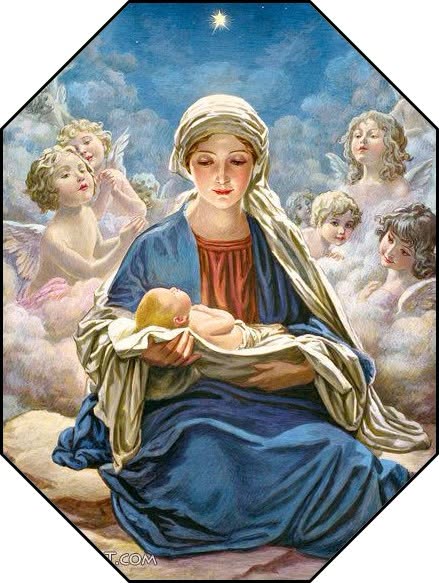
The Son of God truly took our human nature from the Blessed Virgin Mary. He Who is eternally begotten of the Father entered the world through the humble obedience of a Virgin. God, in His infinite wisdom, chose not merely to appear among men but to become one of us, sanctifying human life from its very beginning in the womb. The mystery of the Incarnation reveals the immeasurable dignity of every human life and the sacred vocation of motherhood.
Our Lord’s reply has sometimes been misunderstood: “Yea rather, blessed are they who hear the Word of God and keep it.” Far from diminishing His Blessed Mother, Jesus reveals why she is the most blessed of all creatures. Mary is blessed not only because she bore Christ in her womb, but also because she first received Him in perfect faith. She heard the Word of God through the message of the Angel Gabriel and answered with complete trust: “Be it done unto me according to thy word.”
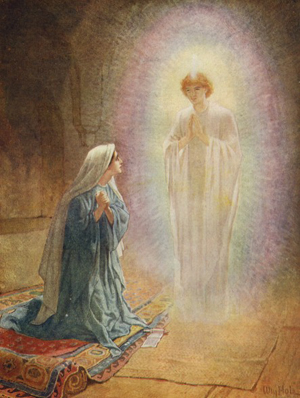
Throughout her entire life she remained faithful to that “Fiat,” never wavering in love, even as she stood beneath the Cross of her Divine Son. Our Lord extends this same invitation to each one of us. We become members of His family not through earthly privilege but through obedient faith. Every soul who hears His Word, treasures it, and strives to live it participates in the spiritual family of Christ.
Yet how easily the voice of God is drowned out amid the constant noise of the world. Our days are filled with endless activity, conversations, devices, and distractions that leave little room for silence. God often speaks not amid the clamor, but in the quiet recollection of a heart turned toward Him. Time spent before the Blessed Sacrament, faithful meditation upon Sacred Scripture, the Holy Rosary, and moments of peaceful silence allow His grace to penetrate our souls. Like Our Lady, we are called not merely to hear God’s Word but to keep it faithfully within our hearts.
In today’s Epistle, Holy Wisdom is spoken of as dwelling among God’s chosen people and flourishing like the fairest trees planted by living waters. From ancient times the Church has seen in these sacred words a beautiful figure of the Blessed Virgin Mary, the Seat of Wisdom, through whom the Eternal Word entered the world.
Today’s commemoration of St. Pius I reminds us that faithfully hearing God’s Word also requires faithfully guarding it. St. Pius shepherded the Church during the second century when dangerous heresies threatened to lead many souls away from the truth.
Among those spreading grave error was Marcion, who rejected much of Sacred Scripture and attempted to separate the God of the Old Testament from the God revealed by Christ. St. Pius firmly opposed those false teachings, preserving the apostolic faith handed down from the Apostles. Tradition also remembers him as a martyr who sealed his witness with his life.
The challenges facing us today may differ somewhat in form but not in substance. Every generation encounters voices that seek to reshape the Gospel according to the spirit of the age. Like St. Pius, we are called to remain faithful to the deposit of faith entrusted to Holy Mother Church – not selecting teachings just because they are easy or popular, but rather embracing the fullness of Catholic truth with humility and love.
The Blessed Virgin Mary perfectly heard and kept the Word of God. St. Pius I courageously defended that same Word against error. Together they remind us that authentic discipleship requires both loving obedience and steadfast fidelity. May Our Lady obtain for us hearts that eagerly receive God’s grace, and may St. Pius I strengthen us to stand courageously for the truth, so that persevering in faith until the end, we may one day rejoice forever in the presence of Christ our King.
QUESTIONS FOR THE HEART
Do I seek moments of silence each day so that I may hear the gentle voice of God speaking within my heart?
Like the Blessed Virgin Mary, do I strive to follow Christ with humility, trust, and loving obedience?
Am I faithful to the teachings of Holy Mother Church, even when they challenge the spirit of the world or my own preferences?
Do I ask Our Lady each day to help me treasure God’s Word and live it more faithfully?
Like St. Pius I, am I willing to defend the Catholic faith with both courage and charity whenever truth is challenged?
A LITTLE POEM FOR THE JOURNEY
Hail, Holy Mother, pure and bright,
Who bore the everlasting Light,
Teach me to hear God’s gentle voice,
And in His holy Will rejoice.
When noise would draw my soul away,
Lead me to silence, prayer, and stay,
With Pius, may I guard the faith,
Through every trial until death.
O Word made flesh, my heart renew,
Make all my thoughts and actions true,
And with Thy Mother by my side,
Help me to trust, and in love abide.
“YEA RATHER, BLESSED ARE THEY WHO HEAR THE WORD OF GOD, AND KEEP IT.” (Luke 11:28)
THE BRIDEGROOM AND HIS FAITHFUL FAMILY
In Honor of the Seven Holy Brothers, Martyrs, and Saints Rufina and Secunda, Virgins & Martyrs
July 10, 2026
TODAY’S GOSPEL: Matthew 12:46-50
EPISTLE: Proverbs 31:10-31
As Holy Mother Church continues to guide us through the Sixth Week after Pentecost, today’s Sacred Readings draw our attention to one of the greatest privileges ever offered to mankind: the invitation to belong to the family of God. In the Gospel, Our Lord teaches that those who faithfully obey His Heavenly Father are His true brethren.

In the Epistle, Sacred Scripture praises the faithful and virtuous woman whose steadfast love and fidelity bring blessing to all around her. Together these readings reveal the beauty of the Holy Catholic Church, the spotless Bride of Christ, and the faithful souls who, through grace and obedience, become living members of the Mystical Body.
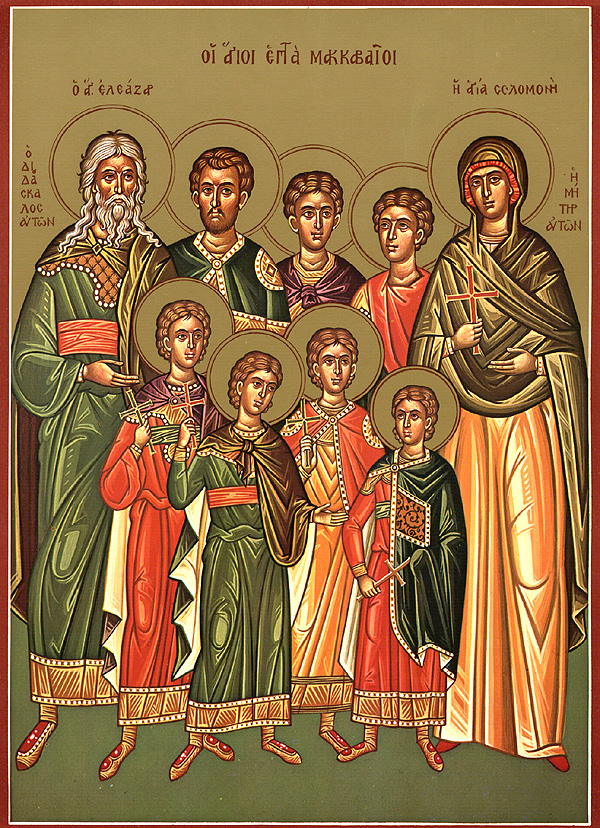
Today’s holy martyrs – the Seven Holy Brothers – and the virgin sisters Rufina and Secunda – show us what it truly means to belong to Christ. Their love for Him was not merely professed with words but sealed with heroic fidelity, even unto death. Their witness reminds us that membership in the famiily of Christ is not measured by earthly ties but by loving obedience to God, whatever the cost.
In today’s Gospel, Our Lord is teaching the crowds when He is told that His Blessed Mother and His relatives are standing outside, wishing to speak with Him. Jesus responds, “Who is My mother, and who are my brethren?” Stretching forth his hand toward his disciples, He says, “Behold My mother and My brethren. For whosoever shall do the Will of My Father Who is in Heaven, he is My brother, and sister, and mother.”
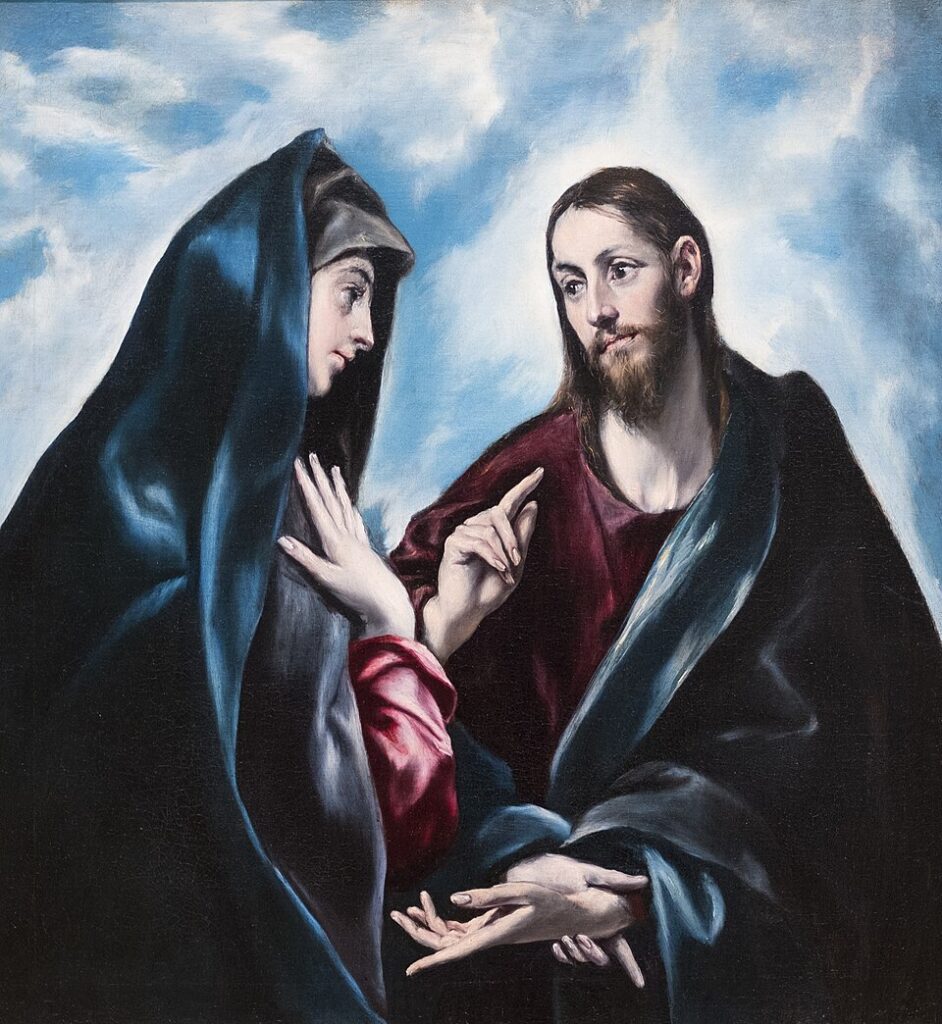
At first hearing, these words may seem surprising. Some have mistakenly thought that Our Lord was diminishing His Mother. Nothing could be further from the truth. Jesus, Who perfectly fulfilled the Fourth Commandment, could never dishonor the Blessed Virgin Mary. Rather, He is revealing the very reason she is the greatest of all creatures.
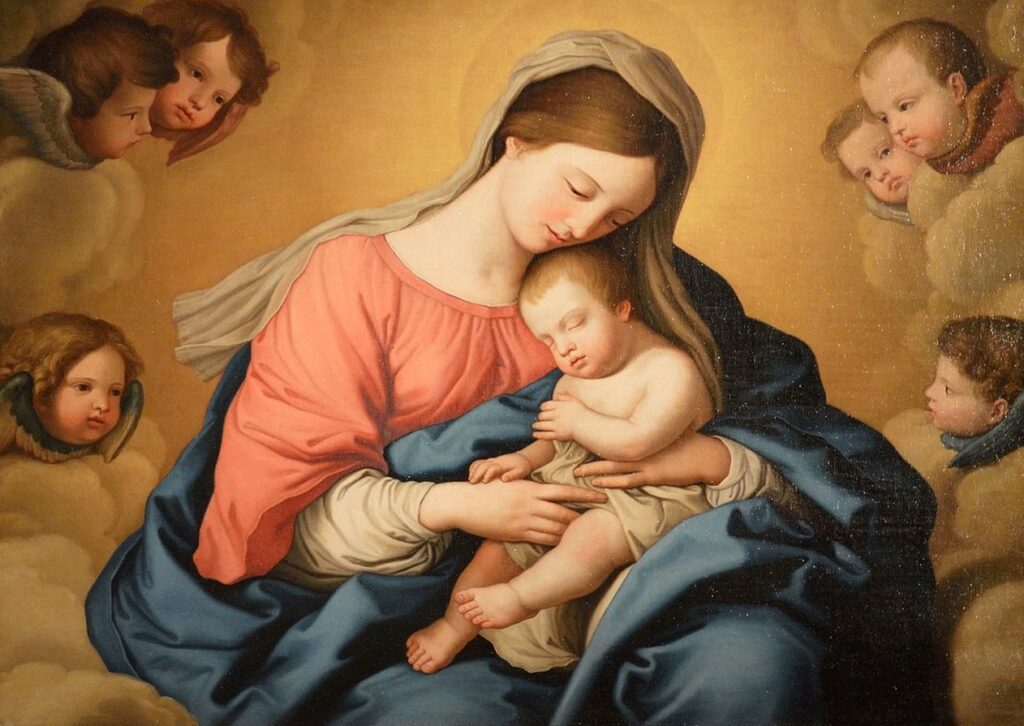
Mary’s incomparable dignity does not rest merely upon her physical motherhood, glorious though that is. She is blessed above all women because she responded with complete faith to God’s call and remained faithful to Him throughout her entire life. Before she conceived Christ in her womb, she had already conceived Him in her heart through perfect faith and obedience.
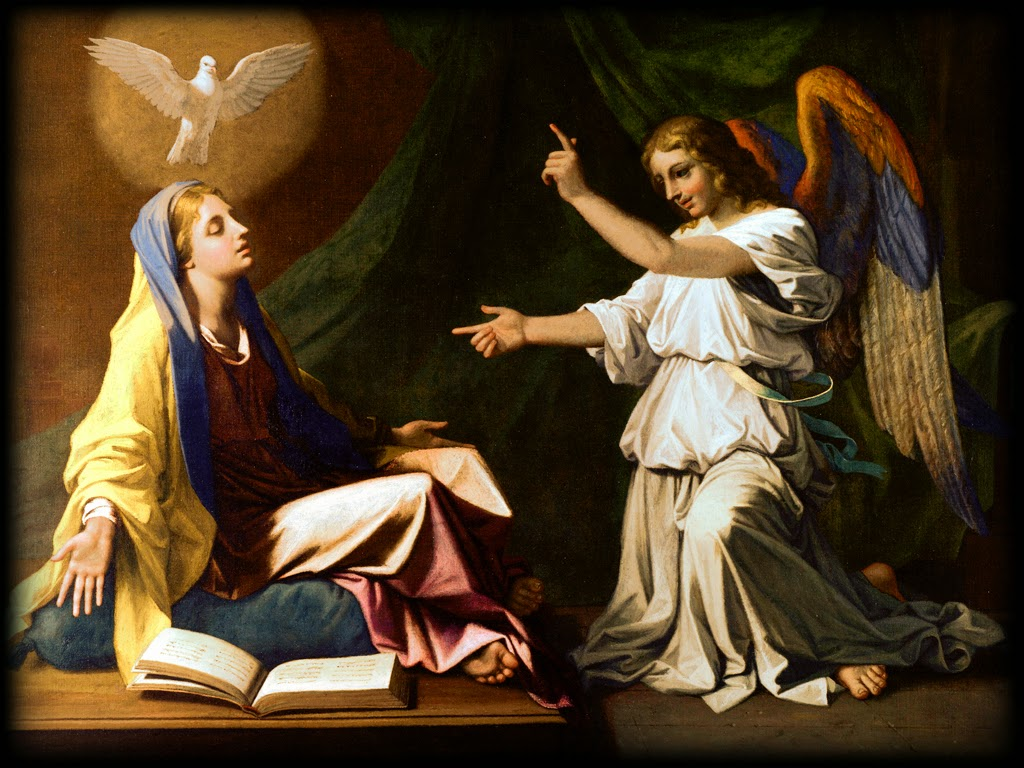
Jesus is not lowering His Mother but inviting us to imitate her. The Blessed Virgin becomes the perfect model of discipleship. Her humble “Fiat” at the Annunciation continues to echo through every generation, teaching us that holiness begins with a simple yet wholehearted “yes” to God.
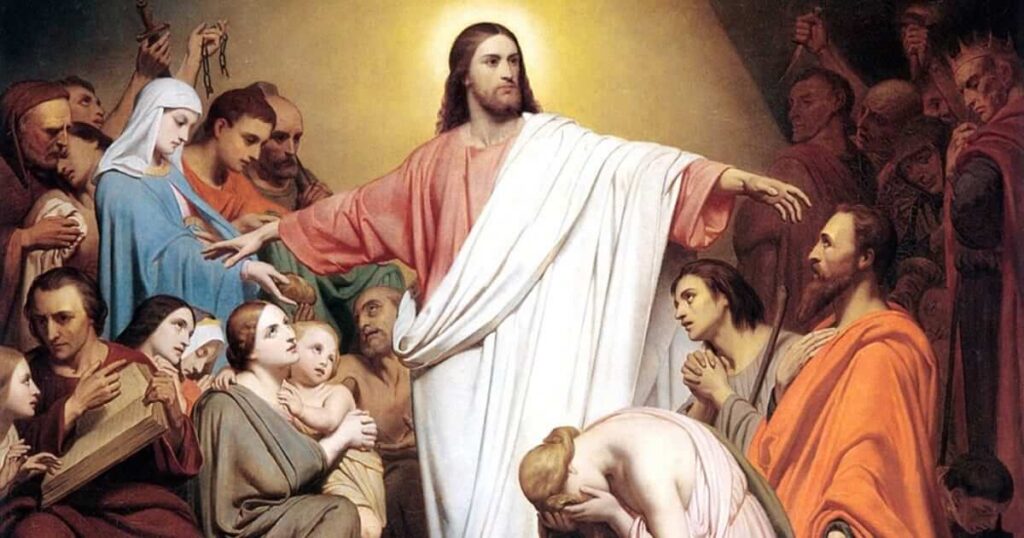
The disciples themselves were far from perfect. They misunderstood, stumbled, and even fled during Our Lord’s Passion. Yet they continued to return to Him in repentance and trust. In the same way, we need not despair over our weaknesses. Christ knows our frailty. He knows how easily the world distracts us and how often we fall. Yet every sincere act of repentance opens our hearts once again to His sanctifying grace.
Today’s Epistle once again places before us the beautiful portrait of the virtuous woman found in the Book of Proverbs. While these verses speak directly of the dignity and vocation of a faithful wife and mother, the Church also recognizes in them a deeper meaning. They also point toward the Holy Catholic Church herself, the spotless Bride of Christ.
Throughout Sacred Scripture, Christ reveals Himself as the Divine Bridegroom. He loved His Bride so completely that He gave Himself upon the Cross to sanctify and cleanse her. The Church is not merely an earthly institution but the Mystical Body of Christ, united to Him in an intimate and supernatural bond of love.

Like the virtuous woman described in Proverbs, the Church nourishes her children with wisdom, strengthens them through the Holy Sacraments, and faithfully carries the treasures entrusted to her by Christ Himself. Though individual members of the Church may fall through sin and weakness, the Church remains holy because Christ, her Head, is holy. Through every century of persecution, scandal, and trial, Christ has never abandoned His Bride.
Our Lord continues to purify His Church and invites each one of us to cooperate in that work by allowing Him first to purify our own hearts. Through frequent Confession, worthy reception of the Holy Eucharist, daily prayer, acts of charity, and faithful perseverance, we become more perfectly united to Christ, and we help build up His Mystical Body.
To belong to Christ is not merely to bear the name Christian but to allow His grace to transform every aspect of our lives.
The Seven Holy Brothers, together with their heroic mother, St. Felicitas, endured unimaginable suffering rather than deny their Lord. One by one her sons were tortured and put to death before her eyes. Yet instead of urging them to preserve their earthly lives by sacrificing to false gods, she strengthened them to remain faithful to Christ. Like the Blessed Virgin standing beneath the Cross of her Divine Son, St. Felicitas entrusted those she loved most completely into the hands of God. Her courage reminds Christian parents that the greatest gift they can give their children is not earthly success or comfort, but an unwavering love for Jesus Christ and His Holy Church.
The virgin sisters, Saints Rufina and Secunda, likewise demonstrated extraordinary fidelity. Born into a noble Roman family, they refused to abandon Christ even when threatened with torture and death. When Rufina was scourged, Secunda courageously cried out that she confessed Christ and wished to suffer alongside her sister. Unable to overcome their steadfast faith, their persecutors finally beheaded them.
These holy martyrs remind us that every generation is called to witness for Christ. While most of us may never face physical martyrdom, we are all called to die daily to sin, resist the spirit of the world, remain faithful to the teachings of the Church, and courageously confess Christ before others. The blood of the martyrs has always been the seed of the Church, and their witness continues to strengthen the faithful even today.
The family of Christ is built not upon earthly privilege but upon faithful obedience. The Bride of Christ is adorned not with worldly power but with holiness. May we ask these glorious martyrs to obtain for us steadfast faith, courageous hearts, and the grace to persevere joyfully until we too may enter the eternal wedding feast of the Lamb.
QUESTIONS FOR THE HEART
Have I learned to imitate the Blessed Virgin Mary by seeking above all else to follow my Heavenly Father with trust, humility, and love?
Do I remember that belonging to Christ is not merely a matter of words or outward appearances, but of daily fidelity, allowing His grace to shape my thoughts, choices, and actions?
As a member of the Holy Catholic Church, do I pray faithfully for her purification, unity, and holiness, remaining steadfast even when I witness weakness or suffering within her members?
When God permits sacrifices or crosses in my life, do I unite them with the Passion of Christ, asking that they become instruments of grace for my own soul and for the salvation of others?
Do the lives of the holy martyrs inspire me to greater courage in living my Catholic faith, even when it requires sacrifice, perseverance, or standing against the spirit of the world?
A LITTLE POEM FOR THE JOURNEY
O gentle Lord, Thy Will I seek,
Though I be frail, though I be weak,
Like Mary, may my answer be,
“Lord, let it all be done in me.”
Through trial’s fire and sorrow’s night,
Keep ever burning faith’s pure light,
With martyr’s heart and heaven’s cheer,
May I be faithful, year by year.
Teach me to love Thy Holy Bride,
Within her shelter to abide,
Until at last, by grace set free,
I dwell forever, Lord, with Thee.
“FOR WHOSOEVER SHALL DO THE WILL OF MY FATHER WHO IS IN HEAVEN, HE IS MY BROTHER, AND SISTER, AND MOTHER.” (Matthew 12:50)
BREAD OF LIFE
In Honor of St. Veronica Giuliani (Franciscan Calendar and Roman Martyrology)
July 9, 2026
TODAY’S GOSPEL: Mark 8:1-9
EPISTLE: Romans 6:3-11
As we continue through the Sixth Week after Pentecost, Holy Mother Church once again places before us the miracle of the feeding of the multitude and pairs it with St. Paul’s teaching on our union with Christ in His Death and Resurrection. Together, these sacred readings reveal the loving compassion of Our Lord, who not only knows our every need but has provided everything necessary for our salvation. These readings remind us that Jesus never abandons His people. He nourishes us with His grace, strengthens us through the Holy Sacraments, and calls us to place our complete trust in Him, who has conquered both sin and death.
In today’s Gospel, we read that a great multitude had remained with Jesus for three days. Seeing their hunger and exhaustion, Our Lord says with tenderness, “I have compassion on the multitude.” These simple words reveal the very Heart of Christ. The Son of God is not distant from our sufferings or indifferent to our weaknesses. He sees every burden we carry, every temptation we endure, every sorrow that weighs upon us, and He responds not with indifference but with divine compassion.
The disciples, seeing only the bitterness of the wilderness, ask how anyone could feed so many people in such a deserted place. Their question reflects our own at times. Faced with trials, uncertainty, illness, or suffering, we may wonder how God will provide what we need. Yet where human resources end, God’s providence begins.
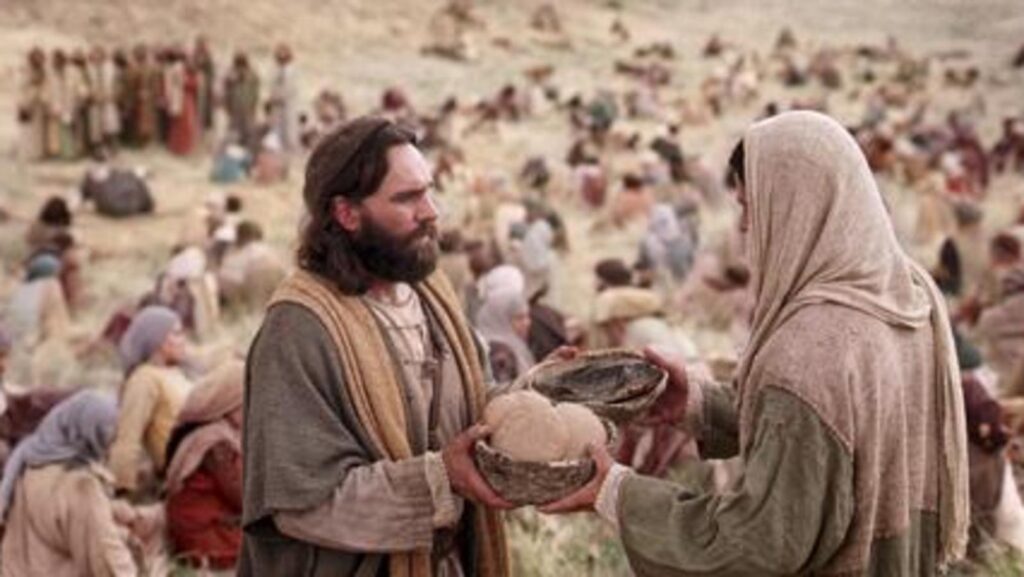
Jesus takes the loaves, gives thanks, blesses them, breaks them, and entrusts them to His disciples to distribute among the people. The Church recognizes in this miracle a foreshadowing of the Most Holy Eucharist. At every Holy Mass, the same Divine Savior continues to feed His people – not merely with earthly bread, but with His own Body, Blood, Soul, and Divinity. Through His priests, Christ still gives thanks, blesses, breaks, and gives Himself to nourish weary souls on their pilgrimage toward Heaven.
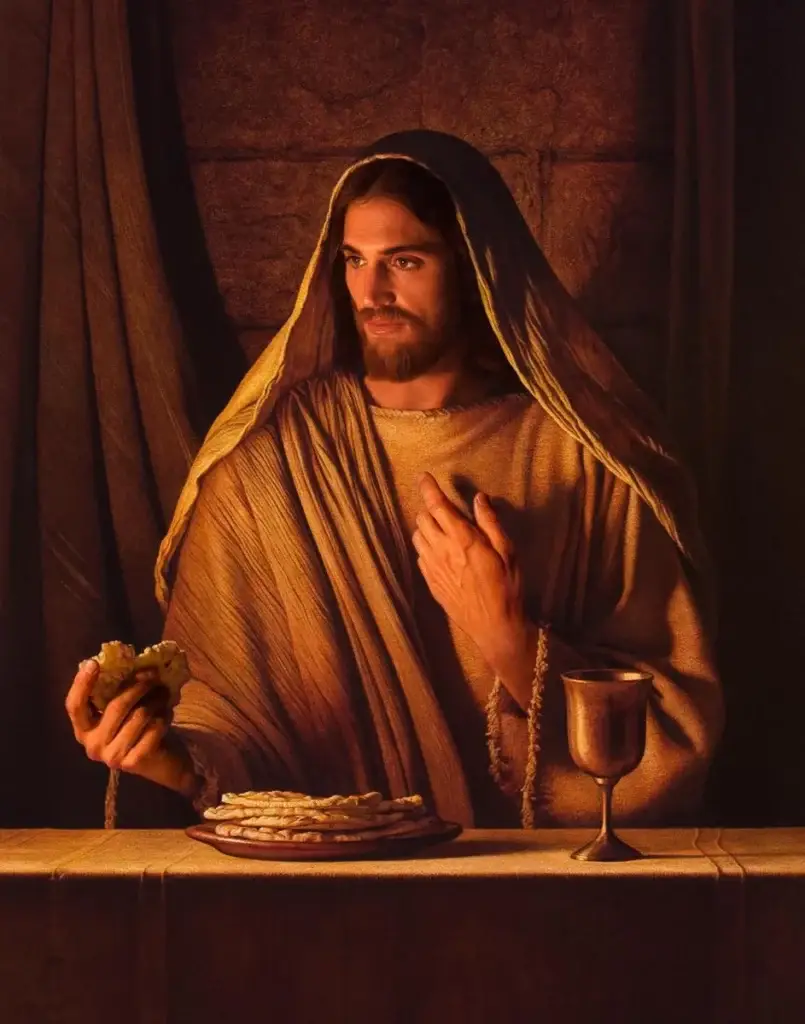
The multitude had only one task: to receive with gratitude what Our Lord provided. We, too, are invited to approach Him with humble and trusting hearts, striving always to be in the state of sanctifying grace, so that we may receive the Bread of Life with faith, reverence, and thanksgiving. Jesus knows precisely what His children need, and He never fails to provide the grace necessary for those who seek Him faithfully.
St. Paul then deepens this mystery in today’s Epistle. He reminds us that through Holy Baptism we have been united with Christ in His Death so that we may also share in His Resurrection. The old man, enslaved by sin, is called to die so that a new life, transformed by grace, may begin.
This union with Christ is not merely symbolic. Through His saving Passion, Death, and glorious Resurrection, Our Lord has broken the power of sin and opened the gates of eternal life. Every time we renounce sin, receive the Sacraments worthily, and faithfully carry the crosses permitted in our lives, we participate more fully in His victory. Our sufferings, when united with His Cross, are no longer meaningless but become instruments through which God sanctifies our souls and draws us ever closer to Himself.
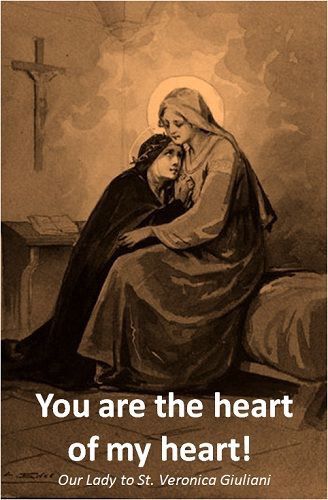
Although St. Veronica Giuliani is not found on the universal 1962 Roman Calendar, she is honored today in the Franciscan family and in the Roman Martyrology. Her life offers a profound witness to love of the Crucified Christ and complete abandonment to the Will of God.
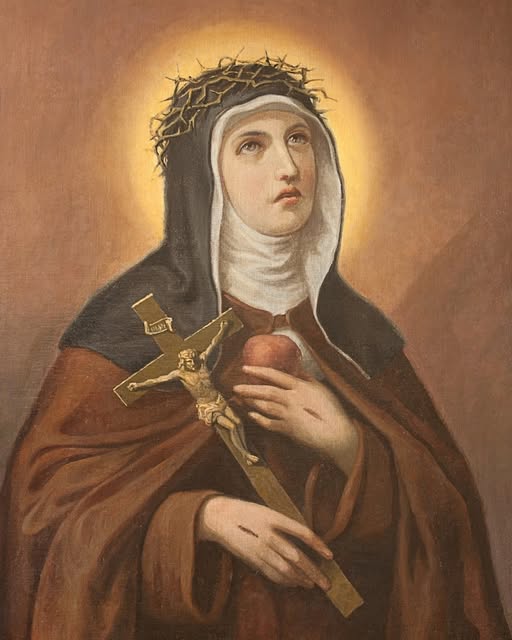
Veronica received extraordinary mystical graces, including the stigmata, yet she never sought extraordinary experiences for their own sake. Rather, she desired only to belong entirely to Christ. Her deep union with His Passion was marked by humility, obedience, and self-forgetting love. She understood that the surest path to holiness is found in faithfully embracing God’s will each day, especially when it requires sacrifice.
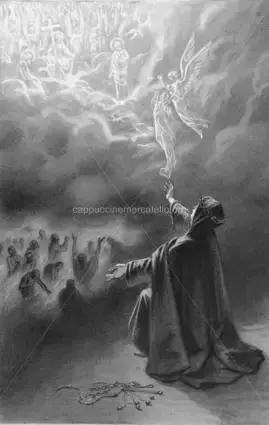
Many people dream of finding a love that will never fail. Every earthly love, however beautiful, remains imperfect. In Jesus Christ we encounter the only Bridegroom whose love never changes, whose mercy never fails, and whose fidelity endures forever. St. Veronica found in Him the fulfillment of every longing of her heart. Her example reminds us that the deepest desires of the human soul are satisfied only by the One who first loved us and gave Himself for us upon the Cross.
Our world constantly encourages us to seek comfort, pleasure, and self-fulfillment. Christ invites us to something far greater. He calls us to trust His compassion, receive His grace, die daily to ourselves, and follow Him along the path that leads through Calvary to the empty tomb. The Cross is never the end of the story. Beyond it shines the everlasting joy of the Resurrection and the promise of the Kingdom prepared for those who remain faithful to Him.
QUESTIONS FOR THE HEART
Have I learned to trust in the compassionate Heart of Jesus, especially when I cannot see how He will provide for my needs?
Do I approach the Holy Eucharist with faith, reverence, and gratitude, recognizing that Christ Himself is the Bread of Life who strengthens me for my journey toward Heaven?
Am I striving to die daily to sin so that I may walk in the newness of life given to me through Holy Baptism?
When God permits suffering in my life, do I unite it with the Passion of Christ, trusting that He can use even my crosses to sanctify my soul?
A LITTLE POEM FOR THE JOURNEY
O Heart of Christ so full of grace,
You never turn from one lost face,
You feed our souls with Bread Divine,
And make our wounded hearts be Thine.
Teach us to trust through joy and pain,
To walk the Cross that leads to gain,
Like Veronica, may we prove,
That every cross is filled with love.
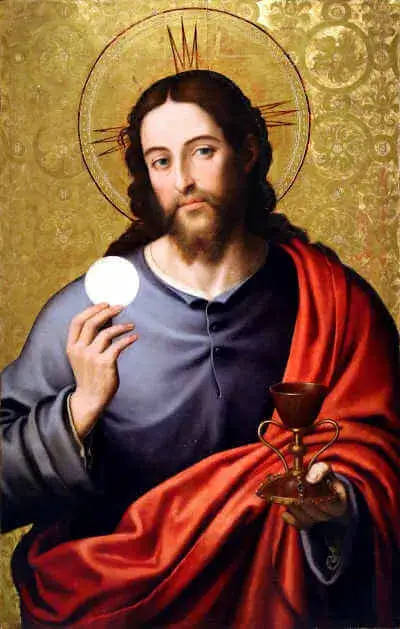
“AND THEY DID EAT, AND WERE FILLED.” (Mark 8:8)
THE PEARL OF GREAT PRICE
Commemoration of St. Elizabeth of Portugal, Queen and Widow
July 8, 2026
TODAY’S GOSPEL: Matthew 13:44-52
EPISTLE: Proverbs 31:10-31
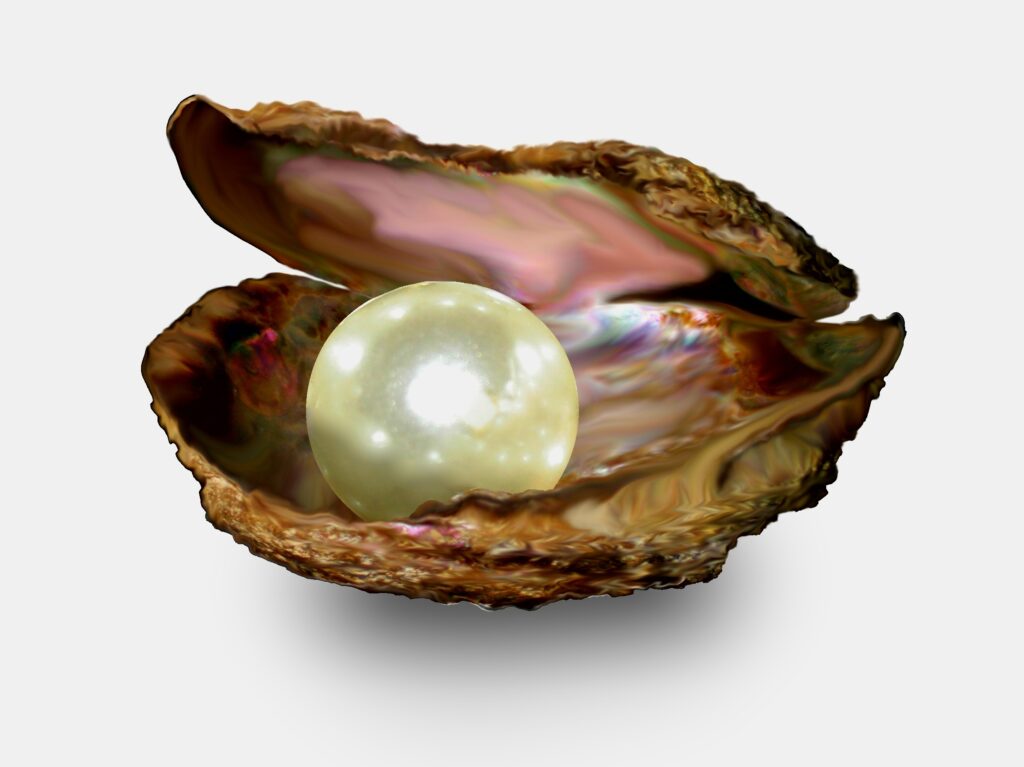
As we continue our journey through the Sixth Week after Pentecost, Holy Mother Church continues the mission of salvation entrusted to her by Christ. Our Lord gives us every assistance to choose Him and to walk the narrow path that leads to the Kingdom of Heaven. Through the Church, and especially through the Holy Sacraments, He provides the sure means of grace that guide us toward everlasting life. Jesus did not leave us orphans, nor did He leave us to our own devices. He gave us His Church, His spotless Bride, whose value is beyond all earthly price.
In today’s Gospel, Our Lord uses three contrasting parables to reveal both the priceless value of the Kingdom of Heaven and the reality that not everyone will enter it: the treasure hidden in a field, the pearl of great price, and the net cast into the sea.
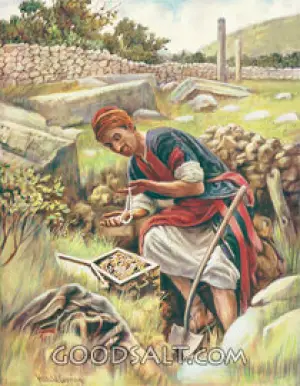
In the first parable, the man joyfully buys the field in order to obtain the hidden treasure. In the second, the merchant diligently searches for the pearl of great price and, upon finding it, sells everything he owns to purchase it. Both parables emphasize a choice. The Kingdom of Heaven is worth every sacrifice, but we must first choose to seek it and then be willing to surrender all in order to possess it.
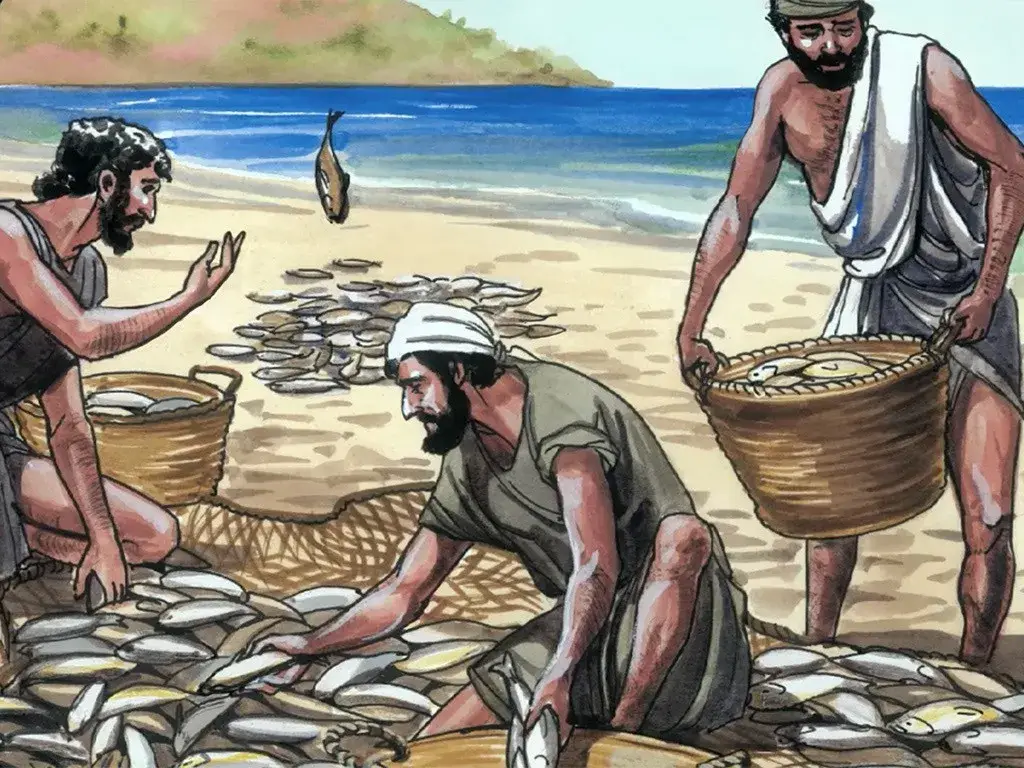
The third parable is different. A net gathers fish of every kind, but when it is full, the good fish are gathered into vessels while the bad are cast away. Here there is no choice left to be made. Our Lord plainly tells us, “So shall it be at the end of the world. The angels shall go out, and shall separate the wicked from among the just.” He also speaks of the place “where there shall be weeping and gnashing of teeth.” These solemn words leave no doubt that our choices in this life carry eternal consequences.

Every day we make choices. We choose what we value, what we pursue, and whom we serve. Our Lord reminds us that these daily choices shape our eternal destiny. The Kingdom of Heaven is offered to all, but it is a treasure that must be sought with our whole heart and embraced above every earthly possession.

The Epistle begins by describing the dignity and worth of a virtuous wife: “Who shall find a virtuous woman? Far and from the uttermost coasts is the price of her.” Her husband safely trusts in her. She fulfills her vocation with love, bringing harmony to her home, caring for her household, extending her hands to the poor, and serving her family and neighbors with generosity, strength, and wisdom.

Proverbs then gives us a truth that stands in sharp contrast to the passing values of this world: “Favor is deceitful, and beauty is vain: the woman that feareth the Lord, she shall be praised.” The writer directs our attention beyond outward appearance to the beauty of a soul adorned with virtue.
A woman’s true dignity is found not in earthly charm but in her reverence for God, her fidelity to her vocation, and the love that governs all she does. Such beauty neither fades nor passes away, but bears fruit for eternity.
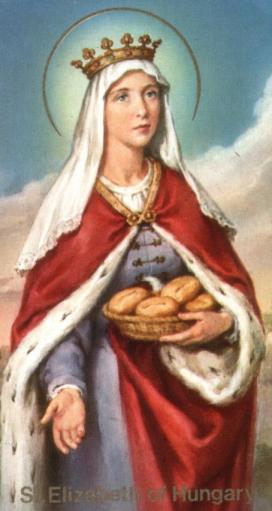
Today the Church honors St. Elizabeth of Portugal, known as the Peacemaker. Though she was a queen, she was known for her modesty, humility, generosity to the poor, and deep life of prayer. She devoted herself to feeding the hungry, caring for those in need, and bringing peace wherever conflict arose. She earned the title “Peacemaker” through her successful efforts to reconcile her husband with those who opposed him and to restore peace within her kingdom.
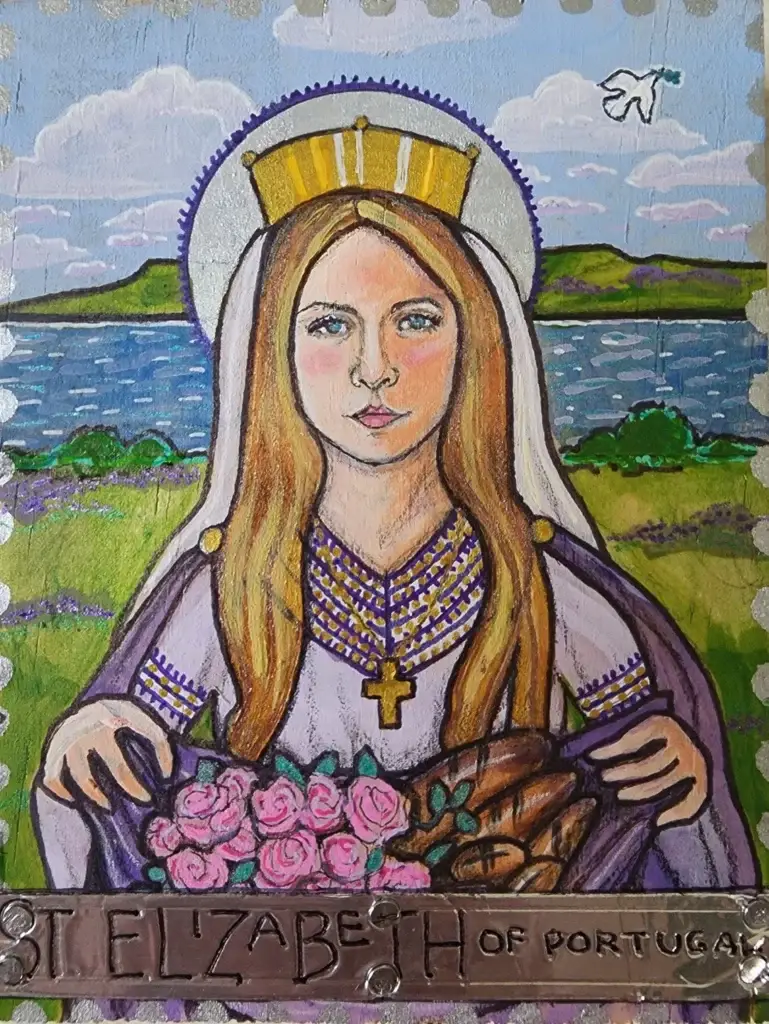
Her interior beauty made her a remarkable witness in her own day because she refused to live according to the expectations of worldly wealth and privilege. Instead, she embraced humility, charity, and virtue, reminding all who encountered her that true greatness is measured not by rank or riches, but by holiness.
Time has not changed the temptations of the human heart. Society continues to admire wealth, influence, and outward success, often overlooking the virtues that God values most. St. Elizabeth reminds us that we are not called to conform ourselves to the standards of the world, but to the Gospel of Jesus Christ. She courgeously chose the pearl of great price and remained faithful to Him above all else.
In our own day, we are likewise called to embrace faith, prayer, virtue, and charity, and to become peacemakers wherever God has placed us. We cannot set these aside when they become inconvenient. Rather, we are called to live them faithfully at all times, witnessing to the world that nothing is more precious than the Lord, and that we willingly choose our Creator and Author of Life above all things.
QUESTIONS FOR THE HEART
Every day we make countless choices. But in those choices, am I truly seeking first the Kingdom of God?
Do I consider whether today’s decisions draw me closer to God or lead me away from Him?
Do I look to Holy Mother Church for guidance as I navigate the ordinary duties and trials of daily life?
Am I striving to grow in virtue and to faithfuly embrace the vocation God has entrusted to me, allowing the fear of the Lord to become the foundation of all that I do?
A LITTLE POEM FOR THE JOURNEY
O Lord, You are the Treasure true,
The Pearl of Price my whole life through,
Teach me to seek Your holy will,
With trusting heart and spirit still.
May worthy riches lose their claim,
Compared with Your most holy Name,
Grant me, like saints who went before,
To love You first forevermore.
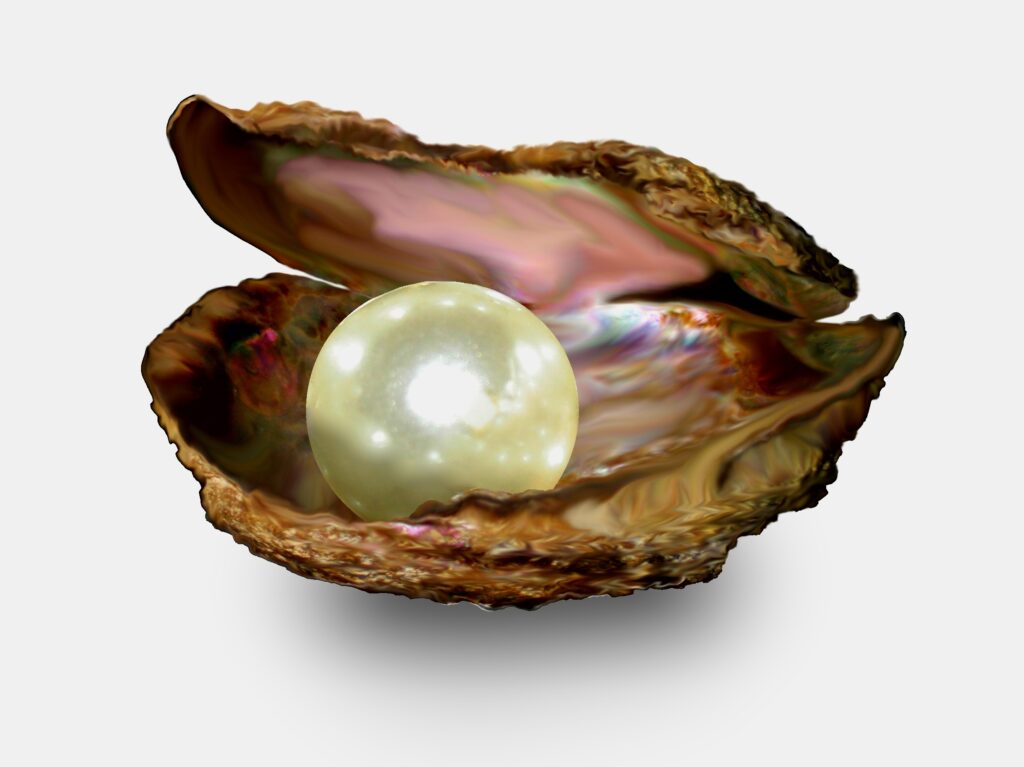
“WHO WHEN HE HAD FOUND ONE PEARL OF GREAT PRICE, WENT HIS WAY, AND SOLD ALL THAT HE HAD AND BOUGHT IT.” (Matthew 13:46)
LABORERS FOR THE HARVEST
Commemoration of Saints Cyril and Methodius, Bishops and Confessors
July 7, 2026
TODAY’S GOSPEL: Luke 10:1-9
EPISTLE: Hebrews 7:23-27
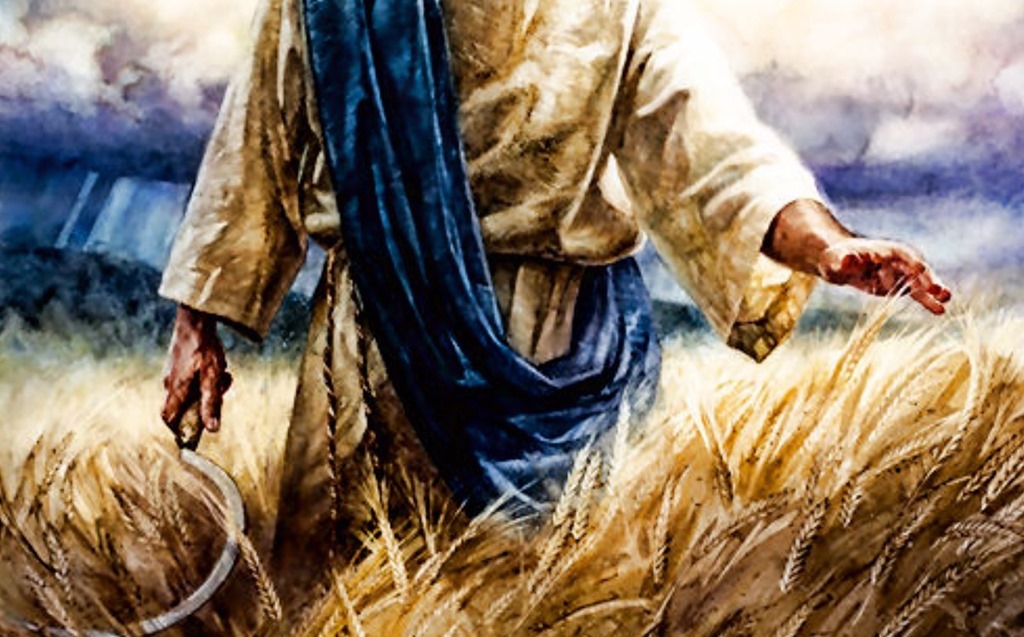
As we continue our journey through the Sixth Week after Pentecost, Holy Mother Church places before us the missionary call of the Gospel and the eternal priesthood of Our Lord Jesus Christ. In these sacred readings we are reminded that every Christian is sent into the world bearing the peace of Christ, yet never by his own strength. The One who sends us is also the One who intercedes for us, sanctifies us, and supplies every grace needed to fulfill our vocation.
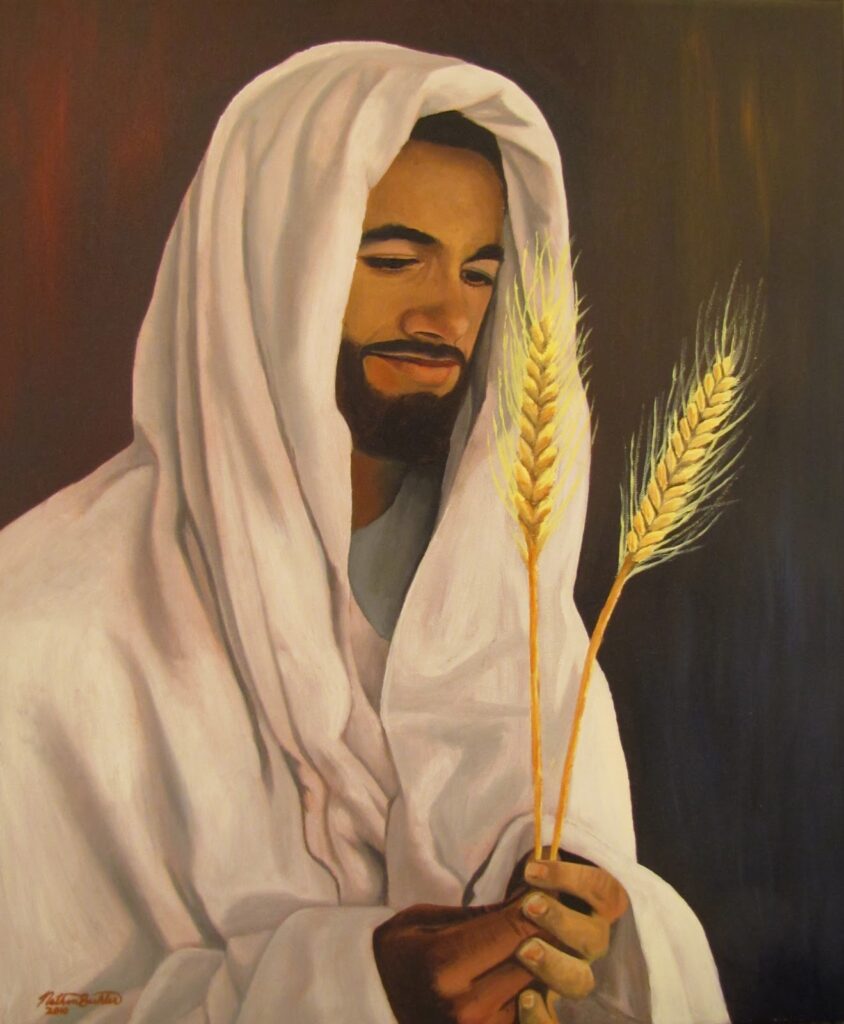
In today’s Gospel, Our Lord appoints seventy-two disciples and sends them forth. Before they depart, He tells them, “The harvest indeed is great, but the laborers are few.” These words remain just as true today. Countless souls long for truth, hope, and the love of God, often without realizing what it is they seek. Christ continues to call laborers into His harvest – not only priests and religious, but every baptized Christian who bears witness through prayer, charity, fidelity, and joyful perseverance.
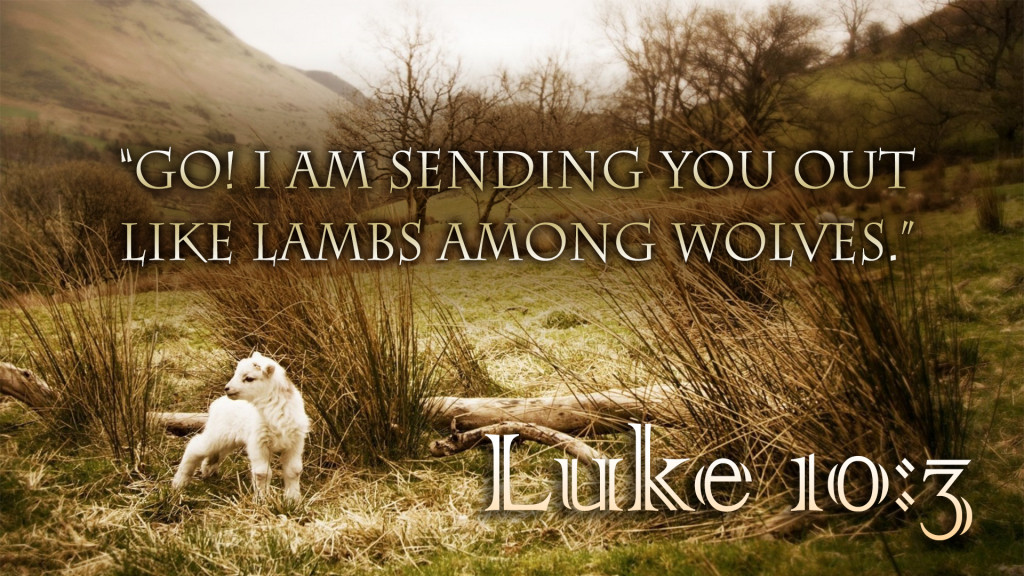
Yet Our Lord does not promise His disciples an easy mission. Instead, He tells them, “Behold, I send you as lambs among wolves.” The Christian life has never been free from opposition. Fidelity to Christ often requires courage, patience, and a willingness to remain steadfast even when the world rejects the Gospel. But the image of the lamb is itself a source of consolation. The lamb does not conquer by violence or earthly power. It overcomes through trust in the Good Shepherd. Our strength is never found in ourselves but in the Lord who goes before us.
Christ also instructs the disciples to carry neither purse nor bag nor sandals. In doing so, He teaches them complete dependence upon Divine Providence. Their confidence is to rest not in material security, careful planning, or worldly influence, but in God alone. This lesson speaks powerfully to our own hearts. How easily we become anxious about tomorrow or cling to things that promise security yet cannot satisfy. The Lord gently invites us to loosen our grasp on earthly supports so that we may place our confidence more fully in Him, who never abandons those who trust in His providence.

Every home the disciples enter is first to receive the greeting of peace. This peace is far more than mere politeness; it is the very peace of Christ flowing into the hearts of those willing to receive Him. We are called to become bearers of that same peace in our families, workplaces, parishes, and communities. Often the greatest act of evangelization is not eloquent speech but a calm spirit, a forgiving heart, and a joyful confidence that reflects the presence of Christ dwelling within us.
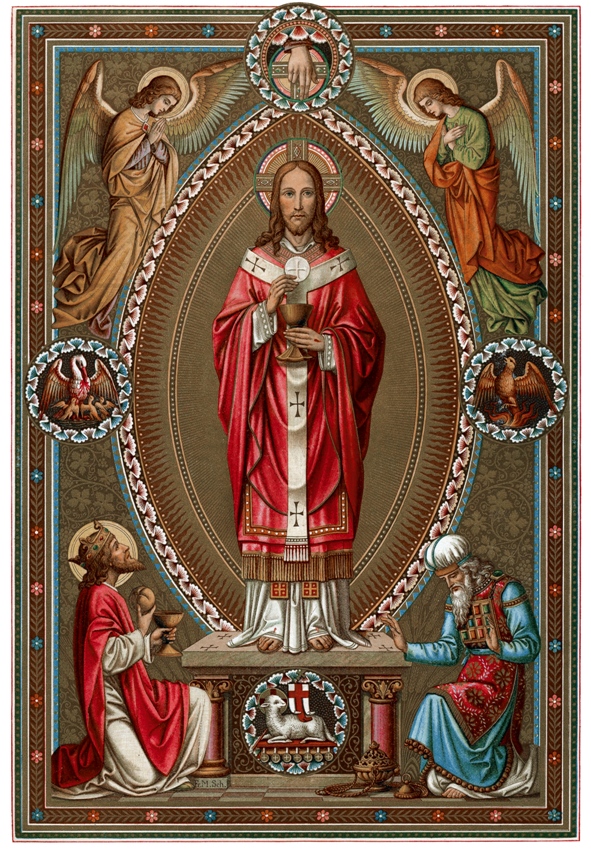
The Epistle to the Hebrews lifts our eyes to the source of this peace and confidence. Unlike the priests of the Old Covenant, whose ministry ended with death, Jesus Christ possesses an eternal priesthood. “He ever liveth to make intercession for us.” Even now our Savior stands before the Father on our behalf, continually presenting the perfect sacrifice He offered once for all upon Calvary. Because His priesthood never ends, His mercy never ceases, and His grace is always available to those who seek Him with humble hearts. We do not labor alone. Every prayer we offer, every sacrifice we make, and every act of faithful service is united to the perfect offering of Christ, our Eternal High Priest, who strengthens His people for the work He entrusts to them.
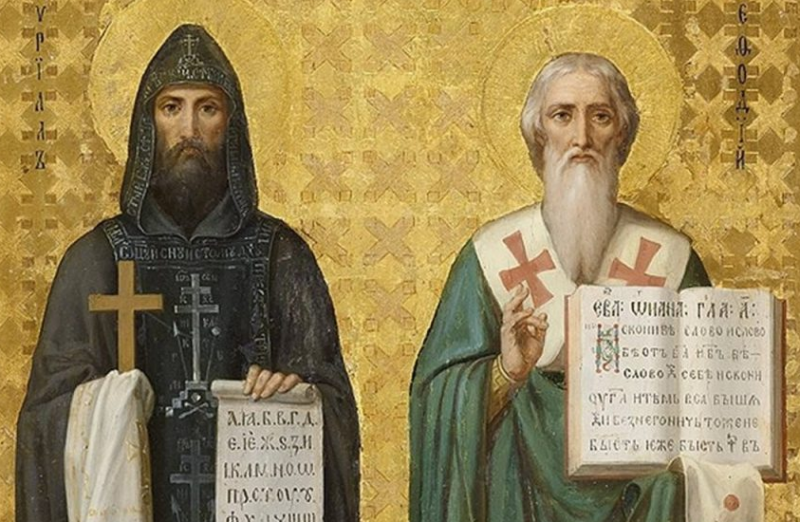
Today the Church also honors Saints Cyril and Methodius, Bishops and Confessors, known as the Apostles to the Slavic peoples. Leaving behind personal comfort, they devoted their lives to preaching Christ to nations that had not yet fully received the Gospel. Rather than expecting the people to come to them, they went out into the harvest, learning the language of those they served. St. Cyril even developed the Glagolitic alphabet which later influenced the development of the Cyriillic script, leading to an alphabet so that Scripture and the sacred liturgy could be understood. Their missionary zeal reflected the very spirit of today’s Gospel. Like the seventy-two, they trusted in God’s providence, proclaimed His peace, and faithfully prepared hearts to receive Christ.
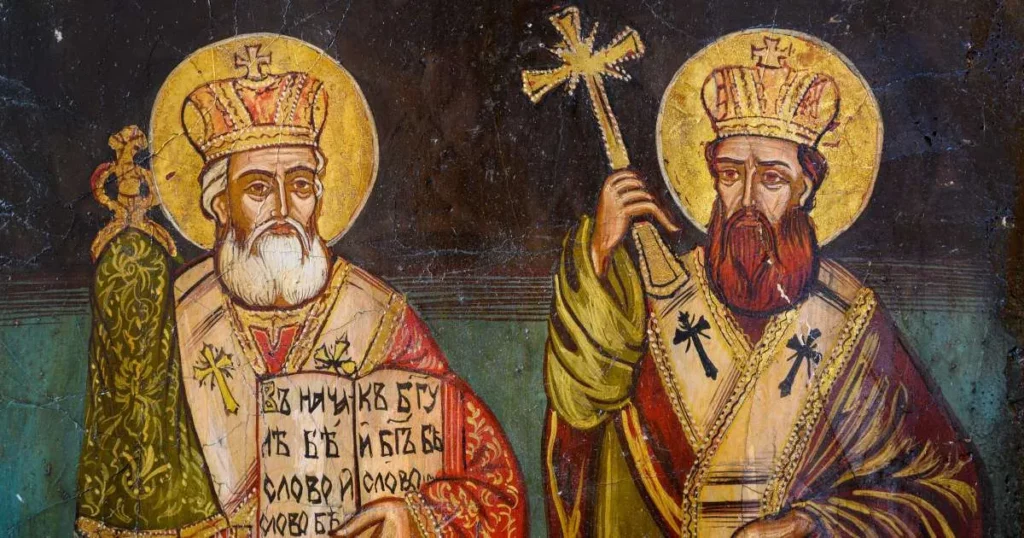
Their example reminds us that the harvest is not confined to distant lands. Every home, parish, neighborhood, workplace, and circle of friends presents opportunities to bear witness to Christ. Some are called to preach with words, while others evangelize through quiet acts of charity, patient endurance, humble service, and steadfast fidelity to the teachings of the Church. The Lord does not ask all of us to accomplish the same work, but He does ask each of us to be faithful where He has placed us.
QUESTIONS FOR THE HEART
Do I see myself as one whom Christ has sent into His harvest, beginning with my own family, parish, and daily life?
What fears or attachments keep me from trusting more completely in God’s providence?
Am I bringing the peace of Christ to those around me through my words, my actions, and my example?
A LITTLE POEM FOR THE JOURNEY
Lord, send me where Your fields are wide,
And ever keep me by Your side,
Though wolves may gather on the way,
Your gentle voice shall be my stay.
Grant me a heart that’s free from fear
To sow Your truth both far and near,
May every soul Your peace impart,
And reap Your harvest in my heart.
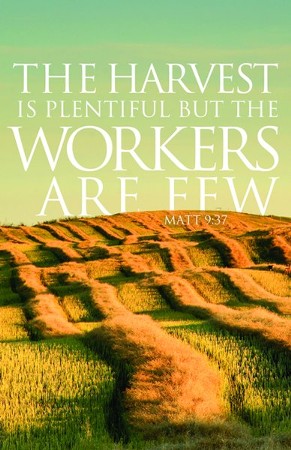
“THE HARVEST INDEED IS GREAT, BUT THE LABORERS ARE FEW.” (Luke 10:2)
CHRIST FEEDS US
Commemoration of St. Maria Goretti, Virgin & Martyr
July 6, 2026
TODAY’S GOSPEL: Mark 8:1-9
EPISTLE: Romans 6:3-11
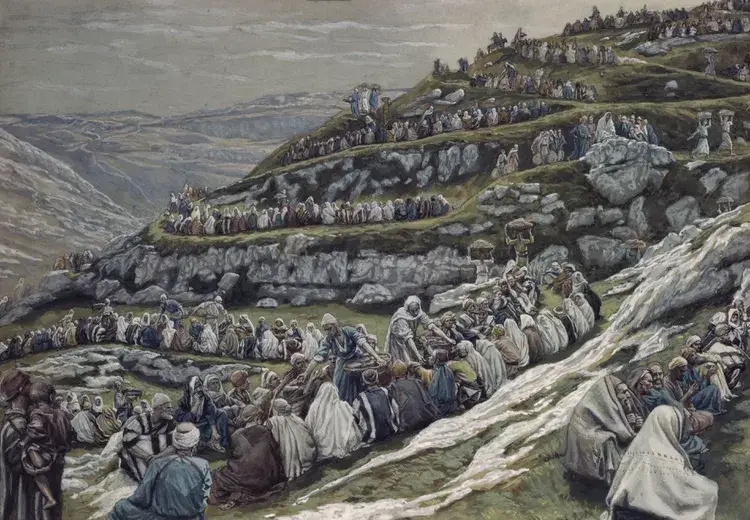
As we continue our journey through the Sixth Week after Pentecost, Holy Mother Church again places before us the miracle of the feeding of the multitude and St. Paul’s beautiful teaching on our union with Christ through Baptism. Though these readings are the same as those heard yesterday, the Church invites us to linger over them, for the treasures of God’s Word are inexhaustible. Today we are encouraged to consider not only what Christ gives us, but how He asks us to cooperate with His grace each day.
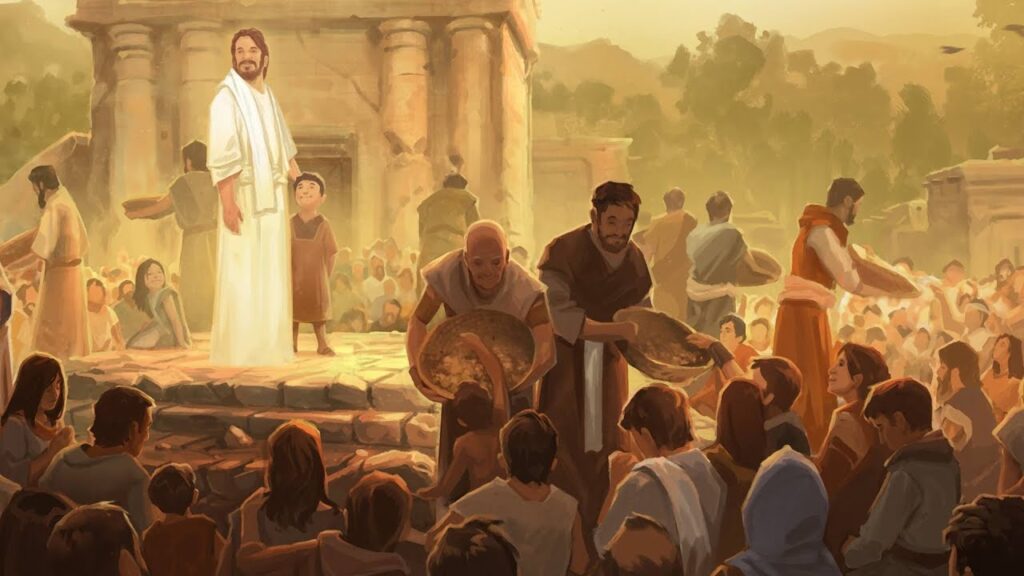
In the Gospel, Our Lord takes the simple offering of seven loaves and a few small fishes and transforms them into a banquet sufficient for thousands. Before performing the miracle, however, He first asks His disciples what they have. The Lord, who could have created bread from nothing, instead chose to involve His disciples in His work. In this we see an important lesson: God delights in allowing His children to participate in His providence. He asks us to place our time, talents, sacrifices, and prayers into His hands so that He may multiply them for the good of souls.
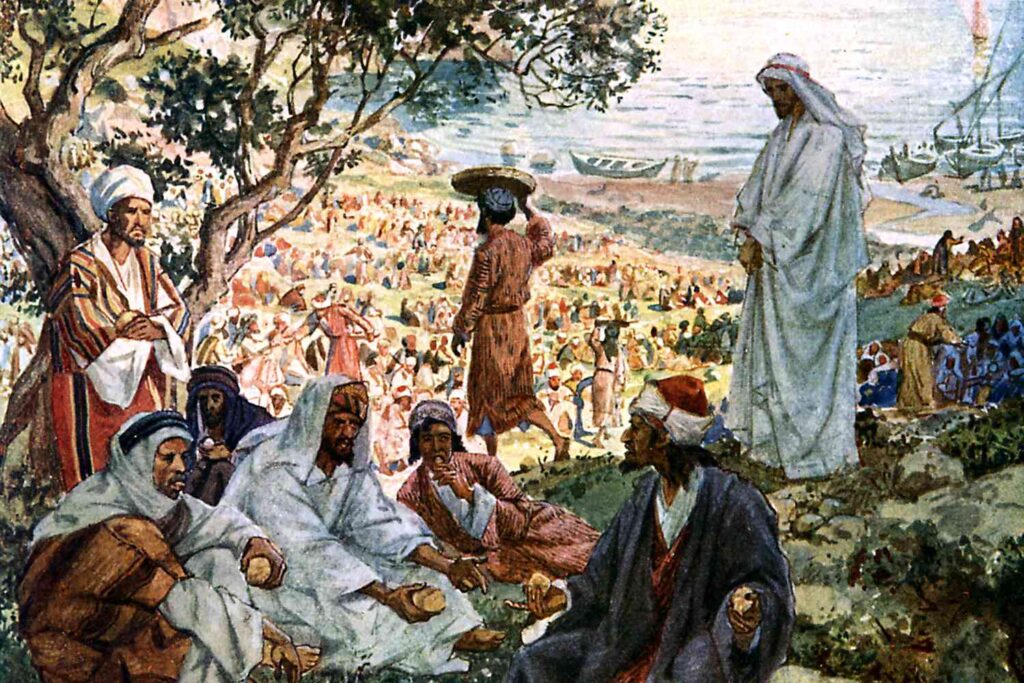
How often we are tempted to think that our efforts are too small to matter. A quiet prayer, a hidden sacrifice, a word of encouragement, an act of forgiveness, or a work of charity may seem insignificant in our own eyes. Yet when offered with love and confidence in Christ, these humble gifts become channels through which His grace flows abundantly. God measures not the size of our offering but the generosity of our hearts.
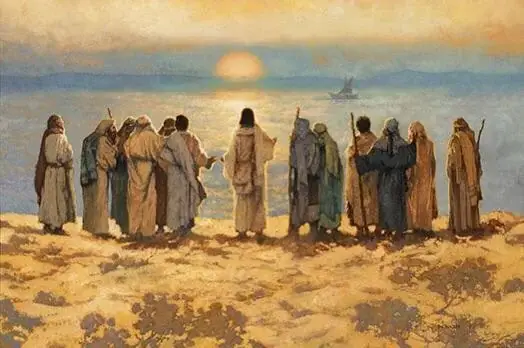
In the Epistle, St. Paul reminds us that through Baptism we have died with Christ so that we may also share in His risen life. This dying to self is not confined to one moment in the past but is meant to become the pattern of every day. Each temptation resisted, every selfish desire surrendered, every act of patience, humility, and obedience allows the life of Christ to shine more brightly within us. The Christian life is a continual invitation to leave behind the old man and to grow ever more into the likeness of Our Lord.
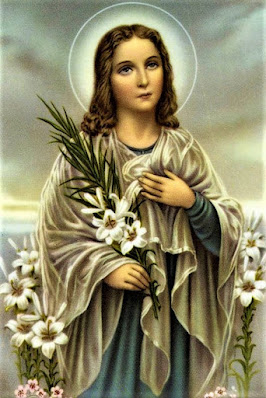
Today the Church commemorates St. Maria Goretti, the youthful virgin and martyr whose purity, courage, and forgiveness have inspired generations of Christians. Though only a young girl, she chose fidelity to God over her own earthly life and heroically forgave the one who attacked her. Her radiant witness reminds us that holiness is not measured by age but by the depth of one’s love for Christ. Her forgiveness reflected the mercy she had first received from God, showing that grace is stronger than hatred and that charity triumphs over violence.
The example of St. Maria Goretti also reminds us that sanctity is often found in the ordinary duties and hidden sacrifices of daily life. We may never be called to heroic martyrdom, but we are all called to daily fidelity – to choose truth over compromise, purity over impurity, kindness over resentment, and Christ over self. These quiet victories of grace prepare our souls for eternal life.
May we never underestimate what God can accomplish through a heart that is wholly surrendered to Him. As we place our lives into His hands and strive to live the grace of our Baptism each day, may Christ multiply our small offerings for His glory, strengthen us with His heavenly nourishment, and lead us ever closer to Himself.
QUESTIONS FOR THE HEART
Do I willingly place my daily prayers, sacrifices, and ordinary duties into Christ’s hands, trusting Him to use them for His glory?
Am I allowing the grace of my Baptism to help me die to selfishness and grow in holiness each day?
How can I imitate the courage, purity, and forgiving spirit of St. Maria Goretti in my own life?
A LITTLE POEM FOR THE JOURNEY
Lord, take the little that I bring,
My humble gift, my offering,
Though small it seems within my sight,
Your grace can fill it with Your light.
Teach me to die to self each day,
And faithfully to walk Your way,
Like saints who loved through joy and pain,
May I with You forever reign.
“AND THEY DID EAT AND WERE FILLED …” (Mark 8:8)


Pillars of Faith
